Nissan Motor(NSANY)

Search documents
据日经新闻:日产汽车将于2026年开始从中国向东南亚、中东和拉丁美洲出口电动汽车。
news flash· 2025-07-04 09:04
据日经新闻:日产汽车将于2026年开始从中国向东南亚、中东和拉丁美洲出口电动汽车。 ...
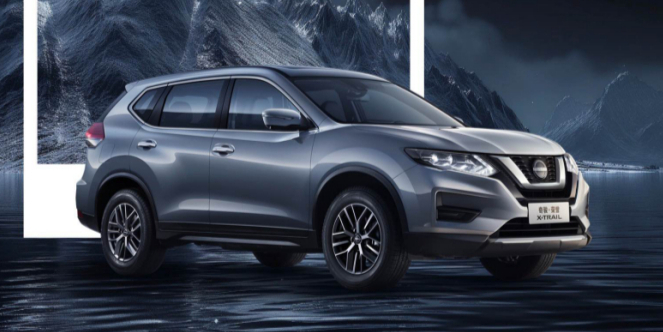
12万元的日产奇骏能否打动中国消费者?
Jing Ji Guan Cha Wang· 2025-07-03 12:23
Core Insights - The launch of the new model, X-Trail Honor, by Dongfeng Nissan is a strategic move to address declining sales and market competitiveness in China, with significant price reductions of up to 37% compared to previous models [2][3] - The new X-Trail Honor features upgrades in technology, space, and appearance, including a new intelligent vehicle system and enhanced interior design [2] - Despite these changes, the market response to Nissan's e-POWER technology has been lukewarm, and sales figures indicate a significant decline in demand for the X-Trail [3] Pricing and Model Details - The X-Trail Honor is available in two versions: the True Heart Edition priced at 119,800 yuan (official price 160,800 yuan) and the Leading Edition at 125,800 yuan (official price 166,800 yuan) [2] - The price drop from the previous classic model, which ranged from 189,300 yuan to 192,800 yuan, represents a substantial reduction [2] Market Performance - The X-Trail has historically been a strong performer in the compact SUV market, achieving annual sales of over 100,000 units until mid-2021, when a model change led to a decline in competitiveness [3] - Sales figures for 2023 show only 32,000 units sold, with a cumulative total of 13,000 units from January to May, reflecting a year-on-year decline of 63.4% [3] Competitive Landscape - To regain market share in the 200,000 yuan SUV segment, Dongfeng Nissan introduced the fuel version of the fifth-generation Terra, which is positioned as a larger SUV with a more favorable four-cylinder engine [4] - However, the Terra's monthly sales remain low, indicating challenges in the competitive landscape [4]

汽车早餐 | 广汽集团与华为合作的首款车型预计2026年面世;哪吒汽车再被冻结20亿股权;日产将在美国召回44.39万辆汽车
Zhong Guo Qi Che Bao Wang· 2025-07-03 01:00
Domestic News - The State Administration for Market Regulation has approved the release of seven national standards related to artificial intelligence, information technology, and the Internet of Things, providing technical support for digital services and applications [2] - The National Financial Supervision Administration has issued a draft notice for non-auto insurance companies, emphasizing the need to avoid blind scale expansion and to establish a rate adjustment mechanism [3] - The Hong Kong government announced that the "Cantonese Cars Southbound" plan will be implemented in November, allowing 100 vehicles daily to enter Hong Kong [4] International News - Dubai successfully completed the first test flight of an air taxi, which can carry four passengers and one pilot, with plans to launch commercial operations by 2026 [5] - Japanese Prime Minister Shigeru Ishiba responded to the U.S. threat of higher tariffs, emphasizing Japan's role as a major investor in the U.S. and its contribution to job creation [6] - Nissan will recall 443,900 vehicles in the U.S. due to engine failures, affecting models such as Rogue and Altima [7] - France's Ministry of Economy aims to integrate AI into 100% of large enterprises, 80% of SMEs, and 50% of micro-enterprises by 2030 [8] Company News - Changan Automobile reported a 1.59% year-on-year increase in sales for the first half of 2025, totaling 1.3553 million vehicles, with overseas sales of 299,400 units [10] - GAC Group announced that its first model developed in collaboration with Huawei is expected to be launched in 2026, targeting the high-end market [11] - Chery Group's June sales reached 233,607 vehicles, a 16.6% increase year-on-year, with 71,582 of those being new energy vehicles [12] - FAW-Volkswagen's June sales were 160,110 vehicles, a 15.1% increase year-on-year, with significant growth in various brands [13] - Dongfeng Motor's subsidiary, SAIC Hongyan, is facing bankruptcy reorganization due to severe debt issues, but it is believed to have restructuring potential [14] - Li Auto clarified that a fire incident involving one of its vehicles was caused by external factors and did not result in injuries [15] - Beijing Automotive Financial's capital increase has been approved, raising its registered capital from 1 billion to 1.9 billion yuan [15] - Neta Auto's associated company has had 2 billion yuan worth of equity frozen for three years due to legal actions [16]




日产将在美国召回44.39万辆汽车
news flash· 2025-07-02 07:33
Core Points - Nissan will recall 443,900 vehicles in the U.S. due to engine failures [1] - Affected models include Nissan Rogue, Altima, Infiniti QX50, and Infiniti QX55 [1]
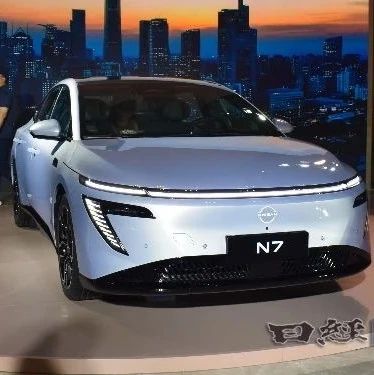
日产将从中国出口整车,与东风成立合资公司
日经中文网· 2025-07-02 02:51
Core Viewpoint - Nissan is focusing on expanding its automobile export business from China due to poor performance in the domestic market, with plans to export the newly launched electric sedan "N7" [1][2]. Group 1: Company Developments - Nissan announced a restructuring plan in mid-May, emphasizing the development of its export business from China as a response to declining sales [1]. - A new joint venture has been established between Dongfeng Motor Group and Nissan's wholly-owned subsidiary, Nissan (China) Investment (NCIC), to handle the export of complete vehicles and parts globally [1]. - The registered capital of the new joint venture is 1 billion yuan, with NCIC contributing 60% and Dongfeng Motor Group 40%, and the contract is set for 28 years [1]. Group 2: Market Performance - In 2024, Nissan's new car sales in the Chinese market are projected to decrease by 12% compared to 2023, primarily due to intense competition from local companies like BYD [2]. - As part of its strategy to maintain production scale, Nissan closed its factory in Changzhou, Jiangsu, in June 2024 [2]. - Dongfeng Motor Group is also actively expanding into overseas markets, with its EV brand "Lantu" planning to enter 60 countries by 2030 [1].

Nissan Downsizes & Delays Supplier Payments Amid Cash Shortage
ZACKS· 2025-07-01 15:01
Group 1 - Nissan Motor Co., Ltd. is facing a cash shortage, leading to delays in payments to suppliers and significant global cost-cutting measures, including the elimination of 20,000 jobs, which is about 15% of its global workforce [1][10] - The company is negotiating with suppliers for extended payment terms and has offered flexible payment options to selected suppliers in the U.K. and Europe to improve cash flow for the April-June quarter [3][4][10] - As of March end, Nissan had 2.2 trillion yen in cash and equivalents but faced approximately 700 billion yen in debt maturing later in the year, with a target of 250 billion yen in cost reductions under its Re:Nissan recovery plan [6][10] Group 2 - Discussions will begin with workers at the Sunderland plant in the U.K. regarding voluntary retirement, aiming to reduce the workforce by about 250 employees, as the facility is crucial for Nissan's turnaround and future electric vehicle production [2][10] - Nissan has provided suppliers with two options for payment: defer payments at a higher interest rate or receive immediate payment from HSBC, which Nissan will reimburse later with interest [5][10]
Nissan Motor Co Digital Transformation Analysis Report 2025 | Accelerators, Incubators, and Other Innovation Programs
GlobeNewswire News Room· 2025-07-01 08:07
Core Insights - The report titled "Enterprise Tech Ecosystem Series: Nissan Motor Co., Ltd. - 2025" provides a comprehensive overview of Nissan's technology activities, including digital transformation strategies, innovation programs, technology initiatives, investments, and acquisitions [1][3]. Company Overview - Nissan Motor Co., Ltd. is a Japanese automotive manufacturer that produces vehicles under four brands: Nissan, NISMO, AUTECH, and INFINITI, established in 1933 to offer affordable automobiles to the Japanese market [2]. Technology Activities - The report details Nissan's digital transformation strategies and innovation programs, highlighting various technology initiatives, partnerships, product launches, investments, and acquisitions [5]. - Insights into Nissan's technology themes, objectives, and benefits are provided, along with an overview of its ICT budgets and contracts [5]. Key Initiatives and Partnerships - The report covers Nissan's venture arm, Alliance Ventures, and its network of partnerships, investments, and acquisitions, including collaborations with companies like Solize Corporation, Baidu, and Oracle [5][7]. - A detailed map of Nissan's partnerships, investments, and acquisitions is included, showcasing its extensive network in the technology sector [5]. Executive Insights - The report also provides information on key executives involved in Nissan's technology operations, emphasizing leadership in driving innovation and strategic initiatives [5].

Evolution of the accounting treatment of Renault Group's stake in Nissan
Globenewswire· 2025-07-01 05:00
Group 1 - Renault Group will change the accounting treatment of its stake in Nissan from the equity method to a financial asset measured at fair value through equity as of June 30, 2025 [1][4] - The financial impact of this change is estimated at a loss of €9.5 billion, recognized in the income statement, primarily in other operating income and expenses, with no cash impact [4][5] - This accounting change aligns the value of Renault Group's stake in Nissan with Nissan's stock price, while operational projects and collaborations between the two companies remain unaffected [4][6] Group 2 - Renault Group sold 2.265 million vehicles in 2024 and operates in 114 countries, employing over 98,000 people [2] - The Group is focused on developing new technologies and services, aiming for carbon neutrality in Europe by 2040 [3] - Renault Group's strategic cooperation with Nissan continues to emphasize joint industrial and technological development programs, reflecting a commitment to maximizing synergies and creating value [4]

曝某车企严重资金压力,推迟供应商付款;何小鹏谈靠现金流压供应商款:真科技车企不需要;特朗普:已为TikTok找到超级富豪集团买家
雷峰网· 2025-07-01 00:31
Key Points - Trump claims to have found a buyer for TikTok, expected to announce in two weeks, involving a group of wealthy individuals [4] - Nissan faces severe financial challenges, requesting suppliers to accept delayed payments to improve cash flow, with potential cash flow increase of up to €59 million (approximately ¥495 million) [6][7] - Xiaomi's Yu7 model sees high demand, with delivery times extending up to 56 weeks for standard versions, indicating strong market interest [8][10] - OpenAI highlights Chinese competitor Zhiyu as a significant player in the AI field, noting its advancements and global outreach [33][34] - Two domestic GPU unicorns, Moer Technology and Muxi Co., have received IPO acceptance on the same day, aiming to raise nearly ¥150 billion combined [29][30] - Geely Group announces a major personnel change, appointing a new chairman for its Swedish subsidiary, indicating a strategic shift in European operations [18][19] - NIO's chief technology planner Hu Chengchen announces departure, raising questions about the company's future direction in chip technology [20]