Starbucks(SBUX)

Search documents
巴克莱上调星巴克目标价至110美元
Ge Long Hui A P P· 2026-01-08 09:52
Group 1 - Barclays raised Starbucks' target price from $95 to $110, maintaining an "Overweight" rating [1]

新兴玩家不断涌入,中国咖啡市场“变阵”拉开序幕
Bei Jing Wan Bao· 2026-01-08 02:52
Core Insights - The coffee market in China is experiencing intense competition, shifting from price wars to supply chain control, digital operations, and penetration into lower-tier markets [2][4] - The transformation reflects a deeper change in coffee consumption culture, evolving from "social consumption" to "daily consumption" [2][3] - Domestic brands are rapidly gaining market share, leveraging low pricing strategies and digital ordering models, while international brands are seeking strategic adjustments [3][5] Market Dynamics - The initial dominance of Western brands like Starbucks and Costa is being challenged by local brands such as Luckin Coffee, which disrupted the market with lower prices and convenient services [3][4] - As of 2024, the per capita annual coffee consumption in China is projected to rise from 6 cups in 2016 to 22 cups, with significant growth in second and third-tier cities [4] - Luckin Coffee has nearly 30,000 stores, while Starbucks operates around 8,000 stores after 26 years in China [4][5] Pricing Trends - Coffee prices have been declining, with average consumer spending on coffee dropping from 41 yuan in September 2023 to 26 yuan by September 2025 [6] - The proportion of coffee shops with prices below 15 yuan has increased from 29.8% in September 2024 to 36.9% in September 2025, driven by aggressive price competition [6] - The price war has altered consumer expectations, leading to a vacuum in the 16-25 yuan price range, pushing consumers towards cheaper options or premium brands [6] Challenges and Strategies - Coffee brands face challenges such as high costs, price pressures, and severe product homogenization, leading to decreased consumer loyalty [7] - Brands are responding by launching budget sub-brands, utilizing smart devices for cost reduction, and diversifying their business models [7] - Luckin Coffee has achieved a gross margin of 63.8% through scale procurement and self-built roasting factories [7] Supply Chain Importance - The competition is shifting towards supply chain integration and restructuring, with a focus on controlling costs and ensuring quality from "seed to cup" [9][10] - Coffee bean prices have seen significant fluctuations, impacting profitability; for instance, the price of Arabica coffee futures reached a 47-year high, increasing by 118.57% over the past year [10] - Major brands are engaging in long-term procurement agreements and establishing their own roasting facilities to stabilize costs and enhance efficiency [10][11] Future Outlook - The coffee industry is expected to undergo a "de-bubbling" reshuffle, leading to increased market concentration and the emergence of brands that leverage unique supply chains or regional advantages [12] - The market is transitioning from price-driven competition to efficiency-driven value competition, emphasizing the need for brands to establish a complete value chain advantage [12]


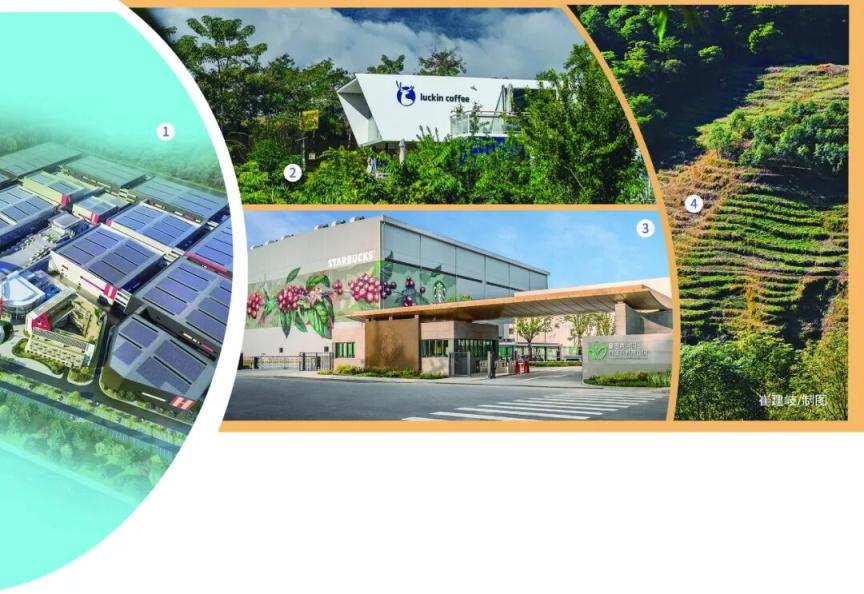
中国咖啡市场“变阵”拉开序幕
Zheng Quan Ri Bao· 2026-01-07 17:05
Core Insights - The Chinese coffee market is experiencing intense competition, shifting from price wars to a focus on supply chain management, digital operations, and penetration into lower-tier markets [1][2][9] - The transformation in coffee consumption culture is evident, with coffee evolving from a "social consumption" to a "daily consumption" product [1][2] Market Dynamics - Domestic brands like Luckin Coffee have disrupted the market traditionally dominated by international players such as Starbucks and Costa by leveraging delivery and digital ordering models [2][3] - The proportion of consumers drinking coffee during daily activities has reached 47.89% [2] - The per capita annual coffee consumption in China is projected to rise from 6 cups in 2016 to 22 cups by 2024, with significant growth in second and third-tier cities [2] Brand Expansion - Major coffee brands such as Luckin, Kudi, and others have surpassed 10,000 stores, with Luckin nearing 30,000 locations [3] - Starbucks operates approximately 8,000 stores in China after 26 years, while some mid-tier brands have seen slower growth or even a decline in store numbers [3] Strategic Shifts - International brands are seeking strategic partnerships and restructuring to adapt to the changing market landscape, with Starbucks forming a joint venture with Boyu Capital to enhance local market expertise [8] - The competition is shifting from brand premium to efficiency and scale, with domestic brands likely to dominate the market [4] Pricing Trends - Coffee prices have been declining, with average consumer spending on coffee dropping from 41 yuan in September 2023 to 26 yuan by September 2025 [6] - The percentage of coffee shops with prices below 15 yuan has increased from 29.8% to 36.9% within a year [6] Challenges and Innovations - Coffee brands face challenges such as high costs, price pressures, and severe product homogeneity, leading to decreased consumer loyalty [7] - Brands are exploring various strategies to enhance value, including launching budget sub-brands and utilizing technology to reduce costs [7] Supply Chain Importance - The competition is increasingly focused on supply chain integration, with companies aiming to control costs and ensure quality from sourcing to retail [9][10] - Fluctuations in coffee bean prices have prompted brands to secure long-term procurement agreements and invest in roasting facilities to stabilize costs [9][10] Future Outlook - The coffee industry is expected to undergo a "de-bubbling" reshuffle, leading to increased market concentration and the emergence of brands that leverage unique supply chains and localized operations [11] - The market is transitioning from price-driven competition to efficiency-driven value competition, emphasizing the need for brands to establish comprehensive value chains [11]
喝星巴克和住亚朵的,其实都是同一类人
Xin Lang Cai Jing· 2026-01-07 09:57
Core Viewpoint - Starbucks aims to differentiate its growth strategy amidst ongoing price wars and expansion in the Chinese coffee market by enhancing its membership offerings through partnerships with brands like Atour Group, Hilton, and China Eastern Airlines [2][4][11]. Group 1: Membership Strategy - Starbucks has announced a joint membership program with Atour Group, allowing members to enjoy benefits such as free room upgrades, free breakfast, and double points when using each other's services [2]. - The company has a significant membership base, with over 160 million members expected by November 2025, and 25 million active members within 90 days [5]. - The membership demographics of Starbucks and Atour show considerable overlap, targeting digital-savvy consumers who value efficiency in their purchases [5][6]. Group 2: Market Positioning - Starbucks has previously engaged in a price reduction strategy, but the adjustments were modest and selective, reflecting a careful approach to maintain brand integrity and profitability [4][15]. - The company operates 8,566 stores in China, while competitors like Luckin Coffee and Koolearn have significantly larger store counts, indicating a competitive landscape [14]. - Starbucks' sales from membership accounted for 74.4% of its revenue in the Chinese market for the fiscal year 2024, highlighting the importance of its membership strategy [10]. Group 3: Consumer Behavior and Trends - High-value members contribute significantly to Starbucks' profits, with a strong inclination towards premium products, indicating a focus on high-margin items [9][10]. - The evolving consumer landscape in China shows a shift towards price sensitivity and a demand for quality experiences, which Starbucks must navigate carefully [19][20]. - The partnership strategy allows Starbucks to reduce customer acquisition costs by leveraging shared user bases, enhancing the value proposition for both brands [8]. Group 4: Future Considerations - Starbucks is exploring further enhancements to its membership system, including the introduction of a new tier, "Diamond Membership," to better segment its customer base and increase engagement [11]. - The company is also considering adjustments to its product pricing, offerings, and store models in response to market changes and consumer preferences [20]. - The collaboration with local capital through a joint venture may influence Starbucks' strategies in pricing and market penetration, particularly in lower-tier markets [20].
“爷爷的农场”冲击港股IPO;雀巢在欧洲多国召回婴儿奶粉|消费早参
Mei Ri Jing Ji Xin Wen· 2026-01-06 23:58
Group 1 - "爷爷的农场" International Holdings Limited submitted an IPO application to the Hong Kong Stock Exchange, with a projected revenue of 622 million yuan in 2023 and 875 million yuan in 2024, indicating a strong growth trajectory in the organic baby food sector [1] - The company is ranked first in the Chinese organic baby food market, highlighting the robust potential of this niche industry [1] - The IPO is expected to enhance market recognition of the sector's value and attract long-term investment in the baby economy and consumer segments [1] Group 2 - Nestlé announced a precautionary recall of infant formula in several European countries due to quality issues with a supplier's ingredient, emphasizing the importance of supply chain quality control [2] - The recall may pose challenges to Nestlé's brand reputation and could lead to a reassessment of risk management capabilities within the dairy sector [2] - This incident may dampen overall sentiment in the consumer sector, prompting investors to focus more on companies' risk management and operational stability [2] Group 3 - Starbucks China and Atour Group launched a joint membership program, aiming to enhance user engagement and repurchase rates through cross-industry collaboration [3] - The membership program is expected to cover all levels of members, with Starbucks China reaching over 160 million members by November 2025 [3] - This partnership represents a significant innovation in the retail and service sectors, potentially setting a positive example for future collaborations [3] Group 4 - Chengdu Blue Wind Group, the parent company of brands like "春娟" and "红玫瑰," has an estimated valuation of 210 million yuan based on the transfer of shares [4] - The valuation reflects the current market pricing of established daily chemical companies, despite having well-known brands under its umbrella [4] - This situation may accelerate the revaluation of the daily chemical sector, directing attention towards companies with strong brand rejuvenation capabilities and core competitiveness [4]

My Dividend Growth Income - December 2025 Update
Seeking Alpha· 2026-01-06 13:19
Group 1 - The author is an electromechanical engineer with experience in automotive, IT infrastructure, and medical device industries, aiming to provide technical breakdowns on company products and share industry experiences [1] - The focus is on delivering insights into current engineering trends and real-world product knowledge, which can benefit investors conducting research [1] - The author identifies as a long-term buy-and-hold investor, seeking investments with strong cash flows and a growing passive income stream or significant R&D investments [1]





星巴克深耕济南十五载 不断焕发消费者“星”体验
Zhong Guo Jin Rong Xin Xi Wang· 2026-01-06 11:48
Core Insights - Starbucks has celebrated its 15th anniversary in Jinan, marking a significant milestone in its journey with local customers and coffee enthusiasts [1] - The company has transformed its Jinan Hang Lung Plaza store into an "anniversary theme store," incorporating local seasonal elements into its decorations [1] Group 1: Company Development - Over the past 15 years, Starbucks has continuously integrated into the lives of coffee lovers in Jinan by expanding its store types, enhancing the "Star" experience [1] - The company has introduced various store formats, including core stores that foster human connections, premium selection stores for higher quality coffee experiences, green stores promoting sustainable living, and pet-friendly stores [1] Group 2: Employee Growth - Employees like Dai Qiuyuan express a sense of achievement and belonging through Starbucks' diverse development platform, which allows them to acquire new skills in both coffee expertise and store management [1] Group 3: Community Connection - In Jinan, coffee serves as a connection point, linking baristas with customers and Starbucks with the city, creating unique memories for the local people [2] - Starbucks aims to continue its journey with Jinan by offering richer coffee experiences, fostering warmer human connections, and creating more diverse third spaces for customers and partners [2]
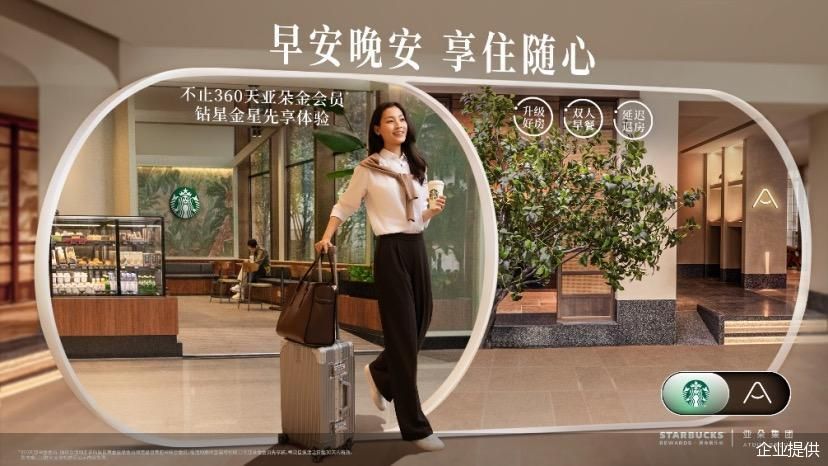
星巴克中国携手亚朵集团推出联合会员 再度升级会员权益
Zheng Quan Ri Bao Zhi Sheng· 2026-01-06 10:20
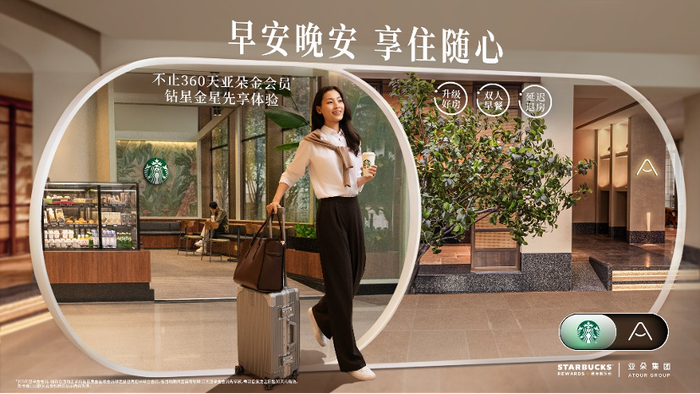
Core Insights - Starbucks China has partnered with Atour Group to launch a joint membership program, enhancing the benefits of the Starbucks membership club [1][3] - The collaboration aims to provide a comprehensive "coffee + travel" experience for Starbucks' 160 million members, offering practical travel benefits such as room upgrades and complimentary breakfasts [3][4] Membership Benefits - Members of both Starbucks and Atour can enjoy exclusive benefits, including up to 360 days of Atour Gold membership core benefits for Starbucks Gold and Diamond members [1][4] - Starbucks Gold members can receive up to 12 Atour Gold membership privileges, while Diamond members can upgrade some privileges to Atour Platinum membership, gaining additional benefits [4][5] - Atour members can earn Starbucks stars, which can be redeemed for various rewards, enhancing the value of the membership experience [5][6] Strategic Goals - The partnership reflects both companies' commitment to creating valuable travel experiences for customers, focusing on enhancing user satisfaction from daily life to travel [3][6] - Starbucks aims to continue expanding its membership offerings and partnerships in the "coffee + travel" sector, enhancing the overall quality of life for its members [6]
星巴克再跨界引流,与亚朵会员打通,能升级房型还有双人早餐
Nan Fang Du Shi Bao· 2026-01-06 07:17
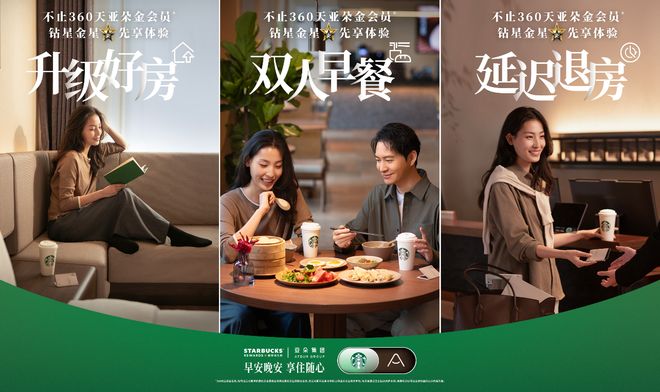
Core Insights - Starbucks China has announced a partnership with Atour Group to launch a joint membership program, enhancing the benefits of the Star Enjoy Club membership [1][4] - Members of the Star Enjoy Club can experience up to 360 days of Atour Gold Member core benefits, including perks like room upgrades, double breakfasts, and late check-outs [1][3] Membership Benefits - The membership system at Starbucks includes four tiers: Silver Star, Jade Star, Gold Star, and Diamond Star [3] - Gold Star members can receive up to 12 Atour Gold Member priority access rights, equivalent to 360 days of core benefits, and can earn up to 36 double breakfast vouchers and 36 late check-out vouchers [3] - Diamond Star members can upgrade three of their Atour Gold Member priority access rights to Atour Platinum Member rights, gaining additional benefits including up to 18 room upgrade vouchers [3] - Silver and Jade Star members can receive Atour discount vouchers and exclusive offers, enhancing the value of membership [3] Atour Member Benefits - Atour members can earn Starbucks rewards, with Black Gold members receiving 6 stars, Platinum members 3 stars, and Gold, Silver, and registered members 1 star upon binding their accounts [3] - During their stay at Atour hotels, members with Black Gold, Platinum, or Gold status can earn double stars when spending at designated Starbucks channels [3] - Atour has introduced a joint meal delivery robot featuring the joint membership theme, allowing guests to enjoy Starbucks coffee without leaving their rooms [3] Additional Perks - Starbucks offers additional benefits for members seeking quality travel experiences, including free in-flight Wi-Fi and complimentary medium-sized drinks [4] - Members can redeem stars for services such as concierge car transfers, airport lounges, and expedited security checks [4] Membership Growth - Starting in 2024, Starbucks plans to continue enhancing the Star Enjoy Club membership system, collaborating with Hilton Group and China Eastern Airlines for joint membership programs [4] - By November 2025, Starbucks China's membership base is expected to exceed 160 million, with 25 million active members within the last 90 days [4] - This partnership with Atour is part of Starbucks China's broader strategy to expand its membership offerings following the establishment of a joint venture with China’s Boyu Capital in November last year [4]
星巴克中国与亚朵集团推出联合会员
Bei Jing Shang Bao· 2026-01-06 06:16
Group 1 - Starbucks China has announced a partnership with Atour Group to launch a joint membership program, allowing members to enjoy up to 360 days of Atour Gold membership benefits, including perks like room upgrades, double breakfasts, and late check-outs [1][2] - Members of the Starbucks Rewards program can earn double stars when they stay at designated Atour hotels and make purchases through specified Starbucks channels, with stars redeemable for various premium services [1][2] - The joint membership benefits will be available to all levels of members from both companies, who can link their accounts through apps or WeChat mini-programs to access exclusive rewards [2] Group 2 - Starting in 2024, Starbucks plans to collaborate with Hilton Group and China Eastern Airlines to introduce additional joint membership programs [2] - Starbucks entered the Chinese market in 1999 and currently operates over 8,000 stores across more than 1,000 county-level markets [2] - Atour Group, established in 2013, is projected to have 1,948 hotels by the end of September 2025, with multiple hotel brands under its umbrella, including A.T.HOUSE and Atour S Hotel [2]