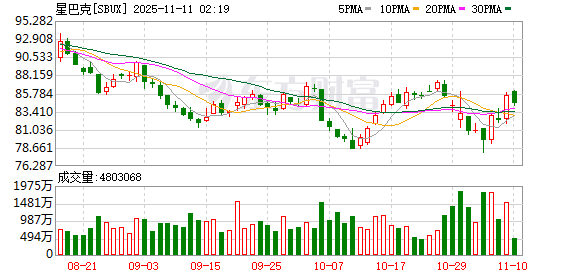
Starbucks(SBUX)

Search documents
星巴克中国变阵应对本土竞争咖啡市场进入“平价”时代
Zheng Quan Shi Bao· 2025-11-10 18:20
Core Insights - Starbucks is restructuring its equity in China, partnering with Boyu Capital to form a joint venture for its retail operations, reflecting a strategic response to increasing competition from local brands like Luckin Coffee and Kudi Coffee [3][4][5] - The high-end coffee market in China is experiencing a downturn, with Starbucks facing challenges such as slowing store growth and declining same-store sales, prompting a shift towards more affordable coffee options [3][4][5] - The coffee consumption trend in China is evolving from a social symbol to a daily necessity, with consumers increasingly prioritizing quality and price [8][9] Starbucks' Strategic Moves - Starbucks has agreed to sell up to 60% of its Chinese retail business to Boyu Capital for approximately $4 billion, valuing its operations in China at over $13 billion [3] - The new joint venture will manage around 8,000 existing stores and aims to expand to 20,000 locations in the future, indicating a commitment to deepening its market presence [3][4] - The company reported a 5% year-on-year revenue increase in China for fiscal year 2025, but same-store sales fell by 1%, highlighting the competitive pressures it faces [3] Market Dynamics - The high-end coffee segment is under pressure, as evidenced by Starbucks' first large-scale price reductions in its history, with an average price drop of about 5 yuan on several products [4][5] - Local brands are rapidly expanding, with Luckin Coffee leading the market with 27,000 stores, followed by Kudi Coffee and Luckin Coffee, which has surpassed 9,000 stores [6][7] - The market for ready-to-drink coffee is growing significantly, with a projected increase from 366 billion yuan in 2018 to 1,721 billion yuan in 2023, reflecting a compound annual growth rate of 36.3% [8] Competitive Landscape - Local affordable coffee brands are gaining traction by leveraging efficient supply chains to control costs and expand rapidly, challenging the traditional dominance of high-end brands in major cities [6][7] - The shift in consumer preferences towards value-for-money options is evident, as brands like Luckin Coffee and Kudi Coffee offer products priced between 8 to 15 yuan, appealing to urban professionals [7][8] - The ability to manage supply chains effectively will be crucial for brands to maintain competitiveness in the increasingly crowded coffee market [9]


汉堡王中国,也被卖了
Sou Hu Cai Jing· 2025-11-10 17:02
Group 1 - CPE Yuanfeng announced a strategic partnership with Burger King to establish a joint venture named "Burger King China" with an initial investment of $350 million for expansion and marketing [1] - CPE Yuanfeng will hold approximately 83% of the shares in Burger King China, while Restaurant Brands International will retain about 17% [1] - The plan aims to increase the number of Burger King outlets in China from around 1,250 to over 4,000 by 2035, with a focus on sustainable same-store growth [1] Group 2 - Hillhouse Capital will acquire up to 60% of Starbucks' retail business in China, with Starbucks retaining 40% and maintaining ownership of the brand and intellectual property [2] - The acquisition is based on an enterprise value of approximately $4 billion, excluding cash and debt [2]
JUST Capital Strengthens Board of Directors With Six Strategic Appointments
Markets.Businessinsider.Com· 2025-11-10 14:34
Core Insights - JUST Capital has appointed six new members to its board of directors, enhancing its leadership and expertise in technology, research, communications, and corporate strategy [1][2][4] Group 1: New Board Members - Mehdi Ansari is a partner at Sullivan & Cromwell LLP, specializing in intellectual property and technology, particularly in AI [7][8] - Jonathan Auerbach has over 30 years of experience in technology and financial services, previously serving as Chief Strategy and Growth Officer at PayPal, where he led significant initiatives including the launch of PayPal USD [9][10][12] - Laxman Narasimhan, former CEO of Starbucks and Reckitt, brings extensive experience in leading global brands and driving digital transformation [14][15][16] - Franz Paasche, EVP of Corporate Affairs at Verizon, has over 30 years of experience in public affairs and communications, previously holding leadership roles at Columbia University and PayPal [19][20][21] - Stephanie Stahl is a seasoned business leader and executive coach with a strong background in marketing and strategy, serving on multiple public company boards [23][25][26] - Charles C.Y. Wang is a professor at Harvard Business School, focusing on corporate governance and valuation, with extensive research published in leading academic journals [27][29] Group 2: Organizational Goals and Developments - The new board members will support JUST Capital's transformation into an AI-powered corporate intelligence platform, set to launch its JUST Intelligence platform in 2026 [2][4] - JUST Capital aims to provide C-suites and boards with insights on stakeholder performance, competitive benchmarking, and strategic guidance on critical issues [4][5] - The organization has already improved job quality for 2.6 million workers and reached over 30 million Americans through media partnerships [5]




汉堡王中国,也被卖了
财联社· 2025-11-10 13:47
Group 1 - CPE Yuanfeng announced a strategic partnership with Burger King to establish a joint venture named "Burger King China" with an initial investment of $350 million to support restaurant expansion, marketing, menu innovation, and operational improvements [1] - The joint venture will have a 20-year master development agreement granting exclusive rights to develop the Burger King brand in China, with CPE Yuanfeng holding approximately 83% of the equity and Restaurant Brands International retaining about 17% [1] - The plan aims to expand the number of Burger King stores in China from approximately 1,250 to over 4,000 by 2035, while achieving sustainable same-store growth [2] Group 2 - Starbucks announced the sale of the majority stake in its China operations to Boyu Capital, forming a joint venture where Boyu will hold up to 60% of the retail business, while Starbucks retains 40% and continues to own the brand and intellectual property [2] - The acquisition by Boyu Capital is based on an enterprise value of approximately $4 billion, excluding cash and debt [2]

“红杯日”前的星巴克(SBUX.US)工会逼宫 美国议员敦促CEO重启谈判
智通财经网· 2025-11-10 12:48
Core Viewpoint - A group of 26 U.S. senators and 82 representatives urged Starbucks to resume negotiations with union organizations, expressing concerns over increased suppression of union activities [1][2] Group 1: Union Negotiations - Negotiations between Starbucks executives and the Starbucks Workers United union, representing approximately 9,500 employees, have been stalled since April of last year, with both sides blaming each other for the impasse [2] - The union has filed over 100 charges against Starbucks for unfair labor practices since December, including retaliatory actions against unionizing baristas [2] - The letters from lawmakers emphasized that Starbucks management has the capability to reach a fair labor agreement, highlighting the company's planned multi-billion dollar expenditures on dividends and stock buybacks [2] Group 2: Potential Strike - Union representatives indicated readiness to initiate a large-scale strike if a contract is not finalized by November 13, coinciding with the company's peak sales period known as "Red Cup Day," which could impact sales across over 25 cities [3] Group 3: Company Performance and Strategy - Under CEO Brian Niccol, Starbucks has been restructuring its U.S. store operations to regain customer loyalty and aims to return to growth after six consecutive quarters of year-over-year sales declines, with a slight 1% increase reported recently [4] - As part of its turnaround efforts, Starbucks closed over 600 stores, including its flagship unionized location in Seattle, and significantly reduced corporate staff [4] - The company is implementing various initiatives to enhance sales, including the return of seasonal products, store renovations, and upgrades to mobile ordering systems, with early signs of improvement in sales and transaction volumes [4][5]
中国资本出手收购星巴克,“9块9”离我们还远吗?
Chang Sha Wan Bao· 2025-11-10 10:11
Core Insights - Starbucks has entered a strategic partnership with Chinese company Boyu Investment, forming a joint venture to operate Starbucks' retail business in China, marking the first time Starbucks has sold equity in its Chinese operations in 26 years [1][3] - Boyu Investment acquired a 60% stake for $4 billion, while Starbucks retains a 40% stake, maintaining ownership of the brand and intellectual property [1][3] - The partnership is expected to accelerate Starbucks' expansion in China, aiming to increase the number of stores from 8,011 to 20,000 [5][6] Financial Performance - Starbucks' global comparable store sales fell by 7% in Q4 of fiscal year 2024, with net revenue declining by 3% to $9.1 billion, indicating significant pressure on its global operations [3] - In contrast, Starbucks' China operations have shown strong growth, with Q4 fiscal year 2025 revenue reaching $831.6 million, a 6% increase year-over-year, and total annual revenue of $3.105 billion, up 5% [3][5] Market Dynamics - The partnership with Boyu Investment is seen as a strategic move to tap into the growing Chinese coffee market, which remains underpenetrated in lower-tier cities [6][7] - Boyu Investment has experience in expanding coffee brands in China, having rapidly increased its own coffee brand's store count by 2,000 in less than a year [6] - The competitive landscape in China is intensifying, with local brands like Luckin Coffee and others gaining market share, prompting Starbucks to consider more cost-effective product offerings [7][9] Future Outlook - The joint venture is expected to enhance Starbucks' ability to innovate in product offerings and strengthen connections with local consumers, particularly in lower-tier markets [6][7] - There is speculation about the potential introduction of lower-priced products, such as a 9.9 yuan coffee, to better compete with local brands and meet changing consumer preferences [7][9]
US lawmakers urge Starbucks CEO to restart union talks
Reuters· 2025-11-10 10:02
Core Points - Twenty-six U.S. senators and 82 House representatives have urged Starbucks to resume negotiations with its workers union [1] Group 1 - A total of 26 U.S. senators and 82 House representatives have expressed their concerns regarding Starbucks' relationship with its workers union [1]
星巴克迎来「中国合伙人」之后,还要面临哪些压力? | 声动早咖啡
声动活泼· 2025-11-10 09:04
Core Viewpoint - Starbucks has transitioned from wholly-owned expansion in China to a joint venture model, indicating a strategic shift in response to competitive pressures in the market [3][4]. Group 1: Historical Context and Strategic Decisions - Starbucks entered the Chinese market in 1999 through partnerships with local companies, gradually shifting to a wholly-owned model as the market matured [4]. - The recent deal with Boyu Capital marks a return to a joint venture structure, allowing Starbucks to retain some control while leveraging local expertise [4][5]. - The valuation of Starbucks China at $4 billion has raised concerns among industry experts, who believe it may be too high given the competitive landscape [4]. Group 2: Market Strategy and Expansion Plans - Starbucks adapts its market entry strategy based on local conditions, opting for wholly-owned or majority-controlled models in markets similar to the U.S., while using joint ventures in less familiar territories [5][6]. - The company aims to expand its store count in China to 20,000, indicating an aggressive growth strategy despite the challenges posed by local competitors [6][8]. - The partnership with Boyu Capital is seen as a way to enhance local market penetration and capitalize on Boyu's resources in residential and commercial properties [7]. Group 3: Challenges Ahead - The ambitious target of 20,000 stores may necessitate a shift towards franchising, as managing such a large number of outlets without local partners could be impractical [8][9]. - Expanding into lower-tier cities presents challenges, including limited consumer spending power and competition from lower-priced coffee options [8][10]. - Starbucks faces pressure to localize its menu and supply chain to compete effectively, as its current offerings may not meet the evolving preferences of Chinese consumers [10][11]. Group 4: Operational Adjustments - The company has made recent adjustments to its pricing and product offerings, including limited-time discounts and new beverage options, to remain competitive [10][11]. - There is a need for innovation in product development, particularly in sourcing and flavor profiles, to better align with local tastes and preferences [11].
星巴克中国变了,要加入价格战了吗?
东京烘焙职业人· 2025-11-10 08:05
Core Viewpoint - Starbucks has announced a strategic partnership with Boyu Capital to establish a joint venture, with Boyu holding 60% and a transaction valuation of approximately 4 billion USD. The plan is to expand the number of stores in China from 8,000 to 20,000, focusing on smaller cities and emerging regions [2]. Group 1: Market Challenges - Over the past 26 years, Starbucks has witnessed significant growth in the Chinese coffee market, but it now faces challenges from local competitors that have diluted its unique value propositions, such as the "third space" concept [3][4]. - The "third space" value, which provided a comfortable environment for socializing and working, has become a standard offering among competitors, reducing Starbucks' ability to command a premium price [3][4]. - The brand's symbolic value has also diminished as younger consumers have more choices, with local tea brands capturing attention through cultural symbols and collaborations [4]. Group 2: Competitive Landscape - The entry of local players like Luckin Coffee and Koolearn has shifted consumer perceptions of coffee, introducing sweeter and more accessible options that challenge Starbucks' traditional offerings [4]. - As Starbucks expands its store presence, its scarcity and symbolic value have decreased, further exacerbated by ongoing price wars that lower overall brand premiums in the coffee market [4][5]. Group 3: Strategic Initiatives - In response to these challenges, Starbucks has initiated several actions to reinforce its value, including creating unique store concepts and collaborating with popular cultural figures to enhance brand resonance [5][6]. - The introduction of a joint membership program with Eastern Airlines aims to provide exclusive benefits to high-value customers, enhancing the perceived value of the Starbucks membership system [6]. - Product innovation, such as the introduction of a no-sugar series and non-coffee offerings, aims to attract new customer segments and extend consumption periods [6]. Group 4: Financial Performance - Starbucks' recent financial results indicate a successful recovery, with consecutive quarters of growth in same-store sales and transaction volume, alongside maintaining double-digit operating profit margins [11]. - The simultaneous growth in transaction volume and profit margins suggests that Starbucks has effectively retained or regained customers, demonstrating the success of its value-driven strategy amidst a competitive pricing environment [11][12].
星巴克中国卖身:60%股权仅卖40亿?中国市场增长神话破灭
Sou Hu Cai Jing· 2025-11-10 04:11
Core Insights - Starbucks is undergoing a significant transformation, shifting from direct operations to becoming a brand licensor, thereby transferring operational risks and benefiting from licensing fees [1] - The recent $4 billion investment from Boyu Capital grants them up to 60% equity in Starbucks China, revealing a substantial valuation discrepancy where Starbucks China is valued at approximately $6.7 billion, despite Starbucks estimating its retail business in China at over $13 billion [3] - Starbucks China reported a revenue of $830 million for Q4 FY2025, a 6% year-on-year increase, with an annual revenue of $3.1 billion, reflecting a 5% growth, but the growth rate appears slow compared to competitors [5] - Global operating profit for Starbucks plummeted by 78.7% in Q4, with net profit down 85.4%, raising concerns about profitability in the Chinese market, where specific profit figures remain undisclosed [7] - Boyu Capital's partner highlighted the opportunity for more localized and innovative experiences for Chinese consumers, indicating Starbucks' current shortcomings in localization and competitive pricing against rivals like Luckin Coffee [9] - The ambitious goal of expanding from 8,000 to 20,000 stores in ten years is seen as overly aggressive, with the need for 1,200 new stores annually, which may be challenging for Starbucks alone [11] - Boyu's understanding of Starbucks' challenges, including brand aging and insufficient localization, positions them to potentially enhance Starbucks' market presence and profitability in China [11] - Post-acquisition strategies may include price reductions and localization efforts, indicating a potential shift in Starbucks' traditional high-price model to better compete in the evolving Chinese market [12]