Starbucks(SBUX)

Search documents
星巴克,还会降价吗
2 1 Shi Ji Jing Ji Bao Dao· 2025-11-10 02:31
Core Insights - Starbucks China is undergoing significant changes following the sale of a 60% stake to Boyu Capital, which will lead to a joint venture valued at approximately 28.49 billion RMB (4 billion USD) [1][6] - The decision to sell a majority stake indicates a loss of market dominance for Starbucks China, as it lags behind competitors like Luckin Coffee, which reported a 47.1% year-on-year revenue growth to 12.36 billion RMB [2][5] - The expansion strategy for Starbucks China aims to increase the number of stores to 20,000, raising questions about pricing strategies and operational adjustments needed to achieve this goal [8][9] Company Strategy - The joint venture with Boyu Capital allows Starbucks to retain 40% ownership while relinquishing core decision-making power in the Chinese market [1][6] - Starbucks China has seen a revenue increase of 6% year-on-year to 831.6 million USD (approximately 5.91 billion RMB) in Q3, driven by product pricing strategies and new product launches [5][6] - The introduction of local shareholders is viewed as a higher stage of operational autonomy for the Chinese team, potentially leading to more tailored strategies for the local market [6][7] Market Position - Starbucks China currently operates around 8,000 stores, significantly fewer than its competitors, with Luckin Coffee exceeding 26,000 stores [3][5] - The brand's premium pricing strategy is under pressure as it faces rising rental costs and a decline in brand prestige, making it challenging to maintain its previous market position [3][4][11] - The potential for price reductions exists, but significant cuts may be difficult due to higher operational costs compared to competitors like Luckin and Kudi [11][12] Future Outlook - The goal of expanding to 20,000 stores suggests a shift in Starbucks' operational model, which may require adjustments in employee benefits and service quality to remain competitive [13][14] - The current service quality and employee engagement at Starbucks may be at risk if the operational model changes significantly [15] - Overall, Starbucks China is poised for transformation, but the direction and implications of these changes remain uncertain [15][16]


星巴克,还会降价吗
21世纪经济报道· 2025-11-10 02:29
Core Viewpoint - Starbucks China is undergoing significant changes following the sale of a 60% stake to Boyu Capital, raising questions about its future direction and pricing strategy in the competitive coffee market [1][3]. Group 1: Sale and Market Position - Starbucks has formed a joint venture with Boyu Capital, valuing the partnership at approximately 28.49 billion RMB (4 billion USD), with Starbucks retaining 40% ownership and brand rights [1]. - The decision to sell a majority stake indicates Starbucks is losing its market dominance in China, as evidenced by the performance gap with Luckin Coffee, which reported a 47.1% year-on-year revenue increase to 12.36 billion RMB, compared to Starbucks China's 8% growth to 7.9 billion USD (approximately 56.26 billion RMB) [1][2]. Group 2: Financial Performance and Strategy - Starbucks China reported a 6% year-on-year revenue increase to 8.316 billion USD (approximately 59.13 billion RMB) in Q3, with same-store sales up 2% and transaction volume up 9%, although average transaction value decreased by 7% [2]. - The introduction of local shareholders and the shift in operational control are seen as necessary steps for Starbucks to adapt to the changing market dynamics [3]. Group 3: Future Expansion and Pricing - Starbucks plans to expand its store count in China to 20,000, which would require a significant adjustment in its pricing strategy, especially in lower-tier markets where consumer spending is limited [4][5]. - While a drastic price reduction seems unlikely due to higher operational costs compared to competitors like Luckin and Kudi, minor price adjustments may be feasible to support the expansion goal [5]. Group 4: Operational Changes and Brand Identity - The potential shift in Starbucks' operational model raises concerns about maintaining service quality and employee morale, which have been key competitive advantages in the Chinese market [5]. - The company's commitment to high employee welfare standards may complicate efforts to lower prices while expanding rapidly [5].

星巴克,还会降价吗?
2 1 Shi Ji Jing Ji Bao Dao· 2025-11-10 00:12
Core Viewpoint - Starbucks China is undergoing significant changes following the sale of a 60% stake to Boyu Capital, raising questions about its future direction and pricing strategy [3][4][10]. Group 1: Sale Details - Starbucks will form a joint venture with Boyu Capital to operate its retail business in China, with Boyu holding up to 60% equity and Starbucks retaining 40% [3]. - The joint venture is valued at approximately 28.49 billion RMB (4 billion USD) [3]. - This sale indicates that Starbucks is relinquishing core decision-making power in its Chinese retail operations [3][4]. Group 2: Market Position and Performance - Starbucks China is losing market dominance compared to Luckin Coffee, which reported a 47.1% year-on-year revenue growth to 12.36 billion RMB, while Starbucks China’s revenue grew only 8% to 7.9 billion USD (approximately 56.26 billion RMB) [4]. - As of now, Luckin has over 26,000 stores, while Starbucks China has only 8,000, indicating a significant gap in market presence [5]. Group 3: Strategic Changes - Starbucks is shifting towards empowering its Chinese team, which has led to a 6% year-on-year revenue increase to 8.316 billion USD (approximately 59.13 billion RMB) in Q3, with same-store sales up 2% and transaction volume up 9% [7]. - The introduction of new products and price reductions has been part of this strategy, although the average transaction value has decreased by 7% [7]. Group 4: Future Expansion Plans - The plan is to expand Starbucks' store count in China to 20,000, which poses challenges in maintaining a high average spending per customer in lower-tier markets [10][11]. - Achieving this expansion may necessitate price reductions, although significant cuts may be difficult due to higher operational costs compared to competitors like Luckin and Kudi [13][15]. Group 5: Operational Considerations - Starbucks' operational costs are higher due to its premium pricing strategy and employee benefits, making substantial price reductions unlikely [13][14]. - A potential shift in operational model may be required to meet the ambitious store expansion goals, raising questions about the impact on service quality and brand identity [16][17].
星巴克,还会降价吗?丨消费参考+
2 1 Shi Ji Jing Ji Bao Dao· 2025-11-10 00:07
Core Viewpoint - Starbucks China is undergoing significant changes following the sale of a 60% stake to Boyu Capital, raising questions about its future direction and pricing strategy [3][4][10]. Group 1: Sale Details - Starbucks will form a joint venture with Boyu Capital to operate its retail business in China, with Boyu holding up to 60% equity and Starbucks retaining 40% [3]. - The joint venture is valued at approximately 28.49 billion RMB (4 billion USD) [3]. - This sale indicates Starbucks is relinquishing core decision-making power in its Chinese retail operations [3][4]. Group 2: Market Position and Performance - Starbucks China is losing market dominance compared to competitors like Luckin Coffee, which reported a 47.1% year-on-year revenue growth to 12.36 billion RMB, while Starbucks China saw only an 8% increase to 7.9 billion USD (approximately 5.63 billion RMB) [4]. - Luckin has over 26,000 stores, while Starbucks China has only 8,000, highlighting a significant gap in market presence [5]. Group 3: Strategic Changes - Starbucks is shifting towards empowering its Chinese team, which has led to a 6% year-on-year revenue increase to 8.316 billion USD (approximately 5.91 billion RMB) in Q3, despite a 7% decline in average transaction value [7][8]. - The introduction of local shareholders represents a higher level of operational autonomy for Starbucks China [8]. Group 4: Future Expansion Plans - Starbucks aims to expand its store count in China to 20,000, which would require a significant adjustment in its pricing strategy to remain competitive in lower-tier markets [10][11]. - The feasibility of maintaining a mid-to-high-end positioning while expanding to 20,000 stores is uncertain [16][17]. Group 5: Operational Considerations - Starbucks' operational costs are higher than those of competitors like Luckin and Kudi, making substantial price reductions challenging [13][15]. - The company’s commitment to employee welfare and service quality may limit its ability to lower prices significantly [14][18]. Group 6: Overall Implications - The changes at Starbucks China suggest a potential shift in its operational model, with an emphasis on adapting to the competitive landscape while maintaining service quality [19][20].
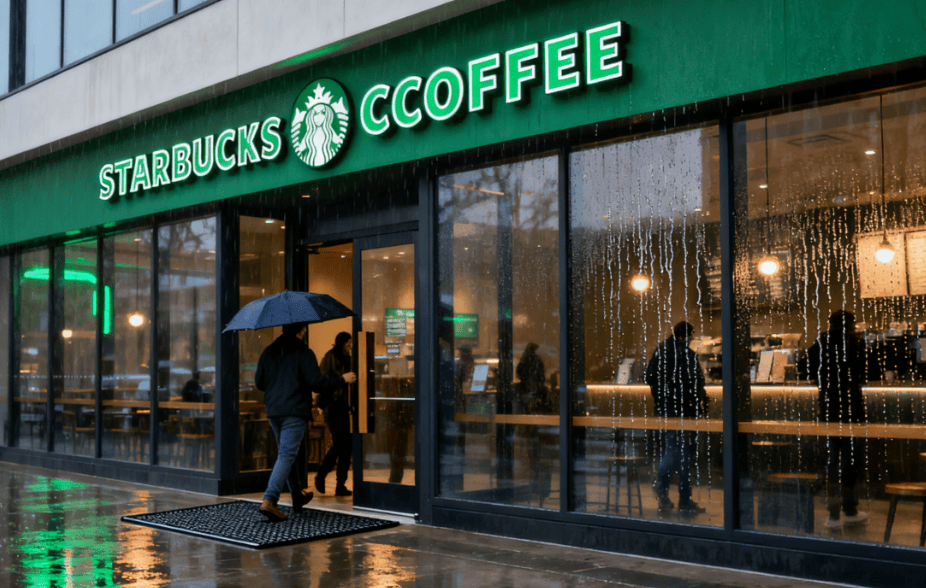
Starbucks Just Proved Its Coffee Shop Experience Doesn't Matter
Forbes· 2025-11-09 17:50
Core Insights - Starbucks' coffee delivery business has reached $1.0 billion, growing by 30% in the most recent quarter, indicating a significant shift in consumer behavior towards convenience over the traditional coffee shop experience [2][7][25] - The delivery growth suggests that many customers may not prioritize the in-store experience that Starbucks has historically emphasized, challenging the company's traditional business model [6][10][24] Business Model Evolution - The concept of Starbucks as a "third place" has been central to its brand identity, but changing consumer preferences indicate that this model may no longer be sufficient [4][5][10] - CEO Brian Niccol's strategy to enhance the in-store experience may need to adapt to the growing demand for mobile ordering and delivery services, as evidenced by 30% of transactions occurring through the mobile app [9][10][23] Infrastructure and Strategy - The closure of mobile order and pickup-only stores may not have been a wise decision, as there is a potential need for a "dark cafe" model that focuses on speed and efficiency [11][12] - A bifurcated strategy is suggested, where some locations cater to in-store customers while others focus on fulfillment and delivery [12][16] Omnichannel Retailing - The current retail landscape requires a balance between in-store experiences and digital-first approaches, as customers increasingly seek both options [14][15] - The infrastructure must be redesigned to accommodate both in-store patrons and mobile order fulfillment, indicating a need for separate operational strategies [16] Future Trends - The shift in consumer behavior towards convenience is not limited to Starbucks but is a broader trend affecting various retail sectors, including grocery and apparel [19][20][21] - Retailers that adapt quickly to these changes, focusing on convenience and fulfillment, are likely to thrive in the evolving market [25]

社服零售行业周报:博裕入主星巴克中国,百胜中国Q3同店延续正增长-20251109
HUAXI Securities· 2025-11-09 15:08
Investment Rating - Industry rating: Recommended [4] Core Insights - Starbucks has formed a strategic partnership with Boyu Capital to establish a joint venture aimed at expanding Starbucks' store count in China to 20,000 from the current 8,000 [1][21] - Yum China reported a revenue of $3.206 billion in Q3 2025, representing a 4% year-on-year increase, with same-store sales growth of 1% [2][26] Summary by Sections Industry and Company Dynamics - Starbucks and Boyu Capital's joint venture will manage Starbucks' retail operations in China, with Boyu holding up to 60% equity and Starbucks retaining 40% [1][21] - Yum China's Q3 2025 performance included a net profit of $282 million, down 5% year-on-year, but up 7% when excluding the impact of its investment in Meituan [2][26] Macroeconomic and Industry Data - In September, China's total retail sales reached 4.20 trillion yuan, growing by 3.0% year-on-year, with a notable decline in restaurant revenue growth [26][27] - Online retail sales of physical goods increased by 6.5% year-on-year from January to September, indicating a stable performance in physical store operations [27][28] Investment Recommendations - Five investment themes are highlighted: 1. Continuous upgrades in AI technology with beneficiaries including companies like Core International and Focus Technology [3][55] 2. Enhanced consumer willingness to pay for emotional value, benefiting new retail players like Miniso and Pop Mart [3][55] 3. Recovery in cyclical sectors under domestic demand stimulation, with beneficiaries including Yum China and Haidilao [3][55] 4. Expanding opportunities for domestic brands overseas, with a focus on service providers and strong product offerings [3][55] 5. Revitalization of traditional business formats as offline traffic returns, benefiting companies like Yonghui Supermarket and Kidswant [3][55]
传媒互联网产业行业周报:路径不清晰,等待机会 1 / 16-20251109
SINOLINK SECURITIES· 2025-11-09 14:37
Investment Rating - The report suggests a focus on cloud vendors and companies with exceeding expectations in the current market environment [3]. Core Insights - The report highlights a divergence in market performance, with consumer companies facing pressure while AI technology companies continue to show mixed results. Concerns about AI valuation bubbles persist, but leading tech companies like Microsoft, Google, and Meta maintain strong cash flows, suggesting a stable outlook for cloud vendors [3]. - The gaming demand remains robust, although there is a short-term lack of new game releases. Attention is drawn to the progress of key game tests and launches, which could drive revenue growth for related companies [3]. - The report emphasizes the importance of monitoring quarterly reports from major Chinese companies like Tencent, JD, Baidu, and Alibaba, as well as the ongoing value in sectors like PDD and the gaming industry [3]. Summary by Sections 1.1 Consumer & Internet - **Education**: The education index fell by 3.59%, with notable performance differences among companies. The implementation of a spring and autumn break system in Sichuan is expected to impact the sector positively [11][18]. - **Luxury & Gaming**: The luxury goods and gaming sectors are closely tied to macroeconomic conditions. Recent Q3 earnings from major gaming companies exceeded expectations, benefiting from a longer holiday schedule in 2026 [19][24]. - **Coffee & Tea**: The coffee sector remains vibrant, while the tea sector faces challenges due to reduced delivery platform subsidies and seasonal competition [3][27]. - **E-commerce**: The e-commerce sector is under pressure, with a lackluster performance during the Double Eleven shopping festival [3][35]. 1.2 Platform & Technology - **Streaming Platforms**: The streaming sector is driven by domestic demand, with platforms like Spotify reporting better-than-expected earnings [3][42]. - **Virtual Assets & Internet Brokers**: The cryptocurrency market is experiencing volatility, with a significant drop in global market value. However, there are potential buying opportunities following recent corrections [3][43]. - **Automotive Services**: The automotive aftermarket is projected to decline, with a year-over-year decrease of 4% expected by October 2025 [3][61]. 1.3 Media - The media sector is experiencing mixed performance, with streaming services facing challenges but also opportunities for growth through strategic partnerships and content offerings [3][41].



黄金税收新政后终端提价,品牌力、产品力重要性凸显
GOLDEN SUN SECURITIES· 2025-11-09 14:31
Investment Rating - The report suggests a focus on the Hainan sector and sub-sectors with performance elasticity during the Spring Festival, indicating a positive medium-term outlook for new consumption growth, transformation recovery, overseas expansion, and policy benefits [3] Core Insights - Following the new gold tax policy, there has been a price increase in gold jewelry at retail terminals, highlighting the importance of brand strength and product quality [1][2] - The new tax policy differentiates between investment and non-investment uses of standard gold, affecting tax deductions and pricing strategies for retailers [2] - Major brands have raised their gold prices post-policy implementation, with increases ranging from 58 to 70 CNY per gram for leading brands [2] Summary by Sections 1. Market Review - The retail index increased by 0.31% this week, underperforming the Shanghai Composite Index by 0.77 percentage points [9] - The retail sector's performance ranked 17th among all sectors during this period [9] 2. Company Dynamics - Small Commodity City has acquired land for a cultural and commercial complex for 3.2 billion CNY [16] - West China Tourism plans to issue up to 30.61 million shares to raise no more than 300 million CNY for working capital and debt repayment [16] 3. Industry Dynamics - Xiaohongshu has obtained a payment license, indicating a significant development in the digital payment landscape [22] - Starbucks has partnered with Boyu Capital to expand its retail operations in China, aiming to increase the number of stores to 20,000 [22] - JD's global sales during the Double 11 event saw a transaction volume increase of over 300% in cross-border shipping areas [23]




40亿美元出让60%股权 星巴克中国联手博裕冲刺2万家门店
Sou Hu Cai Jing· 2025-11-09 11:10
Core Insights - Starbucks announced the sale of a 60% stake in its China business to Boyu Capital for $4 billion, marking the first time the company has relinquished control in its 26 years in China [1] - The joint venture aims to accelerate Starbucks' expansion plan to reach 20,000 stores in China, leveraging local resources from Boyu Capital [1][3] - Starbucks will retain a 40% stake in the joint venture and continue to authorize the use of its brand and intellectual property [1] Group 1: Market Context - Starbucks' market share in China's fresh coffee segment has dropped to 14% in 2024, down from a peak of 42% in 2017, indicating significant competitive pressure from local brands [3] - The current size of China's fresh coffee market has surpassed 280 billion yuan, with the affordable segment growing at 42% [4] - Products priced under 10 yuan account for 58% of consumer spending, highlighting a shift in consumer preferences towards value [4] Group 2: Strategic Response - The joint venture's goal of expanding to 20,000 stores exceeds the total number of stores opened by Starbucks in the past 26 years, reflecting a need to compete with local rivals like Luckin Coffee and Kudi [3] - The expansion strategy may draw from experiences in the South Korean market, where price promotions and operational efficiencies were implemented post-equity sale [3][4] - The restructuring is seen as a critical move to adapt to market changes and bind local resources, transitioning from a wholly-owned model to a joint venture [4]
新十年,重新定义 | 5万字解读2025年中国餐饮全品类、全球餐饮认知及三大趋势
3 6 Ke· 2025-11-09 09:16
Core Viewpoint - The report highlights the evolution of the Chinese restaurant industry over the past decade, emphasizing the shift towards chain operations and capital investment, while also outlining future trends and opportunities for growth in the sector [4][6][9]. Industry Overview - The chain rate of the Chinese restaurant industry has reached 23%, with revenue approximately 6.4 trillion RMB and nearly 9 million stores [4][6]. - The past decade has been characterized as the "chain era," marked by significant capital investment and the emergence of influential associations like the China Chain Store & Franchise Association [4][6][8]. Future Trends - The report anticipates that the chain rate will rise to 25% in 2025 and potentially reach 28% by 2026 [14]. - Key trends identified for the next decade include the evolution of chains, the globalization of Chinese cuisine, and a focus on cost reduction while maintaining quality [10][12][14]. Restaurant Categories Hot Pot - The number of hot pot restaurants in China is approximately 528,298, with a net increase of 62,000 stores [17][18]. - Haidilao has initiated the "Pomegranate Plan," which aims to empower new brands using its supply chain and operational capabilities, resulting in significant revenue growth [18][19]. Barbecue - The barbecue segment has around 413,682 operating stores, with a net increase of 16,029 [33]. - Brands like "Very Long Ago" and "Guan's Chicken Wings" exemplify different operational philosophies, focusing on quality and customer relationships [36][39]. Regional Cuisines - Hunan cuisine is experiencing a transformation into a national favorite, with brands like "Fei Chef" emphasizing fresh ingredients and healthy cooking methods [70][76]. - Sichuan cuisine faces challenges in scaling due to reliance on franchising and a lack of standardized operations, which hinders brand strength [79][84]. Cantonese Cuisine - Cantonese cuisine is expanding both nationally and globally, with brands like "Dian Dou De" successfully adapting their offerings to attract a broader audience [93][94]. - The focus on fresh supply chains and innovative dining experiences is driving growth in this segment [95][96]. Jiangsu-Zhejiang Cuisine - Jiangsu-Zhejiang cuisine, known for its delicacy and refinement, has around 110,463 operating stores, with a focus on cultural experiences and high-quality ingredients [104][106]. - The global appeal of dishes like soup dumplings is highlighted as a key opportunity for international expansion [108].