TME(TME)

Search documents
美股大跌,科技股全线下挫,热门中概股普跌
Di Yi Cai Jing Zi Xun· 2026-01-20 23:31
Group 1 - The global market risk appetite has significantly decreased following President Trump's renewed tariff threats towards Europe, leading to a sell-off in major stock indices [2][3] - The Dow Jones Industrial Average fell by 870.74 points, a decline of 1.76%, closing at 48,488.59 points; the S&P 500 dropped by 143.15 points, down 2.06%, at 6,796.86 points; and the Nasdaq Composite decreased by 561.07 points, a 2.39% drop, ending at 22,954.32 points, marking the worst single-day performance since October 10 of the previous year [2] - Major tech stocks experienced declines, with Nvidia down 4.32%, Apple down 3.45%, and Microsoft down 1.16%, among others [2] Group 2 - The CBOE Volatility Index (VIX), often referred to as the "fear index," rose to a two-month high, reflecting increased market anxiety [3] - Trading volume on U.S. stock markets reached approximately 20.6 billion shares, significantly above the 20-day average of 17.01 billion shares, indicating concentrated selling pressure [3] - Analysts suggest that the current geopolitical tensions regarding tariffs are more of an emotional shock rather than a fundamental change that would trigger a deep market correction [3] Group 3 - The global bond market is also experiencing spillover effects, with upward pressure on some European government bonds due to potential increases in defense spending [4] - The yield on the U.S. 10-year Treasury note reached a high of 4.313%, the highest since late August, closing at 4.287% after a rise of 5.6 basis points [5] - Market expectations for interest rate cuts by the Federal Reserve have been adjusted downward, with projections for a reduction of approximately 47 basis points in 2026, down from 53 basis points at the end of the previous year [5] Group 4 - Netflix reported fourth-quarter revenue of $12.1 billion, exceeding market expectations of $11.97 billion, with adjusted earnings per share of $0.56, also slightly above forecasts [6] - The company anticipates full-year revenue for 2026 to reach between $50.7 billion and $51.7 billion, with expectations for advertising revenue to potentially double in the future [6] - Following the announcement, Netflix's stock price fell by 4.9% in after-hours trading, influenced by merger financing and market sentiment [7] Group 5 - Gold prices surged significantly, with spot gold rising approximately 2% to $4,757.33 per ounce, reaching a historical high of $4,756.93 during the session [7] - Silver prices experienced a slight decline of 0.3%, settling at $94.38 per ounce, after hitting a record high of $95.87 [7] - Oil prices showed volatility, with light crude oil futures for February delivery rising by $0.90 to $60.34 per barrel, a 1.51% increase [8]



高盛:腾讯控股、网易-S及快手-W等为内地游戏与娱乐股核心
Zhi Tong Cai Jing· 2026-01-20 06:38
Core Insights - Goldman Sachs reports that the Chinese gaming and entertainment sector experienced significant stock price increases in 2025, with large and mid-cap stocks rising by 50% to 80% compared to the Hang Seng China Enterprises Index's 26% [1] - The report indicates that the strong performance is driven equally by valuation expansion and earnings per share growth [1] - Looking ahead to 2026, the firm believes the risk-reward profile remains attractive, with a focus on "alpha" driven opportunities [1] Group 1: Market Trends - Chinese gaming publishers and content platforms, represented by Tencent Holdings and NetEase, are accelerating their overseas expansion, leveraging capital, talent, and technological capabilities [2] - The global market share of Chinese game manufacturers is expected to increase from the current level of approximately 15% [2] Group 2: AI Impact - AI is seen as a transformative force, reducing production and labor costs while enhancing efficiency and revenue potential, particularly in gaming and advertising sectors [2] - The total addressable market (TAM) for AI-generated film tools is projected to expand tenfold by 2028 [2] Group 3: Investment Recommendations - Goldman Sachs identifies key buy stocks including Tencent, NetEase, Kuaishou, Bilibili, and Tencent Music, with Tencent's core business expected to maintain low to mid-double-digit growth annually [2] - The firm maintains a "buy" rating on Tencent, lowering the target price from HKD 770 to HKD 752 [2]





大行评级|高盛:游戏与娱乐板块风险回报仍具吸引力,核心买入股份包括腾讯、快手等
Ge Long Hui· 2026-01-20 02:22
Core Viewpoint - Goldman Sachs reports that the Chinese gaming and entertainment sector experienced significant stock price increases in 2025, with mid to large-cap stocks rising by 50% to 80% compared to the Hang Seng China Enterprises Index's 26% [1] Group 1: Market Performance - The strong performance continued into early 2026, with some stocks increasing by as much as 30% compared to related indices' growth of approximately 3-5% [1] - The price increase is attributed to a combination of valuation expansion and earnings per share growth [1] Group 2: Future Outlook - For 2026, Goldman Sachs outlines key themes and debates for the sector, indicating that the risk-reward profile remains attractive but is more alpha-driven [1] - The firm prefers companies with new growth potential, such as those benefiting from AI application penetration and accelerated overseas expansion [1] Group 3: Competitive Landscape - Companies that still have compound growth and profit expansion potential amid increasing competition, particularly with ByteDance raising competitive concerns, are favored [1] - Core buy stocks selected by Goldman Sachs include Tencent, NetEase, Kuaishou, Bilibili, and Tencent Music [1] Group 4: Stock Ratings - Goldman Sachs maintains a "Buy" rating on Tencent, adjusting the target price from HKD 770 to HKD 752 [1]
腾讯音乐娱乐申请风险预测方法专利,提高风险预测准确性
Jin Rong Jie· 2026-01-19 12:45
Group 1 - Tencent Music Entertainment Technology (Shenzhen) Co., Ltd. has applied for a patent titled "A Risk Prediction Method, Device, Equipment, and Computer-Readable Storage Medium," with publication number CN121356915A, and the application date is December 2025 [1] - The patent describes a risk prediction method that enhances accuracy by determining a comprehensive predicted risk based on static risk scores, associated network risk scores, and predicted risk scores [1] - The method involves identifying target static risk features and associated network risk features, calculating future handling ratios, and predicting risks based on user attributes [1] Group 2 - Tencent Music Entertainment Technology (Shenzhen) Co., Ltd. was established in 2017 and is primarily engaged in software and information technology services, with a registered capital of 5 million RMB [2] - The company has invested in 12 enterprises, participated in 14 bidding projects, and holds 1,169 trademark records and 1,457 patent records [2] - Additionally, the company possesses 45 administrative licenses [2]
大行评级|大摩:预计今年AI发展道路更光明,予腾讯、阿里巴巴、拼多多等“增持”评级
Ge Long Hui· 2026-01-19 08:51
Core Insights - Morgan Stanley's report on Chinese tech stocks presents an optimistic outlook for AI development by 2026, driven by both supply and demand factors [1] - The overseas expansion of internet companies is highlighted as a crucial strategy to address macroeconomic, competitive, regulatory, and geopolitical risks [1] Company Preferences - The report lists preferred stocks with an "overweight" rating, including Tencent, Alibaba, Pinduoduo, Tencent Music, NetEase, BOSS Zhipin, Manbang, Meituan, Trip.com, Tongcheng Travel, TAL Education, and Beike [1]


大行评级|里昂:腾讯音乐回调后提供入市机会,重申“跑赢大市”评级
Ge Long Hui· 2026-01-19 07:37
Core Viewpoint - Tencent Music's stock price has underperformed the market year-to-date due to concerns over increased competition, adjustments in expectations regarding the resumption of K-pop concerts in mainland China, and potential impacts from heightened antitrust activities on its acquisition of Ximalaya [1] Group 1 - The stock price has retraced 38% from its peak on September 17 of the previous year, indicating a significant decline [1] - The company is believed to have a sustainable subscription model and competitive products built around fan and artist connections, suggesting that the market may have overreacted [1] - The report maintains an "outperform" rating with target prices of $23.7 for US shares and HK$92.1 for Hong Kong shares, indicating a favorable risk-reward level at current prices [1]
腾讯音乐(TME):音乐盘点
citic securities· 2026-01-19 07:23
Investment Rating - The report indicates a favorable investment opportunity for Tencent Music (TME US/1698 HK), suggesting that the current sell-off is excessive and presents a good entry point due to attractive risk-reward dynamics [4]. Core Insights - Tencent Music's stock has underperformed year-to-date, influenced by competitive narratives, expectations around the K-pop concert restart, and heightened antitrust concerns regarding the acquisition of Himalaya [4]. - The stock price has retraced 38% from its peak of $26.7 on September 17, 2025, primarily driven by a reduction in valuation multiples [4]. - The report aligns with the views of CITIC Lyon Research, emphasizing the sustainability of Tencent Music's subscription model and its competitive product offerings built around fan-artist relationships [4]. Company Overview - Tencent Music was established in 2016 and operates several well-known music platforms, including QQ Music, Kugou Music, Kuwo Music, and 全民 K 歌. The company has developed a diversified business model centered around music and audio content discovery, listening, singing, viewing, performing, and social interaction [10]. - The primary revenue sources include online music subscriptions, online karaoke and live streaming, advertising, content licensing, and digital album sales. After a challenging transition in 2022-2023, the company has established a more sustainable business structure, with online music business growth driven by successful subscription strategies [10]. Revenue Breakdown - Online music services account for 62.4% of total revenue, while social entertainment services and others contribute 37.6% [11]. - The company generates 100% of its revenue from Asia, with no contributions from the Americas, Europe, or the Middle East and Africa [11]. Market Consensus - The market consensus target price for Tencent Music is $25.80 [12]. - As of January 15, 2026, the stock price is $16.6, with a market capitalization of $27.09 billion [11].
中国游戏与娱乐_2026 展望:围绕竞争、海外扩张与 AI 应用的核心主题与争议-China Games & Entertainment_ 2026 Outlook_ Framing key themes_debates around competition, overseas expansion and AI applications
2026-01-19 02:32
Summary of China Games & Entertainment Sector Conference Call Industry Overview - The China Games & Entertainment sector experienced a significant rally in 2025, with large and mid-cap stocks increasing by 50-80%, compared to the HSCEI's 26% rise. The strong momentum continued into 2026, with some stocks rising by 30% against a 3-5% increase in corresponding indexes [2][21][24]. Key Themes and Debates for 2026 1. **Competition from Bytedance** - Bytedance's competition is a major concern for investors, particularly in selective growth verticals such as short drama and mini-game platforms. Music streaming remains a key debate, with TME maintaining a differentiated position in ARPU and non-subs revenue growth [3][26]. 2. **Overseas Market Expansion** - Chinese game publishers, led by Tencent and NetEase, are accelerating their overseas expansion. The current market share of Chinese game publishers in overseas markets is around 15%, with expectations to increase significantly due to capital intensity, technology capabilities, and ongoing content upgrades [4][43][78]. 3. **AI Applications** - AI is expected to disrupt and benefit existing ecosystems by reducing production costs and enhancing efficiency. The gaming and advertising sectors are particularly poised for revenue uplift and efficiency gains through AI applications. The total addressable market (TAM) for AI video generation tools is projected to expand 10X by 2028 [5][54][56]. 4. **Policy Tailwinds for Content Creation** - Favorable domestic policies are expected to support content creation, leading to faster production turnaround and increased consumer demand across the entertainment industry. The number of game approvals increased by 25% year-over-year in 2025, indicating a supportive regulatory environment [10][66][69]. Company-Specific Insights - **Kuaishou** - Revenue forecast for Kuaishou has been raised to US$280 million for 2026, with expectations of ARR reaching US$350-400 million. The company is positioned to benefit from AI narratives and has seen its share price double over the past 12 months [11][12]. - **NetEase** - NetEase is trading at a discount compared to peers due to its lower overseas revenue exposure. Upcoming titles like "Sea of Remnants" and "Ananta" are expected to drive significant growth in overseas markets [13][14]. - **Bilibili** - Bilibili is anticipated to deliver strong margin expansion, with advertising revenue growth projected at 20% year-over-year in 2026. The company is expected to benefit from a turnaround in its gaming business [12][14]. - **Tencent** - Tencent's core business is expected to see low to mid-teens growth year-over-year, driven by strong game pipelines and monetization benefits from AI in advertising [14][15]. - **Tencent Music (TME)** - TME's valuation has decreased by 30% due to competition concerns, but the company maintains a strong market position with diversified revenue streams and double-digit music revenue growth [16][12]. Additional Insights - The mini-games sector is identified as the fastest-growing segment, with a 34.39% year-over-year revenue increase in 2025, reaching US$7.7 billion [77]. - The overall Chinese video game market is projected to grow at a CAGR of 7-8% through 2028, with 2025 revenues reaching a record high of 350.8 billion yuan (US$50 billion) [76]. - The integration of AI across various processes in the entertainment industry is expected to enhance cost efficiency and revenue generation, with significant implications for advertising and content creation [54][55]. Conclusion The China Games & Entertainment sector is poised for growth driven by overseas expansion, AI integration, and supportive policies. Companies like Tencent, NetEase, Kuaishou, and Bilibili are well-positioned to capitalize on these trends, although competition from Bytedance remains a critical factor to monitor.
贾国龙再发声:“从来不存在两岁的西蓝花”;马斯克向OpenAI微软索赔千亿美元;欧盟多国考虑对930亿欧元美国商品加征关税...
Sou Hu Cai Jing· 2026-01-19 02:25
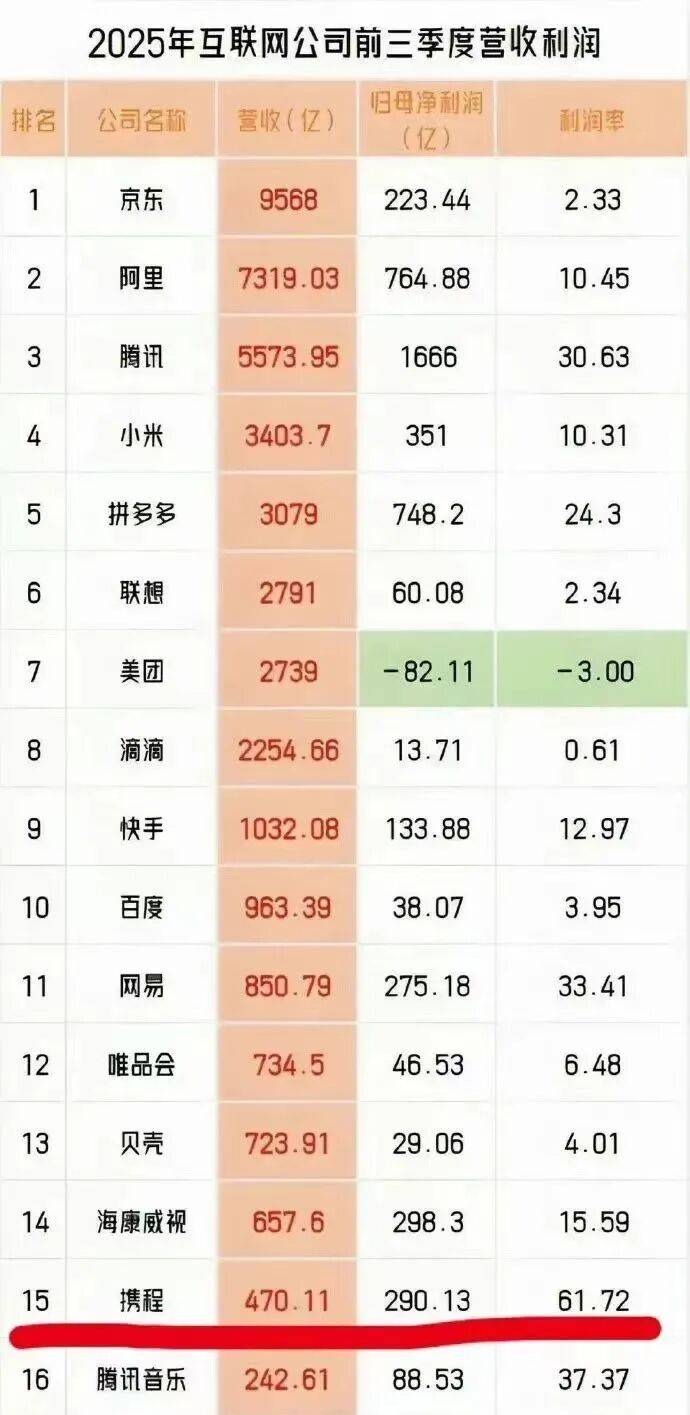
Group 1: Internet Company Revenue and Profit - JD.com leads the revenue chart with 956.8 billion, followed by Alibaba at 731.9 billion and Tencent at 557.4 billion [1] - Alibaba's net profit stands at 76.5 billion, significantly higher than JD.com's 22.3 billion, while Tencent shows a strong profit of 166.6 billion [1] - The profit margin for Tencent is notably high at 30.63%, compared to Alibaba's 10.45% and JD.com's 2.33% [1] Group 2: Market Trends and Insights - The data indicates a competitive landscape among major internet companies, with varying revenue and profit margins suggesting different business strategies and operational efficiencies [1] - The significant profit margins of Tencent may indicate a focus on high-margin services, while JD.com and Alibaba are still scaling their operations [1] Group 3: Financial Performance Overview - The overall financial performance of the top internet companies reflects a diverse range of growth strategies, with some companies prioritizing revenue growth while others focus on profitability [1] - The financial results for the third quarter of 2025 highlight the ongoing evolution of the internet sector in China, with implications for future investment opportunities [1]
中国所有互联网公司市值加起来,竟然不如一个 Google?劝劝巨头们 别再卷了 通过免费打压行业对手追求垄断
Xin Lang Cai Jing· 2026-01-18 13:23
Core Viewpoint - The market capitalization of Google (Alphabet) is approximately $4 trillion, while the combined market capitalization of China's top internet companies is only about $1.8 trillion, indicating a significant disparity in valuation and market perception [25][28][30]. Market Capitalization Comparison - As of the end of 2025 or early 2026, the estimated market capitalizations of major companies are as follows: - Google (Alphabet): ~$40,000 million - Tencent: ~$5,917 million - Alibaba: ~$3,333 million - Xiaomi: ~$1,987 million - Pinduoduo: ~$1,486 million - Meituan: ~$975 million - NetEase: ~$852 million - JD: ~$471 million - Trip.com: ~$383 million - Kuaishou: ~$345 million - Tencent Music: ~$302 million - The total market capitalization of the top 10 Chinese internet companies is estimated to be around $17,000–20,000 million, which is more than 2.2 times less than that of Google [28][3][25]. Competitive Landscape - The primary issue in the Chinese internet sector is not a lack of effort but rather a misdirection in competitive strategies, focusing excessively on user acquisition, subsidies, and speed, leading to a dangerous cycle of competition [30][5]. - This competitive model, which relies on free services to gain scale and eliminate competitors, is damaging long-term sustainability in the industry [31][32]. Impact on Entrepreneurship - The current environment is systematically clearing out entrepreneurs, reducing their roles to mere tools for larger platforms, and stifling genuine innovation [34][37]. - The lack of reasonable pricing, stable profits, and long-term investment in research and development is leading to fewer companies being profitable and surviving [35][36]. Employment Challenges - The concentration of the industry into a few dominant platforms is contributing to job losses, with monopolistic structures eliminating positions rather than technological advancements like AI [39][10]. - As industry profits shrink, salaries are also compressed, leading to fewer job opportunities for young people [11][39]. Comparison with Google - Google’s strength lies not in the number of applications but in its focus on foundational capabilities, allowing ecosystem partners to thrive and generating productivity-based revenue rather than merely capturing attention [40][41]. - The competitive landscape in China, characterized by internal strife, hinders the emergence of globally competitive companies [41][42]. Future Outlook - If the current competitive practices continue, the industry may end up with a few platforms and many dependent entities, leading to a degraded ecosystem rather than a mature industry [42][45]. - A healthy internet ecosystem should support entrepreneurship and job creation, rather than relying solely on free services as a competitive tool [44][51].