
Tesla(TSLA)

Search documents
未知机构:伟创电气更新推荐昨天市场有关于机器人一些较恐慌的谣言我们就相-20260128
未知机构· 2026-01-28 02:20
Company and Industry Summary Company: 伟创电气 (Weichuang Electric) Key Points 1. **Technical Review with Tesla** The recent technical review at Tesla's factory was primarily focused on product manufacturing details, process specifics, and issues encountered during trial production. This was the final communication before mass production. The general manager of Zhejiang Rongtai was present during this review, and the rumors circulating in the market were deemed exaggerated. The company showcased its capabilities in joint frameless motors, encoders, and drivers to Tesla, which will evaluate these capabilities internally. Following the review, Tesla will confirm the final specifications and processes for the product, with a deadline set for mid-February 2026 to ensure mass production starts in April 2026 [1][1][1]. 2. **Mass Production Capacity Planning** The company maintains its original plan for mass production, targeting a weekly output of 1,000 units by June 2026 and 10,000 units by June 2027. Tesla has requested that the products for the April mass production be supplied from Thailand. The company plans to first establish the production line domestically before relocating it to Thailand to ensure initial production begins in early April [1][1][1]. 3. **Cooperation Model** The company is collaborating with Rongtai through a joint venture named Rongchuang, which is responsible for interfacing with Tesla. The joint venture in Thailand has already established a code for operations [2][2][2]. 4. **Investment Recommendation** The robotics sector has experienced significant volatility due to funding and sentiment fluctuations. However, the core industry advancements are continuing to exceed expectations, with formal mass production set to commence in April. The year 2026 is projected to be a pivotal year for Tesla's supply chain, with potential production volumes expected to increase from 1 million units to 10 million units in the future [2][2][2].


未知机构:天风电新伟创电气更新推荐0127-20260128
未知机构· 2026-01-28 02:20
Summary of Conference Call Records Company and Industry Involved - The records pertain to **Weichuang Electric** and its involvement in the **robotics industry**, particularly in collaboration with **Tesla** and **Zhejiang Rongtai** [1][2]. Core Points and Arguments 1. **Technical Review Meeting**: A technical review meeting was held, focusing on product manufacturing details and issues encountered during trial production. This was the final communication before mass production [1]. 2. **Collaboration with Tesla**: Weichuang Electric showcased its capabilities in joint frameless motors, encoders, and drivers to Tesla, which will evaluate the company's capabilities. Final specifications and processes are expected to be confirmed by mid-February 2026 to ensure mass production starts in April [1]. 3. **Mass Production Capacity Planning**: The company maintains its original plan for mass production, targeting a weekly output of 1,000 units by June 2026 and 10,000 units by June 2027 [1][2]. 4. **Supply Chain Strategy**: Tesla aims for products to be supplied from Thailand, with the company planning to first establish production lines domestically before relocating them to Thailand to ensure initial production in April [2]. 5. **Joint Venture with Rongtai**: The company is collaborating with Rongtai through a joint venture, which is expected to enhance supply chain stability and support the production of various components [2]. Additional Important Information 1. **Market Sentiment and Investment Outlook**: The robotics sector has experienced significant volatility due to market sentiment, but the core industry advancements are expected to exceed expectations. April marks the official start of mass production, with 2026 anticipated as a pivotal year for Tesla's production chain [2]. 2. **Projected Financial Growth**: The company anticipates a combined revenue of 500 million from its main business and the robotics chain, representing a potential increase of approximately 140% from current levels. The joint venture is expected to yield significant synergies [2]. 3. **Profit Expectations**: The company projects future profits from the T chain to reach 1 billion, with a corresponding market value of 30 billion based on a 30x PE ratio. Additionally, the collaboration is expected to enhance market share and contribute to an incremental market value of 165 billion [2].
Tesla, Inc. (NASDAQ:TSLA) Analysts Show Optimism Despite Challenges
Financial Modeling Prep· 2026-01-28 02:00
Core Viewpoint - Tesla, Inc. is a leading electric vehicle manufacturer with a focus on sustainable energy and innovative technology, facing competition from traditional automakers and emerging electric vehicle companies [1] Group 1: Stock Performance and Analyst Sentiment - Analysts have shown increasing optimism about Tesla's stock, with the average price target rising to $461.75, down from $474.67 in the previous quarter but up from $412.40 last year [2] - Wedbush has reiterated an 'Outperform' rating for Tesla, setting a 12-month price target of $600, driven by improving delivery trends and the company's AI transformation [3] - Despite challenges, Wells Fargo analyst Colin Langan has set a high price target of $960 for Tesla, indicating strong future growth potential [4][6] Group 2: Financial Expectations - Analysts anticipate Tesla's fourth quarter 2025 earnings report to show earnings per share (EPS) of 43 cents and sales of $24.6 billion, a decrease from the previous year's EPS of 73 cents and sales of $25.7 billion [5] - The positive outlook from analysts suggests confidence in Tesla's future performance despite projected declines in EPS and sales [6] Group 3: Strategic Initiatives - Tesla is strategically positioning itself to revolutionize the Transport-As-A-Service (TAAS) industry by assembling components for an "on-demand" Robotaxi service, including Supercharging, car rental, insurance, and Full Self-Driving (FSD) technology [4]

S&P 500 marks closing record as corporate earnings roll in; Medicare rates hit insurers
The Economic Times· 2026-01-28 01:51
Market Overview - Technology stocks extended gains, with major contributions from Microsoft, Amazon, Nvidia, Apple, and Broadcom, leading to the Nasdaq reaching its highest level since late October and the S&P 500 nearing the 7,000 milestone, marking its fourth record closing high in 2026 [1][15] - The Dow Jones Industrial Average fell by 408.99 points, or 0.83%, closing at 49,003.41, while the S&P 500 gained 28.37 points, or 0.41%, to 6,978.60, and the Nasdaq Composite rose by 215.74 points, or 0.91%, to 23,817.10 [6][15] Earnings Reports - 102 S&P 500 companies are set to report earnings this week, with 79.7% of the 64 that had reported by Friday exceeding analyst expectations [8][15] - General Motors saw an 8.7% increase in shares after reporting higher fourth-quarter core profit [15] - Boeing reported a fourth-quarter profit due to a unit sale but faced larger-than-expected losses in its two biggest divisions, leading to a 1.6% decline in shares [9][15] - American Airlines shares closed down 7% due to expected impacts from a winter storm on first-quarter results, despite a positive 2026 profit forecast [10][15] - JetBlue shares fell 6.9% after reporting a wider-than-expected quarterly loss attributed to bad weather and a government shutdown [10][15] Sector Performance - The technology sector led gains among the S&P 500's 11 major industry sectors, rising by 1.4%, with Corning being the biggest gainer, rallying 15.6% after signing a deal with Meta worth up to $6 billion for fiber-optic cables in AI data centers [7][15] Consumer Confidence and Economic Indicators - U.S. consumer confidence unexpectedly declined in January, reaching its lowest level since 2014, but this did not significantly impact the stock market [4][15] - A recent decline in the U.S. dollar, dropping over 1% on Tuesday, is viewed positively for U.S. equities as it benefits exports, which is expected to enhance S&P earnings going forward [5][6][15] Federal Reserve Watch - Investors are awaiting a policy announcement from the U.S. Federal Reserve, with expectations of unchanged interest rates, while focusing on guidance regarding future rates and economic commentary [11][15] Market Breadth - Advancing issues outnumbered decliners by a 1.61-to-1 ratio on the NYSE, with 693 new highs and 95 new lows, while on the Nasdaq, 2,725 stocks rose against 2,056 that fell, resulting in a 1.33-to-1 ratio [12][15]





港股开盘:恒指涨0.73%,恒生科指涨0.56%,科网股、黄金股普涨,鸣鸣很忙首日上市涨逾88%
Jin Rong Jie· 2026-01-28 01:39
港股恒生指数开盘涨0.73%,报27325.89点,恒生科技指数涨0.56%,报5786.66点,国企指数涨0.63%, 报9302.93点,红筹指数涨0.26%,报4299.98点。 大型科技股中,阿里巴巴-W涨0.35%,腾讯控股涨0.99%,京东集团-SW涨1.5%,小米集团-W平收,网 易-S涨0.97%,美团-W涨0.47%,快手-W涨0.63%,哔哩哔哩-W涨0.52%。 电力设备股高开,哈尔滨电气涨超2%;创新药概念活跃,先声药业涨超5%;黄金股普涨,赤峰黄金涨 超4%。零食巨头鸣鸣很忙首日上市涨逾88%;紫金矿业涨逾2%,新东方跌逾3%。 【隔夜外盘】 美股三大指数涨跌不一,道指跌0.83%,纳指涨0.91%,标普500指数涨0.41%并创收盘新高。热门中概 股涨跌互现,纳斯达克中国金龙指数收涨0.48%。 "七巨头"中六家上涨,英伟达、苹果涨超1%,微软、亚马逊涨逾2%,仅特斯拉一家下跌。费城半导体 指数涨2.4%,也收于历史新高。30只成分股中27家收涨。 金价再度刷新历史新高。现货黄金收涨3.3%,报5180.2美元/盎司;现货白银收涨7.92%,报112.16美元/ 盎司。 【隔夜资讯 ...


This "Magnificent Seven" Stock Has a Secret Weapon for 2026: Meet Optimus
The Motley Fool· 2026-01-28 01:35
Tesla continues to make technology revolutionary.The stuff of science fiction is quickly becoming reality. Iconic electric vehicle maker Tesla (TSLA 0.99%) is now making AI-controlled humanoid robots that will be available for purchase by the public before the end of 2027. That's what Tesla CEO Elon Musk said at this year's World Economic Forum, anyway. Just bear in mind the larger-than-life founder has significantly understated developmental timelines before.On the other hand, he's also got a penchant for ...
汽车早餐 | 春节假期免收7座及以下小型客车通行费;比亚迪与埃克森美孚签署战略合作备忘录;欧盟公布印欧贸易协议
Zhong Guo Qi Che Bao Wang· 2026-01-28 01:32
Domestic News - The Ministry of Transport has implemented a policy to waive toll fees for small passenger vehicles (7 seats or fewer) during the Spring Festival holiday [2] - The Ministry's notice emphasizes the need to enhance charging infrastructure for electric vehicles, proposing tailored strategies for busy service areas to reduce long wait times for charging [2] Industry Insights - In 2025, profits for large-scale high-tech manufacturing industries are expected to grow by 13.3% year-on-year, surpassing the overall industrial profit growth of 12.7% [3] - The smart electronics sector is driving significant profit increases, with profits in the smart consumer device manufacturing sector rising by 48%, and specific industries like smart drones and smart vehicle equipment seeing profits increase by 102% and 88.8%, respectively [3] - The automotive industry is projected to generate profits of 461 billion yuan in 2025, reflecting a modest year-on-year increase of 0.6% [4] - The automotive sector's revenue is expected to reach 1,117.96 billion yuan, with production figures at 34.78 million vehicles, marking a 10% increase year-on-year [4] International News - The EU has announced a trade agreement with India, granting EU service providers preferential access in key sectors such as finance and maritime services, while gradually reducing automotive tariffs to 10% with an annual quota of 250,000 vehicles [5] - Stellantis Group reported that despite a sluggish market, it expects to sell over 2.42 million new vehicles in Europe in 2025, achieving a market share of 16% [6] - The company leads the hybrid vehicle market with a 15% share and holds a 28.6% share in the commercial vehicle sector [6] - The European new car registration is projected to grow by 2.4% in 2025, reaching 13.3 million units, with electric vehicle registrations surging by 30% [7] - In Vietnam, the automotive market is expected to grow by 22% in 2025, although major players like Hyundai and Kia are experiencing declining sales for the third consecutive year [8] - South Africa's electric vehicle sales are projected to decline by 17% in 2025, accounting for only 0.17% of total new car sales, despite overall new car sales reaching a decade-high of 596,818 units [9] Corporate News - BYD has signed a long-term strategic cooperation memorandum with ExxonMobil, focusing on innovation in new energy hybrid technology and collaborative product development [10] - Li Auto plans to close a small number of underperforming stores as part of normal operational adjustments, clarifying that rumors of closing 100 stores are unfounded [11] - Didi plans to enhance the experience of its ride-hailing services in 2026, focusing on improving driver service levels and optimizing vehicle offerings [12] - DeepWay has completed a Pre-IPO financing round of 1.177 billion yuan, marking the largest single financing in the autonomous driving new energy heavy truck sector [13] - XPeng Motors anticipates "very strong" growth this year, with overseas sales growth potentially outpacing domestic sales [14]



OpenAI投资人呼吁特斯拉员工辞职跳槽,马斯克痛骂其“混蛋”
Sou Hu Cai Jing· 2026-01-28 01:21
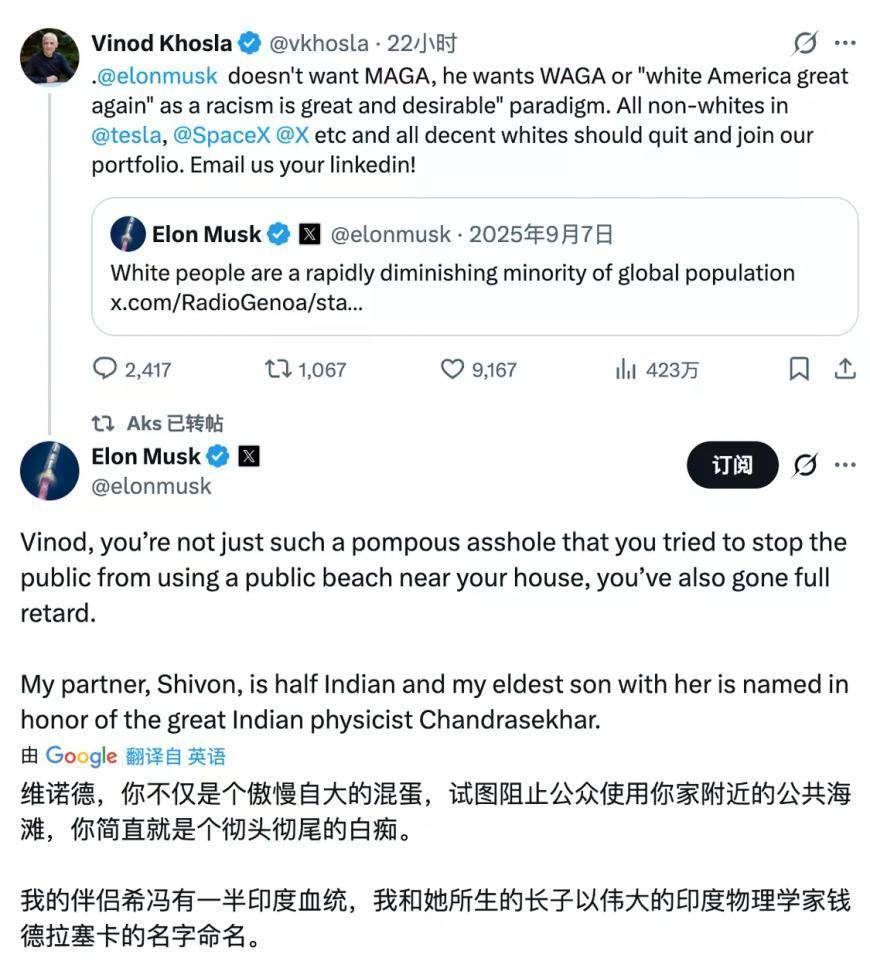
凤凰网科技讯 北京时间1月28日,据《商业内幕》报道,埃隆·马斯克(Elon Musk)与美国知名风险投资家维诺德·科斯拉 (Vinod Khosla)"开战"。此前,科斯拉指责马斯克宣扬种族主义,并公开呼吁马斯克的员工辞职。 周一晚间,科斯拉在X上发文称,马斯克将种族主义标榜为"伟大且可取的范式"。此言是对马斯克去年9月一篇帖文的回 应。当时,马斯克声称"白人是全球人口中快速萎缩的少数族群"。马斯克过去曾多次转发关于白人人口结构变化的帖子。 科斯拉在帖子中呼吁马斯克旗下公司的员工辞职,加入科斯拉旗下科斯拉风投的投资组合公司,其中包括OpenAI和Replit等 AI创业公司。科斯拉是上世纪70年代移民美国的印度裔企业家。 "所有在@特斯拉、@SpaceX、@X等公司任职的非白人员工,以及所有正派的白人员工,都应该辞职并加入我们的投资组 合公司,"科斯拉写道,"将你们的领英资料发至我们邮箱!" 马斯克随后以侮辱性言辞回应科斯拉,称这位风投家为"自大的混蛋",并使用了针对智力障碍者的歧视性用语。 "维诺德,你不仅是个自大的混蛋,曾试图阻止公众使用你家附近的公共海滩,还是个弱智。我的伴侣希冯是半印度血统, 我和她 ...
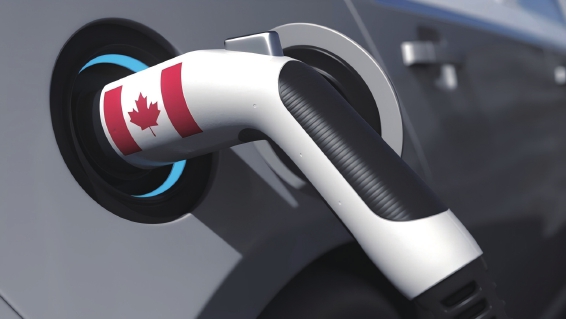
配额内取消100%进口附加税 中加向电动汽车双赢迈进
Zhong Guo Qi Che Bao Wang· 2026-01-28 01:15
"过去几年,加中两国的双边关系确实面临诸多挑战。"卡尼坦言,面对全球性变革和不确定性,沉溺过 去不是应对之策,"以此访为契机,加中双方推进构建新型战略伙伴关系。" 特斯拉、吉利、比亚迪等或成为首批受益者 1月14日至17日,加拿大总理卡尼应邀对中国进行正式访问。中加双方就深化经贸合作达成广泛共 识,签署《中国—加拿大经贸合作路线图》,形成了关于处理双边经贸问题的初步联合安排,这其中就 包括一项针对中国产电动汽车的关税配额协议。 根据协议,加拿大将给予中国产电动汽车每年4.9万辆的配额,配额内享受6.1%的最惠国关税待遇,不 再加征100%附加税,配额数量将按一定比例逐年增长。卡尼表示,这一进口配额可能在5年内提高到7 万辆。作为交换,卡尼预计,从2026年3月1日起,中国将把加拿大油菜籽的综合关税降至约15%。 中加电动汽车贸易破冰 "为充分释放伙伴关系潜力,推动本土制造业发展,加拿大将允许每年最多4.9万辆中国产电动汽车,以 6.1%的最惠国关税税率进入加拿大市场。这一配额量与近年来电动汽车贸易摩擦发生前的进口规模相 当,占加拿大新车市场销量的比例不足3%。"卡尼称。 回首2024年8月,在美国拜登政府的施 ...
OpenAI投资人呼吁特斯拉员工辞职跳槽 马斯克痛骂其“混蛋”
Feng Huang Wang· 2026-01-28 01:12
凤凰网科技讯 北京时间1月28日,据《商业内幕》报道,埃隆·马斯克(Elon Musk)与美国知名风险投资 家维诺德·科斯拉(Vinod Khosla)"开战"。此前,科斯拉指责马斯克宣扬种族主义,并公开呼吁马斯克的 员工辞职。 "所有在@特斯拉、@SpaceX、@X等公司任职的非白人员工,以及所有正派的白人员工,都应该辞职 并加入我们的投资组合公司,"科斯拉写道,"将你们的领英资料发至我们邮箱!" 马斯克随后以侮辱性言辞回应科斯拉,称这位风投家为"自大的混蛋",并使用了针对智力障碍者的歧视 性用语。 周一晚间,科斯拉在X上发文称,马斯克将种族主义标榜为"伟大且可取的范式"。此言是对马斯克去年 9月一篇帖文的回应。当时,马斯克声称"白人是全球人口中快速萎缩的少数族群"。马斯克过去曾多次 转发关于白人人口结构变化的帖子。 "维诺德,你不仅是个自大的混蛋,曾试图阻止公众使用你家附近的公共海滩,还是个弱智。我的伴侣 希冯是半印度血统,我和她的长子命名时还致敬了伟大的印度物理学家钱德拉塞卡。"马斯克称。 科斯拉在帖子中呼吁马斯克旗下公司的员工辞职,加入科斯拉旗下科斯拉风投的投资组合公司,其中包 括OpenAI和Rep ...
