Tesla(TSLA)

Search documents
美媒:特斯拉正考虑在美国多州建厂,以扩大光伏产能
Xin Lang Cai Jing· 2026-02-07 11:30
Core Viewpoint - Tesla is reportedly evaluating multiple locations in the U.S. to expand its solar energy production capacity while also increasing hiring in this sector [1] Group 1: Company Developments - Tesla is assessing sites across the U.S. for expanding its photovoltaic production capacity [1] - The company is ramping up recruitment efforts in the solar energy field [1] - CEO Elon Musk mentioned that Tesla is working in tandem with SpaceX to enhance solar energy production [1] Group 2: Industry Insights - There is a potential for solar panels to be sent into space, as proposed by Musk, indicating innovative directions for solar technology [1]

马斯克,突传重磅!光伏大棋,落子!
证券时报· 2026-02-07 10:56
在光伏领域,马斯克传出大动作! 周五(当地时间2月6日),美股光伏概念股集体大涨,Solaredge Technologies涨近8%,Shoals Technologies、Array Technologies、Nextracker、应用材料涨 超6%,Enphase Energy涨超5%,阿特斯太阳能涨4.79%。 据最新消息,特斯拉正加速推进太阳能制造,以落实马斯克提出的"年产100吉瓦太阳能电池"目标。上个月,马斯克在特斯拉财报电话会上表示:"太阳能 的机会被低估了。" 据外媒报道,特斯拉正在评估扩产光伏产能的多个选项,包括扩大纽约州布法罗工厂的产能至10吉瓦,以及在纽约州、亚利桑那或爱达荷州建设额外的工 厂。 特斯拉拟扩大光伏产能 特斯拉并未坐等马斯克提出的年产100吉瓦太阳能宏愿是否可行,而是已经付诸行动。据彭博社报道,知情人士透露,该公司正在评估美国多个地点,计 划启动太阳能电池制造项目,将几周前看似遥不可及的目标转化为现实的产业推进。 据报道,知情人士称,该计划的一部分是在其位于纽约州布法罗的工厂扩大生产。他们表示,该工厂的产能有望达到10吉瓦,相当于十座核电站的发电 量。其中一位人士还指出, ...

微醺的马斯克聊嗨了:盛赞中国、预言天上的 AI
Sou Hu Cai Jing· 2026-02-07 10:29
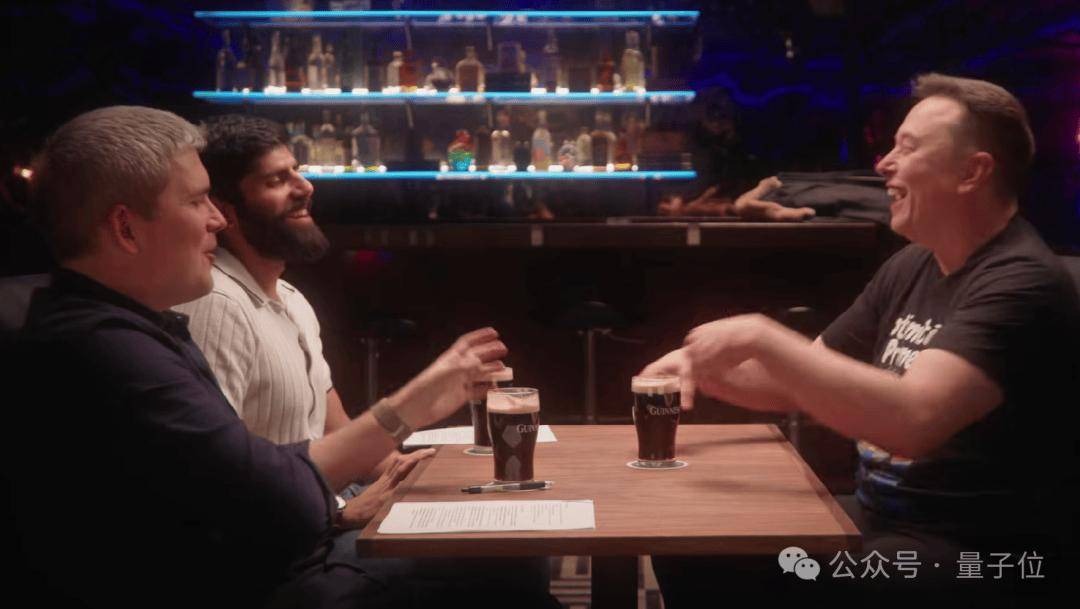
Core Insights - Elon Musk discussed the future of AI infrastructure in space, emphasizing that within 30 to 36 months, space will become the preferred location for AI data centers due to energy efficiency and scalability [4][10][27] - Musk highlighted the challenges of energy supply on Earth, stating that the growth of chip production is outpacing energy production, which could hinder AI development [4][45] - He predicted that in five years, the annual AI computing power launched and operated in space will exceed the cumulative total on Earth, potentially reaching 1 terawatt of power [4][27][74] Group 1: Space as AI Infrastructure - Musk believes that space will be the most economically attractive place for deploying AI due to the efficiency of solar panels in space, which can generate five times the power compared to Earth [8][21] - The construction of data centers in space is seen as a solution to the energy supply issues faced on Earth, where building new power plants is slow and complicated [11][24] - Musk stated that the average power consumption in the U.S. is currently 0.5 terawatts, and achieving 1 terawatt for data centers would require significant infrastructure [11][27] Group 2: Challenges and Innovations - The manufacturing of solar panels for space is expected to be cheaper and easier due to the lack of weather-related constraints, which eliminates the need for robust structures [21][23] - Musk pointed out that the bottleneck in scaling AI infrastructure will shift from energy to chip production once space operations begin [45][46] - He mentioned that the current global chip production capacity is insufficient to meet future demands, necessitating the establishment of large-scale chip manufacturing facilities [38][39] Group 3: Competitive Landscape - Musk warned that without breakthrough innovations in the U.S., China could dominate the AI and manufacturing sectors due to its advanced capabilities and larger workforce [74][75] - He emphasized the importance of addressing energy constraints to maintain competitiveness in the global market [66][67] - The discussion highlighted the need for the U.S. to innovate rapidly to avoid falling behind in AI and robotics, particularly in the context of manufacturing and energy production [75][70]

特斯拉海口体验店打造“AI 空间”未来出行新场景
Xin Lang Cai Jing· 2026-02-07 10:25
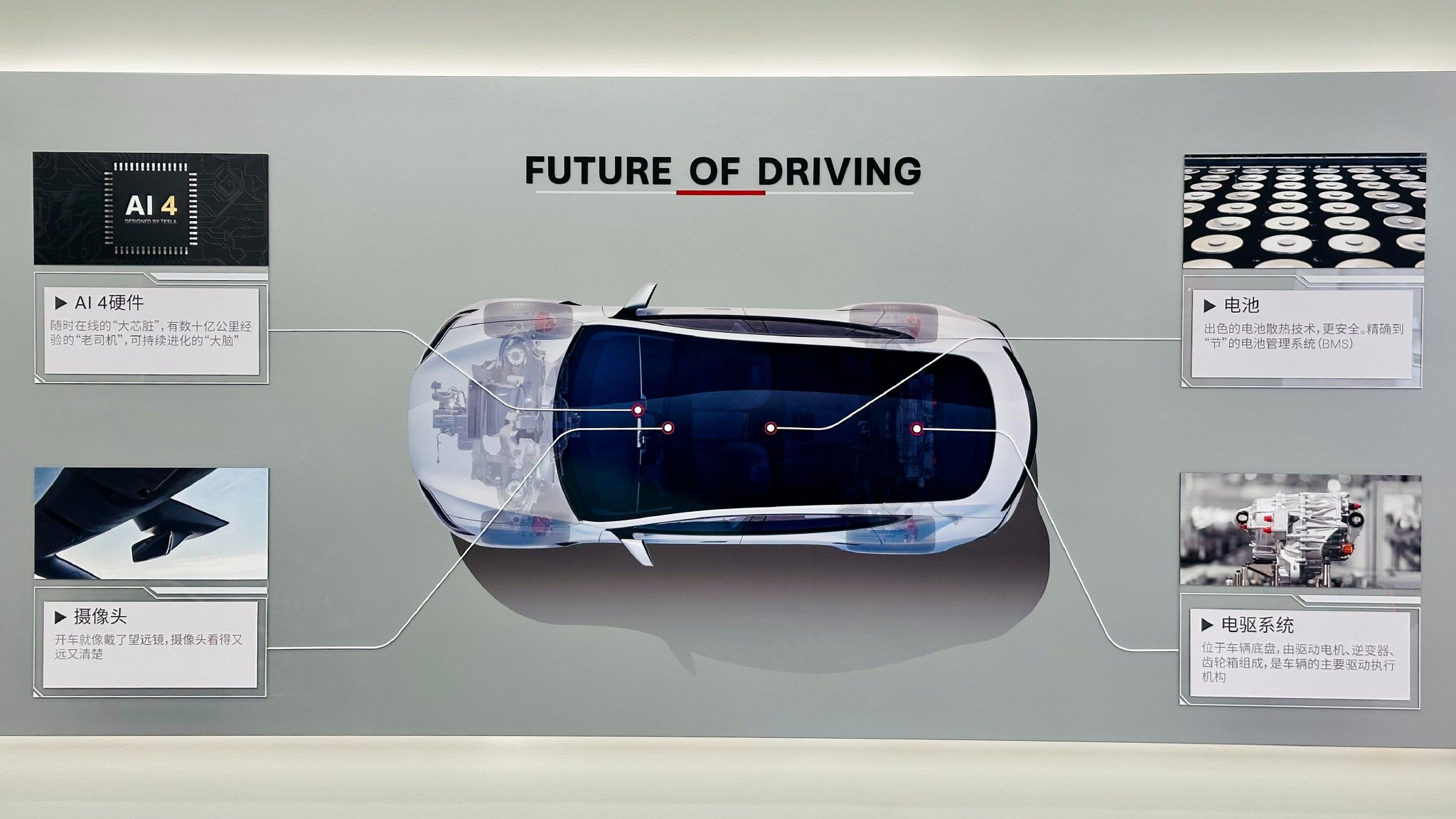
该门店位于城市核心商圈,是特斯拉在海南布局的第6个服务点。该体验店不仅承担车辆销售职能,更致力于成为公众了解特斯拉前沿科技的重要窗口。店 内重点展示了消费者高度关注的几款车型,通过沉浸式体验呈现未来出行的多元可能。 门店设计深度融合人工智能与人形机器人元素,以科技感十足的装饰营造出极具视觉冲击力的未来空间,生动诠释了"特斯拉——不止于车"的品牌理念。这 不仅是对汽车产品的展示,更是对特斯拉在人工智能、机器人技术及可持续能源领域探索的集中体现。 转自:新华财经 2月5日,特斯拉在海口友谊阳光城正式开设以"AI空间"为核心主题的全新体验店,将极简主义设计与人工智能、人形机器人元素深度融合,为市民提供集产 品体验、科技展示与休闲互动于一体的未来出行新场景。 未来,特斯拉将持续深化在海南的直营服务网络,以更高效、更快速的响应机制,为用户带来一体化的科技出行服务。(郝金雷) 编辑:马萌伟 特斯拉自2020年9月正式落户海口市龙华区以来,已稳步发展五年,零售业绩屡创新高。特别是海南自由贸易港封关运作后,门店进店量持续增长,销售环 比增长超20%以上。 目前,特斯拉在海南省已布局6家体验店与服务中心,其中海口5家、三亚1家 ...
特斯拉据悉正在美布局多州建厂 以扩张太阳能电池制造版图
Xin Lang Cai Jing· 2026-02-07 10:02
据知情人士透露,特斯拉正评估美国多个选址,计划扩大太阳能电池制造业务,目标在未来三年内实现 每年100吉瓦的太阳能制造能力。知情人士补充称,特斯拉计划扩大纽约州布法罗工厂产能至10吉瓦, 并可能在纽约州建设第二座工厂,亚利桑那州和爱达荷州也在备选名单中。 ...

Why investors may have to contend with market volatility for a while
Youtube· 2026-02-07 10:00
Market Overview - The Dow closed above 50,000 for the first time, indicating a significant milestone in market performance [1][17] - The S&P 500 is nearing record highs, but there are ongoing challenges in the tech sector, particularly among hyperscalers [1][6] Sector Performance - There is a distinct repricing of expectations in the market, with hyperscalers experiencing declines while their suppliers, such as semiconductor and power companies, are seeing gains [2][3] - Consumer staples have shown strong performance year-to-date, with energy leading the sectors, followed by staples up 13.2% [4] - A rotation is occurring from AI technology stocks to more defensive and cyclical sectors, indicating a shift in investor sentiment [6][8] Investment Sentiment - Investors are derisking their portfolios by moving away from high-beta names and into sectors perceived as more stable and tied to economic growth [7][8] - The market is expected to remain volatile due to geopolitical uncertainties and job market fluctuations, complicating the Federal Reserve's focus on inflation [8][9] Behavioral Trends - The investment community has seen a shift towards trend-following strategies, with contrarian investors becoming less prominent [12][13] - The "buy the dip" mentality has become ingrained in investor psychology, leading to rapid rebounds following market downturns [20][21] Options Market Dynamics - Zero-day-to-expiration (ZDT) options are gaining popularity, with a significant portion of trading volume now occurring in these contracts [26][28] - The SIBO is exploring new products in prediction markets, reflecting a growing interest in innovative financial instruments [30][31]



SpaceX-xAI deal sparks talk: could a Tesla-SpaceX merger be next?
Invezz· 2026-02-07 10:00
Core Viewpoint - Elon Musk's decision for SpaceX to acquire the artificial intelligence startup xAI has significant implications for global financial markets, reigniting discussions about the potential consolidation of Musk's various business ventures into a single technology conglomerate [1] Group 1 - The acquisition of xAI by SpaceX indicates a strategic move towards integrating artificial intelligence capabilities within Musk's broader business ecosystem [1] - This development has led to renewed speculation regarding the future structure of Musk's corporate empire, which includes companies like Tesla and Neuralink [1] - The financial markets are reacting to this news, reflecting investor interest in the potential synergies that could arise from such a consolidation [1]
Why I'm Excited (and Cautious) for Tesla Stock in 2026
The Motley Fool· 2026-02-07 09:25
Core Viewpoint - Investors are focusing on Tesla's autonomous future, particularly its robotaxi expansion, despite current weak automotive revenue [1][3] Group 1: Robotaxi Expansion - Tesla is preparing to scale its robotaxi fleet in multiple cities this year, which could lead to a rise in stock prices [1][4] - The Cybercab, designed without a steering wheel or pedals, is set to enter production this year, indicating rapid scaling of the robotaxi service [4] - Tesla plans to launch its robotaxi service in seven new cities in the first half of 2026, including Las Vegas and Miami [7] Group 2: Data and Demand - Tesla car owners are generating the equivalent of 500 years' worth of driving data daily, enhancing the full-self-driving (FSD) system [3] - The number of Tesla owners using FSD increased by 38% year over year in Q4, surpassing 1.1 million users [3] Group 3: Regulatory Hurdles - The U.S. National Highway Traffic Safety Administration (NHTSA) currently limits annual sales of vehicles without steering wheels to 2,500 units, which could hinder Tesla's Cybercab production plans [5] - The NHTSA is considering modernizing these rules due to advancements in driverless technology, but until the cap is lifted, it may delay expansion [5] Group 4: Financial Outlook - Analysts project Tesla's earnings to grow at a 35% annualized rate over the next few years as higher margins from robotaxis begin to materialize [8]
Tesla's Latest Update Changes Everything
The Motley Fool· 2026-02-07 09:05
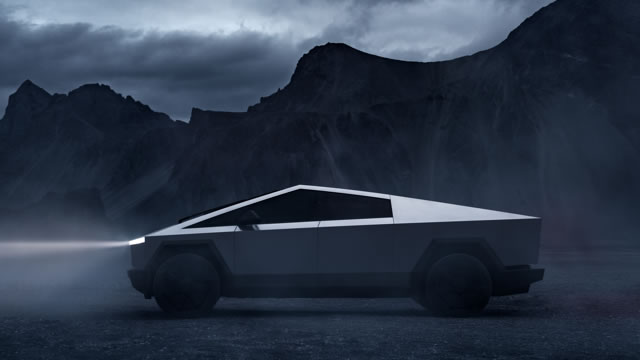
Core Viewpoint - The company's $20 billion investment in 2026 signifies a shift in the investment narrative, moving away from traditional car company valuations to a broader vision of transportation as a service [1][2]. Investment Strategy - Tesla is committing $20 billion to build six new factories, which supports CEO Elon Musk's vision for the future of electric vehicles (EVs) and transportation [3][4]. - The investment includes a lithium refinery and a lithium iron phosphate (LFP) battery factory, aimed at producing cost-effective batteries for future models like the Cybercab [4]. Market Position and Valuation - Tesla's current market cap stands at $1.4 trillion, with a trading valuation exceeding 200 times Wall Street's earnings estimates for 2026 [4]. - The company is transitioning from being viewed solely as a car manufacturer to being perceived as a transportation-as-a-service provider, with a focus on autonomous driving [4]. Risks and Challenges - The company faces significant cash burn due to the $20 billion investment, with estimates suggesting a $6.2 billion cash outflow for 2026 [7]. - Regulatory approvals for unsupervised robotaxis and the Cybercab are still pending, which adds uncertainty to Tesla's future plans [6][10]. Future Outlook - Tesla's CFO stated that the company has $44 billion in cash and investments to support its spending, but there are risks associated with premature investments in projects like Cybercab and Optimus [8]. - The stock may appeal to investors who believe in Musk's vision for the future of transportation, despite the high-risk nature of the investment [11].
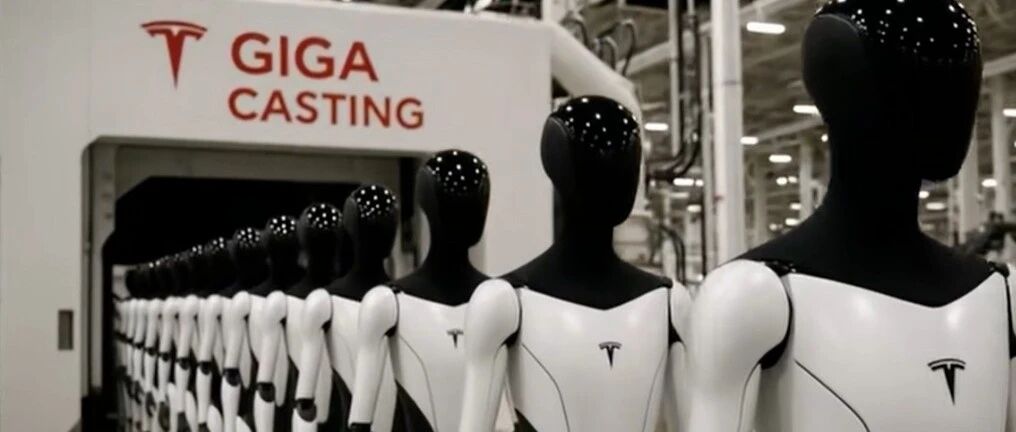
特斯拉再审厂,Optimus供应商最新进展
Robot猎场备忘录· 2026-02-07 08:50
温馨提示 : 点击下方图片,查看运营团队最新原创报告(共260页) 说明: 欢迎约稿、刊例合作、行业交流 , 行业交流记得先加入 "机器人头条"知识星球 ,后添加( 微信号:lietou100w )微 信; 若有侵权、改稿请联系编辑运营(微信:li_sir_2020); 正文: Optimus V3亮相在即,特斯拉再审厂,2月首周(周五),T链们再迎一波上行行情! 板块轮动,伴随特斯拉2月新一轮审厂和诸多T链标的新一轮利好催化下,T链们终于在周五(2月6日)迎来本月 首次真正上行行情,运营微信群又是被信息轰炸的一天 (其实每天都是,各类一手资讯云集,只是今日尤其多) 。 单纯来讲,本波上行行情并没有官方利好催化,马斯克于2月6日的采访虽聊到人形机器人Optimus,内容多是老 生常谈,并没有发酵,因此更多来自于板块间轮动,后续持续性存疑。 当然,伴随本波T链逆势上行,诸多卖方老师显然有不同见解,纷纷发布鼓舞士气小作文,对诸多T链标的进行解 读 (注:已梳理在星球中) 。 值的注意的是,不同于本周二的T链普涨行情,资金呈现"炒新不炒旧"和寻找新增量标的趋势,(周五)本波上行 行情,1月诸多大幅上行标的且本周往日 ...