Walmart(WMT)

Search documents
官宣:通州山姆会员店项目正式签约!选址位于宋庄镇富豪村组团……
Sou Hu Cai Jing· 2025-08-22 11:55
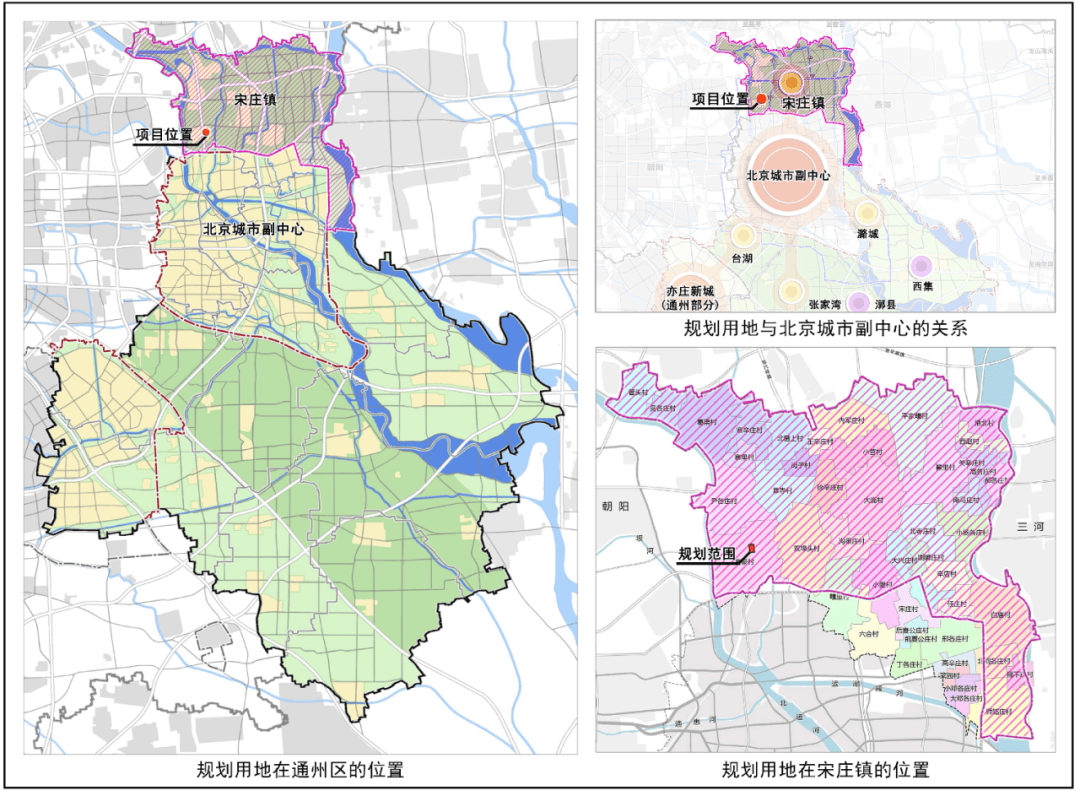
据北投集团消息,近日,由通投公司作为投资合作主体的山姆会员店通州项目完成正式签约。此次签约标志着这一备受瞩目的国际高端零售项目正式落户 通州。 该项目被列为"2025年市重点工程",选址位于宋庄镇富豪村组团,规划总用地规模约4.06万平方米,总建筑规模约5.56万平方米,建设内容为商业设施及 附属配套设施等,预计2027年开业,将有效辐射通州全域及北京东部地区。 山姆会员店此次落户通州,是北京城市副中心优化营商环境、吸引国际高端商业资源的重要成果,将有力填补区域高端零售市场空白,优化商业服务供给 结构,对副中心打造成为国际一流和谐宜居之都示范区、推动区域商业繁荣与民生改善具有重要意义。 下一步,通投公司将持续在通州区委区政府和北投集团党委坚强领导下,以更高的站位、更实的举措,不断引入优质资源,提升运营服务水平,为建设国 际一流的和谐宜居之都示范区贡献通投力量! 小编还了解到,近日相关网站发布了"北京市通州区宋庄镇TZ01-0104-0002等地块项目(勘察)招标公告",公告显示投资额为42881万元。 公告显示 建设地点:通州区宋庄镇富豪组团,东至宋庄富豪村纵四路,南至宋庄富豪村横二街,西、北至规划公园绿地。 ...

X @The Wall Street Journal

The Wall Street Journal· 2025-08-22 10:37
Walmart, Amazon and the owner of T.J. Maxx are scooping up market share from rivals in the tariff economy by offering shoppers good deals and convenience https://t.co/GFDW0rgK9g ...
中国超市百强榜洗牌:盒马领跑前三,胖东来服务佳却居19位
Sou Hu Cai Jing· 2025-08-22 08:27
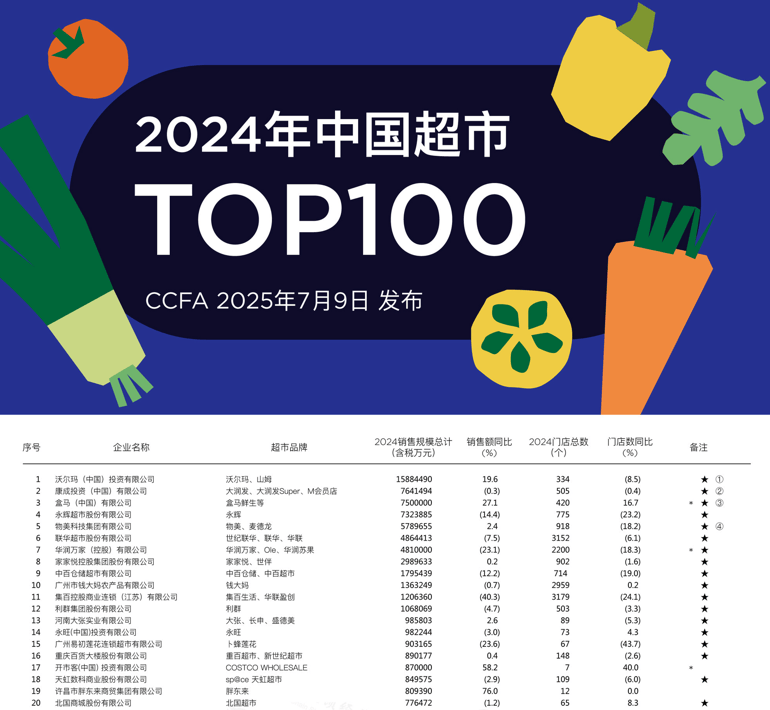
Core Insights - The sales revenue of China's top 100 supermarket companies reached approximately 900 billion RMB, reflecting a slight growth of 0.3%, while the total number of stores decreased significantly by 9.8% to 25,200 stores, indicating transformation challenges in the supermarket industry due to diversified consumer trends and e-commerce impacts [1] - Only 14 companies achieved both sales and store number growth, showcasing a stark polarization in performance within the industry [1] - Notable companies in the lower half of the ranking include Chongqing Department Store, Costco (China), Tianhong Digital Technology, Pang Donglai, and Beiguo Mall, with Pang Donglai achieving sales of approximately 8.094 billion RMB and 12 stores, recognized for its exceptional customer service [1] Group 1 - The top ten companies include Walmart (China), RT-Mart, Hema, Yonghui Superstores, and Wumart, with Walmart leading at a sales scale of 158.84 billion RMB and 334 stores [4][5] - Hema's innovative business model resulted in a sales revenue of approximately 75 billion RMB and 420 stores, with plans to open nearly 100 new stores in over 50 new cities this year [5] - Lianhua Supermarket achieved sales of approximately 48.64 billion RMB with 3,152 stores, focusing on providing a rich selection of goods and creating a convenient shopping experience [5] Group 2 - Jibai Holdings, Lihua Group, Henan Dazhang, Aeon (China), and Guangzhou Yichulai ranked 11th to 15th, with Jibai Holdings reporting a sales scale of approximately 12.06 billion RMB and 3,179 stores [2] - The performance of the top 100 supermarket companies highlights the competitive landscape, where only a few have successfully adapted to market changes and consumer preferences [1][2]


食饮吾见 | 一周消费大事件(8.18-8.22)
Cai Jing Wang· 2025-08-22 07:39
Group 1: China Resources Beer - China Resources Beer reported a revenue of RMB 23.942 billion for the first half of 2025, a year-on-year increase of 0.8% [1] - The company's profit before interest and tax and net profit attributable to shareholders were RMB 7.691 billion and RMB 5.789 billion, respectively, showing year-on-year growth of 20.8% and 23.0% [1] - The beer sales volume reached approximately 6.487 million kiloliters, up 2.2% year-on-year, with high-end beer products seeing over 10% growth [1] Group 2: Miao Ke Lan Duo - Miao Ke Lan Duo's revenue increased by 7.98% to RMB 2.567 billion in the first half of 2025, with net profit rising by 86.27% to RMB 133 million [2] - The cheese business generated RMB 2.136 billion, a 14.85% increase year-on-year, accounting for 83.67% of total revenue [2] - The restaurant industrial cheese series saw a revenue increase of 36.26% to RMB 816 million [2] Group 3: Qiaqia Food - Qiaqia Food's revenue for the first half of 2025 was RMB 2.752 billion, a decrease of 5.05% year-on-year, with net profit down 73.68% to RMB 88.6416 million [3] - The decline was attributed to external channel changes and the timing of the Spring Festival [3] - The company expanded its overseas market presence and e-commerce channels, achieving breakthroughs in various international markets [3] Group 4: Tianwei Food - Tianwei Food is planning to issue H-shares and apply for listing on the Hong Kong Stock Exchange to enhance its international strategy and capital structure [4] Group 5: Muyuan Foods - Muyuan Foods reported a revenue of RMB 76.463 billion for the first half of 2025, a 34.46% increase year-on-year, with net profit soaring by 1169.77% to RMB 10.53 billion [5] - The company achieved a complete cost of pig farming below RMB 12.1 per kg by June 2025 [6] Group 6: Estée Lauder - Estée Lauder's net sales for the fiscal year 2025 were USD 14.326 billion, a decrease of 8% year-on-year [7] - The company reported an operating loss of USD 785 million due to increased impairment and restructuring costs [7] - The brand La Mer achieved double-digit growth in organic sales in mainland China for two consecutive quarters [7] Group 7: Walmart China - Walmart's total revenue for the second quarter of fiscal year 2026 was USD 177.4 billion, a 4.8% increase year-on-year [8] - Walmart China reported net sales of USD 5.8 billion, a 30.1% increase year-on-year, with comparable sales up 21.5% [8] - E-commerce sales grew by 39%, accounting for over 50% of total sales [8] Group 8: Yonghui Superstores - Yonghui Superstores reported a revenue of RMB 29.948 billion for the first half of 2025, a decrease of 20.73% year-on-year [9] - The company incurred a net loss of RMB 241 million, attributed to strategic transformations and store closures [9] - Online business revenue reached RMB 5.49 billion, accounting for 18.33% of total revenue, with a reduction in losses compared to the previous year [9]




沃尔玛启动2025年“她乡好货”公益项目
Xin Lang Ke Ji· 2025-08-22 06:23
据了解,除直播选品、带货技巧、视频剪辑等培训外,沃尔玛还依托自身优势,组织采购、电商、供应 链、营运领域的专家,以志愿者身份参与项目,分享全渠道零售经验,帮助学员建立乡村产品标品化、 规模化发展的零售思维,增强她们的创业品牌自主走向市场的能力。沃尔玛还积极与学员对接,将符合 标准和资质的"她乡好货"引进沃尔玛门店及销售平台。(罗宁) 责任编辑:郭栩彤 沃尔玛中国公司事务高级副总裁佘端志表示:"15年来,沃尔玛携手中国妇基会长期支持乡村女性的发 展,帮助她们通过创、就业实现经济自立。从母亲创业循环金,到@她创业计划,再到她乡好货赋能培 训公益项目,我们不断迭代公益模式,通过'资金支持'、'能力培养'、'渠道建设'多措并举,为乡村人才 发展构建了全面的帮扶体系,激活乡村经济内生动力,助力乡村产业的可持续发展。" 中国妇女发展基金会副理事长兼秘书长董葵表示:"女性是推进乡村振兴的重要力量。多年来,中国妇 基会通过@她创业计划,探索乡村女性创、就业的可持续发展模式,推动女性共建共享经济社会发展成 果。沃尔玛作为项目长期合作伙伴,从资金支持到数字化赋能,持之以恒助力女性参与乡村振兴,让超 过1.8万名乡村女性从中受益。 ...
沃尔玛中国二季度净销售额同比增长30.1% 山姆双位数增长
Bei Jing Shang Bao· 2025-08-22 06:12
Core Insights - Walmart China reported a net sales of 5.8 billion USD for Q2 2025, representing a year-on-year growth of 30.1% [1] - The e-commerce segment of Walmart China experienced a net sales growth of 39% year-on-year [1] - The performance of Walmart China was significantly supported by Sam's Club, which saw a double-digit year-on-year growth in transaction volume [1] - In the past 12 months, Sam's Club opened 8 new stores, with 2 new stores launched in Q2 2025 [1]
中美博弈延续下国产替代逻辑不断强化
citic securities· 2025-08-22 04:03
Market Overview - A-shares showed mixed performance with the Shanghai Composite Index rising 0.13% to 3,771 points, marking a 10-year high[13] - U.S. stocks fell for the fifth consecutive day, with the Dow Jones down 0.34% to 44,785 points and the S&P 500 down 0.40% to 6,370 points[7] - European markets exhibited divergence, with the Stoxx 600 index closing nearly flat, while the UK FTSE 100 rose 0.23%[7] Economic Indicators - U.S. manufacturing expanded at the fastest pace since 2022, while initial jobless claims indicated a weak labor market[4] - The Federal Reserve officials expressed hawkish views ahead of Chairman Powell's speech at Jackson Hole, raising concerns about inflation[4] Commodity and Currency Movements - International oil prices fluctuated, with WTI crude oil rising 0.5% to $63.52 per barrel and Brent crude oil up 1.2% to $67.67 per barrel[26] - The U.S. dollar index increased by 0.4%, while gold prices saw a slight decline[26] Company Performance - Futu Holdings reported a 74.9% year-on-year increase in revenue for H1 2025, reaching HKD 10.006 billion, with a Non-GAAP net profit growth of 101.7%[7] - AAC Technologies' net profit for H1 2025 grew by 63% to CNY 876 million, exceeding market expectations[12] Stock Market Trends - The Hang Seng Index fell 0.24%, with major tech stocks declining, while healthcare stocks showed strength with a 2.2% increase[9] - In Latin America, the S&P Mexico IPC Index rose 0.76%, driven by gains in the healthcare sector[7] Bond Market Insights - U.S. Treasury yields fluctuated, with the 2-year yield rising 4.4 basis points to 3.79% following strong PMI data[29] - Standard & Poor's maintained the U.S. sovereign credit rating at "AA+" with a stable outlook, citing concerns over rising debt levels[29]


异动盘点0822|名创优品涨超20%,快手-W涨超4%,小鹏涨超10%;科蒂大跌超21%,蔚来美股涨超9%



贝塔投资智库· 2025-08-22 04:00
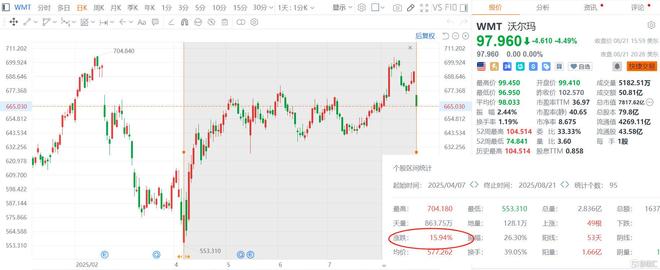
Group 1: Hong Kong Stocks Performance - Miniso (09896) surged over 20% after reporting a 10% year-on-year increase in adjusted net profit for Q2, with TOP TOY revenue skyrocketing by 87.0% [1] - Li Ning (02331) rose over 6% as it announced a 3.3% year-on-year increase in revenue and declared an interim dividend of HKD 0.3359 per share [1] - Innovent Biologics (02096) increased by over 6% following a 26% year-on-year growth in innovative drug revenue, expanding its commercialized innovative drug portfolio to ten products [1] - Tuhu-W (09690) gained over 10% after reporting a 14.6% year-on-year increase in adjusted net profit while continuing to optimize supply-side costs [1] - Kuaishou-W (01024) rose over 4% with impressive Q2 results and accelerated commercialization [1] - UBTECH (09880) increased over 3% as it led the establishment of two national technical standards for humanoid robots [1] - InnoCare Pharma (02577) saw a rise of over 5% after announcing a partnership with NVIDIA [1] Group 2: Other Notable Performances - China Communications Services (00552) fell over 2% despite a slight 0.18% year-on-year increase in net profit attributable to shareholders, with stable development among its three major clients [2] - Parkson Group (03368) surged nearly 25% after reporting a turnaround to profitability in the first half of the year and proposing an interim dividend of HKD 0.02 per share [2] - Esprit Holdings (00330) jumped over 37% after issuing a profit warning, expecting a net profit of approximately HKD 1 million for the six months ending June 30, 2025 [2] - XPeng Motors (09868) rose over 10% as CEO He Xiaopeng increased his stake by purchasing 3.1 million Class A ordinary shares at an average price of HKD 80.49 per share [2] Group 3: US Market Highlights - Coty (COTY.US) plummeted 21.60% due to weak performance in the US market, retailer destocking, and consumers seeking value, impacting Q4 results [3] - NIO (NIO.US) increased by 9.27% ahead of the launch of its new ES8 product and the start of pre-sales [3] - Huazhu Group (HTHT.US) continued to rise by 2.19% with a 41.3% year-on-year increase in revenue and net profit, benefiting from management franchise and licensing business [3] - Boss Zhipin (BZ.US) rose 6.61% after reporting an over 85% year-on-year increase in net profit for the mid-year and extending its share buyback plan [3] - Youlan Group (YOUL.US) surged 17.13% after announcing plans to acquire four companies to expand its online recruitment and regional market share [3] - Hesai Technology (HSAI.US) increased by 11.00% amid market speculation about a potential IPO in Hong Kong to raise approximately USD 300 million [3] Group 4: Additional US Stock Movements - Miniso (MNSO.US) rose 6.38% after reporting a revenue of CNY 9.39 billion for the first half of the year, a year-on-year increase of 21.1%, with adjusted net profit of CNY 1.28 billion [4] - Walmart (WMT.US) fell 4.49% as Q2 adjusted earnings per share fell short of expectations due to increased insurance claims, legal fees, and restructuring costs [4] - Gilead Sciences (GILD.US) dropped 2.18% after CVS Health decided not to include Gilead's new HIV prevention drug Yeztugo in its business plans [4] - XPeng Motors (XPEV.US) rose 11.68% following the CEO's purchase of 3.1 million Class A ordinary shares [5] - Aegon (AEG.US) increased by 7.64% after reporting a turnaround to profitability in the first half of 2025, primarily driven by growth in its US business [5]

成本“每周都在增加”!沃尔玛警告关税影响将“持续到第三、第四季度”
美股IPO· 2025-08-22 03:46
Core Viewpoint - Walmart's CEO Doug McMillon warns that rising tariffs are increasing operational costs, which are expected to persist into the third and fourth quarters, despite efforts to lower product prices [1][3][6] Group 1: Financial Performance - Walmart's Q2 revenue grew by 4.8% to $177.4 billion, exceeding expectations, and the company raised its full-year sales guidance [3] - However, operating profit declined by 8.2% to $7.3 billion, falling short of expectations, leading to a 4.5% drop in stock price, marking the largest single-day decline in over four months [3][6] Group 2: Impact of Tariffs - The company indicates that the cost of goods is rising weekly due to tariffs, with about one-third of its U.S. products imported from countries like China, Mexico, Vietnam, and India [6] - The same-store inflation rate increased by 1.1% year-over-year, doubling from the previous quarter, although it remains below the overall U.S. inflation rate [6] - Despite some price reductions in food items, the overall grocery inflation rate in the U.S. rose by approximately 1.5%, while prices for clothing and electronics have decreased [6] Group 3: Consumer Behavior - McMillon noted that while there hasn't been a drastic change in consumer spending behavior due to tariffs, adjustments are more pronounced among middle- and low-income households compared to high-income households [6]
关税压顶、利润逊预期,全球零售巨头绩后暴跌!
Ge Long Hui· 2025-08-22 02:10
Core Viewpoint - The latest financial reports from global retail giants, particularly Walmart, show mixed results amid the impact of tariffs, with challenges in profit expectations despite revenue growth [1]. Group 1: Financial Performance - Walmart's Q2 revenue reached $177.4 billion, a year-on-year increase of 4.8%, surpassing market expectations of $176.16 billion [3]. - The GAAP earnings per share for Q2 were $0.88, while adjusted earnings per share were $0.68, falling short of the market estimate of $0.74, marking the first miss since May 2022 [3]. - Operating profit declined by 8.2% to $7.3 billion, while net income rose by 51.8% to $7.151 billion [3]. Group 2: Growth Drivers - The growth in performance was primarily driven by Sam's Club and e-commerce, with global e-commerce sales increasing by 25% and global advertising revenue rising by 46% [5]. - Same-store sales in the U.S. grew by 4.6%, exceeding analyst expectations of 4%, and e-commerce sales in the U.S. increased by 26% [5]. - In China, net sales reached $5.8 billion, a 30.1% year-on-year increase, with e-commerce net sales growing by 40% [5]. Group 3: Strategic Initiatives - Walmart's CEO Kathryn McLay highlighted the growth of e-commerce in China, noting the opening of 33 new front warehouses and cloud warehouses, totaling 455, enabling rapid delivery to customers [7]. - The company plans to increase prices on certain imported goods to offset tariff costs, which has drawn criticism from former President Trump [8][9]. - Walmart's CFO John David Rainey indicated that the cost impact from tariffs is continuously rising, but the company is working to maintain low prices through accelerated imports and limited-time discounts [9]. Group 4: Future Outlook - Walmart has raised its full-year net sales growth forecast for fiscal 2026 to between 3.75% and 4.75%, and adjusted earnings per share expectations to between $2.52 and $2.62 [9]. - The company is assessing various scenario models due to trade policy negotiations, demand fluctuations, and future expansion flexibility [9].