Walmart(WMT)

Search documents
成本“每周都在增加”!沃尔玛警告关税影响将“持续到第三、第四季度”
美股IPO· 2025-08-22 03:46
Core Viewpoint - Walmart's CEO Doug McMillon warns that rising tariffs are increasing operational costs, which are expected to persist into the third and fourth quarters, despite efforts to lower product prices [1][3][6] Group 1: Financial Performance - Walmart's Q2 revenue grew by 4.8% to $177.4 billion, exceeding expectations, and the company raised its full-year sales guidance [3] - However, operating profit declined by 8.2% to $7.3 billion, falling short of expectations, leading to a 4.5% drop in stock price, marking the largest single-day decline in over four months [3][6] Group 2: Impact of Tariffs - The company indicates that the cost of goods is rising weekly due to tariffs, with about one-third of its U.S. products imported from countries like China, Mexico, Vietnam, and India [6] - The same-store inflation rate increased by 1.1% year-over-year, doubling from the previous quarter, although it remains below the overall U.S. inflation rate [6] - Despite some price reductions in food items, the overall grocery inflation rate in the U.S. rose by approximately 1.5%, while prices for clothing and electronics have decreased [6] Group 3: Consumer Behavior - McMillon noted that while there hasn't been a drastic change in consumer spending behavior due to tariffs, adjustments are more pronounced among middle- and low-income households compared to high-income households [6]


关税压顶、利润逊预期,全球零售巨头绩后暴跌!
Ge Long Hui· 2025-08-22 02:10
Core Viewpoint - The latest financial reports from global retail giants, particularly Walmart, show mixed results amid the impact of tariffs, with challenges in profit expectations despite revenue growth [1]. Group 1: Financial Performance - Walmart's Q2 revenue reached $177.4 billion, a year-on-year increase of 4.8%, surpassing market expectations of $176.16 billion [3]. - The GAAP earnings per share for Q2 were $0.88, while adjusted earnings per share were $0.68, falling short of the market estimate of $0.74, marking the first miss since May 2022 [3]. - Operating profit declined by 8.2% to $7.3 billion, while net income rose by 51.8% to $7.151 billion [3]. Group 2: Growth Drivers - The growth in performance was primarily driven by Sam's Club and e-commerce, with global e-commerce sales increasing by 25% and global advertising revenue rising by 46% [5]. - Same-store sales in the U.S. grew by 4.6%, exceeding analyst expectations of 4%, and e-commerce sales in the U.S. increased by 26% [5]. - In China, net sales reached $5.8 billion, a 30.1% year-on-year increase, with e-commerce net sales growing by 40% [5]. Group 3: Strategic Initiatives - Walmart's CEO Kathryn McLay highlighted the growth of e-commerce in China, noting the opening of 33 new front warehouses and cloud warehouses, totaling 455, enabling rapid delivery to customers [7]. - The company plans to increase prices on certain imported goods to offset tariff costs, which has drawn criticism from former President Trump [8][9]. - Walmart's CFO John David Rainey indicated that the cost impact from tariffs is continuously rising, but the company is working to maintain low prices through accelerated imports and limited-time discounts [9]. Group 4: Future Outlook - Walmart has raised its full-year net sales growth forecast for fiscal 2026 to between 3.75% and 4.75%, and adjusted earnings per share expectations to between $2.52 and $2.62 [9]. - The company is assessing various scenario models due to trade policy negotiations, demand fluctuations, and future expansion flexibility [9].
早报 | 美欧贸易协定框架达成一致;官方通报女子36岁领养老金;Meta回应冻结AI部门招聘传闻;黑龙江一恶势力团伙全员改判无罪
虎嗅APP· 2025-08-22 00:41
Group 1 - The United States and the European Union have reached an agreement on a trade framework, covering 19 key areas including agricultural products, automobiles, semiconductors, and digital trade barriers [2][3] - Walmart's Q2 revenue was $177.4 billion, exceeding analyst expectations, but adjusted earnings per share of $0.68 fell short of the anticipated $0.74, marking the first time in three years that profits did not meet expectations [4] - Intel is seeking additional funding through negotiations with large investors, while also considering a shift in government chip subsidies to equity stakes in the company [14][16] Group 2 - Meta has temporarily paused hiring in its AI department as part of organizational adjustments while establishing a new structure for upcoming AI projects [20][21] - TikTok Shop is preparing for the 2025 global Black Friday sales event, with significant investments in promotional resources to support cross-border merchants [28] - Ren Zhengfei stated that artificial intelligence may be the last technological revolution for human society, highlighting China's unique advantages in the field [29]




成本“每周都在增加”!沃尔玛警告关税影响将“持续到第三、第四季度”
Hua Er Jie Jian Wen· 2025-08-22 00:34
Group 1 - Walmart warns that U.S. tariffs are increasing its operating costs, with the impact expected to continue into Q3 and Q4 [1][4] - Despite an influx of customers seeking affordable products, Walmart's profit margins are under pressure, with Q2 revenue growth of 4.8% to $177.4 billion, but operating profit down 8.2% to $7.3 billion [1][5] - The company's stock fell 4.5%, marking its largest single-day decline in over four months [1] Group 2 - The cost pressure from tariffs is increasing weekly, with about one-third of Walmart's U.S. goods relying on imports from countries like China, Mexico, Vietnam, and India [4] - The same-store inflation rate rose 1.1% year-over-year in Q2, doubling from the previous quarter, but remains below the overall U.S. inflation rate [5] - Walmart has indicated the need to raise prices on certain items to offset tariff costs, which has drawn criticism from President Trump, who argues that tariffs do not lead to inflation [5]
标普500指数五连阴!沃尔玛重挫4.5%,纳斯达克中国金龙指数涨超1%
Di Yi Cai Jing Zi Xun· 2025-08-22 00:29
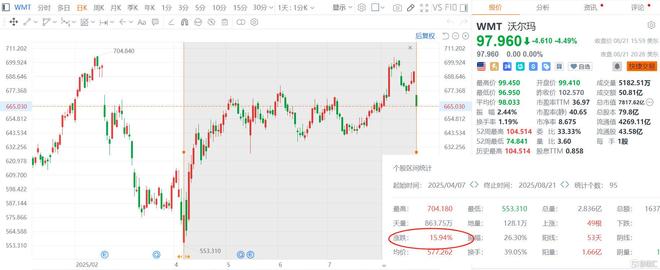
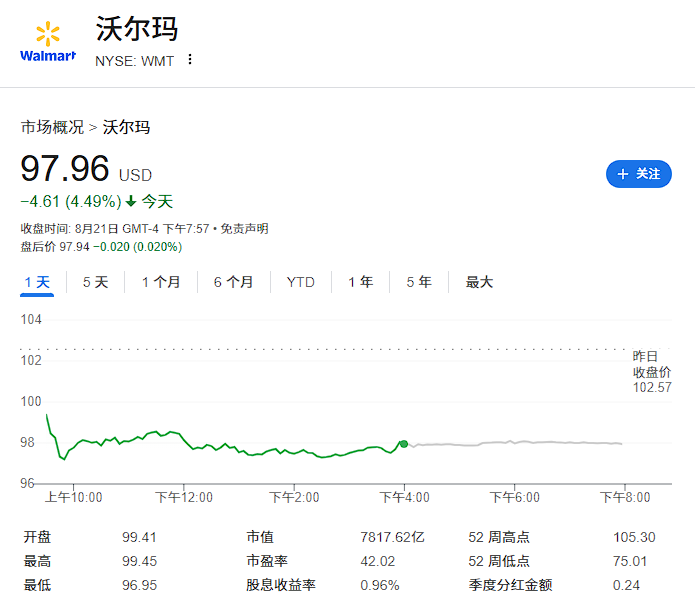
Group 1 - Walmart's stock plummeted by 4.5% after reporting quarterly profits that fell short of expectations, despite raising its full-year sales and profit forecasts due to tariff-induced cost increases [3] - The company's second-quarter revenue was $177.4 billion, slightly above the market expectation of $176.16 billion, but the adjusted earnings per share were $0.68, below the expected $0.74, marking the first time in three years that it did not meet analyst expectations [3] - The consumer sector is experiencing mixed signals, with employment and tariff issues adding uncertainty, as noted by Northlight Asset Management's Chief Investment Officer [3] Group 2 - The beauty product manufacturer Coty saw its stock drop by 21.4% due to expectations of weak consumer spending leading to a decline in sales for the current quarter [3] - The housing market showed resilience, with July existing home sales annualized at 4.01 million units, exceeding market expectations of 3.92 million units and the previous value of 3.93 million units [4] - Initial jobless claims increased by 11,000 to 235,000, marking the largest rise in nearly three months, while continuing claims rose to 1.972 million, the highest since November 2021, indicating signs of cooling in the labor market [4]
9月降息概率大降!美联储释放鹰派信号
Zheng Quan Shi Bao· 2025-08-22 00:17
Market Overview - On August 21, U.S. stock indices collectively declined, with the S&P 500 down 0.4%, the Dow Jones down 0.34%, and the Nasdaq down 0.34%, marking five consecutive declines for the S&P 500 and three for the Nasdaq [1][5] - The market is focused on the upcoming Jackson Hole global central bank conference, where Federal Reserve Chairman Jerome Powell is expected to deliver a key speech regarding future monetary policy [2][3] Federal Reserve Insights - Federal Reserve officials, including Cleveland Fed President Loretta Mester, Atlanta Fed President Raphael Bostic, and Kansas City Fed President Esther George, have expressed cautious signals, emphasizing that monetary policy should rely on data and are not in a hurry to cut rates [2][3] - Mester stated that current inflation levels remain too high and have been on the rise over the past year, indicating no reason to lower rates at this time [2] - Bostic believes that the current federal funds rate target range of 4.25%-4.5% is slightly tight and acknowledges significant uncertainty regarding the need for rate cuts [3] Economic Indicators - According to S&P Global, the U.S. manufacturing PMI expanded at its fastest pace in over three years due to stronger demand, contributing to a composite PMI that reached its highest level of the year in August [2] - This expansion has intensified ongoing inflationary pressures, as companies are increasingly passing on rising costs to customers [2] Walmart Financial Performance - Walmart reported second-quarter revenue of $177.4 billion, exceeding analyst expectations of $176.16 billion, but adjusted earnings per share of $0.68 fell short of the expected $0.74, marking the first time in three years that profits did not meet expectations [6] - Walmart raised its full-year sales growth forecast to between 3.75% and 4.75%, up from the previous estimate of 3% to 4% [6] Chinese Stocks Performance - The Nasdaq Golden Dragon China Index rose by 1.35%, with notable gains in several Chinese companies such as XPeng Motors, which saw a nearly 12% increase, and NIO, which rose over 9% [7] - XPeng Motors reported a significant revenue increase of 125.3% year-over-year for Q2 2025, driven by a record high delivery volume of 103,200 vehicles, a 241.6% increase compared to the same period last year [7]

标普500指数连续5日下跌!中概股逆势走强,市场聚焦杰克逊霍尔年会,沃尔玛拖累消费板块
Jin Rong Jie· 2025-08-22 00:15
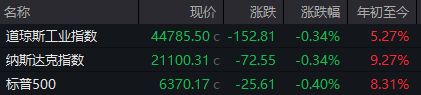
Market Overview - The US stock market continued its downward trend, with the S&P 500 index declining for the fifth consecutive trading day as investors remained cautious ahead of Federal Reserve Chairman Jerome Powell's speech at the Jackson Hole Economic Symposium [1] - All three major indices closed lower: the Dow Jones Industrial Average fell by 152.81 points (0.34%) to 44,785.50 points, the S&P 500 dropped by 25.61 points (0.40%) to 6,370.17 points, and the Nasdaq Composite decreased by 72.54 points (0.34%) to 21,100.31 points [1][2] Technology Sector - The technology sector, a key driver of the US stock market's rise this year, faced profit-taking pressure recently, with major stocks like Nvidia, Meta, and Amazon experiencing declines [3] - The US Technology Seven Giants Index fell by 0.43%, with Apple and Nvidia down by 0.49% and 0.24%, respectively [3] - Concerns over high valuations and macroeconomic uncertainties have led to fears that the adjustment in tech stocks could evolve into systemic risks [3] Retail Sector - Walmart's earnings report highlighted structural challenges in the retail sector, as the company reported a second-quarter sales figure that exceeded expectations but adjusted earnings per share of $0.68 fell short of the anticipated $0.74, marking the first miss in three years [5] - The challenges faced by Walmart include increased promotional efforts, rising costs, and diminishing marginal returns from e-commerce expansion, raising investor concerns about the prolonged path to profit recovery in the retail sector [5] Chinese Stocks - In contrast to the weakness in US tech stocks, Chinese assets saw gains, with the Nasdaq China Golden Dragon Index rising by 1.35%, and companies like Xpeng and NIO recording increases of 11% and 9%, respectively [7] - This trend is attributed to short-term capital rotation towards risk assets and international events, including the US Department of Justice's investigation into Federal Reserve Governor Lisa Cook and the trade agreement framework between the EU and the US [7] Federal Reserve Policy - Market expectations for a rate cut by the Federal Reserve in September are facing challenges, with bets on a 25 basis point cut dropping from 99.9% to 79% [9] - This shift is linked to internal policy disagreements within the Fed, as most officials remain cautious about inflation and labor market conditions, while dissenting opinions reveal deep divisions [9][10]
零售商乐观暗藏隐忧 关税涨价成美国消费者韧性“终极考验”
智通财经网· 2025-08-22 00:14
Group 1 - Major U.S. retailers, including Walmart and Home Depot, express optimism about consumer resilience despite potential challenges from rising prices due to tariffs [1][2] - Walmart raised its full-year performance expectations based on strong sales momentum, while Home Depot reported that customer spending remains "very healthy" [1] - Target's sales are still declining year-over-year, but the performance is better than expected, indicating a mixed retail environment [1] Group 2 - Retailers are facing increased costs as new inventory is subject to higher tariffs, which may lead to price increases in the latter half of the year [2][3] - The impact of price increases is uncertain, as retailers have different strategies for passing on costs to consumers [2] - Consumers are becoming more price-sensitive, seeking value through second-hand stores and private label products, indicating a shift in spending behavior [3] Group 3 - Analysts predict that inflation will accelerate in the second half of the year as retailers deplete pre-tariff inventory and pass on more costs to consumers [3][4] - The holiday shopping season is expected to be subdued due to rising essential goods prices, which will limit disposable income for budget-sensitive consumers [3]


中国资产,深夜爆发!美股齐跌,沃尔玛重挫
Di Yi Cai Jing Zi Xun· 2025-08-21 23:48
Market Overview - The US stock market continued its downward trend, with the S&P 500 index declining for the fifth consecutive day, as investors are concerned about potential hawkish signals from Federal Reserve Chairman Jerome Powell at the Jackson Hole Economic Policy Symposium [2] - The Dow Jones Industrial Average fell by 152.81 points (0.34%) to close at 44,785.50 points, while the S&P 500 dropped by 25.61 points (0.40%) to 6,370.17 points, and the Nasdaq Composite decreased by 72.54 points (0.34%) to 21,100.31 points [2] Sector Performance - Among the 11 sectors of the S&P 500, nine sectors experienced declines, with the consumer staples sector suffering the largest drop of 1.18% [4] - Walmart's stock plummeted by 4.5% after reporting quarterly profits that fell short of expectations, despite raising its full-year sales and profit forecasts due to tariff-induced cost increases [4] Company-Specific News - Coty Inc. saw its stock price crash by 21.4% as the company anticipates a decline in sales for the current quarter due to weak consumer demand in the US [5] - Walmart reported Q2 revenue of $177.4 billion, slightly above the market expectation of $176.16 billion, but its adjusted earnings per share of $0.68 fell short of the expected $0.74, marking the first time in three years that it did not meet analyst expectations [4] Economic Indicators - The US Department of Labor reported an increase of 11,000 in initial jobless claims to 235,000, the largest rise in nearly three months, while continuing claims rose to 1.972 million, the highest since November 2021, indicating signs of a cooling job market [5] - The housing market showed resilience, with the National Association of Realtors reporting that July existing home sales totaled an annualized 4.01 million units, exceeding market expectations of 3.92 million units and the previous value of 3.93 million units [5] Commodity Market - International oil prices rose on the 21st, with light crude oil futures for October delivery increasing by $0.81 to $63.52 per barrel (1.29% increase), and Brent crude oil futures for October delivery rising by $0.83 to $67.67 per barrel (1.24% increase) [5] - COMEX gold futures for the current month fell by $6.90, a decrease of 0.20%, settling at $3,381.60 per ounce [6]
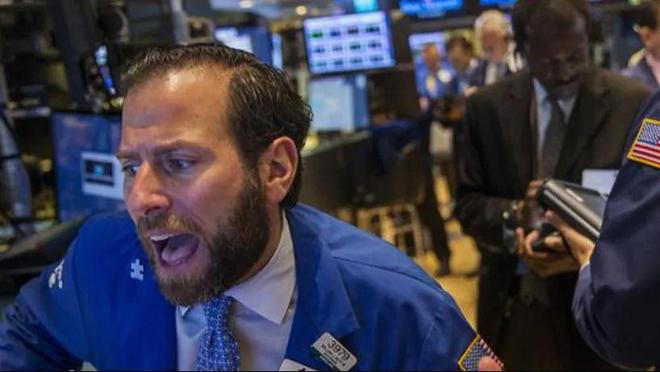
中国资产,深夜爆发!美股齐跌,沃尔玛重挫
第一财经· 2025-08-21 23:39
Core Viewpoint - The article discusses the recent decline in major U.S. stock indices, driven by investor concerns over potential hawkish signals from Federal Reserve Chairman Jerome Powell at the Jackson Hole Economic Policy Symposium [3]. Market Performance - The Dow Jones Industrial Average fell by 152.81 points, a decrease of 0.34%, closing at 44,785.50 points [3]. - The S&P 500 index dropped by 25.61 points, down 0.40%, to 6,370.17 points [3]. - The Nasdaq Composite Index decreased by 72.54 points, a decline of 0.34%, ending at 21,100.31 points [3]. - Large tech stocks experienced a downward trend, with Tesla down 1.17%, Meta down 1.15%, Amazon down 0.83%, Apple down 0.49%, Nvidia down 0.24%, Microsoft down 0.13%, and Google up 0.22% [3]. Sector Performance - Among the 11 sectors in the S&P 500, nine sectors declined, with the consumer staples sector experiencing the largest drop of 1.18% [5]. - Walmart's stock plummeted by 4.5% after reporting quarterly profits below expectations, despite raising its full-year sales and profit forecasts due to tariff-induced cost increases [5]. - Coty, a beauty products manufacturer, saw its stock fall by 21.4% due to expectations of weak U.S. consumer spending impacting sales this quarter [5]. Economic Indicators - Initial jobless claims rose by 11,000 to 235,000, marking the largest increase in nearly three months, while continuing claims reached 1.972 million, the highest since November 2021, indicating a cooling job market [6]. - The housing market showed resilience, with July existing home sales annualized at 4.01 million, exceeding market expectations of 3.92 million and the previous value of 3.93 million [6]. Commodity Prices - As of the close on August 21, crude oil prices increased, with light crude oil futures for October delivery rising by $0.81 to $63.52 per barrel, a gain of 1.29% [6]. - Brent crude oil futures for October delivery also rose by $0.83 to $67.67 per barrel, an increase of 1.24% [6]. - COMEX gold futures for the current month fell by $6.90, a decrease of 0.20%, settling at $3,381.60 per ounce [7].