瑞幸

Search documents
赚钱模式,彻底变了
Hu Xiu· 2025-06-09 09:16
Group 1 - The core viewpoint of the article emphasizes the shift from growth-driven strategies to efficiency-focused approaches in the current economic landscape, termed the "stock economy" era [6][10][14] - The article discusses the success of companies like Pop Mart, which saw its market value increase over tenfold to over 330 billion in just two years, and the expansion of other brands like Hushang Ayi and Anker Innovation [2][3] - The author highlights the importance of efficiency in business operations, stating that without it, growth can lead to failure, especially in a stock economy where resources are limited [14][16][18] Group 2 - The article outlines the characteristics of national brands that can thrive in the stock economy, emphasizing the need for products, store types, and management strategies that can penetrate deeper markets [30][31][32] - It discusses the significance of regional density in store management, suggesting that higher density can optimize supply chain costs and improve operational efficiency [41][42] - The article also mentions the importance of adapting to seasonal demand fluctuations and maintaining consistent sales throughout the year [45][46] Group 3 - The article addresses the global expansion strategies of companies, advocating for a diversified market approach and the establishment of manufacturing capabilities outside of China [60][62] - It emphasizes the need for companies to adopt a global mindset from inception, rather than merely reacting to international market conditions [61][65] - The author notes that the current trend in globalization is shifting from cost-driven strategies to efficiency-driven ones, leveraging validated technologies and operational capabilities [66][67] Group 4 - The article discusses the role of technology, particularly AI, in enhancing business efficiency, with a focus on companies like DeepSeek that have significantly reduced operational costs [70][71] - It predicts a future where the number of applications on mobile devices will decrease, workweeks will shorten, and average human lifespans will increase due to advancements in AI and healthcare [72][74][75] - The author stresses the importance of product development and innovation in maintaining competitive advantages in the market [56][70] Group 5 - The article highlights the essential qualities of successful founders, including strong values, learning ability, and adaptability to market changes [77][78] - It suggests that founders should focus on long-term sustainability rather than short-term gains, emphasizing the importance of building a solid foundation for their businesses [80][81] - The author provides advice for young professionals, encouraging them to prioritize skill development and time management over immediate financial rewards [86][94]
港股风险偏好持续上行


SINOLINK SECURITIES· 2025-06-08 15:26
Investment Rating - The report maintains a positive outlook on the Hong Kong stock market, indicating a strong risk appetite and suggesting investment opportunities in various sectors, particularly in virtual assets and Web 3.0 [3][10]. Core Insights - The Hong Kong stock market is experiencing a significant increase in risk appetite, with improved asset quality and trading volume, highlighting the value of asset trading platforms [3][10]. - There is a notable uptrend in multiple sectors such as AI, new consumption, and innovative pharmaceuticals, with a particular focus on small and mid-cap stocks in media and consumer sectors [3][10]. - The report emphasizes the ongoing development of virtual assets and the Web 3.0 market, driven by stablecoin policies and recent IPOs, suggesting that more regulatory frameworks will emerge [3][10]. - The trend of Chinese companies returning to Hong Kong for IPOs is gaining momentum, with increased trading of companies like NetEase and Ctrip in the Hong Kong market [3][10]. - The valuation of overseas Chinese assets remains influenced by US-China trade relations and the broader economic environment, necessitating close monitoring of trade policies and domestic economic changes [3][10]. Summary by Sections Education - The K12 education sector maintains high growth, with leading institutions reporting over 20% revenue growth during the winter training period, and an increase in non-academic course retention rates [5][11]. Luxury Goods - The luxury goods market shows slight pressure due to macroeconomic factors, but brands that align with demand trends are performing well, with cautious price increases observed [5][20]. Coffee and Tea Drinks & OTA - Coffee and tea remain key categories for delivery platforms, with strong performance from major brands like Luckin Coffee, which continues to expand its store presence [5][25]. E-commerce - The e-commerce sector faces slight pressure, but major platforms like Alibaba and JD.com are expected to benefit from ongoing promotional activities [5][26]. Streaming Platforms - Music streaming platforms are viewed as high-quality internet assets, with sustained profitability driven by scale effects [5][34]. Virtual Assets & Internet Brokers - The stablecoin leader Circle's IPO saw a 168% increase on its first day, marking a significant event in the virtual asset space [5][38]. Real Estate Transactions - Recent data shows a slight decline in second-hand housing transactions in major cities, suggesting a need for caution in the real estate market [5][50]. Automotive Services - The automotive aftermarket is under pressure, with traditional fuel vehicle service visits declining, while new energy vehicle service visits are increasing [5][45].
高盛:料即制饮品受惠内地外卖平台补贴计划 升蜜雪冰城(02097)及古茗(01364)目标价
智通财经网· 2025-06-03 02:50
Group 1 - Goldman Sachs reported that since JD Group announced a 10 billion RMB takeaway subsidy plan on April 11, the average stock price of the covered ready-to-drink beverage companies has increased by 39% [1] - The takeaway orders from JD are significantly directed towards ready-to-drink brands, with Luckin Coffee and Kudi Coffee leading in order volume, followed by major ready-to-drink tea brands [1] - Channel surveys indicate that participating stores in promotional activities may see their order volume more than double, with the impact varying based on brand participation strategies, pricing, and delivery proportions [1] Group 2 - Goldman Sachs raised the earnings forecasts for Gu Ming and Mi Xue Bing Cheng for 2025 to 2027 by 5% to 9%, reflecting faster store expansion and stronger merchandise transaction growth [1] - The expected price-to-earnings ratio for Gu Ming in 2026 has been adjusted from 20 times to 26 times, still about 20% lower than the industry leader Mi Xue Bing Cheng [1] - The target price for Gu Ming has been increased from 21 HKD to 29.2 HKD, maintaining a "Buy" rating [1] Group 3 - Goldman Sachs also raised the earnings forecasts for Mi Xue Bing Cheng for 2025 to 2027 by 2% to 3%, reflecting faster store expansion and steady growth in merchandise transaction value in the Chinese market [2] - The expected price-to-earnings ratio for Mi Xue Bing Cheng in 2026 has been adjusted from 26 times to 32 times, with the target price increased from 484 HKD to 597 HKD, maintaining a "Buy" rating [2]
霸王交卷,单店失蹄
3 6 Ke· 2025-06-03 02:26
Core Viewpoint - Bawang Chaji's stock price experienced volatility, dropping 9.59% on the last trading day of May to $28.01, then rebounding 9.93% on the first trading day of June to $30.79, with a market capitalization of $5.652 billion. The company reported its first quarterly earnings post-IPO, showing significant growth in GMV, net revenue, and net profit, but also a decline in net profit margin and same-store GMV growth [1][2][7]. Financial Performance - In Q1, Bawang Chaji's total GMV reached 8.23 billion yuan, a year-on-year increase of 38%. Net revenue was 3.39 billion yuan, up 35.4%, and net profit was 677 million yuan, reflecting a 13.8% growth [1][7]. - The net profit margin decreased from 23.7% in Q1 2024 to 20.0% in Q1 2025, with same-store GMV growth rate turning negative for two consecutive quarters [2][7]. Market Position and Strategy - Bawang Chaji is the first Chinese ready-to-drink tea brand to list on the US stock market, differentiating itself by avoiding intense competition in the milk tea sector and focusing on a unique product narrative around "modern oriental tea" [1][5]. - The company has adopted a "big product" strategy, with its tea latte series contributing 91% to GMV in 2024, emphasizing a simplified supply chain and standardized production processes [1][8][11]. Competitive Landscape - The ready-to-drink tea market has seen rapid growth since Bawang Chaji's establishment in 2017, with competitors like Heytea and Nayuki Tea expanding aggressively [5][6]. - Bawang Chaji's expansion strategy has led to a significant increase in store count, reaching 6,681 stores by Q1 2025, a 63.6% year-on-year growth [9][23]. Challenges and Future Outlook - Despite its growth, Bawang Chaji faces challenges such as declining same-store GMV growth and increased competition from established brands [20][22]. - The company is focusing on overseas markets, with plans to expand beyond Southeast Asia to higher-value markets in Europe and North America, where it has already opened its first store in Los Angeles [24][25].


特朗普称将把进口钢铁关税提高至50%;永辉超市及其董事长 被限制高消费;比亚迪回应“汽车圈恒大”丨每经早参
Mei Ri Jing Ji Xin Wen· 2025-05-30 22:54
Market Overview - US stock indices closed mixed, with the Dow Jones up 0.13% and a monthly increase of 3.94%, while the Nasdaq fell 0.32% with a monthly increase of 9.56% [2] - Major tech stocks mostly declined, with Tesla and Intel down over 3%, and Nvidia, AMD, and Advanced Micro Devices down over 2% [2] - Chinese concept stocks generally fell, with the Nasdaq Golden Dragon China Index down 2.69% [2] - Spot gold decreased by 0.86% to $3288.58 per ounce, and WTI crude oil fell by 0.25% to $60.79 per barrel [2] Economic Policies and Regulations - The Ministry of Foreign Affairs stated that China's export control measures align with international practices and are non-discriminatory, opposing US actions that politicize economic issues [3] - The National Development and Reform Commission announced a significant reduction in credit service fees, expected to save users approximately 1.1 billion yuan annually [3] - The People's Bank of China reported that the balance of RMB loans reached 265.41 trillion yuan at the end of Q1 2025, with a year-on-year growth of 7.4% [4] Industry Developments - The Ministry of Industry and Information Technology released an action plan aiming for standardized national public computing power interconnectivity by 2028 [5] - The Housing and Urban-Rural Development Ministry reported that over 1.3 trillion yuan in housing provident fund loans were issued in 2024, with a steady operation of the housing fund system [6] Corporate News - BYD's PR manager refuted claims comparing the company to Evergrande, asserting that Chinese automakers have better financial health than foreign counterparts [13] - Huawei launched a new model with a parameter scale of 718 billion, showcasing advancements in AI computing [14] - The chairman of Midea Group expressed confidence in competing with Xiaomi in the home appliance sector, highlighting the industry's competitive nature [21] - Luckin Coffee clarified that recent price reductions were promotional and not indicative of a price drop [22] Legal and Compliance Issues - Yonghui Supermarket and its chairman were restricted from high consumption due to a legal dispute [16] - *ST Tianyu announced that its actual controller is under criminal investigation for fund misappropriation, although it does not significantly impact operations [26]


华宝股份(300741) - 300741华宝股份投资者关系管理信息20250520
2025-05-20 11:50
Group 1: Company Strategy and Vision - The company aims to be a "leader in delicious living," focusing on "green, nutritious, and healthy" missions while strengthening mergers and acquisitions to enhance core capabilities and market presence [2][3] - The company plans to expand into the daily chemical sector, integrating innovative technology and established channels to unlock growth potential [3] Group 2: Research and Development - The company has established a national recognized enterprise technology center and multiple overseas R&D centers, employing 298 R&D personnel, including 79 perfumers, to drive innovation [3][4] - The company emphasizes technological innovation as a key driver for enhancing competitiveness in the flavor and food ingredient sectors [4] Group 3: International Expansion - The company is accelerating its overseas market presence, particularly in Southeast Asia and the Middle East, with a new food technology base in Indonesia set to enhance its international operations [3][4] - The company aims to build a stable overseas market position, focusing on high-growth potential regions [3] Group 4: Profit Improvement Measures - The company plans to leverage technological innovation and global development strategies to enhance operational efficiency and profitability [4] - Strategies include capturing consumer trends, exploring new product markets, and optimizing supply chain management [4] Group 5: Client Base and Market Position - The company has established a diverse client base across various sectors, including partnerships with major brands like Yili and Luckin Coffee [5] - The company’s food ingredient business is a key focus for strategic transformation and growth [5] Group 6: Financial Performance and Future Outlook - The company reported a net loss for 2024 due to goodwill impairment related to edible flavor assets, but aims to enhance its food ingredient business through strategic acquisitions [5] - Future growth will focus on integrating resources across subsidiaries to drive diversification and scale in the food ingredient sector [5][6]

Tims中国盈利能力大幅修复,加拿大国民咖啡又能打了?
Guan Cha Zhe Wang· 2025-05-20 03:13
Core Viewpoint - Tims China is struggling to maintain competitiveness in the rapidly growing Chinese coffee market, facing significant financial challenges and competition from both international and local brands [1][2][12] Financial Performance - In 2024, Tims China reported a revenue decline of 10.8% to 1.391 billion yuan, with a net loss of 409 million yuan, although the loss narrowed by 53% year-on-year [3][12] - The company has total assets of 1.564 billion yuan and total liabilities of 2.397 billion yuan, indicating a state of insolvency [3][4] - Tims China received a total of $65 million in financing from its parent company and shareholders to support operations [4][5] Market Position and Competition - The Chinese coffee market is projected to grow at a compound annual growth rate of 17.14%, reaching 265.4 billion yuan by 2024, with strong competition from Starbucks, Luckin Coffee, and other local brands [1][2] - Tims China has been unable to achieve the scale necessary to compete effectively, with a total of 1,022 stores as of December 31, 2024, falling short of its expansion targets [6][11] Strategic Initiatives - To improve profitability, Tims China is increasing its focus on franchise operations, having opened franchise opportunities in major cities and launched a "county-level franchise" plan [6][8] - The company is also adjusting its product offerings to include lower-cost items to attract consumers in lower-tier cities, although this strategy may compress margins [8][10] Challenges and Risks - Tims China faces challenges in differentiating its product offerings, as its "coffee + warm food" model is easily replicable by competitors [10][12] - The company has raised prices on some products, which has led to consumer dissatisfaction and potential loss of market share [9][10] - The long-term viability of Tims China is in question, with concerns about whether its parent company, RBI, will continue to provide financial support if profitability does not improve [11][12]


新茶饮夏日“狂飙”:港股走高下的消费新机遇
Huan Qiu Wang· 2025-05-19 10:13
Group 1 - The core viewpoint of the articles highlights the strong performance and growth potential of the new tea beverage industry in Hong Kong, driven by increasing consumer demand and market optimism [1][3] - The new tea beverage brands are significant contributors to China's tea consumption, accounting for nearly 10% of the total tea production, indicating their importance in the market [1] - The inclusion of brands like Biluok, Guming, and Mixue Group in the Hang Seng Composite Index reflects the growth and influence of the new tea beverage sector [1] Group 2 - As summer approaches, there is a surge in consumer demand for refreshing and healthy beverages, with beverage orders leading the restaurant sector since April 20 [3] - The introduction of new products by leading brands such as Luckin, Heytea, KFC, and Nayuki has driven significant growth in group purchase orders, with a 110% week-on-week increase in searches for summer-themed drinks [3] - The trend towards low-sugar and low-calorie fruit and vegetable tea products is rising, with a nearly 30% increase in the number of tea merchants launching new group purchase products compared to the previous month [3] Group 3 - The new tea brand Tianlala has successfully launched summer limited products, such as the "Watermelon Cool Bucket," which sold over 1 million cups within seven days, showcasing effective product innovation [4] - The success of Tianlala's products is attributed to a combination of cultural relevance, product quality, and an efficient supply chain that ensures freshness [4] - The brand's strategy emphasizes the association of fruit buckets with summer social experiences, enhancing customer engagement through limited-time offerings and collaborations [4] Group 4 - The new tea beverage sector is expanding not only through product innovation but also by diversifying consumption scenarios and meeting varied consumer needs [5] - As consumers increasingly prioritize health and quality, new tea brands are expected to continue focusing on product innovation, supply chain optimization, and cultural branding to deliver high-quality, personalized products [5]

「咖啡+贝果」卷不过「9块9」,Tims天好中国还在亏损
36氪· 2025-05-12 10:07
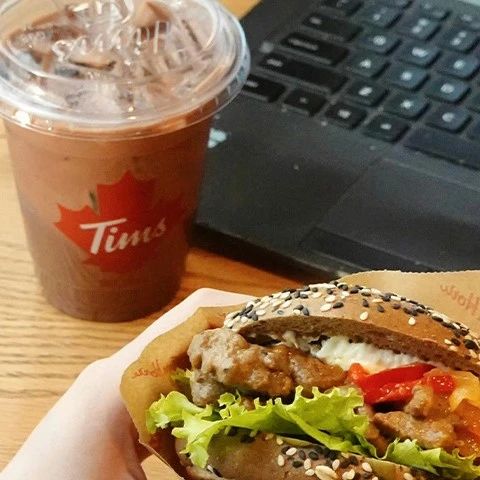
Core Viewpoint - Tims China is struggling to achieve profitability despite its efforts to differentiate itself in the highly competitive coffee market through a "coffee + warm food" strategy, while facing significant financial challenges and competition from established brands like Luckin Coffee [3][4][15]. Financial Performance - In 2024, Tims China reported total revenue of 1.391 billion RMB, a decrease of 10.8% year-on-year, with a net loss of 409 million RMB, although this represented a significant reduction in losses compared to previous years [8][21]. - The company’s cash and cash equivalents decreased by 16.08% to 184.2 million RMB by the end of 2024, compared to 219.5 million RMB in the previous year [21]. - Tims China’s total liabilities reached 2.397 billion RMB, with short-term borrowings amounting to 381 million RMB, indicating increased financial pressure and liquidity challenges [22]. Business Strategy - Tims China has shifted its focus to franchise operations, with a total of 1,022 stores by the end of 2024, of which 576 are company-owned and 446 are franchised, marking an increase of 163 franchise stores within a year [11][12]. - The company aims to enhance its profitability by closing unprofitable stores and optimizing its operational efficiency, alongside establishing a strategic position for its franchise business [22][15]. Market Competition - The coffee market in China has become increasingly competitive, with Tims China facing challenges from various brands engaging in price wars and expanding their product offerings [9][24]. - Tims China’s same-store sales growth has shown a decline, with a notable drop of 21.7% in the third quarter of 2024, reflecting the intense competition and market saturation [12][27]. Product Development - Tims China has introduced a "light bagel burger lunch box" series to attract customers during lunch hours, aiming to increase foot traffic and sales [4][28]. - The company has also revamped its store model to include "made-to-order" counters, allowing customers to see the preparation process, which is expected to enhance customer experience and drive sales [28][29]. Supply Chain Management - Tims China is leveraging its parent company RBI's global coffee supply chain to stabilize and reduce costs associated with coffee bean procurement, while also sourcing local coffee beans from Yunnan [24][25]. - The company has established partnerships with various suppliers to ensure a steady supply of ingredients, which is crucial for maintaining operational efficiency in a competitive market [32].
一周上新!望丘山、入口刚好、奈雪的茶...海内外新品资讯抢先看|全球职人情报站
东京烘焙职业人· 2025-05-11 00:08
Core Viewpoint - The 2025 China Bakery New Product Launch Week will take place from May 19 to May 22, showcasing over 50 new products from more than 18 well-known companies, emphasizing the collaboration across the entire industry chain to create popular products [1][3]. Group 1: Event Details - The event will be held at Bakery China, Hall 3, Booth F61, featuring a product manual that includes hundreds of new product case studies across 13 major categories [6]. - Attendees can pre-register to receive the product manual on-site, which is available in limited quantities [6]. Group 2: Featured Products - Notable new products include: - Parmigiano Ham Sandwich by Wangqiushan [7] - Mother's Day Cake Series by Miqi [7] - Guava Light Fat Cheese Cake by HPC Bakery [8] - Tiramisu Layered Toast by Rukou Ganghao [9] - Flowering Berry by Sun Beibei Bread [9] - Limited Edition Mother's Day Cakes from various brands [8][9][10]. Group 3: Industry Trends - The event highlights a trend towards seasonal and themed products, particularly for Mother's Day, with many brands launching special cakes and desserts to cater to this occasion [16][26][40]. - The introduction of clean-label products, such as the Green Bean Vegan Cake with only six ingredients, reflects a growing consumer preference for transparency and health-conscious options [30]. Group 4: Market Expansion - Companies like Sunmerry and Little Mermaid are expanding their product lines with innovative offerings, such as French-style baked goods and unique flavor combinations [135][137]. - The industry is witnessing a shift towards incorporating local flavors and ingredients, as seen in products like the Quinoa Walnut Milk Cake [60]. Group 5: Consumer Engagement - The event serves as a platform for brands to engage directly with consumers, allowing them to experience new products firsthand and gather feedback [1][3]. - The emphasis on visually appealing and Instagram-worthy products indicates a strategy to attract younger consumers through social media [18][22].