中航沈飞

Search documents
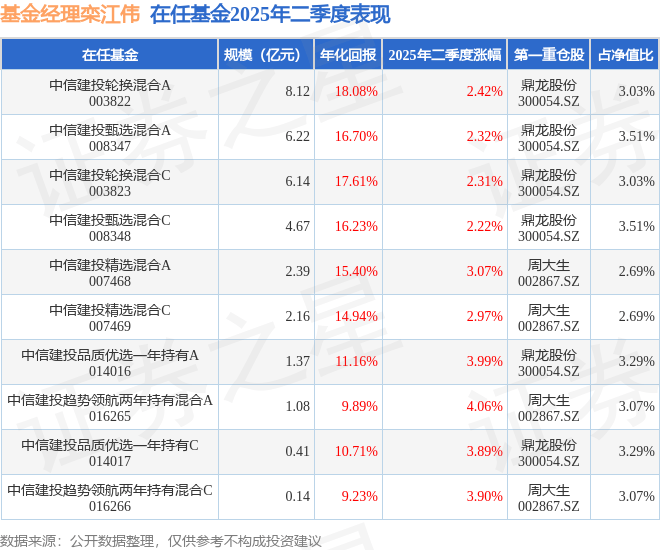
栾江伟2025年二季度表现,中信建投趋势领航两年持有混合A基金季度涨幅4.06%
Sou Hu Cai Jing· 2025-07-21 03:25
证券之星消息,截止2025年二季度末,基金经理栾江伟旗下共管理10只基金,本季度表现最佳的为中信建投趋势领航两年持有混合A (016265),季度净值涨4.06%。 | 在任基金 | 规模(亿元) | 年化回报 | 2025年二季度涨幅 | 第一重合股 | 白净值比 | | --- | --- | --- | --- | --- | --- | | 中信建投轮换混合A | 8.12 | 18.08% | 2.42% | 鼎龙股份 | 3.03% | | 003822 | | | | 300054.SZ | | | 中信建投甄选混合A | 6.22 | 16.70% | 2.32% | 鼎龙股份 | 3.51% | | 008347 | | | | 300054.SZ | | | 中信建投轮换混合C | 6.14 | 17.61% | 2.31% | 鼎龙股份 | 3.03% | | 003823 | | | | 300054.SZ | | | 中信建投甄选混合C | 4.67 | 16.23% | 2.22% | 异龙股份 | 3.51% | | 008348 | | | | 300054.SZ | | | ...


激浊扬清,周观军工第128期:军贸推荐,中航西飞
Changjiang Securities· 2025-07-21 01:10
Investment Rating - The report maintains a "Positive" investment rating for the defense and military industry [4] Core Insights - The report highlights the increasing demand for advanced, domestically produced military equipment, which is expected to enhance China's military trade capabilities [26][72] - The performance of major companies in the industry is showing signs of recovery, particularly in the upstream components sector, with many companies reporting positive earnings forecasts [11][22] - The report emphasizes the strategic importance of companies like AVIC Xi'an Aircraft Industry Group (中航西飞) and AVIC Chengfei (中航成飞) in the context of military exports, particularly with their advanced aircraft models [36][42] Summary by Sections Performance Forecast - As of July 20, 2025, 32 companies have released performance forecasts, with a significant number indicating positive growth in their second-quarter earnings, particularly in the upstream components sector [16][18] - The report notes that 56.25% of the companies forecasted year-on-year growth for Q2 2025, while 50% indicated quarter-on-quarter growth [18] Military Trade - The report discusses the shift towards high-end military trade, driven by the development of domestically produced aircraft such as the J-10 and J-35, which are now export-ready [28][72] - AVIC Chengfei is highlighted as a key player with its J-10 model, which has seen increased international interest, particularly from Indonesia [36][42] - AVIC Xi'an is noted for its Y-20 transport aircraft, which is positioned to become a leading model in the military transport market due to its competitive specifications [46] Company Highlights - AVIC Xi'an is recognized for its production of large military transport aircraft and is expected to benefit from the growing demand for such models [42][46] - AVIC Chengfei is acknowledged for its successful export of advanced military aircraft, with the J-10 model being a standout performer in international markets [36][42] - The report also mentions the potential for companies like Hongdu Aviation (洪都航空) and AVIC Helicopter (中直股份) to expand their export capabilities with their respective aircraft and missile systems [47][50] Market Trends - The report indicates a trend of increasing military trade demand due to global conflicts, which is expected to drive growth in the industry [72][71] - The military trade landscape is evolving, with a focus on high-quality, domestically produced equipment that meets international standards [72][71]

申万宏源证券晨会报告-20250721
Shenwan Hongyuan Securities· 2025-07-21 00:41
Core Insights - The report highlights the potential impact of rumors regarding Trump's possible dismissal of Powell, which has led to significant market volatility across stocks, bonds, and currencies [2][11] - The defense and military industry is expected to see a performance turning point, with 48 key companies projected to report a total of approximately 6.768 billion yuan in Q2 2025, reflecting a year-over-year decline of 11.2% [10][12] Market Performance - The Shanghai Composite Index closed at 3534 points, with a daily increase of 0.5% and a monthly increase of 0.69% [1] - The Shenzhen Composite Index closed at 2154 points, with a daily increase of 0.36% and a monthly increase of 1.74% [1] - The large-cap index showed a 6-month performance increase of 6.72%, while the small-cap index increased by 11.95% over the same period [1] Industry Performance - The small metals sector experienced a significant increase of 25.75% over the past 6 months, while energy metals rose by 14.3% [1] - Conversely, the animal health sector saw a decline of 33.8% over the past 6 months, indicating a stark contrast in performance across different industries [1] Defense and Military Industry Insights - The military industry is entering a growth cycle driven by domestic demand, particularly due to ongoing military modernization efforts [15][24] - The report emphasizes the importance of military trade, which is expected to resonate strongly with domestic supply and demand dynamics, creating a new landscape for military exports [15][24] - Key companies in the defense sector are recommended for investment, including those involved in next-generation equipment and precision-guided munitions [26]
廖市无双:如何应对“跌不下去”的局面?
2025-07-21 00:32
Summary of Key Points from the Conference Call Industry or Company Involved - The discussion primarily revolves around the Chinese stock market, particularly focusing on the Shanghai Composite Index and various sectors such as technology, finance, and healthcare. Core Insights and Arguments 1. **Market Performance and Trends** The market has shown strong performance despite underlying concerns regarding the economy and trade tensions. The Shanghai Composite Index has been in a state of consolidation since July 11, with a target of 3,674 points for the medium term [1][3][7]. 2. **Sector Rotation and Stock Performance** The market has shifted from a broad rally to a more structural performance, with growth stocks leading the way. The National Index 2000 has reached new highs, while the Hang Seng Technology Index has seen a rebound of 5.5% due to external factors affecting financial forecasts [5][6][8]. 3. **Investment Strategy Recommendations** Investors are advised to adopt a balanced allocation strategy, avoiding heavy concentration in any single sector. The banking and brokerage sectors are highlighted as having potential, while sectors like military and technology are also recommended for attention [3][17][18]. 4. **Support Levels and Market Adjustments** Strong support is expected around the 3,350-3,360 point range, indicating that significant market corrections are unlikely. The market's upward trend remains intact, with a robust defensive structure in place [10][16]. 5. **Sector-Specific Insights** Growth sectors such as telecommunications, pharmaceuticals, and defense have shown significant gains, while traditional sectors like finance and utilities have faced declines. This indicates a shift in market leadership towards more dynamic sectors [9][19]. 6. **Future Market Outlook** The market is anticipated to enter a phase of broader expansion, with a potential for previously lagging sectors to catch up as risk appetite increases. The medium-term target remains at 3,674 points, with adjustments expected to be minor [7][31]. Other Important but Potentially Overlooked Content 1. **Historical Context of Market Movements** Historical patterns of market movements indicate that significant upward trends often lead to stable periods without major risks. The current technical indicators suggest a favorable environment for continued growth [11][12][13]. 2. **Sector Rotation Dynamics** The rapid rotation among sectors increases operational complexity, necessitating a flexible approach to investment strategies. Investors are encouraged to switch between high and low-performing stocks within the same sector [15][22]. 3. **Emerging Themes and Tools** New thematic investment tools have been introduced to identify momentum opportunities based on trading data. Themes such as robotics and new energy are highlighted as areas of potential growth [28][30]. 4. **Long-term Investment Considerations** The long-term outlook for sectors like banking remains positive due to structural support from various financial instruments and market conditions. Investors are encouraged to view market pullbacks as buying opportunities [18][20]. 5. **Focus on Secondary Industries** Secondary industries such as pharmaceuticals, aerospace, and renewable energy are expected to perform well, driven by strong growth potential and market demand [26][25]. This summary encapsulates the key points discussed in the conference call, providing a comprehensive overview of the current market landscape and strategic recommendations for investors.
品牌工程指数上周涨1.63%
Zhong Guo Zheng Quan Bao· 2025-07-20 20:20
Market Performance - The market continued to rise last week, with the Shanghai Composite Index up 0.69%, the Shenzhen Component Index up 2.04%, and the ChiNext Index up 3.17% [1] - The China Securities Xinhua National Brand Index increased by 1.63%, closing at 1706.67 points [1] Strong Stock Performance - Several constituent stocks performed strongly last week, including: - Zhongji Xuchuang up 24.33% - Xinlitai up 20.86% - Ecovacs up over 20% - Woer Biotech and AVIC Shenfei up 15.42% and 12.78% respectively [1] - Year-to-date performance shows: - Xinlitai up 78.17% - WuXi AppTec up 53.33% - Ecovacs up over 50% [2] Market Outlook - Institutions believe the Shanghai Composite Index has stabilized above 3500 points, indicating strong bullish momentum [2] - Increased market profitability is expected to attract more external funds, supported by ample liquidity and positive trading sentiment [2] - The current market may be at the beginning of a new bull market, driven by domestic policy support and improving fundamentals [2] Focus on Earnings and Policies - The upcoming earnings season is expected to significantly impact individual stock performance [3] - Market attention will shift towards domestic policies and Federal Reserve actions, which may form the basis for mid-term trends [3] - Structural opportunities are anticipated to be key for A-share investments in the second half of the year, with a focus on core A-share assets [3]




军贸业务有望提速提效,继续看好军贸板块
Orient Securities· 2025-07-20 14:17
Investment Rating - The report maintains a "Positive" outlook on the defense and military industry [5] Core Insights - The military trade market is expected to accelerate and improve efficiency, with a continued positive outlook on the military trade sector [10][12] - Geopolitical instability is likely to lead to sustained global demand for military trade, presenting significant development opportunities for China's military trade [14][15] - The current market position suggests a continued positive outlook on the military industry, with military trade expected to become a second growth driver [16] Summary by Sections Military Trade Sector - A high-level meeting between AVIC and Shaanxi Aircraft Industry Group highlighted the importance of military trade, focusing on high-quality development and addressing international market needs [9][12][13] - The European defense sector is undergoing upgrades, with countries increasing defense budgets, which may create supply gaps and opportunities for China's military exports [14][15] Performance and Market Trends - The defense and military industry index increased by 2.26%, outperforming the Shanghai Composite Index [18][19] - The report notes that most military companies have shown rapid growth in their half-year performance for 2025, with significant increases in net profits for several companies [30][32] Investment Recommendations - Suggested investment targets include: - Military Electronics: Zhenhua Technology (000733, Buy), Aerospace Electronics (002025, Buy) [17] - Key Materials and Parts: Western Superconductor (688122, Buy), Chujian New Materials (002171, Buy) [17] - Engine Supply Chain: Aero Engine Corporation of China (600893, Not Rated), Western Superconductor (688122, Buy) [17] - Military Trade: AVIC Shenyang Aircraft Corporation (600760, Not Rated), Guorui Technology (600562, Not Rated) [17]


国防军工行业周报(2025年第30周):周期向上催化不断,持续建议加大军工关注度-20250720
Shenwan Hongyuan Securities· 2025-07-20 14:14
Investment Rating - The report maintains a positive outlook on the defense and military industry, suggesting an increase in focus on military investments [4][5]. Core Insights - The military trade supply and demand are strongly resonating, creating a new industry landscape, with expectations for continuous progress [5]. - The military industry is entering an upward cycle, driven by domestic demand from military construction, particularly in the transition to "mechanization + informationization" and the upcoming "intelligent + unmanned" equipment [5]. - The global geopolitical changes are expanding military trade demand, with China's military products gaining recognition, leading to a strong resonance between supply and demand in military trade [5]. - The growth cycle in the military sector is expected to enhance industry valuations, with a recognition of "technological equity" in military advancements [5]. - Recommendations include increasing attention to military investments, focusing on next-generation equipment and precision-guided weapons, which are expected to see initial growth by 2025 [5]. Market Review - Last week, the Shenwan Defense and Military Index rose by 2.26%, while the CSI Military Leaders Index increased by 3.68%, outperforming the Shanghai Composite Index, which rose by 0.69% [6][4]. - The top five performing stocks in the defense and military sector were Beihua Co. (23.37%), Yingliu Co. (20.37%), Feilihua (15.98%), AVIC Shenyang Aircraft (12.78%), and Aerospace Power (11.37%) [6][13]. - The bottom five performing stocks included Changchun Yidong (-9.36%), Rongfa Nuclear Power (-6.6%), Rainbow Co. (-6.14%), Guorui Technology (-5.02%), and Galaxy Electronics (-4.66%) [6][13]. Valuation Changes - The current PE-TTM for the Shenwan Military Sector is 83.84, placing it in the upper range historically, with a valuation percentile of 71.57% since January 2014 [14]. - Valuations are slightly differentiated among sub-sectors, with aerospace and aviation equipment at a relatively high valuation since 2020 [14][19]. Key Valuation Targets - The report lists key valuation targets in the military sector, including companies like AVIC Shenyang Aircraft, AVIC Chengfei, and others, with projected net profits and PE ratios for the coming years [21].


国家联合基金助辽宁创新结硕果
Liao Ning Ri Bao· 2025-07-20 01:39
Group 1 - The collaboration between Liaoning Province and the National Natural Science Foundation of China (NSFC) has strengthened, focusing on major economic and social development needs in Liaoning [1][2] - The National Joint Fund has supported significant technological breakthroughs, resulting in 28 key technology challenges overcome, 76 authorized invention patents, and 50 major achievement transformations, generating an economic benefit of 4.18 billion yuan [1] - Liaoning Province has organized 143 National Joint Fund projects from 2020 to 2024, leading to the selection of over 20 individuals as national high-level talents and the training of more than 500 outstanding young scientific talents [2] Group 2 - In 2024, Liaoning Province was approved for 40 National Joint Fund projects with funding of 120 million yuan, achieving record highs in the number of new national youth science fund A and B project recipients [2] - The province has emphasized demand-oriented approaches, collecting and refining 222 major scientific issues that align with Liaoning's economic and social development needs [2][3] - The National Joint Fund has facilitated collaboration between local researchers and external research institutions, with 50% of the fund's undertaking units being from outside the province [3]
强军胜战——国防军工行业2025年度中期投资策略
2025-07-19 14:02
Summary of Key Points from the Conference Call Industry Overview - The conference call focuses on the **defense and military industry** in China, particularly the investment strategies and market dynamics leading up to 2025 [1][2]. Core Insights and Arguments - **Core Drivers of Stock Price Increase**: The primary drivers for stock price increases in the military industry are **orders, contracts, and performance expectations**. Orders represent critical milestones in weapon development, while contracts are agreements between the military and industrial sectors for equipment purchases. Performance refers to the revenue and profit reported by listed companies, with pre-report performance expectations acting as catalysts for stock price movements [4][1]. - **Stock Price Dynamics**: The military stock price movements can be divided into two phases: **expectation phase** and **performance realization phase**. The expectation phase is characterized by high volatility and significant price increases, while the performance realization phase tends to be more stable but may experience price corrections due to valuation adjustments [5][1]. - **Investment Strategy**: The recommended investment strategy is **swing trading**, particularly buying during the performance realization phase when stock prices decline. This is due to the competitive landscape and the eventual improvement in profitability and asset quality of military enterprises, which are expected to materialize despite potential delays [7][1]. - **New Trends in the Industry**: Current narratives in the military industry include **high-end military trade breakthroughs** and **civilian-military integration**. The industry is also focused on addressing past deficiencies in domestic equipment construction, with a directive to make up for three years of shortfalls within one year to meet the 2027 military goals [8][1]. Additional Important Content - **High-End Military Trade**: The breakthrough in high-end military trade is exemplified by the demonstration of China's systematic equipment capabilities in global markets, such as during the India-Pakistan conflict, which showcased the effectiveness of Chinese military equipment [9][1]. - **Market Positioning of Companies**: Companies like **AVIC Xi'an Aircraft Industry Group** are expected to see a revaluation of their stock prices due to their role in high-end military trade. The company’s market value is currently around **80 billion**, which is significantly lower compared to its peers, indicating potential for growth [3][1]. - **Component Market Outlook**: Orders in the component sector are expected to rise in the latter half of 2025, enhancing confidence in a **3-5 year expansion cycle** for the military industry. This is anticipated to create investment opportunities in companies like **AVIC Optoelectronics** and **Zhenhua Technology** [17][1]. - **Geopolitical Considerations**: The importance of advanced aircraft manufacturers is highlighted in the context of geopolitical events, as these manufacturers play a crucial role in the global military trade market [10][1]. - **Civilian-Military Integration**: The strategy of integrating military technologies into civilian applications is seen as vital for the development of the mechanical industry in China, with companies leveraging advanced technologies for broader market opportunities [14][1]. - **Safety in Explosives and Ammunition Production**: The safety production of explosives and ammunition is emphasized as a critical area, with companies in this sector being recommended due to their importance in national defense capabilities [22][1][23][1]. This summary encapsulates the key points discussed in the conference call, providing insights into the military industry's current state and future directions.
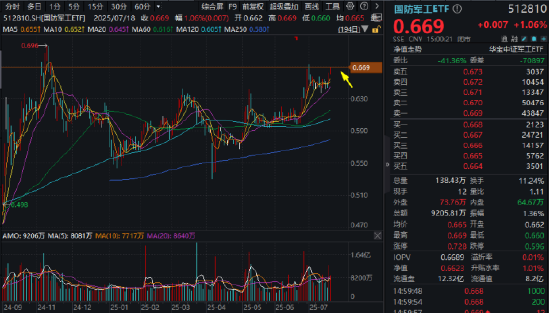
8个月新高,国防军工ETF初露锋芒!中航沈飞续刷历史新高!后续催化密集,当前或仍处于布局窗口期
Xin Lang Ji Jin· 2025-07-18 12:00
Market Overview - On July 18, the A-share market experienced an upward trend, with the Shanghai Composite Index rising by 0.5% to close at 3534.48 points, and the ChiNext Index increasing by 0.34%. Market sentiment improved, leading to a trading volume of 1.59 trillion yuan [1]. Defense and Military Industry Performance - The defense and military sector continued to show strong performance, with the popular defense and military ETF (512810) rising by 1.06%, marking its highest closing price since November 14, 2024. The ETF recorded a trading volume of 92.06 million yuan for the day [1]. - For the week of July 14-18, the defense and military ETF (512810) accumulated a gain of 2.45%, achieving a four-week consecutive increase, with a total weekly trading volume of 404 million yuan, significantly higher than the previous week [2]. Earnings Forecasts and Stock Performance - As of July, the defense and military sector was primarily in a phase of adjustment, influenced by mid-year earnings expectations. However, from July 17 onwards, the sector began to rebound as several companies released positive earnings forecasts, indicating a recovery in the sector's fundamentals [3]. - Among the 29 component stocks of the defense and military ETF that have released mid-year earnings forecasts, 23 are expected to report profits. Notably, 11 companies are projected to see their net profits double, with Aerospace Science and Technology showing a growth rate exceeding 23 times [3]. Notable Stock Movements - The defense and military ETF's component stocks saw 59 stocks rise and 21 decline, with several stocks reaching historical or recent highs. Notable performers included AVIC Shenyang Aircraft Company, which rose by 2.92%, and Yingliu Co., which surged by 3.44% [4]. Future Outlook - The outlook for the defense and military sector appears promising, with multiple catalysts expected to drive growth. Short-term improvements in Q2 earnings are anticipated due to increased orders and a stabilization in military component orders. The sector is expected to gain further attention as the September 3 military parade approaches, potentially leading to structural investment opportunities [6]. - Long-term prospects are bolstered by geopolitical factors, such as the India-Pakistan conflict, which may enhance China's defense industry's profile and stimulate military trade. The upcoming centenary of the military in 2027 is also expected to sustain high demand for military equipment [6]. Investment Strategy - The defense and military ETF (512810) is highlighted as a strategic investment option, offering exposure to both traditional and emerging military capabilities. It includes a diverse range of sectors such as commercial aerospace, low-altitude economy, large aircraft, deep-sea technology, and military AI. The ETF is considered a low-risk investment vehicle with a lower entry threshold compared to individual stocks [7].