伊利股份

Search documents
伊利集团捐赠1000万港元 紧急驰援香港大埔火灾救援
Jing Ji Guan Cha Wang· 2025-11-28 01:47
经济观察网 11月26日,中国香港大埔宏福苑突发重大火灾,造成重大人员伤亡与财产损失,灾情牵动 人心。 伊利集团第一时间启动应急响应机制,联合中国红十字基金会捐赠1000万港元紧急驰援。这笔善款将专 项用于受灾同胞的医疗救助、紧急安置及过渡期生活保障等。 ...

老年用品被列入下一个“万亿级”消费市场 促消费新方案给出这些指引
Di Yi Cai Jing· 2025-11-28 01:12
Core Insights - The implementation plan aims to create three trillion-level consumption sectors and ten hundred-billion-level consumption hotspots by 2027, focusing on elderly products, smart connected vehicles, and consumer electronics [1] Group 1: Elderly Products Market - The elderly products market is projected to grow from 2.6 trillion yuan in 2014 to 5.4 trillion yuan by 2024, with a compound annual growth rate of 7.3%, highlighting its significance in the silver economy [1] - By 2024, the elderly population aged 65 and above in China is expected to reach 220 million, accounting for 15.6% of the total population, indicating a growing consumer base with potential spending power [1] Group 2: Product Development and Recommendations - The plan suggests enhancing the research and design of elderly-friendly products, including nursing service robots, multifunctional nursing beds, and health monitoring devices [2] - It recommends launching comfortable, functional, and stylish clothing for the elderly, as well as food products that cater to their chewing, swallowing, and nutritional absorption needs [2] - The plan encourages the establishment of elderly-friendly product promotion directories and the creation of dedicated sections for silver consumption on e-commerce platforms and supermarkets [2] Group 3: Market Opportunities and Challenges - The development of elderly-friendly products is already underway in various industries, particularly in medical devices targeting cardiovascular and neurodegenerative diseases [2] - The market for elderly nutritional supplements is currently fragmented due to a lack of specific standards, with some products inadequately meeting the physiological needs of older adults [2][3] - There is significant market potential in the leisure and entertainment needs of middle-aged and elderly individuals, with varying preferences observed between urban and rural populations [3]
老年用品被列入下一个“万亿级”消费市场,促消费新方案给出这些指引
Di Yi Cai Jing· 2025-11-28 01:08
Core Insights - The article emphasizes the importance of optimizing the supply of age-friendly products in response to China's aging population and the growing consumer potential among elderly individuals [1][2]. Group 1: Market Potential - By 2024, the elderly population aged 65 and above in China is projected to reach 220 million, accounting for 15.6% of the total population, indicating a significant market for age-friendly products [1]. - The market size for elderly products has grown from 2.6 trillion yuan in 2014 to 5.4 trillion yuan in 2024, with a compound annual growth rate of 7.3%, highlighting the importance of the silver economy [1]. Group 2: Product Development - The plan suggests enhancing the research and design of age-friendly products, focusing on essential items such as elderly care robots, multifunctional nursing beds, and health monitoring devices [2]. - There is a need for comfortable, functional, and stylish clothing for the elderly, as well as food products that cater to their chewing, swallowing, and nutritional absorption needs [2]. Group 3: Industry Trends - The development of age-friendly products is already underway in various sectors, including medical devices targeting cardiovascular and neurodegenerative diseases [2]. - The recent draft of the national standard for elderly nutritional supplements marks a significant step in addressing the specific dietary needs of individuals aged 60 and above [3]. Group 4: Leisure and Lifestyle - There is a substantial market opportunity in the leisure and entertainment needs of middle-aged and elderly individuals, with differing preferences observed between urban and rural populations [3].
走不出舆论风波 维他奶内地收入再降
Guo Ji Jin Rong Bao· 2025-11-27 15:09
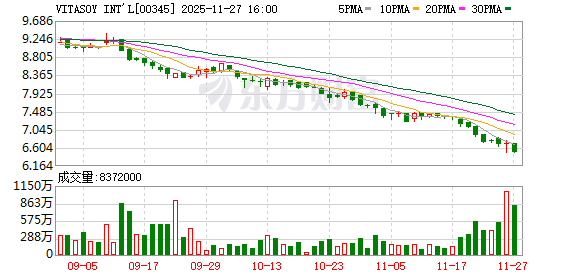
Core Viewpoint - Vitasoy International's performance in the mainland China market has been adversely affected by a previous public relations crisis, leading to a decline in revenue and market competitiveness. Group 1: Financial Performance - For the six months ending September 30, Vitasoy International reported a revenue of HKD 3.227 billion, a year-on-year decrease of 6% [2] - Operating profit was HKD 247 million, down 4% year-on-year, while profit attributable to shareholders slightly increased by 1% to HKD 172 million, largely due to cost-cutting measures that reduced total operating expenses by 7% [2] - Revenue from the mainland market was HKD 1.778 billion, a decline of 9% year-on-year, with a slight decrease in gross margin to 51.1% due to lower product prices and increased promotional spending [3] Group 2: Market Challenges - The decline in Vitasoy's mainland revenue is attributed to a long-standing impact from a public relations crisis in July 2021, which led to significant brand damage and a 22.77% drop in revenue for the 2022 fiscal year [3] - The company has faced ongoing revenue declines in the mainland market, with a slight recovery only expected in the 2025 fiscal year [3] - Vitasoy's product and channel strategies are losing competitiveness in a fiercely competitive mainland market, with traditional retail channels slowing down and consumers shifting towards e-commerce and chain snack stores [4] Group 3: Competitive Landscape - The plant-based milk sector is still growing, but the market growth rate has slowed, with increased competition from both new and established brands [5] - In the tea beverage segment, competition has intensified, particularly with the rise of new brands and the proliferation of chain tea shops, which have impacted Vitasoy's lemon tea sales and market share [5] Group 4: Management and Future Outlook - Since the public relations crisis in July 2021, Vitasoy's leadership has seen two changes, with the founder's second-generation leader, Lo Yau Lee, being 84 years old and not yet retired [6] - Despite short-term challenges in the mainland market, the executive chairman expressed confidence in the long-term growth potential and plans to optimize channels and innovate products, focusing on low-sugar and no-sugar options [6]


走不出舆论风波,维他奶内地收入再降
Guo Ji Jin Rong Bao· 2025-11-27 15:09
Core Viewpoint - Vitasoy International's performance in the mainland China market has been significantly impacted by a previous public relations crisis, leading to a decline in revenue and market competitiveness. Group 1: Financial Performance - For the six months ending September 30, Vitasoy International reported a revenue of HKD 3.227 billion, a year-on-year decrease of 6% [1] - Operating profit was HKD 247 million, down 4% year-on-year, while net profit attributable to shareholders slightly increased by 1% to HKD 172 million, largely due to cost-cutting measures that reduced total operating expenses by 7% [1] - Revenue from the mainland China market was HKD 1.778 billion, a decline of 9% year-on-year, with a slight decrease in gross margin to 51.1% due to lower product prices and increased promotional spending [1] Group 2: Market Challenges - The decline in Vitasoy's mainland market performance is attributed to a long-standing issue stemming from a public relations crisis in July 2021, which led to a significant drop in revenue and a shift from profit to loss in the 2022 fiscal year [3] - The company has faced ongoing revenue declines in the mainland market for two years, with only a slight recovery projected for the 2025 fiscal year [3] - Vitasoy's product and channel strategies are losing competitiveness in a rapidly evolving market, with traditional retail channels slowing down and consumers shifting towards e-commerce and chain snack stores [3] Group 3: Competitive Landscape - The plant-based milk sector is experiencing growth, but the market's growth rate is slowing, with increased competition from both new and established brands [6] - The tea beverage segment is highly competitive, with a surge in demand for sugar-free tea leading to new brands gaining market share, impacting Vitasoy's lemon tea sales [6] Group 4: Management Perspective - Since the public relations crisis, Vitasoy has seen two changes in leadership for its mainland operations, with the founder's second-generation leader, Lo Yau Lee, still at the helm at the age of 84 [7] - The executive chairman expressed confidence in the long-term potential for growth in the mainland market, emphasizing plans to optimize channels and innovate products, focusing on low-sugar and sugar-free options [7]
受困传统零售 维他奶国际降价寻增
Bei Jing Shang Bao· 2025-11-27 14:26
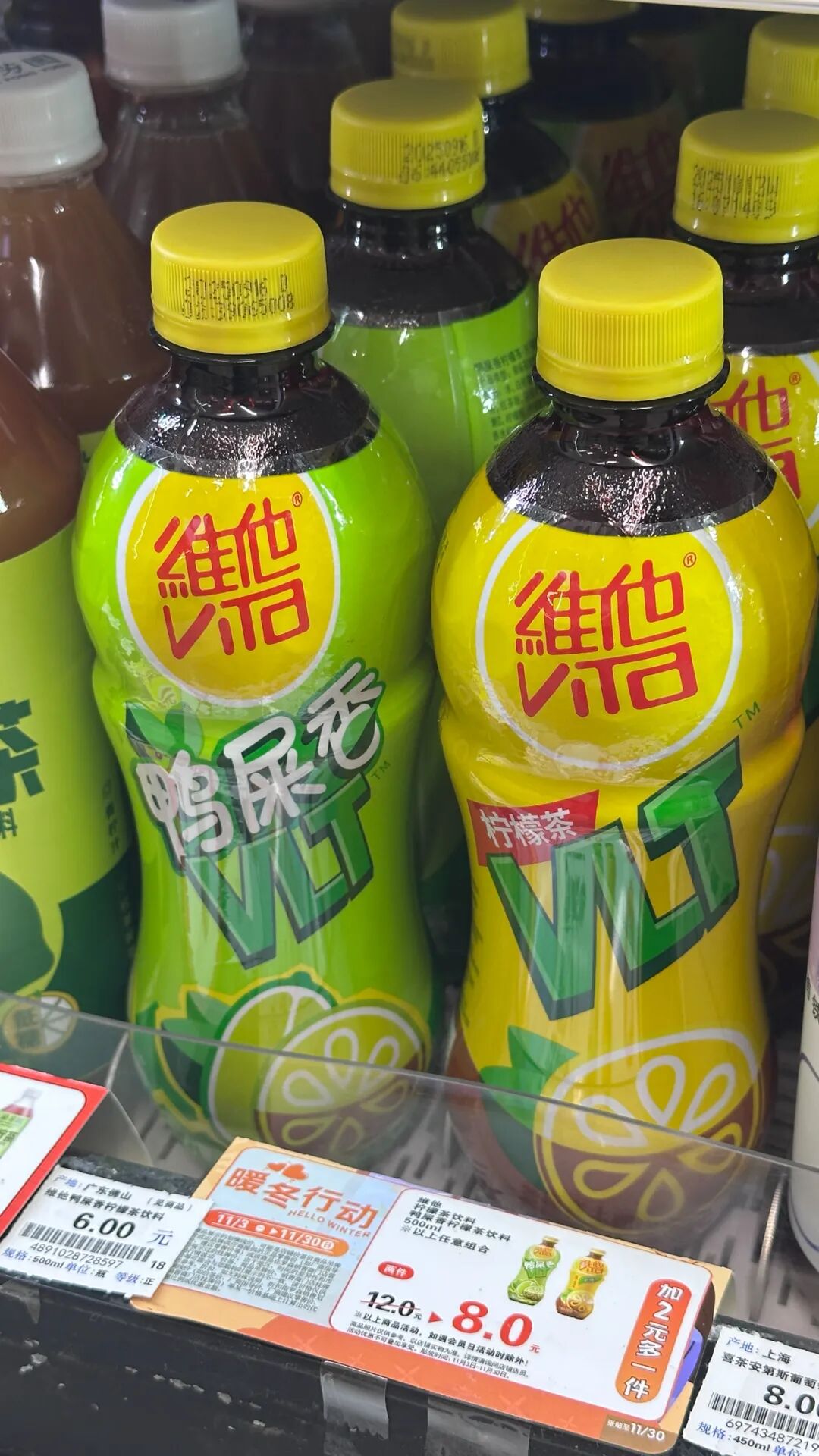
Core Viewpoint - Vitasoy International reported a 6% decline in revenue for the first half of the 2025/2026 fiscal year, primarily due to a weak market and intensified competition in the plant-based milk sector, posing challenges for the company's growth [2] Revenue Performance - The company's revenue for the first half of the fiscal year was HKD 3.227 billion, down from the previous year [2] - Revenue from mainland China decreased by 9.19% to HKD 1.778 billion, while net profit fell by 12.45% to HKD 192 million [3] - Mainland China accounts for approximately 55% of Vitasoy's total revenue and 63.07% of its net profit [3] Strategic Initiatives - To counteract declining sales, Vitasoy implemented cost optimization measures, maintaining an operating profit margin of 11% in mainland China [3] - The company introduced innovative products like the "Vitasoy Lemon Tea" to enhance its market share in the ready-to-drink tea category [3] - A price reduction of 10%-15% for Vitasoy Lemon Tea was attempted to respond to industry price wars, resulting in increased market share [3] Market Challenges - Vitasoy's business in Hong Kong also faced growth pressures, with a 4% revenue decline attributed to weak performance in its Vitasoy Tian Di business and adverse weather conditions affecting sales [4] - The company continues to hold a leading position in the non-alcoholic beverage market in Hong Kong, supported by successful product launches [4] Long-term Outlook - Despite short-term challenges, the company remains confident in its long-term growth potential, aiming to increase the proportion of low-sugar or no-added-sugar products to 80% by the 2030/2031 fiscal year [5] - The company is focusing on expanding its presence in southern China and Southeast Asia to capture growth opportunities [6]
受困传统零售,维他奶国际降价寻增
Bei Jing Shang Bao· 2025-11-27 14:13
Core Viewpoint - Vitasoy International reported a 6% decline in revenue for the first half of the 2025/2026 fiscal year, totaling HKD 3.227 billion, primarily due to a weak market and intensified competition in the plant-based milk sector [1] Revenue Performance - Revenue from mainland China decreased by 9.19% to HKD 1.778 billion, while net profit fell by 12.45% to HKD 192 million, with mainland China accounting for approximately 55% of total revenue and 63.07% of net profit [3] - The overall revenue decline was attributed to a contraction in traditional retail channels, despite maintaining an operating profit margin of 11% through cost optimization measures [4] Product Strategy - Vitasoy introduced innovative products like the "Vitasoy Lemon Tea" to enhance market share in the ready-to-drink tea category amid slowing growth in plant-based and tea products [4] - A price reduction of approximately 10%-15% for Vitasoy Lemon Tea was implemented to respond to industry price wars, resulting in increased market share [4] Market Challenges - The Hong Kong business also faced growth pressures, with a 4% revenue decline attributed to weak performance in Vitasoy's subsidiary, Macau, and export markets [5] - Adverse weather conditions during the typhoon season negatively impacted business operations, particularly in the Vitasoy subsidiary [5] Competitive Landscape - Vitasoy faces significant competition from companies like Mengniu, Yili, and DaLi Foods, which have launched their own soy milk products, as well as the rise of sugar-free tea and ready-to-drink brands that compete with Vitasoy's offerings [6] - The company plans to increase the proportion of low-sugar or no-added-sugar products to 80% by the 2030/2031 fiscal year to align with health-conscious consumer trends [6] Future Outlook - Analysts suggest that Vitasoy's focus on cost reduction and efficiency improvements, along with potential market opportunities in southern China and Southeast Asia, could support future growth [7]
伊利集团副总裁张轶鹏:消费者需要更加精准的营养产品,乳品深加工已成为行业升级的关键
Sou Hu Cai Jing· 2025-11-27 09:16
Core Viewpoint - The Chinese dairy industry is transitioning from a focus on quantity to a focus on quality, with an emphasis on precision and functionality in nutritional products, making deep processing a key to industry upgrade [2][4]. Group 1: Industry Trends - The demand for more precise, professional, and functional nutritional products is increasing among consumers, leading to a shift in the dairy industry [2]. - The deep processing of dairy products is becoming essential for industry advancement [2]. Group 2: Company Innovations - Yili Group has invested 17 years in developing a breakthrough technology for the directional extraction and protection of lactoferrin, successfully breaking foreign technological monopolies [5][6]. - Yili has established a diverse health product matrix, transitioning from a dairy company to a "health food group," covering various categories including liquid milk, ice cream, milk powder, yogurt, cheese, and more [7]. Group 3: Market Performance - In the first half of 2025, Yili achieved an 18.1% market share in the infant formula retail sector, ranking first in the industry [9]. - Yili's infant goat milk powder business experienced a 65.7% growth overseas, gaining consumer trust [9]. Group 4: Global Strategy - Yili has built a global industrial system with 81 production bases and 15 innovation centers, with products available in over 60 countries and regions [4]. - The company has integrated global resources for milk source, research, and manufacturing, establishing the largest Chinese breast milk research database [9].

反弹高度受限,调仓注重赔率
Orient Securities· 2025-11-27 07:50
Core Insights - The report indicates that the market is experiencing a "rebalancing," with funds flowing from previously high-performing technology sectors to relatively undervalued sectors such as resources, consumption, and manufacturing [8] - The short-term rebound in the technology growth sector is limited due to overhead pressure and a lack of investor interest, while some industries like non-bank financials and steel show improved capital returns [8] - The food and beverage industry is expected to have short-term opportunities and mid-term performance improvements driven by supply-side factors, focusing on companies that can expand market share and optimize customer resources [8] Market Strategy - The market is likely to maintain a volatile pattern, suggesting investors should consider reallocating to sectors that will benefit from marginal improvements in economic conditions next year [8] - Key ETFs mentioned for potential investment include the CSI 500 ETF and CSI 1000 ETF [8] Sector Strategy - The food and beverage sector is highlighted for its potential, with specific recommendations for companies like Yili (伊利股份) and Salted Fish (盐津铺子) due to their market positioning and growth strategies [8] - The report emphasizes the importance of identifying leading companies that can leverage competitive advantages during the current market conditions [8] Theme Strategy - The robotics industry is noted for its transition from demonstration to practical application, with significant advancements in technology and increased order volumes for companies like Linker Hand and the four-legged robot "Steel Coin" [8] - Relevant ETFs for the robotics sector include various options that focus on this emerging technology [8]
东兴证券晨报-20251127
Dongxing Securities· 2025-11-27 07:13
Core Insights - The report highlights the trend of the logistics industry shifting from quantity competition to quality development, driven by the "anti-involution" movement, which aims to improve profitability and service quality [8][10] - The company has adjusted its business volume guidance for the year to 38.2-38.7 billion pieces, reflecting a year-on-year growth of 12.3%-13.8%, down from the previous guidance of 38.8-40.1 billion pieces [8][10] - The company's single ticket revenue has shown a slight increase of 1.7% year-on-year, reaching 1.21 yuan per ticket, indicating a recovery in revenue despite previous declines [9][10] Company Performance - In Q3 2025, the company achieved a business volume of 9.573 billion pieces, a year-on-year increase of 9.8%, while its market share decreased by 0.6 percentage points to 19.4% [8] - The adjusted net profit for Q3 was 2.506 billion yuan, reflecting a year-on-year growth of 5.0% [8] - The company reported a decrease in single ticket core costs by 0.04 yuan, with transportation costs dropping from 0.39 yuan to 0.34 yuan, contributing to improved profitability [9][10] Industry Trends - The logistics industry is experiencing a decline in overall volume growth, with industry growth rates dropping from 12.7% in September to 7.9% in October [8] - The report notes that the "Double Eleven" shopping festival saw lower-than-expected volume growth, further impacting industry dynamics [8] - The focus on quality over quantity is expected to continue, with the company anticipating a decline in volume growth but an increase in single ticket profitability in Q4 [10]