vivo

Search documents
手机厂商暂缓采购存储芯片,DRAM库存低于三周
Xin Lang Ke Ji· 2025-11-14 12:36
Core Viewpoint - Multiple smartphone manufacturers have paused their procurement of storage chips due to soaring prices, with some facing DRAM inventory levels below three weeks, while the demand from data centers driven by AI models is pushing prices higher [1][2]. Group 1: Market Dynamics - Smartphone manufacturers like Xiaomi, OPPO, and vivo are experiencing low inventory levels, with DRAM stocks generally under two months and some below three weeks [1]. - The price increase for storage chips is driven by a surge in demand from data centers, which are willing to pay over 30% more than smartphone manufacturers for the same products [1][2]. - Major storage manufacturers, including Samsung and SK Hynix, have reduced their NAND flash supply in the second half of the year to drive prices up [1][2]. Group 2: Production Adjustments - Samsung has lowered its NAND wafer production target for the year from 5.07 million to 4.72 million, while Kioxia and SK Hynix have also reduced their production targets [2]. - The shift towards quad-level cell (QLC) technology due to AI demand is contributing to the decline in NAND flash production [2]. - Panic buying among North American tech companies has led to some suppliers having their NAND supply for next year fully booked [2]. Group 3: Impact on Smartphone Industry - The rising prices of storage chips are causing uncertainty among smartphone manufacturers regarding whether to reduce specifications or increase prices [3]. - Companies like SMIC have reported cautious procurement behavior in the mobile and networking sectors due to supply shortages and price hikes [3]. - The current inventory levels of major manufacturers are nearing depletion, indicating limited room for price reductions [3]. Group 4: Future Outlook - Even if manufacturers choose to increase production, it will take one to two years to meet current market demand [4]. - The prevailing strategy among major manufacturers is to reduce production to maximize profits, suggesting that storage chip prices may continue to rise in the first half of next year [5].


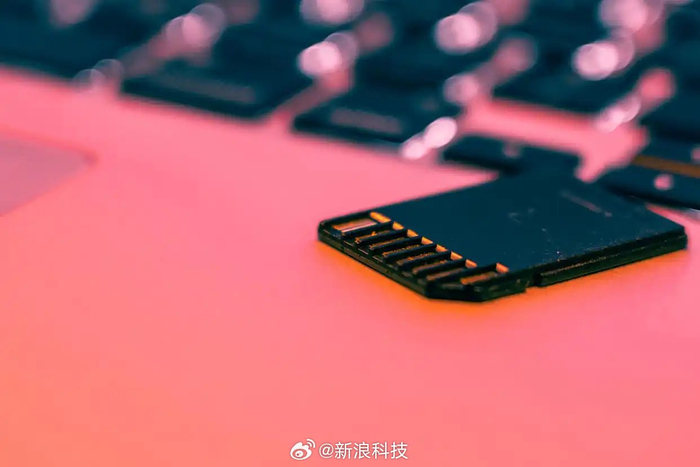
【独家】多家手机厂商暂缓采购存储芯片,部分厂商库存不足三周
Xin Lang Cai Jing· 2025-11-14 11:49
Core Viewpoint - The surge in upstream storage chip prices has led several smartphone manufacturers, including Xiaomi, OPPO, and vivo, to pause their procurement for the current quarter, as they face significant price increases of nearly 50% from suppliers like Micron, Samsung, and SK Hynix [1][5]. Group 1: Market Dynamics - The demand for storage chips has surged due to the AI model wave, with data centers willing to pay over 30% more than smartphone manufacturers for the same products [1]. - Major storage manufacturers, including Samsung and SK Hynix, have reduced their NAND flash supply in the second half of the year to drive up prices [1][2]. - Samsung has lowered its NAND wafer production target for the year from 5.07 million to 4.72 million, a decrease of about 7% [2]. Group 2: Pricing Trends - The price of DDR5 DRAM surged by 25% within a week after Samsung paused its contract pricing for October [1]. - SanDisk raised its NAND flash contract prices by 50% in November, prompting other major manufacturers to follow suit [4]. - The cost of storage chips typically accounts for 10%-30% of a smartphone's total cost, with high-end models seeing costs exceed 20% [5]. Group 3: Supply Chain Implications - Smartphone manufacturers are currently cautious in their procurement strategies due to rising costs, with many projects being halted due to high storage chip prices [5]. - Semiconductor companies like SMIC have delayed shipments of mobile products due to supply shortages and price increases [5]. - The current inventory levels of major manufacturers are nearing depletion, limiting their ability to lower prices [5]. Group 4: Future Outlook - Even if manufacturers choose to increase production, it will take one to two years to meet current market demand [6]. - The ongoing AI demand may have speculative elements, and true demand levels may not be clear until next year [6]. - It is anticipated that storage chip prices will continue to rise in the first half of next year due to reduced production by major suppliers [6].

段永平最新访谈:聊巴菲特、苹果、茅台、拼多多、特斯拉,永远要算你的机会成本
Guan Cha Zhe Wang· 2025-11-14 09:51
Core Insights - The interview with Duan Yongping, a renowned investor and entrepreneur, provides a comprehensive review of his investment philosophy, personal experiences, and views on corporate culture and education [1][2]. Investment Philosophy - "Buying stocks means buying companies" emphasizes the importance of understanding the underlying business when investing [2]. - Duan believes that investment is simple but not easy, highlighting the challenges faced by investors [2]. - He stresses that investment requires selling, countering the common misconception that value investing means holding indefinitely [2]. - Understanding business operations is crucial for successful investing, as demonstrated by his familiarity with companies like Apple, Tencent, and Moutai [2]. Personal Experiences - Duan's upbringing in a rural environment and the freedom given by his parents shaped his decision-making abilities and confidence [7][9]. - He emphasizes the importance of providing children with a sense of security and autonomy in their decision-making [9][10]. - Duan's career path involved several relocations and job changes, driven by a desire to find suitable environments for growth [19][18]. Corporate Culture - The corporate culture at his companies, such as BuBuGao, evolved organically, reflecting shared values among employees rather than being imposed top-down [23][24]. - Duan advocates for a culture of integrity, user orientation, and a focus on doing the right things, which he believes is essential for long-term success [24][25]. - He highlights the significance of trust and clear communication in establishing effective corporate governance [20][21]. Decision-Making and Values - Duan emphasizes the importance of making decisions based on long-term comfort rather than immediate benefits, which has guided his career choices [19]. - He believes that having a shared value system among team members is crucial for organizational success, as it fosters collaboration and reduces conflicts [28][29]. - The concept of a "not-to-do list" reflects a proactive approach to avoid mistakes and focus on what aligns with the company's values [25][27].



最后一代股神
3 6 Ke· 2025-11-14 07:32
Core Insights - The article discusses the interactions between Warren Buffett and Dong Yongping, highlighting their mutual respect and influence on each other's investment philosophies [1][3][5]. Group 1: Key Meetings - Buffett and Dong have met three times, with the first meeting in 2006 when Dong paid $620,000 for a lunch with Buffett, expressing gratitude for his investment insights [3][5]. - Their second meeting occurred in 2018, where Dong discussed Apple's business model, which Buffett later credited for his significant investment in Apple [5][6]. - The last face-to-face meeting was during the 2022 Berkshire Hathaway annual meeting, where Buffett acknowledged Dong's influence on his investment decisions regarding Apple [6][8]. Group 2: Investment Philosophy - Dong emphasizes that investing is about understanding business models, a principle he learned from Buffett, which shaped his investment approach of "buying companies, not just stocks" [5][9]. - Dong's successful investments include significant stakes in companies like NetEase, Yahoo, and Apple, with Apple being a major contributor to Buffett's investment success [8][15]. - Dong's investment strategy is rooted in his entrepreneurial background, having founded successful companies like Bubugao, which later evolved into OPPO and Vivo [11][12]. Group 3: Current Market Dynamics - The article notes the challenges both Buffett and Dong face in the current AI-driven market, with Dong acknowledging the difficulty of understanding new technologies like AI and its impact on traditional investment strategies [16][20]. - Dong's recent investments in companies like NVIDIA reflect a cautious approach to not miss out on potential opportunities in the AI sector, despite his reservations about the technology [20].


与C++之父面对面、共庆四十周年!直击AI算力、系统软件、研发智能化:2025全球C++及系统软件技术大会核心专题揭晓
AI科技大本营· 2025-11-14 05:55
Core Viewpoint - The "2025 Global C++ and System Software Technology Conference" will be held in Beijing, focusing on the new paradigms and future directions of system software in the AI-native era, featuring prominent figures like Bjarne Stroustrup, the father of C++ [1][2]. Group 1: Conference Overview - The conference will gather top compiler experts, system software architects, and engineers to discuss the intersection of AI and system software [1][2]. - It aims to redefine the computing foundation and engineering paradigms in the intelligent era [2]. Group 2: Key Topics and Speakers - The conference will cover various core topics, including modern C++ best practices, AI-driven software development, AI computing and optimization, and system-level software challenges [4][5][11][22]. - Notable speakers include Bjarne Stroustrup, John Lakos, and experts from companies like Xiaomi, Bloomberg, and Adobe, who will share insights on software architecture, AI integration, and modern C++ applications [7][11][12]. Group 3: AI and Software Development - The shift from "automation" to "intelligence" in software development will be a key focus, emphasizing the role of large models as collaborative partners for developers [11][12]. - Discussions will include the transition of software development processes to AI-native paradigms, ensuring sustainable evolution and quality assurance [11][12]. Group 4: AI Computing and Optimization - The "AI Computing and Optimization" topic will explore the foundational paradigms of intelligent computing, addressing challenges in heterogeneous computing and system-level optimization [18][20]. - Experts will present innovative solutions for optimizing AI model inference and managing diverse hardware architectures [20][22]. Group 5: System-Level Software Challenges - System-level software is crucial for the stable and efficient operation of intelligent applications, facing challenges in performance, reliability, and scalability [22][24]. - Experts will share practices and insights on compiler optimization and edge deployment challenges in AI software stacks [22][24]. Group 6: Software Quality and Development Efficiency - The conference will highlight the importance of development efficiency and software quality as competitive advantages in the AI and large model technology landscape [25]. - Topics will include intelligent testing, quality visualization, and the integration of AI in software engineering processes [25][30]. Group 7: High Performance and Low Latency - High performance and low latency are critical for system software innovation, with discussions on optimizing database kernels, operating systems, and execution paths [31][30]. - Experts will share practical experiences and technical insights on achieving performance breakthroughs through code optimization [31][30]. Group 8: Concurrency and Parallelism - The conference will address the significance of concurrency and parallelism in enhancing system performance, featuring discussions on the latest trends and breakthroughs in parallel computing [36][37]. - Experts will explore the design and implementation of efficient data transmission and task scheduling in heterogeneous computing environments [37]. Group 9: Invitation to Participate - The conference invites technology experts, corporate representatives, developers, and open-source contributors to join in exploring the future of C++ and system software [43][45]. - It serves as a platform for showcasing cutting-edge achievements, fostering technical collaboration, and expanding industry partnerships [44][45].

“一天一个价!”比黄金还猛!消费者:一个月,价格涨了一两千元
Zhong Guo Jing Ji Wang· 2025-11-14 04:40
Core Insights - The storage industry is experiencing a super cycle driven by AI giants' aggressive procurement, leading to significant price increases for memory products [1][5][10] - The rising costs are impacting smartphone manufacturers, particularly during the peak sales season of "Double 11" [1][3][11] Group 1: Price Surge and Market Dynamics - Prices for solid-state drives and memory modules have doubled in just two months, with DRAM prices increasing by 171.8% year-on-year in Q3 [1][5] - Major manufacturers like Samsung and SK Hynix have halted contract pricing for DDR5 DRAM due to rapid price increases [1][5] - The demand for storage is being driven by AI data centers and cloud service providers, who are less price-sensitive and are engaged in a "computing arms race" [5][6] Group 2: Impact on End Products - Smartphone manufacturers like Xiaomi are raising prices for new models due to increased memory costs, with significant price hikes noted for the K90 series [3][11] - The price of PC components has also surged, with reports of increases of 1,000 to 2,000 yuan for certain models during the "Double 11" sales [12] - The overall gross margin for companies like Xiaomi has been affected, dropping from 14.6% to 12.6% due to rising core component prices [11] Group 3: Future Outlook and Strategies - The current supply constraints are expected to persist, with many manufacturers locking in orders for 2027, exacerbating the tight supply situation [10][13] - Companies are exploring ways to mitigate the impact of rising memory costs by developing smaller models and enhancing storage chip capabilities [14][15] - The competition for HBM (High Bandwidth Memory) is intensifying, with major players like Samsung aiming to secure a leading position in the next generation of memory technology [6][9]
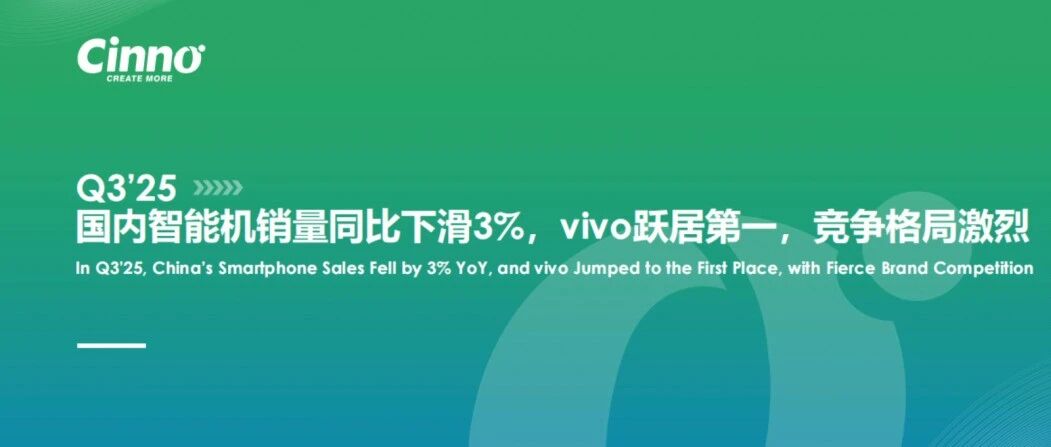
2025年Q3国内智能机销量同比下滑3%,vivo跃居第一,竞争格局激烈
CINNO Research· 2025-11-13 23:32
Core Insights - The domestic smartphone market in China experienced a 3% year-on-year decline in sales in Q3 2025, with vivo emerging as the leading brand amidst intense competition [3]. Group 1: Sales Trends - From Q1 2023 to Q3 2025, the overall sales volume of smartphones in the Chinese market showed a downward trend, indicating a challenging environment for manufacturers [3]. - The analysis includes detailed year-on-year comparisons of smartphone sales, highlighting the competitive dynamics among various brands [3]. Group 2: Brand Performance - vivo has taken the lead in the Chinese smartphone market, surpassing other brands in terms of sales volume during Q3 2025 [3]. - The report provides insights into the sales trends of other major brands, including OPPO, Xiaomi, Huawei, HONOR, and Apple, showcasing their performance relative to vivo [3]. Group 3: Price Segment Trends - The report analyzes the price segment trends of smartphones in the Chinese market from Q1 2023 to Q3 2025, indicating shifts in consumer preferences and pricing strategies among brands [3]. - Specific trends in the pricing of vivo smartphones are highlighted, reflecting the brand's strategy in a competitive landscape [3].

创新国际产业与标准生态系统 提高大湾区产业链全球竞争力
Sou Hu Cai Jing· 2025-11-13 23:11
Core Viewpoint - The 2025 Consumer Electronics Innovation Conference (CEIC) held in Shenzhen emphasized the importance of standards as a technical foundation for economic activities and social development, highlighting the role of the Shenzhen Gongshang Industry and Standard Innovation Service Center in building an innovative international industry and standard ecosystem [5][6]. Group 1: Establishment of the "1+6" Ecosystem - The first international industry and standard organization cluster in China was established in He Tao, forming a "1+6" international industry and standard ecosystem, with the Gongshang Service Center at its core [6]. - The "1" represents the Gongshang Service Center, while the "6" includes six international organizations such as the World Wireless Local Area Network Application Development Alliance (WAA) and the International Star Flash Wireless Short-Distance Communication Alliance (SA) [6]. - This ecosystem is becoming a significant force in promoting international industry and standard cooperation in the Guangdong-Hong Kong-Macao Greater Bay Area [6]. Group 2: Achievements of the Gongshang Service Center - Under the leadership of Director Hou Yan, the Gongshang Service Center has contributed to the high-quality development of international alliances, enhancing the global competitiveness of the Greater Bay Area's industrial chain [7]. - As of October 2025, the He Tao international industry and standard organization cluster has produced 196 standards, published 50 reports, tested and certified 489 products, and developed nearly 2,500 members [7]. - The "1+6" model has achieved significant results, creating a broad social impact and establishing an innovative international industry and standard ecosystem [7]. Group 3: Role of International Standard Organizations - International standard organizations play a crucial role in connecting Chinese enterprises with international markets, as exemplified by the three major international standard organizations (ITU, IEC, ISO) [8]. - These organizations publish international standards that impact various sectors, facilitating global trade and economic interactions [8]. - The presence of six international organizations in He Tao, including WAA and the International Star Flash Wireless Short-Distance Communication Alliance, enhances the region's capacity for technological innovation and industry development [8]. Group 4: Future Plans of the Gongshang Service Center - The Gongshang Service Center plans to continue optimizing its service system and enhancing its digital infrastructure, particularly the AllianceHub platform [9]. - There is a focus on improving service capabilities and professional levels to better support the international influence of the He Tao international industry and standard organization cluster [9]. - The center aims to ensure that all services are conducted within an open, transparent, and compliant framework, contributing to the global leadership of international organizations in technological innovation [9].

实探华强北:内存条炒成“黑色金条” 有人待价而沽有人开始回笼资金
Zheng Quan Shi Bao· 2025-11-13 17:49
Core Viewpoint - The memory market is experiencing a significant price surge, with some products seeing price increases of up to three times since April 2023, driven by supply shortages and rising demand from AI infrastructure investments [1][2][4]. Price Surge Details - Prices for various memory products have doubled or tripled, with a 64GB LPDDR5 memory module increasing from around 1000 yuan to 4200 yuan [2]. - The price of 16GB DDR4 memory has risen from under 200 yuan to over 400 yuan as of November 13, 2023 [2]. - Many shop owners in Huaqiangbei have seen their paper wealth increase by millions within six months due to this price surge [2]. Market Dynamics - The price increase is attributed to a mismatch between supply and demand, primarily driven by the expansion of AI data centers [4][6]. - Major tech companies like Alibaba and Microsoft are significantly increasing their investments in AI infrastructure, further driving demand for high-capacity memory products [4][5]. - The demand for memory in AI servers is reported to be 3 to 8 times higher than that of regular servers, leading to tight supply for high-end storage products [4]. Supply Chain Adjustments - Major memory manufacturers such as SK Hynix, Samsung, and Micron are prioritizing high-margin products and reducing production of lower-margin items like DDR4 [6]. - The current price increase cycle is expected to last until supply and demand reach equilibrium, potentially extending for 1 to 2 years [6]. Impact on Consumer Electronics - The rising prices of memory products are affecting the costs of consumer electronics, leading to increased prices for assembled computers and smartphones [7]. - For instance, the price of the Redmi K90 series smartphones has increased significantly due to higher storage costs, with some models seeing price hikes of up to 600 yuan [7]. - Companies like Xiaomi have publicly acknowledged the impact of rising memory costs on their pricing strategies [7]. Opportunities for Domestic Manufacturers - The current shortage in the memory market presents a valuable opportunity for domestic manufacturers to capture market share as global supply chains face disruptions [8]. - The low domestic production rates of NAND and DRAM products indicate potential for growth as local firms enhance their technology and product offerings [8].
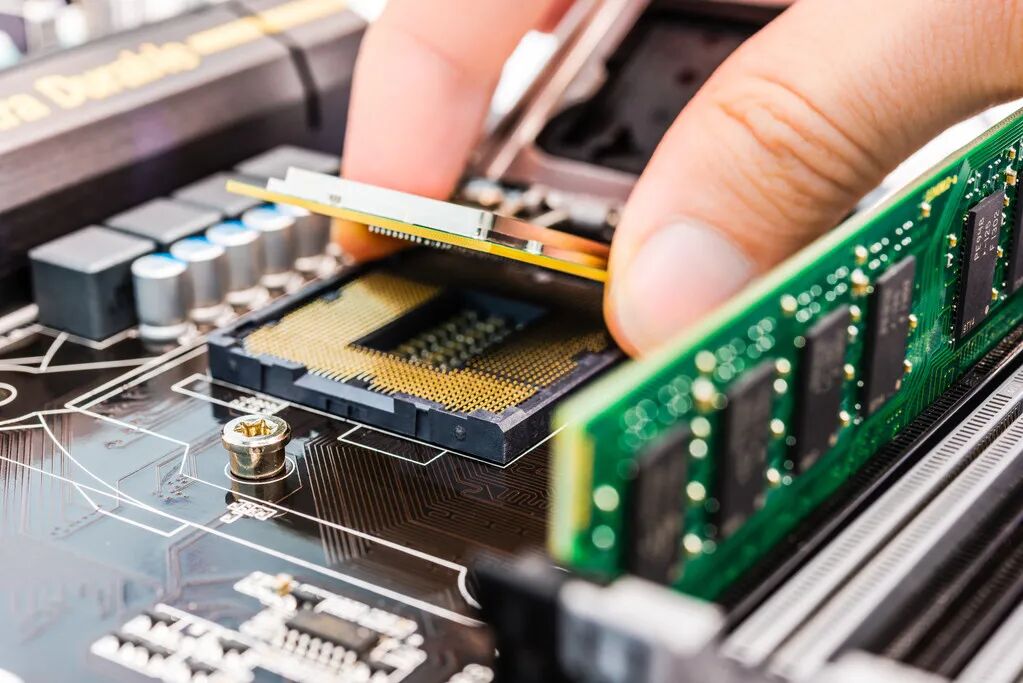
疯狂的内存,被炒成了“金条”
虎嗅APP· 2025-11-13 09:47
Core Insights - The article discusses the significant price surge in memory storage products driven by AI companies' aggressive procurement strategies, leading to a super cycle in the storage industry [4][5][9] - The price of DRAM chips has increased by 171.8% year-on-year in Q3, with SSD prices also doubling in a short period [4][6] - Major tech companies are investing heavily in AI data centers, which is a key factor pushing storage prices higher [9][11] Group 1: Price Surge and Market Dynamics - AI giants are hoarding memory products, causing a drastic increase in prices, with solid-state drives and memory modules seeing prices double within two months [4][5] - The price of a 16GB Samsung DDR4 memory module rose from 200 yuan in September to 400 yuan in November, compared to just over 100 yuan for the same product last year [4] - Companies like Xiaomi are facing challenges in maintaining profit margins due to rising storage costs, with their smartphone gross margin dropping from 14.6% in 2023 to 12.6% in 2024 [12] Group 2: Impact on End Products - The price increases have affected consumer electronics, with smartphone prices rising significantly; for instance, Xiaomi's K90 series saw a price increase of 600 yuan for a specific model [5][12] - PC components are also experiencing price hikes, with some consumers reporting increases of 1,000 to 2,000 yuan for desktop PCs during the shopping season [13] - Companies are struggling to manage the impact of rising storage costs on their product pricing and sales strategies [13] Group 3: Future Outlook and Industry Response - The demand for storage is expected to continue outpacing supply, with many manufacturers already locking in orders for 2027 [11] - Companies are exploring ways to mitigate the impact of rising costs, such as developing smaller AI models that require less memory [14][15] - The industry is also focusing on increasing production capacity for memory chips to stabilize prices in the long term [14][15]