
巨子生物

Search documents
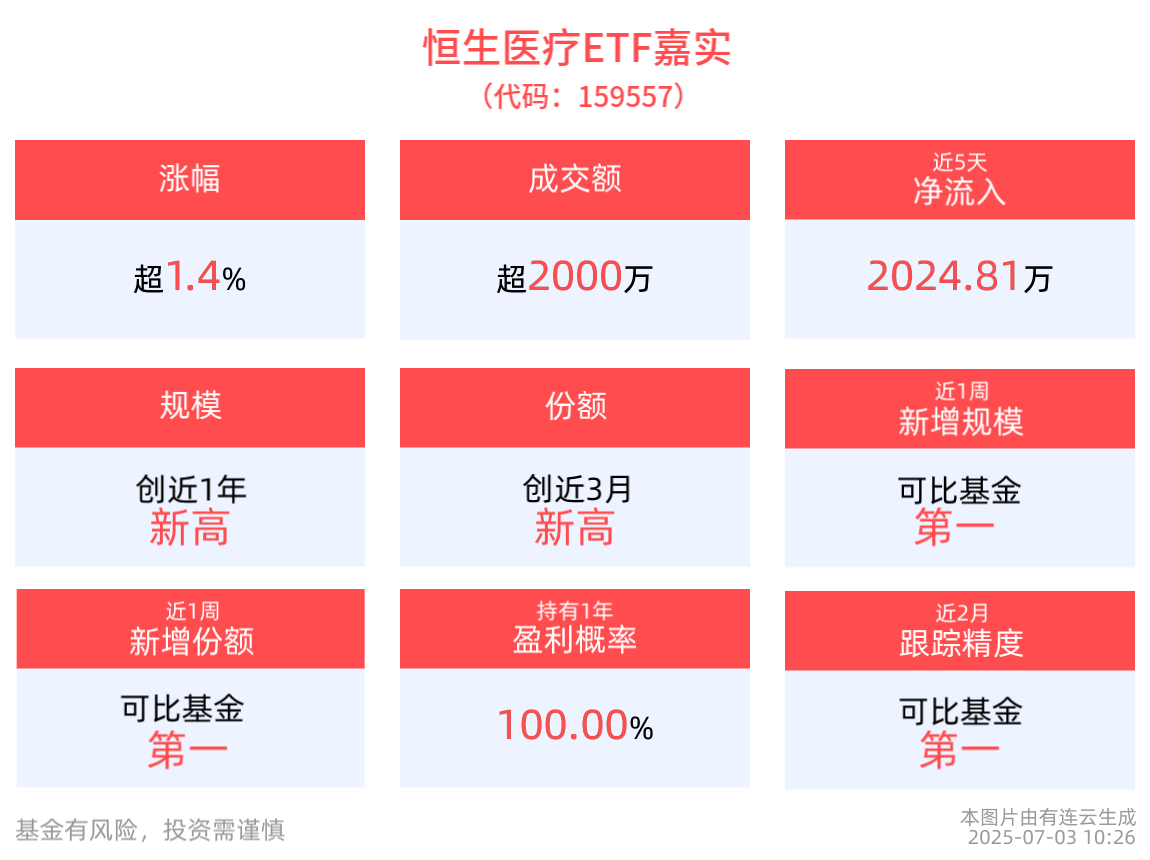
最新资金净流入超2000万元,恒生医疗ETF嘉实(159557)上涨1.48%,规模创近1年新高!
Sou Hu Cai Jing· 2025-07-03 02:53
Core Viewpoint - The Hang Seng Healthcare Index has shown strong performance, with significant increases in constituent stocks, indicating a positive trend in the healthcare sector [1][2]. Group 1: Market Performance - As of July 3, 2025, the Hang Seng Healthcare Index rose by 1.67%, with notable gains from stocks such as Huahao Zhongtian Pharmaceutical-B (+16.97%) and Ascentage Pharma-B (+7.11%) [1]. - The Hang Seng Healthcare ETF (Jia Shi, 159557) increased by 1.48% [1]. - The ETF recorded a turnover of 6.64% and a transaction volume of 21.35 million yuan, with an average daily transaction volume of 46.55 million yuan over the past month [2]. Group 2: Fund Performance - The latest scale of the Hang Seng Healthcare ETF reached 315 million yuan, marking a one-year high, with the latest share count at 221 million, also a three-month high [2]. - The ETF has seen a net inflow of 2.048 million yuan recently [2]. - Over the past year, the net value of the ETF has increased by 68.77%, ranking 16th out of 122 QDII equity funds, placing it in the top 13.11% [2]. Group 3: Valuation Metrics - The current price-to-earnings ratio (PE-TTM) of the Hang Seng Healthcare Index is 27.19, which is in the 9.23rd percentile over the past three years, indicating a valuation lower than 90.77% of the historical data [2]. Group 4: Sector Composition - The top ten weighted stocks in the Hang Seng Healthcare Index account for 57.72% of the index, including companies like Innovent Biologics, BeiGene, and WuXi Biologics [3][5]. - The top stocks have shown varied performance, with notable increases in companies like XinDa Biologics (+6.12%) and Kangfang Biologics (+6.95%) [5]. Group 5: Industry Outlook - According to Xiangcai Securities, the domestic innovative drug industry is expected to reach a turning point in 2025, shifting from capital-driven to profit-driven growth, presenting opportunities for both performance and valuation recovery [6]. - The commercialization of innovative products and the acceleration of research outcomes are expected to support market recovery [6].

平安证券晨会纪要-20250703
Ping An Securities· 2025-07-03 01:05
Group 1: Core Insights - The new generation of consumers, raised in the internet and mobile internet era, emphasizes experience, authenticity, self-focus, and personalization, driving changes in travel, retail, beauty, and pet sectors [2][6][8] - The tourism consumption potential is continuously being released, with a focus on broad beneficiaries in the OTA platform sector, particularly in domestic travel and inbound tourism [6][7] - Retail is returning to consumer demand itself, with traditional retail showing differentiated performance across categories, and recommendations include Alibaba and Yonghui Supermarket [7][8] Group 2: Industry Recommendations - In the beauty and pet sectors, domestic brands are thriving, with significant growth rates of 20-30% or more in specific segments like skincare and pet food [8] - The bond market is experiencing wide fluctuations due to policy uncertainties, with U.S. Treasury yields showing a downward trend in early months and an overall increase in May [3][9] - The credit spread in the credit bond market has slightly increased, but the overall increase is manageable due to stable hard data from the U.S. economy [9][11] Group 3: Market Trends - The commodity market shows varied performance, with crude oil prices down by 12.12% over the past week, while gold prices increased by 1.87% [4] - The U.S. labor market is showing signs of slowing down, with a surprising decrease in private sector employment in June, raising concerns about economic momentum [16][17] - The second-hand car market in China remains in a downturn, with the manager index at 42.3%, indicating a lack of demand and increased risks in transactions [19]
被华熙生物暗指“伪科学”!巨子生物回应:不作评价
Nan Fang Du Shi Bao· 2025-07-02 15:23
Core Viewpoint - Huaxi Biological asserts that claims exempt from scientific verification are inherently pseudoscientific, emphasizing the necessity of measurable and verifiable scientific methods in the industry [1][2]. Group 1: Huaxi Biological's Position - Huaxi Biological argues that the absence of standardized testing methods does not negate the existence of scientific methods for validation, using their product "Runbaiyan" as an example of verifiable testing results for recombinant collagen [2][5]. - The company highlights the use of High-Performance Liquid Chromatography-High-Resolution Mass Spectrometry (HPLC-HRMS) as a reliable method to accurately measure recombinant collagen content, claiming it effectively avoids complex matrix interference [5][12]. Group 2: Response from Juzhi Biological - Juzhi Biological acknowledged the limitations of their existing quality standards and testing methods in a statement, indicating a need for continuous optimization to meet industry advancements [6][9]. - The company plans to collaborate with research institutions to enhance the qualitative and quantitative detection methods for recombinant collagen in cosmetics, aiming for greater transparency and industry standardization [9][10]. Group 3: Testing Method Controversy - The debate over testing methods arose when beauty blogger Dazui Doctor (Hao Yu) questioned the recombinant collagen content in a product, using a high-precision HPLC amino acid quantification method, which Juzhi Biological claimed was not included in industry standards [10][11]. - Experts noted that both HPLC amino acid quantification and HPLC-HRMS methods have their unique applications and challenges, particularly in detecting low concentrations of collagen in complex cosmetic formulations [12][13].

市值蒸发300亿后,陕西女首富“认输”了,但市场仍在追问真相
凤凰网财经· 2025-07-02 13:50
Core Viewpoint - The article discusses the recent controversy surrounding Juzhi Biotechnology (巨子生物) and its admission of limitations in quality standards and testing methods, which has raised further questions about the integrity of its products and the broader implications for the industry [2][4][10]. Group 1: Company Response and Market Impact - Juzhi Biotechnology acknowledged its limitations in quality standards and testing methods, marking a significant shift from its previous defensive stance against accusations regarding its collagen products [4][10]. - Following the controversy, Juzhi's stock price fell from 87.1 HKD to 53.9 HKD, resulting in a market capitalization loss of over 330 billion HKD [10]. - The company's internal investor meeting indicated confidence in recovering from short-term impacts, despite the ongoing public skepticism [4][11]. Group 2: Industry Context and Competition - The controversy highlights a broader "ingredient war" between Juzhi Biotechnology and Huaxi Biotechnology (华熙生物), with both companies competing in the collagen and hyaluronic acid markets [14][15]. - Huaxi Biotechnology, a leader in the hyaluronic acid market, has criticized Juzhi's claims about collagen superiority, emphasizing the lack of scientific basis for such assertions [15][16]. - The article suggests that the current lack of unified testing standards in the collagen industry poses challenges for quality control and consumer trust [17][19]. Group 3: Consumer Trust and Market Dynamics - The incident has led to a decline in consumer trust, particularly among core users who prioritize ingredient efficacy, which could have long-term repercussions for Juzhi's brand reputation [12][13]. - The article notes a shift in consumer behavior towards more informed purchasing decisions, moving from concept-driven marketing to a focus on ingredient transparency and scientific validation [23][24]. - The controversy may catalyze regulatory changes and industry standards, potentially leading to a market reshuffle where companies lacking core R&D capabilities may struggle to survive [22][24].

护发赛道成美妆品牌新战场
Bei Jing Shang Bao· 2025-07-02 13:13
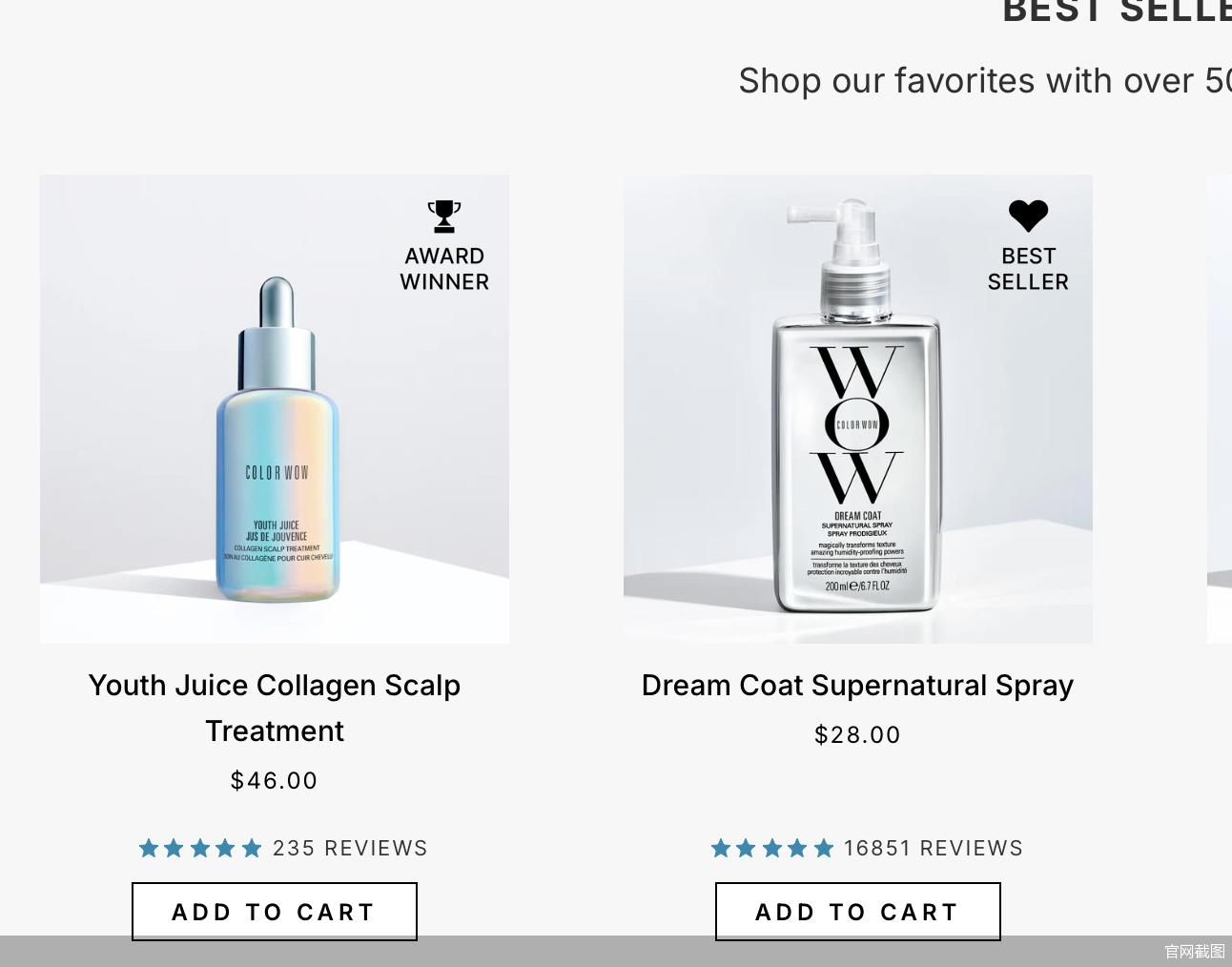
Core Insights - The acquisition of Color Wow by L'Oréal marks a strategic move to expand its high-end hair care portfolio and enter the growing Chinese market [1][4] - The hair care market in China is rapidly expanding, with significant competition among beauty brands to capture market share [7][8] Group 1: Acquisition Details - L'Oréal has signed an agreement to acquire Color Wow, a professional hair care brand founded in 2013, known for addressing stubborn hair issues [4] - Color Wow's sales have reportedly doubled over the past three years, with total sales exceeding $300 million and a target valuation of $1 billion [4] - The acquisition is seen as a way for L'Oréal to strengthen its position in the hair care and styling categories [4][5] Group 2: Market Dynamics - The Chinese hair care market is projected to grow from 581.4 billion yuan in 2021 to an estimated 668-691 billion yuan by 2025, driven by scalp care, premiumization, and export growth [7] - L'Oréal's professional hair care division has shown consistent growth, with a 5.3% increase in sales in 2024 and a 2.7% increase in Q1 2025 [5] - Competitors like Proya and Juhua Group are also expanding their presence in the hair care sector, indicating a highly competitive landscape [7][10] Group 3: Competitive Landscape - The hair care market in China is characterized by established brands like Procter & Gamble and Unilever, with L'Oréal ranking behind them in market share [10] - New entrants face challenges in a mature market, requiring strong technological differentiation and effective branding to succeed [11] - The competitive pressure is evident as brands like Proya and others are rapidly launching new products and expanding their market reach [7][10]

社会服务行业2025年中期策略报告:新世代、新需求、新消费-20250702
Ping An Securities· 2025-07-02 08:30
Group 1: Core Insights - The new generation of consumers, raised in the internet and mobile internet era, emphasizes experiential consumption, authenticity, and personalization, driving changes in travel, retail, beauty, and pet sectors [3][12] - The tourism sector is expected to continue its recovery, with domestic travel projected to reach 5.75 trillion yuan in 2024, a 17.1% increase year-on-year, and 56.15 billion domestic trips anticipated, marking a 14.8% growth [18][21] - The retail sector is returning to consumer demand, with traditional retail showing growth in essential goods and cultural consumption, while e-commerce platforms are focusing on optimizing consumer experiences [42][45] Group 2: Tourism Sector - Domestic tourism is recovering, with urban residents expected to make 43.7 billion trips in 2024, a 16.3% increase, and rural residents 12.45 billion trips, a 9.9% increase [18] - International travel is rebounding, with 1.23 billion outbound trips in 2024, a 41% increase, and inbound tourism expected to grow by 60.8% to 1.32 billion visitors [21][26] - OTA platforms like Ctrip and Tongcheng are benefiting from the recovery in travel demand and are expanding their inbound tourism services [27] Group 3: Retail Sector - The retail market is experiencing steady growth, with social retail sales expected to rise, and online retail growth slowing down as platforms focus on consumer needs [42][45] - Traditional retailers like Yonghui Supermarket are undergoing significant transformations to meet consumer demands, with a focus on quality and customer experience [57] - The cross-border e-commerce sector is adapting to changing tariff policies, with companies like Yiwu Market playing a crucial role in global supply chains [58][62] Group 4: Beauty and Pet Industries - The beauty and pet sectors are witnessing rapid growth, with domestic brands achieving revenue growth rates of 20-30% in niche markets [68][72] - The pet industry in China has surpassed 300 billion yuan in market size, reflecting the growing trend of pet ownership and related consumption [68] - Companies in the beauty sector, such as Aimeike, are expected to see growth due to lower base effects and strategic acquisitions [75]
预见2025:《2025年中国医美注射材料行业全景图谱》(附市场现状、竞争格局和发展趋势等)
Qian Zhan Wang· 2025-07-02 03:44
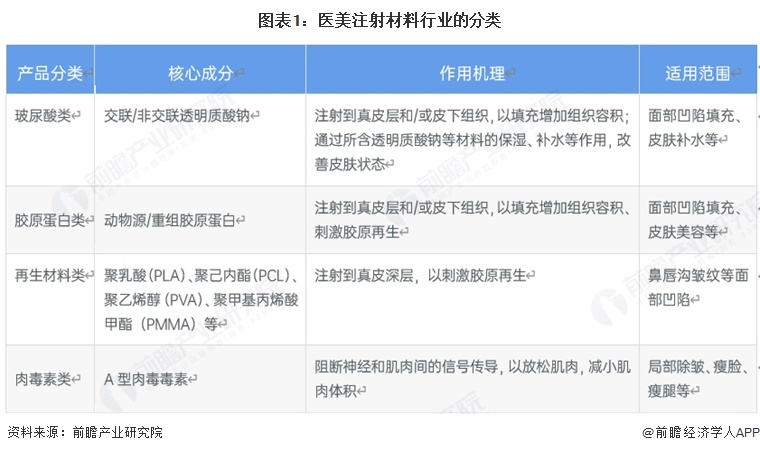
Industry Overview - The medical beauty injection products mainly include hyaluronic acid, collagen, regenerative materials, and botulinum toxin, with hyaluronic acid and collagen being classified as medical devices, while botulinum toxin is categorized as a toxic medical drug [1][2][5] Industry Chain Analysis - The upstream of the medical beauty injection materials includes raw materials and equipment manufacturing, while the midstream focuses on product research and manufacturing, and the downstream consists of sales channels such as public hospitals and private chains [2][5] Industry Development History - The Chinese medical beauty injection materials market has evolved from reliance on imports to self-innovation, with significant milestones including the approval of the first domestic hyaluronic acid filler in 2009 and the emergence of domestic leaders like Huaxi Biological, Aimeike, and Haohai Biological by 2015 [6][8] Industry Policy Background - Regulatory measures have been strengthened since 2019, with guidelines issued for the clinical trial of hyaluronic acid products and stricter management of medical beauty injection materials to enhance product quality and safety [9][11][12] Current Industry Status - The market size of China's medical beauty injection materials is projected to reach approximately 34.6 billion yuan in 2024, reflecting a year-on-year growth of 28.6% and a CAGR of 31.3% from 2021 to 2024 [14][16] Market Structure - Hyaluronic acid and botulinum toxin dominate the market, with hyaluronic acid accounting for about 36% and botulinum toxin for about 29% of the total market share [17][19] Competitive Landscape - Major competitors in the hyaluronic acid market include Huaxi Biological, Aimeike, and Haohai Biological, while the botulinum toxin market is primarily represented by Lanzhou Biological, which is currently the only domestic company with approved products [23][25] Future Industry Outlook - The medical beauty injection materials market is expected to reach 93.7 billion yuan by 2030, driven by technological advancements, compliance, and the rise of male consumers [28][30] Industry Development Trends - Key trends include the long-lasting and precise application of materials, the rise of intelligent and customized solutions, and increased regulatory scrutiny leading to higher approval thresholds for injection materials [32]

2025年国内创新药产业有望迎来拐点,恒生医疗ETF嘉实(159557)冲击3连涨
Sou Hu Cai Jing· 2025-07-02 02:40
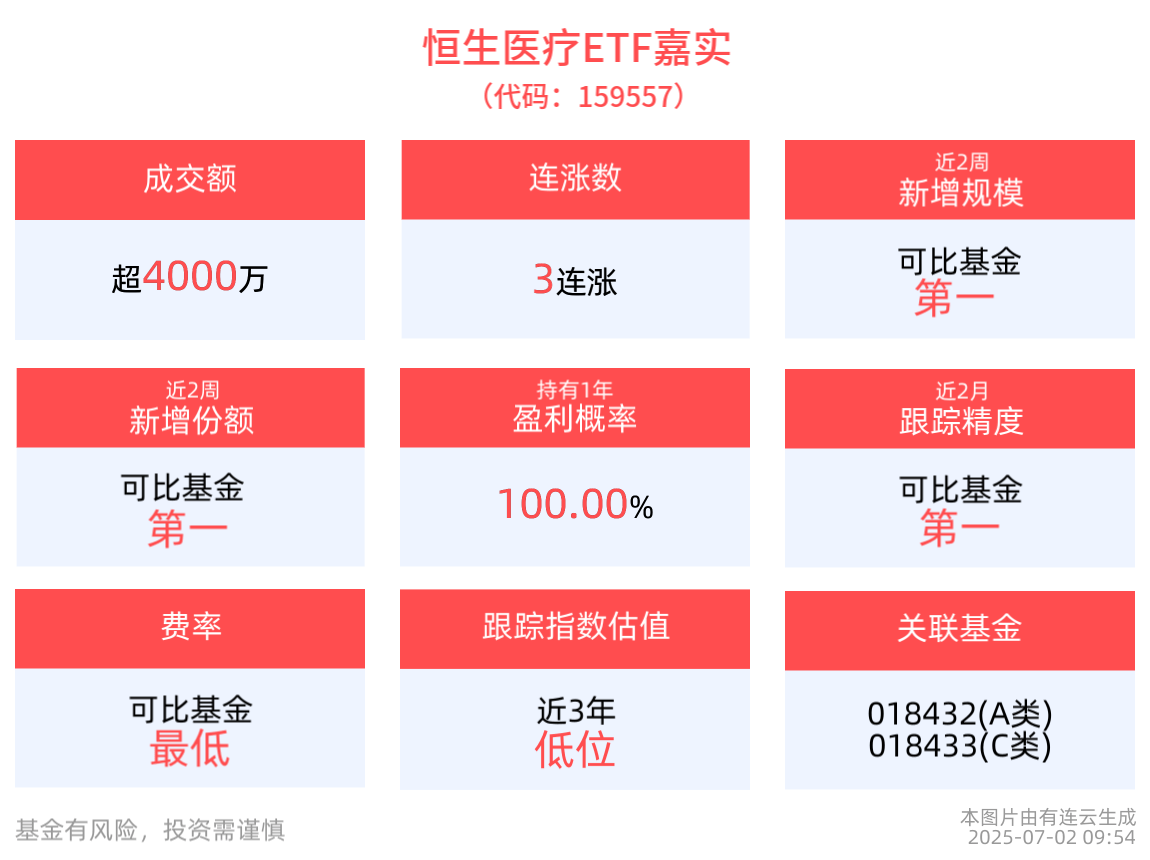
Core Viewpoint - The Hang Seng Healthcare Index has shown strong performance, with significant gains in constituent stocks, indicating a positive trend in the healthcare sector [1][3]. Group 1: Market Performance - As of July 2, 2025, the Hang Seng Healthcare Index rose by 1.75%, with notable increases in stocks such as SiPai Health (+46.34%) and HuaHao ZhongTian Pharma-B (+22.68%) [1]. - The Hang Seng Healthcare ETF (159557) experienced a 0.62% increase, marking its third consecutive rise [1]. - The trading volume for the Hang Seng Healthcare ETF was active, with a turnover of 43.37 million yuan and a turnover rate of 14.33% [3]. Group 2: Fund Performance - The Hang Seng Healthcare ETF has seen a significant increase in scale, growing by 5.73 million yuan over the past two weeks, ranking first among comparable funds [3]. - The ETF's net asset value increased by 66.32% over the past year, placing it 16th out of 119 QDII equity funds, which is in the top 13.45% [3]. - The ETF has recorded a maximum monthly return of 23.84% since its inception, with an average monthly return of 7.67% during rising months [3]. Group 3: Valuation Metrics - The current price-to-earnings ratio (PE-TTM) of the Hang Seng Healthcare Index is 27.1, which is at a historical low, being in the 8.88th percentile over the past three years [3]. - The top ten weighted stocks in the Hang Seng Healthcare Index account for 57.72% of the index, with notable companies including Innovent Biologics and BeiGene [4][6]. Group 4: Industry Outlook - Recent measures from the National Healthcare Security Administration and the National Health Commission aim to support the high-quality development of innovative drugs, focusing on R&D support and inclusion in insurance directories [6]. - Analysts from Huayuan Securities and Xiangcai Securities express optimism for the innovative drug sector, anticipating a shift from capital-driven growth to profit-driven growth in 2025 [7].
重组胶原蛋白之争未休:巨子生物承认局限性,华熙生物送检润百颜
Xin Jing Bao· 2025-07-02 01:19
Core Viewpoint - The ongoing debate between two major companies regarding the restructuring of collagen detection methods highlights the industry's need for standardized testing protocols and the challenges posed by varying product quality in the market [1][4][6]. Group 1: Company Actions and Statements - Huaxi Biological published an article asserting the need for industry standards based on testing results, revealing that their product "Runbaiyan" was tested for collagen content using advanced HPLC-HRMS technology, yielding a result of 0.60 mg/g (0.06%) for type III collagen [2][3]. - Huaxi Biological emphasized that their testing method effectively eliminates matrix interference and ensures accurate detection of recombinant collagen, addressing concerns about the reliability of their results [2][3]. - Juzhi Biological acknowledged the limitations of their existing quality standards and testing methods, stating the need for continuous optimization to meet industry advancements and consumer expectations [5][6]. Group 2: Industry Implications - The debate over collagen measurement methods has been ongoing since May, with Huaxi Biological criticizing misleading conclusions from industry reports and calling for a unified testing standard [4][6]. - Juzhi Biological has committed to collaborating with research institutions to enhance detection methods and to gradually disclose key technical parameters and quality control data to foster industry development and transparency [5]. - The lack of a unified detection method has been described as a strategy to evade scrutiny, highlighting the industry's regulatory challenges and the necessity for verifiable solutions [6].
化妆品医美行业25Q2业绩前瞻:新消费长坡厚雪,美护板块强者恒强
Shenwan Hongyuan Securities· 2025-07-01 14:55
Investment Rating - The report rates the cosmetics and medical beauty industry as "Positive" [2][3] Core Viewpoints - The cosmetics retail sales growth for January to May 2025 is 4.1%, an increase of 2 percentage points compared to the same period last year, indicating a steady recovery in demand [3] - The performance of leading brands remains strong, with double-digit growth, supported by the theme of self-care in new consumption trends, leading to a positive outlook for the first half of 2025 [3] - The 618 shopping festival saw strong performances from domestic brands, with notable rankings on platforms like Tmall and Douyin [3] Summary by Sections Cosmetics Industry Outlook - The report anticipates significant revenue and net profit growth for major companies in Q2 and H1 2025, with specific forecasts: - Up Beauty Co. is expected to see a revenue increase of 16% and a net profit increase of 25% [3] - Marubi is projected to grow revenue by 22% and net profit by 28% in Q2 2025 [3] - Proya is expected to achieve a revenue growth of 10% and net profit growth of 15% in Q2 2025 [3] Key Companies Performance - Notable companies and their expected performance include: - Mao Geping is projected to have a revenue increase of 38% and net profit increase of 35% in H1 2025 [3] - Ruibin is expected to see a revenue increase of 15% and net profit increase of 15% in Q2 2025 [3] - Huaxi Biological is expected to maintain stable performance with a 0% revenue growth and a 10% net profit increase in Q2 2025 [3] Investment Recommendations - The report recommends focusing on companies with strong brand matrices and comprehensive product layouts, such as Up Beauty Co., Marubi, and Proya, which are expected to benefit from the live e-commerce traffic [3] - It also highlights the importance of niche market players like Ruibin and Mao Geping, who are positioned to capitalize on the rise of personal care and domestic beauty trends [3] - For the medical beauty sector, the report suggests focusing on companies with high R&D barriers and strong profitability, recommending companies like Aimeike and Langzi [3] E-commerce and Other Segments - The report suggests monitoring e-commerce companies like Ruibin, which is expected to see significant growth in revenue and net profit [3] - In the maternal and infant sector, Kid King is projected to exceed market expectations with a revenue increase of 10% and a net profit increase of 70% in Q2 2025 [3]

