三星

Search documents
独家对话研极微创始人:80人做到近100亿营收后,要把AI摄像头插到田间地头
Sou Hu Cai Jing· 2026-01-21 01:05
Core Insights - The article highlights the journey of Yang Zuoxing, founder of Bit Micro, who transitioned from a chip designer to an entrepreneur focused on AI chips and low-power camera technology [9][10][12]. Company Overview - Bit Micro, founded by Yang Zuoxing, has achieved significant sales growth, reaching 1.3 billion yuan in sales within two years of its establishment [9]. - The company aims to disrupt the traditional camera market by developing wireless, low-power AI cameras that eliminate the need for power cables [12][21]. Technology and Innovation - The core technology of Bit Micro is the "fully customized chip design methodology," which allows for extreme energy efficiency tailored to specific needs [12][13]. - The company has successfully migrated this methodology to develop low-power chips for AI applications, achieving a performance of 40 to 50 teraflops per watt [16][18]. Market Position and Strategy - Bit Micro's product, the "CINMOORE" AI camera, has become a market leader in the battery camera category within a year of its e-commerce launch [12]. - The company anticipates that the market for wireless cameras could grow from a billion-level to a trillion-level market by 2035, with a projected annual shipment of 10 billion units [12][28]. Financial Performance - Despite significant sales growth, Bit Micro is currently experiencing strategic losses, with an expected loss of over 700 million yuan in 2025, which is seen as necessary for ongoing investment in chip development [34]. - The company aims to narrow losses to 300-400 million yuan by 2026 and achieve breakeven by 2027 [34]. Competitive Landscape - Bit Micro faces competition from established players like Hikvision and Dahua, but aims to differentiate through innovative features and pricing strategies [24][28]. - The company plans to expand its market presence by focusing on user-friendly installation and leveraging its unique technology to capture market share [21][32]. Future Outlook - The company is committed to continuous innovation and aims for a tenfold increase in sales annually, with a focus on both consumer and business markets [33][34]. - Bit Micro is also exploring international markets, with a strategy to adapt products to local needs and regulations [27].


Omdia:2025年,印度智能手机出货量因需求疲软与成本压力下滑1%,vivo保持市场领先地位
Canalys· 2026-01-21 01:02
Core Insights - The Indian smartphone market is expected to see a year-on-year decline of 7% in Q4 2025, with shipments dropping to 34.5 million units, influenced by high channel inventory, currency depreciation, and rising storage costs affecting purchasing power in the mid-to-low-end market [2][11] - Vivo maintained its leading position in Q4 2025 with shipments of 7.9 million units, capturing a market share of 23%, followed by Samsung with 4.9 million units (14% share) and OPPO with 4.6 million units (13% share) [2][11] - The overall smartphone shipments for India in 2025 are projected to be 154.2 million units, reflecting a mild decline of 1% year-on-year, indicating a trend towards a more mature market [2][12] Market Dynamics - Brands are adjusting their Minimum Official Prices (MOP) to cope with rising component costs, particularly in price-sensitive models, leading to a cautious approach from retailers and a slowdown in shipments from November [5][8] - Vivo and OPPO are the only brands to achieve double-digit year-on-year growth, showcasing their strong retail execution and ability to attract consumer demand [5][8] - Samsung's shipments have slowed despite maintaining a value-driven strategy through selective upgrades and cashback offers, while Xiaomi's volume has declined, relying heavily on entry-level models [8][10] Future Outlook - The Indian smartphone market is expected to experience a slight decline in 2026, driven by high prices and limited upgrade opportunities, with a shift towards value-driven growth strategies among Chinese brands focusing on the ₹25,000–₹60,000 price segment [10] - Brands will increasingly rely on channel leverage, including service bundling, financing options, and trade-in programs, as hardware differentiation becomes limited due to rising storage costs [10] - Retail execution capabilities, including promotional strength and localized sales strategies, will be crucial for maintaining market stability amid cautious consumer demand [10]



TMT行业周报(1月第2周):阿里巴巴举办千问产品发布会
Century Securities· 2026-01-21 00:25
Investment Rating - The report does not explicitly state an investment rating for the industry, but it suggests a positive outlook for Alibaba and related sectors, indicating a favorable investment environment [2]. Core Insights - Alibaba's "Qianwen" product launch signifies a shift in AI capabilities from a "Q&A assistant" to a "task executor," integrating over 400 functions across its ecosystem, which is expected to enhance user engagement and commercial viability [3][5]. - The emergence of the GEO (Generative Engine Optimization) business model is transforming marketing strategies, shifting focus from SEO to GEO, which is anticipated to benefit marketing agencies and authoritative media platforms while traditional traffic platforms may face challenges [3][5]. - The TMT sector showed a strong performance in the week of January 12-16, with notable gains in sub-sectors such as portal websites and semiconductor equipment, outperforming the broader market [3][5]. Market Weekly Review - The TMT sector's performance from January 12-16 showed a rise in the computer sector by 3.82%, electronics by 3.77%, media by 2.04%, and communication by 1.42%, collectively outperforming the CSI 300 index, which fell by 0.57% [3][5]. - The top-performing sub-industries included portal websites (17.69% increase), integrated circuit packaging and testing (14.47% increase), and semiconductor equipment (9.31% increase) [3][5]. Industry News and Key Company Announcements - Alibaba's "Qianwen" product launch on January 15 is a significant event, showcasing its AI capabilities and integration with various services [3][5]. - The report highlights the rapid growth of the "Qianwen" app, which achieved over 100 million monthly active users within two months of launch, indicating strong market acceptance [3][5]. - The report notes that the GEO model is expected to enhance the profitability of marketing agencies and elevate the status of authoritative media platforms, while traditional traffic platforms may experience a decline [3][5].

1月21日早餐 | 一揽子扩内需政策出炉;外围走弱
Xuan Gu Bao· 2026-01-20 23:59
先看海外要闻: 美股大跌,道指收跌1.76%、纳指收跌2.39%、标普500收跌2.06%;英伟达收跌4.38%,特斯拉跌4.17%,苹果跌3.46%,亚马逊跌3.40%,Meta跌 2.60%,谷歌A跌2.42%,微软跌1.16%。 马斯克兑现承诺,开源X推荐算法。 大家早上壕! OpenAI与ServiceNow在商业软件领域达成AI Agent合作协议。 分析师:2030年前 OpenAI广告年收入有望达250亿美元。 报道:三星美国厂3月启动EUV试产,计划下半年量产特斯拉AI芯片。 花旗集团将闪迪目标股价从280美元上调至490美元。 Neuralink首例受试者:脑机接口已能实现OTA升级。 据央视,加拿大百年来首次模拟美国军事入侵;丹麦官员称欧盟已准备好对美国商品加征反制关税。 财政部长贝森特:美国计划对关键矿产设定价格下限和上限。 美国天然气期货日内涨超25%。 COMEX黄金期货涨3.70%,报4765.50美元/盎司,盘中一度刷新历史高位至4771.50美元。 国内重大事件汇总: 1、习近平:努力提高国民经济循环质量和效率,让内需成为经济发展的主动力。(新华社) 到2026年底,台积电WM ...
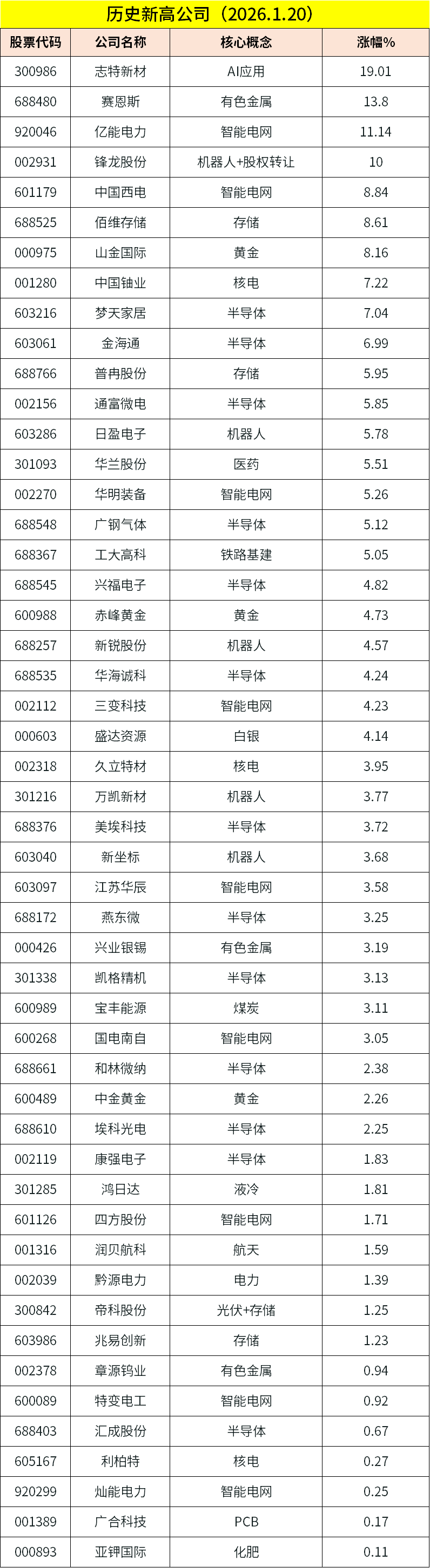
韩厂减产 NAND催动价格飙涨 群联、点序、威刚等受惠
Jing Ji Ri Bao· 2026-01-20 23:11
Group 1 - Samsung and SK Hynix are significantly reducing NAND chip production to focus on high-end DRAM and high bandwidth memory (HBM), leading to a structural supply shortage in the global NAND chip market, with prices expected to rise further [1][2] - Samsung's NAND chip production is projected to decrease from 4.9 million units last year to 4.68 million units this year, a reduction of approximately 4.5%, while SK Hynix's production is expected to drop from 1.9 million units to 1.7 million units, a decrease of 10.5% [1] - The combined NAND chip output from both companies is anticipated to fall from 6.8 million units last year to about 6.38 million units this year, representing a year-on-year decline of approximately 6.2% [1] Group 2 - The current tight supply of NAND chips and the booming high-end storage market are driving prices higher, as NAND chip and DRAM production capacities can be interchanged, with both companies prioritizing high-end DRAM production for better profitability [2] - The demand for enterprise-level SSDs and storage capacity from cloud service providers is experiencing structural growth, with a supply gap of over 10% that is unlikely to ease in the short term [2] - Phison, a company specializing in NAND controller chips, is benefiting from the rising prices, which is enhancing its operational momentum [3]
可去二手市场转转
Xin Lang Cai Jing· 2026-01-20 18:53
Core Viewpoint - The memory price surge in China, particularly for DDR4 and DDR5 RAM, has significantly impacted consumer purchasing behavior and overall costs in the tech market, with prices increasing dramatically since mid-2025 [2][10]. Group 1: Price Increases - Kingston's DDR4 16GB memory prices have skyrocketed from around 160 RMB in June 2025 to approximately 720 RMB by January 2026, marking a price increase of 336% [3][10]. - The cost of a mainstream Intel i5 computer has risen from 3000 RMB to about 4500 RMB due to the memory price surge, while high-end gaming setups have seen increases of 2000 RMB [3][10]. - The price of 1TB SATA solid-state drives has also increased from over 300 RMB to around 1000 RMB, reflecting a nearly 300% rise [7][10]. Group 2: Consumer Behavior Changes - Consumers, including students and young professionals, are increasingly turning to second-hand memory options due to the high prices of new components, with second-hand 16GB DDR4 memory selling for around 350 RMB, half the price of new [5][10]. - Many consumers are delaying purchases or opting for upgrades to existing systems rather than buying new machines, as seen with individuals needing to spend significantly more than initially budgeted [4][10]. - The demand for second-hand memory has surged, with sales increasing by 180% compared to the previous year, particularly among budget-conscious students [5][10]. Group 3: Market Dynamics - The price surge is attributed to a supply-demand imbalance exacerbated by increased demand for high-performance memory in AI and data centers, alongside production cuts by major manufacturers like Samsung and Micron [10][11]. - The current market conditions have led to cautious purchasing behavior among retailers, with many opting for small batch orders to avoid overstocking at high prices [7][10]. - Predictions indicate that memory contract prices may continue to rise by 30% to 50% in early 2026, with a potential gradual decline not expected until late 2026 [10][11].
赢家通吃格局突变,日本制造业跌落,谁将主宰中美欧新战局
Sou Hu Cai Jing· 2026-01-20 18:06
Core Viewpoint - The decline of Japanese manufacturing, once a symbol of quality and technology, is attributed to a combination of historical missteps, internal stagnation, and external pressures, leading to a significant loss of market share to competitors from China, the US, and Europe [1][20]. Group 1: Historical Context - The decline of Japanese manufacturing can be traced back to events like the Toshiba incident in the 1980s, which led to severe sanctions and a loss of international standing in high-end industrial equipment and electronics [3][4]. - Japanese companies such as Hitachi and Panasonic faced fierce competition from South Korean firms like Samsung and LG, ultimately leading to their exit from key markets like televisions and semiconductors [4][8]. Group 2: Internal Challenges - The internal promotion system and reliance on traditional advantages have made Japanese companies slow to respond to global competition, resulting in management rigidity and a lack of innovation [6][9]. - The economic bubble burst in the 1990s led to a prolonged period of stagnation, with reduced R&D investment and a shift in talent away from engineering to finance and services, further eroding innovation capabilities [11][13]. Group 3: External Pressures - The US-Japan semiconductor agreement in the 1980s significantly hampered Japan's semiconductor industry, allowing South Korea's Samsung to rise as a dominant player in the global market [8][9]. - The current global manufacturing landscape is characterized by a push for reshoring in the US and Europe, which is attracting investments away from Japan, exacerbating its industrial hollowing [15][16]. Group 4: Competitive Landscape - Chinese companies, such as BYD, are rapidly advancing in sectors like electric vehicles, effectively outpacing traditional Japanese automakers like Toyota and Honda [6][18]. - Japanese brands are losing ground in both emerging and developed markets, as Chinese firms leverage lessons from Japanese manufacturing while being more responsive to local market demands [18][20].

存储价格又涨疯了?
傅里叶的猫· 2026-01-20 16:00
Core Viewpoint - The article discusses the significant price increase in DRAM and NAND memory, driven by the rising demand from AI applications, particularly in the context of high bandwidth memory requirements for AI inference tasks [2][7][8]. Group 1: Price Trends - DRAM prices have nearly doubled since New Year's, causing distress among server distributors, with DDR4 32G rising from approximately 2500 to around 4500, and DDR4 64G increasing from about 6500 to 12000 [2]. - A report from Morgan Stanley indicates that DRAM, high bandwidth memory (HBM), NAND, and traditional storage categories are entering a steep upward price cycle [7]. Group 2: Supply and Demand Dynamics - The article highlights the bottleneck in storage due to the increasing demand for high bandwidth memory driven by AI applications, which is forcing the industry to optimize storage efficiency at both architectural and software levels [8]. - The shift in focus from computational power to storage capacity in AI hardware competition is emphasized, as storage becomes a critical constraint for scaling AI systems [8][9]. Group 3: Technological Innovations - NVIDIA's introduction of a context storage platform at CES 2026 aims to enhance inference tasks by integrating enterprise-level SSDs for KV Cache data management, significantly improving storage performance [10]. - The Engram technology aims to separate memory tasks from complex reasoning tasks in large language models, optimizing DRAM utilization and potentially increasing DRAM demand by a factor of three for every unit of storage efficiency gained [11][12]. Group 4: Market Outlook - The transition to Agentic AI is expected to drive massive demand for DRAM and NAND storage, as the industry moves towards more autonomous and sustainable learning systems, leading to a structural growth in storage needs [9][12]. - The ongoing production adjustments by major players like Samsung and Hynix are attributed to process transitions rather than profit maximization, indicating potential short-term supply constraints [14][15].


洁美科技:天津基地目前正处于设备调试阶段
Zheng Quan Ri Bao Wang· 2026-01-20 13:42
证券日报网1月20日讯,洁美科技(002859)在接受调研者提问时表示,天津基地目前正处于设备调试 阶段,预计一季度内开始试生产。项目投产后,公司将具备对华北地区战略客户三星的就近供货能力, 并有望大幅提升在韩系客户的出货量和市场份额。 ...

台积电不相信AI有泡沫
远川研究所· 2026-01-20 13:16
Core Viewpoint - TSMC's recent financial report has provided strong validation for the AI industry, showcasing significant growth and robust capital expenditure plans that signal future demand for chip manufacturing [5][8]. Financial Performance - TSMC's Q4 2025 financial results exceeded expectations, with revenue growth for eight consecutive quarters and a gross margin surpassing 60%, comparable to software giants [5][12]. - The company projected capital expenditures of $52 billion to $56 billion for 2026, a substantial increase from $40.9 billion in 2025, indicating confidence in future orders from clients like NVIDIA and AMD [8][27]. Market Dynamics - TSMC's dominance is attributed to its advanced 3nm process technology, which accounted for 28% of revenue in Q4, driving a 20% increase in average wafer prices over two years [12][16]. - The demand for AI computing chips has surged, leading to a shortage of 3nm capacity, with reports indicating that TSMC has stopped accepting new orders for this process due to full capacity bookings [16][24]. Competitive Landscape - TSMC's competitors, particularly Samsung and Intel, have struggled to keep pace with its advancements in process technology, allowing TSMC to maintain a significant competitive edge [16][19]. - The advanced packaging technology, CoWoS, has become critical for AI chips, with TSMC holding a dominant position in this area, further solidifying its market leadership [17][20]. Client Relationships - TSMC's collaboration with NVIDIA has evolved from design to system-level integration, with NVIDIA expected to surpass Apple as TSMC's largest client by 2026 [22][24]. - The company has successfully diversified its client base, reducing reliance on any single customer, which is crucial for sustaining growth in advanced process technologies [23][26]. Future Outlook - TSMC's capital expenditure plans reflect a strong forecast for the semiconductor industry, with anticipated revenue growth rates of 25% from 2024 to 2029, driven by increasing demand for advanced chips [27].