
极氪

Search documents
高阶智驾免费狂奔 “靠软件挣钱”无望?
Jing Ji Guan Cha Wang· 2025-08-05 03:04
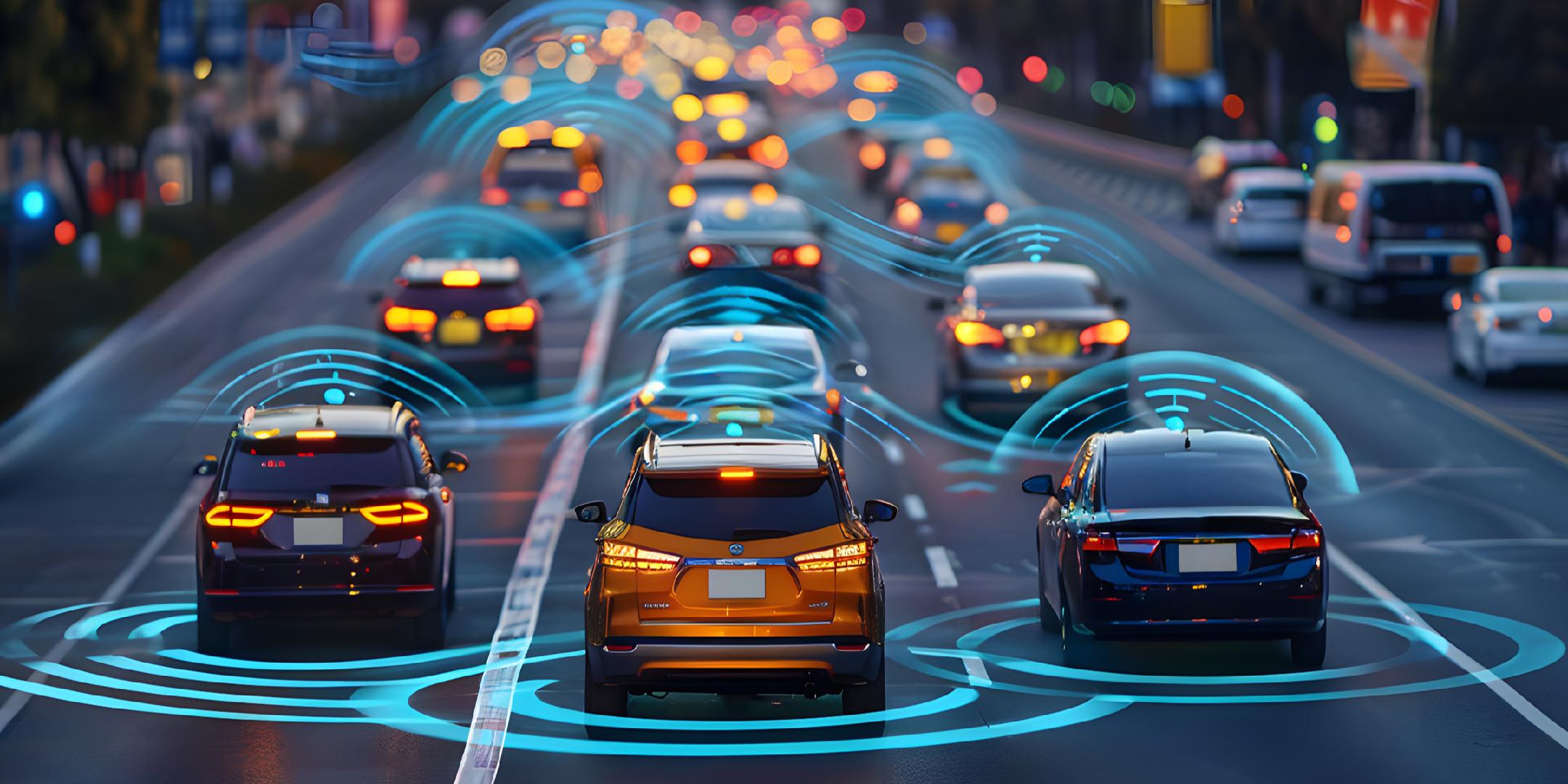
Group 1 - The core viewpoint of the articles highlights the concern that free promotion of advanced driving assistance systems (ADAS) could undermine the profitability of the automotive industry, as emphasized by Bosch's president in China, Wu Yongqiao [2][7] - The trend of "free high-level intelligent driving" is gaining traction among domestic automakers, with companies like Chery, Leap Motor, BYD, and Xpeng announcing that their entire model ranges will be equipped with advanced ADAS, leading to over a hundred models being offered [2][8] - The expectation of profitability through software subscription models has become uncertain, with industry insiders stating that discussions on software subscription profitability are currently not feasible [2][5] Group 2 - International automakers are prioritizing "sustainable revenue" and have begun charging subscription fees for embedded hardware features, although this approach has faced backlash from domestic consumers [3][5] - Tesla and Huawei are strong proponents of software charging, with Tesla's Full Self-Driving (FSD) priced at 64,000 yuan, while Huawei has increased the price of its Qian Kun intelligent driving system by 2,000 yuan [3][12] - The consensus among industry experts is that the realization of a paid subscription model is more challenging than anticipated due to intense price competition and consumer expectations for free features [3][11] Group 3 - The feasibility of hardware subscription models has diminished significantly, with luxury brands still experimenting with them despite low consumer uptake [4][5] - BMW and Mercedes-Benz have faced criticism for charging fees for features that are standard in many domestic vehicles, leading to adjustments in their subscription strategies [4][5] - The trend of free high-level intelligent driving features is seen as a way to build consumer habits and dependencies, but there is skepticism about the potential for high subscription rates post-free periods [9][10] Group 4 - The articles suggest that the subscription model for software may be collapsing, with experts indicating that a successful implementation would require overcoming fierce competition and establishing significant technological barriers [11][12] - The potential for consumers to pay for advanced driving technologies may increase with the advent of Level 3 autonomous driving, but achieving a consensus among automakers on subscription models remains challenging [11][12] - The automotive industry is experiencing a shift where hardware upgrades are seen as the foundation for profitability, with companies like Horizon predicting a profitability turning point by 2027 [12][13]




吉利智驾整合:吉利研究院等三大团队并入新公司,规模3000人;爱驰汽车所持7亿元股权被冻结丨汽车交通日报
创业邦· 2025-08-04 10:24
Group 1 - Aichi Automotive has had 700 million RMB worth of equity frozen for three years, with the court being the Shanghai Huangpu District People's Court [2] - Pony.ai has launched a Robotaxi service in specific areas of Shanghai's Pudong district, operating from 7:30 AM to 9:30 PM on weekdays, available through their app [2] - Geely has restructured its autonomous driving teams, merging the Zeekr autonomous driving team, Geely Research Institute, and the AI brand "Mochi Zhixing" into Chongqing Qianli Zhijia, resulting in a combined workforce of nearly 3,000 [2] Group 2 - Land Rover China has announced the limited launch of the Range Rover Sport Blue Flame Special Edition, with a retail price of 1.036 million RMB for 50 units [2]


新能源二手车是中产省钱的那道光
3 6 Ke· 2025-08-04 08:37
Core Insights - The growing acceptance of second-hand electric vehicles (EVs) reflects a shift in consumer behavior, driven by the desire for cost-effective options while still enjoying the benefits of new energy vehicles [1][3][30] - The second-hand EV market is thriving due to increased supply from the rising ownership of new energy vehicles and the high cost-performance ratio of these second-hand options [4][9][23] Group 1: Market Dynamics - The penetration rate of new energy vehicles has surged, leading to a significant increase in the availability of second-hand EVs [2][23] - In the first five months of this year, the transaction volume of second-hand new energy vehicles exceeded 545,000 units, marking a nearly 30% year-on-year increase, with a market penetration rate approaching 10% [9][12] - The price drop of second-hand EVs, often by 30-40%, makes them attractive to consumers seeking practical and economical choices [3][12][16] Group 2: Consumer Preferences - Consumers are increasingly viewing second-hand new energy vehicles as their first choice, particularly for commuting and as a second family car, due to lower costs and various benefits such as tax exemptions [3][18][30] - The typical buyer profile includes budget-conscious individuals who desire quality vehicles without the high price tag of new models [17][20] - The market is particularly appealing to first-time electric vehicle users and those looking for a practical second vehicle for short-distance travel [20][22] Group 3: Quality Concerns and Market Trends - Despite the growing popularity, there are concerns regarding the quality of second-hand EVs, with some consumers wary of potential issues related to battery health and vehicle condition [7][23][27] - The depreciation rates for new energy vehicles are significant, with first-year depreciation ranging from 15% to 30%, making second-hand options more appealing [12][14][16] - The market is witnessing a trend where second-hand EVs are being marketed as "quasi-new cars," which can sometimes mask underlying issues [23][30] Group 4: Buying Considerations - Consumers are advised to be cautious and conduct thorough research before purchasing second-hand EVs, focusing on battery health, vehicle age, and maintenance records [27][28][30] - Key factors to consider include the vehicle's battery health, warranty transferability, and the presence of a comprehensive maintenance history [27][30] - The importance of clear contractual agreements is emphasized to protect consumer rights and ensure transparency in the purchase process [27][30]
新能源车销量近况曝光:三家突破纪录,理想暴跌40%
Guo Ji Jin Rong Bao· 2025-08-04 08:04
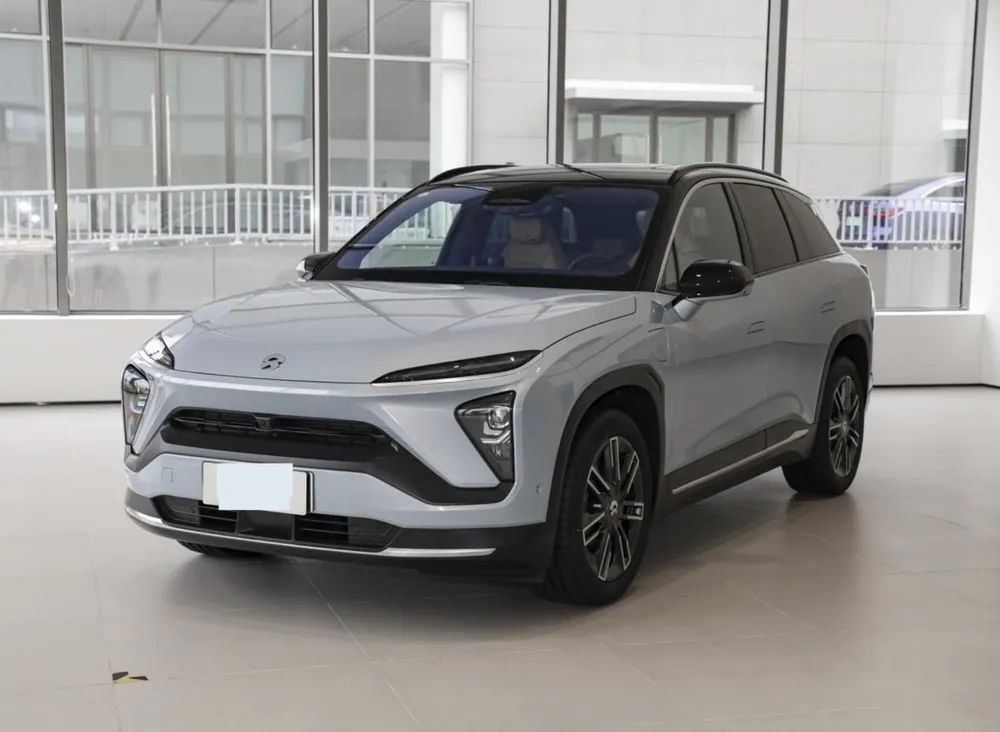
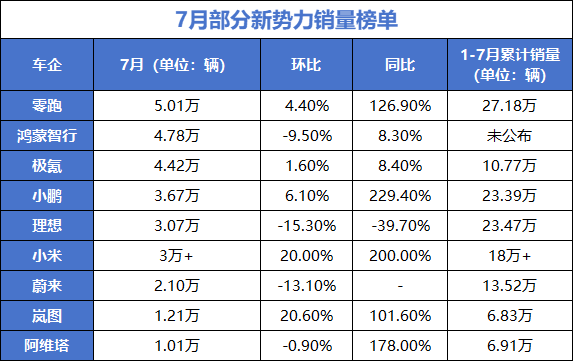
Core Insights - In July, several new energy vehicle companies reported record delivery numbers, with Leap Motor, Xiaomi, and Xpeng achieving significant growth, while Li Auto experienced a substantial decline in deliveries [1][4]. Group 1: Market Performance - The retail market for narrow passenger cars in July reached approximately 1.85 million units, representing a year-on-year increase of 7.6% but a month-on-month decrease of 11.2% [1]. - The new energy vehicle market showed strong performance, with a retail penetration rate rising to 54.6% and sales reaching 1.01 million units [1]. Group 2: Company Deliveries - Leap Motor led the July sales with 50,100 units, marking a month-on-month increase of 4.4% and a year-on-year increase of 126.9%, achieving a cumulative sales of 271,800 units in the first seven months, which is 54.4% of its annual target of 500,000 units [2][3]. - Xpeng's July deliveries reached 36,700 units, a month-on-month increase of 6.1%, with a cumulative total of 233,900 units in the first seven months, leading the new energy vehicle sector with a completion rate of 66.8% [3]. - Li Auto's deliveries fell to 30,700 units in July, a month-on-month decline of 15.3% and a year-on-year decline of 39.7%, with a cumulative total of 235,000 units, reflecting a completion rate of only 36.7% of its revised annual target of 640,000 units [4][5]. Group 3: Product Developments - Leap Motor's COO indicated that the new B01 model has received over 10,000 orders, and the factory is operating at full capacity to meet the growing demand [1]. - Xiaomi's delivery exceeded 30,000 units for the first time, with a cumulative total of over 180,000 units in the first seven months, achieving a completion rate of 51.4% of its revised annual target of 350,000 units [5]. - NIO's new model, the L90, has received positive market feedback, raising expectations for future sales [7].

新能源车销量近况曝光:三家突破纪录,理想暴跌40%
Guo Ji Jin Rong Bao· 2025-08-04 07:37
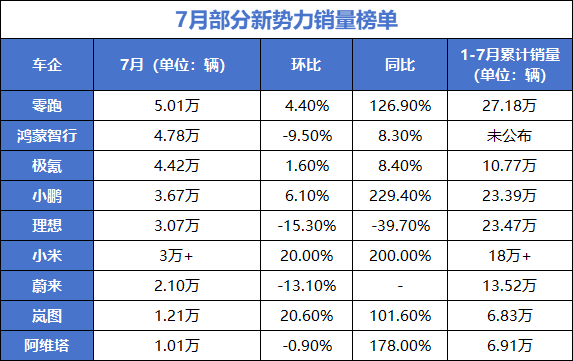
Core Insights - In July, several new energy vehicle companies reported record delivery numbers, with Leap Motor, Xiaomi, and Xpeng achieving significant growth, while Li Auto experienced a substantial decline in deliveries [1][3]. Market Performance - The retail market for narrow passenger cars in July reached approximately 1.85 million units, marking a year-on-year increase of 7.6% but a month-on-month decrease of 11.2% [1]. - The new energy vehicle market showed strong performance, with a retail penetration rate rising to 54.6% and sales reaching 1.01 million units [1]. Company-Specific Performance - Leap Motor led the July sales with 50,100 units, reflecting a month-on-month growth of 4.4% and a year-on-year increase of 126.9%. Cumulatively, Leap Motor's sales for the first seven months reached 271,800 units, achieving 54.4% of its annual target of 500,000 units [2][3]. - Xiaopeng Motors reported a record delivery of 36,700 units in July, a month-on-month increase of 6.1% and a year-on-year increase of 229.4%. Cumulative sales for the first seven months reached 233,900 units, with a completion rate of 66.8% towards its annual target [3][4]. - Li Auto's deliveries fell to 30,700 units in July, down 15.3% month-on-month and 39.7% year-on-year, with cumulative sales for the first seven months at 235,000 units, reflecting a year-on-year decline of 2.2% [3][4]. - Xiaomi's deliveries exceeded 30,000 units for the first time in July, with cumulative sales surpassing 180,000 units in the first seven months, achieving 51.4% of its revised annual target of 350,000 units [4][5]. - NIO delivered 21,000 units in July, a month-on-month decline of 15.7%, with cumulative sales of 135,200 units for the first seven months [4][5]. - Zeekr and Lynk & Co combined sales reached 44,200 units in July, with Zeekr selling 17,000 units and Lynk & Co selling 27,000 units [5].

吉利智驾整合:吉利研究院等三大团队并入新公司,规模3000人
news flash· 2025-08-04 06:27
金十数据8月4日讯,吉利控股集团近期对吉利系内部智驾公司、团队进行了一轮大整合。极氪智驾团 队、吉利研究院、以及旷视旗下的智驾品牌"迈驰智行",将一同合并进入重庆千里智驾。当前极氪团队 将近1500人、吉利研究院将近1000人,加上迈驰智行的500人团队,完成合并后,重庆千里智驾团队将 达到近3000人的规模。 (21财经) 吉利智驾整合:吉利研究院等三大团队并入新公司,规模3000人 ...
曝吉利对多品牌智驾团队大调整:极氪将并入千里科技,smart团队要转岗
Ju Chao Zi Xun· 2025-08-04 04:08
千里科技的汽车销量也在此过程中发生显著变化,最新数据显示,千里科技7月公司汽车整车合计销量10222辆,同比增长 142.34%;本年累计销量48950辆,同比增长73.7%。 今年2月12日,在力帆科技2025年第一次临时股东大会上,公司《关于变更公司名称、证券简称及修订〈公司章程〉的议案》获 得参会股东一致通过。2月12日下午,力帆科技正式完成关于公司名称变更的工商登记并发布相关公告。 3月2日,千里科技同意公司与两江产业基金、重庆产业母基金、江河汇、吉利、迈驰、路特斯共同签订《车BU投资框架协 议》,指定公司全资子公司与两江产业基金或其指定关联方、重庆产业母基金及江河汇指定主体共同出资15亿元发起设立有限 合伙企业。 千里合伙企业设立后,将以15亿元现金向由关联方吉利或其指定主体、关联方迈驰、关联方路特斯或其指定主体及为员工激励 目的设立的员工持股平台共同投资设立的重庆千里智驾有限公司进行增资。 6月27日,千里科技发布公告称,公司全资子公司智骐鑫旺与两江产业基金、重庆产业母基金及江河乾达,依照前期协议约定共 同设立重庆江河启兴企业管理合伙企业(有限合伙),注册资本15亿元,并已于6月27日完成工商注册 ...

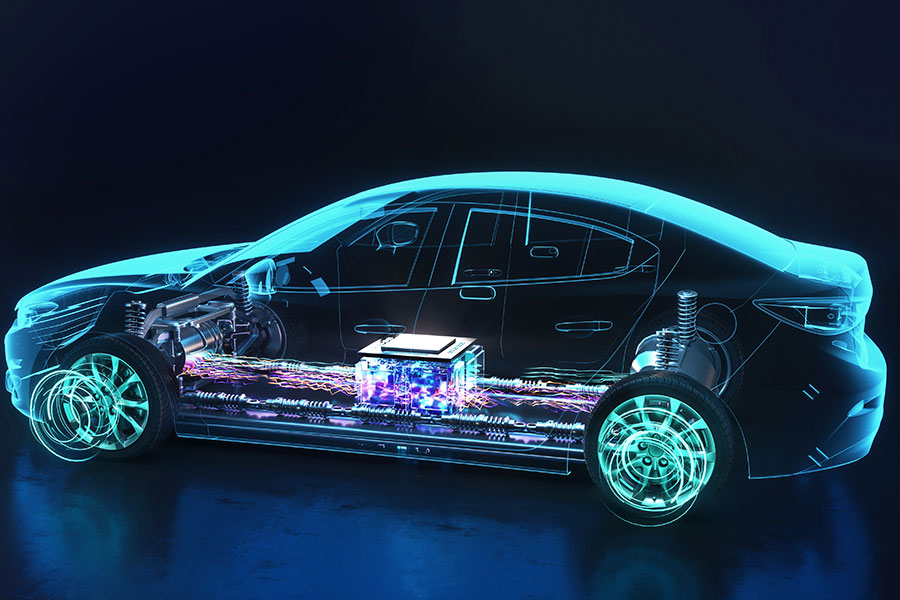
技术补课、产品补齐、渠道补强,BBA蓄势反扑
Zhong Guo Qi Che Bao Wang· 2025-08-04 01:55
Core Insights - The German luxury car trio, BMW, Mercedes-Benz, and Audi (BBA), is facing unprecedented challenges in the transition to electric and intelligent vehicles, particularly in the Chinese market [2][7] - BBA is launching a comprehensive counterattack by collaborating with local tech firms, introducing electric models tailored for Chinese consumers, and enhancing their retail strategies [2][4][7] Intelligent Technology Development - BMW has partnered with Momenta to develop a China-specific intelligent driving solution, while Mercedes-Benz and Audi have also engaged with Momenta and Huawei, respectively [3] - BBA's strategies reflect different paces and considerations in their transformation, with Audi's collaboration with Huawei being the most extensive [3] - Sales data indicates a significant decline in BBA's performance in China, with BMW's sales down 15.5%, Mercedes-Benz down 14%, and Audi down 16.78% in early 2025 [3] Electric Vehicle Strategy - BBA is intensifying its electric vehicle (EV) offerings, with Mercedes-Benz planning to launch 10 pure electric models in the next two years, and BMW's Neue Klasse platform set to produce its first model in China by 2026 [4] - The electric vehicle strategy shows strong localization, with tailored designs and features for the Chinese market [4] - Despite maintaining a leading position in the fuel vehicle market, BBA's share in the 300,000 yuan and above segment has dropped from 72% in 2021 to 39% in 2025 [4] Channel and Service Innovation - BBA is transforming its retail strategies to enhance customer experience, with initiatives like Mercedes-Benz's EQ experience center and BMW's future mobility experience center [4] - The traditional dealership model is being re-evaluated to meet the demands of the electric vehicle era [4] Competitive Challenges - BBA faces significant challenges in building sustainable competitive advantages, including high costs, changing consumer perceptions, and the need for an integrated ecosystem [5][6] - The cost of BBA's electric models is generally 20% higher than that of domestic brands, with specific examples highlighting the cost disparity [6] - Consumer preferences are shifting towards intelligent technology, with 47% of younger buyers prioritizing smart features over brand prestige [6] Strategic Adjustments - BBA is adjusting its strategies in China by empowering local teams and establishing design centers to better understand consumer preferences [6][7] - These strategic shifts reflect a deeper recognition of the Chinese market, although the effectiveness of these changes will take time to assess [6][7]

吉利汽车 | 7月:新能源持续亮眼 银河A7上市在即【民生汽车 崔琰团队】
汽车琰究· 2025-08-03 15:23
Core Viewpoint - The company has shown strong growth in wholesale sales and is optimistic about achieving its annual sales target of 3 million units, driven by new product launches and a focus on the high-end market [3][4]. Sales Performance - In July, the total wholesale sales reached 238,000 units, representing a year-on-year increase of 57.7% and a month-on-month increase of 0.7% [2]. - From January to July, the total wholesale sales amounted to 1.647 million units, up 48.8% year-on-year [2]. - The sales of new energy vehicles in July were 130,124 units, a year-on-year increase of 120.4% and a month-on-month increase of 6.3%, with a penetration rate of 54.7% [2]. New Energy Vehicle Growth - Cumulative sales of new energy vehicles from January to July reached 855,000 units, reflecting a year-on-year increase of 125.5% [2]. - The company has adjusted its annual sales target from 2.71 million to 3 million units due to better-than-expected performance in the first half of the year [3]. Brand Performance - In July, the sales figures for different brands were as follows: Geely brand sold 194,000 units, Zeekr sold 16,977 units, and Lynk & Co sold 27,216 units [2][4]. - For the first seven months, Zeekr and Lynk & Co recorded cumulative sales of 108,000 and 181,000 units, respectively, with year-on-year growth of 4.1% and 23.1% [4]. Product Launches - The Geely Galaxy A7 is expected to launch on August 8, featuring a new hybrid system with a comprehensive range of approximately 2,100 kilometers [3]. - The Geely Galaxy M9 is planned for release in Q3 2025, targeting the large six-seat plug-in hybrid SUV market [3]. Strategic Moves - Zeekr is considering privatization to consolidate its assets and resources, which is expected to enhance operational efficiency and competitiveness in the high-end electric vehicle market [5]. - The company aims to leverage the synergy between its brands to strengthen its market position [5]. Financial Projections - Revenue projections for 2025-2027 are estimated at 404.78 billion, 489.69 billion, and 572.83 billion RMB, with net profits of 16.21 billion, 22.09 billion, and 25.98 billion RMB, respectively [6][7]. - The expected EPS for the same period is 1.61, 2.19, and 2.58 RMB, with corresponding P/E ratios of 10, 7, and 6 [6][7].

吉利汽车(00175):系列点评三十一:新能源持续亮眼,银河A7上市在即
Minsheng Securities· 2025-08-03 14:13
Investment Rating - The report maintains a "Buy" rating for the company [6][8]. Core Views - The company reported a total wholesale sales volume of 238,000 vehicles in July, representing a year-on-year increase of 57.7% and a month-on-month increase of 0.7% [3]. - The company has raised its annual sales target from 2.71 million to 3 million vehicles, reflecting confidence in achieving sales growth in the second half of the year [4]. - The company is set to launch the Galaxy A7 on August 8, 2025, which is expected to enhance its product lineup in the hybrid vehicle segment [4]. - The company plans to privatize its high-end electric vehicle brand, Zeekr, to consolidate resources and improve operational efficiency [5]. Sales Performance - In July, the company sold 130,124 new energy vehicles, a year-on-year increase of 120.4%, with a penetration rate of 54.7% [3]. - For the first seven months of the year, the cumulative sales of new energy vehicles reached 855,000, up 125.5% year-on-year [4]. - The sales figures for the Geely brand in July were 194,000 vehicles, while Zeekr and Lynk & Co sold 16,977 and 27,216 vehicles, respectively [5]. Financial Forecast - The company expects revenues of 404.78 billion, 489.69 billion, and 572.83 billion RMB for 2025, 2026, and 2027, respectively [6][7]. - The projected net profit for the same years is 16.21 billion, 22.09 billion, and 25.98 billion RMB, with corresponding EPS of 1.61, 2.19, and 2.58 RMB [6][7]. - The report indicates a P/E ratio of 10, 7, and 6 for the years 2025, 2026, and 2027, respectively [6][7].