
恒瑞医药

Search documents
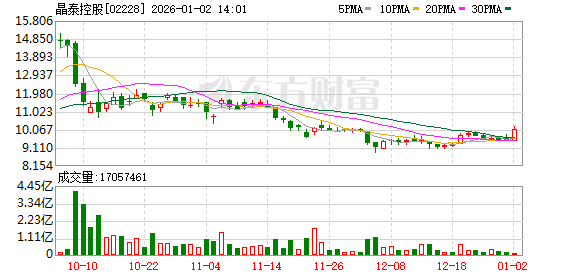
港股创新药概念股持续走高,晶泰控股涨超6%
Mei Ri Jing Ji Xin Wen· 2026-01-02 06:00
Group 1 - The core viewpoint of the article highlights the significant rise in Hong Kong's innovative drug concept stocks, indicating a positive trend in the sector [2] - Jingtai Holdings experienced a surge of over 6%, reflecting strong investor interest and confidence in the company [2] - Hengrui Medicine saw an increase of over 5%, suggesting robust performance and market positioning [2] - Four Seasons Pharmaceutical rose by more than 4%, indicating a favorable market response [2] - Innovent Biologics and WuXi Biologics both increased by over 3%, showcasing the overall strength of the innovative drug sector [2] - BeiGene's stock rose by over 2%, further contributing to the positive sentiment in the market [2]


港股异动 | 恒瑞医药(01276)午后涨超5% CLDN18.2 ADC胃癌适应症纳入突破性治疗品种名单
智通财经网· 2026-01-02 05:48
Core Viewpoint - Heng Rui Medicine (01276) saw a stock increase of over 5%, reaching HKD 74.95, with a trading volume of HKD 55.6871 million, following the announcement of its antibody-drug conjugate (ADC) SHR-A1904 being included in the National Medical Products Administration's list of breakthrough therapies [1] Group 1: Company Developments - The ADC SHR-A1904 targets Claudin18.2 (CLDN18.2) and is intended for the treatment of locally advanced or metastatic gastric or gastroesophageal junction adenocarcinoma in patients who have previously received at least one line of systemic therapy [1] - The inclusion in the breakthrough therapy program is based on the potential clinical value of the drug for specific indications, which will lead to prioritized review resources and enhanced R&D guidance to accelerate clinical development and market entry [1] Group 2: Industry Context - Gastric cancer is a highly prevalent malignancy in China, with new cases and deaths in 2020 accounting for approximately 44% and 48.6% of global totals, respectively, indicating a significant unmet clinical need [1] - The CLDN18.2 target is highly expressed in various gastrointestinal tumors and is currently a popular target in cancer drug development, with no similar ADC products approved globally [1]
恒瑞医药午后涨超5% CLDN18.2 ADC胃癌适应症纳入突破性治疗品种名单
Zhi Tong Cai Jing· 2026-01-02 05:47
Core Viewpoint - Heng Rui Medicine's stock rose over 5% following the announcement that its antibody-drug conjugate (ADC) SHR-A1904 has been included in the National Medical Products Administration's list of breakthrough therapies, aimed at treating CLDN18.2 positive advanced gastric or gastroesophageal junction adenocarcinoma [1] Company Summary - Heng Rui Medicine's SHR-A1904 is designed for patients who have previously received at least one line of systemic therapy and are positive for CLDN18.2 [1] - The inclusion in the breakthrough therapy program is based on the drug's potential clinical value for specific indications, which will lead to prioritized review resources and enhanced R&D guidance from the drug review center [1] Industry Summary - Gastric cancer is a highly prevalent malignancy in China, with new cases and deaths in 2020 accounting for approximately 44% and 48.6% of global totals, respectively, indicating a significant unmet clinical need [1] - The CLDN18.2 target is highly expressed in various gastrointestinal tumors and is currently a popular target in cancer drug development, with no similar ADC products approved globally [1]
2025年超2800亿港元,港股IPO募资额重登全球冠军宝座
Sou Hu Cai Jing· 2026-01-02 01:10
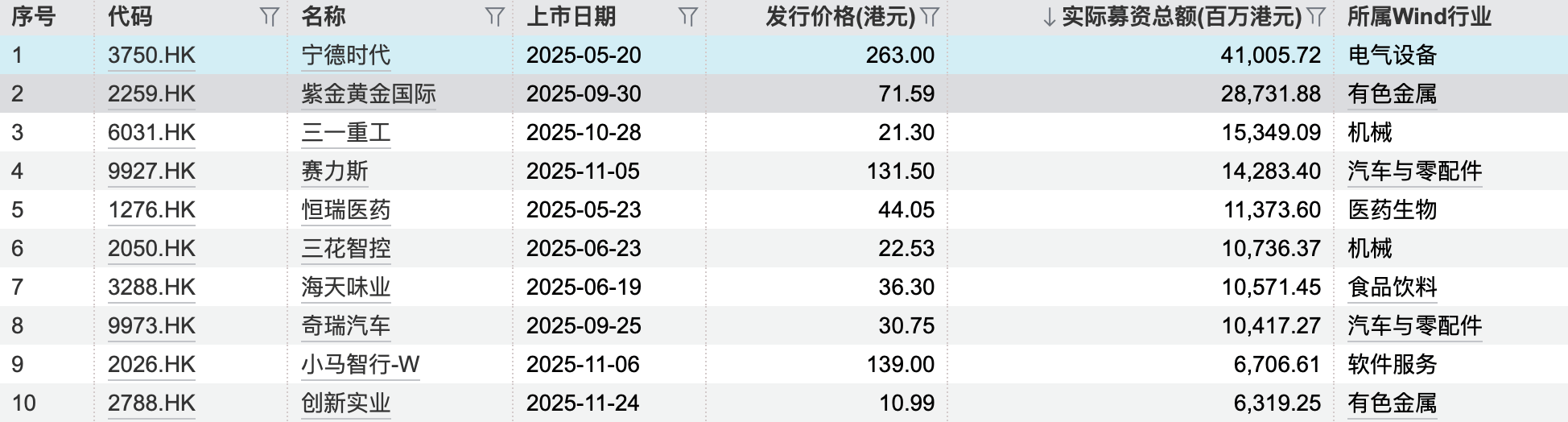
Core Insights - The Hong Kong IPO market achieved a significant milestone in 2025, with total fundraising reaching HKD 285.69 billion, marking a 224% increase from HKD 88.15 billion in 2024, and reclaiming the top position globally for IPO fundraising [2][5] - A total of 117 companies went public in Hong Kong in 2025, representing a 67.14% increase compared to the previous year [2][5] - The market saw a strong influence from mega IPOs, with eight companies raising over HKD 10 billion each, collectively accounting for 52.75% of the total fundraising [2][4] IPO Market Performance - The average daily trading volume in the Hong Kong IPO market reached a historical high in 2025, driven by robust investor interest [2] - The top eight IPOs included notable companies such as CATL (HKD 41.01 billion), Zijin Mining (HKD 28.73 billion), and Sany Heavy Industry (HKD 15.35 billion) [2][4] - The influx of A-share companies contributed significantly, with 19 A-share firms raising a total of HKD 139.99 billion, nearly half of the total IPO fundraising [5][6] Sectoral Insights - The leading sectors for new listings included renewable energy, AI, and biotechnology, reflecting a strong trend towards technology-driven companies [2][8] - The IPO landscape in 2025 was characterized by a notable presence of technology innovation firms, with a significant number of listings in the pharmaceutical and software services sectors [8][9] Regulatory Environment - The Hong Kong Stock Exchange implemented several regulatory changes to facilitate the listing of A-share companies, including adjustments to public holding requirements and streamlined application processes [7][9] - The introduction of the "Specialized Technology Company" listing mechanism and the reduction of minimum market capitalization thresholds have made it easier for early-stage tech companies to go public [9] Future Outlook - Projections for 2026 indicate a continued recovery in the Hong Kong IPO market, with expectations of around 160 new listings and fundraising of at least HKD 300 billion [12] - Major sectors anticipated to drive future listings include technology, media, telecommunications, and healthcare, alongside a strong interest in companies listed in the U.S. [12]
2025年GLP_1行业深度:最新进展、市场空间、未来趋势、产业链及相关公司深度梳理
Sou Hu Cai Jing· 2026-01-01 03:43
Core Insights - The GLP-1 (Glucagon-Like Peptide-1) drug class is evolving from a simple diabetes treatment to a comprehensive metabolic therapy, showing potential in weight loss, cardiovascular benefits, and fatty liver disease, leading to intensified competition among pharmaceutical companies [1][2]. Industry Developments - The GLP-1 drug development has transitioned from single-target to multi-target approaches, with drugs like Eli Lilly's Tirzepatide (GLP-1/GIP dual-target) and Innovent's Ma Shidu (GLP-1/GCG dual-target) gaining approval, enhancing metabolic control across various indicators [2][3]. - Chinese pharmaceutical companies are emerging as significant players, with Innovent's Ma Shidu showing promising Phase III clinical trial results for weight loss and liver fat reduction, while other companies like Hengrui and Zhongsheng are advancing their own dual-target and oral formulations [3][4]. Market Expansion - The future growth of the GLP-1 market is shifting from traditional Type 2 diabetes and obesity treatments to broader disease areas, including metabolic dysfunction-related fatty liver disease (MASH), with drugs like Semaglutide already approved for MASH treatment [4][5]. - The concept of "high-quality weight loss" is gaining traction, focusing on preserving muscle mass while reducing fat, with several companies developing combination therapies that include GLP-1 and muscle-preserving agents [5]. Competitive Landscape - The GLP-1 market is dominated by Novo Nordisk and Eli Lilly, with their combined revenue expected to grow from approximately $2.9 billion in 2015 to about $49.4 billion by 2024, indicating a robust growth trajectory [43]. - The sales of Tirzepatide are projected to surpass those of Semaglutide, with significant revenue growth observed in both diabetes and weight loss indications [46][48]. Clinical Advancements - Innovent's Ma Shidu achieved a 20.08% average weight reduction in a Phase III trial, significantly outperforming the placebo group, and demonstrated a 71.9% reduction in liver fat content among non-diabetic participants [32][33]. - Hengrui's dual-target drug HRS9531 has shown positive results in its Phase III trials, with its application for market approval accepted by the NMPA [37]. Future Trends - The GLP-1 industry is at a pivotal point of rapid technological iteration and expanding indications, with a clear trajectory towards more comprehensive, convenient, and personalized metabolic disease management solutions [6].


2025中国创新药出海一年狂揽1356亿美元,2026年能否持续?
Jing Ji Guan Cha Wang· 2026-01-01 02:55
Core Insights - The surge in BD (business development) transactions in China's innovative pharmaceutical sector is a reflection of the industry's maturation and increasing global recognition, with 2025 marking a significant year for License-out agreements [3][4][5] Group 1: BD Transactions Overview - In December 2025, several Chinese pharmaceutical companies, including Ganli Pharmaceutical and Heng Rui Medicine, announced significant BD agreements, indicating a trend towards increased collaboration and innovation in the sector [2] - The total value of BD transactions for Chinese innovative drugs reached $135.655 billion in 2025, with upfront payments totaling $7 billion, marking a historical high in both transaction volume and value [3] - The number of BD transactions involving Chinese companies and top multinational corporations (MNCs) increased from 3 in 2015 to 35 in 2025, highlighting the growing interest from global players [3] Group 2: Market Dynamics and Future Outlook - The BD transaction boom is expected to continue into 2026, with industry experts predicting sustained high activity levels, although the focus may shift from quantity to value [5][14] - The NewCo model, which allows for "technology equity + capital cooperation," is emerging as a new pathway for Chinese pharmaceutical companies to engage in international markets, although its prevalence may decrease in 2026 [14][15] - The overall trend indicates a shift from isolated transactions to a more collaborative ecosystem, where companies leverage partnerships to enhance their global market presence [16][20] Group 3: Transaction Structures and Strategies - The structure of BD transactions is evolving, with companies increasingly engaging in co-development and co-commercialization agreements, allowing for shared risks and benefits [10][11] - The pricing of BD transactions is becoming more rational, with companies focusing on the clinical value and market potential of their products, which influences upfront payment amounts [19][18] - Legal and advisory services are becoming integral to BD transactions, reflecting the increasing complexity and importance of these deals in the pharmaceutical landscape [17]


2025年度中资企业IPO排行榜
Wind万得· 2025-12-31 22:50
2025年,中资企业全球IPO市场显著回暖,发行数量与募资规模双双实现大幅增长。全年共有290家中资企业在全球主要资本市场完成上市,较2024年增 加61家;累计募资规模达3663.55亿元,同比大幅增长123.04%。从市场结构看,港股已成为中资企业最主要的融资平台,募资规模显著领先;A股市场 IPO节奏回暖,融资功能明显修复;海外市场发行数量保持稳定,但募资规模有所回落。整体来看,2025年中资企业IPO呈现数量回升、结构优化、港股 领跑的显著特征。 中资企业上市全景 1.1 中资企业全球IPO数量 Wind数据显示,2025年,中资企业全球市场共完成IPO上市290起(A股按网上发行日期,港股及美股市场按首发上市日期,下同),数量较2024年上升 61起。 1.2 中资企业全球IPO募资金额 2025年,中资企业全球IPO募资规模合计约3663.55亿元(人民币,下同),较2024年回升123.04%。 1.3 中资企业分市场 IPO 数量 2025 年,具体到各市场来看, A 股市场 IPO 上市 112 起,较 2024 年上升 10 起;港股市场 IPO 上市 110 起,较 2024 年上升 4 ...

A股医药板块的“火热”与“寒意”
Xin Lang Cai Jing· 2025-12-31 16:01
Core Viewpoint - The A-share pharmaceutical sector in 2025 exhibits structural differentiation, with innovative drugs and CXO sectors thriving due to overseas demand and business development, while traditional Chinese medicine, medical devices, and pharmaceutical commerce face performance pressures [3][20]. Summary by Category Overall Market Performance - The A-share pharmaceutical and biotechnology sector saw an overall increase of 25.64% from January 1 to December 30, 2025, despite a slight decline in revenue and a stabilization in profits, with total revenue of 18,544.52 billion yuan, down 1.42% year-on-year, and net profit of 1,407.32 billion yuan, down 1.65% year-on-year [4][21]. Innovative Drug Sector - The innovative drug sector was a standout performer in 2025, with the chemical pharmaceutical segment rising by 32.58% and the medical services segment by 32.91% [4][21]. - Companies like BeiGene (百济神州) reported significant growth, achieving revenue of 27.595 billion yuan, a 44.2% increase year-on-year, surpassing the total revenue of 27.21 billion yuan for 2024 [4][22]. Business Development (BD) Trends - The business development landscape for innovative drug companies is evolving, with significant partnerships such as the 11.4 billion USD deal between Innovent Biologics and Takeda, and a 12.5 billion USD collaboration between Hengrui Medicine and GlaxoSmithKline [5][22][24]. - The total value of business development transactions reached approximately 94.158 billion USD in the first three quarters of 2025, significantly exceeding the total for 2024 [25]. CXO Sector Performance - The CXO sector, driven by the demand for innovative drug research, achieved a 32.91% increase in 2025, with total revenue of 1,365.72 billion yuan, up 3.63% year-on-year, and net profit of 209.12 billion yuan, up 36.47% year-on-year [10][27]. - Leading companies like WuXi AppTec (药明康德) and Kanglong Chemical (康龙化成) returned to growth, with WuXi AppTec reporting a revenue increase of 18.61% and net profit growth of 84.84% [28][31]. Traditional Chinese Medicine and Medical Devices - The traditional Chinese medicine sector experienced a modest increase of 6.75% in 2025, with total revenue of 2,590.69 billion yuan, down 4.33% year-on-year, and net profit of 294.99 billion yuan, down 1.53% year-on-year [36]. - The medical device sector reported a revenue of 1,792.10 billion yuan, down 2.24% year-on-year, with notable performance differences among sub-sectors, where companies like Mindray Medical (迈瑞医疗) showed strong overseas revenue growth [33][34].


创新药BD交易火热 2026年热潮能否持续?
Xin Hua Cai Jing· 2025-12-31 13:50
Core Viewpoint - The innovative pharmaceutical sector is expected to perform well in 2026, driven by strong business development (BD) activities and supportive industrial policies, despite recent market adjustments [1][4]. Group 1: Market Performance - The Hong Kong innovative drug index has seen a year-to-date increase of nearly 70%, with individual stocks like Shuyou Shen and Sanofi Biopharma doubling in price [1][2]. - In the A-share market, stocks such as Shuyou Shen and Sanofi Biopharma have also experienced significant gains, with Shuyou Shen's price soaring nearly 7 times at one point [2]. - The Hong Kong stock market has welcomed over 20 pharmaceutical companies this year, with notable first-day performances, including a nearly 300% increase for Yinnuo Pharmaceutical [2][3]. Group 2: Business Development (BD) Trends - The number of BD projects in the Chinese innovative drug sector reached 166 by December 5, 2025, marking an increase of 54 projects from the previous year [4]. - The total amount of BD transactions has reached $141.97 billion, a growth of over 136.8% compared to 2024, with upfront payments totaling $6.3 billion, up by over 199% [4][5]. - Major deals include a $13 billion transaction between Qiguang Dekang and Biohaven, and a collaboration between Sanofi Biopharma and Pfizer worth up to $48 billion [4][5]. Group 3: Future Outlook - Analysts predict that the innovative drug sector will continue to thrive in 2026, with a shift in focus from quantity to value in BD transactions [7]. - The industry is expected to see a selection of high-quality companies emerge as leaders, supported by a stable policy environment and improved market confidence [7][8]. - The innovative drug sector is anticipated to remain a core focus within the pharmaceutical industry, with significant benefits expected for related sectors such as CXO [7][8].
银河金工指数分析系列研究:市场基准分析:主要主题指数
Yin He Zheng Quan· 2025-12-31 13:44
- The report analyzes various thematic indices, including AI, Internet, Mainland Consumption, and Mainland Low Carbon, which are constructed by selecting top 50 stocks in terms of market cap and liquidity within each theme, and are adjusted semi-annually[1][4][5] - The indices are market-cap weighted and focus on specific sectors, such as AI and Internet indices focusing on technology-related fields, Mainland Consumption covering consumer themes, and Mainland Low Carbon emphasizing low-carbon economy-related businesses[1][4][5] - The indices show concentrated industry distribution, with Mainland Low Carbon heavily weighted in the electric power equipment sector, and the Internet index concentrated in communication and computer industries[6][7][8] - The indices exhibit high concentration in terms of weight, with the top 10 stocks accounting for a significant portion of the index weight, and a high proportion of private ownership among the top indices[11][13][14] - The indices tend to include large-cap stocks, with a significant portion of the index constituents having a market cap over 100 billion[14][19][20] - The AI and Internet indices have higher PB/PE ratios, reflecting market pricing for high growth, while Mainland Consumption and Mainland Low Carbon have lower valuations, indicating a thicker valuation cushion[21][22][23] - The indices have shown strong performance, with AI, Internet, and Mainland Low Carbon indices outperforming in recent years, driven by policy and technology cycles[24][27][28] - The indices' dividend rates have been increasing annually, with Mainland Consumption showing the most significant growth, and Mainland Consumption and Mainland Low Carbon having higher dividend yields compared to AI and Internet[38][39][40] - AI and Internet indices demonstrate stronger profitability with higher revenue and net profit growth rates, while Mainland Consumption has a higher ROE[40][42][43] Index Performance Metrics - **CS Artificial Intelligence Index**: Annualized return: 12.5%, Annualized volatility: 18.3%, Sharpe ratio: 0.68, Maximum drawdown: -25.4%[27][28][36] - **Internet Index**: Annualized return: 11.8%, Annualized volatility: 17.9%, Sharpe ratio: 0.65, Maximum drawdown: -24.7%[27][28][36] - **Mainland Consumption Index**: Annualized return: 9.2%, Annualized volatility: 15.4%, Sharpe ratio: 0.60, Maximum drawdown: -22.1%[27][28][36] - **Mainland Low Carbon Index**: Annualized return: 10.3%, Annualized volatility: 16.7%, Sharpe ratio: 0.63, Maximum drawdown: -23.5%[27][28][36]


