宝马

Search documents
特斯拉加注的新一代电池,上海公司已量产关键新材料,成本比欧洲日本巨头低10%|早起看早期
36氪· 2025-07-29 00:02
Core Viewpoint - The article highlights the significant market opportunity for Tean Lithium (Shanghai) New Energy Co., Ltd. in the pre-plated nickel steel strip market, which is currently dominated by foreign manufacturers, and discusses the company's recent funding and product developments [4][5]. Company Overview - Tean Lithium was established in July 2023 in Shanghai and has production facilities in Jiangsu and Shandong [4]. - The company has completed nearly 100 million yuan in Series A financing, with funds allocated for production line enhancement and capacity expansion [4]. Market Context - The global pre-plated nickel steel strip market is primarily monopolized by overseas companies, leading to long procurement cycles and limited global capacity, which is significantly below market demand [3][4]. - Tean Lithium aims to leverage its 30 years of industry experience to capitalize on this market opportunity [5]. Product Development - Tean Lithium's core technology is pre-plated nickel, which offers advantages over traditional nickel plating methods, such as more uniform coating thickness and improved corrosion resistance [4][5]. - The company has initiated a project to produce 15,000 tons of cylindrical battery pre-plated nickel steel strips in 2023, with an expected output of 12,000 tons of related products by the end of the year [5]. Competitive Advantage - Tean Lithium's pre-plated nickel products are comparable in performance to those from leading Japanese and European manufacturers, while offering a cost reduction of approximately 10% [5]. - The pre-plated nickel cylindrical batteries are gaining traction among major automotive companies like Tesla, BMW, and Mercedes-Benz, particularly in the electric vehicle sector [5]. Additional Products - Besides pre-plated nickel products, Tean Lithium has commercialized aerogel insulation films, which are used in electronic devices to address overheating issues [6]. - The company is also supplying electromagnetic shielding materials to Samsung and is developing new composite materials for other clients, including Lenovo and BOE [6].

加氢站关停潮下,氢燃料电池车难行
Zhong Guo Qi Che Bao Wang· 2025-07-28 09:26
Group 1: Industry Overview - The global automotive industry is experiencing a shift towards electrification, with hydrogen fuel cell vehicles (FCVs) gaining attention due to their zero emissions and long driving range [2] - Major automakers like Toyota, Hyundai, and Honda have invested heavily in hydrogen FCVs, launching models such as Toyota Mirai, Honda Clarity, and Hyundai Nexo [2] - Despite the investments, the hydrogen industry faces challenges, including high purchase prices and operational costs of FCVs, leading to low consumer demand and insufficient hydrogen station utilization [2][3] Group 2: Market Challenges in the U.S. - In California, a lawsuit has been filed against Toyota by hundreds of Mirai owners, claiming the company misled consumers about the convenience of hydrogen refueling [3] - The number of operational hydrogen stations in the U.S. is declining, with only 51 public and 21 private stations reported as of July 2025, significantly below the required infrastructure for widespread FCV adoption [4] - The rising cost of hydrogen, from $13 per kilogram in 2022 to $36 per kilogram in 2024, exacerbates the challenges faced by FCV owners [4] Group 3: European Market Developments - Stellantis has halted its hydrogen fuel cell technology development due to limited refueling infrastructure and high funding requirements, indicating a lack of commercial viability for hydrogen FCVs in the near term [8][9] - The European hydrogen station network is underdeveloped, with only about 250 stations across the EU as of 2024, far below initial targets [11] - Several hydrogen stations in Europe have closed due to profitability issues, highlighting the slow commercialization of hydrogen FCVs [10] Group 4: Japan's Hydrogen Strategy - Japan has been proactive in developing a hydrogen society, with significant government investment in hydrogen infrastructure and FCVs [12] - However, the number of operational hydrogen stations in Japan has decreased from 161 in April 2024 to 151 by July 2025, reflecting operational difficulties [13] - The high cost of hydrogen FCVs, such as the Toyota Mirai priced at approximately ¥7.414 million to ¥8.6108 million, remains a barrier to consumer adoption [13] Group 5: South Korea's Hydrogen Initiatives - South Korea has launched the new generation of Hyundai Nexo, with a price range of 7.644 million to 8.345 million KRW, but faces challenges in infrastructure and safety incidents [17][19] - The number of hydrogen stations in South Korea is 218, but safety concerns and supply chain issues have hindered growth [18] - The South Korean government plans to provide subsidies for 11,000 hydrogen FCVs and 2,000 hydrogen buses by 2025, aiming to enhance infrastructure and reduce costs for users [20]


基于14个主流20万以上品牌看理想市占率变化
理想TOP2· 2025-07-28 09:23
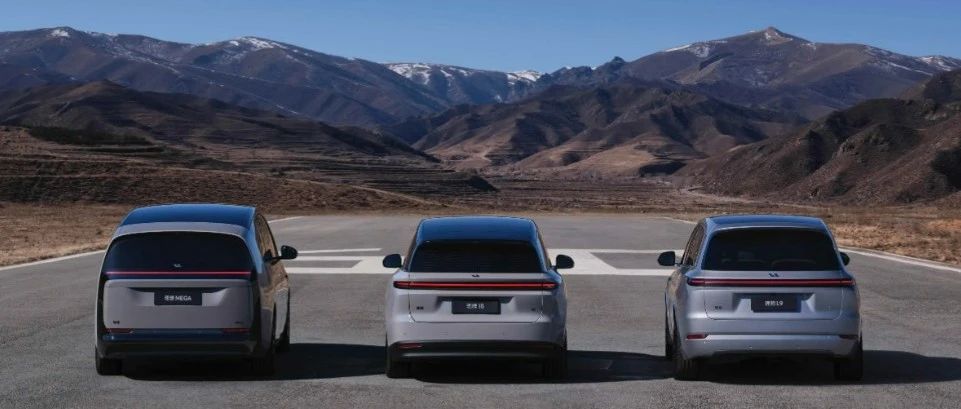
Core Viewpoint - The article analyzes the market share trends of various automotive brands, particularly focusing on Li Auto and its competitors, highlighting fluctuations in market share from January 2023 to June 2025 [1][2]. Market Share Trends - Li Auto's market share increased from 6.97% in January 2023 to a peak of 13.14% in October 2023, before declining to 11.33% and 11.59% in November and December respectively [1]. - In 2024, Li Auto's market share fluctuated between 8.34% and 9.77% until June, when it rose to between 11.17% and 14.36% following the delivery of the L6 model [1]. - By June 2025, Li Auto's market share dropped to 9.35%, indicating a significant decline compared to the previous year [2]. Competitor Analysis - The article notes that while some readers perceive Seres/Wenjie as having a faster iteration speed compared to Li Auto, Seres' market share has not surpassed its peak since February 2024 [3]. - The market share of Seres reached a high of 10.66% in June 2024, but overall sales have not significantly increased despite a higher market share in the 400,000+ price segment [3]. - A comparison of market share changes from July 2024 to June 2025 shows declines for several brands, including Li Auto, NIO, and BMW, while Seres saw a slight increase of 0.38% [4]. Combined Market Share Insights - The combined market share of Li Auto and Seres reached a high of 25.49% in July 2024, suggesting that increases in one brand's share do not necessarily correlate with decreases in the other's [5]. - The expectation is that with the ongoing deliveries of new models, the combined market share of Li Auto and Seres could surpass the previous high of 25.49% [5].

特斯拉加注的新一代电池,上海公司已量产关键新材料,成本比欧洲日本巨头低10%|硬氪首发
Sou Hu Cai Jing· 2025-07-28 07:22
Group 1 - The core viewpoint of the article highlights the significant market opportunity for Tean Lithium in the pre-plated nickel steel strip sector, which is currently dominated by foreign manufacturers [6][7]. - Tean Lithium has completed nearly 100 million yuan in Series A financing, which will be used for production line supplementation and capacity expansion [6]. - The company has established a strategic supply agreement with South Korea's POSCO, becoming the first domestic supplier in this partnership [6][7]. Group 2 - Tean Lithium's pre-plated nickel process offers advantages over traditional methods, including more uniform coating thickness, reduced internal short circuits, and improved corrosion resistance and airtightness of battery shells [6][7]. - The company plans to launch a 15,000-ton cylindrical battery pre-plated nickel steel strip project in 2023, with an estimated output of 12,000 tons of related products this year [7]. - The demand for pre-plated nickel products is increasing in the electric vehicle sector, with major automakers like Tesla, BMW, and Mercedes showing interest [7][8]. Group 3 - Tean Lithium has also commercialized aerogel insulation films, which are used in electronic devices to address overheating issues during charging and gaming [7]. - The company supplies electromagnetic shielding materials to Samsung's wireless division, which helps reduce precious metal usage and material costs while enhancing performance [8]. - Tean Lithium is also developing new composite materials for other clients, including Lenovo and BOE, and is targeting the new energy vehicle sector for specialized applications [8].
浙江荣泰(603119):主业稳健增长,传动业务卡位优越
Shanxi Securities· 2025-07-28 05:44
Investment Rating - The report assigns an "Accumulate-A" rating for the company, marking its first coverage [1][8]. Core Views - The company's main business is experiencing steady growth, particularly in the transmission sector, which is strategically positioned for future opportunities [1][8]. - The acquisition of a 15% stake in Jinli Transmission expands the company's robotics business footprint, enhancing its product matrix [2][8]. - The company has a robust customer base, including major international automotive manufacturers, which supports its strong cash flow and profitability [4][5][8]. Summary by Relevant Sections Company Overview - The company specializes in high-temperature insulation mica products, primarily for the new energy vehicle sector, with a revenue growth from 522 million to 1.135 billion from 2021 to 2024, reflecting a compound annual growth rate (CAGR) of 29.6% [4][8]. - The net profit increased from 104 million to 230 million during the same period, with a CAGR of 30.2% [4][8]. Financial Performance - As of March 31, 2025, the company reported a gross margin of approximately 35% and a net margin of around 20% [4][8]. - The projected earnings per share (EPS) for 2025, 2026, and 2027 are 0.87, 1.15, and 1.52 respectively, with corresponding price-to-earnings (P/E) ratios of 62.8, 47.7, and 36.0 [8][11]. Market Position and Strategy - The company is well-positioned to leverage its relationships with leading automotive manufacturers to expand its robotics business through strategic acquisitions [4][8]. - The acquisition of a 51% stake in Dizi Precision and the 15% stake in Jinli Transmission are part of the company's strategy to enhance its capabilities in micro transmission components [6][8]. Future Outlook - The company anticipates significant revenue growth, with projected revenues reaching 2.719 billion by 2027, representing a year-on-year growth of 30.8% [11][15]. - The company is expected to benefit from the ongoing industrialization of robotics, positioning it for long-term growth [8].

美欧贸易协定推高欧股期货与欧元,欧洲市场“舒缓式反弹”能持续多久?
Di Yi Cai Jing· 2025-07-28 05:07
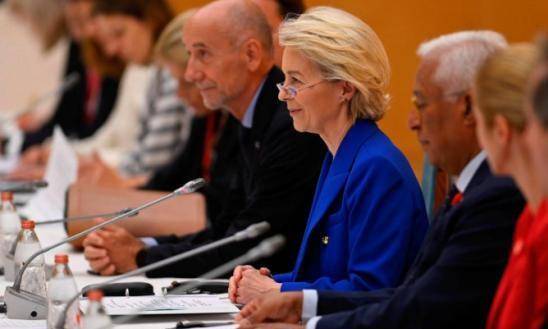
不确定性结束,将为欧股带来舒缓式反弹,汽车、能源、奢侈品等行业将成为最大受益者。但随着细节和行业关 税谈判持续,欧股未来几周料将波动。 据央视新闻,当地时间27日,美国总统特朗普表示,美国已与欧盟达成15%税率的关税协议。特朗普表示,欧盟 将比此前增加对美国投资6000亿美元,欧盟将购买美国军事装备,并将购买价值7500亿美元的美国能源产品。欧 盟委员会主席冯德莱恩表示,欧盟与美国双方同意实行统一的15%关税税率,包括汽车在内的各类商品将适用该 关税标准。冯德莱恩称,这些与美国的贸易协议将为市场带来稳定性。 消息宣布后,28日亚太交易时段,欧股和德国股票期货均上涨,欧元兑美元小幅走高。分析师认为,不确定性结 束,将为欧股带来舒缓式反弹,汽车、能源、奢侈品等行业将成为最大受益者。但分析师们也警示,反弹可能仅 是短暂的,且随着细节和行业关税谈判持续,欧股未来几周料将波动。 汽车、能源、奢侈品等行业将受益 瑞士私人银行CitéGestion的投资策略主管帕拉萨德(John Plassard)称,"贸易协定足以释放股市最需要的东西: 可见性。此前的关税升级风险,接下来已经不在考虑范围内,一个重大的宏观疑虑消失了。对投 ...
欧洲头条丨大众承压 美加关税拖累“德国制造”
Yang Shi Xin Wen Ke Hu Duan· 2025-07-27 09:40
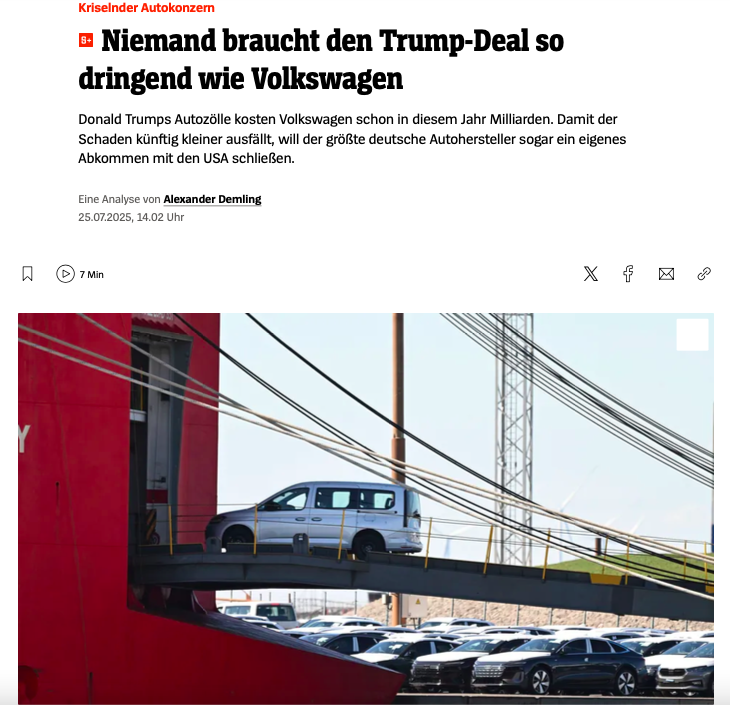
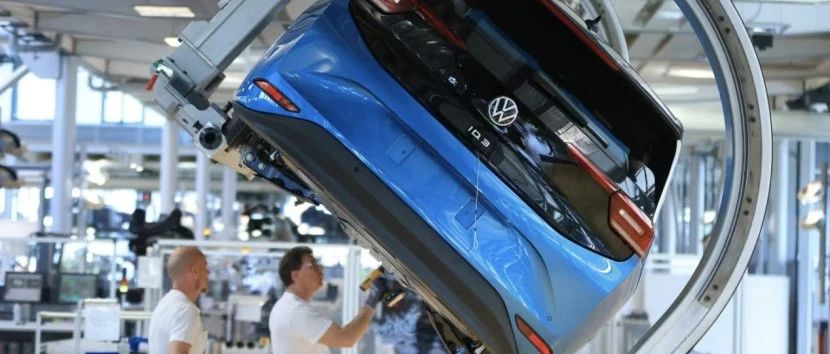
Core Viewpoint - Volkswagen Group's recent financial report for the first half of 2025 reveals a significant profit drop of nearly 40%, high restructuring costs, and pressures on the global supply chain, reflecting broader challenges faced by German manufacturing amid geopolitical and economic shifts [1][25]. Group 1: Profit Decline and Costs - Volkswagen's revenue for the first half of 2025 reached €158.4 billion, remaining stable year-on-year, but operating profit fell by 33% to €6.7 billion, with net profit dropping over 38% to €4.47 billion, significantly below market expectations [2]. - A key factor for the profit decline is the new round of import tariffs imposed by the U.S. government on electric vehicles and components, resulting in an additional cost burden of €1.3 billion for Volkswagen [2][4]. Group 2: Supply Chain Challenges - The global automotive supply chain is undergoing forced restructuring due to the U.S. tariff policies, which disrupt the collaboration needed for electric vehicle production that relies on cross-border component integration [12]. - The inability to achieve "closed-loop production" for electric vehicles due to high precision component requirements exacerbates the impact of policy barriers, leading to increased uncertainty in strategic planning and financial cost control [12]. Group 3: Role of China in Global Market - Despite a 3% year-on-year decline in sales in China, Volkswagen emphasizes the importance of the Asian market for long-term growth, focusing on collaborations in software and battery technologies [13]. - China is transitioning from being merely a sales market to becoming an innovation engine for German automakers, with partnerships in electric and intelligent vehicle technologies expected to enhance Volkswagen's global strategy [16]. Group 4: Institutional Cooperation - Amidst the fragmentation of international trade rules, institutional cooperation between China and Europe is seen as a crucial stabilizing factor for the global manufacturing system [17]. - The collaboration between Germany and China in high-tech and green industries is deepening, with Chinese advancements in technology becoming a key driver for German automotive companies' global strategies [21][24].
利润暴跌,汽车巨头向美国“低头”?
汽车商业评论· 2025-07-26 14:40
Core Viewpoint - The article discusses the significant impact of the Trump administration's tariff policies on Volkswagen, emphasizing the urgency for the EU and the US to reach a trade agreement to mitigate these effects [2][4]. Financial Performance - Volkswagen reported a revenue of €158.4 billion (approximately $185.7 billion) for the first half of 2025, remaining stable compared to the previous year, but operating profit fell by one-third to €6.7 billion (about $7.86 billion) [3]. - The decline in operating profit is attributed mainly to increased costs from US import tariffs, amounting to €1.3 billion (approximately $1.52 billion), along with an additional loss of €0.7 billion (around $0.82 billion) from restructuring and other expenses [5]. - The company has adjusted its full-year revenue forecast from a 5% increase to flat growth compared to last year, with an expected operating profit margin of 4% to 5%, down from a previous estimate of 5.5% to 6.5% [5][33]. Market Dynamics - Despite a 1.5% increase in global deliveries in the first half of 2025, Volkswagen's deliveries in the US dropped by nearly 10%, with North America accounting for 18.5% of the group's global sales [6]. - The performance of luxury brands under Volkswagen, such as Porsche and Audi, has been particularly poor, with Porsche's operating profit plummeting over 90% to €154 million and Audi's profit down 64% to €550 million [6][27]. Electric Vehicle Sales - Volkswagen has become the leader in the European electric vehicle market, surpassing Tesla, with a notable increase in sales of electric vehicles in Europe [6][8]. - In Germany, electric vehicle sales reached a record high in the first half of 2025, with a 35% year-on-year increase, totaling 249,100 units, despite a 4.7% decline in overall new car sales [8][9]. Tariff Negotiations - Volkswagen and its competitors are urging European trade negotiators to reach an agreement to lower the 25% US tariffs imposed since April [17]. - There is optimism that an agreement could be reached to impose a 15% tariff on most imported products, which would alleviate some financial pressure on the automotive sector [17][18]. - The company’s CFO indicated that if a deal similar to the US-Japan agreement is reached, profit margins could stabilize within the expected range [18]. Strategic Adjustments - Volkswagen is considering local production of Audi vehicles in the US and increasing exports from its Chattanooga plant to mitigate tariff impacts [31][26]. - The company is also exploring partnerships with Rivian and Xpeng to enhance product competitiveness, although new models from these collaborations are not expected until next year [34].
超高镍三元材料“突围”锂电下半场竞赛!
起点锂电· 2025-07-26 06:29
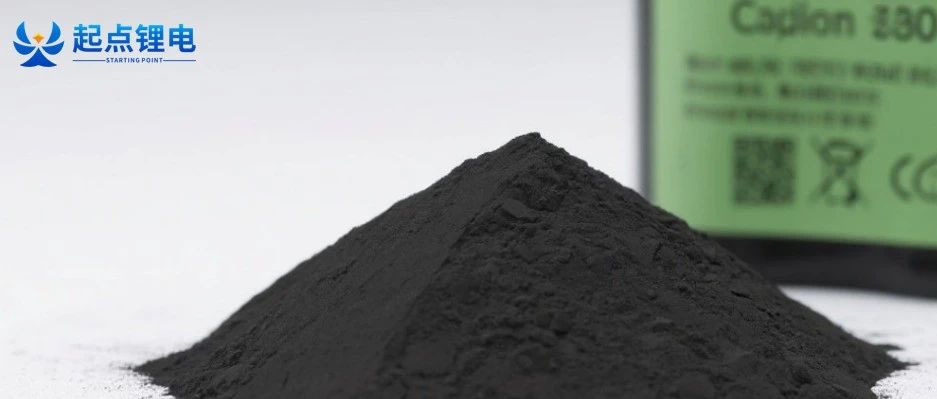
Group 1 - The core viewpoint of the article emphasizes the clear direction of upgrades and iterations in cathode materials for lithium batteries, particularly focusing on lithium iron phosphate (LFP) and nickel-cobalt-manganese (NCM) systems, driven by market demands for high performance and long cycle life [2][4] - The upgrade paths for lithium iron phosphate materials include self-renewal through technology to enhance packing density and formula adjustments to create manganese-based cathode materials, with lithium manganese iron phosphate and lithium-rich manganese-based materials being popular directions [2][4][5] - Data from the 起点研究院 (SPIR) indicates that in May 2025, the installation volume of lithium iron phosphate power batteries exceeded 80% of the total, with a total installation volume of 227 GWh from January to May, highlighting the growing dominance of LFP batteries [2][12] Group 2 - The development path for high-nickel NCM materials is confirmed, focusing on three main aspects: high nickel content, high voltage, and single crystal structures, which enhance energy density and reduce costs [4][5][6] - High-nickel NCM materials are categorized into four levels based on nickel content, with ultra-high nickel materials exceeding 90% nickel content, such as Ni90, Ni95, and Ni98 [8][9] - The domestic production capacity of ultra-high nickel NCM materials is accelerating, with companies like 容百科技 (Rongbai Technology) and 巴莫科技 (Bamo Technology) leading the market, as evidenced by a 170% increase in shipments of ultra-high nickel products in 2024 [10][11][30] Group 3 - The demand for ultra-high nickel NCM materials is driven by four major end markets: electric vehicles, 3C digital products, low-altitude flying, and robotics, with electric vehicles maintaining a steady market share of around 18.5% for NCM batteries [12][13][14] - In the 3C digital sector, high-end devices require batteries with high discharge rates and endurance, leading to increased demand for ultra-high nickel NCM materials [14][15] - The robotics market is expected to see significant growth, with humanoid robots requiring batteries with energy densities above 300 Wh/kg, where ultra-high nickel NCM materials provide a competitive advantage [15][16] Group 4 - The mass production of large cylindrical batteries is accelerating the shipment of ultra-high nickel NCM materials, with companies like 宁德时代 (CATL) and 亿纬锂能 (EVE Energy) leading the development of high-nickel cylindrical batteries [20][21] - The market for large cylindrical batteries is projected to grow significantly, with an expected annual compound growth rate of 38.6% from 2024 to 2030 [22] - Solid-state batteries are also a key technology for ultra-high nickel materials, with major companies planning to integrate ultra-high nickel cathodes into their solid-state battery designs [24][25] Group 5 - The competitive landscape for ultra-high nickel NCM materials is dominated by leading companies in China, which holds over 60% of the global market share, with major players including 容百科技, 巴莫科技, and 当升科技 [27][28][29] - 容百科技 is projected to achieve a sales volume of 120,000 tons of NCM materials in 2024, with a significant increase in the share of ultra-high nickel products [30] - 巴莫科技 and 当升科技 are also expanding their production capacities and partnerships, indicating a robust growth trajectory in the ultra-high nickel segment [31][33]
当着冯德莱恩的面,中方把话说得很清楚,美国想收手?有点晚了
Sou Hu Cai Jing· 2025-07-26 00:02
Group 1: Global Trade Dynamics - The ongoing trade war, primarily driven by the U.S. under President Trump, is creating significant global economic implications, with the EU seeking to navigate its interests amidst U.S.-China tensions [1] - Trump's tiered tariff strategy, which includes a baseline 15% tariff, disproportionately impacts specific industries, such as a potential €26 billion loss for the German automotive sector and pressures on French brandy producers from Chinese anti-dumping investigations [3] - The EU's recent negotiations with China faced strong resistance, particularly regarding requests to lift rare earth export controls and halt energy trade with Russia, highlighting the complexities of international trade relations [4] Group 2: Economic Cooperation Amidst Tensions - Despite the political tensions, there are signs of pragmatic economic cooperation, such as the resumption of negotiations on electric vehicle anti-subsidy agreements and commitments from China to facilitate compliance applications for rare earth exports [6] - The logistics sector is feeling the strain from tariffs, with UPS announcing a workforce reduction of 20,000 and shipping costs rising by 20%, indicating the broader impact of trade policies on operational costs [8] - The deep interconnections in the global economy are evident, with significant trade flows continuing between the EU and China, including a notable increase in Chinese investments in the Eurozone despite rising tensions [8]