
李宁

Search documents
特步国际(01368):2025Q3经营数据点评:Q3 天气扰动流水表现,维持全年预期
GUOTAI HAITONG SECURITIES· 2025-10-20 09:33
Investment Rating - The report maintains an "Accumulate" rating for the company [6][12]. Core Views - The main brand experienced low single-digit revenue growth in Q3, while the Saucony brand saw revenue growth exceeding 20%. The overall annual expectations remain unchanged [2][12]. - The report anticipates a healthy inventory level, projecting it to decrease to below 2 billion by the end of 2025. The dividend payout ratio is expected to be no less than 50% for the year [12]. Financial Summary - Total revenue is projected to be 14,470 million RMB in 2025, reflecting a 6.6% increase from 2024. Net profit is expected to reach 1,373 million RMB, a 10.8% increase from the previous year [11][12]. - The company is expected to maintain a PE ratio of 10.9 in 2025, with a target price of 8.74 HKD based on a 15X PE for 2026 [12][15]. - The financial ratios indicate a projected ROE of 14.6% and a sales net profit margin of 9.49% for 2025 [13].
烟花秀余波未平:始祖鸟大中华区总经理离职,双十一跌出前二十
Guan Cha Zhe Wang· 2025-10-20 09:33
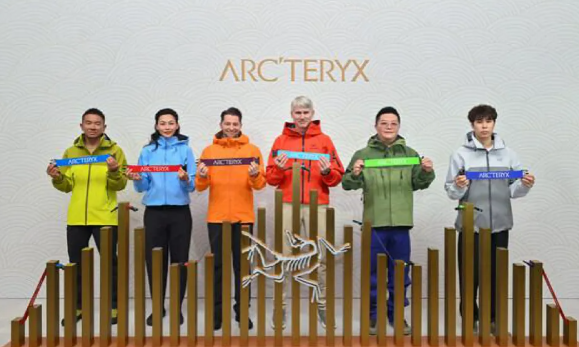
Core Viewpoint - The management change at Arc'teryx, following the fireworks event controversy, reflects the company's response to the situation and its ongoing challenges in the Chinese market [1][7]. Group 1: Management Changes - Ivan She, the General Manager of Arc'teryx Greater China, has left the company, with Jeffery Ma temporarily taking over his responsibilities [1][4]. - Ivan She previously held senior roles at Anta and was involved in the brand's retail operations before becoming the General Manager [2]. - Jeffery Ma, who joined Amer Sports in July, brings extensive experience from various companies in the sports industry and will report directly to the global CEO of Arc'teryx during this transition [4][7]. Group 2: Market Performance and Challenges - Arc'teryx's parent company, Amer Sports, reported a 23% revenue growth in the technical functional apparel segment for Q2, amounting to $509 million, which is a decline from the 28% growth in Q1 [7]. - The revenue growth rates for the Greater China and Asia-Pacific regions have also slowed, with Q2 growth at 42% and 45%, respectively, compared to 43% and 49% in Q1 [7]. - The outdoor industry in China is experiencing significant growth, with participation expected to exceed 400 million by the end of 2024, and the market size projected to reach 418 billion by 2029 [8]. Group 3: Competitive Landscape - Numerous international outdoor brands are rapidly expanding in China, posing direct competition to Arc'teryx, including the recent entry of Norrøna and the expansion of Haglöfs by Li Ning [10][12]. - Local brands like Camel and Kailas are also gaining traction, with Kailas specifically targeting Arc'teryx in its marketing and product positioning [14]. - The domestic professional outdoor apparel market is projected to grow from 27 billion in 2019 to 57.3 billion by 2024, with a compound annual growth rate of 19.1% [16]. Group 4: Brand Marketing and Strategy - The fireworks event was part of Arc'teryx's "Upward to Beauty" series, aimed at enhancing brand visibility through high-profile collaborations [17][20]. - Despite significant marketing investments, Arc'teryx's performance in the Tmall Double 11 sales event was disappointing, as it fell out of the top ten brands, indicating potential issues in brand positioning [21][22].

轻工制造及纺服服饰行业周报:重视新消费估值切换逻辑,运动品牌Q3经营表现平稳-20251020
ZHONGTAI SECURITIES· 2025-10-20 08:05
Investment Rating - The report maintains an "Overweight" rating for the industry [4] Core Views - The report emphasizes the importance of valuation switching logic in the new consumption sector, highlighting stable operational performance in the sports brand sector for Q3 [6][4] - It suggests a focus on high-growth tracks in new consumption and the valuation switching logic within the sector, particularly in the collectible toy segment [6][4] - The report identifies several companies with strong growth potential and suggests monitoring their performance closely [6][4] Summary by Sections Industry Overview - The industry consists of 175 listed companies with a total market value of 10,672.79 billion and a circulating market value of 8,623.31 billion [2] Market Performance - The Shanghai Composite Index decreased by 1.47%, while the Shenzhen Component Index fell by 4.99% during the week of October 13-17, 2025 [6][11] - The light industry manufacturing index dropped by 2.22%, ranking 13th among 28 Shenwan industries, while the textile and apparel index decreased by 0.31%, ranking 5th [6][11] Key Company Insights - Companies such as Bubble Mart are expected to release Q3 operational data, with new product launches anticipated to drive performance in Q4 [6] - 361 Degrees reported a stable performance with a 10% increase in offline and children's clothing sales, and a 20% increase in e-commerce sales [6] - Anta Sports, Li Ning, and other functional apparel brands are highlighted for their growth potential [6] Investment Opportunities - The report suggests focusing on the acceleration of the Chinese consumption supply chain going overseas, particularly in non-woven fabric manufacturing [6][7] - Companies like Yanjiang Co. are recommended for their advanced production techniques and global supply chain capabilities [7] - The pet supplies sector is also highlighted, with companies like Yuanfei Pet expected to benefit from growth in both OEM and OBM businesses [6][7] Sector Recommendations - The report recommends monitoring companies in the home furnishing sector, such as Xilinmen and Gujia Home, for potential recovery in performance and valuation [6] - In the paper industry, Sun Paper is recommended due to its integrated advantages and expected improvement in profitability [6][7] - The textile manufacturing sector suggests a focus on companies like Jingyuan International for their market share growth potential [6][7]





江苏省无锡市市场监督管理局发布老人鞋产品质量监督抽查结果
Zhong Guo Zhi Liang Xin Wen Wang· 2025-10-20 06:29
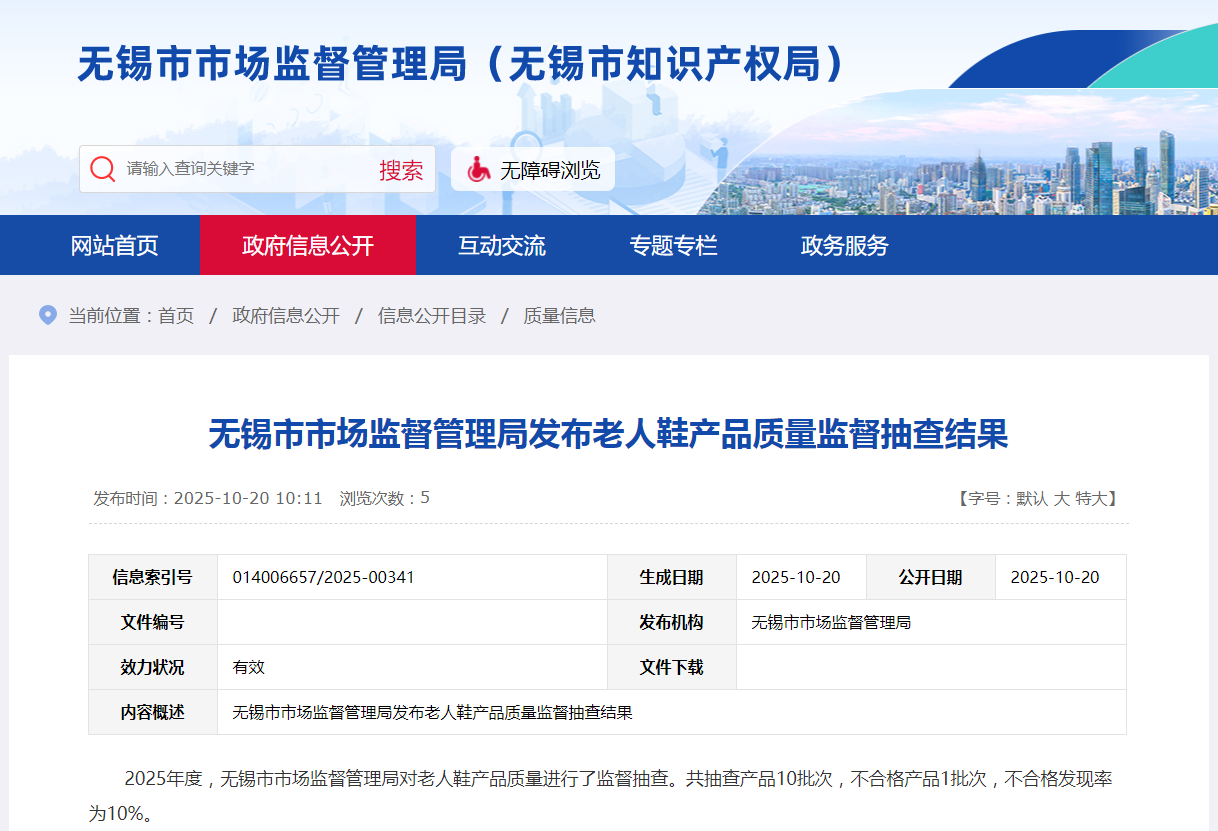
Core Insights - The Wuxi Market Supervision Administration released the results of a quality inspection for elderly shoes, revealing that out of 10 batches tested, 1 batch was found to be non-compliant, resulting in a non-compliance rate of 10% [2]. Summary by Sections Quality Inspection Results - In 2025, the Wuxi Market Supervision Administration conducted a quality inspection on elderly shoes, with a total of 10 batches sampled and 1 batch failing the quality standards [2]. Consumer Guidance - Consumers are advised to purchase elderly shoes from reputable brands in formal retail environments to ensure product quality and reliable after-sales service. It is recommended to check packaging and materials, ensuring all labels are clear and accurate [2]. - Specific steps for selecting elderly shoes include: 1. Inspecting the shoe's surface for consistency in color, thickness, and texture, and checking for any defects in seams and adhesive areas [3]. 2. Testing the internal comfort by pressing on the shoe and ensuring the forefoot is adequately cushioned while the heel provides proper support [3]. 3. Bending the shoe to assess its flexibility and checking for any signs of adhesive failure [3]. 4. Evaluating the hardness of the heel and toe areas to ensure adequate protection and support [3]. 5. Checking for any unpleasant odors that may indicate harmful chemicals [3]. 6. Trying on both shoes simultaneously to assess comfort and ensuring there is at least 1 cm of space for the toes [4].
地铁里,没有人穿高跟鞋了
3 6 Ke· 2025-10-20 01:27
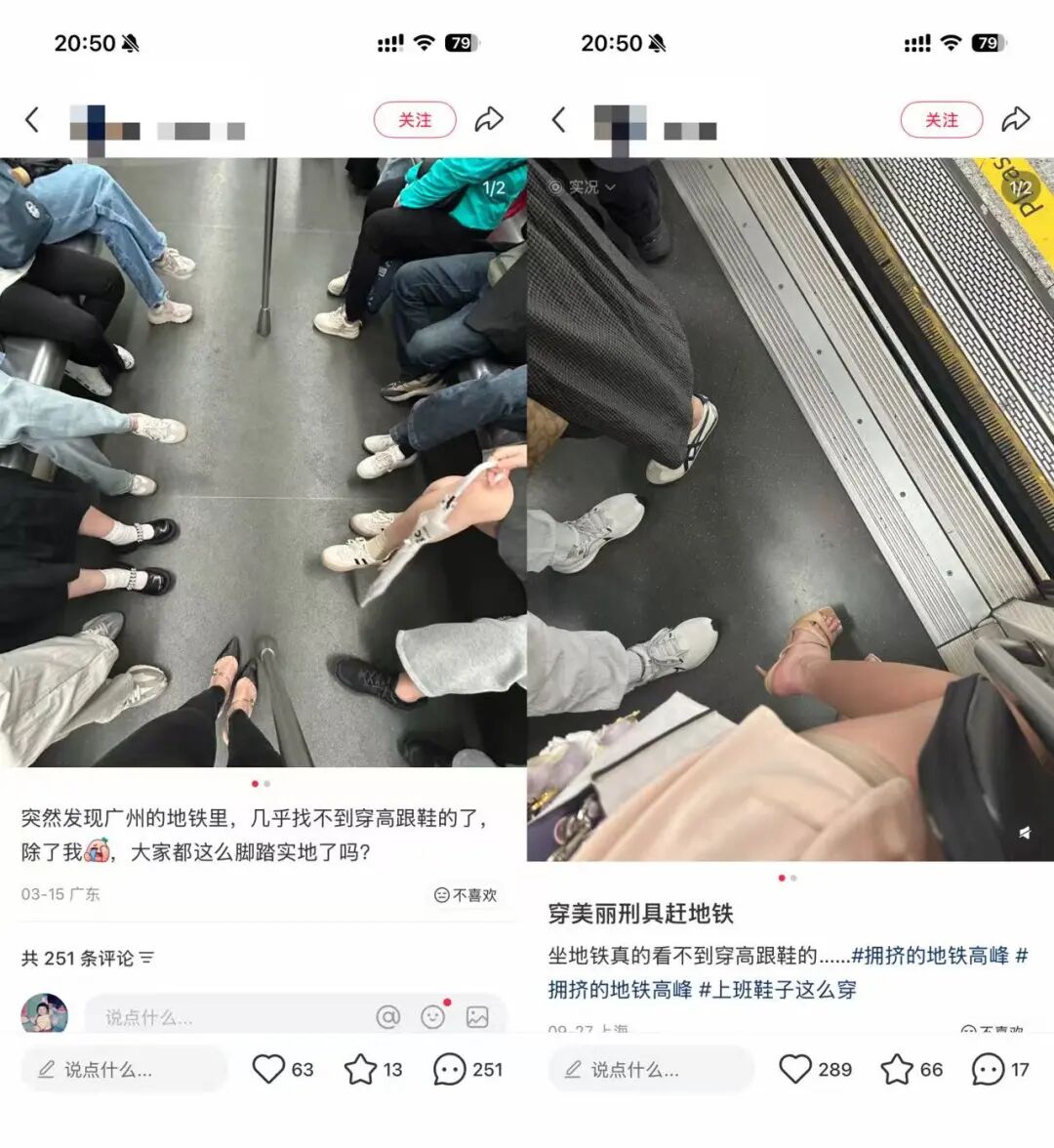
Core Viewpoint - The discussion around high heels, particularly in the context of airline staff, highlights a shift in societal norms regarding professional attire, emphasizing comfort and practicality over traditional notions of beauty and professionalism [1][6][18]. Group 1: Industry Trends - Airlines such as Spring Airlines, Shandong Airlines, and Juneyao Airlines have begun to allow flight attendants to wear flat shoes, reflecting a broader trend towards comfort in professional settings [1][6]. - The global sales of high heels have been declining, with an annual decrease of 1.5%-2% from 2019 to 2023, indicating a significant shift in consumer preferences [18][21]. - The fashion industry is witnessing a move towards more casual and comfortable styles, with high heels increasingly seen as incompatible with modern lifestyle demands [11][12][19]. Group 2: Cultural Shifts - High heels, once a symbol of femininity and professionalism, are now often viewed as "instruments of beauty" that can cause physical harm, leading to a cultural reevaluation of their place in women's wardrobes [7][17]. - The portrayal of high heels in popular media, such as in the film "Sex and the City," has shifted, with contemporary narratives focusing on comfort and practicality over traditional glamour [15][18]. - The rise of alternative footwear options, such as sneakers and casual shoes, reflects changing attitudes towards fashion and functionality, with high heels becoming less common in everyday settings [10][21][24]. Group 3: Market Dynamics - Brands like Christian Louboutin are diversifying their product lines to include non-heel options, recognizing the declining demand for high heels [18][23]. - The market for high heels is becoming increasingly concentrated, with only a few brands like Christian Louboutin and Jimmy Choo still experiencing growth amidst a broader industry decline [22][24]. - Investment firms are viewing high heel businesses as "non-performing assets," indicating a lack of confidence in the future profitability of this segment [23][24].
智通港股沽空统计|10月20日
智通财经网· 2025-10-20 00:23
Summary of Key Points Core Viewpoint - The report highlights the top short-selling stocks in the market, indicating significant investor sentiment and potential market movements for these companies [1][2]. Group 1: Top Short-Selling Ratios - New World Development Co. Ltd. (80016), Li Ning Company Limited (82331), and JD Health International Inc. (86618) have the highest short-selling ratios at 100.00% [1][2]. - Other notable companies with high short-selling ratios include China Resources Beer Holdings Company Limited (80291) at 93.39% and JD Group (89618) at 92.79% [2]. Group 2: Top Short-Selling Amounts - Meituan (03690) leads in short-selling amount with 2.07 billion, followed by Alibaba Group Holding Limited (09988) at 1.993 billion and Xiaomi Corporation (01810) at 1.858 billion [2]. - Other companies with significant short-selling amounts include Semiconductor Manufacturing International Corporation (00981) at 1.363 billion and Tencent Holdings Limited (00700) at 1.245 billion [2]. Group 3: Top Short-Selling Deviation Values - JD Group (89618) has the highest deviation value at 42.40%, indicating a significant difference from its average short-selling ratio over the past 30 days [2]. - Tencent Holdings (80700) and BYD Company Limited (81211) follow with deviation values of 38.32% and 33.97%, respectively [2].





新发消费ETF募集放量 公募仓位切换望偏向内需逻辑
Zheng Quan Shi Bao· 2025-10-19 17:38
Core Insights - Fund managers have shown a lack of interest in consumer stocks this year, leading to poor performance of consumer-themed funds, but there has been a sudden increase in fundraising for these funds in Q4 as institutional investors anticipate a decline in risk appetite and recognize the importance of domestic demand for stable growth [1][2] Group 1: Consumer Fund Performance - The recent surge in interest for consumer-themed funds marks a significant shift from earlier this year when these funds struggled to attract investment [2] - The Huazhang Guozheng Hong Kong Stock Connect Consumer ETF is set to launch on October 22, with a fundraising target of 6.39 billion yuan, indicating a turning point for consumer-themed funds [2][3] - Some consumer ETFs have recently experienced unusual premium pricing in the secondary market, suggesting renewed investor interest [3] Group 2: Technology Fund Adjustments - Many technology funds have seen significant declines in net value, prompting a shift towards defensive strategies, with some funds reallocating to consumer sectors [4][5] - A notable example includes a fund that transitioned from high-growth technology stocks to consumer sectors, reflecting a broader trend among fund managers to seek stability amid market volatility [5] Group 3: Market Outlook and Domestic Demand - Fund managers are increasingly considering domestic demand as a potential area for investment, especially in light of uncertainties in the global economy and potential pressures on exports [6][7] - The expectation of a rebound in earnings growth for many industries in Q3 is anticipated to bolster market confidence, with sectors like basic chemicals benefiting from emerging consumer demand [7]
“双11”即时零售变革:平台开启价值竞赛
Sou Hu Cai Jing· 2025-10-19 16:45
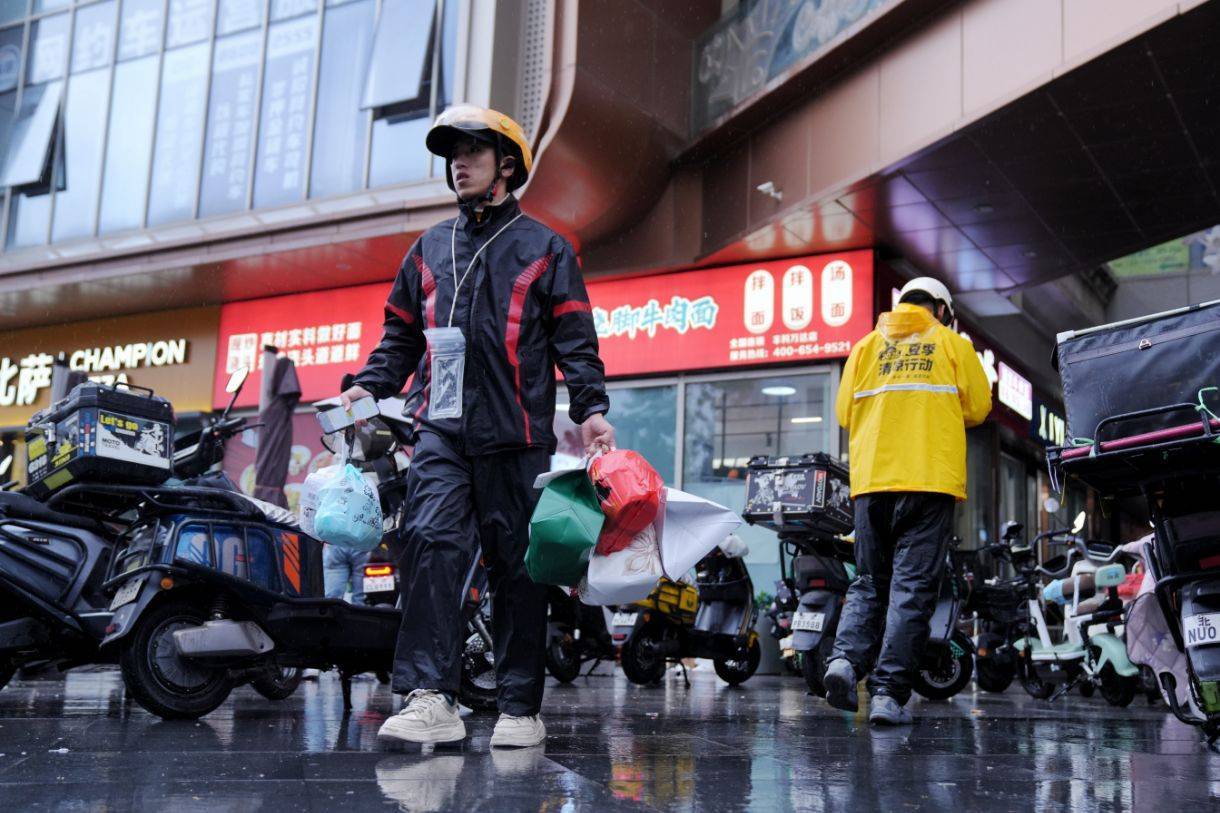
Core Insights - The "Double 11" shopping festival has initiated a transformation in the instant retail sector, with significant changes in management practices and the integration of instant retail with traditional e-commerce [1][6]. Group 1: Management Changes in Instant Retail - JD.com has begun a pilot program in 25 cities to eliminate penalties for delivery riders exceeding order time, replacing it with a "service score" system to encourage positive performance [3][4]. - Meituan and Ele.me are also moving towards similar management changes, with plans to eliminate penalties for late deliveries and implement new scoring systems to reward timely service [4][5]. Group 2: Integration of Instant Retail and E-commerce - The integration of instant retail with traditional e-commerce is a prominent trend during this year's "Double 11," with Taobao Flash Sale showing rapid growth since its launch [6][7]. - Taobao Flash Sale achieved an average of 80 million orders per week and a peak of 120 million daily orders in August, significantly boosting overall traffic on Taobao [7]. - The collaboration between Taobao Flash Sale and Tmall aims to meet diverse consumer needs, including urgent delivery within 30 minutes and guaranteed delivery within 4 hours [8]. Group 3: Brand Perspectives on Instant Retail - Brand representatives at the Tmall "Double 11" conference highlighted the substantial demand generated by instant retail, emphasizing the importance of expanding new scenarios beyond traditional retail [9]. - Instant retail is seen as an extension of service, enhancing customer engagement and loyalty through timely delivery and support [9]. - The integration of instant retail with traditional e-commerce is expected to create long-term value for brands by connecting distant and nearby consumer scenarios [9].
餐饮、潮玩及家电行业周报-20251019
Haitong Securities International· 2025-10-19 14:35
Investment Ratings - The report assigns an "Outperform" rating to multiple companies including Pop Mart, Anta Sports, Huazhu Group, and Haidilao, while Budweiser APAC is rated "Neutral" [1]. Core Insights - The report highlights the strong performance of the F&B sector, particularly noting the 10.7% increase in the stock price of Guoquan [4][7]. - It also mentions the strategic partnership between Haier Group and Alibaba, focusing on AI and digital innovation [3][6]. - Jiumaojiu's operational data for Q3 shows a decrease in same-store sales, but improvements in operational metrics are noted [3][6]. Weekly Performance Summary - Key performers in the F&B sector include Guoquan (+10.7%) and Xiaocaiyuan (+3.0%), while underperformers include ECOVACS (-11.8%) and ROBOROCK (-12.5%) in the home appliances sector [4][7]. - The report provides detailed stock price changes and PE ratios for various companies, indicating market trends and investor sentiment [5].

纺织服装行业周报 20251019:特步、361度发布Q3运营数据,运动板块仍有韧性-20251019
Shenwan Hongyuan Securities· 2025-10-19 11:34
Investment Rating - The report maintains a "Buy" rating for the industry, highlighting potential growth opportunities in the textile and apparel sector [20][25]. Core Insights - The textile and apparel sector has shown resilience, with the SW textile and apparel index outperforming the SW All A index by 3.3 percentage points during the period from October 13 to October 17, 2025 [3]. - Domestic demand is gradually recovering, while external demand remains volatile, emphasizing the value of globalized production capacity [10][11]. - The report suggests that companies with mature overseas capabilities and the ability to allocate production globally will benefit from the ongoing shifts in the supply chain due to U.S. tariff policies [8][11]. Summary by Sections Industry Performance - The SW textile and apparel index decreased by 0.3%, while the SW apparel and home textiles index increased by 0.4%, outperforming the SW All A index by 4.0 percentage points [3]. - Retail sales in the clothing, shoes, and textiles category reached 940 billion yuan from January to August, reflecting a year-on-year growth of 2.9% [10]. Export Data - In September, China's textile and apparel exports amounted to $24.42 billion, a year-on-year decline of 1.0%. However, textile yarn, fabric, and products saw an increase of 6.4% [10][44]. - Vietnam's textile exports grew by 9.1% in the same period, indicating a shift in production orders and competitive advantages for overseas production [8][11]. Cotton and Wool Prices - As of October 17, the national cotton price B index was reported at 14,683 yuan per ton, down 0.6% from the previous week [46]. - The Australian wool index showed a significant year-on-year increase of 30.7%, indicating strong demand in the wool market [10]. Company Performance - 361 Degrees reported a 10% year-on-year increase in retail sales for its main brand and children's line, while e-commerce sales grew by approximately 20% [16]. - Xtep International's main brand saw a low single-digit growth in retail sales, with online sales outperforming offline [22]. - The report highlights the strong performance of companies like Bosideng, Anta, and Li Ning, suggesting they are well-positioned to capitalize on the upcoming winter season [9][14]. Investment Recommendations - The report recommends focusing on high-quality domestic brands that are beginning to reverse their challenges, particularly in the sports and outdoor segments [14]. - Specific companies highlighted for investment include Bosideng, Anta, and 361 Degrees, with a suggestion to monitor Xtep and other emerging brands [14].