智谱

Search documents
2025中国企业出海年鉴:不确定时代中的全球化韧性:中国企业的实践与趋势
EqualOcean· 2026-01-28 01:10
Investment Rating - The report does not explicitly provide an investment rating for the industry. Core Insights - In 2025, Chinese companies' overseas expansion did not experience a singular turning point but rather accelerated along multiple changing trajectories, significantly impacting their overseas operations [6] - The focus of overseas market layout has shifted, with compliance and organizational setup becoming prerequisites, and localization evolving from a strategic option to a fundamental requirement [6] - The importance of 2025 lies not only in what occurred but in the changes that have begun to emerge, reshaping the decision-making logic of overseas enterprises and influencing their long-term choices [6] Summary by Sections Overall Changes in 2025 - The industry coverage for Chinese companies going abroad has expanded, encompassing retail e-commerce, tea drinks, entertainment, AI, automotive, and hardware, with Southeast Asia, the Middle East, Latin America, and Africa becoming significant growth sources [14] - The technological investment has increased, and compliance challenges have intensified, with a notable shift in export structure, as evidenced by a trade surplus exceeding $1 trillion for the first time in 2025 [19][21] Country-Specific Roles in Overseas Expansion - The Global South has emerged as a crucial growth source for Chinese companies, transitioning from a supplementary market to a core strategic depth [28] - The Gulf region is becoming a key node in the global AI capability competition, with significant investments in digital infrastructure and AI technologies [31] - Competition in the European and American markets has shifted towards regulatory and compliance aspects, with stringent measures impacting market access for Chinese firms [34] Industry-Specific Changes in Overseas Expansion - The automotive industry's focus has shifted from export expansion to deep localization, with significant investments in overseas manufacturing facilities [43][48] - The global AI landscape is being restructured, with Chinese AI capabilities transitioning from a follower to a leader in the market [49] - The competitive focus in cross-border e-commerce has shifted towards fulfillment and infrastructure capabilities, reflecting the need for robust operational frameworks [6] Strategic Responses of Companies and Service Systems - Chinese brands are entering a critical window for global reputation and brand premium, with the first generation of overseas experience beginning to systematically fail [4][10] - The overseas service system is evolving from a reactive response to customer needs to a proactive global service model, indicating a shift towards comprehensive service offerings [10]





释放创新驱动强势能
Jing Ji Ri Bao· 2026-01-27 22:12
Core Viewpoint - China is positioning itself to lead in global technology by enhancing its innovation capabilities and focusing on key areas such as artificial intelligence, biotechnology, and renewable energy by 2026 [1][2]. Group 1: Investment in Research and Development - By 2025, China's R&D expenditure intensity is expected to reach 2.8%, surpassing the OECD average for the first time, with basic research funding accounting for 7.08% of total R&D, a historical high [2]. - The government aims to increase the proportion of basic research funding in total R&D expenditures, narrowing the gap with developed countries [3]. Group 2: Focus on Key Core Technologies - The "14th Five-Year Plan" emphasizes the need for breakthroughs in critical core technologies across various sectors, including integrated circuits and advanced materials [4]. - In the semiconductor sector, China plans to overcome key technological challenges and promote the large-scale application of domestic chips in consumer electronics and industrial control [4]. Group 3: Strategic Technological Forces - China will strengthen collaboration among national laboratories, research institutions, and leading technology enterprises to build a robust strategic technology force [5]. Group 4: Talent Development and Education - A coordinated mechanism will be established to promote the integration of education and technology, fostering a new generation of innovative talent and teams [6]. Group 5: New Quality Productivity - The development of new quality productivity is highlighted as a key focus area, with an emphasis on applying technology to enhance industrial systems [7][8]. - The "Artificial Intelligence+" initiative aims to integrate AI into various sectors, transforming traditional manufacturing into intelligent manufacturing [7]. Group 6: International Cooperation and Regional Innovation - China will continue to promote international scientific cooperation to address global challenges, emphasizing the importance of collaboration alongside competition [10]. - The establishment of international technology innovation centers in regions like Beijing, Shanghai, and the Guangdong-Hong Kong-Macau Greater Bay Area will facilitate regional collaboration and resource sharing [11]. Group 7: Innovation Ecosystem Optimization - Continuous reforms will be implemented to eliminate barriers to innovation, creating an environment that encourages creativity and tolerates failure [12]. - The government will enhance the sharing of scientific resources and improve the efficiency of technology resource utilization [12]. Group 8: Financial Support for Technology - The government plans to strengthen financial services for major technological tasks and technology-based SMEs, ensuring adequate funding for innovation [13][14]. - A comprehensive financial support system will be established to facilitate the financing of key technology sectors [14].
首都在线(300846.SZ):与智谱联合打造的“硬件+软件+模型”一体化交付方案已完成核心技术适配与产品定型
Ge Long Hui· 2026-01-27 14:22
Group 1 - The company has completed the core technology adaptation and product definition for the integrated delivery solution of "hardware + software + model" in collaboration with Zhiyu, supporting dynamic scheduling of GPU heterogeneous resources [1] - The integrated machine solution is now open for application to B-end customers in government, finance, and industry, and is advancing benchmark scenario implementation and commercial scale promotion [1] - A comprehensive strategic partnership with Zhiyu has been established since 2024, focusing on collaboration in integrated machines, intelligent computing cluster construction, large model commercialization, domestic GPU adaptation, and local intelligent computing center development [1] Group 2 - The company is a core computing power supplier for Zhiyu, constructing large-scale high-performance GPU computing clusters in multiple locations to support the stable operation of Zhiyu's GLM series model training and inference [2] - The company has built a MaaS service platform to facilitate the comprehensive access of Zhiyu's GLM-Z1 series inference models, promoting their application penetration in industries such as gaming, audio-video, and e-commerce [2] - The company has obtained "diverse computing power adaptation rights" from Zhiyu, becoming a core partner for domestic computing power adaptation, focusing on optimization with domestic GPUs like Ascend and Suiruan [2]
深扒Minimax与智谱:大模型,到底是怎样的生意模式?
虎嗅APP· 2026-01-27 14:17
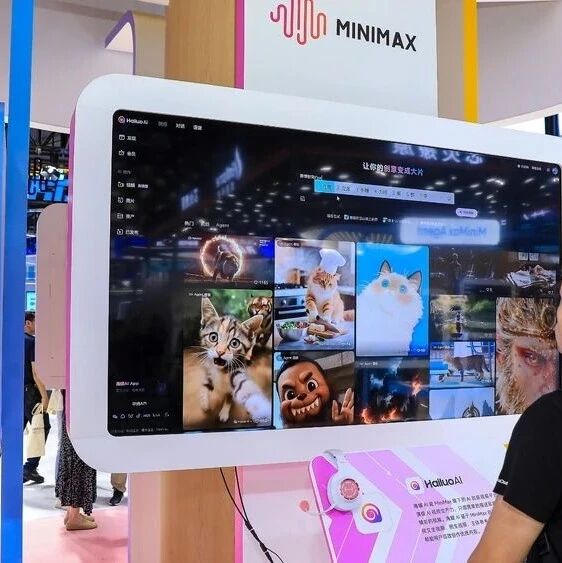
Core Viewpoint - The article discusses the financial dynamics and business models of two AI companies, Minimax and Zhipu, which both went public with valuations around $60 billion but are facing significant losses due to high operational costs and investments in model training [5][8]. Group 1: Revenue and Expenditure Dynamics - Both Minimax and Zhipu are characterized as "short and agile" companies with fewer than 1,000 employees, rapidly iterating products and achieving annual revenues approaching $100 million within a few years [9]. - Despite rapid revenue growth, expenditures for both companies are approximately ten times their current income, with Minimax's spending being over five times its revenue in the first nine months of 2025 [11]. - The article raises questions about whether increasing revenue will lead to a narrowing of losses or exacerbate them, indicating a potential scale inefficiency in their business models [14]. Group 2: Role of Computational Power - The article emphasizes the critical role of computational power in the business model of AI companies, noting that training costs are a significant portion of total expenditures, often exceeding 50% [21][24]. - For Minimax, the revenue generated in 2024 is only 65% of the training costs incurred in 2023, while Zhipu's coverage is even lower at 30% by mid-2025 [25][26]. - The companies rely heavily on third-party cloud services for computational power, which contributes to their high operational costs [20]. Group 3: Human Resource Investment - Both companies have a high percentage of R&D personnel, with Minimax's monthly salary per employee reaching up to 160,000 RMB, indicating a focus on talent density rather than sheer headcount [16][18]. - The overall salary expenditure for Minimax is around $10 million annually, which is about 90% of its revenue, reflecting a high investment in skilled labor [18]. Group 4: Business Model Challenges - The article highlights a fundamental contradiction in the business model: while revenue is increasing, it is not sufficient to cover the rising costs of model training and operational expenses, leading to significant losses [30][34]. - The companies are caught in a cycle where they must continuously invest in new models to remain competitive, requiring additional financing that often exceeds their revenue [35]. - The potential for a sustainable business model hinges on the ability to amortize training costs over a longer period, which is currently not feasible due to the rapid pace of model iteration [30][37]. Group 5: Competitive Landscape - The competitive landscape is described as a capital-intensive game, where companies must secure financing to survive, with only a few players likely to emerge as long-term leaders [39][44]. - The article notes that many smaller companies are struggling to compete against larger firms and open-source models, leading to a consolidation in the market [43].

印奇出任阶跃星辰董事长 公司迈入商业化深耕期?
Mei Ri Jing Ji Xin Wen· 2026-01-27 13:17
Core Viewpoint - The appointment of Yin Qi as the chairman of Jiyue Xingchen marks a significant strategic move in the AI industry, aiming to enhance the company's competitive edge and commercial viability in the rapidly evolving large model sector [1][2][8]. Group 1: Leadership Changes - Yin Qi has been appointed as the chairman of Jiyue Xingchen, responsible for overall strategic direction and technology [1]. - Yin Qi is also the chairman of Qianli Technology, bringing extensive experience in AI and automotive integration [1][3]. - The new management team includes CEO Jiang Daxin, Chief Scientist Zhang Xiangyu, and CTO Zhu Yibo, indicating a strong leadership structure [1]. Group 2: Financing and Market Position - Jiyue Xingchen completed over 5 billion RMB in B+ round financing, setting a record for single financing in China's large model sector in the past 12 months [1][2]. - The company is transitioning from a financing race to a phase of value realization, with increasing market attention on the "AI Six Little Tigers" [1][8]. Group 3: Strategic Focus - The company aims to become one of the best in the foundational model field in China, focusing on the integration of AI and terminal applications [5][6]. - Jiyue Xingchen has developed three generations of foundational models and has partnered with major smartphone brands and automotive companies to implement AI functionalities [6][7]. Group 4: Commercialization Efforts - Yin Qi's dual role is expected to enhance the commercialization of AI technologies, with a focus on strategic direction and specific projects [7]. - The company is working on a complete chain from foundational models to productization and market implementation, particularly in automotive and mobile sectors [7][8]. Group 5: Future Outlook - Jiyue Xingchen's revenue is projected to reach 1 billion RMB in 2025, indicating strong growth potential [8]. - The company remains optimistic about future financing opportunities but has not disclosed specific IPO plans [9][10].

从私行专属到“1元起购”,银行理财子掘金港股IPO
Di Yi Cai Jing· 2026-01-27 13:02
Core Viewpoint - The surge in Hong Kong IPOs has attracted bank wealth management subsidiaries, which are increasingly participating in the market to enhance their equity investment capabilities and offer new products to investors [2][8]. Group 1: Market Trends - The Hong Kong IPO market has seen significant growth, with 12 new listings as of January 27, raising a total of HKD 34.747 billion, a year-on-year increase of 480.89% [3]. - Major companies such as Wallen Technology and MiniMax have successfully launched IPOs, indicating a strong interest in hard technology sectors [3][4]. Group 2: Bank Participation - Bank wealth management subsidiaries, such as ICBC Wealth Management, have become active participants in Hong Kong IPOs, with ICBC participating in over 80% of the projects it locked in, achieving a 100% success rate with a maximum single investment return of 165.45% [4][5]. - ICBC Wealth Management has focused its investments on hard technology and high-end manufacturing sectors, including semiconductor and AI companies [5]. Group 3: Product Development - Wealth management subsidiaries are embedding Hong Kong IPO capabilities into their product offerings, with ICBC launching "fixed income + Hong Kong IPO" strategy products aimed at private banking clients [6][7]. - The minimum investment thresholds for these products are set at RMB 200,000 and RMB 1 million, respectively, while some banks are working to lower barriers for retail investors [7]. Group 4: Industry Dynamics - The shift of wealth management funds towards Hong Kong IPOs is driven by the need for higher returns in a low-interest-rate environment, as traditional fixed-income assets are no longer sufficient [8]. - Participation in Hong Kong IPOs allows wealth management firms to enhance their equity investment capabilities and potentially achieve excess returns through strategic investments [8]. Group 5: Challenges Ahead - Despite the opportunities, wealth management firms face challenges in project acquisition, research capabilities, and risk management, necessitating the establishment of a robust primary market research system [9]. - Firms must navigate competition for quality cornerstone shares, enhance cross-market research capabilities, and manage risks associated with market volatility and currency fluctuations [9].
大模型统一竞赛700天后,AI走向“分野之年”
3 6 Ke· 2026-01-27 12:34
"世界不是由事实构成的,而是由事实之间的关系构成的。" 如果用维特根斯坦的理论来反推 AI 的能力边界,智能的上限或许从一开始就不取决于模型"知道多少",而取决于它是否理解Context(语境)、规则,以及 这些知识在不同场景中如何被使用。 也正是在这一意义上,今天更有竞争力的模型们,开始逐步逼近维特根斯坦后期所说的"语言游戏":意义并不来自词本身,而来自使用。能否参与这种游 戏,决定了 AI 只是一个高效的工具,还是正在进入更深层的认知结构。 但这一变化,并没有被舆论第一时间捕捉。过去两年,舆论场被 ChatGPT 与 Claude 轮番占据,行业习惯将 AI 视为一个整体的、线性的竞赛,更强的模 型、更大的参数、更通用的智能被视为唯一的进化方向。 身处一线的从业者,先于市场感知到了"温差"。前OpenAI成员姚顺雨,便在此前AGI会谈上分享到: AI 在 To C 端和 To B 端正遵循不同的发展轨迹。 从 GPT-4 到后续迭代版本,普通 C 端用户的体感差异微乎其微;但另一边,Claude,已开始深入编程等核心环节,改变程序员们的工作模式。 陷入马太效应的"垂直整合" 过去两年,市场曾笃信"模型+应 ...

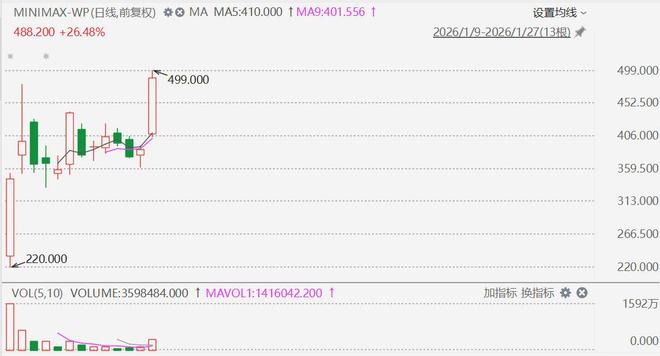
MiniMax创上市新高,市值升破1500亿港元
Ge Long Hui· 2026-01-27 09:52
Group 1 - The Hong Kong stock market saw a significant surge in AI concept stocks, with MINIMAX-WP (0100.HK) rising over 29% to reach 499 HKD, marking a new listing high and a market capitalization exceeding 150 billion HKD [1] - Another AI stock, Zhiyu, experienced a nearly 13% increase, reaching 244.6 HKD [1] - The release of DeepSeek's new DeepSeek-OCR 2 model, which utilizes the innovative DeepEncoder V2 method, allows AI to "see" images in a logical sequence similar to humans [1] Group 2 - A new AI named "Clawdbot" gained immense popularity in Silicon Valley, achieving a search volume that surpassed the renowned Claude Code within just one day [1]
智谱冲击“A+H”两地上市!
是说芯语· 2026-01-27 09:36
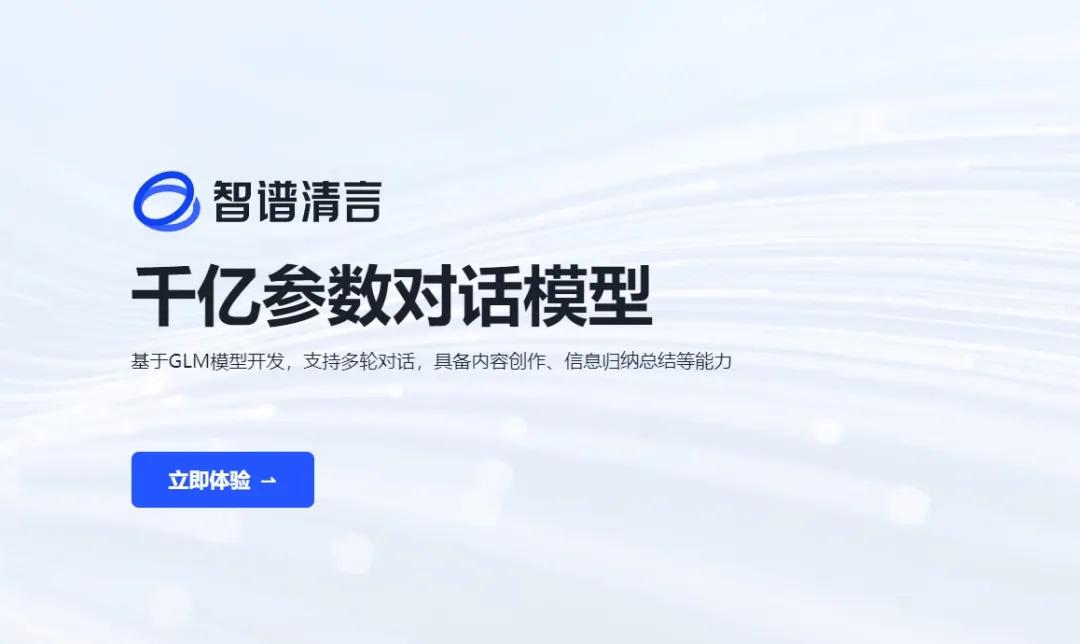
据港股招股书,智谱是中国领先的人工智能公司,致力于开发先进的通用大模型。2019年,公司秉承 着在中国追求通用人工智能(AGI)创新的大胆理念而创立。公司于全方位的人工智能研究中扎实交付 先进技术,并稳步扩大其商业应用,以实现收入的快速增长。 作为国内商业化起步较早的大模型厂商,智谱以MaaS模式,即通过API调用向开发者和企业输出智能 能力。智谱云端MaaS和订阅业务呈现指数级增长趋势,MaaS平台的企业和开发者用户数超290万。 截至目前,智谱大模型已赋能了全球12000家企业客户、逾8000万台终端用户设备及超4500万名开发 者,是中国赋能终端设备最多的独立通用大模型厂商,在中国独立通用大模型开发商中位列第一。 根据中国证监会近日更新的公告,智谱(02513.HK)的辅导机构中金公司已递交了关于公 司首次公开发行股票并上市的第三期辅导工作进展情况报告。这也意味着,在2026年1月 8日完成港交所上市,成为"全球大模型第一股"后,智谱仍在持续推进其A股上市计划, 向"A+H"两地上市路径迈进。 截至1月27日收盘,智谱(02513.HK)报233.40港元/股,市值1027.50亿港元。 辅导报告显示, ...

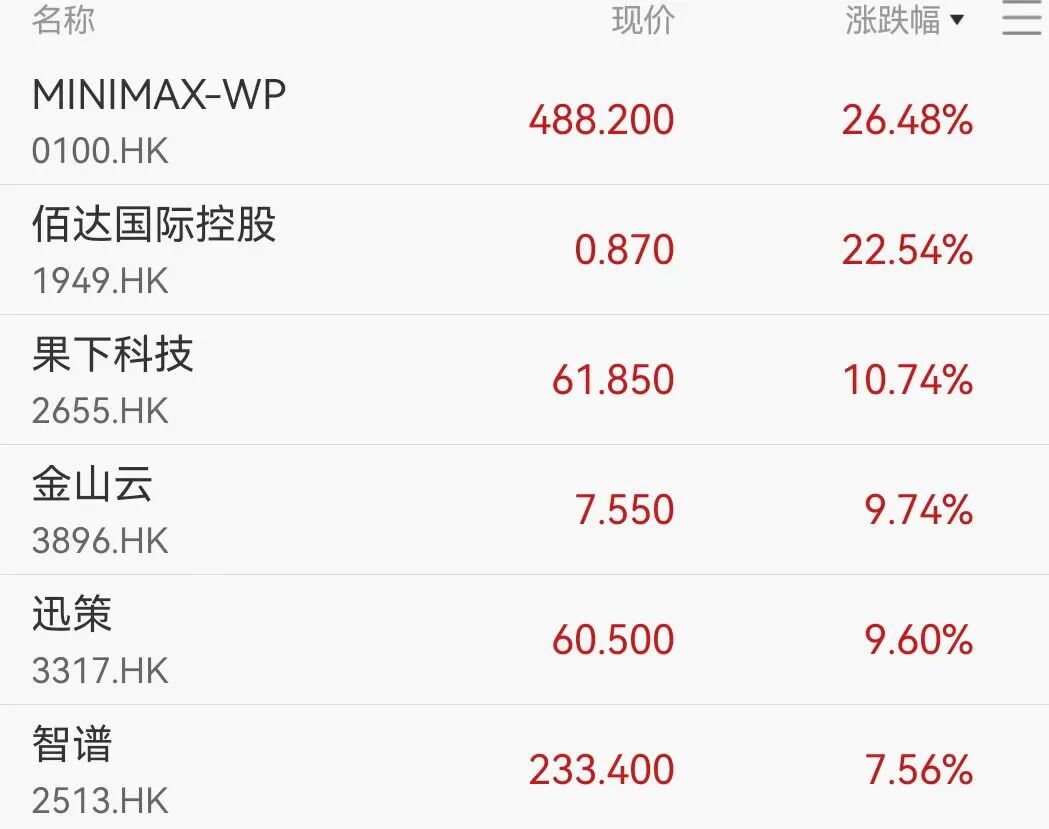
港股AI大涨,MINIMAX飙升26%,智谱涨逾7%,阿里涨近3%,千问推出最强模型
2 1 Shi Ji Jing Ji Bao Dao· 2026-01-27 09:24
Core Insights - The AI application concept has seen significant growth in the Hong Kong stock market, with MINIMAX-WP rising by 26.48%, Zhizhu by 7.56%, and Alibaba by nearly 3% [1][2] - Major tech companies are intensifying their competition in the AI sector, with each adopting different strategies [5][17] Group 1: Company Developments - Alibaba has released its strongest model, Qwen3-Max-Thinking, which is claimed to be the largest and most capable reasoning model, outperforming competitors like GPT-5.2 and Gemini 3 Pro in several benchmark tests [4][5] - Tencent's CEO, Ma Huateng, acknowledged the slow pace of AI development and emphasized the integration of large models and AI products [3] - Baidu has increased its AI-related revenue growth forecast for 2026 to 200%, aiming to lead the AI cloud market [3] Group 2: Model Innovations - Qwen3-Max-Thinking features over one trillion parameters and has set new records in 19 authoritative benchmark tests, focusing on reasoning technology innovations [5][8] - The model employs a new Test-time Scaling mechanism that enhances reasoning performance while being more economical, allowing for more efficient and intelligent reasoning results [7][8] - The model has significantly improved its autonomous tool-calling capabilities, enabling it to perform complex tasks like planning trips and analyzing data [8][9] Group 3: Strategic Moves - Alibaba is integrating Qwen into its ecosystem while also planning to spin off its chip company, Pingtouge, to transform it from a cost center to a revenue center [10][11] - The integration of Qwen into Alibaba's ecosystem aims to create a "super entrance" for AI applications, connecting various services like e-commerce, local life, and entertainment [13][15] - Other tech giants like Tencent and Baidu are also enhancing their AI strategies, with Tencent focusing on integrating AI into its social products and Baidu targeting B2B solutions [17][18]