北方稀土

Search documents
LME铜创十年新高!唯一百亿规模的有色金属ETF(512400)涨1.3%,连续5日获净申购
Ge Long Hui· 2025-12-04 03:39
Core Viewpoint - The A-share market for non-ferrous metals continues to rise, driven by factors such as a weakening dollar, supply concerns, and tight supply in LME registered warehouses, leading to record high copper prices [1] Group 1: Market Performance - Non-ferrous metal stocks in the A-share market saw significant gains, with Xiyang Co. rising by 6% and Western Mining increasing by over 5% [1] - The non-ferrous metal ETF (512400) rose by 1.3%, expanding its year-to-date increase to 82% [1] - The ETF has experienced a net inflow of 325 million yuan over the past five days [1] Group 2: Commodity Prices - LME copper prices reached $11,540 per ton, the highest level since 2013, while Shanghai copper futures surpassed 90,000 yuan per ton, marking a historical peak [1] - The ongoing tight supply of refined copper globally, particularly in non-American regions, is contributing to upward price pressure [1] Group 3: Industry Insights - The non-ferrous metal ETF is the only one tracking the Zhongzheng Shenwan Non-ferrous Metal Index, with a current scale of 16.2 billion yuan, covering key sectors such as copper, aluminum, lithium, rare earths, and gold [1] - Key holdings in the ETF include leading companies in the non-ferrous sector such as Zijin Mining, Northern Rare Earth, Luoyang Molybdenum, Huayou Cobalt, and China Aluminum [1] Group 4: Future Outlook - With rising premiums for American copper and ongoing supply tightness in non-American regions, there is a bullish sentiment in the market [1] - The anticipated demand from the artificial intelligence sector is expected to provide a broad demand outlook for copper, suggesting potential upward price movement in the short term [1]




资金风向标|3日两融余额减少38.62亿元 通信行业获融资净买入居首
Sou Hu Cai Jing· 2025-12-04 02:24
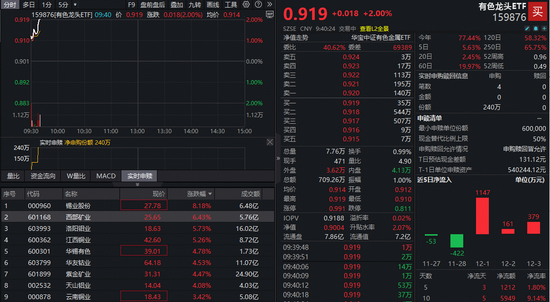
Group 1 - As of December 3, the margin trading balance in A-shares is 24,825.92 billion yuan, a decrease of 38.62 billion yuan from the previous trading day, accounting for 2.60% of the A-share circulating market value [1][2] - The margin trading transaction amount on the same day is 1,614.91 billion yuan, an increase of 53.15 billion yuan from the previous trading day, representing 9.58% of the total A-share transaction amount [1][2] Group 2 - Among the 31 primary industries in Shenwan, 10 industries experienced net financing inflows, with the communication industry leading with a net inflow of 9.27 billion yuan [2] - Other industries with significant net financing inflows include non-ferrous metals, banking, food and beverage, national defense and military industry, and light industry manufacturing [2] Group 3 - A total of 17 stocks received net financing inflows exceeding 1 billion yuan, with Industrial Fulian leading at 8.17 billion yuan [3] - Other notable stocks with high net financing inflows include China Uranium Industry, Tianfu Communication, ZTE Corporation, Shanghai Hanxun, Tongyu Communication, Huaying Technology, Northern Rare Earth, Jereh Holdings, and Cambridge Technology [3][4]




有色龙头ETF(159876)涨超2%冲击历史高点,资金持续净流入!铜铝价格走强支撑行业景气度修复
Xin Lang Cai Jing· 2025-12-04 02:00
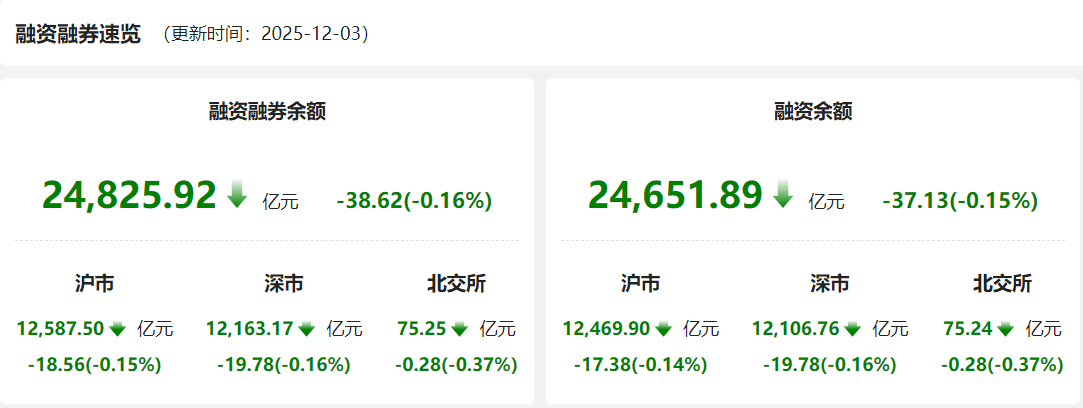
12月4日早盘,有色龙头ETF(159876)场内价格上涨2%冲击历史高点,资金实时净申购240万份,此 前已连续3日净流入。成份股方面,锡业股份、西部矿业、华锡有色等多股涨超5%。 | 分时 多日 1分 5分 · | | | | | F9 盘前盘用 露加 九转 面线 工具 @ (2 ) | | | | | | 有色龙头ETF | | | | --- | --- | --- | --- | --- | --- | --- | --- | --- | --- | --- | --- | --- | --- | | 0.919/ | | | | 159876[南色龙头ETF] 09:40 6 0.919 图表 0.018(2.00%) 编龄 0.914 | | 2 0000 500 | | 0.979 +0.018 +2.00% | | | | | | | | | | | | | | | SZSE CNY 9:40:24 交易中 查看(2全国 | | | | | 7 . . + | | and | | | | | | 1,0096 | 净值是设 | | 华富中经有色金属ETF | 今年 | 77.44% 120日 ...
17股获融资净买入额超1亿元 工业富联居首
Zheng Quan Shi Bao Wang· 2025-12-04 01:32
个股方面,12月3日,有1643只个股获融资净买入,净买入金额在3000万元以上的有98股。其中,17股 获融资净买入额超1亿元。工业富联获融资净买入额居首,净买入8.17亿元;融资净买入金额居前的还 有中国铀业、天孚通信、中兴通讯、上海瀚讯、通宇通讯、华映科技、北方稀土、杰瑞股份等股。 Wind统计显示,12月3日,申万31个一级行业中有10个行业获融资净买入,其中,通信行业获融资净买 入额居首,当日净买入9.27亿元;获融资净买入居前的行业还有有色金属、银行、食品饮料、国防军 工、轻工制造等。 ...
Q1:什么是战略金属?战略金属为何广受关注?
Tou Bao Yan Jiu Yuan· 2025-12-03 13:27
Investment Rating - The report does not explicitly state an investment rating for the strategic metals industry. Core Insights - Strategic metals are critical for national economic security, defense, and the development of strategic emerging industries, with supply facing high risks due to scarcity, geographical concentration, and geopolitical instability [2][13]. - The competition for strategic metal resources is intensifying due to their essential role in technology, economy, and military applications, leading to increased demand and supply chain security concerns [13][14][15]. Summary by Sections Definition and Importance of Strategic Metals - Strategic metals are defined as key minerals crucial for a country's economic and defense security, with high supply risks and irreplaceability [2]. - China has identified 24 strategic minerals, including tungsten, lithium, and rare earth elements, as essential for national interests [2][6]. Global Developments and Policies - On September 5, 2025, an executive order by Trump confirmed the importance of strategic metals by implementing tariff exemptions on several key metals, reaffirming their critical status [3]. - The global landscape for strategic metals has evolved, with various countries, including the EU and Japan, establishing their own critical mineral lists and strategies [4]. China's Strategic Metal Advantages - China holds significant advantages in tungsten, antimony, tin, and molybdenum, with global production shares of 80.8%, 48.2%, 23.4%, and 42.3% respectively [7][9]. - Despite its production capabilities, China still relies on imports for high-value applications in advanced manufacturing [8]. Supply and Demand Dynamics - The supply-demand imbalance for strategic metals is exacerbated by their scarcity and concentrated geographical distribution, with increasing demand from sectors like electric vehicles and renewable energy [14]. - The U.S. and China are engaged in a strategic competition over these resources, with both countries enhancing their policies to secure supply chains [15][16]. Innovations and Breakthroughs in Applications - Chinese companies are making significant advancements in strategic metal applications, such as the production of 80-nanometer nickel powder and the development of high-efficiency rare earth permanent magnet motors [25][26]. - New technologies, including lithium sulfide preparation for solid-state batteries, are being pioneered by Chinese firms, enhancing energy density and safety [30].
2025年12月3日稀土市场主流产品价格偏弱 氧化镨钕均价58.88万元/吨下跌0.62万元/吨
Jin Rong Jie· 2025-12-03 11:19
Group 1 - The rare earth market is experiencing a weak overall price trend, with prices for praseodymium and neodymium products rising and then falling, leading to a slight decrease in both transaction volume and price [1] - The average price of praseodymium and neodymium oxide is 588,800 CNY/ton, down by 6,200 CNY/ton; the average price of metallic praseodymium and neodymium is 712,300 CNY/ton, down by 9,000 CNY/ton; the average price of dysprosium oxide is 1,435,000 CNY/ton, down by 27,100 CNY/ton; and the average price of terbium oxide is 6,443,800 CNY/ton, down by 12,600 CNY/ton [1] - Market sentiment is generally cautious, with metal companies holding limited spot inventory and primarily focusing on long-term contracts, putting pressure on price transactions [1] Group 2 - New orders from neodymium-iron-boron companies are progressing slowly, with weak demand and low enthusiasm for end-user stocking, leading to only essential purchases [1] - The recycling prices in the scrap market are declining, increasing the willingness of holders to sell [1] - In the short term, mainstream product prices are expected to continue adjusting, showing a narrow fluctuation and weak operational trend [1] Group 3 - A-share market performance for some rare earth permanent magnet concept stocks includes: China Aluminum (11.03 CNY, +4.25%, 4.404 billion CNY), Jinchao Wanfang (10.00 CNY, +3.09%, 594 million CNY), Huaxin Environmental Protection (13.29 CNY, +2.94%, 312 million CNY), Northern Rare Earth (47.22 CNY, +1.77%, 6.853 billion CNY), and Guangsheng Nonferrous (53.73 CNY, +1.38%, 589 million CNY) [1]
有色金属、培育钻石大涨,高手怎么看大盘回调?
Mei Ri Jing Ji Xin Wen· 2025-12-03 11:03
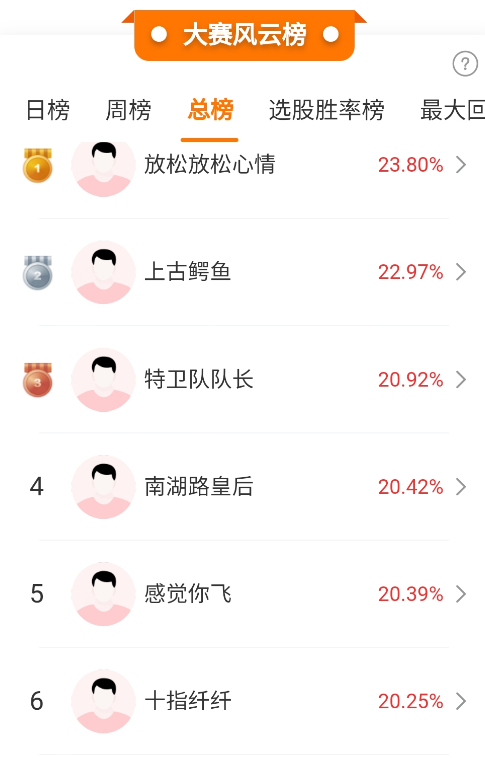
Core Viewpoint - The stock market experienced a pullback on December 3, with significant movements in the non-ferrous metals and cultivated diamond sectors, while the commercial aerospace concept faced considerable fluctuations. The total trading volume in the Shanghai and Shenzhen markets reached 1.67 trillion yuan, an increase of 76.5 billion yuan compared to Tuesday [1]. Group 1: Market Overview - The stock market saw a continued decline, with the non-ferrous metals and cultivated diamond sectors leading in gains [1]. - The trading volume in the Shanghai and Shenzhen markets was 1.67 trillion yuan, reflecting a significant increase from the previous trading day [1]. Group 2: Competition and Rewards - The 79th session of the simulated stock trading competition, hosted by the Daily Economic News App, began on December 1 and will run until December 12, with a simulated capital of 500,000 yuan [1]. - Cash rewards for the competition include 688 yuan for the first place, 188 yuan for the second to fourth places, and 88 yuan for the fifth to tenth places, with additional rewards for monthly leaderboard positions [3]. Group 3: Investment Insights - Some participants in the competition are optimistic about opportunities in humanoid robots and interest rate-sensitive trades, such as gold, silver, and non-ferrous metals [4]. - The "Fire Line Quick Review" product, developed by the team led by Da Ge, provides insights into market trends, investment logic, and company analysis, highlighting sectors like the Nvidia supply chain, electronic cloth, rare earths, and tungsten [4].
量化大势研判:继续增配低估值质量类资产
Guolian Minsheng Securities· 2025-12-03 07:16
Quantitative Models and Construction Methods 1. Model Name: Quantitative Market Trend Judgment Framework - **Model Construction Idea**: The model aims to address the systematic rotation of market styles by identifying the dominant asset characteristics that represent the future mainstream market style. It evaluates assets based on the priority of "g > ROE > D" to determine whether there are good assets and whether they are overvalued[5][8][12] - **Model Construction Process**: 1. Define five style stages based on the industry lifecycle: external growth, quality growth, quality dividend, value dividend, and bankruptcy value[8] 2. Use the "g > ROE > D" priority to compare assets, focusing on growth (g), profitability (ROE), and dividend yield (D)[5][8] 3. Incorporate factors such as expected growth (gf), actual growth (g), profitability (ROE), and valuation metrics (PB, DP, BP) to classify and evaluate assets[9][12] 4. Apply the framework to select industries and allocate them equally within each strategy[19] - **Model Evaluation**: The framework has demonstrated strong explanatory power for A-share market style rotation since 2009, achieving an annualized return of 27.06%[19] --- Model Backtesting Results Quantitative Market Trend Judgment Framework - **Annualized Return**: 27.06% since 2009[19] - **Excess Returns by Year**: - 2017: 27% - 2020: 44% - 2022: 62% - 2024: 52% - 2025 (YTD): 8%[22] --- Quantitative Factors and Construction Methods 1. Factor Name: Expected Growth (gf) - **Factor Construction Idea**: Measures the expected growth rate of industries based on analysts' forecasts, regardless of the lifecycle stage[9] - **Factor Construction Process**: 1. Calculate the expected growth rate (gf) for each industry 2. Rank industries based on the highest expected growth rates 3. Select top-performing industries for allocation[9][38] - **Factor Evaluation**: The factor has shown significant excess returns since 2019, with notable performance in 2014-2015 and 2025[38] 2. Factor Name: Actual Growth (g) - **Factor Construction Idea**: Focuses on industries with the highest earnings momentum (△g), particularly during transition and growth phases[9] - **Factor Construction Process**: 1. Use △g to represent earnings momentum 2. Rank industries based on △g and select the top-performing ones 3. Incorporate additional factors such as SUE, SUR, and JOR for refinement[40] - **Factor Evaluation**: The factor has consistently delivered significant excess returns, especially in growth-dominant environments[40] 3. Factor Name: Profitability (ROE) - **Factor Construction Idea**: Targets industries with high ROE and low valuation under the PB-ROE framework, focusing on mature stages[9] - **Factor Construction Process**: 1. Calculate PB-ROE residuals for each industry 2. Rank industries based on residuals and select the top-performing ones[43] - **Factor Evaluation**: The factor performed strongly from 2016 to 2020 but has weakened since 2021[43] 4. Factor Name: Quality Dividend (DP + ROE) - **Factor Construction Idea**: Combines dividend yield (DP) and ROE to identify industries with the highest scores, focusing on mature stages[9] - **Factor Construction Process**: 1. Calculate DP and ROE for each industry 2. Combine the two metrics into a composite score 3. Rank industries and select the top-performing ones[46] - **Factor Evaluation**: The factor has shown significant excess returns in 2016, 2017, and 2023[46] 5. Factor Name: Value Dividend (DP + BP) - **Factor Construction Idea**: Combines dividend yield (DP) and book-to-price ratio (BP) to identify undervalued industries, focusing on mature stages[9] - **Factor Construction Process**: 1. Calculate DP and BP for each industry 2. Combine the two metrics into a composite score 3. Rank industries and select the top-performing ones[49] - **Factor Evaluation**: The factor has delivered significant excess returns in 2009, 2017, and 2021-2023[49] 6. Factor Name: Bankruptcy Value (PB + SIZE) - **Factor Construction Idea**: Targets industries with the lowest PB and SIZE scores, focusing on stagnation and recession stages[9] - **Factor Construction Process**: 1. Calculate PB and SIZE for each industry 2. Combine the two metrics into a composite score 3. Rank industries and select the lowest-scoring ones[52] - **Factor Evaluation**: The factor has shown significant excess returns in 2015-2016 and 2021-2023[52] --- Factor Backtesting Results Expected Growth (gf) - **Recent Performance**: - Lithium: +51.15% (3 months) - Frozen Food: +14.08% (3 months)[38] Actual Growth (g) - **Recent Performance**: - Lithium Chemicals: +51.88% (3 months) - Other Home Appliances: +14.93% (3 months)[41] Profitability (ROE) - **Recent Performance**: - Network Equipment: +12.18% (3 months) - Buses: +10.46% (3 months)[43] Quality Dividend (DP + ROE) - **Recent Performance**: - Timber Processing: +145.24% (3 months) - Lithium Equipment: +21.95% (3 months)[46] Value Dividend (DP + BP) - **Recent Performance**: - Network Equipment: +12.18% (3 months) - Security: -2.24% (3 months)[49] Bankruptcy Value (PB + SIZE) - **Recent Performance**: - Gas: +15.88% (3 months) - Building Renovation: +16.42% (3 months)[52]
有色ETF基金(159880)涨超1.3%,中国铝产能逼近4500万吨
Xin Lang Cai Jing· 2025-12-03 05:32
Group 1 - The China Nonferrous Metals Industry Index (399395) has seen a strong increase of 1.65%, with notable gains in stocks such as Zhongfu Industrial (600595) up 7.17%, Xiyang Co. (000960) up 6.46%, and Yun Aluminum (000807) up 5.49% [1] - The cumulative production of alumina in China from January to October 2025 reached 75.36 million tons, reflecting a year-on-year increase of 6.77%, indicating a significant oversupply situation [1] - The operating capacity of electrolytic aluminum has reached 44.449 million tons, with a capacity utilization rate of 99.41%, approaching the policy ceiling of 45 million tons, suggesting limited supply elasticity [1] Group 2 - China Galaxy Securities noted that the market's expectation for a Federal Reserve rate cut in December has risen above 80% following dovish comments from New York Fed President Williams and a weak labor market report [2] - The ongoing easing of liquidity conditions is likely to continue supporting the prices of gold and silver [2] - The Nonferrous ETF fund closely tracks the China Nonferrous Metals Industry Index, which reflects the overall performance of listed companies in the nonferrous metals sector [2] Group 3 - As of November 28, 2025, the top ten weighted stocks in the China Nonferrous Metals Industry Index include Zijin Mining (601899), Luoyang Molybdenum (603993), and Northern Rare Earth (600111), collectively accounting for 52.34% of the index [3]

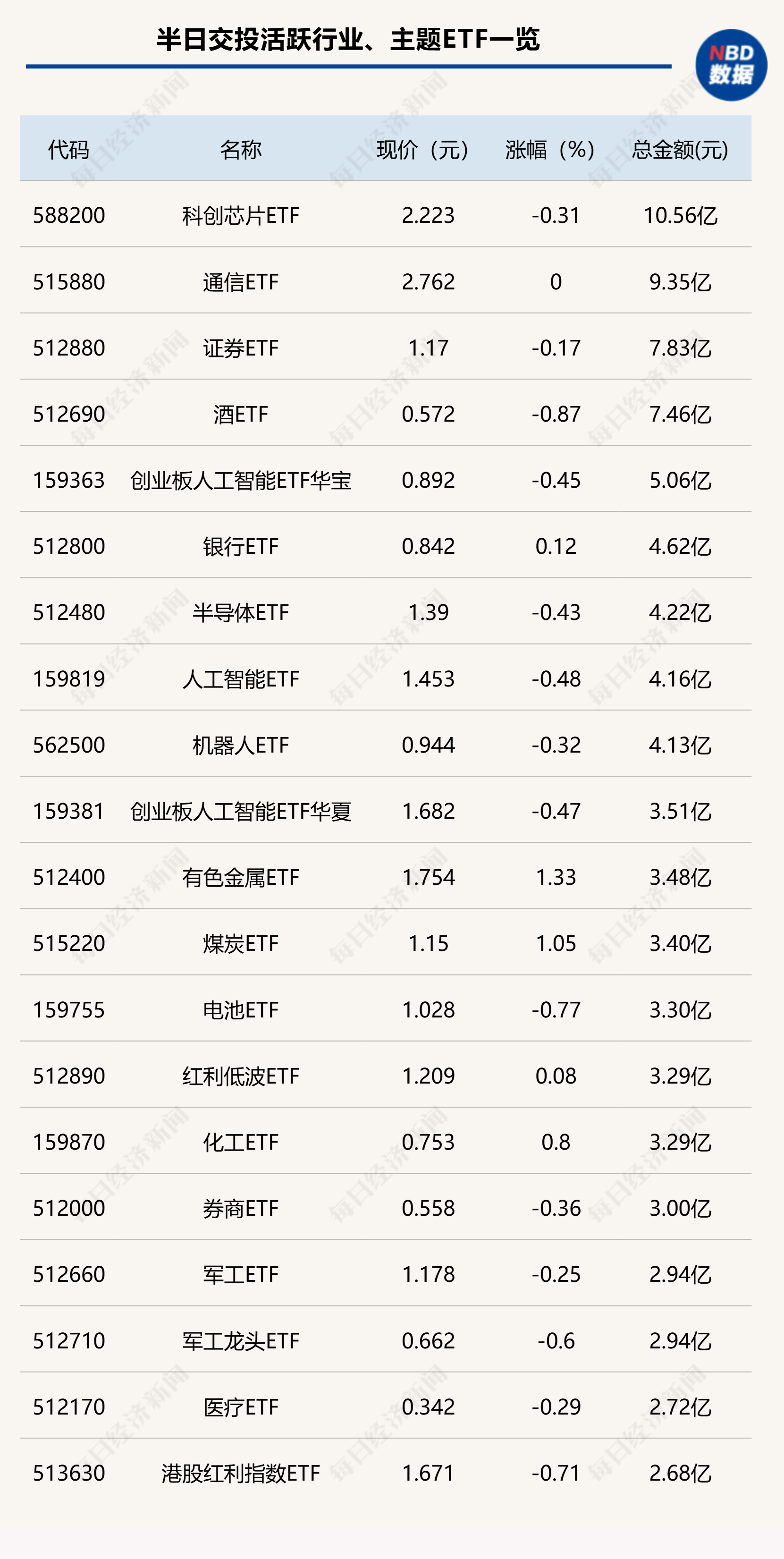
行业ETF风向标丨ETF交投维持平淡,工业有色ETF半日涨幅近2.5%
Sou Hu Cai Jing· 2025-12-03 05:20
Core Viewpoint - The recent rise in copper prices has led to a rebound in the non-ferrous metal sector, with several related ETFs showing significant gains, particularly the Industrial Non-Ferrous ETF, which increased by 2.48% in the morning session [5][7]. ETF Performance - The Industrial Non-Ferrous ETF (560860) saw a morning increase of 2.48%, with a total of 4.365 billion shares and a trading volume of 128 million yuan, tracking the CSI Industrial Non-Ferrous Metal Theme Index [7]. - Other non-ferrous metal ETFs, such as the Non-Ferrous Metal ETF (516650) and Non-Ferrous 50 ETF (159652), also reported gains of 1.41% and 1.33% respectively, with the Non-Ferrous 50 ETF having a total of 2.152 billion shares and a trading volume of 61.7662 million yuan [9][12]. Index Composition - The CSI Industrial Non-Ferrous Metal Theme Index includes 30 major companies involved in copper, aluminum, lead, zinc, and rare metals, reflecting the overall performance of the non-ferrous metal sector [7][13]. - The CSI Non-Ferrous Metal Index selects companies engaged in the mining, smelting, and processing of non-ferrous metals, providing a comprehensive view of the sector's performance [13][14]. Key Stocks in Non-Ferrous Metal Sector - Major stocks in the CSI Industrial Non-Ferrous Metal Theme Index include: - Luoyang Aluminum (603993) with a weight of 10.71% - Northern Rare Earth (600111) with a weight of 10.41% - China Aluminum (601600) with a weight of 7.44% [8][10]. - The CSI Non-Ferrous Metal Index also features key stocks such as: - Chongjin Mining (601899) with a weight of 15.70% - Luoyang Aluminum (603993) with a weight of 6.22% - Northern Rare Earth (600111) with a weight of 6.05% [10][14].