华润啤酒

Search documents
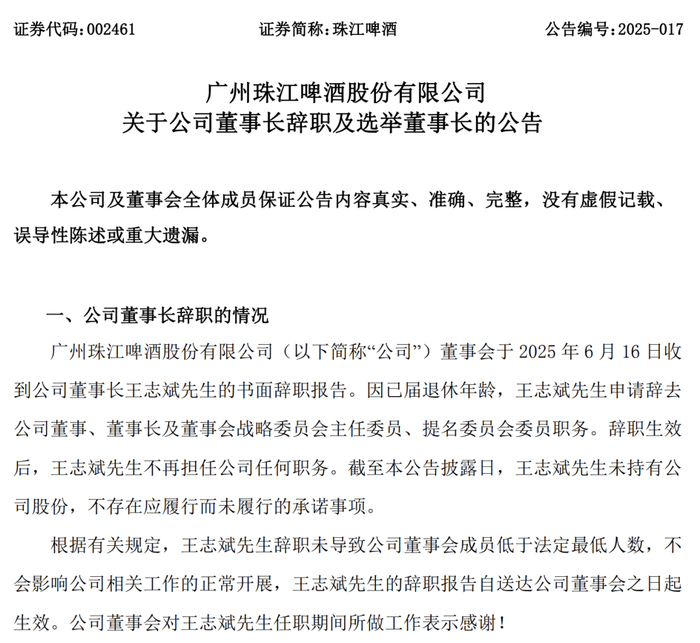
功成身退,华润啤酒告别侯孝海时代
Sou Hu Cai Jing· 2025-06-27 22:16
Core Viewpoint - The resignation of Hou Xiaohai as Chairman of China Resources Beer (Holdings) Co., Ltd. will not affect the company's normal operations, and the company expresses gratitude for his contributions during his tenure [2]. Group 1: Leadership Transition - Hou Xiaohai has resigned from all positions, including Executive Director and Chairman of the Board, effective immediately [2]. - Zhao Chunwu, the Executive Director and President, will temporarily assume the responsibilities of Chairman during the transition period [2]. Group 2: Hou Xiaohai's Background and Contributions - Hou Xiaohai, born in August 1968, has a background in statistics and has worked for various companies including Shougang, Gallup, and PepsiCo before joining China Resources Snow Beer in 2001 [3]. - He became General Manager of China Resources Snow Beer in 2016 and was appointed as Chairman of China Resources Beer in April 2023 [4]. - Under his leadership, the company established the national brand of Snow Beer and implemented significant marketing strategies, including the "4+4 product matrix" and a strategic partnership with Heineken Group [4]. Group 3: Financial Performance - During Hou Xiaohai's tenure, the company's sales revenue increased by over 10 billion yuan, with sales volume of premium and above beers growing by over 2 million kiloliters [4]. - Net profit surged from 1.329 billion yuan in 2015 to 4.759 billion yuan in 2024, while net assets rose from 19.32 billion yuan to 35.585 billion yuan, an increase of 16.265 billion yuan [4]. Group 4: Recognition and Legacy - Hou Xiaohai has received multiple accolades for his leadership, including being named one of the "Leaders 50 Global Business Leaders" by Thinkers50 and "Outstanding CEO of the Year" by Forbes [5]. - His business philosophies and transformative strategies are expected to continue influencing China Resources Beer and the broader beer industry for years to come [5].


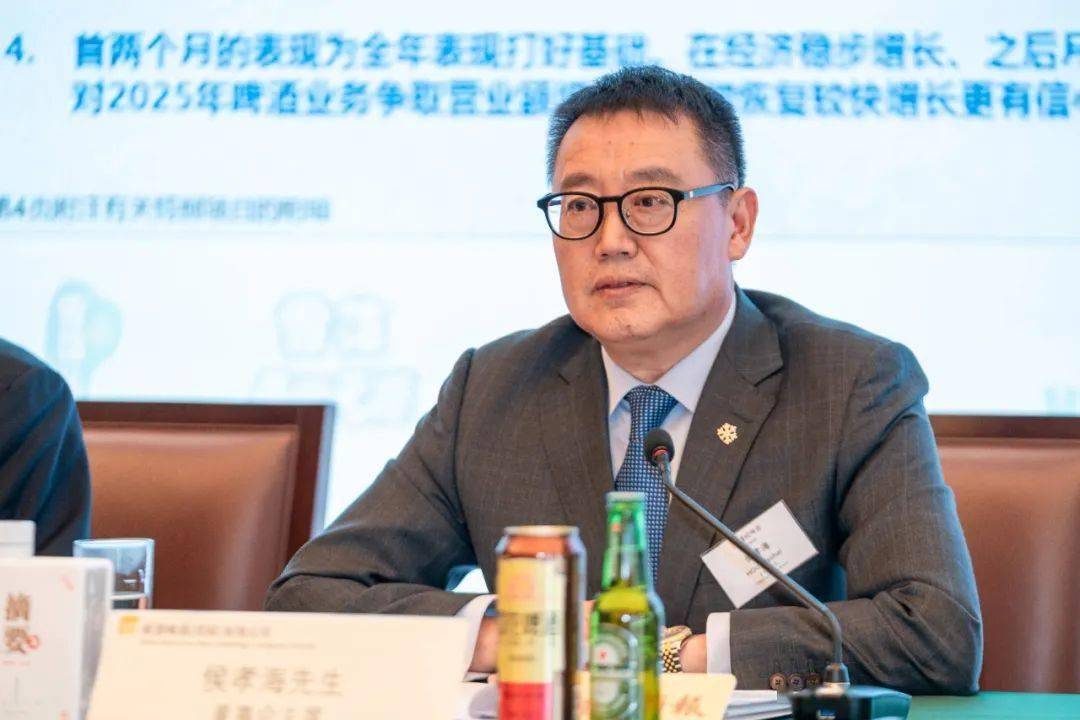
华润啤酒董事会主席侯孝海辞职,执掌公司近10年
Xin Jing Bao· 2025-06-27 13:53
Core Viewpoint - The resignation of Hou Xiaohai as Executive Director and Chairman of China Resources Beer Holdings Co., Ltd. is a significant leadership change, with the company emphasizing that this will not affect its normal operations [1][3]. Group 1: Leadership Transition - Hou Xiaohai resigned to focus more on personal arrangements, confirming no disagreements with the board [1]. - The position of Chairman will remain vacant until a suitable successor is appointed, with Executive Director and President Zhao Chunwu temporarily taking on the responsibilities [3]. Group 2: Company Development and Strategy - Under Hou Xiaohai's leadership, the company implemented a "3+3+3" strategy and underwent significant transformations, including organizational restructuring and brand optimization [1]. - The company has been expanding its presence in the liquor sector, acquiring a 55.19% stake in Guizhou Jinsha Jiao Wine Industry Co., Ltd. for 12.3 billion yuan [2]. Group 3: Financial Performance - The financial performance of the acquired liquor businesses has been underwhelming, with Guizhou Jinsha's revenue for 2024 projected at 2.149 billion yuan, a growth rate of only 4%, significantly below the 40% target [2]. - Jinzhongzi Wine reported a revenue of 925 million yuan in 2024, a year-on-year decline of 37.04%, with a net loss of 258 million yuan, a staggering drop of 1067.17% [2].
侯孝海卸任华润啤酒:34年“倔强”职业生涯,起落之间未改“勇闯”本色
Cai Jing Wang· 2025-06-27 09:43
Core Viewpoint - The resignation of Hou Xiaohai from China Resources Beer marks a significant transition in the company, as he has been a pivotal figure in its growth and strategic direction, particularly in the high-end beer market and the recent foray into the white liquor sector [1][2][17]. Group 1: Resignation Announcement - Hou Xiaohai officially announced his resignation as Executive Director and Chairman of the Board of China Resources Beer, citing a desire to spend more time on personal matters [2]. - Following his resignation, the position of Chairman will be temporarily vacant until a suitable successor is appointed, with current Executive Director and President Zhao Chunwu taking on the responsibilities during the transition [2]. Group 2: Career Background - Hou Xiaohai has worked in the beer industry for over 20 years, with significant contributions to China Resources Beer, which has been a leader in the domestic beer market, focusing on capacity efficiency and high-end transformation [1][3]. - His career trajectory includes experiences in various companies, including a notable tenure at PepsiCo, where he developed key marketing strategies that later influenced China Resources Beer [6][7]. Group 3: Strategic Developments - Under Hou's leadership, China Resources Beer successfully implemented the "Courage to Explore the World" marketing strategy, which helped the company achieve significant sales milestones, including becoming the top-selling beer brand in China by 2008 [8][9]. - The company has also made strategic moves to enter the white liquor market, with a significant acquisition of a controlling stake in Guizhou Jinsha Liquor, marking a major investment in diversifying its product offerings [16][17]. Group 4: Market Position and Future Outlook - China Resources Beer is positioned to capitalize on the growing high-end beer market, with a reported 60% increase in sales for the Heineken brand, indicating strong performance in its premium segment [18]. - The company aims to navigate the challenges in the white liquor sector, addressing inventory and pricing issues while maintaining a focus on high-quality development and consumer engagement [19][20].
侯孝海,辞任华润啤酒董事会主席
第一财经· 2025-06-27 09:22
公开资料显示,侯孝海于2001年通过社会化招聘进入华润雪花啤酒,2016年通过公开竞聘任职公司总经 理、首席执行官。 2019年,其主导与喜力集团达成战略合作,成为亚洲最大的中外啤酒企业并购案。 微信编辑 | 龙王 6月27日,华润啤酒(控股)有限公司发布公告,宣布侯孝海因个人原因辞任执行董事及董事会主席,且 不再担任董事会辖下财务委员会主席、执行委员会以及购股权总务委员会各自之成员,自当日董事会会议 结束时起生效。侯孝海辞任后,由执行董事及总裁赵春武暂时承担过渡期间董事会主席的工作及责任。华 润啤酒表示,该辞任将不会影响公司的正常营运,并衷心感谢侯孝海于任内对公司的付出和卓越贡献。 ...

从“坐等客来”到“主动触达”,商家在闪购找到增长锚点
Sou Hu Cai Jing· 2025-06-27 09:22
Core Insights - The article discusses the transformation of local retail logic driven by the rise of instant retail, particularly in the liquor industry, where offline merchants are adapting to new consumer demands for faster and more convenient purchasing options [2][3][18]. Group 1: Instant Retail Growth - Instant retail has enabled offline merchants to actively reach consumers rather than passively waiting for them to visit stores, leading to significant sales increases during events like the 618 shopping festival [2][3]. - During the 618 event, liquor sales saw explosive growth, with some brands reporting a tenfold increase in GMV compared to the previous year, despite being in a traditionally slow season [3][5]. - The overall liquor sales on the first day of the 618 event exceeded 3 billion yuan, marking a more than 200-fold increase compared to the previous year [5]. Group 2: Consumer Behavior Changes - Consumers are increasingly favoring instant retail for its convenience, with a notable shift in purchasing habits towards immediate delivery options, which is expected to continue even after promotional pricing ends [9][12]. - The demand for liquor, particularly for immediate consumption scenarios, has surged, with instant retail platforms effectively addressing the need for quick access to products [5][13]. Group 3: Market Dynamics - The instant retail sector is projected to grow significantly, with the market size expected to exceed 1 trillion yuan for liquor by 2027, indicating a strong future for this segment [19]. - Major brands are adapting to this trend by developing new products tailored for instant consumption and enhancing their collaboration with instant retail platforms like Meituan [15][20]. Group 4: Operational Efficiency - Instant retail is transforming the operational models of offline merchants, allowing them to utilize data-driven decision-making and improve supply chain efficiency [3][18]. - Meituan's instant retail platform has connected nearly 1 million offline stores, providing a robust network that supports local businesses in reaching consumers effectively [20][22].

光伏治沙助力“沙戈荒”地区可持续发展
Xin Hua She· 2025-06-27 09:17
Group 1 - JinkoSolar's global vice president shared China's experience in photovoltaic desertification control at the 2025 Summer Davos Forum, attracting international interest [2] - JinkoSolar supplied a total of 1.75GW of photovoltaic components for two major projects in Saudi Arabia and is involved in a 1.8GW project in Abu Dhabi, showcasing China's solutions for energy transition and desertification prevention [2] - The company aims to shift from global sales to global production and investment, exporting technology, systems, standards, talent, and experience to help local industries establish their own supply chains [2] Group 2 - China has the most severe desertification in the world, with 2.57 million square kilometers of desertified land, accounting for 26.81% of its territory [3] - Through large-scale greening projects, China has effectively managed 53% of its desertifiable land, achieving "zero growth" in land degradation [3] - The "14th Five-Year Plan" emphasizes the construction of large-scale wind and photovoltaic bases in desert areas, with a target of 455 million kilowatts of installed capacity by 2030 [3] Group 3 - The State Grid Corporation of China plans to integrate large-scale renewable energy into the grid, transmitting power from desert regions over distances of 2,000 to 3,000 kilometers [5] - By the end of 2024, the first batch of 50 large-scale wind and photovoltaic base projects will be completed, with an installed capacity exceeding 90 million kilowatts [5] - Continuous technological innovation has led to increased global recognition of JinkoSolar's products, with over 50% of orders coming from overseas clients [5] Group 4 - The systematic development approach of photovoltaic desertification control in China is seen as a model for other countries [5] - Building large-scale renewable energy bases in desert areas is an effective solution for integrating renewable energy generation with desertification control and ecological restoration [5][6] - This approach not only promotes green energy development but also creates economic growth points in desert regions through ecological restoration and energy industry integration [6]

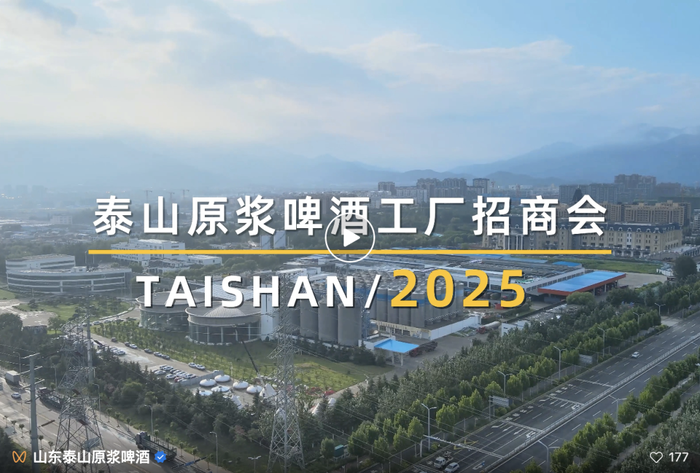
泰山啤酒夏季猛攻,招商热浪能解资本冷情吗?
Xin Lang Cai Jing· 2025-06-27 06:38
Expansion Ambitions - Taishan Beer has initiated an aggressive expansion strategy, starting with a factory investment conference in Tai'an, Shandong, on February 28, 2025, attracting over 330 potential investors and signing 283 distributors on the same day [3] - The company aims to achieve a "thousand cities, ten thousand stores" goal, focusing on its core product, "7-day fresh raw beer," amidst increasing competition in the beer market [1][3] - As of April 2025, Taishan Beer reported nearly 3,000 specialty stores, indicating a slight decline from previous peak numbers, reflecting challenges in maintaining growth [7][10] Operational Challenges - Taishan Beer reported a net profit of 3.86 million yuan in Q1 2025, a significant increase of 621.6% year-on-year, while the total profit for 2024 reached 16.11 million yuan, up 6.8% from the previous year [8][10] - Despite impressive financial results, the company faces scrutiny regarding its growth pace due to a decline in store numbers and pressures from capital agreements [10] - The brand's unique positioning in the "raw beer" segment has attracted attention, but competition from established brands like Qingdao Beer and China Resources Snow Beer is intensifying [11][12] Attempts to Break Through - In January 2025, Taishan Beer announced the opening of its contract manufacturing business, leveraging its production capabilities to offer various beer types and services [16] - The market response to this move has been mixed, with some viewing it as a sign of overcapacity while others see it as a strategy to improve operational efficiency [20] - The company has also launched new products targeting different consumer segments, such as the "Golden 7 Premium" and "Oriental Herbal" series, aiming to meet evolving market demands [20][22]
36氪精选:啤酒泡沫消散:产量连跌、场景萎缩,涨价也难救啤酒巨头
日经中文网· 2025-06-27 06:25
Core Viewpoint - The beer industry in China is experiencing a decline, with production and consumption trends indicating a challenging market environment. The industry's growth strategies, such as premiumization, are no longer sufficient to drive revenue increases as consumer preferences shift away from beer [5][11][18]. Industry Trends - Beer production among major domestic breweries decreased by 4.9% year-on-year in the first two months of 2025 [6]. - The decline in beer production has been ongoing since 2013, despite revenue growth due to premiumization and price increases by major players [7][8]. - Major breweries have adopted high-end pricing strategies, with products priced above 10 yuan, contributing to revenue growth in previous years [9][10]. Consumer Behavior - The consumption of beer is divided into two categories: off-premise (purchased for home consumption) and on-premise (consumed immediately at venues) [12]. - Approximately 60% of beer consumption in China occurs in on-premise settings, which have been negatively impacted by the closure of many KTVs and bars [13]. - Changing consumer preferences indicate a shift away from beer, with many opting for lower consumption levels and alternative beverages like milk tea [14]. Strategic Responses - In response to declining domestic sales, breweries are exploring globalization, with beer exports increasing by nearly 50% since 2019, reaching 62.1 million liters in 2023 [16]. - Companies are diversifying their product lines, with some breweries venturing into other beverage categories, such as soft drinks and liquor [17].
钟睒睒偏向虎山行
3 6 Ke· 2025-06-26 07:58
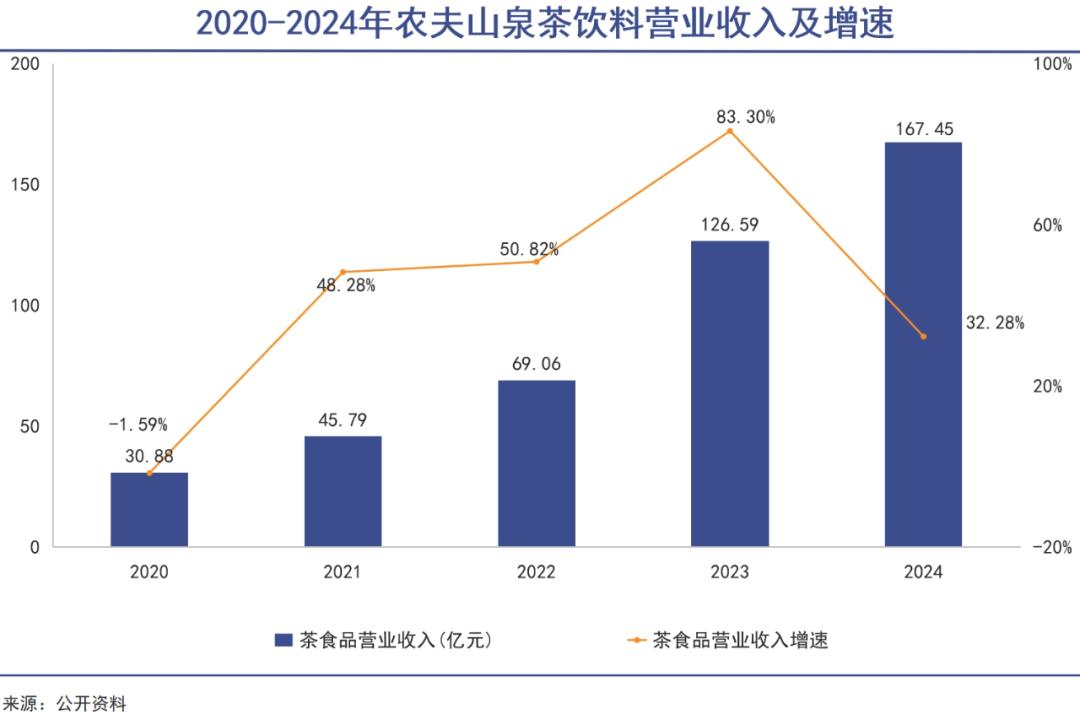
Core Insights - The article discusses the strategic moves of Nongfu Spring in response to market challenges and competition, particularly in the beverage sector, highlighting its focus on expanding product offerings and market presence [2][6][18]. Product Strategy - In June 2024, Nongfu Spring launched a carbonated lemon tea beverage priced at 5 yuan per bottle, which has drawn consumer attention due to its sugar content, contrasting with the trend of zero-sugar beverages [1][2]. - The company is diversifying its product matrix, introducing new items such as green bottle purified water and ice tea, aiming to strengthen its market position in competitive segments [3][13]. Market Performance - In 2024, Nongfu Spring's ready-to-drink tea products, led by the "Dongfang Shuye" brand, generated revenue of 16.745 billion yuan, accounting for 39% of total revenue, marking a nearly 10 percentage point increase from 2023 [6][9]. - Despite strong performance in tea beverages, the overall revenue growth for Nongfu Spring was modest, with total revenue reaching 42.896 billion yuan, a mere 0.5% increase year-on-year, the lowest growth rate in four years [9][12]. Competitive Landscape - The ready-to-drink tea market has surpassed carbonated beverages in market share, with ready-to-drink tea accounting for 21% of the market, and sugar-free tea making up 7.6% [6][14]. - Nongfu Spring's market share in the sugar-free ready-to-drink tea segment has exceeded 70% over four consecutive quarters, indicating strong dominance [9][12]. Brand Positioning - Nongfu Spring has established itself as a leading brand in the bottled water market, despite facing significant challenges from public scrutiny and competition [12][14]. - The company has a strong brand presence, ranking fourth globally in brand value among soft drink brands, and first in China, which aids in its market penetration [17][19]. International Expansion - The company is pursuing international market opportunities, starting with Hong Kong as a test market, and plans to expand its tea beverage offerings to developed countries, particularly in Europe [18][21]. - Nongfu Spring aims to leverage its domestic supply chain advantages to establish a global presence, focusing on exporting its unique business model rather than just products [23].

8元啤酒混战起,珠江啤酒能否入场全国赛?
Xin Lang Cai Jing· 2025-06-26 03:53
Core Viewpoint - The leadership change at Zhujiang Beer marks a critical moment as the company transitions from a focus on high-end product development to addressing its national expansion challenges, particularly in the competitive 8 yuan beer segment [1][8]. Financial Performance - In 2024, Zhujiang Beer achieved a revenue of approximately 5.731 billion yuan, a year-on-year increase of 6.56%, with beer sales reaching 143.96 million tons, up 2.62% [2][3]. - The net profit attributable to shareholders was about 810 million yuan, reflecting a significant year-on-year growth of 29.95% [2][3]. - High-end products generated revenue of 3.904 billion yuan, a 13.97% increase, accounting for nearly 70% of total revenue, with a gross margin of 48.6% [4]. Product Strategy - Zhujiang Beer has established a "3+N" product strategy, focusing on high-end brands such as the Xuebao series and the 97 Pure Draft, which has seen remarkable growth since its launch [4][6]. - The 8 yuan price segment has become a battleground for various brands, with Zhujiang Beer positioning its 97 Pure Draft as a key player in this competitive landscape [6][8]. Regional Dependency - Zhujiang Beer heavily relies on the South China market, with 95.81% of its revenue coming from this region, indicating a lack of national market penetration [8][10]. - The gross margin in Guangdong is significantly higher at 47.8%, compared to only 12.06% in markets outside the province, highlighting the disparity in profitability [10][11]. National Expansion Challenges - The company acknowledges its limited brand recognition outside of South China, facing stiff competition from established brands like Qingdao and Yanjing in other regions [11][15]. - Zhujiang Beer’s sales expenses as a percentage of operating costs are lower than competitors, suggesting a need for increased marketing investment to enhance brand presence nationally [15][16]. - The current distribution network is primarily traditional, with nearly 90% of revenue coming from these channels, indicating a need for modernization to adapt to changing consumer behaviors [16][18].