
江淮汽车

Search documents
安徽首富,赚翻了
创业家· 2025-11-13 10:30
以下文章来源于投资界 ,作者刘博 投资界 . 清科控股旗下创业与投资资讯平台 股价大涨。 作者:刘博 来源:投资界 阳光电源股价一路飙升,本周盘中一度达到209.88元/股,创下历史新高。可以看到,公司股 价自 4月初 至今已涨超3倍,最新收盘市值仍有4100亿元。 至此,阳光电源成为安徽省内唯一一家市值突破4000亿元的上市公司。 坐落于合肥,阳光电源背后掌舵者是光伏大佬曹仁贤,他早年从合肥工业大学辞职创业,一手 创立阳光电源,在他的新能源版图中,还坐拥阳光新能源、阳光氢能两只独角兽。 透过阳光电源可以看到,合肥正崛起为一座新能源重镇。正如一位投资人感叹,"投新能源来 合肥转一转就对了。" 这里插播一条课程资讯: 报名 「 黑马·日本游学 」 , 11月30日-12月5日, 我们将带着黑马的同学,一起去日本学 习: 日本品牌穿越周期背后的经营密码。 共同拆解 日本在低增长、少子化、高龄化背后,怎样孕育出如此多行业的领军企业? 包括大家熟悉的 三得利、711、花王、FANCL、神户物产、WORKMAN 等知名企业。 6天5晚,让我们 共同预见未来20年中国消费市场的业态创新机会。 扫码咨询报名 安徽首富 坐拥 ...


用“攒机法”造旗舰:智己LS9暴露品牌困局
Jing Ji Guan Cha Bao· 2025-11-13 08:25
Core Insights - The launch of the Zhiji LS9 highlights SAIC's awkward position in the high-end brand strategy, as it is forced to compete in the crowded 300,000 RMB market segment instead of establishing a clear premium brand identity [1][2] - The strategy of stacking features rather than building a strong brand image diverges from the mainstream approach in China's high-end electric vehicle market, where brand perception and user identity are key to success [2][5] - The LS9's structural misalignment between product design and pricing is evident, as it offers flagship-level features at mainstream prices, yet lacks the brand recognition of competitors like Li Auto and NIO [3][4] Product and Market Positioning - The LS9 is perceived more as a high-spec domestic SUV rather than a luxury flagship, indicating a failure to create a clear brand image during a critical phase of brand development [3][6] - The vehicle's pricing strategy, which undercuts competitors while offering high configurations, positions it as a "value anchor" in the market, potentially distorting price perceptions for other models [4][5] - The internal brand positioning of Zhiji appears muddled, as it was expected to be a key player in SAIC's high-end strategy but is instead competing on cost-effectiveness in the mid-range segment [5][6] Industry Context - The current trend in the Chinese automotive market emphasizes brand elevation through higher price points and stronger brand narratives rather than mere hardware competition [2][5] - Successful high-end brands like Avita and Geely's Zeekr are establishing clear brand identities and targeting the premium market, contrasting with Zhiji's approach [2][3] - The competitive landscape for electric vehicles has shifted towards a focus on brand, style, and consumer perception, making it essential for Zhiji to develop a distinct brand identity to thrive in the high-end market [5][6]

福田5.6万领跑!重汽/解放涨超五成 江淮连跳 10月商用车销36万辆 | 头条
第一商用车网· 2025-11-13 07:44
Core Viewpoint - The commercial vehicle market in China has shown a fluctuating trend in 2025, with a notable increase in sales during the latter part of the year, achieving a cumulative sales volume of over 3 million units by September, reflecting a net increase of over 220,000 units compared to the previous year [1]. Sales Performance - In October 2025, the commercial vehicle market sold 360,700 units, representing a month-on-month decrease of 2% but a year-on-year increase of 21%. The growth rate compared to the previous month narrowed by 9 percentage points [4][5]. - The cumulative sales from January to October 2025 reached 3,478,700 units, marking a year-on-year growth of 9%, with an increase of nearly 290,000 units compared to the same period last year [9][17]. Market Share and Rankings - In October 2025, the top ten companies in the commercial vehicle market accounted for a combined market share of 76.19%, with the top five companies exceeding 50% [15]. - Foton led the sales with 56,100 units, followed by China National Heavy Duty Truck with 38,500 units, and Changan with 33,300 units [11][13]. Competitive Landscape - The competitive landscape remains intense, with small differences in market share among neighboring companies. For instance, the market share difference between Jianghuai and Jiangling was only 0.06% [25]. - The rankings of the top ten companies remained stable, with Jianghuai moving up three positions to seventh place [16]. Cumulative Sales by Company - Foton's cumulative sales exceeded 500,000 units, reaching 530,800 units, while China National Heavy Duty Truck, Dongfeng, and Changan all surpassed 300,000 units [19][23]. - The growth rates of major companies varied, with China National Heavy Duty Truck, Shaanxi Automobile, and SAIC Maxus showing significant increases of 25%, 20%, and 28% respectively [19].







华龙证券:25Q3乘用车业绩分化 市场年底前有望迎来抢购潮
Zhi Tong Cai Jing· 2025-11-13 07:38
Core Viewpoint - The automotive sector is experiencing mixed performance, with passenger vehicles showing revenue growth but declining profits, while commercial vehicles and parts suppliers are benefiting from improved fundamentals and new product launches [1][2][3]. Passenger Vehicles - In Q3 2025, the passenger vehicle sector achieved a revenue growth of 7.4% year-on-year, which is lower than the consolidated sales growth of 14.4%, primarily due to a price war that led to a decrease in average selling price by 0.99 million yuan per vehicle [2]. - The sector's net profit attributable to the parent company was 9.49 billion yuan, down 25.1% year-on-year [2]. - New product launches and a shift towards high-end models are driving revenue growth for car manufacturers, with companies like Xpeng Motors and Leap Motor seeing rapid sales growth due to low base effects and significant new vehicle releases [2]. Commercial Vehicles - The commercial vehicle market is showing continuous improvement, with significant sales growth since June 2025, contributing to a recovery in sector valuations [1]. - The heavy truck segment reported a revenue of 108 billion yuan in Q3 2025, reflecting a year-on-year increase of 26.9%, with net profit rising 55.3% to 3.84 billion yuan [5]. - The bus segment also performed well, with a revenue increase of 30.6% year-on-year, driven by higher single-vehicle income [4]. Auto Parts - The auto parts sector achieved a revenue of 368.37 billion yuan in Q3 2025, up 10.4% year-on-year, with net profit increasing by 22.6% to 19.64 billion yuan [3]. - Nearly 80% of auto parts companies reported revenue growth in Q3 2025, driven by strong terminal sales and effective cost control measures [3]. - The introduction of several key new models in the passenger vehicle market is expected to boost the performance of core suppliers in the supply chain [3]. Recommendations - Companies in a strong new product cycle such as Great Wall Motors, Seres, SAIC Motor, and Xpeng Motors are recommended for attention [6]. - Strong supply chain players and those involved in humanoid robotics and intelligent driving, such as Longsun Technology and Joyson Electronics, are also highlighted as potential investment opportunities [6]. - For commercial vehicles, leading companies like Weichai Power and Yutong Bus are suggested as beneficiaries of the industry's recovery [6].
第二届“汽”势磅礴看合肥媒体摄影采风活动举办
Zhong Guo Xin Wen Wang· 2025-11-13 06:49
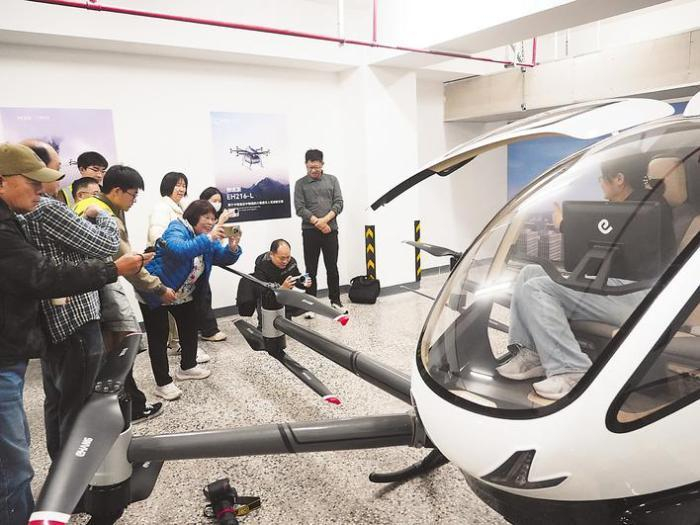
Core Insights - The event showcased Hefei's advancements in the automotive industry, particularly in electric vehicles and smart manufacturing, highlighting the city's role as a hub for innovation in China [3][4][6] Automotive Industry - The "Zun Jie" super factory, a collaboration between JAC Motors and Huawei, is recognized as a world-class smart factory, producing China's first ultra-luxury flagship sedan, the Zun Jie S800, with over 15,000 pre-orders in just four months [3][4] - NIO's second advanced manufacturing base utilizes cutting-edge technologies, allowing for a vehicle to be produced from order to completion in just 14 days, demonstrating a blend of mass production and customization [3][4] - Hefei's passenger car sales reached 174,700 units from January to July this year, marking a 9.58% year-on-year increase, with electric vehicle sales at 96,200 units, up 30.57% [4][6] Innovation and Technology - Hefei is positioned as a significant center for technological innovation, focusing on sectors such as new energy vehicles, quantum technology, artificial intelligence, and low-altitude economy [6][8] - The city has established a comprehensive innovation ecosystem, integrating research, development, and commercialization, which supports the growth of high-tech enterprises [7][8] Low-altitude Economy - Hefei is actively developing its low-altitude economy, with the launch of the EH216-S, the world's first fully certified electric vertical takeoff and landing aircraft, indicating a commitment to pioneering in this emerging sector [8] - The city has created a localized supply chain for drone development and operations, with over 300 companies involved in the industry, enhancing its position in the low-altitude economy [8]
商用车下一阶段怎么走?解放/东风/江淮/中集/载合等多家高层发声 | 头条
第一商用车网· 2025-11-13 03:24
Core Viewpoint - The 2025 China Commercial Vehicle New Ecology Forum emphasizes the transformation and opportunities within the commercial vehicle industry, focusing on electrification and intelligence as key trends for future development [2][3][6]. Group 1: Forum Overview - The forum, themed "Intelligent Chain Globalization and Win-Win Cooperation," was held in Wuhan and aimed to discuss cutting-edge trends and strategies for the commercial vehicle industry [3]. - The event was hosted by the China Council for the Promotion of International Trade Automotive Industry Branch and featured leaders from government, industry experts, and automotive manufacturers [2]. Group 2: Industry Challenges and Opportunities - Industry leaders highlighted the core challenges facing the commercial vehicle market, including external uncertainties, intense competition, and the difficulties of scaling up while maintaining profitability and R&D investment [9]. - The future of the commercial vehicle industry is expected to see accelerated electric transformation, faster intelligent applications, sustained high overseas demand, and a pressing need for ecosystem construction [10]. Group 3: Globalization Strategies - Strategies for entering the European market were discussed, including transitioning from product trade to ecosystem development, focusing on electrification and intelligence, and shifting from price competition to value competition [15]. - Emphasis was placed on the importance of building compliance systems for overseas operations and understanding local market needs to enhance adaptability and survival [24]. Group 4: New Energy Commercial Vehicles - The new energy heavy truck sector is entering a period of explosive growth, driven by technological upgrades and favorable policies, although challenges such as refueling and safety remain [27]. - The market for new energy commercial vehicles is projected to see a 17% increase in sales from January to September, with an expected penetration rate of 50% by 2030 [31]. Group 5: Logistics and Efficiency - Discussions on logistics highlighted the need for commercial vehicle companies to improve overall efficiency to escape price wars, focusing on maximizing product value and enhancing operational efficiency [37]. - The importance of service efficiency in reducing costs and improving overall logistics performance was emphasized, suggesting a collaborative approach among manufacturers and service providers [37]. Group 6: Intelligent Transformation - The potential of autonomous driving technology in logistics was explored, with a focus on its ability to reduce costs and improve efficiency [39]. - The need for a comprehensive understanding of the user lifecycle and the importance of cloud-based maintenance solutions were highlighted as critical factors for success in the commercial vehicle sector [39].

合肥押中第二个“蔚来”!人大校友造电动卡车,干出全球第一
创业邦· 2025-11-13 03:15
Core Viewpoint - Deepway is positioned as a leading player in the global new energy heavy truck market, with significant growth in revenue and delivery volumes, backed by strong capital support and strategic partnerships [2][3][18]. Company Overview - Deepway was founded in 2020 and is recognized as one of the earliest new forces in the heavy truck sector in China [5]. - The company has achieved rapid revenue growth, with projected revenues nearing 2 billion yuan in 2024 and over 1.5 billion yuan in the first half of 2025 [18]. - Deepway has delivered approximately 6,400 new energy heavy trucks to date, with a strong market presence [18]. Business Model and Strategy - The company employs a "two-phase" development strategy focusing on product market penetration and operational efficiency through smart technology [11][16]. - Deepway's first product, the "Deepway Star," was launched in 2021, and the company has seen significant delivery growth since then [11]. - The company has developed a fully self-researched electric drive system, which has led to a cost reduction of 18.7% compared to traditional fuel trucks [15][12]. Market Position and Performance - According to a report, Deepway ranks first in the global market for new energy heavy trucks defined by positive design, with a market share of 2.7% [16]. - The company is expected to continue its growth trajectory, with a focus on expanding its international presence and enhancing its smart technology offerings [24][25]. Financial Performance - Deepway's revenue structure is heavily reliant on new energy heavy truck sales, accounting for over 99% of total revenue [18]. - The company has recorded losses during its strategic investment phase, with significant investments in technology development and production capacity expansion [20][31]. - The company has raised a total of 1.96 billion yuan through multiple funding rounds, with notable investors including Baidu and various venture capital firms [31][34]. Industry Outlook - The new energy heavy truck sector is experiencing rapid growth, with global sales projected to reach 70.3 million units by 2030, and the market size expected to exceed 806 billion USD [23]. - China is leading the global transition to new energy heavy trucks, with a projected market penetration rate of 53.5% by 2030 [23]. - Deepway's strategy includes expanding into international markets, with initial exports already taking place in regions such as the Middle East and Southeast Asia [24].

乘用车业绩分化,商用车高景气有望持续 | 投研报告
Zhong Guo Neng Yuan Wang· 2025-11-13 01:27
Core Insights - The automotive sector has shown a significant performance improvement from early 2025 to October, with the Shenwan Automotive Index rising by 23.82%, outperforming the CSI 300 Index by 5.88 percentage points [1][2] Group 1: Commercial Vehicles - The commercial vehicle segment has experienced a notable recovery since June 2025, with sales showing significant year-on-year improvement, continuing strong growth into Q3 [2][3] - The commercial vehicle and auto parts sectors have generated excess returns, driven by improved sales and valuation recovery [1][2] Group 2: Passenger Vehicles - The passenger vehicle sector reported a revenue increase of 7.4% year-on-year in Q3 2025, although this was lower than the 14.4% increase in sales volume, primarily due to a price war leading to a decrease in average selling price by 0.99 million yuan per vehicle [3] - The net profit attributable to the parent company for the passenger vehicle sector dropped by 25.1% year-on-year to 9.49 billion yuan, largely due to temporary sales pressure on leading manufacturer BYD [3] - Excluding BYD, the sector's net profit increased by 44.34% year-on-year, indicating a divergence in performance among manufacturers [3] Group 3: Auto Parts - The auto parts sector achieved a revenue of 368.37 billion yuan in Q3 2025, reflecting a year-on-year growth of 10.4%, with a net profit of 19.64 billion yuan, up 22.6% [4][5] - Nearly 80% of auto parts companies reported revenue growth in Q3 2025, driven by strong terminal sales [4] Group 4: Buses and Heavy Trucks - The bus segment saw a revenue increase of 30.6% year-on-year in Q3 2025, with net profit rising by 86.6% due to improved gross margins [6] - The heavy truck segment reported a revenue of 108 billion yuan, up 26.9% year-on-year, with net profit increasing by 55.3% [6] Group 5: Investment Outlook - The outlook for Q4 2025 suggests continued growth in the automotive sector, particularly in commercial vehicles, supported by favorable policies [7] - The introduction of new products and the increasing penetration of intelligent driving systems are expected to drive performance in the auto parts sector [7]
上市车企10月销量:整车销量超231万辆北汽蓝谷、蔚来等销量增速加快
Xin Lang Cai Jing· 2025-11-13 00:05
Core Insights - In October 2025, 20 major A and H-share listed automotive manufacturers reported a total vehicle sales of 2.3166 million units, representing a year-on-year increase of 8.82% and a month-on-month increase of 5.97% [1][2] - The total sales of new energy vehicles (NEVs) reached approximately 1.3078 million units, marking a year-on-year increase of 15.63% and a month-on-month increase of 9.68%, with a penetration rate of about 57.48% [1][3] Group 1: Overall Vehicle Sales - The top-selling company in October 2025 was SAIC Motor, with sales of 454,000 units, reflecting a year-on-year growth of 12.96% [2] - Other notable manufacturers included BYD, Geely, and Changan, which followed closely in sales figures [2] - Companies like Beiqi Blue Valley and Qianli Technology saw their sales growth exceed 100% year-on-year, while NIO and XPeng also experienced significant growth [2] Group 2: New Energy Vehicle Sales - The leading companies in NEV sales for October 2025 were BYD, SAIC Motor, and Geely, with sales of 441,700 units, 206,700 units, and 177,900 units respectively [3] - Beiqi Blue Valley's NEV sales growth exceeded 100% year-on-year, while NIO and XPeng also saw substantial increases in their sales growth rates compared to September [3] - BYD's total sales for the year up to October reached 3.7019 million units, showing a year-on-year increase of 13.88% [3]




商用车加速驶向新能源化
Zheng Quan Ri Bao· 2025-11-12 16:48
Core Insights - The commercial vehicle industry is experiencing a significant shift towards new energy vehicles (NEVs), with a ratio of 2:1 between NEV and fuel vehicles at the recent China International Commercial Vehicle Exhibition [1] - The growth of NEVs in the commercial vehicle sector is driven by systemic policy regulations, market mechanisms, and technological advancements, aligning with China's "dual carbon" goals [2] Group 1: Industry Trends - In the first ten months of this year, commercial vehicle production and sales reached 3.456 million and 3.479 million units, respectively, marking year-on-year increases of 10.9% and 9% [2] - NEV sales in the commercial vehicle sector reached 649,000 units in the same period, reflecting a remarkable year-on-year growth of 60.2% and a market penetration rate of 24.6% [2] - In October alone, NEV sales hit 82,000 units, a 52.4% increase year-on-year, with NEVs accounting for 30.9% of total commercial vehicle sales, surpassing 30% for the second consecutive month [2] Group 2: Company Developments - CIMC Vehicles Group launched the EVRT (pure electric head-mounted train) ecosystem and comprehensive solutions, showcasing advancements in EVRT technology and industry positioning [1] - BYD made its global debut of the pure electric T4 truck at the exhibition, along with showcasing core products in the NEV light truck, heavy truck, and bus sectors, providing solutions for urban logistics and mid-distance transport [1] - FAW Jiefang Group presented five pure electric NEV models, while Dongfeng Commercial Vehicle Company showcased six models across pure electric, hydrogen, hybrid, and intelligent technology routes [1] Group 3: Economic Considerations - The total cost of ownership (TCO) for NEVs is becoming increasingly favorable, with estimates suggesting a potential cost reduction of over 30% over a five-year vehicle usage cycle for a 4.5-ton light truck [3] - The commercial vehicle market prioritizes economic viability, with a shift from policy-driven purchases to economically rational choices as the TCO of NEVs becomes more competitive compared to traditional fuel vehicles [3]