重庆银行

Search documents
固定收益点评:供给减少,基金如何调整转债仓位
GOLDEN SUN SECURITIES· 2025-07-27 10:27
1. Report Industry Investment Rating No relevant content provided. 2. Core Views of the Report - In 25Q2, the scale of convertible bonds held by public - offering funds accounted for 42.44% of the total market value of convertible bonds, with a slight decrease in positions. The convertible bond market showed a net outflow trend due to large - scale bond delistings and an increase in forced redemptions [2][12]. - The market value and proportion of convertible bonds held by first - tier bond funds increased, while those of second - tier bond funds, other funds, partial - debt hybrid funds, and flexible allocation funds decreased [2][13]. - The market value of convertible bonds held by convertible bond funds decreased by 3.42% quarter - on - quarter, but the convertible bond position and leverage ratio increased slightly. The average return of convertible bond funds in 25Q2 was slightly lower than the CSI Convertible Bond Index [4][23][29]. - Public - offering funds significantly increased their positions in industries such as social services, non - bank finance, beauty care, food and beverage, and basic chemicals, and reduced their positions in industries such as steel, banks, and household appliances [6][35]. 3. Summary According to the Directory 3.1 Public - Offering Fund Convertible Bond Holdings - In 25Q2, the balance of the convertible bond market was 642.481 billion yuan, a 7.16% decrease from 25Q1. Public - offering funds held convertible bonds worth 272.661 billion yuan, accounting for 42.44% of the total market value of convertible bonds, a 1.65 - percentage - point increase from 25Q1. The position of public - offering funds in convertible bonds was 0.73%, a 0.09 - percentage - point decrease from 25Q1 [2][12]. - First - tier bond funds increased their holdings of convertible bonds by 6517 million yuan (+3.56%), while second - tier bond funds decreased their holdings by 7933 million yuan (-1.06%), other funds by 1991 million yuan (-0.55%), partial - debt hybrid funds by 1969 million yuan (-0.38%), flexible allocation funds by 1215 million yuan (-0.29%), and convertible bond funds by 3022 million yuan (+0.57%) [2][13]. - As of 25Q2, there were 60 public - offering funds (excluding convertible bond funds) with a convertible bond market value of over 1 billion yuan, with a total market value of 170.987 billion yuan, a 3.41% decrease from 25Q1, accounting for 62.71% of the market value of public - offering funds investing in convertible bonds. There were 311 public - offering funds (excluding convertible bond funds) with a convertible bond market value of over 100 million yuan, with a total market value of 249.435 billion yuan, a 3.30% decrease from 25Q1, accounting for 91.48% of the market value of public - offering funds investing in convertible bonds [3][18]. 3.2 Convertible Bond Fund Convertible Bond Holdings - As of 25Q2, there were 40 convertible bond funds, holding convertible bonds worth 8.5233 billion yuan, a decrease of 302.2 million yuan from 2025Q1, a 3.42% quarter - on - quarter decrease [4][23]. - The convertible bond position of convertible bond funds increased from 84.49% in 25Q1 to 84.99%, a 0.50 - percentage - point increase. The leverage ratio increased from 137% to 142%, a 5 - percentage - point increase [4][26]. - In 25Q2, the average annualized return of the CSI Convertible Bond Index was 17.32%, and the average annualized return of convertible bond funds was 15.90%. There were 11 convertible bond funds that outperformed the CSI Convertible Bond Index, with a winning rate of 27.5%; 15 outperformed the convertible bond fund index, with a winning rate of 37.5% [5][29]. - Public - offering funds significantly increased their positions in social services, non - bank finance, beauty care, food and beverage, basic chemicals, and other industries. Industries such as steel, banks, and household appliances saw a significant decrease in the market value of public - offering fund holdings in 25Q2 [6][35]. - The top five heavy - position convertible bonds of convertible bond funds were Industrial Bank Convertible Bonds, Shanghai United Bank Convertible Bonds, 25 Treasury Bond 01, Shanghai Pufa Bank Convertible Bonds, and Chongqing Bank Convertible Bonds [6][38].
25Q2基金转债持仓分析:供给减少,基金如何调整转债仓位
GOLDEN SUN SECURITIES· 2025-07-27 08:07
60 只公募基金持有转债规模超 10 亿元。截止 2025Q2,持有转债市值超 10亿元的基金(不包含可转债基金)共有60只,合计持有转债市值1709.87 亿元,环比 25Q1 下降 3.41%,占投资转债公募基金市值的 62.71%;持 有转债市值超 1 亿元的基金(不包含可转债基金)共有 311 只,合计持有 转债市值 2494.35 亿元,环比 25Q1 下降 3.30%,占投资转债公募基金市 值的 91.48%。 固定收益点评 可转债基金持有转债市值环比下降 3.42%,转债仓位和杠杆率均小幅上 升。截止 2025Q2,可转债基金(同花顺开放式基金分类中的可转换债券 型基金)共计 40 只,持有转债市值共计 852.33 亿元,较 2025Q1 下降 30.22 亿元,环比下降 3.42%。可转债仓位由 25Q1 的 84.49%上升至 84.99%,环比上季度上升 0.50pcts。由于转债供需趋紧、权益主题行情不 断,可转债基金的转债仓位继续上行。与此同时,可转债基金资产净值下 降速率高于基金资产总值下降速率,转债基金杠杆率由 137%上升至 142%,增长了 5pcts。 供给减少,基金如何调 ...
本周聚焦:银行理财2025H1半年报:存续规模达30.67万亿,母行代销占比降至65%左右
GOLDEN SUN SECURITIES· 2025-07-27 06:56
Investment Rating - The report does not explicitly provide an investment rating for the banking sector Core Insights - The banking wealth management market showed stable growth in the first half of 2025, with a total scale of 30.67 trillion yuan, a year-on-year increase of 7.53% [1] - Cash management products continued to decline, with a scale of 6.4 trillion yuan, down 14.55% year-on-year, attributed to lower deposit rates and regulatory policies [1] - The market share of wealth management companies increased, with 32 companies holding 89.61% of the market by the end of Q2 2025, up 1.8 percentage points from the end of the previous year [2] - The asset allocation in wealth management products shifted, with a decrease in credit bond allocation and a notable increase in public fund allocation, which rose to 4.2% [3] - The average annualized yield of wealth management products was 2.12%, a decrease of 53 basis points compared to 2024, indicating a low-interest-rate environment [4] - The proportion of sales through parent banks has decreased to around 65%, as companies expand their distribution channels [5][8] Summary by Sections 1. Wealth Management Market Overview - As of the end of Q2 2025, the total scale of wealth management products reached 30.67 trillion yuan, with a year-on-year growth of 7.53% [1] - Cash management products saw a significant decline, with a scale of 6.4 trillion yuan, down 14.55% year-on-year [1] 2. Market Structure - The market share of wealth management companies increased to 89.61%, reflecting a concentration of market power among leading firms [2] 3. Asset Allocation - The allocation to credit bonds decreased, while public funds saw a significant increase, indicating a shift in investment strategy [3] 4. Yield Trends - The average annualized yield of wealth management products fell to 2.12%, continuing a downward trend since 2023 [4] 5. Distribution Channels - The share of sales through parent banks has decreased to approximately 65%, as firms diversify their distribution strategies [5][8] 6. Sector Outlook - The banking sector is expected to benefit from policy catalysts, with specific banks like Ningbo Bank, Postal Savings Bank, and others highlighted as potential investment opportunities [9]




助力提振住房消费!重庆已受理商转公贷款直转业务10827笔
Sou Hu Cai Jing· 2025-07-25 12:45
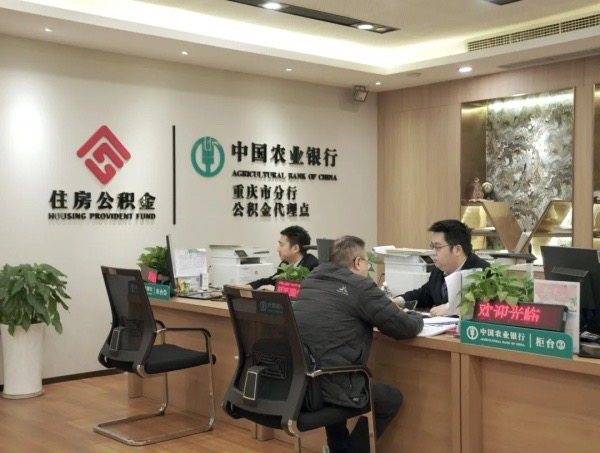
Core Viewpoint - Chongqing is focusing on housing consumption needs and optimizing housing provident fund policies to support residents in solving basic housing issues and boosting housing consumption [1][4]. Group 1: Housing Provident Fund Policies - As of July 24 this year, Chongqing's housing provident fund center has processed 10,827 commercial-to-public loan direct transfer transactions, amounting to 6.158 billion yuan, with a direct transfer ratio of 93% [6]. - The new direct transfer service for commercial-to-public loans significantly reduces the burden on borrowers by eliminating the need for upfront capital to pay off original commercial loans, thus streamlining the process [4][5]. - The initiative began with five major state-owned banks and will expand to include 16 banks by July 2025, enhancing accessibility for borrowers [4]. Group 2: Support for Flexible Employment - The number of flexible employment individuals with accounts has reached 474,300, with total contributions of 1.14 billion yuan, the highest in the country [7]. - A total of 173,800 withdrawals have been made, amounting to 447 million yuan, and 1,110 loans totaling 487 million yuan have been issued, saving approximately 42 million yuan in interest for flexible employment contributors [7]. - Policies have been upgraded four times to reduce contribution pressure and increase loan limits, with the minimum contribution period reduced from 24 months to 6 months and maximum loan amounts increased significantly [8].

A股银行概念股盘初冲高,宁波银行涨超5%,常熟银行、渝农商行、紫金银行、重庆银行、江苏银行跟涨。
news flash· 2025-07-25 01:39
Group 1 - A-share banking concept stocks experienced a surge at the beginning of trading, with Ningbo Bank rising over 5% [1] - Other banks such as Changshu Bank, Chongqing Rural Commercial Bank, Zijin Bank, Chongqing Bank, and Jiangsu Bank also saw increases in their stock prices [1]
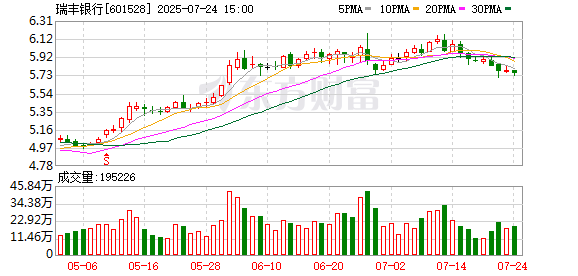
再添新例!又一家农商行发行科创债
Zhong Guo Ji Jin Bao· 2025-07-24 15:36
Core Viewpoint - The successful issuance of 300 million yuan in technology innovation bonds by Ruifeng Bank marks a significant entry of small and medium-sized banks into the technology bond market, reflecting a broader trend of financial institutions supporting technological innovation [2][3]. Group 1: Issuance Details - Ruifeng Bank announced the issuance of 300 million yuan in "2025 Zhejiang Shaoxing Ruifeng Rural Commercial Bank Technology Innovation Bonds," which are 5-year fixed-rate bonds with a coupon rate of 1.77% [3]. - The funds raised will be directed towards technology sectors as outlined in the "Financial 'Five Major Articles' Overall Statistical System (Trial)," including technology loans and investments in bonds issued by technology innovation enterprises [3]. Group 2: Market Context - As of now, 32 banks have issued technology innovation bonds, with a total issuance exceeding 230 billion yuan, although participation from rural commercial banks has been limited to a few, including Qingdao Rural Commercial Bank, Chengdu Rural Commercial Bank, and Ruifeng Bank [3]. - In June, seven small and medium-sized banks issued technology innovation bonds, indicating a shift in the market as these banks become key players in financing technological innovation [4]. Group 3: Strategic Implications - The active participation of small and medium-sized banks in issuing technology innovation bonds is seen as a strategic adjustment to support local technological innovation and optimize their funding structures [4]. - Analysts believe that allowing banks to issue technology innovation bonds will help guide long-term funds from social security and insurance into the technology sector, enhancing the overall financing landscape [4]. Group 4: Benefits for Small Banks - Issuing technology innovation bonds allows small and medium-sized banks to broaden their financing channels and reduce funding costs, which in turn supports local technology enterprises [5]. - Additionally, this participation enhances the brand influence and capital market business growth for these banks [5].
基金转债持仓季度点评:25Q2固收+基金持仓,转债供不应求
HUAXI Securities· 2025-07-24 13:36
Performance Insights - In Q2 2025, convertible bond funds achieved a median return of 3.52%, outperforming pure bond funds which had returns of 0.96%[1] - The overall performance of typical fixed income + funds surpassed that of pure bond funds following a rapid market recovery after a sharp decline[1] Fund Size and Positioning - In Q2 2025, the size of convertible bond funds decreased by 3.67% (CNY 36 billion) to CNY 948 billion, while first and second-tier bond funds increased by CNY 800 billion and CNY 385 billion, reaching CNY 8,487 billion and CNY 8,077 billion respectively[2][20] - The convertible bond fund's position increased slightly by 0.18 percentage points to 91.41%, while first-tier bond funds saw a minor decrease of 0.11 percentage points to 8.54%[24] Market Dynamics - The decline in convertible bond positions was primarily due to passive reductions, as fund managers struggled to find suitable investment opportunities amidst high demand and rising prices[3][26] - The high valuation of convertible bonds has weakened the common low-price investment strategy, leading to a constrained capacity for bottom-layer investment strategies[3][26] Sector Allocation - Public funds focused on increasing allocations in financial securities and mid-to-low priced cyclical consumer sectors, while reducing holdings in banks and other sectors facing forced redemption[4][37] - The top holdings included financial sector bonds, with significant increases in holdings of bonds from banks and non-bank financial institutions[4][37] Investment Strategy - The demand for convertible bonds remains strong, suggesting a continued bullish stance as long as underlying stocks do not show a downward trend[4] - A "barbell" investment strategy is recommended, combining large-cap bank stocks with policy-driven domestic demand sectors and undervalued technology growth stocks[4]
“反内卷”如何影响信贷脉冲?
NORTHEAST SECURITIES· 2025-07-24 06:14
Investment Rating - The report maintains an "Outperform" rating for the banking sector, consistent with the previous rating [6]. Core Insights - The impact of the current "anti-involution" trend on credit is expected to be small overall, but slightly greater than the effects observed during the supply-side reform period from 2015 to 2017 [11][12]. - Credit management is a crucial tool for banks in responding to supply-side reforms, primarily through reducing credit exposure to overcapacity industries and refining client lists to limit loan amounts [12][13]. - The report suggests that the current banking environment is facing a credit slowdown, which may amplify the impact of "anti-involution" on credit growth [13]. Summary by Sections Investment Suggestions - The report recommends focusing on banks such as Xiamen Bank, Chongqing Bank, Yucheng Rural Commercial Bank, Shanghai Bank, and Shanghai Agricultural Bank, as well as major state-owned banks [2][57]. Historical Context and Data Analysis - During the supply-side reform period, the year-on-year growth rates of RMB credit were 14%, 13.5%, and 13.5% from 2015 to 2017, with social financing growth rates of 12.5%, 12.6%, and 14.8% respectively, indicating limited impact on credit pulses [12][13]. - The analysis shows that the impact of supply-side reform on credit was less than 1%, with a more significant effect on joint-stock banks compared to state-owned banks [18][22]. Credit Management and Asset Quality - Credit management during the supply-side reform led to a notable increase in non-performing loan (NPL) ratios in overcapacity industries, with a significant rise in overall NPL ratios for listed banks in the second half of 2016 [13][32]. - The report indicates that the "anti-involution" trend may lead to a similar, albeit slightly larger, impact on credit quality compared to the previous reforms, particularly affecting private enterprises more than state-owned ones [11][45]. Industry Trends and Projections - The report highlights that the proportion of private enterprises in the affected industries has increased compared to the supply-side reform period, suggesting that credit control measures may disproportionately impact these firms [45]. - It notes that the current banking sector is experiencing a degree of asset scarcity, which could further exacerbate the effects of credit management policies [45][46].

基金二季报:公募转债持仓有什么偏好
Changjiang Securities· 2025-07-23 23:30
[Table_Title] 基金二季报:公募转债持仓有什么偏好 报告要点 丨证券研究报告丨 金融工程丨点评报告 [Table_Summary] 截至 2025 年二季度末,持有转债的公募基金数量达到 1721 只,规模高达 2616 亿元,公募基 金持仓市值占比高达 33.26%。相比于全市场转债,基础化工和有色金属的超配比例较高,均 在 1%以上,而非银、电力及公用事业和建筑相对较为低配。全市场基金偏好评级低、正股市 值小、BS 定价溢价率低、转换价值高、转债价格高的转债。 分析师及联系人 [Table_Author] 刘胜利 覃川桃 SAC:S0490517070006 SAC:S0490513030001 SFC:BWH883 SFC:BUT353 请阅读最后评级说明和重要声明 %% %% %% %% research.95579.com 1 [Table_Title2] 基金二季报:公募转债持仓有什么偏好 公募基金 2025 年二季报已全部披露,据此可获取转债持仓。 公募转债持仓的规模如何,行业和风格偏好怎样?本报告将从统计维度分析这些问题。 事件评论 丨证券研究报告丨 cjzqdt11111 202 ...
微众银行,在腾讯的大树下闯出一条特色之路
数说者· 2025-07-23 23:00
Core Viewpoint - WeBank, as a pioneering private bank backed by Tencent, has achieved significant growth and established itself as a leader among private banks in China, leveraging its unique business model and stable management team [1][8][25]. Group 1: Growth and Scale - By the end of 2024, WeBank's total assets reached 651.776 billion yuan, which is 67.75 times the amount at the end of 2015 [2]. - In 2024, WeBank achieved an operating income of 38.128 billion yuan, which is 169 times that of 2015, and a net profit of 10.903 billion yuan, 27 times that of 2016 [5]. - WeBank's net profit of 10.903 billion yuan in 2024 surpassed that of its closest competitor, Ant Bank, which reported 3.366 billion yuan, and was greater than the combined profits of the other 18 private banks [8]. Group 2: Comparison with Traditional Banks - WeBank's total assets have surpassed those of several traditional commercial banks, ranking approximately 32nd among 42 listed banks in China [9]. - Its operating income of 38.128 billion yuan places it around 22nd among the listed banks, while its net profit ranks about 25th [9][10]. Group 3: Management Stability and Tencent's Support - WeBank has maintained a stable management team since its inception, with the same chairman and a consistent leadership approach, which aids in strategic continuity [10][11]. - Tencent, holding just over 30% of WeBank, plays a crucial role in its growth by providing access to a vast user base and technological support, despite not consolidating WeBank's financials [11][12]. Group 4: Unique Business Model - WeBank has rapidly acquired personal customers through Tencent's platforms, reaching over 420 million effective personal customers by the end of 2024 [13]. - The bank's total liabilities reached 595.476 billion yuan by the end of 2024, with deposits making up 85% of this amount, primarily consisting of low-cost demand deposits [15]. - WeBank's net interest margin stood at 5.29% in 2024, significantly higher than the average of 1.52% for traditional banks [18]. Group 5: Transition to Comprehensive Banking - WeBank is expanding its services to corporate clients, having served over 1.6 million small and micro enterprises by the end of 2024 [22]. - The proportion of corporate loans increased from 37.19% in 2021 to 49.44% in 2024, indicating a balanced approach between personal and corporate lending [23]. Group 6: Challenges Ahead - Despite its success, WeBank faced its first decline in operating income in 2024, with net profit growth slowing to 0.81%, highlighting the need for effective risk management as it expands [25]. - The saturation of its customer base and the sustainability of its "small, scattered" strategy in a slowing growth environment pose significant challenges [25][26].