丸美生物

Search documents
双证落地、竞争升级,胶原蛋白赛道谁能抢占下一程?
Bei Jing Shang Bao· 2025-12-18 09:00
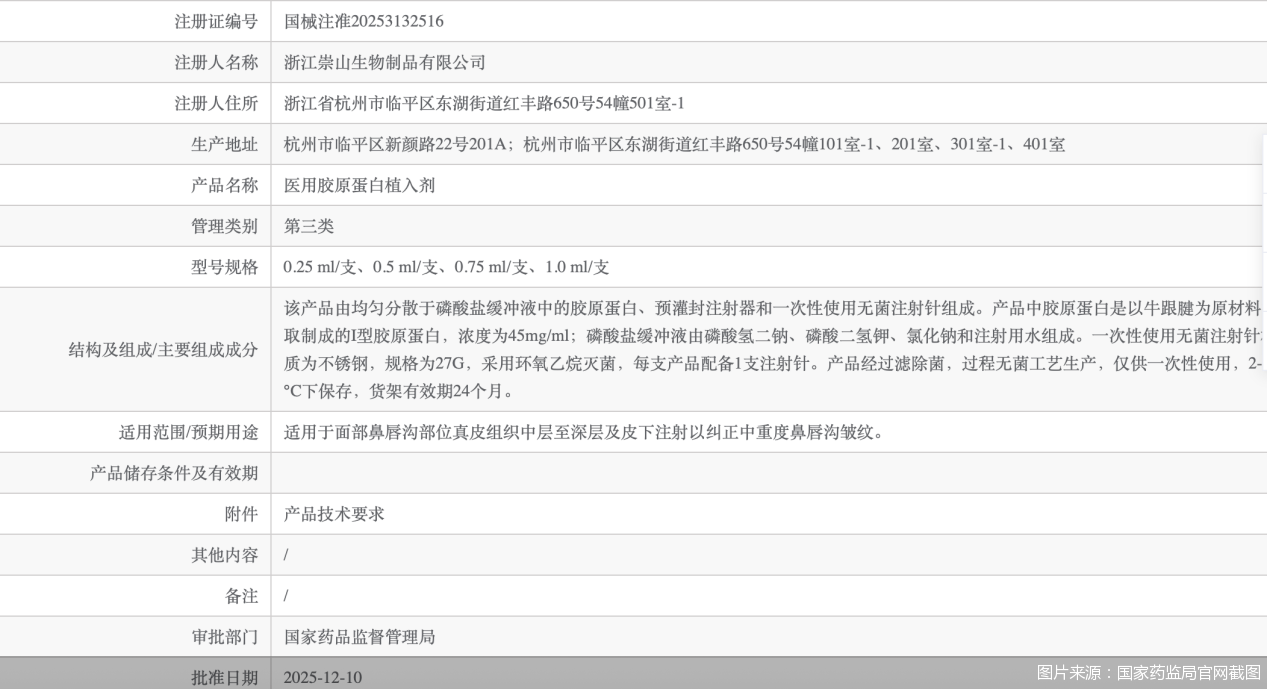
Core Viewpoint - The collagen market is undergoing significant changes with the approval of new products from Chongshan Bio and Aibai Rui, expanding the competitive landscape in the animal-derived collagen sector. The focus is shifting towards differentiation in terms of cost-effectiveness, brand recognition, product safety, and efficacy as the market becomes increasingly crowded [1][2]. Group 1: New Product Approvals - Chongshan Bio's new product is the world's first collagen implant with a concentration of 45mg/ml, aiming to establish a strong product image through high concentration [2]. - Aibai Rui's new product targets specific needs by improving cheek smoothness, attempting to create a niche in the market despite similarities to existing products [4]. Group 2: Market Dynamics - The animal-derived collagen market has formed an "eight strong" competitive landscape, with established players like Shuangmei Bio leading the market due to their early entry and established brand recognition [6]. - New entrants are focusing on differentiation strategies, such as high-quality ingredients and innovative product forms, to compete effectively [6]. Group 3: Growth of Recombinant Collagen - The recombinant collagen market is experiencing rapid growth, with a projected compound annual growth rate (CAGR) of 41.4% from 2023 to 2027, surpassing the 27.7% CAGR of animal-derived collagen [8]. - The market size for recombinant collagen products in 2023 is estimated at 28.63 billion yuan, slightly below the 29.79 billion yuan for animal-derived collagen, indicating a shift in consumer preference towards recombinant options [8]. Group 4: Competitive Landscape and Future Outlook - The approval of new recombinant collagen products is intensifying competition, with companies like Jinjian Bio and others entering the market, challenging the previous dominance of Jinbo Bio [9]. - The future of the collagen market will likely see increased competition, with a focus on cost-effectiveness, brand strength, and product efficacy becoming critical for success [12].

从“假洋品牌”往事到真“财务问题”,丸美赴港上市能赢回信任吗?
Feng Huang Wang Cai Jing· 2025-12-18 06:07
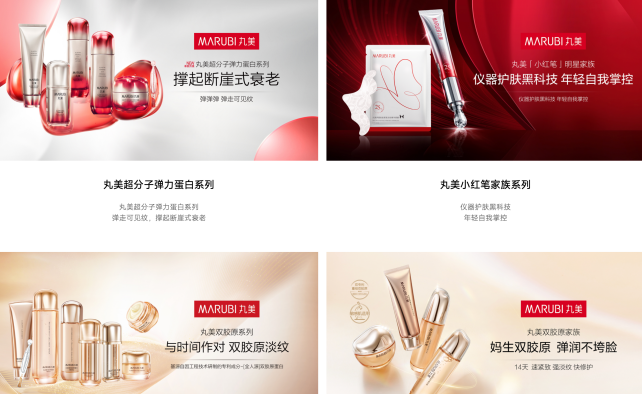
Core Viewpoint - The company Marubi, known for its beauty products, is planning a secondary listing in Hong Kong after facing financial and governance issues following its initial public offering in A-shares in 2019. The company has experienced a decline in net profit from 2020 to 2022, with a significant drop of 47.95% in 2021, although there has been a recovery in 2023 [1][3]. Financial Performance - Marubi's revenue from 2022 to 2025 (first nine months) is projected to be 17.3 billion, 22.3 billion, 29.7 billion, and 24.5 billion respectively, while net profits are expected to be 1.7 billion, 2.8 billion, 3.4 billion, and 2.5 billion [3]. - The company's revenue is primarily generated from its two brands, Marubi and Lianhuo, with Marubi contributing 70-80% of total revenue. Lianhuo's revenue is expected to grow from 2.9 billion in 2022 to 9 billion in 2024 [5]. - Marubi's overall gross margin has increased from 67.8% in 2022 to 74.8% in the first nine months of 2025, while the net profit margin has remained around 10% [6]. Governance Issues - Marubi has faced scrutiny for financial irregularities, including inaccurate revenue recognition and improper accounting practices. The company has been penalized for these issues, which include misreporting funds held in third-party payment platforms and misclassifying consulting fees as research and development expenses [8][9]. - The management of raised funds has also been criticized, as Marubi failed to separate the accounting for projects funded by raised capital from those funded by its own resources [9]. Dividend Concerns - Since its IPO in 2019, Marubi has distributed a total of 1.08 billion in cash dividends over eight occasions, with significant amounts flowing to the founder and his spouse, raising questions about the sustainability of such distributions [12][13]. Brand Trust Issues - Marubi has a history of controversies, including misleading claims about its Japanese origins and product quality issues. Although these past issues have been less frequently mentioned in recent discussions, the company now faces new challenges related to financial data and governance, which could impact its brand trust [17][20].

大消费行业主题报告
2025-12-17 15:50
Summary of Key Points from Conference Call Records Industry Overview - The conference call discusses the **large consumption sector**, highlighting the emergence of new consumer demands that drive growth in the sector through new products (personalized, green, low-carbon), new channels (snack chains, discount formats), and new business models (diverse consumption scenarios) supported by the "14th Five-Year Plan" [1][2]. Core Insights and Arguments - **Traditional Consumption Recovery**: The traditional consumption sector is expected to recover by 2026, driven by the release of residents' purchasing power and policy measures aimed at boosting employment and income stability. The food and beverage industry is stabilizing, with the liquor sector showing signs of fundamental stability and dairy products expected to recover quickly [1][5]. - **Commodity Market Trends**: The commodity market has shown a trend of high followed by low prices, with the government implementing various promotional policies to stimulate service consumption and domestic demand. The Ministry of Commerce has issued opinions to expand service consumption, aiming to enhance residents' quality of life and stimulate domestic demand potential [1][6][7]. - **Emerging Consumer Demands**: New consumer demands are impacting the large consumption sector through three main directions: the development of new products that meet diverse and personalized needs, the optimization of new channel structures, and the promotion of new business models that foster diverse consumption scenarios [2][4]. Important but Overlooked Content - **Social Services Sector Changes**: The social services sector is evolving to meet changing consumer demands, with slight increases in beauty care and retail sectors. Key areas of investment include outdoor sports, gold and jewelry, and cultural and trendy IPs, with recommendations for companies like Anta Sports and Lao Pu Gold [8][22]. - **Tourism Market Trends**: The tourism market is gradually recovering, with leading companies like Ctrip and Huazhu Group adapting through technological innovation and marketing to meet the new demands of both young and elderly consumers. China Duty Free's Hainan business has benefited significantly from new duty-free policies [9][10]. - **Food and Beverage Sector Stability**: The food and beverage sector is stabilizing, with the liquor market facing challenges but showing resilience in mass consumption. The snack sector is experiencing performance differentiation, while dairy product demand is steady and supply is gradually clearing [12][17]. - **Investment Opportunities in Agriculture**: The agriculture, forestry, animal husbandry, and fishery sectors present investment opportunities, particularly in pig farming and the pet industry, which is growing due to demographic changes and emotional needs [3][13][19]. - **Household Appliance Sector**: The household appliance industry is seeking structural highlights amid steady growth, with a focus on high-dividend white goods and improving profit margins in black goods. The market for robotic vacuum cleaners is also expected to grow due to technological advancements [20][21]. This summary encapsulates the key points discussed in the conference call, providing insights into the large consumption sector and its various components, along with potential investment opportunities and market trends.


丸美生物:向港交所递表 全面提升综合竞争力
Zheng Quan Shi Bao Wang· 2025-12-17 11:02
Core Viewpoint - Marubi Biotechnology (丸美生物) is planning to issue H-shares to raise funds aimed at enhancing its core strategies, including strengthening its omni-channel sales system, improving brand value, incubating new brands, enhancing R&D capabilities, optimizing the supply chain, and supplementing working capital, with the goal of improving overall competitiveness [1][2] Group 1: Company Strategy and Financial Plans - The funds raised from the H-share issuance will be used entirely to reinforce the company's core strategies, including building a comprehensive omni-channel sales system and enhancing brand value through diversified marketing activities [1][2] - The company emphasizes that the H-share issuance will not lead to a change in control, with Dr. Sun Huaqing and Wang Xiaopu remaining the actual controllers [2] - Marubi plans to invest in both online and offline direct-to-consumer (DTC) capabilities, expand its R&D team, upgrade R&D facilities, and improve supply chain capabilities [2] Group 2: Market Position and Competitive Advantage - Marubi has established a closed-loop value chain for core raw materials, having developed over 80 proprietary ingredients, with more than 30 achieving large-scale production [2] - The company holds 651 global patent applications and has been granted 265 invention patents, positioning its R&D strength among the top in the domestic beauty industry [3] - Marubi's brand has ranked first in China's eye care market for four consecutive years, while its "Lianhuo" brand ranks third in the domestic foundation market [3] Group 3: Industry Growth and Future Outlook - The anti-aging skincare segment is the fastest-growing sub-sector in China's skincare industry, presenting significant growth opportunities for Marubi [3] - The H-share issuance is viewed as a strategic decision for long-term development, aligning with industry trends and enhancing the company's capital strength and core competitiveness [3]
化工企业加速布局“A+H”双资本平台
Zhong Guo Hua Gong Bao· 2025-12-17 03:36
Group 1 - A number of A-share listed chemical companies, including Guoen Co., Linglong Tire, Proya, and Baili Tianheng, have accelerated their plans for listing in Hong Kong, aiming to create an "A+H" dual capital platform to broaden their development paths and inject new momentum into their growth [1] - The surge in Hong Kong listings is driven by both policy support and market demand, with international expansion and enhanced global competitiveness becoming key motivations for chemical companies [1][2] - Guoen Co. announced that the Hong Kong Stock Exchange's listing committee held a hearing on its application for H-share issuance on December 11, marking a critical stage in its listing process [1] Group 2 - The listing trend is supported by ongoing reforms in Hong Kong's capital market and policies from mainland China, which have made the Hong Kong Stock Exchange more attractive for innovative companies since the introduction of new listing rules in 2018 [2] - Recent measures from the Ministry of Finance and the China Securities Regulatory Commission have expanded the list of qualified institutions for H-share auditing, enhancing the quality of auditing services available to mainland companies seeking to list in Hong Kong [2] - The move to list in Hong Kong represents a proactive choice for companies to broaden financing channels and advance international development, reflecting the dual opening of China's capital market [3]



消费板块为何逆势上涨?丨每日研选
Shang Hai Zheng Quan Bao· 2025-12-17 00:44
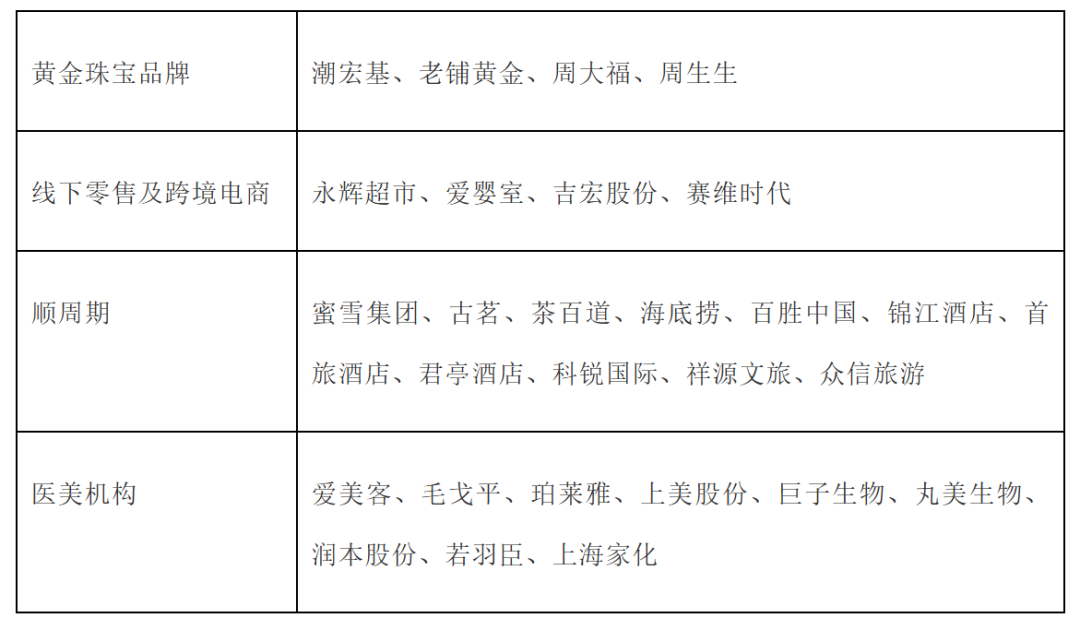
Core Viewpoint - The retail sector is experiencing a structural rally, with significant capital inflow and a shift in investment logic towards quality and service-driven growth, influenced by policy direction, corporate transformation, and upgrading consumer demand [1][2]. Group 1: Policy Direction - The Ministry of Commerce has identified the retail industry as a key focus for fostering a complete domestic demand system and strengthening the domestic circulation, emphasizing a shift towards quality and service-driven transformation [1]. - Policies encourage market penetration and the integration of online and offline development, providing a clear growth path for retail enterprises capable of transformation [1]. Group 2: Corporate Transformation - Leading retailers like Yonghui Supermarket are accelerating their "product-centered" strategy, with significant improvements in store renovations and supply chain optimization, resulting in positive same-store sales growth [2]. - Yonghui has completed renovations of 222 stores by September 2025, with new "quality retail" stores expanding its network [2]. - The traditional retail model has faced challenges due to high competition and low profitability, but Yonghui's shift to a selective retail model positions it for long-term growth in the post-consumption era [2]. Group 3: Consumer Demand Upgrade - Consumer preferences are shifting from price sensitivity to a focus on quality, experience, and emotional value, with sectors like gold jewelry and cosmetics showing strong performance [2]. - Retail sales of gold and silver jewelry increased by 37.6% year-on-year in October, with brands like Lao Pu Gold and Chao Hong Ji achieving high growth through differentiated product offerings [2]. - In the cosmetics sector, companies such as Proya and Mao Ge Ping have excelled through ingredient innovation and brand upgrades, particularly during major sales events [2]. Group 4: Investment Opportunities - Investment strategies should focus on four core themes within the retail sector: 1. Brands with differentiated product offerings and consumer insights in the gold jewelry sector, including Chao Hong Ji, Lao Pu Gold, Chow Tai Fook, and Chow Sang Sang [3]. 2. Offline retail enterprises and AI-enabled cross-border e-commerce leaders, with recommendations for Yonghui Supermarket, Ai Ying Shi, Ji Hong Co., and Sai Wei Times [3]. 3. Cyclical sectors poised for recovery, benefiting companies like Mixue Group, Gu Ming, Cha Bai Dao, Haidilao, Yum China, Jin Jiang Hotels, Shou Lv Hotels, Jun Ting Hotels, Keri International, Xiang Yuan Cultural Tourism, and Zhongxin Tourism [3]. 4. Domestic brands focusing on safe ingredient innovation and chain medical beauty institutions, including Ai Mei Ke, Mao Ge Ping, Proya, Shang Mei Co., Juzi Biology, Marubi, Runben Co., Ruo Yu Chen, and Shanghai Jahwa [3][4].
社零数据点评:11月社零+1.3%,政策加码拉动内需回暖
HUAXI Securities· 2025-12-16 15:01
Investment Rating - Industry rating: Recommended [5] Core Views - The report highlights a recovery in domestic demand driven by policy support, particularly in the real estate sector, which is expected to stabilize [2][3] - The consumer goods sector, particularly home furnishings and cosmetics, is anticipated to benefit from increased consumption policies and a recovering real estate market [3][4] Summary by Relevant Sections Retail Data - In November 2025, the total retail sales growth was +1.3%, lower than the expected +2.9%. Cumulatively, from January to November 2025, retail sales increased by +4.0% year-on-year [1][13] - Specific categories showed varied performance: furniture sales decreased by -3.8%, while cultural office supplies and cosmetics grew by +11.7% and +6.1%, respectively [1][11] Real Estate Sector - The real estate market continues to face challenges, with new housing starts, completions, and sales all showing significant year-on-year declines in November 2025, at -26.8%, -28.0%, and -19.1%, respectively [2][32] - However, there are signs of improvement in the month-on-month data, indicating potential stabilization in the market [2] Home Furnishings - The home furnishings sector is expected to gain momentum due to ongoing policy support and a recovering real estate market, which will stimulate demand for home upgrades [3][9] Cosmetics - The cosmetics sector is experiencing a recovery, with retail sales for January to November 2025 reaching 428.5 billion yuan, a year-on-year increase of +4.8%. November sales alone were 46.8 billion yuan, up +6.1% year-on-year [4][24] Gold and Jewelry - The gold and jewelry sector saw retail sales of 341.4 billion yuan from January to November 2025, reflecting a +13.5% year-on-year increase. November sales were 29.2 billion yuan, up +8.5% year-on-year, driven by rising gold prices [8][28] Investment Recommendations - Recommended companies in the home furnishings sector include Oppein Home, Kuka Home, and others, which are expected to outperform due to their strong brand and market position [9] - In the cosmetics sector, domestic brands like Runben and others are highlighted for their growth potential through diversified product strategies [9]
丸美生物递表港交所 全面提升综合竞争力
Zhong Zheng Wang· 2025-12-16 10:55
Core Viewpoint - Guangdong Marubi Biotechnology Co., Ltd. plans to raise funds through H-share issuance to strengthen its core strategies, enhance its comprehensive competitiveness, and improve its operational capabilities [1][3] Group 1: Company Overview - Marubi has been focused on the anti-aging skincare industry for over 20 years, leveraging synthetic biology technology and core breakthroughs in recombinant collagen [2] - According to a Frost & Sullivan report, Marubi is the third largest beauty company in China in the recombinant collagen skincare segment based on retail sales in 2024 [2] Group 2: Fundraising Purpose - The funds raised will be used to enhance the company's multi-channel sales system, improve brand value, incubate new brands, strengthen R&D capabilities, optimize the supply chain, and supplement working capital [1][3] - Specific plans include building direct-to-consumer (DTC) capabilities, diversifying marketing activities, expanding the R&D team, and upgrading R&D facilities [3] Group 3: Brand Positioning - Marubi's brand has ranked first in China's eye care market for four consecutive years, while its "Lianhuo" brand ranks third among domestic makeup brands [3] - The company has developed over 80 proprietary ingredients, with more than 30 achieving large-scale production, establishing a closed-loop value chain from basic research to application [2] Group 4: Shareholder Return Strategy - Marubi emphasizes a shareholder return plan, prioritizing cash dividends, with a commitment to distribute at least 10% of the annual distributable profits in cash [4] - The company aims to leverage growth opportunities in the anti-aging skincare market, which is the fastest-growing segment in China's skincare industry [4] Group 5: Long-term Development Strategy - The H-share issuance is a strategic decision for long-term development, aligning with industry trends to enhance capital strength and core competitiveness [5] - Effective use of the raised funds will support product innovation and market expansion, laying a solid foundation for sustainable long-term growth [5]
丸美生物业绩波动刚整改即赴港IPO 累计分红10.83亿孙怀庆拿走8.75亿
Chang Jiang Shang Bao· 2025-12-16 00:05
Core Viewpoint - Mamei Biotech (603983.SH) is seeking to list on the Hong Kong Stock Exchange (HKEX) to raise funds despite having sufficient cash reserves, indicating a potential strategy to enhance capital strength and international business expansion [2][11]. Financial Performance - Mamei Biotech's profitability has been unstable since its IPO in July 2019, with a decline in net profit from 2020 to 2022, followed by a recovery in 2023 and 2024, although still below 2019 levels [3][10]. - The company reported a net profit of 2.44 billion yuan for the first three quarters of 2025, with a year-on-year growth of only 2.13%, while its non-recurring net profit decreased by 5.42% [10]. - Cumulative cash dividends since listing amount to 10.83 billion yuan, with an overall dividend payout ratio of 48.22% [4][10]. Regulatory Issues - Mamei Biotech faced administrative regulatory measures from the Guangdong Securities Regulatory Commission due to issues in financial accounting and fundraising management, which were only rectified shortly before the IPO application [3][8]. - The company was found to have inflated revenue and net profit figures due to accounting errors, leading to scrutiny from regulators [8][9]. Market Context - The IPO landscape in Hong Kong is becoming increasingly competitive, with over 500 applications as of November 2025, raising concerns about the quality of submitted materials and regulatory scrutiny [5][6]. - The Hong Kong Stock Exchange and the Securities and Futures Commission have expressed concerns over the quality of IPO applications, which may impact Mamei Biotech's listing process [6][8].
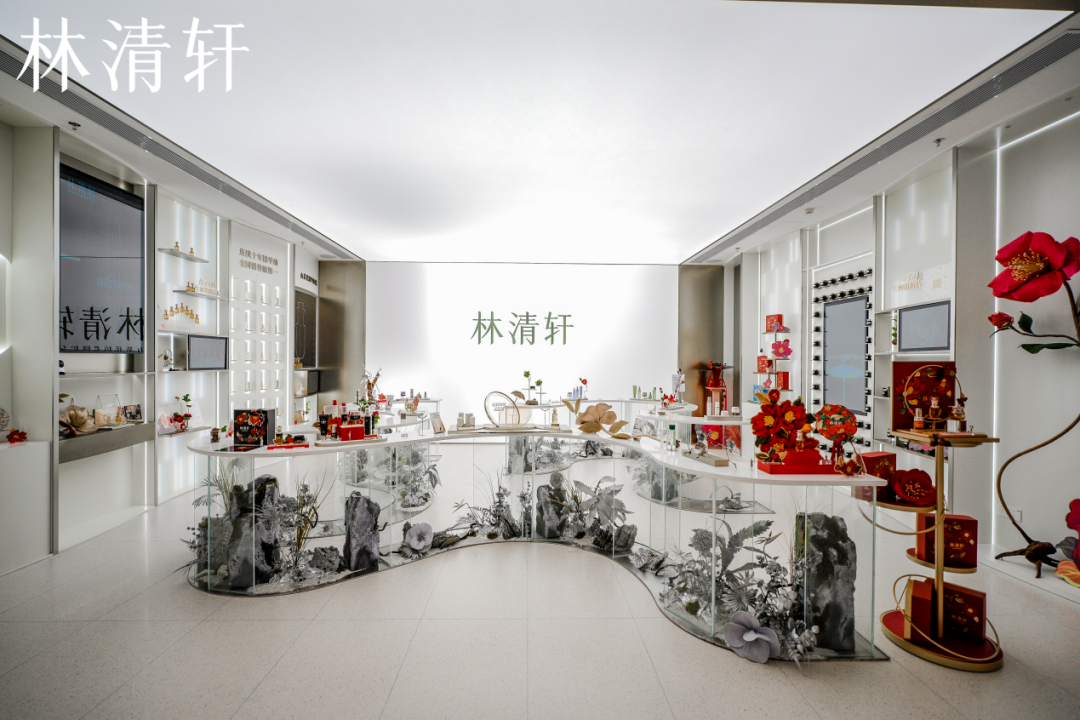
林清轩上市近了:上半年首破10亿
Xin Lang Cai Jing· 2025-12-15 13:35
Core Viewpoint - Lin Qingxuan is set to go public on the Hong Kong stock market after successfully submitting its prospectus following the listing hearing, aiming to become the first high-end domestic skincare stock and the first domestic essence oil stock in China [2][17]. Financial Performance - Lin Qingxuan's revenue has significantly increased from 691.5 million RMB in 2022 to 1.209641 billion RMB in 2024, with a notable 98.3% year-on-year growth in the first half of 2025, marking its first half-year revenue exceeding 1 billion RMB [3][18]. - The company turned a profit in 2023 with a net profit of 85 million RMB, which further increased to 187 million RMB in 2024, and reached 182 million RMB in the first half of 2025, with net profit margins improving to 10.5%, 15.4%, and 17.3% respectively [4][19]. Product Structure - The core product category for Lin Qingxuan is essence oil, generating revenues of 448 million RMB in 2024 and 478 million RMB in the first half of 2025, accounting for 37% and 45.5% of total revenue respectively [5][20]. - Lin Qingxuan's camellia oil essence has ranked first in retail sales among all facial essence oil products in China for 11 consecutive years since 2014, with cumulative sales exceeding 45 million bottles by June 30, 2025 [7][22]. Sales Channels - Online sales have seen a substantial increase, with revenue rising from 312 million RMB in 2022 to 714 million RMB in 2024, achieving a compound annual growth rate of 51.2%. By the first half of 2025, online revenue reached 688 million RMB, making up 65.4% of total sales [8][23]. - Offline revenue also grew from 378 million RMB in 2022 to 494 million RMB in 2024, with a compound annual growth rate of 14.3%. As of June 30, 2025, Lin Qingxuan operated 554 stores, primarily located in shopping malls [10][25]. Market Position - Lin Qingxuan is positioned as the leading high-end domestic skincare brand in China by retail sales in 2024, and it is part of a broader trend of domestic beauty brands seeking to list in Hong Kong to enhance their capital structure and global competitiveness [11][26]. - The company is among several domestic beauty brands, including Pechoin and Marubi, that have initiated their listing processes in Hong Kong, reflecting a new phase of capitalized development in the industry [14][29].