
京新药业

Search documents
国泰海通医药2026年1月月报:景气延续,持续重点推荐创新药械产业链-20260104
GUOTAI HAITONG SECURITIES· 2026-01-04 05:37
Investment Rating - The report maintains an "Overweight" rating for the innovative pharmaceutical and medical device industry chain [4][8]. Core Viewpoints - The report continues to recommend the innovative pharmaceutical and medical device industry chain, highlighting a selection of A-share and H-share stocks with an "Overweight" rating [2][8][11]. - The performance of the pharmaceutical sector in December 2025 was weaker than the broader market, with the SW Pharmaceutical Biotechnology index declining by 4.1% compared to a 2.1% increase in the Shanghai Composite Index [18][30]. - The report notes that the premium level of the pharmaceutical sector relative to the entire A-share market is currently at a normal level, with a relative premium rate of 63.2% as of December 31, 2025 [29][32]. Summary by Sections A-Share Recommendations - The report lists the following A-share stocks with an "Overweight" rating: - 恒瑞医药 (Hengrui Medicine) - 科伦药业 (Kelun Pharmaceutical) - 华东医药 (East China Pharmaceutical) - 恩华药业 (Enhua Pharmaceutical) - 特宝生物 (Tebao Biological) - 京新药业 (Jingxin Pharmaceutical) - 益方生物 (Yifang Biological) - 药明康德 (WuXi AppTec) - 泰格医药 (Tigermed) - 乐普医疗 (Lepu Medical) - 联影医疗 (United Imaging) - 微电生理 (Microelectrophysiology) [8][9]. H-Share Recommendations - The report maintains an "Overweight" rating for the following H-share stocks: - 翰森制药 (Hansoh Pharmaceutical) - 三生制药 (3SBio) - 科伦博泰生物 (Kelun-Botai Biological) - 康方生物 (CanSino Biologics) - 映恩生物 (InnoCare Pharma) - 百济神州 (BeiGene) [11][12]. Performance Analysis - The report indicates that the 国泰海通医药 monthly portfolio outperformed the pharmaceutical index in December 2025, with an average decline of 1.8% compared to a 3.9% decline in the overall pharmaceutical index [14][15]. - The report highlights the best-performing stocks in December 2025, with 泰格医药 (Tigermed) increasing by 11.2%, 特宝生物 (Tebao Biological) by 7.5%, and 惠泰医疗 (Huitai Medical) by 3.9% [15][18].



医药股深夜放大招:38巨头百亿回购血本,6家狂烧超5亿直接销户
Sou Hu Cai Jing· 2026-01-02 21:40
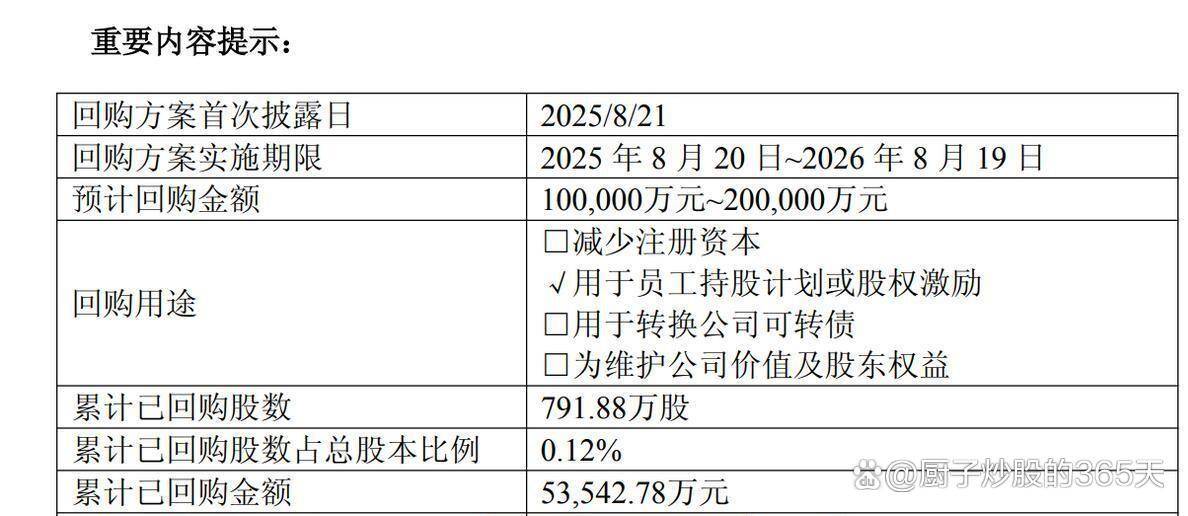
Core Viewpoint - In 2025, the pharmaceutical sector in the A-share market is actively engaging in stock buybacks, with many companies opting to destroy the repurchased shares, contrasting with the more subdued actions in the liquor sector [1][10]. Group 1: Buyback Activities - A total of 38 leading pharmaceutical companies participated in stock buybacks, with 6 companies spending over 500 million yuan, and the largest spending 1 billion yuan [1][3]. - WuXi AppTec, a major player in the pharmaceutical outsourcing industry, announced a buyback plan of 1 billion yuan, completing 497 million yuan by April 2025 [2][5]. - Hengrui Medicine, a leader in innovative drugs, announced a buyback plan of 2 billion yuan, having already repurchased 535 million yuan worth of shares by August 2025 [3][6]. - Other notable companies include Jingxin Pharmaceutical, which planned to spend 700 million yuan and has already spent 609 million yuan, and several others like New Harmony, Jiuzan Medical, and Nengte Technology, each spending over 500 million yuan [3][9]. Group 2: Purpose and Impact of Buybacks - The primary purpose of these buybacks is to cancel the repurchased shares, effectively reducing the total share capital and increasing the value of remaining shares for shareholders [4][10]. - This strategy is viewed as a strong signal of management's confidence in the company's future, especially during periods of low market sentiment [5][10]. - The buyback actions are seen as a more tangible commitment to shareholder value compared to merely announcing intentions to stabilize stock prices [4][10]. Group 3: Financial Health and Market Position - The companies engaging in these buybacks, such as WuXi AppTec and Hengrui Medicine, possess strong market positions and cash flows, allowing them to undertake such financial maneuvers [6][10]. - The buyback trend is not as prevalent in the liquor sector, indicating a potential difference in financial strategies and market confidence between the two industries [6][10]. - The buyback prices set by companies reflect a calculated approach, ensuring that they are responsible with shareholder funds [8][10].


医药行业2026年策略报告:坚定出海方向,把握结构性机遇-20251231
Huaxin Securities· 2025-12-31 11:05
Group 1 - The core investment theme for the pharmaceutical industry in 2025 is the overseas expansion of innovative drugs, which is expected to yield excess returns compared to the broader pharmaceutical sector and the CSI 300 index [2][21] - The innovative drug index has shown a significant increase, outperforming the pharmaceutical biological index by 37.48 percentage points, with a year-to-date increase of 65.99% [21] - Major transactions in the ADC and dual antibody fields are anticipated to continue, while there is a need to avoid repetitive competition in areas like small nucleic acids and focus on unmet clinical needs [3][4] Group 2 - The report emphasizes the importance of overseas markets for both innovative drugs and medical devices, suggesting that companies should seek growth opportunities beyond domestic market saturation [4][5] - The Chinese pharmaceutical industry is gradually becoming a global innovation center, with significant advancements in dual antibodies and ADCs, while also making strides in emerging fields like small nucleic acids and inhalation formulations [5][6] - The report highlights that the overseas authorization revenue has become a crucial funding source for innovative drug development, with a total upfront payment of $4.551 billion in the first three quarters of 2025 [29][32] Group 3 - The medical device sector is experiencing a shift towards overseas expansion, with a focus on high-value consumables and IVD products, as Chinese companies enhance their market share [7][55] - The export growth of high-value consumables is significant, with a recorded increase of 10.75% in the first half of 2025, particularly in the North American and European markets [57][66] - The report notes that the certification and market establishment processes for high-value consumables are long-term investments, requiring compliance with stringent regulations in the EU and the US [60][61] Group 4 - The recovery of financing in the domestic innovative drug sector has been robust, with a total of 324 financing events amounting to $5.51 billion in the first three quarters of 2025, marking a 67.6% increase year-on-year [70][72] - The CXO industry is experiencing varied recovery rhythms across different segments, with some areas like CDMO seeing order growth due to overseas financing recovery [74]




京新药业:公司的LP(a)降脂创新药临床I期接近尾声,盐酸卡利拉嗪胶囊已提交上市申请
Mei Ri Jing Ji Xin Wen· 2025-12-29 10:27
Group 1 - The company is nearing the end of Phase I clinical trials for its innovative drug JX2201, which targets lipid reduction [1] - The company has submitted the application for the market approval of its generic drug, hydrochloride caliraheptine capsules, and it is progressing normally [1] - The company encourages stakeholders to pay attention to its regular reports for further updates on clinical indicators and future plans [1]
继续推荐创新药械产业链
Haitong Securities International· 2025-12-29 05:01
Investment Rating - The report maintains an "Outperform" rating for several companies in the pharmaceutical sector, including Jiangsu Heng Rui Medicine, Hansoh Pharmaceutical Group, 3SBio, Sichuan Kelun Pharmaceutical, and Jiangsu Nhwa Pharmaceutical [5][6]. Core Insights - The report emphasizes the high prosperity in innovative drugs and continues to recommend companies with promising pipelines and performance growth in the Biopharma/Biotech sector, maintaining an "Outperform" rating for Innovent Biologics, WuXi XDC Cayman, and others [5][23]. - It highlights the performance of the A-Shares pharmaceutical sector, which underperformed the market, with the SW Pharma & Bio index falling by 0.2% while the SHCOMP rose by 1.9% [7][18]. - The report notes that the premium level of the pharmaceutical sector relative to all A-Shares is currently at a normal level of 66.7% as of December 26, 2025 [13][17]. Summary by Sections 1. Continued Recommendation for Innovative Drugs and Industry Chain - The report continues to recommend innovative drugs and the associated industry chain, highlighting the high demand and potential for revaluation in the pharmaceutical sector [5][23]. - Specific companies recommended include Jiangsu Heng Rui Medicine, Hansoh Pharmaceutical Group, 3SBio, Sichuan Kelun Pharmaceutical, and Jiangsu Nhwa Pharmaceutical, all rated as "Outperform" [5][6]. 2. A-Shares Pharmaceutical Sector Performance - In the fourth week of December 2025, the A-Shares pharmaceutical sector underperformed the broader market, with a decline of 0.2% compared to a 1.9% increase in the SHCOMP index [7][18]. - The best-performing sub-sectors included chemical raw materials (+2.0%) and medical equipment (+0.1%), while biological products saw a slight decline of -0.1% [9][18]. 3. Hong Kong and U.S. Market Performance - The Hong Kong pharmaceutical sector also underperformed, with the Hang Seng Healthcare index down by 1.8% and the Hang Seng Biotechnology index down by 2.3% [18]. - In contrast, the U.S. pharmaceutical sector performed similarly to the market, with the S&P Healthcare Select Sector increasing by 1.0% [18].



潍坊:准备交一份“万亿”答卷|深度报道
Xin Lang Cai Jing· 2025-12-23 14:59
Core Insights - Weifang aims to achieve a total agricultural output value of 135.87 billion yuan by 2024, marking a 30.9% increase over five years, and is targeting to become a trillion-yuan city by 2026 [1] - The city has faced challenges in 2025 due to adverse weather conditions affecting agricultural production, yet managed to stabilize grain output at over 9 billion jin [3][4][5] - Weifang's agricultural policies and infrastructure have significantly contributed to its resilience and growth, with key industries achieving over 100 billion yuan in output during the 14th Five-Year Plan [8][9] Agricultural Production - Weifang's grain production is projected to remain stable at over 9 billion jin annually, despite facing challenges such as reduced rainfall and adverse weather during the harvest season [3][4][6] - The city has implemented a robust agricultural support system, including emergency response measures and technological assistance to farmers [5][6] - Continuous investment in agricultural infrastructure has been crucial for mitigating the impact of extreme weather on crop yields [6] Policy and Economic Development - Weifang's agricultural policies have led to significant growth in various sectors, including vegetables, livestock, and machinery, with the number of agricultural enterprises and cooperatives ranking first in the country [8][9] - The city is focusing on enhancing the value chain of agricultural products through deep processing and training programs for farmers [9][10] - The local government has allocated funds to promote Weifang's agricultural products in other cities, further supporting economic growth [9] Industrial Growth - Weifang's industrial economy is advancing towards high-end, intelligent, and green development, with significant contributions from private enterprises [10][12] - The city has established a modern marine economy framework, achieving an average annual growth of 8.57% in marine production value since the 14th Five-Year Plan [12] - Weifang's industrial output has surpassed 1.2 trillion yuan, with a focus on innovation and technology in various sectors [10][12] Research and Innovation - The establishment of research institutions, such as the Peking University Modern Agricultural Research Institute, is fostering innovation in agricultural practices and technology [17][21] - Collaboration between research entities and local industries is enhancing the application of scientific research to meet agricultural demands [20][21] - The city is building a comprehensive agricultural technology innovation system to support research and development in agriculture [21]

华创医药投资观点&研究专题周周谈·第155期:失眠治疗蓝海大市场,看好上市新药销售表现-20251220
Huachuang Securities· 2025-12-20 12:16
Investment Rating - The report maintains a positive outlook on the insomnia treatment market, highlighting the potential for new drug sales performance in this sector [20][32]. Core Insights - The insomnia treatment market in China is characterized by a significant unmet need, with over 200 million individuals estimated to suffer from insomnia symptoms, representing a large consumer market potential [16][24]. - The report emphasizes the shift towards innovative insomnia medications, particularly focusing on new types of benzodiazepine receptor agonists (BZRAs) and dual orexin receptor antagonists (DORAs) as key areas for development [25][38]. - The introduction of new drugs like JY-202 (地达西尼) and DORA medications is expected to reshape the market dynamics, with a forecasted rapid increase in market share and sales [34][39]. Market Overview - The insomnia drug market in China has seen stagnant growth due to a lack of new effective treatments, with the market size in 2023 estimated at 31.62 billion yuan [24]. - The report outlines the historical sales performance of major insomnia medications, indicating a long gap since the last new product launch in 2007, which has contributed to the current market stagnation [24][25]. - The report projects a significant increase in the market size and sales for innovative insomnia drugs, particularly with the anticipated approval and market entry of new products [34][39]. Drug Development Trends - The report identifies two main directions for insomnia drug innovation: improvements on existing BZRAs and the development of DORAs, which are expected to have lower addiction risks and better patient compliance [25][38]. - The new drug JY-202 is highlighted for its selective action on the GABAA receptor, which may reduce side effects associated with traditional insomnia medications [34]. - The report also notes the successful clinical trial results for DORAs, which have shown significant improvements in sleep quality without the risk of addiction, making them suitable for broader consumer use [38][39]. Key Players and Recommendations - The report suggests focusing on companies like 京新药业 (JY-202) and 先声药业 (DORA medications) as they are positioned to capitalize on the emerging market opportunities in insomnia treatment [34][39]. - It recommends monitoring the sales performance of these new drugs as they enter the market, particularly in the context of changing consumer behavior and increasing awareness of sleep health [20][32].
华创医药周观点:失眠治疗蓝海大市场,看好上市新药销售表现2025/12/20
华创医药组公众平台· 2025-12-20 11:15
Core Viewpoint - The article emphasizes the significant market potential for insomnia treatment, highlighting the promising sales performance of newly listed drugs in this sector [16][22][24]. Market Overview - The current insomnia medication market in China is estimated at 31.62 billion yuan, with a large unmet demand due to existing medications failing to meet treatment needs [26]. - The proportion of individuals experiencing insomnia symptoms in China is reported at 16.8%, indicating a potential patient population exceeding 200 million [20][31]. Drug Development and Innovation - The development of insomnia medications has evolved through four generations, with the latest focusing on physiological regulation rather than merely sedative effects [21][32]. - New insomnia drugs, particularly novel benzodiazepine receptor agonists (BZRAs) and dual orexin receptor antagonists (DORAs), are gaining traction, with several products recently launched [24][34]. Specific Drug Insights - The newly launched drug, Dazadiline, is expected to capture a significant market share due to its unique mechanism of action and favorable safety profile, with projected peak sales of 15.6 billion yuan [33]. - Dazadiline's pricing is set at 13.88 yuan per day, making it competitive in the market [33]. - DORAs, such as Daridorexant, are noted for their non-addictive properties and potential for broader consumer acceptance, as they do not fall under strict regulatory controls [38]. Market Dynamics - The article discusses the competitive landscape, noting that the introduction of new insomnia treatments could disrupt the existing market dominated by older, less effective medications [26][27]. - The sales performance of insomnia drugs is expected to improve significantly as new products enter the market and address the needs of a large patient population [16][24]. Future Projections - The article forecasts a steady increase in the number of patients treated for insomnia, with the treatment rate projected to rise from 7.5% in 2024 to 12.1% by 2033 [31]. - The market for insomnia medications is anticipated to grow rapidly, driven by the introduction of innovative therapies and an increasing awareness of sleep health [16][24].
医药行业2026年年度策略报告:从“治疗领域”和“技术平台”双管齐下挖掘创新龙头-20251216
Ping An Securities· 2025-12-16 02:44
Core Insights - The report emphasizes the continuous improvement of the global competitiveness of Chinese innovative pharmaceutical companies, focusing on innovation from both "therapeutic areas" and "technology platforms" [5][6] - The growth of commercial health insurance premiums is expected to provide new payment sources for medical expenses, as the scale of commercial health insurance is projected to reach 977.4 billion yuan by 2024 [29][30] - The report identifies potential therapeutic areas such as metabolic diseases (e.g., weight loss), chronic diseases (e.g., hypertension, hyperlipidemia), and central nervous system diseases (e.g., Alzheimer's, Parkinson's) as key focus areas for innovation [5][38] - Emerging technology platforms like small nucleic acid drugs, radioactive drugs (RDC), and CAR-T therapies are highlighted as significant areas for investment [5][38] Market Review - As of November 15, 2025, the pharmaceutical sector has outperformed the market, with the pharmaceutical index rising by 22.09% compared to a 17.62% increase in the CSI 300 index, resulting in a 4.47 percentage point outperformance [11] - The chemical preparation sector showed the best performance, increasing by 40.52%, followed by medical services (+36.98%) and chemical raw materials (+25.34%) [20] - The overall PE valuation of the pharmaceutical sector is at 30.89 times, which is relatively low compared to historical averages, indicating potential for future growth [22][23] Innovative Drugs - The report notes that the growth of health expenditures in China, which reached 9.06 trillion yuan in 2023, is outpacing GDP growth, indicating a robust market for innovative drugs [26][27] - The analysis of multinational corporations (MNCs) reveals that innovation is a core competitive advantage, with companies like Eli Lilly and Novartis showing significant growth driven by innovative products in advanced technology fields such as GLP-1 and ADC [31][32] - The report highlights the strong sales performance of GLP-1 drugs, with Eli Lilly's Mounjaro generating $6.515 billion in revenue in Q3 2025, reflecting a 109% year-on-year increase [44] CXO and Upstream - The report indicates a slight increase in pharmaceutical financing, with a recovery in business development transactions and H-share IPOs, which is expected to stimulate innovation [5] - The demand for external CXO services is growing, particularly in emerging fields such as peptides and small nucleic acids, while internal CXO orders are also showing signs of recovery [5][39] Medical Devices - The domestic medical device market is currently under pressure due to policy impacts, but improvements are anticipated as companies continue to innovate and expand internationally [5] - The report suggests that the industry fundamentals are expected to improve, with a focus on companies like Mindray Medical and Microelectrophysiology [5][39]



医药行业创新药&链 2026 年度投资策略:周期向上,兼具成长
Changjiang Securities· 2025-12-15 14:58
Group 1: Core Insights - The pharmaceutical industry is entering a clear upward cycle with significant growth opportunities in innovative drugs and the innovation chain, driven by supportive policies and a global expansion trend [3][10] - The Chinese innovative drug sector is increasingly favored by international capital, with a record high of 149 transactions in 2025, accounting for 11% of global transaction numbers and 29% of total transaction value [10][37] - The introduction of commercial health insurance into the medical insurance negotiation process in 2025 is expected to diversify the payment system for innovative drugs, enhancing their market accessibility [10][37] Group 2: Innovative Drugs - The upward policy cycle supports innovation, with the latest round of drug procurement entering a new phase of quality-price balance, as seen in the 11th batch of centralized procurement [10][30] - The global patent cliff from 2025 to 2037 is projected to create a gap exceeding $300 billion, prompting multinational corporations (MNCs) to pursue business development (BD) and acquisitions to fill this gap [10][45] - Chinese innovative drugs are positioned to capitalize on this trend, particularly in areas such as second-generation immune-oncology (IO) and next-generation antibody-drug conjugates (ADCs) [10][50] Group 3: Innovation Chain - The innovation chain, including Contract Development and Manufacturing Organizations (CDMO) and Contract Research Organizations (CRO), is benefiting from both domestic and international demand, with CDMO orders showing a positive growth trend [12][12] - The overseas biopharmaceutical investment environment is improving, with a notable increase in funding as interest rates decline, which is expected to enhance the overall industry cycle [12][12] - The life sciences service sector is witnessing a recovery, driven by increasing domestic research demand and improved conditions for innovative drug development [12][13] Group 4: Market Opportunities - The domestic market for innovative drugs is projected to grow significantly, with over 400 innovative drugs approved since 2020, indicating strong internal growth potential [62][66] - As innovative drug companies transition to profitability, there is a potential shift in valuation methods from P/Peak Sales to PE, attracting broader investment interest [66] - Key companies to watch include AiLisi, Yunding Xinyao, and Kangnuo Ya, which are expected to benefit from the commercialization of innovative products [66]