呷哺呷哺

Search documents
传拉夫劳伦高管或担任lululemon CEO;山姆在华门店达63家;呷哺呷哺将推出牛排品牌|品牌周报
3 6 Ke· 2025-12-21 12:52
Group 1: Leadership Changes and Strategic Moves - lululemon's current CEO Calvin McDonald will step down at the end of January 2026, prompting the board to initiate a succession process [1] - Elliott Investment Management has acquired over $1 billion in lululemon shares and is actively involved in company governance, suggesting potential strategic changes [1] - Elliott is recommending Jane Nielsen, a seasoned executive from Ralph Lauren, as a potential successor for lululemon's CEO position [1] Group 2: Financial Performance - lululemon reported a 7% year-over-year increase in global net revenue for Q3 2025, reaching $2.6 billion, with a 2% decline in the Americas and a 33% increase in international revenue [1] - In the same earnings call, McDonald highlighted strong performance in mainland China, expecting annual net revenue growth to meet or exceed the upper range of 20% to 25% [2] - lululemon plans to open approximately 46 new stores this year, with 15 in the Americas and a significant number in international markets, primarily in China [2] Group 3: Competitor Insights - Nike reported Q2 2026 revenue of $12.4 billion, with a 3% decrease in inventory compared to the previous year, and $1.423 billion in revenue from the Greater China region [2] - Nike's CEO Elliott Hill emphasized the company's focus on long-term growth and profitability through restructuring and strategic initiatives [3] Group 4: Market Expansion and New Initiatives - Musinsa, a South Korean fashion platform, opened its first store in China, marking a significant step in its global expansion strategy [6] - Sam's Club in China opened its 63rd store, with plans to continue expanding its presence in the market [3][4] - Three major brands, including DESCENTE, are actively engaging in marketing and brand positioning efforts to enhance their market presence [10]
传拉夫劳伦高管或担任lululemon CEO;山姆在华门店达63家;呷哺呷哺将推出牛排品牌|品牌周报
36氪未来消费· 2025-12-21 11:51
Group 1 - Lululemon's current CEO Calvin McDonald will step down at the end of January 2026, prompting a search for a successor, with Elliott Investment Management recommending Jane Nielsen as a potential candidate [3] - Elliott Investment Management has acquired over $1 billion in Lululemon shares and is actively involved in the company's governance, indicating a potential strategic shift for Lululemon [3] - Lululemon's Q3 2025 financial report shows a 7% year-over-year increase in global net revenue to $2.6 billion, with a 2% decline in the Americas and a 33% increase in international revenue [3] Group 2 - Nike's Q2 2026 financial results reveal total revenue of $12.4 billion, with direct sales down 8% to $4.6 billion and distributor sales up 8% to $7.5 billion [4] - Nike's Greater China revenue reached $1.423 billion, with inventory down 3% year-over-year to $7.7 billion [4] - Nike's President Elliott Hill stated that the company is in a critical phase of recovery, focusing on team restructuring and optimizing product offerings [5] Group 3 - Sam's Club opened its 63rd store in China, with plans to open 10 new stores in 2025, including 8 in China [6] - Walmart's latest financial report indicates that Sam's Club in China has achieved double-digit growth in transaction volume, driven by an increase in membership [6] Group 4 - 52TOYS introduced a new toy series called LITTLE BUNS at the QDF潮玩展, expanding its portfolio of original IPs [8] - Musinsa, a major Korean fashion platform, opened its first store in China, marking a significant step in its global expansion strategy [9][10] - 奇梦岛集团 launched its first flagship store in Beijing, featuring a collection of 17 core IPs [11] Group 5 - Lululemon has launched new winter collections, including various fabric versions and styles aimed at both men and women [12] - Onitsuka Tiger has entered the fragrance market with its first perfume series, marking a strategic extension into lifestyle branding [12] Group 6 - 康师傅 announced a CEO change, with Wei Hongcheng set to take over from Chen Yingliang in 2026 [18] - 呷哺呷哺 is set to launch a new steak brand called "呷牛排," focusing on quality and affordability [19] - 万辰集团 completed the acquisition of a 49% stake in 南京万优 for 1.379 billion yuan, increasing its ownership to 75.01% [20] Group 7 - 永辉超市 held its national skills competition, attracting nearly 300 participants from various regions [21] - 三得利's whiskey business in China is experiencing growth that exceeds supply capabilities, indicating strong market demand [23] - 东鹏饮料's new production facility in Tianjin has commenced operations, featuring advanced automated production lines [25]



开出162家火锅店的河北老板,要去IPO了
3 6 Ke· 2025-12-21 03:15
Core Viewpoint - The article discusses the journey of the hot pot brand "Banu," its market positioning, and its upcoming IPO attempt, highlighting the challenges and opportunities it faces in a competitive and evolving consumer landscape. Company Overview - Banu, founded by Du Zhongbing in 2001 in Anyang, Henan, has grown from a single store to 162 direct-operated locations with annual revenue exceeding 2.3 billion yuan, making it the largest brand in China's quality hot pot market by revenue, holding a market share of approximately 3.1% [2][11]. Business Strategy - The brand's strategic pivot occurred in 2012 when it rebranded to "Banu Hairtail Hot Pot," focusing on the signature dish of hairtail, which allowed it to differentiate itself in a crowded market [4]. - Banu emphasizes a "productism" philosophy, prioritizing quality ingredients and a strong supply chain, which includes a processing plant established in Chongqing and a commitment to fresh, safe ingredients [8][12]. Financial Performance - Banu's revenue grew from approximately 1.43 billion yuan in 2022 to about 2.31 billion yuan in 2024, with net profit turning from a loss to a profit of around 123 million yuan in 2024 [13]. - The operating profit margin improved from 15.2% in 2022 to 24.3% in the first three quarters of 2025, indicating enhanced operational efficiency [13][14]. Market Positioning - Banu operates in a high-end segment of the hot pot market, with an average consumer spending of 150 yuan, significantly higher than competitors like Haidilao and Xiaobai [12]. - The brand's market share in the overall hot pot market is about 0.4%, indicating its position as the third-largest player in the industry [11]. IPO Aspirations - Banu submitted its IPO application to the Hong Kong Stock Exchange in June 2025, aiming to secure funding for expansion and to solidify its market presence [10]. - The IPO is seen as a critical step for Banu to scale its operations while maintaining its high standards of quality and profitability [16]. Industry Context - The article notes a broader trend of restaurant companies seeking IPOs in 2025, with Banu among several brands attempting to capitalize on evolving market dynamics [18]. - The competitive landscape is shifting, with increased focus on supply chain efficiency, digital management, and brand differentiation as key factors for success in the restaurant industry [19].
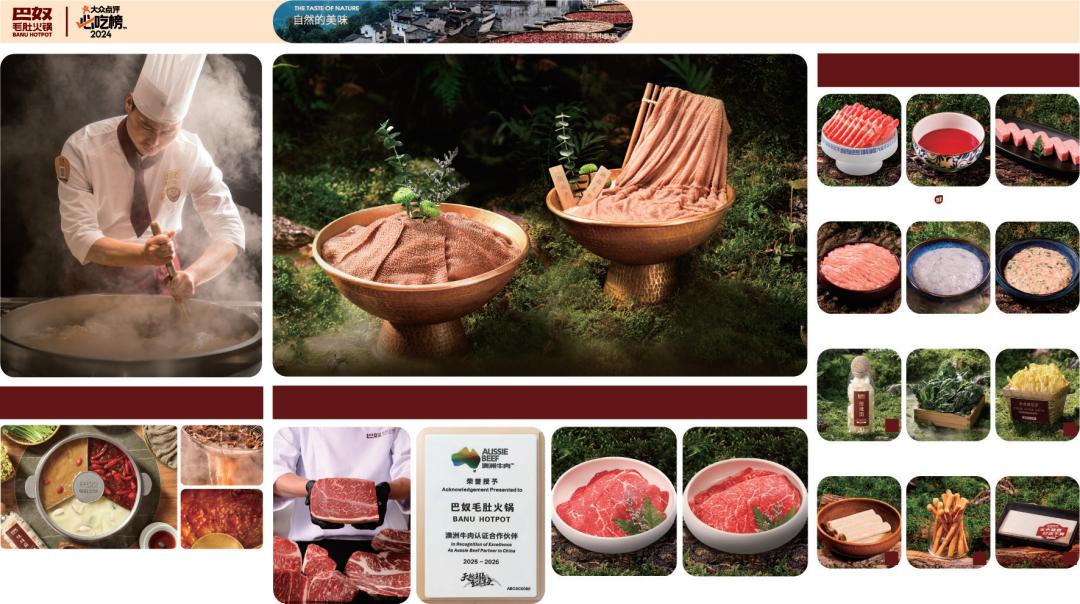
巴奴更新招股书:今年客单价继续下降,门店增加翻台率也上涨
Sou Hu Cai Jing· 2025-12-20 06:09
Core Viewpoint - Banu International Holdings Limited has refiled its Hong Kong IPO prospectus, updating its financial data for the first three quarters of this year, showing significant growth in revenue and net profit compared to the previous year [1][3]. Financial Performance - For the first three quarters of this year, Banu's revenue increased by 24.51% to 2.077 billion yuan, while net profit rose by 58.46% to 156 million yuan. Adjusted net profit grew by 80.78% to 236 million yuan [1]. - The company's performance growth has accelerated compared to the projected full-year revenue growth of 9.23% and net profit growth of 20.87% for 2024 [1]. Market Position - According to data from Frost & Sullivan, Banu ranks third in the Chinese hot pot market in 2024, with a market share of 0.4%. The top two competitors are Haidilao and Xiaobawang, with market shares of 6.7% and 0.4%, respectively [3]. - Banu has received investments from Beijing Sanshengwan Venture Capital, Tomato Capital, and GYH L Limited prior to its IPO [3]. Store Expansion - As of December 7, Banu opened 26 new stores and closed 8, bringing the total number of stores to 162. The company aims to open 44 new stores this year, an increase from the previous target of 40 [4][6]. - The store opening pace has slowed compared to the planned 35 new stores and 2 closures for 2024 [4]. Customer Metrics - Banu's restaurant turnover rate for the first three quarters was 3.6 times per day, up from 3.1 times in the same period last year. The average daily customer count per store was 393, a year-on-year increase of 5.93% [6]. - The average daily sales per store reached 57,600 yuan, reflecting a year-on-year growth of 3.57% [6]. Pricing Strategy - The average customer spending for the first three quarters was 138 yuan, a decrease of 4 yuan compared to the same period last year. This follows a trend of declining average spending, which the company attributes to strategic adjustments in product offerings and pricing to attract a broader customer base [7].
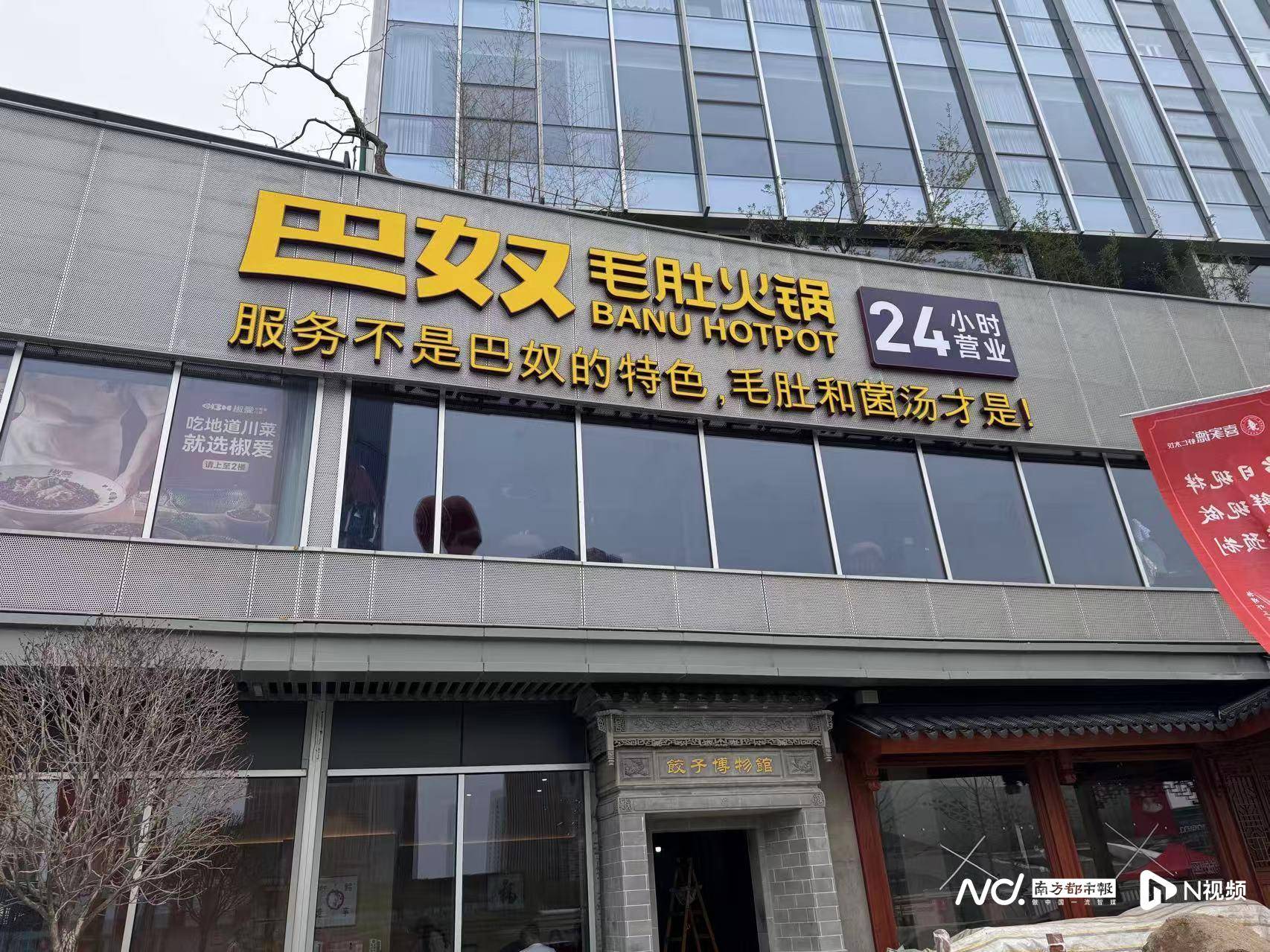
赴港IPO关口,巴奴火锅回应开业广告牌被盗!
Sou Hu Cai Jing· 2025-12-18 13:57
Core Viewpoint - Banu Maodu Hotpot is making a renewed attempt to go public on the Hong Kong Stock Exchange after its initial application was invalidated in June 2025, amidst a backdrop of significant competition in the hotpot industry and recent controversies surrounding its brand image [1][11]. Group 1: Financial Performance - For the first three quarters of 2025, Banu Maodu Hotpot reported revenue of 2.078 billion yuan, a year-on-year increase of 24.5%, and an adjusted net profit of 236 million yuan, reflecting a substantial growth of over 80% [3]. - The operating profit margin for its stores improved from 15.2% in 2022 to 24.3% in the first three quarters of 2025, significantly exceeding the industry average [3]. - The company plans to open 22 new stores in 18 cities in December 2025, bringing its total number of direct-operated stores close to 170 [4]. Group 2: Business Strategy - Banu Maodu Hotpot emphasizes "productism," focusing on high-quality ingredients, particularly its signature "maodu + mushroom soup" combination, which constitutes nearly 50% of its total sales [6]. - The company has established a robust supply chain with a "central kitchen + cold chain logistics" system, ensuring the stability of ingredient quality, which supports its high-quality positioning [6]. - The restaurant maintains a table turnover rate of 3.6 times per day and a same-store sales growth rate of 4.3%, indicating improved single-store profitability and operational efficiency [4]. Group 3: Market Competition - The theft of opening advertisements for the new store in Lianyungang highlights the intense competition within the restaurant industry, particularly in the hotpot sector [7]. - Despite being the third-largest brand in China's hotpot market in 2024, Banu faces challenges from established competitors like Haidilao and Xiaobai Xiaobai, which continue to dominate market share and consumer perception [9]. - The overall market is experiencing a decline in average consumer spending, with per capita consumption dropping from around 90 yuan in 2023 to 60-65 yuan in 2024, putting pressure on Banu's premium pricing strategy [7]. Group 4: IPO Challenges - While Banu Maodu Hotpot holds a certain market position in the quality hotpot sector, it faces significant challenges regarding compliance and brand image ahead of its IPO [11]. - Controversial actions, such as distributing 70 million yuan in cash dividends to shareholders shortly before the IPO, have raised concerns about the company's motives, especially given its need for capital expansion [12]. - Previous incidents involving substandard products and misleading marketing claims have undermined consumer trust in its "productism" approach, posing additional hurdles for the IPO [12].
巴奴火锅二次冲击港股,遭监管“九连问”
Shen Zhen Shang Bao· 2025-12-18 07:54
Core Viewpoint - Banu International Holdings Limited, known as Banu Hotpot, has faced scrutiny from the China Securities Regulatory Commission (CSRC) regarding its IPO application due to issues related to its shareholding structure, dividend rationale, and social security contributions. The company has submitted a revised prospectus on December 17, aiming to address these concerns and potentially become the third Chinese hotpot stock listed on the Hong Kong Stock Exchange [1][4]. Group 1: Company Overview - Banu Hotpot was established in April 2001 and is headquartered in Zhengzhou, Henan Province, founded by Du Zhongbing [4]. - As of December 7, Banu Hotpot operates 162 directly-owned stores across 46 cities, marking a 95.2% increase since the end of 2021. The "Henan model" has been successfully replicated in multiple provinces [5]. Group 2: Market Position - According to Frost & Sullivan, Banu Hotpot ranks third in the Chinese hotpot market by revenue in 2024, with a market share of approximately 0.4%. In the high-end hotpot segment, it holds the top position with a market share of about 3.1% [4]. - Comparatively, Banu Hotpot's revenue figures for the first nine months of 2022 to 2025 are projected at 1.433 billion, 2.112 billion, 2.307 billion, and 2.07 billion yuan, with net profits of -0.05 billion, 0.102 billion, 0.123 billion, and 0.156 billion yuan respectively [5]. Group 3: Regulatory Concerns - The CSRC has raised nine questions regarding Banu Hotpot's shareholding structure, data security, and dividend rationale, particularly focusing on the reasons behind the shareholding through TomatoSecond and the lack of recognition of Du Zhongbing's spouse, Han Yanli, as a co-actual controller [6][7]. - The company has clarified that Du Zhongbing and Han Yanli control 83.38% of the voting rights through D&H (BVI) LTD and BANU UNITED LTD, while Tomato series private equity funds were introduced as financial investors without direct ownership by Du Zhongbing and Han Yanli [7]. Group 4: Dividend and Financial Health - Prior to the IPO, Banu Hotpot distributed a significant dividend of 70 million yuan, prompting regulatory inquiries into the internal decision-making process, tax compliance, and the rationale for dividends amid high debt levels. The company asserts that its operating cash flow has been consistently positive, and its retained earnings and cash assets can cover the dividend [8]. - The CSRC also inquired about the social security contributions for non-full-time employees, revealing a shortfall of 1.6 million, 1.2 million, 0.7 million, and 0.5 million yuan for the years 2022 to 2025. Banu Hotpot has implemented measures to address these issues, including internal policy development and training [9].
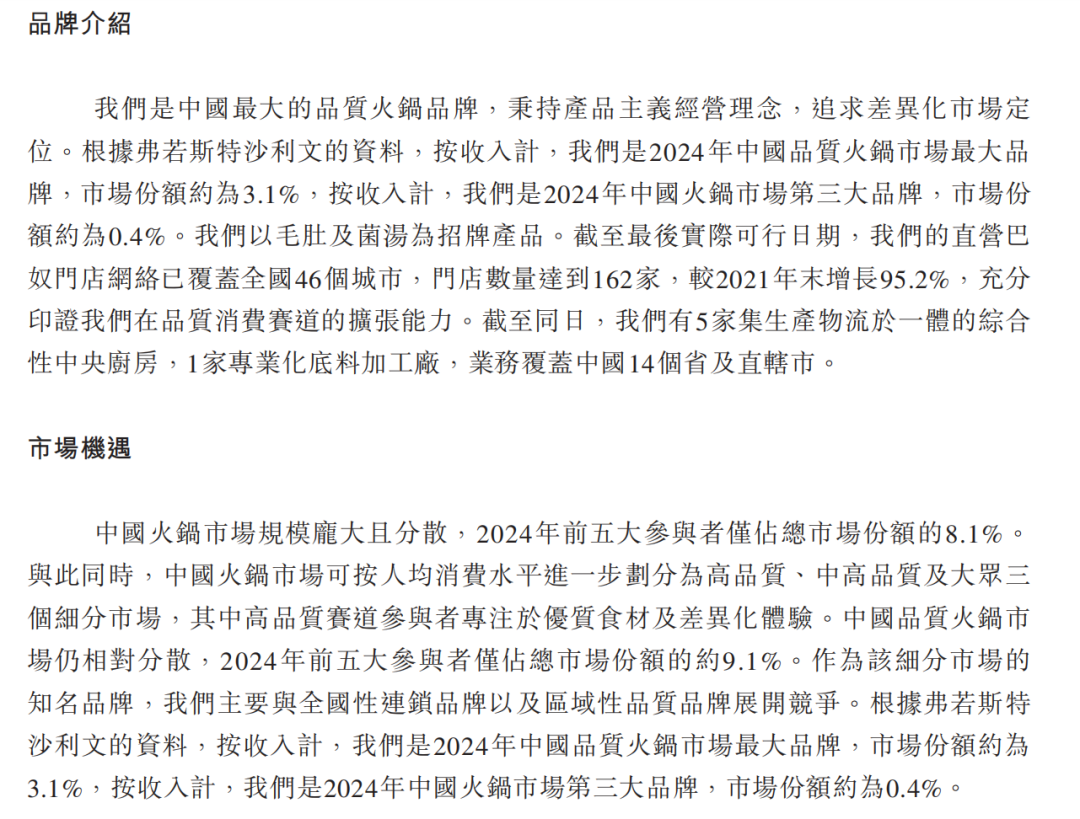
巴奴火锅二次递表冲击港股IPO 招股书回应监管“九连问”
Sou Hu Cai Jing· 2025-12-18 05:37
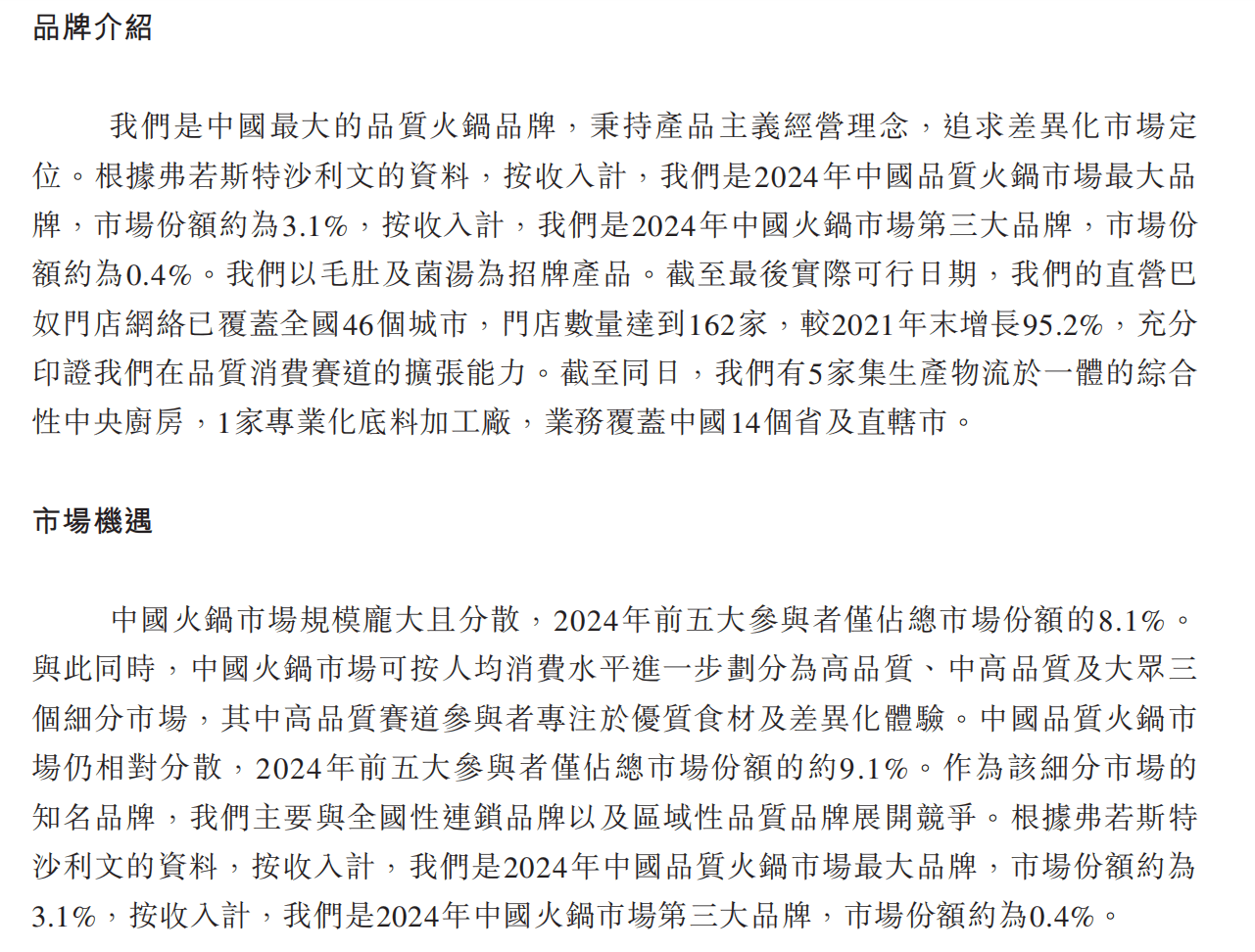
深圳商报·读创客户端记者 詹钰叶 首次递表后,因股权架构、分红合理性、社保欠缴等问题,巴奴国际控股有限公司(简称巴奴火锅)被中国证监会"九连问"。公司于12月17日向港交所二次 递表,并作出针对性解释。若顺利上市,巴奴火锅将成为港股"中式火锅第三股"。 图片内容均来自巴奴火锅本次递交的招股书 12月17日,巴奴国际控股有限公司(以下简称"巴奴火锅"或"公司")更新招股书,中金公司、中银国际为联席保荐人。根据招股书,巴奴火锅成立于2001年 4月,总部位于河南省郑州市,创始人为杜中兵。弗若斯特沙利文数据显示,按收入计,巴奴火锅在2024年中国火锅市场中的排名位于海底捞、呷哺呷哺之 后,位列第三,市场份额约为0.4%;在中国高端火锅市场则排名第一,市场份额约为3.1%。 招股书显示,至12月7日,巴奴火锅的直营门店达162家,覆盖46个城市,较2021年末增长95.2%,"河南模式"成功复制至全国多省份。2022年-2025年前九个 月,公司营业收入分别为14.33亿元、21.12亿元、23.07亿元与20.7亿元,净利润分别为-0.05亿元、1.02亿元、1.23亿元与1.56亿元,毛利率分别为66.2%、 6 ...
巴奴火锅,又发起上市冲锋
3 6 Ke· 2025-12-18 01:39
Core Viewpoint - Banu International Holdings Limited is advancing its listing process on the Hong Kong Stock Exchange, aiming to become the third Chinese hot pot company to go public after Xiaobai Group and Haidilao [1] Group 1: Company Overview - Founded by Du Zhongbing in 2001, Banu started with a single hot pot restaurant in Anyang, Henan, and has grown into a national chain with 162 stores across 46 cities as of December 7, 2025, representing a 95.2% increase since the end of 2021 [2] - The brand name "Banu" is derived from the culture of the boatmen in Chongqing, which is significant to the origins of Sichuan hot pot [2] Group 2: Financial Performance - Banu's revenue is projected to grow from 14.33 billion yuan in 2022 to 23.07 billion yuan in 2024, nearly doubling over three years [4] - For the first three quarters of 2025, Banu reported a revenue of 20.78 billion yuan, reflecting a year-on-year increase of 24.5% [4] - Adjusted net profit increased from 0.42 billion yuan to 1.96 billion yuan from 2022 to 2024, with a significant rise to 2.36 billion yuan in the first three quarters of 2025, exceeding the total for 2024 [4] Group 3: Market Position - Banu ranks third in the Chinese hot pot market by revenue, with a market share of approximately 0.4%, and holds the top position in the high-end hot pot segment with a market share of about 3.1% [4] Group 4: Investment and Governance - Banu's valuation reached 5 billion yuan following multiple rounds of investment, including 1.5 billion yuan from Tomato Capital in August 2022 [2] - The company has a strong governance structure, with the founders controlling approximately 83.38% of the voting rights prior to the IPO [3] - Hu Xiaoming, former Alibaba partner and CEO of Ant Group, has been appointed as an independent non-executive director, bringing extensive management experience to the company [3] Group 5: Regulatory Challenges - Banu has received feedback from the regulatory authority regarding its listing application, particularly concerning its employee social security contributions, which have raised concerns due to a significant number of non-full-time employees [5] - As of September 30, Banu had 1,974 full-time employees, with 3,308 part-time and 5,818 outsourced workers, leading to issues with social security and public fund contributions [5]
中国烹饪协会:11月份餐饮市场稳中有进 “双11”线上线下联动拉动消费
智通财经网· 2025-12-15 13:36
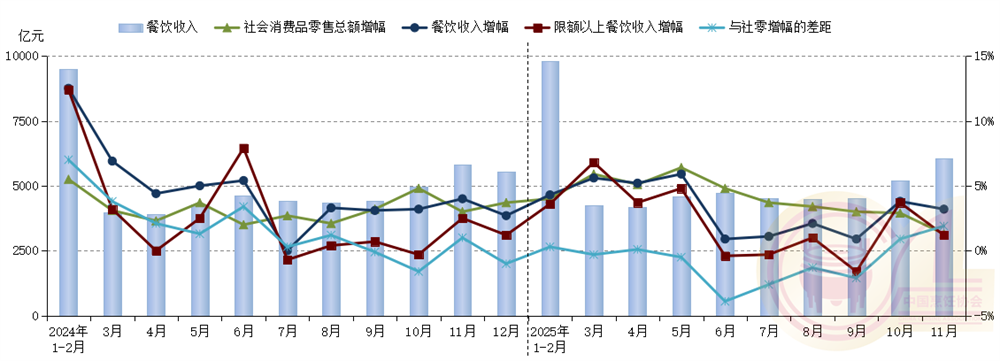
Group 1 - The overall operation of the restaurant market in November remained stable, continuing a trend of steady progress, but there are significant challenges due to a strong supply and weak demand [1] - The National Bureau of Statistics reported that in November 2025, national restaurant revenue reached 605.7 billion yuan, a year-on-year increase of 3.2%, while revenue from above-designated size units was 138 billion yuan, up 1.2% [1] - For the period from January to November 2025, national restaurant revenue totaled 522.45 billion yuan, with a year-on-year growth of 3.3%, and revenue from above-designated size units was 149.33 billion yuan, increasing by 2.3% [1] Group 2 - The China Cuisine Association noted a decline in the growth rate of national restaurant revenue and revenue from above-designated size units by 0.8 and 1.3 percentage points year-on-year, respectively [1] - The proportion of national restaurant revenue to total retail sales of consumer goods was 13.8%, an increase of 2.6 percentage points from the previous month, indicating that restaurant revenue growth outpaced the overall retail sales growth by 1.9 percentage points [1] - During the "Double 11" shopping festival, restaurant companies actively expanded their market through online pre-sales and live streaming, with significant increases in pre-sale orders for brands like Changsha Ju Wei Qu Ji and Shanghai Ha Ling Noodle House [2]

2025年第49周:食品饮料行业周度市场观察
艾瑞咨询· 2025-12-13 00:07
Group 1 - The pre-prepared food market is experiencing a paradox of consumer trust issues and capital enthusiasm, driven by urbanization and the demand for convenient dining [3][4]. - The "zero additives" concept is being phased out in favor of "clean label" standards, emphasizing ingredient transparency and natural prioritization [5][6]. - The energy drink industry is undergoing rapid transformation with ingredient innovation and scene segmentation, focusing on health trends and diverse flavors [7][8]. Group 2 - The nut import market in China is projected to reach $2.386 billion in 2024, with a significant increase in demand for high-end varieties like pistachios [10]. - The beverage market is facing a downturn, with sales declining due to the rise of on-demand drink services and aggressive pricing strategies [14][15]. - The convenience food industry in China is shifting towards value creation, with a market size expected to grow from 673.6 billion yuan in 2023 to 960.3 billion yuan by 2026 [18]. Group 3 - The dairy industry is seeing a shift from ambient milk to fresh milk, with companies like Bright Dairy exploring new growth areas in the pet food market [20]. - Wangwang is facing challenges in the milk market, prompting the company to diversify into AD calcium milk to regain market share [21]. - The plant-based food sector is experiencing a downturn, with companies focusing on technological innovation and localization to meet market demands [17]. Group 4 - JD.com is enhancing its pre-prepared food strategy, aiming to strengthen its supply chain and align with the growing demand for ready-to-eat meals [31]. - China Resources Beverage is entering the ready-to-drink coffee market, competing against established brands like Nestlé and Starbucks [32]. - Wanglaoji is diversifying into the functional beverage market by acquiring distribution rights for Red Bull in southern China, aiming for significant sales growth [33].