天合光能

Search documents
太空光伏能否成为新蓝海?
Ren Min Ri Bao· 2026-02-10 10:12
Core Viewpoint - The exploration of space photovoltaic technology has gained attention, particularly with Elon Musk's proposal to deploy a 100 GW solar energy satellite network annually, which could account for approximately one-sixth of the global new photovoltaic installations [1] Group 1: Space Photovoltaic Technology - Space photovoltaic technology involves equipping spacecraft or satellites with photovoltaic components to convert solar energy into electricity, with the long-term goal of wireless transmission to Earth [1] - The efficiency of solar energy in space can be 7 to 10 times higher than that of ground systems due to constant sunlight and minimal weather interference [1] Group 2: Market Trends and Drivers - The interest in space photovoltaic technology has surged due to advancements in reusable rocket technology, which have lowered launch costs, and the rapid development of the commercial space economy [1] - The increasing demand for electricity and cooling in data centers has highlighted the limitations of ground infrastructure, making space-based solar energy more appealing [1] Group 3: Current Challenges and Economic Viability - Space photovoltaic technology is still in the exploratory phase, with challenges related to technological development and economic feasibility [3] - The current cost of electricity generated from space photovoltaic systems is estimated to be between $2 and $3 per kWh, compared to $0.03 to $0.05 per kWh for ground-based systems, indicating a significant cost disparity [3] Group 4: Advantages of the Chinese Photovoltaic Industry - The Chinese photovoltaic industry has several advantages, including significant advancements in research and development, with a 55% global share of efficiency records during the 14th Five-Year Plan [3] - Manufacturing capacity has increased to 5.5 times that of the previous five-year period, with projections indicating that by 2025, China will account for over 90% of global production [3] - The average cost of electricity from photovoltaic projects has decreased by 80% over the past decade, showcasing China's cost advantages in the sector [3] Group 5: Industry Initiatives - Chinese photovoltaic companies are actively pursuing advancements in space photovoltaic technology, with notable initiatives such as the record-breaking development of perovskite/silicon tandem components by Trina Solar and the establishment of a future energy space laboratory by LONGi Green Energy [4] - JinkoSolar and Jintai Technology are collaborating to promote the research and industrialization of perovskite tandem battery technology [4] - The development of space photovoltaic technology is viewed as a long-term endeavor requiring patience and time [4]


埃夫特,拟至高12亿收购盛普股份
Xin Lang Cai Jing· 2026-02-10 06:55
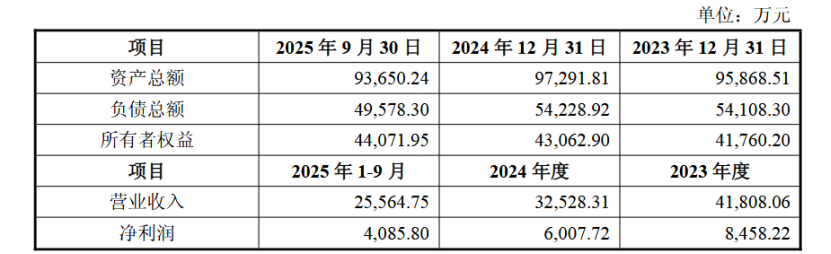
Core Viewpoint - Efort plans to acquire 100% of Shanghai Shengpu Fluid Equipment Co., Ltd. to strengthen its capabilities in adhesive processes, which are currently a weak point in its industrial robot product line [2][4][15]. Group 1: Acquisition Details - The acquisition will be executed in two steps: first, Efort will acquire 95.97% of Shengpu's shares through a combination of issuing shares and cash payments; second, it will purchase the remaining 4.03% in cash [2][4][15]. - The estimated valuation for the acquisition is between 1 billion to 1.2 billion yuan [4][15]. Group 2: Strategic Importance - This acquisition aims to enhance Efort's product offerings in adhesive processes, which are widely used in the industrial robot market, thereby addressing a critical gap in its technology portfolio [4][15]. - The target company has a strong market share in adhesive equipment for the photovoltaic and power battery sectors, with established relationships with leading clients, which will benefit Efort post-acquisition [4][16]. Group 3: Financial Performance of Target Company - Shengpu's projected revenues for 2023, 2024, and the first nine months of 2025 are 418 million yuan, 325 million yuan, and 256 million yuan, respectively, with corresponding net profits of 84.58 million yuan, 60.08 million yuan, and 40.86 million yuan [5][16]. - The total assets of Shengpu as of September 30, 2025, are estimated at 936.50 million yuan, with total liabilities of 495.78 million yuan and equity of 440.72 million yuan [17]. Group 4: Efort's Financial Challenges - Efort has faced continuous losses since its listing in 2020, with a projected net loss for 2025 expected to widen to between 450 million to 550 million yuan, representing a year-on-year increase of 186.34% to 249.97% [10][21]. - The company's revenue for the first nine months of 2025 is reported at 702.04 million yuan, with a net profit attributable to shareholders of -200.28 million yuan [22].

马斯克宣布干法电极技术突破,BC头部企业完成专利许可
Ping An Securities· 2026-02-10 06:11
Investment Rating - The report maintains an "Outperform" rating for the industry [1] Core Insights - The report highlights significant developments in the wind and solar sectors, including a breakthrough in dry electrode technology by Elon Musk, which is crucial for reducing costs in liquid batteries and mass production of solid-state batteries [6] - The report notes that the wind power index decreased by 1.04%, outperforming the CSI 300 index by 0.30 percentage points, with a current PE_TTM valuation of approximately 27.71 times [4][11] - The solar sector saw a 3.36% increase in the photovoltaic equipment index, with the photovoltaic battery component index rising by 8.10% [4] Summary by Sections Wind Power - The European Commission has initiated an in-depth investigation into Goldwind Technology under the Foreign Subsidies Regulation (FSR), focusing on whether the company benefits from foreign subsidies in the EU market [5][10] - The report indicates that the impact of this investigation on China's wind turbine exports to Europe is limited in the short term, but it introduces uncertainty for future market entries [10] - The report maintains a positive outlook on China's competitive advantage in the wind power industry and its opportunities for international expansion [5][10] Solar Power - A major BC company, Aiko Solar, has signed a patent licensing agreement with Maxeon Solar, allowing Aiko to access all BC battery and component patents outside the U.S. for the next five years [5] - The total patent licensing fee amounts to RMB 1.65 billion, with the first-year payment set at RMB 250 million [5] - This agreement is expected to eliminate a significant barrier to Aiko's overseas sales and indicates high technical barriers in the BC technology sector [5] Energy Storage & Hydrogen - The report emphasizes the high demand for new energy storage solutions, recommending investments in domestic and international large-scale storage companies such as Sungrow Power, Haibo Shichuang, and Shuneng Electric [6] - In the lithium battery sector, the report suggests that the industry is emerging from a price decline cycle, with strong demand driving both volume and profit growth [6] - The report highlights the potential of dry electrode technology to significantly reduce costs and improve battery performance, which could create new opportunities in related equipment and materials [6]


深市规模最大的光伏ETF(159857)盘中申购超7000万份,换手率深市同标的第一
Mei Ri Jing Ji Xin Wen· 2026-02-10 05:31
Group 1 - The photovoltaic sector is experiencing a decline, with the photovoltaic ETF (159857) index dropping by 1.67% during trading, and key stocks such as Aotewi, Robotech, and Maiwei falling over 5% [1] - The photovoltaic ETF (159857) has seen a net inflow of 144 million yuan over the last ten trading days, reaching a new high of 2.41 billion yuan as of February 9, 2026, making it the largest in the Shenzhen market [1] - The ETF tracks the photovoltaic industry index, covering the entire industry chain from silicon materials to solar power station operations, reflecting the core competitiveness of China's photovoltaic industry [1] Group 2 - Elon Musk announced that SpaceX and Tesla will each establish 100 GW of annual photovoltaic capacity, with some dedicated to space data centers and Starlink satellites [2] - The cancellation of export tax rebates for photovoltaic products in April is expected to trigger a rush in exports, with component production in February projected to increase by nearly 30% month-on-month [2] - Leading companies like Trina Solar have raised component prices to 0.88-0.92 yuan/W, indicating price stabilization in the industry [2]
马斯克引爆光伏,产业链市值"回血"!太空光伏前景几何
Bei Jing Shang Bao· 2026-02-10 04:56
Core Viewpoint - The capital market is experiencing a surge in interest in the photovoltaic sector, particularly driven by Elon Musk's support for space photovoltaic technology, which has led to significant stock price increases in related companies [1][5][15]. Group 1: Market Dynamics - The photovoltaic sector saw a market capitalization recovery of over 200 billion yuan from January 23 to February 9, with leading companies like GCL-Poly and TCL Zhonghuan hitting their daily price limits [4][9]. - Following Musk's endorsement of space photovoltaic technology at the World Economic Forum on January 22, the A-share photovoltaic sector collectively surged [5][7]. - The market is witnessing a rotation of interest from traditional AI and chip sectors to the photovoltaic sector, particularly space photovoltaic concepts [1][2]. Group 2: Industry Challenges - The photovoltaic industry is currently facing an oversupply situation, with the China Photovoltaic Industry Association predicting a decline in new installed capacity in 2026 by 23.81% to 42.86% year-on-year [1][14]. - Many leading photovoltaic companies have reported significant expected losses for 2025, with 73.47% of the 49 companies that disclosed earnings forecasts predicting net losses [13]. - The industry is undergoing a deep adjustment phase, with many companies expressing concerns about the sustainability of stock price increases without corresponding performance improvements [12][13]. Group 3: Space Photovoltaic Technology - Space photovoltaic technology involves deploying large solar power stations in space to convert solar energy into electricity, which can then be transmitted back to Earth or used to power satellites and space stations [6][15]. - While space photovoltaic technology presents significant advantages over ground-based systems, such as uninterrupted sunlight and higher light intensity, it is still in the early stages of technological exploration and faces various challenges [2][15]. - The potential for space photovoltaic technology to become a new growth driver for the photovoltaic industry is acknowledged, but its realization will depend on overcoming technical, cost, and industry chain challenges [17].

高盛闭门会-上调H1铝价到3150但长期供应可能过剩-铜受益于宏观和结构性短缺
Goldman Sachs· 2026-02-10 03:24
Investment Rating - The report indicates a positive outlook for copper, predicting a price of $13,000 per ton in Q1 2026 and $12,500 per ton in Q2 2026, while aluminum prices are expected to remain high due to various market factors [1][3]. Core Insights - The report highlights that AI capital expenditures are driving copper demand towards cyclical industries such as defense, artificial intelligence, electrification, and grid construction, accounting for over 40% of copper demand growth [1][3]. - It is anticipated that there will be a $1 trillion tax refund for U.S. consumers in the first half of 2026, which will significantly impact the market [1][2]. - The U.S. copper tariff policy under Section 232 is expected to be a key factor in the market in the first half of 2025, with a potential 15% tariff on refined copper to be reassessed in mid-2026 [1][3]. Summary by Sections Copper Market Dynamics - Copper prices and aluminum prices have risen over 20% since November 2025, driven by interest rate cuts, fiscal expansion, and AI capital expenditure [2]. - The global copper supply is expected to grow by only about 1% in 2026, with a tightening supply-demand balance as excess supply decreases from 600,000 tons to 300,000 tons [6][7]. - The report notes that while there are disruptions in major mines, overall copper supply remains stable due to new capacities in Africa and Central Asia [6][7]. Demand Trends - The report indicates a significant change in downstream demand due to rising metal prices, with traditional sectors like consumer electronics and hardware manufacturing experiencing a notable decline [5]. - Despite the overall demand slowdown, certain sectors such as the national grid and electric vehicle charging infrastructure may see increased investment, although the actual growth may be limited in the short term [8][9]. Future Projections - The long-term forecast for copper prices is set at $15,000 per ton by 2035, based on supply gap analysis and historical data trends [10]. - The aluminum market is expected to return to a surplus state by 2027, with prices projected to drop to $2,400 per ton [12]. - China's demand for aluminum is expected to grow at a rate of 3%-4% in 2026, which is lower than previous years but still indicates a positive trend [13].
太空算力时代-太空光伏万亿蓝海
2026-02-10 03:24
Summary of Key Points from the Conference Call on Space Photovoltaics Industry Overview - The focus is on the space photovoltaic (PV) industry, which is expected to grow significantly due to increasing demand for space-based computing power and advancements in solar technology [1][10][23]. Core Technologies and Companies - **Gallium Arsenide (GaAs) Solar Cells**: - Highest efficiency (31.5%-34.5%) but very high cost (RMB 200,000-300,000 per square meter) [1][2][12]. - Leading companies: GanZhao Photovoltaics and Sanan Optoelectronics [2][5]. - **P-Type Heterojunction (HJT) Solar Cells**: - Efficiency of 26%-27% (up to 30% when stacked) with lower costs (a few thousand RMB per square meter) [1][2][4]. - Notable progress by Dongfang Risheng in ultra-thin HJT technology [2][5]. - **Perovskite Solar Cells**: - Single-layer efficiency around 20%, can exceed 35% when stacked; lower raw material costs but complex manufacturing [1][2][4]. - Companies like GCL-Poly and Shanghai Gangwan are making significant advancements [2][5]. Cost and Efficiency Challenges - GaAs cells face limited cost reduction potential due to material scarcity and complex manufacturing processes [3][11]. - HJT is seen as a promising short-term technology due to its lower manufacturing costs and reliability [4]. - Perovskite technology has great potential if stability issues can be resolved [4]. Special Requirements for Space Applications - Space PV materials must withstand extreme temperature variations (from -180°C to +120°C) and UV radiation [16]. - Low-temperature silver paste and light conversion technologies are critical for performance in space [16]. Packaging and Materials - Space PV packaging uses CPI or UTG films instead of traditional glass, with UTG offering better performance but at a higher cost (RMB 6,000-8,000 per square meter) [20][21]. - The cost structure of packaging materials is influenced by raw materials (40%-50%), core processes (25%-35%), and yield losses (10%-15%) [22]. Market Dynamics and Future Outlook - The space PV market is expected to expand significantly in the next 3-5 years, driven by satellite launches and technological advancements [23]. - The demand for PV components will increase as more satellites are deployed, potentially leading to explosive market growth [23]. Risks and Challenges - Key risks include the ability of companies to survive until the market matures and the adaptability of technologies to space environments [29]. - Companies must address challenges related to UV resistance and thermal shock to succeed in the space PV market [29]. Conclusion - The space photovoltaic industry is poised for growth, with various technologies and companies leading the charge. However, significant challenges remain in terms of cost, efficiency, and material stability in the harsh space environment.

未知机构:东吴电新太空光伏特斯拉重启光伏组件生产Starcloud申请部署88-20260210
未知机构· 2026-02-10 02:15
1)近期据PV-Tech,特斯拉位于纽约州布法罗的工厂已重新调整用途,用于生产太阳能组件;特斯拉能源高级总 监ColbyHastings向多家媒体表示,今年的目标是将布法罗工厂的组件组装产能扩大至300MW。 2)2月5日,美国初创公司Starcloud正式向FCC提交申请,计划部署8.8w颗卫星,搭建分布式、基于太空的AI训练 与云计算平台。 3)2月7日,我国在酒泉卫星发射中心使用长征二号F运载火箭,成功发射一型可重复使用试验航天器。 观点重申: 【东吴电新】太空光伏:特斯拉重启光伏组件生产, Starcloud申请部署8.8w颗卫星,持续重点推荐! 1)近期据PV-Tech,特斯拉位于纽约州布法罗的工厂已重新调整用途,用于生产太阳能组件;特斯拉能源高级总 监ColbyHastings向多家媒体表示,今年的目标是将布法罗工厂的组件组装产能扩大至300MW。 2)2月5日,美国初创公司Starcloud正式向FCC提交申请,计划部署 【东吴电新】太空光伏:特斯拉重启光伏组件生产, Starcloud申请部署8.8w颗卫星,持续重点推荐! #技术持续迭代、钙钛矿导入头部。 SingfilmSolar柔性钙钛矿 ...
电力设备行业周报:北美CSP大厂资本开支再加速,国内AI应用裂变进入“商业化拐点期”
Huaxin Securities· 2026-02-10 00:45
Investment Rating - The report maintains a "Recommended" rating for the power equipment sector [4][15]. Core Insights - North American CSP companies are significantly increasing their capital expenditures, with Meta's Q4 2025 capex reaching $22.14 billion and projected to rise to $115-135 billion in 2026. Microsoft, Amazon, and Google are also increasing their capex, indicating a robust demand for AI training and inference [3][12][13]. - Domestic AI applications are entering a commercialization inflection point, with companies like Tencent and Alibaba launching significant promotional campaigns to stimulate user engagement and application usage [12][13]. - The AI industry is transitioning from a focus on computational power to a collaborative expansion involving infrastructure and application ecosystems, benefiting sectors such as servers, power equipment, data centers, and liquid cooling systems [14]. Summary by Sections Investment Views - The report suggests focusing on the IDC sector, highlighting companies like Kehua Data and Jinpan Technology due to their growth potential. It also recommends monitoring high-voltage circuit breakers and power supply sectors, with specific mentions of companies like Liangxin and Sunshine Power [4][14]. Industry Dynamics - The report notes that the domestic data center sector is beginning to expand and upgrade, with significant opportunities in direct current power supply equipment. The power equipment sector is expected to benefit from these trends [4][17]. - The report highlights that the State Grid's fixed asset investment grew by over 35% year-on-year in January, indicating strong infrastructure investment [18][19]. Key Companies and Earnings Forecast - The report provides earnings forecasts for several companies, including Kehua Data, Liangxin, and Sunshine Power, with specific EPS and PE ratios outlined for 2024 to 2026 [7][16].






马斯克“带货” 光伏市值涨超2000亿元
Bei Jing Shang Bao· 2026-02-09 17:07
Core Viewpoint - The recent surge in the photovoltaic sector is significantly influenced by Elon Musk's support for space solar power, which has ignited investor interest and led to substantial gains in the A-share photovoltaic market [1][5][12]. Industry Overview - The photovoltaic industry is currently experiencing an oversupply, with the ground-mounted solar segment facing intense competition and a decline in growth prospects. The China Photovoltaic Industry Association projects a decrease in new installed capacity for 2023, estimating between 180-240 GW, a year-on-year decline of 23.81%-42.86% [1][11]. - The emergence of space solar power is seen as a potential solution to the industry's search for new growth avenues, driven by the expanding commercial space market [2][11]. Market Dynamics - Following Musk's endorsement of space solar power, the photovoltaic sector saw a collective market recovery of over 200 billion yuan from January 23 to February 9, with leading companies like GCL-Poly and TCL Zhonghuan experiencing significant stock price increases [1][4][6]. - As of February 9, the photovoltaic equipment sector showed strong performance, with multiple stocks hitting their daily price limits, indicating a clear profit-making trend among investors [4][6]. Corporate Developments - Tesla is reportedly evaluating locations in the U.S. to expand its solar cell manufacturing, which could open opportunities for Chinese equipment manufacturers to enter Tesla and SpaceX's supply chains [5][12]. - Companies like GCL-Poly and Trina Solar have confirmed that they are exploring technologies related to space solar power, although they have not yet secured any related orders [7][9]. Financial Performance - A significant portion of photovoltaic companies are forecasting losses for 2025, with 73.47% of the 49 companies that disclosed earnings predictions expecting net losses. Notable companies like TCL Zhonghuan and Trina Solar are projected to face substantial losses [9][10]. - The total market capitalization of 70 photovoltaic stocks increased from approximately 1.79 trillion yuan to about 1.99 trillion yuan during the recent surge, reflecting strong investor interest [6][9]. Future Outlook - While space solar power presents exciting possibilities, it remains in the early stages of technological exploration and faces challenges related to market conditions, policy, and technological development [2][12][14]. - Experts believe that advancements in commercial space technology and photovoltaic innovations could position space solar power as a new growth driver for the industry [14].