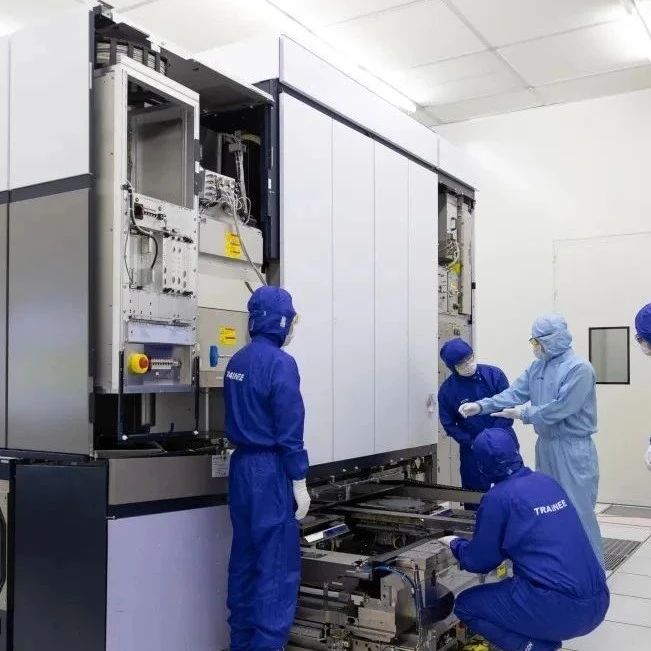
尼康

Search documents
光刻机大变局:中国、日本、荷兰三国杀
是说芯语· 2025-07-11 13:50
Core Viewpoint - ASML's stock performance in 2024 has been poor, with its market value remaining around $280 billion despite significant fluctuations throughout the year, primarily due to disappointing order volumes and external market pressures [1][4]. Group 1: ASML's Financial Performance - ASML's market value dropped from a peak of $432.4 billion on July 10 to a low of $259.1 billion by November 15, representing a 40% decline [1]. - In Q3 2024, ASML reported new orders of only €2.6 billion, significantly below analyst expectations of €5.4 billion [1]. - The company sold only 44 EUV lithography machines in 2024, a decrease of 9 units or 17% from the previous year, largely due to reduced demand from major clients like Intel and Samsung [3]. Group 2: Market Dynamics and Competitors - TSMC, ASML's largest customer, experienced a remarkable stock performance in 2024, with its market value increasing from $520 billion to $1.1 trillion, nearly doubling [2]. - TSMC's revenue and net profit grew by 39% and 54% year-on-year, respectively, driven by strong demand for AI chips [2]. - Nikon has re-entered the high-end lithography market, launching a new ArF immersion lithography machine, aiming to capture market share in China following ASML's exit [5][6]. Group 3: Political and Regulatory Factors - ASML's sales to China, which constituted 49% of its revenue in Q1 2024, have been severely impacted by U.S. export restrictions, dropping to 27% by Q4 2024 and projected to fall to around 20% in 2025 [4]. - The Dutch government has expressed dissatisfaction with U.S. pressures limiting ASML's exports to China, indicating a desire for more autonomy in export policy decisions [8]. Group 4: Future Outlook - ASML's confidence in market performance for 2025 is low, leading the CFO to announce that the company will stop quarterly reporting of new order amounts [8]. - The rise of China's semiconductor manufacturing capabilities is anticipated, with significant advancements in domestic lithography technology being reported [9].


科技股7月开门红?光刻机、芯片齐“躁动”
Ge Long Hui· 2025-07-01 07:04
Group 1 - The A-share technology sector experienced a strong opening on July 1, with the semiconductor industry chain leading the gains, particularly in areas such as photolithography machines and advanced packaging [1][7] - Several stocks, including Kai Mei Te Qi and Hai Li Shares, reached their daily limit, while Blue Ying Equipment surged over 16% and Jiu Ri New Materials increased by over 5% [2][3] - The semiconductor and chip concepts have seen a wave of limit-up stocks, with significant gains in the photolithography machine sector, which has risen over 11% in the last seven trading days [4][5] Group 2 - Recent market rumors suggest a major breakthrough in domestic EUV photolithography machines, with reports indicating that the National Integrated Circuit Industry Investment Fund is adjusting its focus to address key shortcomings in photolithography machines and EDA software [7] - The Chinese government emphasizes the importance of technological self-reliance, with recent meetings highlighting the need to accelerate breakthroughs in core technologies and enhance national security [8][9] - The semiconductor wafer manufacturing equipment market in mainland China is projected to reach over 230 billion yuan in 2024, with a year-on-year growth of 19.4% [9] Group 3 - SEMI forecasts that by 2025, the self-sufficiency rate of domestic chip equipment will reach 50%, with full coverage of 14nm processes, reducing dependence on equipment from the US, Japan, and Europe [10] - The outlook for domestic substitution is promising, with strong momentum in the artificial intelligence sector, and J.P. Morgan predicts a potential 15%-20% increase in Asian tech stocks this year [11] - Minsheng Securities notes that the high-end photolithography machine market is currently dominated by ASML, Nikon, and Canon, indicating a significant market opportunity for domestic breakthroughs in certain categories [13] Group 4 - The domestic semiconductor industry is experiencing a wave of mergers and acquisitions, with companies across various sectors, including materials, equipment, and chip design, actively pursuing consolidation strategies [14] - Mergers are seen as a core strategy for companies to quickly acquire key technologies and maintain market competitiveness, especially in the context of accelerating domestic substitution [15]
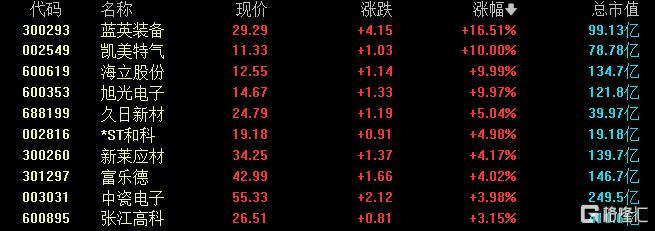
光刻机概念爆发,蓝英装备20%涨停,波长光电等大涨
Zheng Quan Shi Bao Wang· 2025-06-30 02:21
Group 1 - The core viewpoint of the articles emphasizes the importance of lithography machines in the semiconductor industry, highlighting recent stock price surges of related companies due to government support for technological self-reliance and innovation [1][2] - The State Council's meeting on June 27 stressed the need for enhancing responsibility and urgency in advancing high-level technological self-reliance, focusing on breaking through key core technologies and integrating technological innovation with industrial innovation [1] - Lithography is identified as the most critical and complex process in integrated circuit manufacturing, accounting for approximately one-third of manufacturing costs and 40%-50% of the time spent in the process [2] Group 2 - The lithography machine market is dominated by ASML, Nikon, and Canon, with a growing demand for high-end EUV and DUV lithography machines, while there remains significant demand for i-line lithography machines [2] - There is a vast market potential for domestic breakthroughs in certain categories of lithography machines, which could lead to substantial growth opportunities for companies involved in the lithography supply chain [2] - Companies such as Blue Ying Equipment, Wavelength Optoelectronics, and others have seen significant stock price increases, indicating strong market interest and potential investment opportunities in the lithography equipment sector [1]





「经济发展」胡鞍钢等:新型举国体制与世界数字经济强国的构建
Sou Hu Cai Jing· 2025-06-24 14:31
Core Viewpoint - The article emphasizes the necessity of strengthening China's digital economy as a national priority, highlighting the importance of a new type of national system to achieve this goal [3][10][12]. Group 1: Digital Economy Development - The digital economy is rapidly evolving, with significant advancements in technologies such as big data, cloud computing, and artificial intelligence, making it a key variable in global competition [3][10]. - China's digital economy has grown from 22.6 trillion yuan to 45.5 trillion yuan (approximately 7.1 trillion USD) from 2016 to 2021, with an average nominal growth rate of 16.2% [23][26]. - As of 2021, the global digital economy scale reached 38.1 trillion USD, accounting for 45% of GDP, with a nominal growth rate of 15.6%, surpassing the growth rate of nominal GDP by 2.5 percentage points [10][11]. Group 2: National System and Its Importance - The "national system" refers to the mobilization of state power to achieve national goals, characterized by its unique ability to integrate vast resources [4][5]. - The high costs and potential risks associated with the national system necessitate careful consideration of its benefits versus costs, particularly in the context of digital technology development [5][6]. - Historical examples, such as the construction of the Great Wall and the Grand Canal, illustrate the effectiveness of the national system in addressing significant challenges [6][7]. Group 3: Digital Technology and Economic Structure - Digital technology is identified as the cornerstone of the digital economy, with its development being crucial for overcoming existing bottlenecks [15][18]. - China's advantages in data and internet infrastructure are contrasted with its disadvantages in critical digital technologies, particularly in semiconductor manufacturing [14][15]. - The article stresses that the competition in the digital economy ultimately hinges on advancements in digital technology [15][18]. Group 4: New Type of National System - The new type of national system must evolve to be more market-oriented and inclusive, adapting to the demands of the digital economy [12][19]. - The integration of government mechanisms with market mechanisms is essential for fostering innovation in digital technology [22]. - The article advocates for a focus on key core digital technologies, such as quantum information and integrated circuits, to drive overall advancements in the digital economy [18][19]. Group 5: Future Prospects - The article concludes that the next phase is critical for establishing China as a global leader in the digital economy, leveraging its unique advantages and addressing technological gaps [25][26]. - China's digital market demand and infrastructure are positioned to support rapid growth, with significant potential in emerging sectors like industrial internet and smart cities [26][27]. - The establishment of a robust governance structure for digital economy development is highlighted as a key factor for success [26].

第25周共聚焦显微镜招中标20台/套,中标金额1625.1万元
仪器信息网· 2025-06-23 08:18
Core Insights - In the 25th week of 2025 (June 14-20), a total of 17 projects related to confocal microscopes were announced, with 6 projects awarded, totaling 6 units and a total bid amount of 16.251 million yuan [1][2] - There are 11 additional tender projects planned, with a total procurement quantity of 14 units and a disclosed budget exceeding 18.41 million yuan [2] Summary of Awarded Projects - The awarded projects include: - Nanjing Medical University: Super-resolution laser confocal microscope, brand: Nikon AX, date: June 20, 2025 - Hubei University: Laser scanning confocal microscope, brand: OLYMPUS, price: 1.959 million yuan, date: June 19, 2025 - Hebei Medical University: Laser confocal microscope, brand: ZEISS, price: 2.48 million yuan, date: June 18, 2025 - Shanghai Jiao Tong University: Multi-color photon quantitative confocal microscope, brand: Leica, price: 2.682 million yuan, date: June 17, 2025 - Ningbo University: Laser scanning confocal microscope, brand: Nikon AX, price: 2.46 million yuan, date: June 16, 2025 - Wenzhou Medical University: Laser confocal microscope, brand: ZEISS, price: 2.49 million yuan, date: June 16, 2025 [2] Summary of Tender Projects - The tender projects include: - Guangxi University: Laser scanning confocal microscope, budget: 1 million yuan, deadline: June 26, 2025 - Guangdong Agricultural Academy: Intelligent breeding platform, budget: 11.4 million yuan, deadline: July 2025 - Liaoning University of Traditional Chinese Medicine: Various confocal microscopes, budget: 16.802 million yuan, deadline: July 2025 - Capital Medical University: Laser confocal microscope, budget: 3.95 million yuan, deadline: July 9, 2025 - Beijing Normal University: Continuous spectrum laser confocal microscope, budget: 3.6 million yuan, deadline: July 2025 - Tongji University: Confocal microscope, budget: 1.77 million yuan, deadline: June 17, 2025 - Suzhou University: Ultra-high resolution confocal microscope system, deadline: July 7, 2025 - Fujian University of Technology: Laser confocal microscope, deadline: June 20, 2025 - Chongqing People's Hospital: Laser confocal microscope, budget: 3.4 million yuan, deadline: August 2025 - Quzhou People's Hospital: Laser confocal microscope, budget: 2.49 million yuan, deadline: July 1, 2025 - Xi'an Jiaotong University: High-resolution laser confocal microscope, budget: 3.2 million yuan, deadline: June 2025 [3][4]

6月23日|财经简报 充电宝安全危机 伊朗宣布关闭霍尔木兹海峡
Sou Hu Cai Jing· 2025-06-23 03:36
Market Dynamics and Sentiment - A-shares experienced a downward adjustment, with the ChiNext Index leading the decline by 0.84%, the Shenzhen Component Index down 0.47%, and the Shanghai Composite Index slightly down by 0.07%. The market turnover decreased to 1.07 trillion yuan, indicating a strong wait-and-see sentiment [2] - The major indices in the US showed mixed performance, with technology stocks generally declining, including a nearly 4% drop in Google, while Apple rose over 2%. Chinese concept stocks displayed a mixed performance, with the Nasdaq Golden Dragon China Index down 0.92% [2] Policy and Major Events - The US imposed tariffs on steel household appliances starting June 23, leading to a collective adjustment in the Asia-Pacific stock market. Concerns arose regarding the profit pressure on appliance exporters, particularly those reliant on the North American market, prompting some companies to consider relocating production to Southeast Asia or switching to aluminum [3] - The Federal Reserve maintained interest rates during the June meeting, but the "dot plot" indicated a reduction in the expected rate cuts for 2025 from two to one, signaling a more hawkish stance. Trump continued to pressure for significant rate cuts, while Powell emphasized the independence of policy, leading to increased market divergence regarding the rate cut path [3] Industry Sectors and Hotspots - The PCB industry is experiencing a surge due to increased demand driven by AI servers and electric vehicles, with leading companies like Shenghong Technology having orders extending into 2026 [5] - In the consumer electronics sector, multiple factors are driving investment opportunities in the third quarter, with a focus on concepts like HarmonyOS and solid-state batteries [6] - The charging treasure safety crisis has emerged, with multiple brands facing suspension of 3C certification, and battery supplier Amperis under regulatory investigation, exposing credit risks in the industry [7] - The extension of the cobalt raw material ban in the Democratic Republic of Congo for an additional three months may elevate cobalt prices, benefiting companies like Huayou Cobalt and Tengyuan Cobalt [8] - Iran's announcement to close the Strait of Hormuz has drawn attention to the nuclear pollution prevention and oil and gas shipping concepts, with companies like Guangguang Co. and Ningbo Shipping being highlighted [9] - The National Medical Products Administration supports full lifecycle supervision of high-end medical devices, which is favorable for companies like Mindray Medical and United Imaging Medical [10] - The commercial use of humanoid robots in China is expected to reach 60,000 units by 2030, with a compound annual growth rate of 95.3%, benefiting companies like Tongda Power and Zhengye Technology [11] Company Dynamics and Capital Operations - China Railway Construction's 3.856 billion shares of restricted stock were unlocked on June 23, accounting for 72.29% of the total share capital, which may exert pressure on the stock price [12] - Guangting Information's 48.547 million shares of restricted stock were unlocked, representing 52.41% of the total share capital, involving four shareholders [13] - Beijing Junzheng's stock registration date is June 23, with a proposed cash dividend of approximately 48.16 million yuan [14] - Jianfa Real Estate's 670 million yuan bond was fully redeemed on June 23 [15] - Yihua Co. held an extraordinary shareholders' meeting to review the repurchase and cancellation of restricted stock and the reduction of registered capital, which may impact the company's capital structure [16]

时尚设计智能手表成消费新趋势 京东618全周期成交额同比增长超2倍
Sou Hu Cai Jing· 2025-06-19 08:42
Core Insights - JD.com's 618 sales event achieved record-breaking performance, with digital product sales exceeding double the amount from the same period last year, marking a historic high [1] - The event was significantly supported by government subsidies and trade-in policies, driving strong consumer engagement and sales growth [1] User Growth and Consumer Preferences - During the 618 event, new user transactions for JD's digital products increased by 50% year-on-year, indicating a growing preference for JD as a primary platform for digital products [3] - Sales volume and user transactions for new products surged over six times, reflecting strong consumer demand for innovative digital products [3] - The trade-in service saw order volume increase by over six times, showcasing consumer commitment to sustainability and recognition of JD's trade-in offerings [3] Innovative Consumption Trends - JD's digital products are becoming a trendsetter in consumer behavior, with AI smart glasses sales increasing over seven times, highlighting the deep penetration of AI technology in consumer markets [5] - Fashionable smartwatches saw sales revenue double, meeting consumer desires for the integration of technology and fashion [5] - Sales of no-data monitoring devices and gaming products also more than doubled, indicating robust demand for convenient monitoring and entertainment solutions [5] Brand and Product Performance - Notable brands such as DJI, Huawei, Sony, Xiaomi, and Canon emerged as top performers during the event, thanks to their product quality and technological innovation [6] - Top-selling products included DJI Pocket 3, Sony Alpha 7C II, and Huawei GT5, which stood out for their unique advantages [6] New Product Launches - Many brands chose to debut new products on JD during the 618 event, achieving remarkable market responses, such as Huawei Watch 5 sales tripling year-on-year [8] - The Switch 2 auction attracted over 500,000 viewers, demonstrating significant consumer interest [8] - New products like the Fujifilm X-half and Huawei FIT 4 garnered top attention in their respective categories, quickly becoming market highlights due to their innovative features and designs [8] Future Outlook - JD's impressive performance during the 618 event serves as both a validation of past efforts and an encouragement for future initiatives [8] - The company aims to continue its commitment to innovation, quality, and service, striving to provide consumers with superior digital products and shopping experiences [8]


东亚第一内卷国,靠「山寨」发家?
3 6 Ke· 2025-06-17 03:33
Group 1 - Japanese car manufacturers have increasingly focused on disassembling Chinese electric vehicles, with companies like BYD, Geely, and NIO being targeted for detailed analysis [1] - A comprehensive disassembly manual for BYD was sold for approximately 43,700 RMB, indicating a lucrative market for such analyses [1] - This trend reflects a historical pattern where Japan, once known for its imitation, is revisiting its roots in reverse engineering [3][6] Group 2 - Japan's manufacturing industry has evolved from being a "copycat" to a leader in design and innovation, with brands like Muji and renowned designers contributing to its image [4][6] - The historical context reveals that Japan's rise involved meticulous imitation of Western products, leading to significant advancements in various sectors, including automotive and electronics [32][43] - The transformation from imitation to innovation allowed Japan to dominate markets in the 1980s, with companies like Toyota and Sony becoming global leaders [47][49] Group 3 - Despite past successes, Japan's current technological landscape shows a decline in competitiveness, attributed to a conservative approach towards patent usage and innovation [52][56] - The high barriers created by Japanese companies in sectors like DVD and plasma screens have led to a lack of global participation and eventual obsolescence of certain technologies [58][60] - The fear of imitation has resulted in a self-imposed isolation, hindering Japan's ability to adapt and thrive in the 21st-century technology race [62]

Zoom Lens Market to Surpass USD 359.20 million by 2032, Driven by Growing Demand for High-Resolution Imaging | Report by SNS Insider
GlobeNewswire News Room· 2025-06-10 13:10
Core Insights - The Zoom Lens Market is projected to grow from USD 268.48 million in 2024 to USD 359.20 million by 2032, with a CAGR of 3.76% from 2025 to 2032 [1][7]. Market Growth Drivers - The growth of the Zoom Lens Market is driven by applications in surveillance, medical imaging, industrial automation, and transportation, with significant contributions from IoT and AI integration in surveillance systems [1]. - The U.S. market size is expected to increase from USD 63.29 million in 2024 to USD 72.15 million by 2032, growing at a CAGR of 1.70% [1]. Regional Outlook - North America held a 38.65% revenue share in 2024, leading the market due to advancements in surveillance and industrial automation [4]. - Asia Pacific is anticipated to grow at the fastest CAGR of 4.81% from 2025 to 2032, driven by consumer electronics and smart city initiatives in countries like Japan, China, and India [5]. Market Segmentation by Product Type - The Electric Zoom segment dominated the market in 2024 with a 62.87% revenue share, supported by demand in surveillance and broadcasting [8]. - The Manual Zoom segment is projected to grow at a CAGR of 5.29% from 2025 to 2032, appealing to budget-conscious users and hobbyists [9]. Market Segmentation by Application - The Security Monitoring segment held the largest market share at 32.82% in 2024, driven by the demand for high-resolution surveillance [10]. - The Industrial Automation segment is expected to grow at a CAGR of 5.22% by 2032, reflecting the increasing applications in machine vision and robotics [11]. Key Industry Players - Major players in the Zoom Lens Market include Young Optics, Fujifilm Holdings Corporation, IOT Lenses, Canon, Nikon, SONY, Tamron, CBC, Kenko, and Kowa [12].




颠覆性技术,让芯片制造速度提高15倍!
半导体行业观察· 2025-06-10 01:18
Core Viewpoint - Inversion Semiconductor aims to develop a compact, high-performance light source based on laser wakefield acceleration (LWFA) technology, claiming its power will be 10 times higher than ASML's current EUV sources, potentially revolutionizing semiconductor manufacturing [4][24]. Group 1: Company Overview - Inversion Semiconductor, founded in 2024 by Rohan Karthik and Daniel Vega, is backed by Y Combinator and focuses on creating a new type of light source for advanced lithography [7][24]. - The company plans to utilize a "tabletop" particle accelerator that is 1,000 times smaller than traditional accelerators but can output up to 10 kW of power [4][8]. Group 2: Technology and Innovation - The proposed technology can increase chip manufacturing speed by 15 times, allowing for the powering of multiple lithography tools simultaneously, thus reducing costs [4][25]. - Inversion's light source can generate wavelengths between 20 nm and 6.7 nm, including the 13.5 nm light currently used in ASML's EUV tools [8][24]. - The LWFA method used by Inversion is distinct from traditional methods, producing coherent and monochromatic radiation that is crucial for next-generation lithography systems [12][24]. Group 3: Challenges and Considerations - The development of such a light source requires petawatt-level laser systems, which are complex, expensive, and energy-intensive, posing significant challenges for Inversion [5][21]. - Inversion must either collaborate with ASML or develop its own lithography systems, which would require creating a new ecosystem and could be time-consuming and costly [5][25]. - The company lacks experience in building high-volume, reliable wafer fabrication equipment, which is critical for the semiconductor industry [5][22][25].