老板电器

Search documents
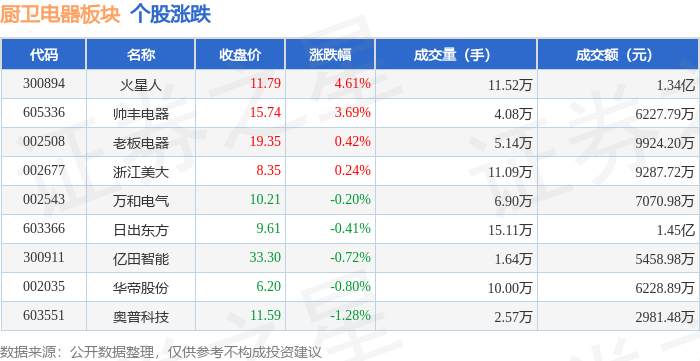
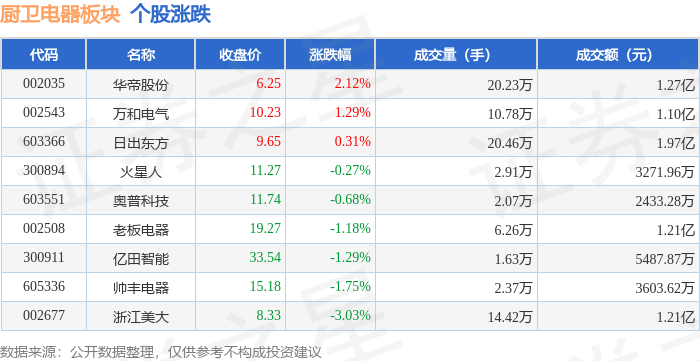
厨卫电器板块12月31日涨0.27%,火星人领涨,主力资金净流出1237.01万元
Zheng Xing Xing Ye Ri Bao· 2025-12-31 08:59
Group 1 - The kitchen and bathroom appliance sector increased by 0.27% on December 31, with Mars Man leading the gains [1] - The Shanghai Composite Index closed at 3968.84, up 0.09%, while the Shenzhen Component Index closed at 13525.02, down 0.58% [1] - Mars Man's stock price rose by 4.61% to 11.79, with a trading volume of 115,200 shares and a transaction value of 134 million yuan [1] Group 2 - The main capital outflow from the kitchen and bathroom appliance sector was 12.37 million yuan, while retail investors saw a net inflow of 6.70 million yuan [1] - Zhejiang Meida had a main capital inflow of 6.01 million yuan, but retail investors had a net inflow of only 1.72 million yuan [2] - Mars Man experienced a main capital inflow of 5.42 million yuan, but retail investors had a net outflow of 15.93 million yuan [2]



家用电器行业投资策略周报-20251230
CAITONG SECURITIES· 2025-12-30 13:17
Core Insights - The report maintains a positive outlook on the home appliance sector, particularly focusing on the cost reduction potential of aluminum replacing copper in air conditioning systems [2][5] - The adoption of aluminum-copper technology is seen as a significant step towards reducing production costs amid rising copper prices and resource scarcity [10][15] Group 1: Aluminum-Copper Technology Impact - The use of aluminum instead of copper in air conditioning units can lead to substantial cost savings, with estimates suggesting a reduction of 208 to 277 RMB per unit when replacing 50% of copper, and up to 416 to 554 RMB when replacing 100% [11][12] - Copper currently constitutes about 26% to 33% of the cost in standard air conditioning units, with high-end models reaching over 40% [11][12] - The global market has seen significant adoption of aluminum-copper products, particularly in Japan where approximately 40% to 50% of air conditioners use aluminum heat exchangers [15][16] Group 2: Domestic Market Challenges - Despite the cost advantages, the domestic promotion of aluminum-copper air conditioners faces challenges, including inferior thermal conductivity and corrosion resistance compared to copper [19][20] - Consumer perception is a major barrier, as negative opinions about aluminum's reliability persist, complicating market acceptance [19][20] - The first domestic aluminum-copper air conditioner was launched by Wanbao in collaboration with JD.com, targeting the mid-to-low-end market, which may help accelerate industry-wide material transitions [16][17] Group 3: Industry Performance and Trends - The home appliance sector has shown mixed performance, with the overall index increasing by 0.44%, while specific segments like white goods and black goods experienced varied changes [21][22] - Recent data indicates a decline in domestic sales growth for air conditioners, refrigerators, and washing machines, reflecting broader market challenges [33][47] - The report highlights the importance of monitoring raw material prices, with copper and aluminum prices showing significant fluctuations that could impact production costs [29][31]





今年十大最惨板块,跌麻了
3 6 Ke· 2025-12-30 12:11
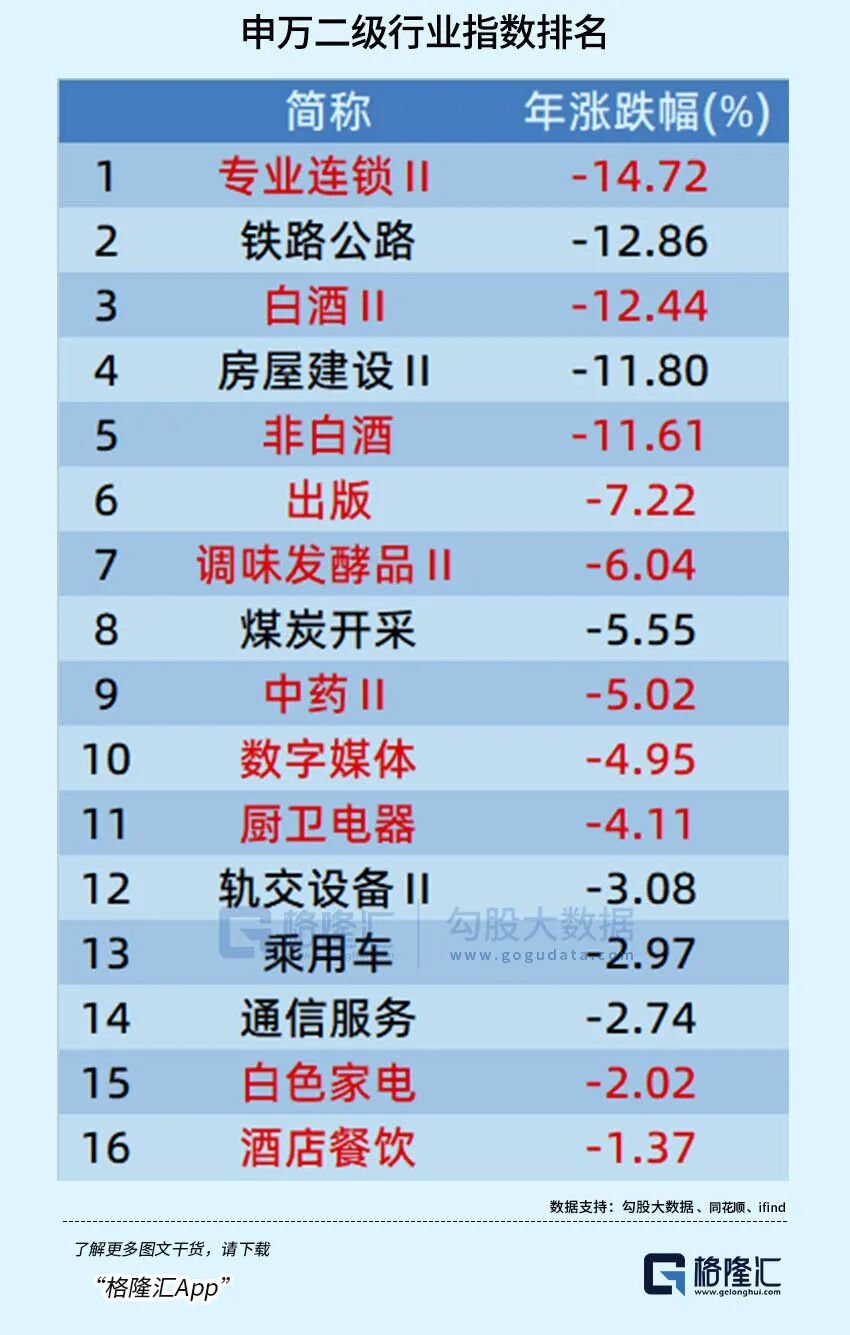
Core Viewpoint - The consumer sector has faced significant challenges in the past year, with many industries within this sector experiencing declines despite overall market growth. The focus on domestic demand and consumption has not translated into positive performance for many consumer-related industries [1]. Group 1: Consumer Sector Performance - In the first half of the year, 10 out of 16 industries that saw declines were from the consumer sector, indicating a troubling trend for consumer-related stocks [1]. - The white liquor sector, a key component of the consumer market, has seen a year-to-date decline of 12.44%, with major brands like Wuliangye experiencing significant drops in revenue and profit [5][8]. - The professional chain sector has been particularly hard hit, with a year-to-date decline of 14.72%, as traditional retail models struggle to adapt to changing consumer behaviors [13][14]. Group 2: White Liquor Industry - The white liquor industry is facing its eighth consecutive year of production decline, with both volume and price dropping, leading to increased inventory pressure and cash flow issues for many companies [9]. - Wuliangye reported a 10.26% decline in revenue and a 13.72% drop in net profit for the first three quarters, marking its first negative growth in nearly a decade [8]. - The changing consumer landscape, with a shift towards lower-alcohol and healthier options, is forcing white liquor companies to adapt or risk further declines [12]. Group 3: Professional Chain Sector - The professional chain sector is experiencing a crisis, with many traditional stores closing and business models failing to adapt to the digital age [14][19]. - The decline of major players like Renrenle, which has seen its market value plummet and faced continuous losses, exemplifies the struggles within this sector [18]. - The shift towards online shopping and personalized consumer experiences is reshaping the retail landscape, leaving traditional large-format stores at a disadvantage [20]. Group 4: Non-White Liquor Sector - The non-white liquor sector, including beer and wine, has also faced challenges, with a year-to-date decline of 11.61% [22]. - Budweiser APAC reported an 8.2% drop in domestic sales and a 24.4% decline in net profit, reflecting broader issues within the beer industry [25]. - The rise of cross-industry competition, with liquor companies diversifying into other beverage categories, indicates a shift in market dynamics [27]. Group 5: Publishing Industry - The publishing industry has seen a decline in the overall market, with a 10.4% drop in the domestic paper book market, yet some companies have managed to increase profits through cost control [35][38]. - Chinese Media, a leading player in the sector, has faced significant revenue and profit declines, highlighting the challenges of adapting to changing educational policies [36][38]. Group 6: Seasoning Industry - The seasoning industry has experienced a 6.04% decline, with companies like Qianhe Flavor struggling due to a drop in sales across key product lines [43][47]. - The industry is facing increased competition and changing consumer preferences, necessitating a shift in strategy for many companies [52]. Group 7: Traditional Chinese Medicine - The traditional Chinese medicine sector has seen a 5.02% decline, with companies like Pian Zai Huang facing significant revenue and profit drops due to rising costs and regulatory pressures [53][56]. - The industry is undergoing a transformation as companies seek to innovate and diversify their product offerings in response to market challenges [62]. Group 8: Digital Media - The digital media sector has faced a 4.95% decline, with traditional advertising models struggling to keep pace with new digital trends [67]. - Companies like Mango TV have reported significant revenue declines, indicating the need for adaptation in a rapidly changing media landscape [66]. Group 9: Kitchen and Bathroom Appliances - The kitchen and bathroom appliance sector has seen a 4.11% decline, largely due to a slowdown in new housing demand and increased competition [69][70]. - Companies like Boss Appliances are experiencing revenue declines for the first time in years, reflecting broader industry challenges [69]. Group 10: White Goods - The white goods sector has faced a 2.02% decline, with major players like Gree Electric experiencing significant revenue and profit drops due to increased competition and market saturation [76][80]. - The industry is shifting towards a focus on product quality and operational efficiency as traditional growth drivers diminish [80]. Group 11: Hotel and Catering - The hotel and catering sector has seen a 1.37% decline, with many businesses struggling to convert increased travel demand into profits due to high commission fees from online platforms [84][85]. - The industry is witnessing a shift towards more refined operational models as companies seek to adapt to changing consumer behaviors and market conditions [86].
2025年A股十大最惨板块,跌麻了
Ge Long Hui· 2025-12-30 11:30
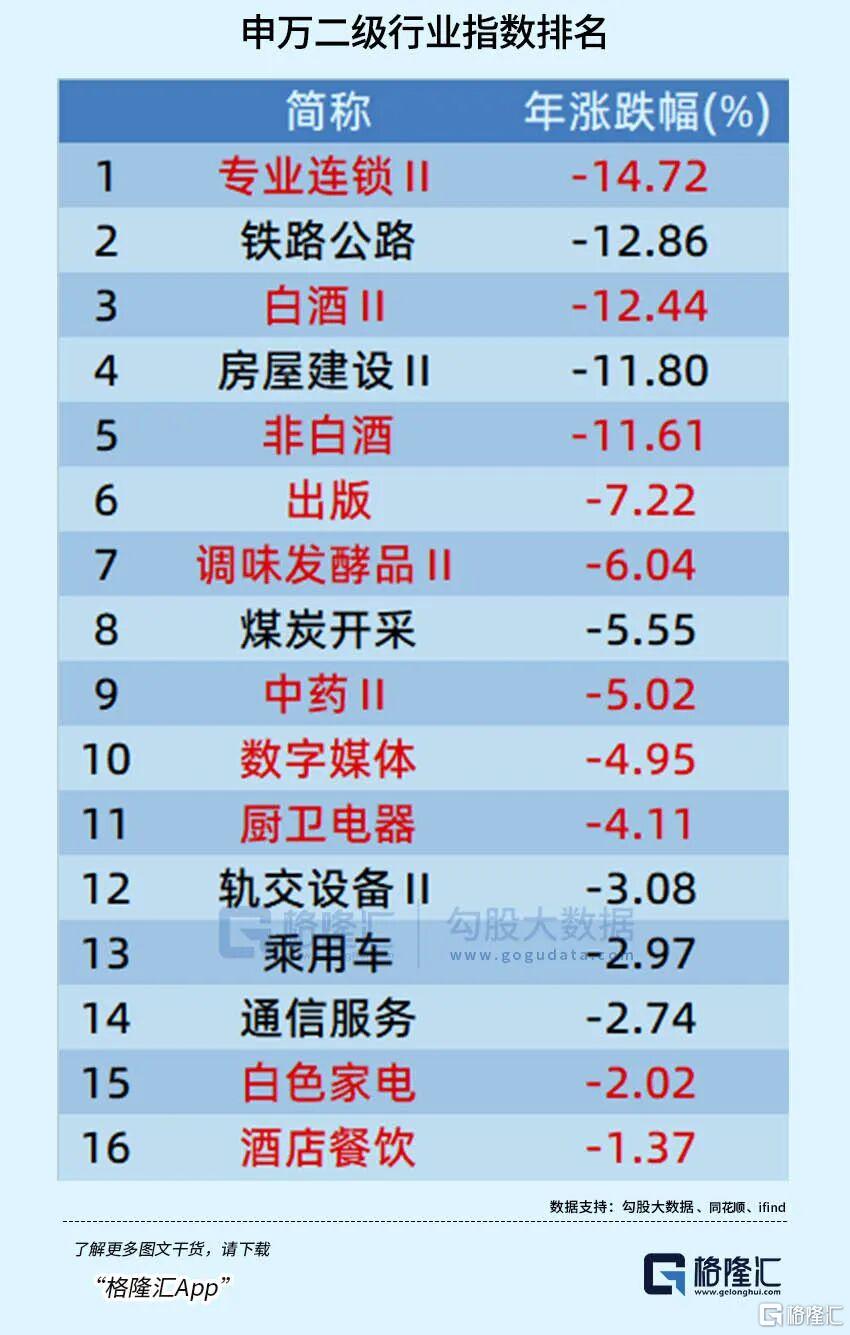
Core Viewpoint - The consumer sector has faced significant challenges in the past year, with many sub-sectors experiencing declines despite overall market growth. The focus on domestic demand and consumption has not translated into positive performance for many consumer-related industries [1][5]. Consumer Sector Performance - In the first half of the year, 10 out of 16 declining industries were from the consumer sector, indicating a broader trend of underperformance [1]. - The white liquor sector, a key component of the consumer market, has seen a year-to-date decline of 12.44%, with major brands like Wuliangye experiencing significant drops in revenue and profit [6][9]. - The professional chain sector has been particularly hard-hit, with a year-to-date decline of 14.72%, exemplified by the struggles of companies like Renrenle [16][20]. White Liquor Sector - The white liquor industry is facing its eighth consecutive year of production decline, with both volume and price dropping simultaneously [10]. - Wuliangye reported a 10.26% decline in revenue and a 13.72% drop in net profit for the first three quarters, marking its first negative growth in a decade [9]. - The industry is shifting from a growth-driven model to one focused on consumer choice, with a need for companies to adapt to changing consumer preferences [15]. Professional Chain Sector - The professional chain sector is experiencing a crisis, with many physical stores closing and traditional business models failing [16][20]. - Renrenle, once a leading private supermarket, has seen its market value plummet and is now facing delisting due to ongoing financial struggles [21][24]. - The shift towards online shopping and personalized consumer demands has further exacerbated the challenges faced by traditional retail chains [24][25]. Non-White Liquor Sector - The non-white liquor sector, including beer and wine, has also faced declines, with the beer segment seeing a notable drop in sales and profits [27][32]. - Budweiser APAC reported an 8.2% decline in domestic sales and a 24.4% drop in net profit, reflecting broader industry challenges [32][33]. - The market is witnessing a trend of cross-industry competition, with liquor companies diversifying into new beverage categories [34]. Publishing Sector - The publishing industry has shown resilience despite a 10.4% decline in the overall market for printed books, with listed companies managing to increase net profits by 14.65% [43][44]. - However, leading companies like Zhongwen Media are struggling, with significant revenue and profit declines due to changes in educational material procurement policies [45][48]. Seasoning Sector - The seasoning industry has faced a 6.04% decline, with companies like Qianhe Flavor struggling due to falling revenues and a loss of consumer trust [51][55]. - The industry is experiencing a shift in consumer preferences and increased competition, necessitating a reevaluation of business strategies [60]. Traditional Chinese Medicine Sector - The traditional Chinese medicine sector is facing challenges, with companies like Pian Zai Huang reporting significant declines in revenue and profit due to rising costs and regulatory pressures [61][66]. - The industry is undergoing a transformation as companies seek to innovate and diversify their product offerings [70]. Digital Media Sector - The digital media industry has seen a 4.95% decline, with companies like Mango TV reporting significant drops in revenue and profit due to changing consumer behaviors and market dynamics [71][74]. - The sector is grappling with the need to adapt to new content consumption trends while facing pressure from traditional advertising models [75]. Kitchen and Bathroom Appliances Sector - The kitchen and bathroom appliance sector has experienced a 4.11% decline, largely due to reduced demand from the real estate market [78][79]. - Companies like Boss Electric are facing revenue declines for the first time in years, highlighting the challenges of adapting to a changing market landscape [79][80]. White Goods Sector - The white goods sector has seen a 2.02% decline, with major players like Gree Electric facing significant revenue and profit pressures due to increased competition and market saturation [83][84]. - The industry is shifting towards a focus on product quality and brand strength as external stimuli diminish [88]. Hotel and Restaurant Sector - The hotel and restaurant sector has faced a 1.37% decline, with revenue pressures stemming from changing consumer spending habits and increased competition from online platforms [89][92]. - Companies are beginning to adopt more refined operational strategies to navigate the challenging market environment [96].




今年十大最惨板块,跌麻了
格隆汇APP· 2025-12-30 11:04
Core Viewpoint - The article discusses the significant downturn in various consumer sectors, particularly the liquor and retail industries, highlighting the challenges and potential opportunities for recovery amidst changing consumer behaviors and market dynamics [2][4][43]. Group 1: Liquor Industry - The liquor sector, especially the white liquor segment, has faced substantial declines, with the overall white liquor market down by 12.44% this year [9][15]. - Major brands like Wuliangye have reported significant drops in revenue and profit, with a 10.26% decline in revenue and a 13.72% drop in net profit for the first three quarters [17]. - The white liquor industry is experiencing a shift from a growth-driven model to one focused on consumer preferences, with a need for companies to adapt to changing consumption patterns [26][27]. Group 2: Retail Industry - The professional chain sector has seen a dramatic decline of 14.72%, with many traditional retail models struggling to survive [28][30]. - Companies like Renrenle have faced severe financial difficulties, leading to a significant reduction in store numbers and ultimately triggering delisting procedures [34][35]. - The shift towards online shopping and changing consumer preferences have forced traditional retailers to innovate or face extinction [36][39]. Group 3: Non-White Liquor Sector - The non-white liquor sector, including beer and wine, has also suffered, with a reported decline of 11.61% this year [40]. - Major players like Budweiser APAC have experienced significant sales drops, with a 9.5% revenue decrease and a 24.4% decline in net profit [46]. - The industry is witnessing a trend of cross-industry competition, with liquor companies diversifying into other beverage categories to adapt to market changes [51][56]. Group 4: Publishing Industry - The publishing sector has faced a 7.22% decline, with the overall market for printed books down by 10.40% [60]. - Despite the downturn, some publishing companies have managed to increase profits through cost control and operational efficiency, with a 14.65% rise in net profit for listed companies [61][62]. - The industry is undergoing significant transformation, moving from traditional sales models to more dynamic content management and IP development strategies [70][71]. Group 5: Seasoning Industry - The seasoning sector has seen a 6.04% decline, with companies like Qianhe Flavor struggling due to a drop in revenue and profit [74]. - The industry is facing challenges from both market saturation and changing consumer preferences, necessitating a shift in strategy for many companies [81]. Group 6: Traditional Chinese Medicine - The traditional Chinese medicine sector has experienced a 5.02% decline, with companies like Pian Zai Huang facing significant revenue and profit drops [86]. - The industry is under pressure from regulatory changes and increased competition, pushing companies to innovate and diversify their product offerings [91][92]. Group 7: Digital Media - The digital media sector has reported a 4.95% decline, with traditional advertising models struggling to adapt to new market realities [97][100]. - Companies like Mango TV have seen significant revenue drops, highlighting the challenges of maintaining profitability in a rapidly changing landscape [101][104]. Group 8: Kitchen and Bathroom Appliances - The kitchen and bathroom appliance sector has faced a 4.11% decline, with major players like Boss Electric experiencing revenue drops for the first time in years [112]. - The industry is grappling with reduced demand due to a slowdown in the real estate market, necessitating a shift towards innovation and international expansion [117][118]. Group 9: White Goods - The white goods sector has seen a 2.02% decline, with companies like Gree Electric facing significant challenges due to market saturation and increased competition [126][129]. - The industry is shifting towards a more rational consumer base that prioritizes product quality and brand reputation over traditional growth drivers [133]. Group 10: Hotel and Restaurant Industry - The hotel and restaurant sector has experienced a 1.37% decline, with many businesses struggling to convert increased tourism into profits [140][141]. - The industry is witnessing a shift towards more refined operational models, with companies focusing on member engagement and digital transformation to enhance profitability [142][143].



当AI开始理解烟火气,厨房或许会成为下一个超级入口
3 6 Ke· 2025-12-30 09:56
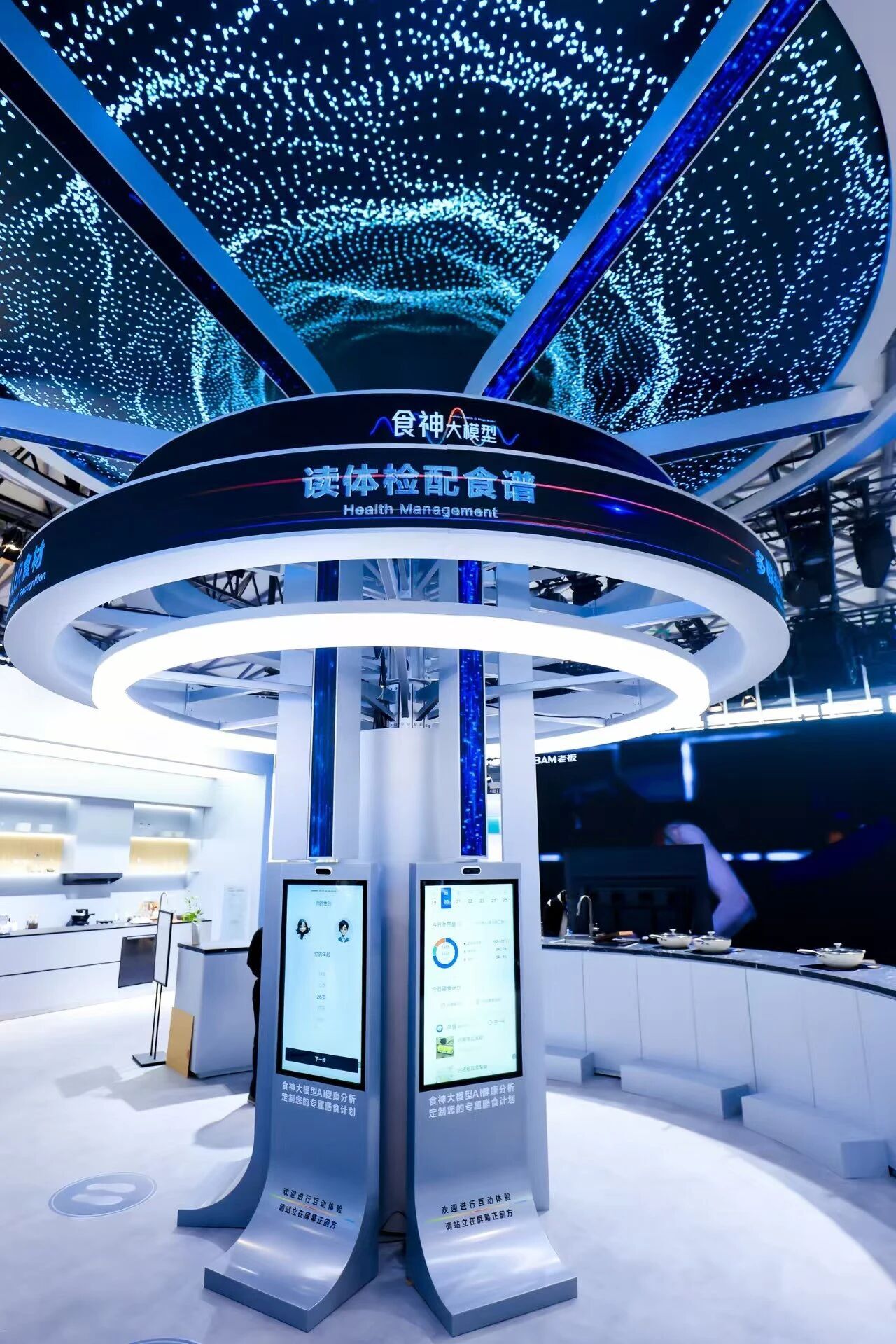
Core Insights - The rapid development of AI has led to a saturation point where the next growth phase must focus on embedding AI into real-life applications rather than just improving model capabilities [2][3] - Vertical scenarios, particularly in complex environments like kitchens, are emerging as new opportunities for AI integration, moving beyond simple functionalities to create sustainable value [3][4] Industry Trends - The kitchen is identified as a highly underappreciated space for AI application due to its complexity and the subjective nature of cooking [4][5] - The transition from AI as a tool to an intelligent partner in cooking is seen as a critical test for AI's integration into daily life [6][7] Company Developments - Boss Electric, with 46 years in the kitchen appliance industry, is pioneering the integration of AI into everyday cooking scenarios through its "Shishen" model, which aims to understand and enhance the cooking experience [7][10] - The "Shishen" model is designed to address decision-making in cooking, adapting to user preferences and real-time conditions, thus providing a more personalized cooking experience [9][11] Technological Advancements - The "Shishen" model incorporates advanced sensory capabilities, allowing it to perceive changes in ingredients and cooking processes, and adjust accordingly [11][12] - By the end of 2025, the model will enhance user interaction through features like AI photo analysis of ingredients and real-time voice dialogue, making it more user-friendly [14][16] Market Potential - The global AI kitchen appliance market is projected to grow from $3.763 billion in 2024 to $5.831 billion by 2031, indicating a strong consumer demand for AI-integrated cooking solutions [18] - A significant portion of consumers (76%) are willing to pay a premium for AI-enabled kitchen products, reflecting a shift towards higher quality living standards [27] Challenges in the Industry - There exists a disconnect between consumer expectations for intelligent kitchen appliances and the current market offerings, with many products still in the early stages of AI integration [28] - The industry faces challenges due to two prevalent approaches: "hardware-first" and "AI-first," both of which often fail to meet user needs effectively [29][30] Strategic Insights - Boss Electric's approach combines hardware, algorithms, and content to create a cohesive cooking experience, positioning itself uniquely in the market [30][31] - The company emphasizes the importance of understanding vertical scenarios, hardware engineering, and cultural content to successfully integrate AI into cooking [31][32] Cultural Impact - The integration of AI in cooking is not just about efficiency but also about reshaping relationships within families and communities, highlighting the emotional and cultural significance of cooking [18][22] - Initiatives like "National Cooking Day" and collaborations with platforms like Xiaohongshu aim to foster community engagement and emotional connections through cooking [21][19]

当AI开始理解烟火气,厨房或许会成为下一个超级入口
36氪· 2025-12-30 09:26
Core Insights - The article discusses the evolution of AI from a tool to a partner in the kitchen, emphasizing the need for AI to create real value in everyday life rather than just demonstrating capabilities [2][6] - The focus is shifting towards vertical applications of AI, particularly in complex environments like kitchens, which have been historically challenging for AI integration [3][5] Group 1: AI in the Kitchen - The kitchen is identified as a high-frequency, non-structured space that presents unique challenges for AI due to its complexity and the subjective nature of cooking [4][5] - The "Shishen" model by Boss Electric is highlighted as an AI cooking partner that learns user preferences and adapts cooking processes accordingly, moving beyond simple tool functionalities [12][13] - By 2025, the "Shishen" model will enhance user experience with features like AI photo analysis of ingredients and real-time voice interaction, making it more user-friendly [14] Group 2: Market Dynamics - The global AI kitchen appliance market is projected to grow from $3.763 billion in 2024 to $5.831 billion by 2031, indicating a strong demand for AI-integrated cooking solutions [18] - Despite the market's growth, there is a disconnect between consumer expectations for smart appliances and the current offerings, with 30% of AI appliances still in basic functionality stages [28][29] Group 3: Boss Electric's Strategy - Boss Electric's approach integrates hardware, algorithms, and content to create a comprehensive cooking experience, distinguishing it from competitors who focus on isolated functionalities [31] - The company has invested significantly in AI cooking technology, holding 9,448 patents, the highest in China related to AI cooking, establishing a strong technical barrier [16] Group 4: Cultural and Emotional Aspects - Cooking is framed as a cultural practice that fosters emotional connections, with AI's role extending beyond efficiency to enhancing relationships within families [18][22] - Initiatives like "National Cooking Day" and collaborations with Michelin chefs aim to democratize high-quality cooking experiences, making them accessible to everyday users [24][23] Group 5: Future Implications - The article posits that as AI becomes more integrated into daily cooking, it could transform kitchens into significant lifestyle hubs, reflecting broader societal changes [36]

家电行业2026年度投资策略:重视红利、拥抱出海、把握家电+转型机遇
HUAXI Securities· 2025-12-30 09:17
Core Insights - The report emphasizes the strong resilience of leading white goods companies, highlighting their high dividend yields, with Gree Electric at 7.3%, Midea Group at 5.1%, Hisense Home Appliances at 4.9%, and Haier Smart Home at 4.6% [6][22] - The "Home Appliance +" strategy indicates opportunities in extending the appliance industry into robotics, with companies like Midea Group and Fuhua Co. making significant advancements [6][58] - The export market shows potential, particularly in the U.S. real estate sector, with expectations of demand recovery due to anticipated interest rate cuts and housing stimulus policies [6][70] Section Summaries 2025 Home Appliance Review - The home appliance index has shown a modest increase of 7.7% year-to-date, underperforming the CSI 300 index by approximately 9.7 percentage points [11][14] - The market style in 2025 has favored growth stocks, while the home appliance sector has leaned towards value, leading to a mismatch in market expectations [13][14] - The public fund allocation in the home appliance sector is at a historical low of 2.94%, indicating potential for future growth as external demand remains optimistic [18][19] Dividends - Leading white goods companies maintain high dividend yields, with Gree Electric at 7.3%, Supor at 6.1%, and Midea Group at 5.1%, reflecting strong earnings resilience [24][29] - The report suggests that the dividend rates for companies like Midea and Haier may continue to increase, supported by robust profit growth [24][30] Domestic Sales - The national subsidy policy has positively impacted consumer confidence, with a clear trend towards structural upgrades in appliance consumption [34] - The sales growth of home appliances has been driven by the "trade-in" policy, although growth rates have shown a declining trend in the latter part of the year [34][39] - The air conditioning market has maintained stable pricing, with a continued trend towards mid-to-high-end products [39] "Home Appliance +" - Midea Group has made significant investments in robotics, with humanoid robots already in practical application within factories [58] - Fuhua Co. is expected to launch its grain storage robots in 2026, indicating a diversification into new growth areas [59] - Key component manufacturers like Huaxiang Co. and Hanyu Group are positioned to benefit from the robotics trend, focusing on core components such as reducers and harmonic drives [64][65] Exports - The U.S. real estate market is expected to recover, with potential interest rate cuts and housing stimulus policies likely to boost demand for home appliances [71][84] - Retail inventory levels in the U.S. are high, which may affect sales performance in the short term, but long-term housing demand remains strong [76][83] - The report anticipates that if mortgage rates fall below 6%, there could be a significant recovery in demand within the real estate chain [84]



厨卫电器板块12月30日跌0.52%,浙江美大领跌,主力资金净流入3639.41万元
Zheng Xing Xing Ye Ri Bao· 2025-12-30 09:00
Group 1 - The kitchen and bathroom appliance sector experienced a decline of 0.52% on December 30, with Zhejiang Meida leading the drop [1] - The Shanghai Composite Index closed at 3965.12, showing a slight decrease of 0.0%, while the Shenzhen Component Index rose by 0.49% to 13604.07 [1] - Key stocks in the kitchen and bathroom appliance sector showed varied performance, with notable declines in Zhejiang Meida (-3.03%) and Boss Electric (-1.18%) [1] Group 2 - The sector saw a net inflow of 36.39 million yuan from main funds, while retail investors experienced a net outflow of 28.32 million yuan [1] - Detailed fund flow data indicates that Boss Electric had a main fund net inflow of 22.99 million yuan, while Zhejiang Meida faced a net outflow of 9.18 million yuan from main funds [2] - Retail investors showed significant outflows across several stocks, with Boss Electric and Zhejiang Meida experiencing outflows of 9.61 million yuan and 15.00 million yuan, respectively [2]

老板电器2025:寻找扣动厨电行业“iPhone时刻”的扳机
Hua Er Jie Jian Wen· 2025-12-29 10:39
Core Insights - The kitchen appliance industry is at a pivotal moment, akin to the smartphone revolution initiated by the iPhone in 2007, but has yet to experience its own transformative breakthrough [1][2] - The current competition in the kitchen appliance market remains focused on hardware specifications rather than innovative applications of AI technology [2][16] - The complexity of cooking, especially in Chinese cuisine, presents significant challenges for AI integration, as it requires understanding individual preferences and experiences [4][5] Industry Trends - The kitchen appliance market in China saw a retail sales growth of 6.1% in the first half of 2025, driven by government subsidies, but faced a downturn during the "Double Eleven" shopping festival with significant declines in sales for various appliance categories [11][13] - A new wave of government policies aimed at boosting domestic consumption is expected to stabilize the kitchen appliance market in 2026, moving away from the fluctuations experienced in 2025 [15][18] Company Developments - Robam Appliances is attempting to redefine kitchen appliances by introducing the "Shishen" AI cooking model, which aims to transform traditional appliances into interactive partners rather than mere tools [6][19] - The "Shishen" model has been developed with a comprehensive knowledge base and has already seen significant user engagement, with over 600,000 users and a 30% increase in monthly active users in the third quarter [25][27] - Robam Appliances has established several research institutes to support ongoing AI development, positioning itself as a leader in the kitchen appliance sector [19][23] Consumer Engagement - The shift towards AI in kitchen appliances is changing the consumer experience from a one-time purchase to a long-term interactive relationship, enhancing user satisfaction and engagement [20][22] - The integration of AI allows for personalized cooking experiences, enabling users to recreate complex recipes and fostering a deeper emotional connection with cooking [20][30] - Robam's approach combines technology with cultural insights, aiming to redefine the kitchen as a space for creativity and emotional connection rather than just a functional area [31]