海康威视

Search documents
和讯投顾张婧:周末消息个个重磅,可能会逆转周一节奏
Sou Hu Cai Jing· 2025-09-27 14:54
Group 1 - The approval of Moer’s IPO is expected to reverse negative sentiment and lead to a recovery in the market, particularly benefiting the consecutive board stocks that have faced significant negative feedback recently [1] - Breakthroughs in domestic chip technology and reductions in semiconductor import plans are likely to boost the domestic semiconductor sector, presenting an opportunity for investment in this area [1] - The implementation of export license management for pure electric passenger vehicles in 2026 is seen as a positive development for leading new energy vehicle companies, with expectations for strong performance from major players like BYD [2] Group 2 - The upcoming cultural tourism consumption month, featuring 29,000 events and 4.8 trillion yuan in subsidies, is anticipated to support the recovery of the tourism and consumer sectors, particularly benefiting companies like Caesar [2] - Increased expectations for a Federal Reserve interest rate cut in October may provide opportunities for small investors, especially in the precious metals sector, during the upcoming holiday period [3] - The recent statements from the central bank indicate a supportive stance towards market stability and potential monetary easing, which may lead to a positive market response despite some mixed signals [3]
摩尔线程IPO上会!阿里推出全新超节点、基础大模型!:——计算机行业周报20250922-20250926-20250927
Shenwan Hongyuan Securities· 2025-09-27 13:14
Investment Rating - The report indicates a positive outlook for the computer industry, suggesting an "Overweight" rating, indicating that the industry is expected to outperform the overall market [2][56]. Core Insights - The report highlights significant advancements in the computer industry, particularly with the progress of domestic AI chip companies like Moer Thread, which is moving towards large-scale commercialization [3][4]. - Alibaba's launch of the new "Panjun 128" ultra-node AI server is noted as a paradigm shift in domestic ultra-node products, showcasing high density and performance [23][34]. - The report emphasizes the rapid growth of AI model capabilities, particularly with Alibaba's Qwen-3-Max model, which has shown substantial performance improvements over competitors [34][49]. Summary by Sections Moer Thread - Moer Thread has updated its IPO status to "passed," with its products focusing on full-function GPU architectures that cater to AI computing, professional graphics acceleration, and desktop graphics [3][4]. - The company has a strong founding team with backgrounds in leading tech firms, enhancing its credibility and potential for innovation [4][5]. - The product matrix includes AI computing products, professional graphics acceleration, desktop graphics, and intelligent SoC products, addressing diverse market needs [5][9]. Alibaba's Innovations - Alibaba's "Panjun 128" ultra-node AI server features a unique architecture that enhances interconnect efficiency and reduces deployment difficulties for domestic AI chips [23][25]. - The server can accommodate 128 AI chips, making it the highest density product in its category, which is expected to set a new standard for ultra-node products [23][34]. - The report also discusses the launch of new AI models by Alibaba, including Qwen-3-Max, which has significantly improved performance metrics compared to previous models and competitors [34][35]. Market Opportunities - The report identifies several key investment targets within the AI and digital economy sectors, including companies like Kingsoft Office, Hikvision, and others that are positioned to benefit from the growth in AI applications and computing power [3][50]. - The focus on AI-driven applications and the digital economy is expected to drive substantial growth in the sector, with a notable emphasis on companies that are leading in AI model development and computing capabilities [50][51].

计算机行业周报 20250922-20250926:摩尔线程IPO上会!阿里推出全新超节点、基础大模型-20250927
Shenwan Hongyuan Securities· 2025-09-27 13:03
Investment Rating - The report rates the industry as "Positive" (Overweight) indicating an expectation for the industry to outperform the overall market [6]. Core Insights - The report highlights significant developments in the computer industry, particularly focusing on the progress of Moore Threads' IPO and the launch of Alibaba's new AI server, the Pangu 128 Super Node, which showcases advancements in architecture and performance [5][26]. - Moore Threads is positioned to benefit from a surge in demand for AI computing clusters, with its self-developed MUSA architecture compatible with major AI frameworks, enhancing its market competitiveness [12][13]. - Alibaba's Pangu 128 Super Node is noted for its innovative design, which improves interconnect efficiency and reduces deployment challenges for domestic AI chips [26][36]. Summary by Sections Moore Threads - Moore Threads, established in 2020, focuses on developing full-featured GPU chips and has launched four generations of GPU architectures, covering AI computing, cloud computing, and personal computing [7][8]. - The company has a strong founding team with backgrounds in leading tech firms, enhancing its capability in the GPU market [7]. - The report emphasizes the company's competitive edge in cluster performance, with its AI computing products expected to see significant sales growth due to rising demand [25][23]. Alibaba's Pangu 128 Super Node - The Pangu 128 Super Node, launched at the Cloud Habitat Conference, is designed to support 128 AI chips, making it the highest density product in its category [26]. - Its innovative architecture eliminates the middle backplane, enhancing performance and adaptability for various GPU configurations [36][37]. - The report anticipates that this product will set a new standard for domestic super nodes, facilitating easier deployment of domestic AI chips [37]. AI Model Developments - Alibaba has released several new AI models, including Qwen-3-Max and the open-source DeepResearch model, which are expected to enhance monetization opportunities [38][47]. - The Qwen-3-Max model has shown significant performance improvements over its predecessors, indicating a strong competitive position in the AI model market [39][40]. - The report suggests that the advancements in these models will contribute to the broader monetization of AI applications within Alibaba's ecosystem [47].
每经智库、城市进化论在数贸会上发布《城市低空经济“链接力”指数(浙江2025)》
Mei Ri Jing Ji Xin Wen· 2025-09-27 10:00
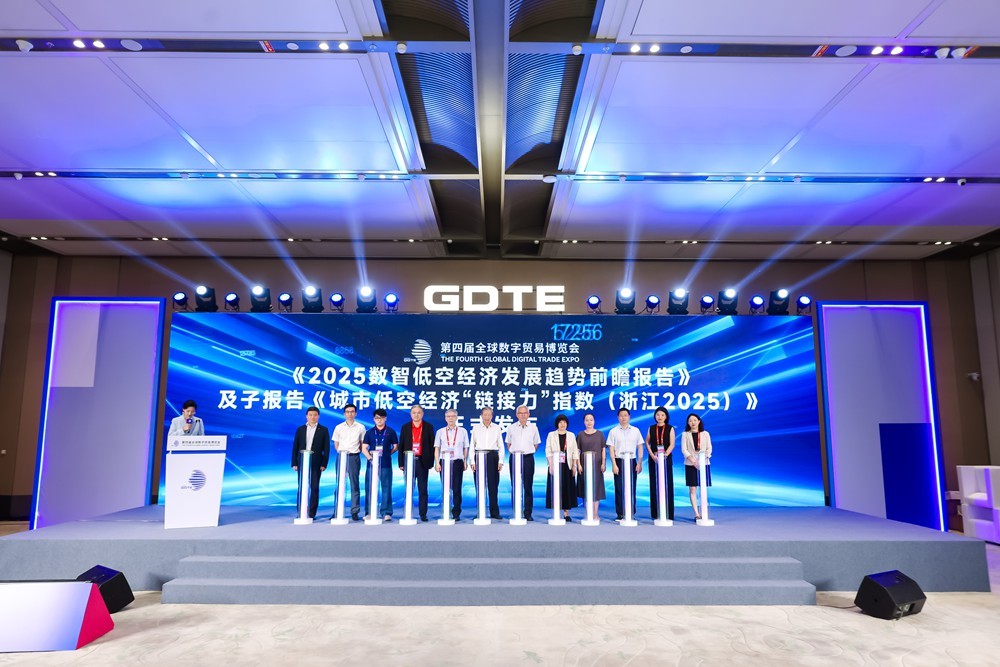
每经记者|刘艳美 每经编辑|杨欢 这几天,一场科技盛宴正在杭州上演。 9月25日起,为期五天的第四届全球数字贸易博览会(以下简称"数贸会")正式拉开帷幕。 作为我国唯一以数字贸易为主题的国家级、国际性、专业型展会,本届数贸会的一大亮点,就是围绕数字贸易核心优势,不仅注重改造提升传统产业,也注 重培育壮大新兴产业,布局建设未来产业。 在15.5万平方米的展会现场,超1800家参展商携前沿技术、创新产品和重磅首秀亮相。其中,低空经济作为新质生产力的典型代表和战略性新兴产业,在此 次数贸会上备受关注。 9月27日,第四届数贸会"低空经济新兴技术与产业发展对接会"举行。会上,由每日经济新闻·每经智库、城市进化论与火石创造联合编写的《城市低空经 济"链接力"指数(浙江2025)》报告正式发布。 报告从企业聚集度、创新聚集度、资本活跃度、环境友好度和AI低空融合度等五大维度,对浙江各市低空经济发展水平进行了系统性评估,为城市找准"坐 标"、协同发展提供参照。 在对接会圆桌对话环节,每经智库总裁、城市进化论主编江然还与德国不来梅州经济促进局亚洲部部长Matthias Hempen,浙科投资董事长、浙江省创业投 资协会副会长 ...

机器人AI视觉重构产业制造逻辑 中国凭什么能够领跑全球?
机器人大讲堂· 2025-09-27 04:15
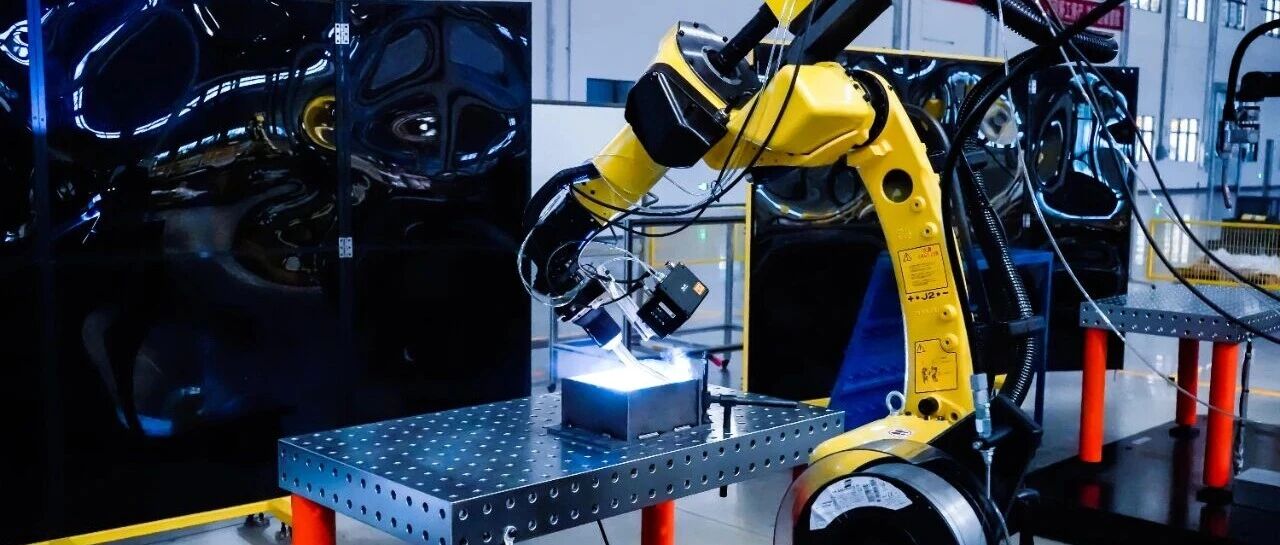
Core Insights - The article emphasizes the growing importance of AI vision technology in the industrial robotics sector, driven by the demand for high precision and efficiency in manufacturing processes [1][2][7]. Market Overview - The global machine vision market is projected to reach 95.754 billion yuan by 2025, with China's market expected to reach 29.042 billion yuan. By 2032, the global market is forecasted to grow to 164.07 billion yuan, reflecting a compound annual growth rate (CAGR) of 8.0% from 2025 to 2032 [1]. Precision in Manufacturing - AI vision technology is crucial for achieving micron-level precision in industries such as automotive manufacturing, where the detection of defects has shifted from millimeter to micron levels. For instance, a welding deviation of just 0.01 millimeters can lead to significant safety hazards in battery production [2][4]. Efficiency in Logistics - The logistics and warehousing sector is rapidly transitioning to "unmanned and clustered" operations, with AI vision technology enhancing sorting efficiency. AI-powered sorting robots can process over 3,000 items per hour with an error rate below 0.05%, compared to human workers who sort about 2,000 items daily with a 1.5% error rate [6][7]. Competitive Landscape - China is emerging as a leader in the global AI vision industry, with its machine vision system market expected to reach 73.164 billion yuan (approximately 10.2 billion USD) by 2025, accounting for over 24% of the global market share [7][15]. Technological Advancements - Traditional machine vision systems face limitations due to insufficient algorithm precision and hardware response delays. Recent advancements in AI algorithms and hardware integration are overcoming these challenges, enabling real-time detection and decision-making capabilities [8][10]. Full-Process Empowerment - AI vision technology is evolving from mere defect detection to full-process empowerment in manufacturing. This transformation enhances efficiency and product quality by integrating perception, decision-making, and execution capabilities [13][14]. Policy and Ecosystem Support - The rapid development of China's AI vision industry is supported by government policies and a robust industrial ecosystem. Initiatives like the "14th Five-Year Plan for Intelligent Manufacturing" aim to digitize and network a significant portion of the manufacturing sector by 2025 [15][16][18]. Future Trends - The future of AI vision technology in robotics is expected to focus on multi-modal data integration, enhanced edge intelligence, and collaborative ecosystems that facilitate interoperability among different manufacturers' systems [19].


人工智能产业“十四五”复盘与“十五五”展望:“两个变局”下的AI要素化跃
Sou Hu Cai Jing· 2025-09-26 17:47
Core Insights - The report focuses on the development and trends of the AI industry during China's 14th Five-Year Plan (2021-2025) and the outlook for the 15th Five-Year Plan (2026-2030), highlighting significant changes and advancements in technology, industry ecology, policy support, and application expansion [2][8]. Group 1: 14th Five-Year Plan Review - The AI industry has undergone five major qualitative changes, establishing a foundation for "factorization" [9]. - Technological transformation is marked by the dominance of the Transformer architecture, which has unified AIGC (AI-Generated Content) and completed the "engine convergence" [12][19]. - The computing power landscape has shifted, with domestic AI chips closing the efficiency gap with international counterparts, and the evolution from general IDC (Internet Data Center) to AIDC (AI Data Center) [25][26]. - Data has transitioned from governmental sharing to being recognized as a fiscal element, with mechanisms for asset inclusion and revenue sharing being established [33][34]. - Market dynamics have changed, with the end of the visual dividend leading to a downward shift in both supply and payment curves, allowing for a revaluation of AI [10][12]. Group 2: 15th Five-Year Plan Outlook - The AI factorization leap will be characterized by "price discovery, scale trading, and cross-border output," with Agents as the core vehicle [9]. - The product dimension will see a shift from passive execution to autonomous collaboration, with revenue models evolving from token-based to profit-sharing [9][10]. - The supply side will benefit from a complete domestic ecosystem, enabling the definition of "Agent instruction sets" and achieving pricing power [9][10]. - Demand will expand into global southern markets, with significant population potential and a projected compound annual growth rate of 9.2% for the digital economy [9][10]. - Five key application scenarios are expected to see iterative expansion, transitioning from project-based to subscription-based consumption [9][10]. Group 3: Investment Recommendations - Investment opportunities are identified in four main areas: computing power infrastructure, AI Agents and MaaS (Model as a Service) providers, intelligent terminals and embodied intelligent robots, and AI applications in green and low-carbon initiatives [9][10].

把握布局窗口:——2025年10月A股及港股月度金股组合-20250926
EBSCN· 2025-09-26 10:33
Market Overview - In September, both A-shares and Hong Kong stocks continued to rise, with the ChiNext Index showing the largest increase of 12.0%, while the Shanghai Composite Index experienced a decline of 0.8% [1][8]. - The Hong Kong market also saw an upward trend, with the Hang Seng Technology Index rising by 12.4% and the Hang Seng Index increasing by 5.6% as of September 25, 2025 [1][11]. A-share Insights - The market is expected to continue its upward trend post-National Day, supported by stable economic fundamentals and reasonable market valuations, with the Shanghai Composite Index's PE-TTM at 16.5 times [2][14]. - The TMT (Technology, Media, and Telecommunications) sector is recommended as a key focus area, driven by liquidity and various catalysts such as advancements in AI and the commencement of the Federal Reserve's rate-cutting cycle [2][16][17]. Hong Kong Stock Insights - The Hong Kong market is anticipated to continue its upward trajectory, supported by strong overall profitability and relatively low valuations, particularly in sectors like technology and new consumption [3][18]. - A "barbell" investment strategy is suggested, focusing on sectors benefiting from domestic policies in the context of US-China relations, as well as high-dividend, low-volatility stocks in telecommunications, utilities, and banking [3][18]. Stock Recommendations - For October 2025, the recommended A-share stocks include SMIC, Cambricon, Hikvision, Aolai Technology, Huayou Cobalt, Sany Heavy Industry, Haier Smart Home, China Merchants Bank, China Merchants Shekou, and Shanghai Lingang [3][20]. - The recommended Hong Kong stocks for October 2025 include Alibaba, Baidu, SMIC, Hua Hong Semiconductor, and Xindong Company [3][24].


数字经济ETF(560800)调整蓄势,机构:半导体产业链正面临结构性机遇
Sou Hu Cai Jing· 2025-09-26 06:38
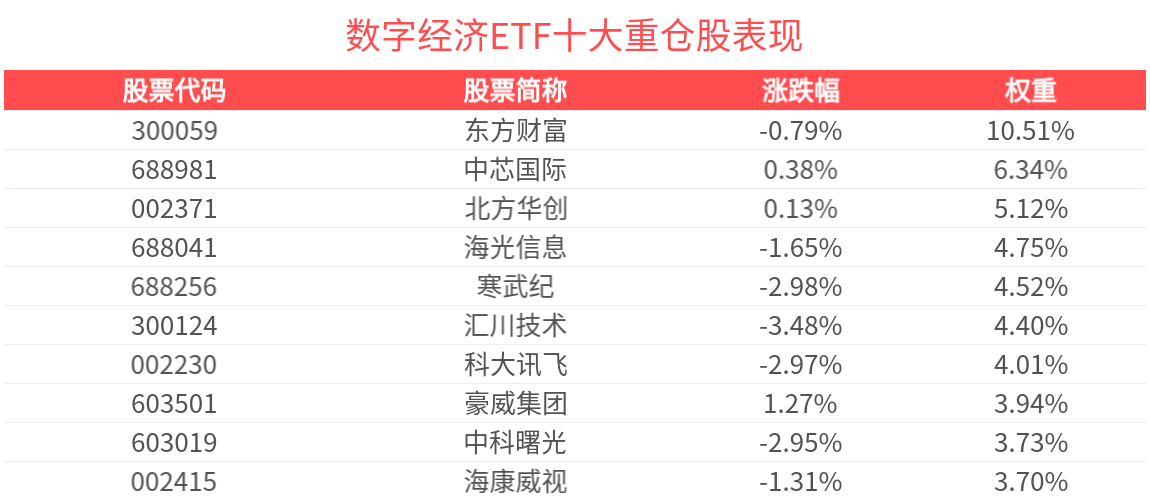
Group 1 - The core viewpoint of the articles highlights the ongoing structural opportunities in the semiconductor industry, particularly in China's wafer fabrication sector, which is expected to increase its global market share from 10% to 30%, indicating a potential threefold capacity expansion [1][2] - The semiconductor equipment sector has entered a main upward trend since 2025, with Q2 2025 revenues growing by 29% year-on-year to 22.4 billion yuan, and net profit increasing by 14% to 3.86 billion yuan, reflecting sustained industry growth [2] - The China Digital Economy Theme Index (931582) has seen a decline of 1.44% as of September 26, 2025, with notable performers including Jinghe Integrated (688249) rising by 19% and Unisoc (002049) increasing by 5.87% [1] Group 2 - The top ten weighted stocks in the China Digital Economy Theme Index account for 53.36% of the index, with notable companies including Dongfang Caifu (300059) and Zhongxin International (688981) [2][4] - The digital economy ETF (560800) closely tracks the China Digital Economy Theme Index, which includes companies involved in digital economy infrastructure and high digitalization applications [2] - The liquidity of the digital economy ETF shows a turnover rate of 2.61% with a trading volume of 18.65 million yuan, and an average daily trading volume of 35.92 million yuan over the past month [1]



AI大模型可媲美人类专家,AI人工智能ETF(512930)今日回调蓄势
Xin Lang Cai Jing· 2025-09-26 02:24
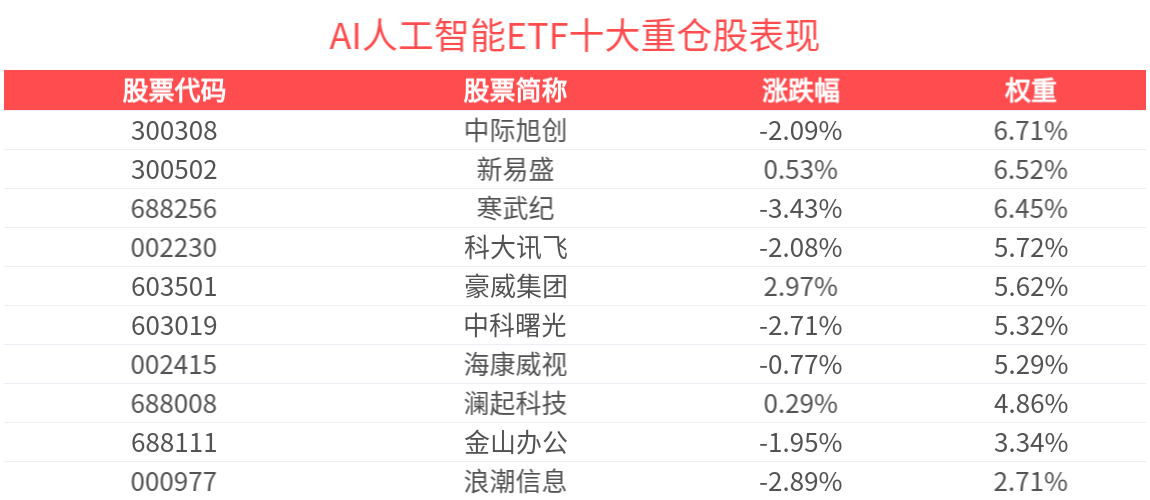
Group 1 - OpenAI released a new benchmark test indicating that its GPT-5 model and Anthropic's Claude Opus 4.1 are approaching the work quality of industry experts [1] - As of September 26, 2025, the CSI Artificial Intelligence Theme Index (930713) decreased by 1.58%, with mixed performance among constituent stocks [1] - The AI Artificial Intelligence ETF (512930) fell by 1.65%, with the latest price at 2.2 yuan, and it has the lowest management fee of 0.15% among comparable funds [1] Group 2 - As of August 29, 2025, the top ten weighted stocks in the CSI Artificial Intelligence Theme Index accounted for 60.82% of the index [2] - The top ten stocks include Xinyi Sheng (300502), Zhongji Xuchuang (300308), and Hanwujing (688256), among others [2][4] - The performance of individual stocks within the top ten shows varied results, with some stocks like Haowei Group (603501) increasing by 2.97%, while others like Hanwujing (688256) decreased by 3.43% [4]
2020丨隐秘的通途:字节、华为如何游说华盛顿
晚点LatePost· 2025-09-26 00:35
Core Viewpoint - The article discusses the ongoing efforts by ByteDance, the parent company of TikTok, to lobby against a potential ban on the app in the United States, highlighting the political and regulatory challenges it faces amid rising scrutiny from the U.S. government [4][5][37]. Group 1: TikTok's Regulatory Challenges - The Trump campaign launched ads calling for the ban of TikTok, citing privacy concerns and national security threats, with a total ad spend of $3,400 on July 17, 2020 [4][5]. - TikTok has faced investigations from the U.S. government, including a $5.7 million fine from the FTC in 2019 for collecting children's personal information without parental consent [5]. - The U.S. government is considering a ban on TikTok, with discussions led by key officials including Secretary of State Mike Pompeo and White House Chief of Staff Mark Meadows [5][37]. Group 2: Lobbying Efforts by ByteDance - ByteDance has employed K&L Gates, a major lobbying firm, to influence U.S. government decisions, with a team of 150 focused on corporate advocacy [7][8]. - Since 2019, ByteDance has hired five lobbying firms and 27 lobbyists, reflecting a broader trend of Chinese tech companies engaging in lobbying efforts in Washington [8][17]. - The lobbying landscape includes former government officials who leverage their connections to advocate for their clients, with many lobbyists having prior experience in Congress [10][11]. Group 3: The Role of Lobbying in U.S.-China Relations - The article notes that Chinese tech companies have significantly increased their lobbying expenditures in the U.S., with a 162% increase in 2018 and a 71% increase in 2019 compared to previous years [17]. - The lobbying industry in the U.S. has remained stable, generating approximately $3.2 to $3.5 billion annually, but Chinese companies represent a rapidly growing segment [17]. - The article highlights the unique challenges faced by Chinese companies in navigating the U.S. political landscape, particularly in light of heightened scrutiny and regulatory barriers [27][39]. Group 4: TikTok's Operational Adjustments - TikTok has made efforts to localize its operations in the U.S., including moving user data to local data centers and establishing a U.S.-based content advisory board [36]. - The company has appointed a U.S. CEO and expanded its workforce in the U.S. to demonstrate its commitment to operating independently from its Chinese parent company [36][37]. - Despite these efforts, skepticism remains regarding TikTok's independence, with U.S. officials questioning the effectiveness of its operational changes [37][38].