
吉利汽车

Search documents
博俊科技:一体化压铸主要客户有理想汽车等主机厂
Zheng Quan Ri Bao Wang· 2026-01-20 13:52
Group 1 - The core viewpoint of the article highlights that Bojun Technology (300926) has established significant partnerships with major automotive manufacturers for its integrated die-casting products [1] - Key customers mentioned include Li Auto, Geely, Zeekr, Seres (601127), BYD (002594), Leap Motor, and BAIC New Energy (Xiangjie) [1] Group 2 - The company is actively engaging with various leading automotive brands, indicating a strong market presence in the automotive sector [1] - The partnerships with these manufacturers suggest potential growth opportunities for Bojun Technology in the integrated die-casting market [1]


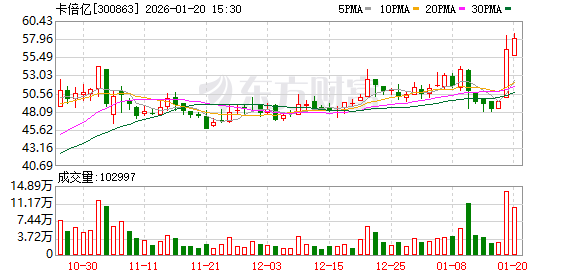
卡倍亿:产品可以满足800伏、1000伏等高压平台的需求
Zheng Quan Ri Bao· 2026-01-20 13:17
Core Viewpoint - The company, 卡倍亿, specializes in the production of various types of cables, including data cables, new energy cables, and general cables, which meet the demands of high-voltage platforms such as 800 volts and 1000 volts [2] Group 1: Company Products - The company primarily manufactures data cables, new energy cables, and general cables [2] - The products are designed to meet the requirements of high-voltage platforms, specifically 800 volts and 1000 volts [2] Group 2: Clientele - In recent years, the company has supplied its products to major domestic new energy vehicle brands, including 比亚迪 (BYD), 小米 (Xiaomi), 吉利 (Geely), 理想 (Li Auto), 蔚来 (NIO), 问界 (Wenjie), and 享界 (Xiaojie) [2]


智能驾驶2026年春季投资策略报告:AI的重要应用,智驾的质变时刻-20260120
GUOTAI HAITONG SECURITIES· 2026-01-20 12:38
Group 1 - The core viewpoint of the report suggests that AI large models are expected to lead a valuation reshaping in the automotive industry, particularly in the context of autonomous driving and subscription services [2] - The report highlights the projected growth in various segments such as traditional vehicle sales, subscription services, and Robotaxi, with significant increases expected by 2035 [8][9] - It emphasizes the importance of advanced AI models in enhancing user acceptance of autonomous driving and subscription software, potentially transforming the automotive sales model from low-frequency to high-frequency consumption [48] Group 2 - The report indicates that the penetration rate of Robotaxi in the ride-hailing market is a critical metric, with a focus on revenue and cost factors such as vehicle costs and operational efficiency [42] - It outlines the competitive landscape, noting that leading companies like Tesla and SAIC Group are expected to dominate the Robotaxi market, with significant projected sales and profits by 2025 [46] - The report identifies investment opportunities in the supply chain, particularly in components related to L3 and above autonomous driving, highlighting the potential for domestic alternatives in high-barrier products [48]
卡倍亿:在新能源汽车领域,公司已进入比亚迪等整车厂商的供应链
Zheng Quan Ri Bao· 2026-01-20 12:16
Group 1 - The company, Kabeiyi, has entered the supply chains of major electric vehicle manufacturers including BYD, Tesla, Geely, NIO, Li Auto, Xpeng, and Xiaomi in the new energy vehicle sector [2]


埃泰克上交所IPO通过上市委会议 客户包括奇瑞汽车、长安汽车等
智通财经网· 2026-01-20 11:37
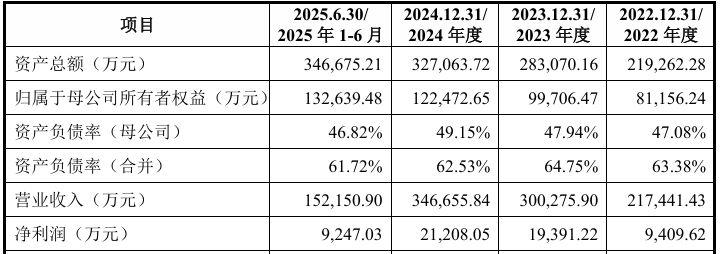
Core Viewpoint - Aitek, a leading automotive electronics solution provider, is set to raise 1.5 billion RMB through its IPO on the Shanghai Stock Exchange, with a focus on various automotive electronic domains including body control, intelligent cockpit, power, and intelligent driving [1]. Group 1: Company Overview - Aitek specializes in the research, production, and sales of automotive electronic products, providing EMS and technical development services [1]. - The company has developed a complete business system from product design to mass production, accumulating extensive experience in automotive electronics [1]. - Aitek has established a diverse customer base, including major domestic automakers like Chery, Changan, Great Wall, SAIC, Geely, BAIC, and Dongfeng, as well as new energy vehicle manufacturers such as Li Auto, Xpeng, and Leap Motor [1]. Group 2: Market Position - Aitek has successfully broken the monopoly of international automotive electronics giants like Bosch, Denso, and Continental in key technologies and markets [2]. - In 2024, Aitek holds a 25.50% market share in the pre-installed body control units for domestic passenger cars, ranking first for three consecutive years [2]. - The company also ranks first with a 13.83% market share in pre-installed remote physical keys and third with a 6.41% market share in cockpit domain and display assembly for domestic passenger cars [2]. Group 3: Financial Performance - Aitek's revenue for the years 2022, 2023, and 2024 is projected to be approximately 2.174 billion RMB, 3.003 billion RMB, and 3.467 billion RMB respectively, with a net profit of around 94.10 million RMB, 194 million RMB, and 212 million RMB for the same years [3]. - As of June 30, 2025, the total assets are estimated at 3.467 billion RMB, with equity attributable to shareholders at 1.326 billion RMB [3]. - The company's asset-liability ratio is projected to be 46.82% for the first half of 2025, showing a slight decrease from previous years [3].

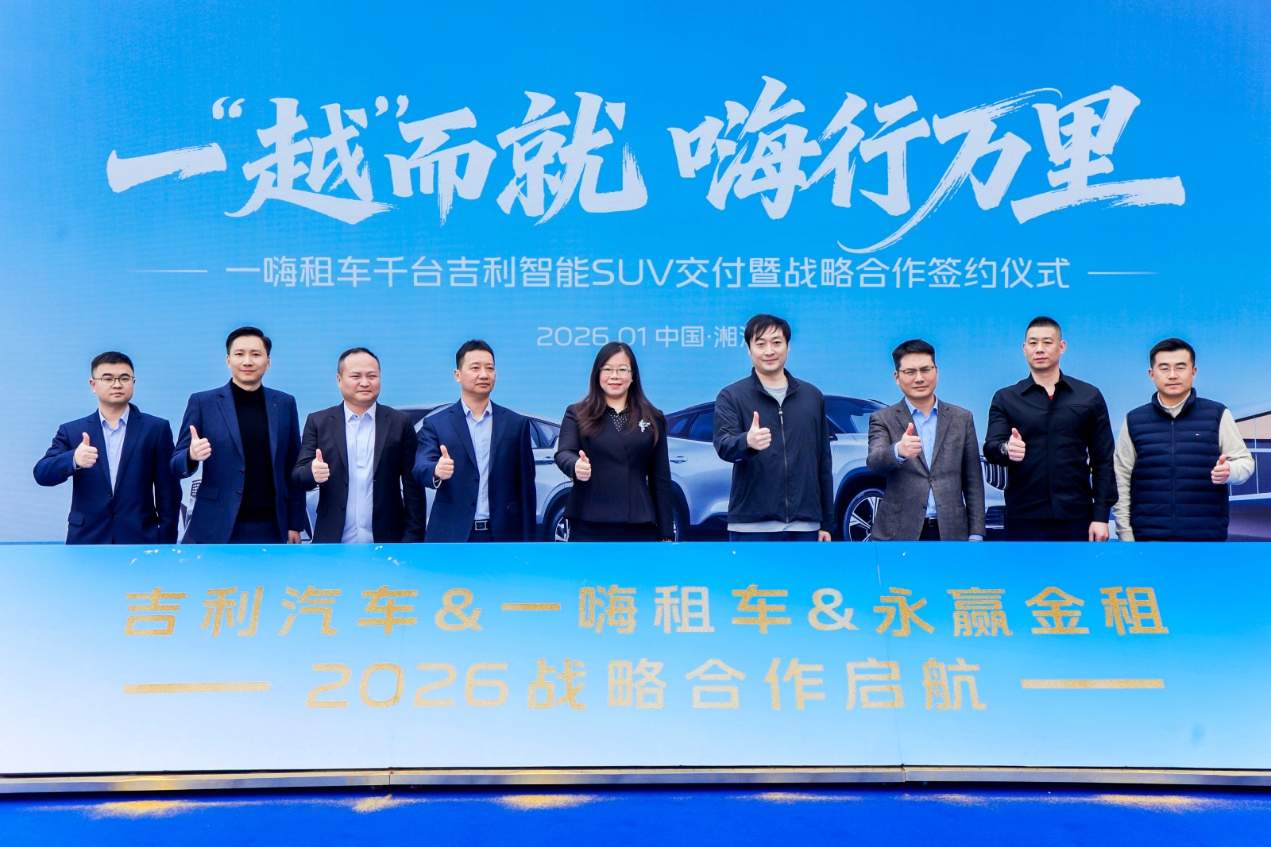
一嗨接收千台吉利新车 三方协同打通“产融运”全产业链生态闭环
Yang Shi Wang· 2026-01-20 11:00
Core Insights - The delivery of 1,000 vehicles marks a deepening collaboration among Ehi Car Services, Geely Automobile, and Yongying Financial Leasing, expanding from traditional vehicle procurement to a comprehensive industry chain collaboration that includes automotive manufacturing, financial services, and mobility operations [2][3] Group 1: Collaboration and Industry Synergy - The partnership leverages Geely's product support, Yongying's flexible financial solutions, and Ehi's nationwide operational network to enhance vehicle operation and market services, creating a high-efficiency closed-loop industry ecosystem [3] - This collaboration signifies a transition from single vehicle procurement to a full-chain deep collaboration encompassing "technology + finance + scenarios" [3] Group 2: Market Demand and Vehicle Features - Ehi Car Services' introduction of Geely models reflects a deep market insight focused on user needs, particularly in response to the higher demands for space, safety, and intelligence during the Spring Festival travel season [5] - The selected SUV models offer spacious interiors, rich intelligent configurations, and efficient energy-saving advantages, catering to diverse travel needs such as family outings and home visits [5] Group 3: Sustainability and Green Mobility - The collaboration aligns with industry trends towards green travel and sustainable development, with plans to prioritize the deployment of new vehicles in tourist hotspots and hub areas [5] - The enhanced intelligence and environmental performance of the delivered vehicles will be integrated into Ehi's service network covering over 500 cities nationwide, transforming into actual mobility services [5]
汽车行业月报:乘商协同引领行业向上,2025年汽车产销续写新高
Zhongyuan Securities· 2026-01-20 10:25
Investment Rating - The report maintains an investment rating of "Outperform the Market" for the automotive industry [5] Core Insights - The automotive industry in China is expected to achieve record production and sales in 2025, driven by policies encouraging vehicle trade-ins and the release of new models [5] - The passenger vehicle market is experiencing steady growth, with production and sales surpassing 30 million units in 2025, and domestic brands capturing nearly 70% of the market share [5] - The commercial vehicle market is recovering, with production and sales exceeding 4 million units, particularly in the new energy heavy truck segment, which has seen significant growth [5] - New energy vehicles (NEVs) are rapidly increasing in production and sales, achieving a market share of 47.9% in 2025, with domestic sales surpassing 50% [5] - The report highlights two main investment themes: the acceleration of L3 autonomous driving technology and the transition of automotive technology towards robotics and liquid cooling systems [5] Industry Performance Review - As of January 20, 2026, the automotive (CITIC) industry index rose by 4.07%, outperforming the Shanghai Composite Index by 2.15 percentage points [10] - Over 75% of automotive stocks increased in value during the same period, with notable performers including Jiaoyun Co., Saifu Technology, and Siliang Zhichui [16] - The automotive sector's PE (TTM) ratio stands at 34.4 times, placing it in the 46th percentile over the past five years [19] Key Data Tracking - In 2025, the total production and sales of automobiles reached 34.53 million and 34.40 million units, respectively, marking year-on-year increases of 10.4% and 9.4% [27] - The passenger vehicle segment produced and sold 30.27 million and 30.10 million units, reflecting growth rates of 10.2% and 9.2% year-on-year [41] - The commercial vehicle sector saw production and sales of 4.26 million and 4.30 million units, with year-on-year growth of 12% and 10.9% [56] - NEVs achieved production and sales of 16.63 million and 16.49 million units, with year-on-year growth of 29% and 28.2% [67] Important Industry Company News - The Ministry of Industry and Information Technology, along with other departments, held a meeting to discuss the competitive order in the NEV industry, emphasizing the need for fair competition and quality [87] - The Ministry of Commerce reported that over 1.15 million vehicles were traded in under the vehicle replacement program in 2025, contributing significantly to consumer spending [88] - Geely Auto received a license for L3 autonomous driving road tests, marking a significant step in the commercialization of advanced driving technologies [88]
“国民神车”连续两个月 0 销量之后,搞了个骚操作
3 6 Ke· 2026-01-20 10:20
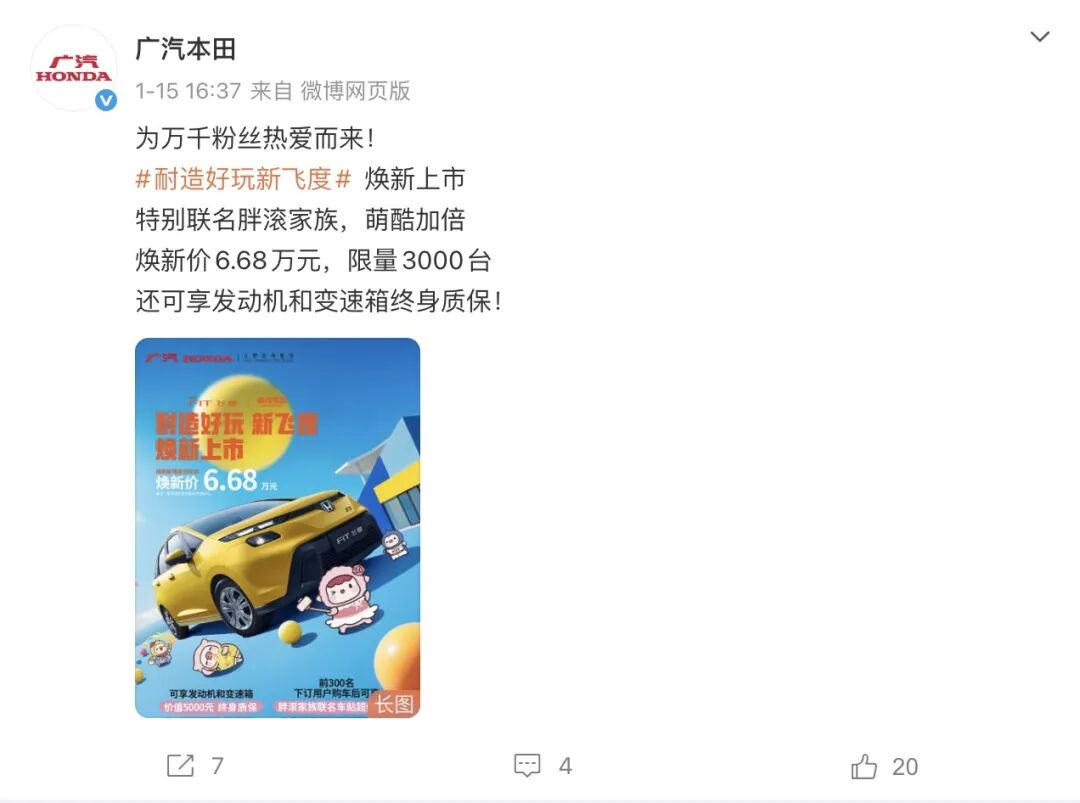
Core Viewpoint - The Honda Fit, once a popular model, is now facing a dramatic decline in sales, with a recent announcement of a limited release of 3,000 units amidst a backdrop of zero monthly sales for the past two months, highlighting the challenges traditional fuel vehicles face against the rise of electric vehicles [1][3][22]. Group 1: Sales Performance - The Honda Fit's sales plummeted to just 3 units in October last year, and it recorded zero sales in November and December, culminating in a total of only 2,695 units sold for the entire year [3][19]. - In stark contrast, the peak sales year of 2018 saw the Fit sell 129,000 units, indicating a 98% decline in sales over seven years [19][21]. Group 2: Market Position and Competition - The emergence of electric vehicles has significantly eroded the competitive advantages that the Fit once held, such as space and fuel efficiency, making it less appealing compared to newer models from domestic manufacturers [6][13][21]. - Domestic fuel vehicles are now offering better space, power, and features at similar price points, further diminishing the Fit's market relevance [21][22]. Group 3: Strategic Decisions - The decision to limit production to 3,000 units is seen as a strategy to control capacity and avoid excess inventory, allowing Honda to allocate resources to more profitable models [22][25]. - This limited release also serves to target a niche market of loyal customers who value the brand's heritage and performance, rather than appealing to the broader market that has shifted towards electric vehicles [26][28]. Group 4: Product Features and Upgrades - The new Fit model features a 10.1-inch smart screen and supports various smartphone connectivity options, representing a significant upgrade from previous models [14]. - Despite these upgrades, the Fit's core attributes, such as its size and performance, are no longer sufficient to compete in a market increasingly dominated by electric vehicles [13][17].

人、货、钱正在涌入:封关后的海南发生了什么? | 《财经》封面
Sou Hu Cai Jing· 2026-01-20 10:18
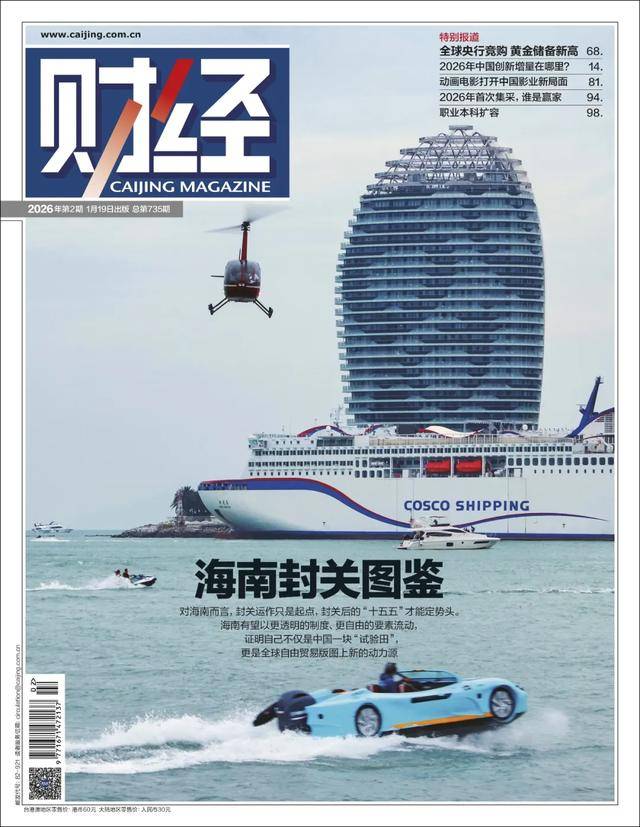
Core Insights - The establishment of the Hainan Free Trade Port marks a significant milestone in China's reform and opening-up process, transitioning from "policy-driven growth" to "institutional supply-driven growth" [2][5][6] - Hainan aims to become a new driving force in the global free trade landscape, leveraging its unique geographical advantages to connect with ASEAN and the world [6][31] Economic Impact - The Hainan Free Trade Port officially commenced operations on December 18, 2025, with immediate positive effects, including a 61% year-on-year increase in duty-free shopping on the first day [5][8] - In the first three weeks post-closure, Hainan recorded a total shopping amount of 38.9 billion yuan, reflecting a 49.6% year-on-year growth [8][19] - The introduction of a "zero tariff" policy has expanded the range of duty-free goods from 1,900 to approximately 6,600 tax items, significantly reducing prices for consumers [9][19] Investment and Business Development - Hainan has seen a surge in foreign investment, with 4,709 new foreign trade enterprises registered within the first month of the port's operation, surpassing the total for an entire previous quarter [13] - Major companies, including Siemens Energy and various international firms, have initiated projects in Hainan, indicating a robust influx of capital and business activities [5][19] Tourism and Entertainment - The influx of international stars for concerts and events has transformed Hainan into a burgeoning hub for entertainment, attracting significant tourism and related economic activities [3][4] - The number of inbound flights and tourists has dramatically increased, with ticket bookings for flights to Hainan rising by over 300% in some cases [8][19] Future Prospects - Hainan's strategic location positions it as a key node for resource allocation globally, with expectations of becoming a central hub for trade and investment between China and ASEAN [6][31] - The province is set to enhance its service sectors, including tourism, high-tech industries, and modern services, aiming for a GDP contribution of 67% from these sectors [16][31] Regulatory Environment - The implementation of the Hainan Free Trade Port Law in 2021 has provided unprecedented autonomy and legal frameworks for the region, facilitating smoother business operations and foreign investments [4][6] - Ongoing policy optimizations are expected to further attract talent and investment, with tax incentives for businesses and individuals residing in Hainan [12][19]
博俊科技(300926) - 300926博俊科技投资者关系管理信息20260120
2026-01-20 10:06
Group 1: Company Overview - Jiangsu Bojun Industrial Technology Co., Ltd. was established in 2011, focusing on the R&D, design, production, and sales of automotive precision components and molds [2][3] - The company offers a one-stop solution for automotive parts, covering various systems such as steering, power, doors, sunroofs, electronics, interiors, and seating [3] - Bojun has established strategic partnerships with renowned manufacturers like Geely, Changan, BYD, and Magna [3] Group 2: Production Facilities - The company has multiple subsidiaries across China, including Chongqing, Chengdu, and Xi'an, with several established between 2017 and 2025 [3][4] - Current construction progress of factories is on schedule, with completed structures in Chongqing and ongoing developments in Kunshan and Jinhua [4] Group 3: Client Relationships and Revenue Projections - The company has secured a project with BAIC, expected to start production in 2026, supplying integrated die-casting products [4] - Major clients contributing to revenue growth in 2026 include Leap Motor, Xpeng, Geely, and Changan [5] - The top five clients are primarily OEMs, with specific details to be announced in future communications [4] Group 4: Product Supply and Innovations - Current production models supplied to Leap Motor include B01, LAFA5, B10, and C11, while Changan models include S7 and SL03 [5] - The company is collaborating with Shanghai Electric on customized robotics technology, aiming for cost savings and potential entry into humanoid robot components [5] - Key clients for integrated die-casting include Ideal Auto, Geely, and BYD [5]