吉利汽车

Search documents
深度 | 学习华为IPD运动,中国汽车业的一次大反思
汽车商业评论· 2026-01-19 23:07
Core Viewpoint - The year 2025 is marked as a significant learning year for Chinese automotive companies, which are increasingly adopting Huawei's methodologies, particularly the Integrated Product Development (IPD) process, to enhance their operations and product offerings [3][6]. Group 1: Learning from Huawei - Chinese automotive companies, whether state-owned or private, are engaging in a "learning from Huawei" movement, aiming to replicate its success in the automotive sector [3][6]. - The collaboration with Huawei has led to significant improvements in product development cycles and cost reductions for companies like GAC Group, which reported a reduction in product development time from 30 months to 18-24 months and a 10% decrease in development costs [11][6]. - The IPD process, which emphasizes market-driven product development, has become a sought-after model among automotive firms, with many companies adopting varying degrees of this approach [6][13]. Group 2: Implementation of IPD - The IPD framework encourages cross-departmental collaboration, allowing teams to share information transparently and make collective decisions throughout the product lifecycle [18][19]. - Companies implementing IPD have reported enhanced efficiency, with GAC Group noting a 70% improvement in data query efficiency and a significant reduction in fault tracing time [8][19]. - The structure of the PDT (Product Development Team) within the IPD framework allows for a more integrated approach to product development, ensuring that all relevant departments are involved from the outset [16][18]. Group 3: Challenges and Cultural Aspects - Despite the benefits, the transition to IPD is not without challenges, as companies often face cultural resistance and difficulties in aligning existing organizational structures with the new processes [38][46]. - The success of IPD implementation heavily relies on the leadership and cultural adaptability of the organization, as highlighted by the experiences of Huawei, which emphasizes a culture of accountability and collaboration [38][57]. - The ability to attract and retain talent is crucial for the successful adoption of IPD, as seen in Huawei's approach to hiring top talent and fostering a competitive environment [54][55].


30+固态电池企业新进展
DT新材料· 2026-01-19 22:33
Core Viewpoint - The article discusses the advancements and production timelines of solid-state batteries from various companies, highlighting the competitive landscape and technological progress leading up to 2026 and beyond [4]. Group 1: Company Developments - CATL launched the world's first sulfide solid-state battery pilot line in Hefei in May 2025, achieving an energy density of 450Wh/kg, with plans to expand production capacity to 50GWh by 2026 [6]. - Guoxuan High-Tech introduced its "Guan" quasi-solid-state square aluminum shell cell with an energy density greater than 300Wh/kg and initiated a pilot line with a 90% yield rate in May 2025 [8]. - EVE Energy's solid-state battery, "Longquan No. 2," achieved an energy density of 300Wh/kg and is aimed at high-end applications like humanoid robots and low-altitude aircraft [8]. - Aoxin Technology plans to launch its polymer solid-state battery with an energy density of 400Wh/kg by the end of 2025, targeting high-end new energy vehicles [8]. - Ganfeng Lithium announced the mass production of lithium sulfide, completing the last link in the solid-state battery ecosystem, with plans to launch solid-state batteries by the end of 2025 [9]. Group 2: Industry Trends - The solid-state battery industry is expected to enter a critical year in 2026, with many companies racing to achieve mass production [4]. - The article outlines the competitive landscape, with over 30 companies making significant strides in solid-state battery technology, indicating a robust growth trajectory in the sector [4]. - The anticipated commercialization of solid-state batteries is projected for around 2030, as supply chains mature and production processes are refined [6].




港股再融资开门红,募资超270亿港元
21世纪经济报道· 2026-01-19 15:34
Core Viewpoint - The Hong Kong capital market has seen a significant increase in refinancing activities at the beginning of 2026, with over HKD 27 billion raised, marking a more than 20-fold increase compared to the same period in 2025, setting a vibrant tone for the year ahead [1][3]. Group 1: Active Refinancing at the Start of 2026 - As of January 18, 2026, Hong Kong-listed companies have raised over HKD 27 billion through various methods such as placements and rights issues, compared to HKD 1.1 billion in the same period of 2025 [1][3]. - The robust refinancing activity is built on the historical high of HKD 325.32 billion in 2025, which surpassed the IPO fundraising scale for the first time [3]. - Major companies like BYD and Xiaomi have completed significant fundraising projects, contributing to a trend of continuous capital replenishment [3]. Group 2: Structural Characteristics of Refinancing - The refinancing activities in early 2026 are characterized by a diverse industry distribution, including sectors like oil and gas, construction, software services, and healthcare [7]. - Notable companies such as SF Express and Jitu Express have raised over HKD 1 billion, indicating a clear differentiation in fundraising scales [7]. - The use of raised funds is closely aligned with core business strategies, including international expansion, technology R&D, and financial structure optimization [7]. Group 3: Advantages of Hong Kong's Refinancing Market - The efficiency of Hong Kong's refinancing system allows companies to quickly seize market opportunities without prior regulatory approval for placements [4]. - The flexible and diverse financing tools available in the Hong Kong market cater to various corporate needs, enhancing the ability to raise funds [5]. - The market's recovery and valuation improvements since Q3 2024 have created a favorable environment for refinancing activities [5]. Group 4: Emerging Trends in Refinancing - The refinancing landscape is evolving, with a notable increase in strategic mutual holdings among companies, exemplified by the collaboration between SF Express and Jitu Express [8]. - The current refinancing structure shows a higher proportion of traditional and consumer industries compared to emerging sectors, highlighting the complementary nature of Hong Kong and A-share markets [8]. - Future trends indicate that refinancing will remain high but with a more stable growth rate, and the focus will shift towards optimizing capital structures and enhancing R&D capabilities [10].




Tesla, Geely-controlled brands seen as early winners of Canada's EV tariff cut
Proactiveinvestors NA· 2026-01-19 15:28
Company Overview - Proactive provides fast, accessible, informative, and actionable business and finance news content to a global investment audience [2] - The news team operates from key finance and investing hubs including London, New York, Toronto, Vancouver, Sydney, and Perth [2] Market Focus - Proactive specializes in medium and small-cap markets while also covering blue-chip companies, commodities, and broader investment stories [3] - The content includes insights across various sectors such as biotech and pharma, mining and natural resources, battery metals, oil and gas, crypto, and emerging digital and EV technologies [3] Technology Utilization - Proactive is a forward-looking company that adopts technology enthusiastically to enhance workflows [4] - The company utilizes automation and software tools, including generative AI, while ensuring all content is edited and authored by humans [5]


如何看2025年12月消费数据?
Changjiang Securities· 2026-01-19 14:31
Investment Rating - The report does not explicitly state an investment rating for the industry, but it provides insights into various sectors and companies with potential investment opportunities. Core Insights - In December, the total retail sales of consumer goods reached 45,136 billion yuan, a year-on-year increase of 0.9%. Excluding automobiles, retail sales amounted to 39,654 billion yuan, growing by 1.7%. For 2025, total retail sales are projected to reach 501,202 billion yuan, representing a 3.7% increase from the previous year, with non-automobile retail sales expected to grow by 4.4% to 451,413 billion yuan [4][7]. Retail Sector - The retail sector shows stable growth, with offline sales demonstrating resilience. In December, the retail sales of goods increased by 0.7% year-on-year, while dining revenue grew by 2.2%. Online retail sales of physical goods for the year increased by 5.2%, accounting for 26.1% of total retail sales [17][18]. Food and Beverage Sector - The food and beverage sector faced challenges in December, with dining revenue growing by only 2.2% year-on-year. The report suggests that the sector may see a rebound as previous restrictions on alcohol consumption ease [19][20]. Automotive Sector - The automotive sector experienced a decline in December, with total retail sales of automobiles at 548.2 billion yuan, down 5.0% year-on-year. However, the export of passenger vehicles saw significant growth, with a 50.4% increase in December [24][25]. Apparel and Textile Sector - The apparel and textile sector saw a slowdown in retail growth, with sales increasing by only 0.6% year-on-year in December. The report indicates that the sector is expected to recover in 2026 as inventory levels stabilize [28][29]. Home Appliances Sector - The home appliances sector faced a decline in December, with retail sales down 18.7% year-on-year. The report highlights that the sector's performance is affected by high base effects and the withdrawal of government subsidies [38][39]. Investment Recommendations - The report recommends focusing on companies with strong growth potential in various sectors, including beauty and personal care, gold and jewelry, and consumer electronics. Specific companies highlighted include 毛戈平, 上美股份, and 美的集团 [18][45].
思特威:车载(AT)系列已拥有覆盖1MP~8MP分辨率的丰富产品规格
Zheng Quan Ri Bao· 2026-01-19 14:14
Core Viewpoint - The company, Sitwei, is one of the few domestic manufacturers capable of providing automotive-grade CIS solutions, with a diverse product range covering resolutions from 1MP to 8MP [2] Group 1: Product Offerings - The automotive (AT) series includes a rich specification of products ranging from 1MP to 8MP [2] - The company is continuously enhancing product performance and expanding its product matrix in response to the ongoing development of automotive intelligence and autonomous driving technologies [2] Group 2: Industry Collaboration - The company has deepened collaborations with several major automotive manufacturers, significantly increasing its industry solution capabilities and influence [2] - The number of covered vehicle projects is continuously increasing, with mass production already achieved with major manufacturers such as BYD, Geely, Chery, SAIC, GAC, Leap Motor, Great Wall, Dongfeng Nissan, Jiangling, and South Korean SsangYong [2] Group 3: Market Position - The company aims to further enhance its market share in the automotive electronics CIS sector [2]

价格承诺还是加关税,中国车企出口欧洲要做“选择题”
Bei Ke Cai Jing· 2026-01-19 13:25
Core Viewpoint - The recent developments in the EU-China electric vehicle case are expected to significantly boost market confidence and inject new momentum into automotive trade and investment cooperation between China and Europe [1]. Group 1: Price Commitment Guidance - The European Commission has released guidance allowing Chinese electric vehicle manufacturers to submit price commitment applications, which can replace anti-subsidy duties if approved [1][2]. - The guidance allows companies to choose the range of products covered by the price commitment, enabling them to apply for specific models while exporting others under anti-subsidy duties [3][4]. - The price commitment mechanism is designed to offset the damage caused by Chinese electric vehicle exports to the EU industry, potentially through minimum import prices or export quantity restrictions [2]. Group 2: Challenges and Recommendations - The complexity of the price commitment design poses challenges, as it must meet EU requirements while ensuring the commercial sustainability of companies in the European market [10]. - Companies are advised to conduct comprehensive assessments of their operational and export situations, including product structure and pricing systems, to avoid simplistic decision-making [9][11]. - The guidance emphasizes the need for companies to prepare compliance materials and ensure data accuracy to mitigate legal and operational risks [10]. Group 3: Historical Context and Future Implications - The EU initiated an anti-subsidy investigation against Chinese electric vehicles in October 2023, citing unfair subsidies that harm the local automotive industry [14]. - The investigation is politically significant, as it was self-initiated by the EU rather than prompted by external parties [14]. - The release of the guidance on January 12, 2024, is seen as a positive outcome following multiple negotiations, indicating a "soft landing" for the electric vehicle case and benefiting future cooperation in the automotive supply chain between China and Europe [15].
港股再融资迎“开门红”,募资超270亿港元
2 1 Shi Ji Jing Ji Bao Dao· 2026-01-19 12:37
Core Viewpoint - The Hong Kong capital market has seen a significant increase in refinancing activities at the beginning of 2026, with over HKD 27 billion raised, marking a more than 20-fold increase compared to the same period in 2025, setting a vibrant tone for the year ahead [1][2]. Group 1: Market Activity and Trends - As of January 18, 2026, Hong Kong listed companies have raised over HKD 27 billion through various refinancing methods, a substantial increase from HKD 1.1 billion in the same period of 2025 [1]. - The 2025 Hong Kong refinancing market reached a historic high of HKD 325.32 billion, surpassing the IPO fundraising scale for the first time [1][2]. - The active refinancing market is attributed to a 27.77% increase in the Hang Seng Index in 2025, which improved market sentiment and valuation [2]. Group 2: Structural Characteristics of Financing - The refinancing activities in early 2026 show a diverse industry distribution, including sectors such as oil and petrochemicals, construction, software services, and healthcare [3]. - Notable companies like SF Express and Jitu Express raised over HKD 10 billion each, while 10 other companies raised over HKD 1 billion [3]. - The primary use of raised funds is aligned with core business strategies, including international expansion, technology R&D, and financial structure optimization [3]. Group 3: Financing Methods and Innovations - Placement remains the dominant method for refinancing, with 27 out of 36 cases in 2026 utilizing this approach, highlighting its efficiency and flexibility [3]. - A notable trend in 2026 is the diversification of financing methods, including strategic mutual holdings through consideration issuance, which promotes industry chain integration [4][5]. - The issuance of convertible bonds, particularly zero-coupon convertible bonds, is becoming increasingly active, with financing concentrating on leading enterprises [6]. Group 4: Future Outlook - The Hong Kong refinancing market is expected to maintain high activity levels, with a stable growth rate and continued demand from capital-intensive industries [6]. - The flexible and efficient issuance system is likely to attract more listed companies, with refinancing volumes expected to exceed IPOs [6]. - The importance of hard technology and biotechnology companies is anticipated to rise, while the participation of cross-border capital is expected to enhance market liquidity [6].
十年深耕铸口碑,重装开业启崭新征程
Qi Lu Wan Bao· 2026-01-19 11:09
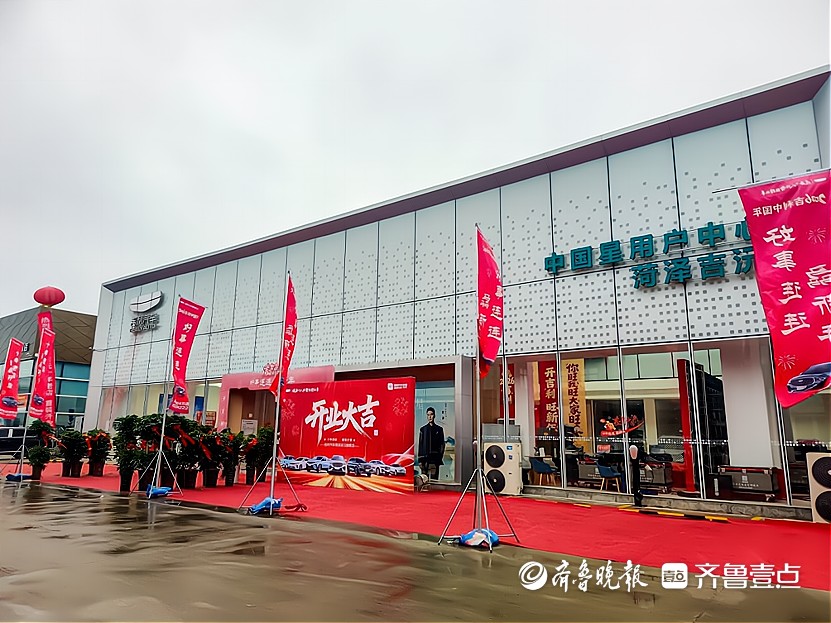
Core Viewpoint - The celebration of the 10th anniversary of Heze Jiyuan Geely 4S store marks a significant milestone, showcasing a blend of brand heritage and technological renewal through a comprehensive upgrade to the Geely global 4.0 standard [1][15]. Group 1: Anniversary Celebration - The "Ten-Year Old Store, Grand Reopening" event was lively, with guests including Geely representatives, old and new car owners, partners, and local media gathering to witness this important moment [3]. - The atmosphere at the opening ceremony was vibrant, filled with drums, flowers, and a red carpet, highlighting the unique sense of occasion with Geely brand elements [11]. Group 2: Store Development and Philosophy - Since its establishment, the store has adhered to Geely's core mission of "Happy Life, Geely Accompany," focusing on customer-centric and quality-based business principles [5]. - Over the past decade, the store has built a strong reputation among Heze consumers, becoming a reliable partner for many families in their journeys [7]. Group 3: Upgrade and Service Enhancement - The store underwent a comprehensive upgrade to align with Geely's 4.0 brand strategy, enhancing the showroom layout, service systems, and overall customer experience [9]. - The upgraded store features popular models such as the Xingyue L, BinYue, and others, and offers a one-stop service system for purchasing, maintenance, rescue, and trade-in [9]. Group 4: Future Commitment - The store's leadership emphasized that the reopening is a new starting point for service upgrades and a commitment to Geely's mission of creating quality vehicles for everyone [15]. - The store aims to continue deepening its understanding of Heze consumers' travel needs, enhancing product experiences, and innovating service models to provide high-quality travel solutions [17].
特朗普“让中国进来”后,中国汽车产业将如何走向美国
Guan Cha Zhe Wang· 2026-01-19 10:19
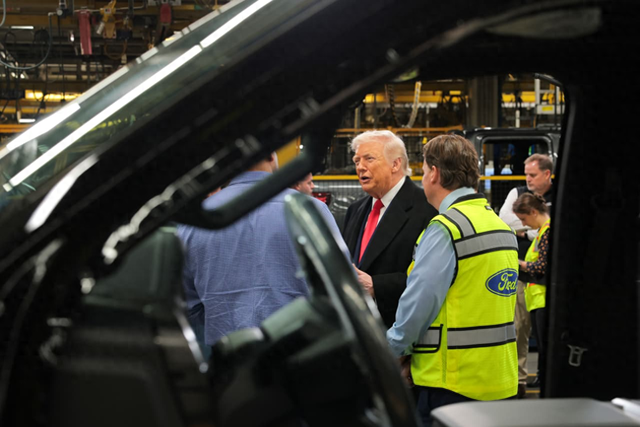
Core Viewpoint - The recent decline in stock prices of major U.S. automakers is linked to Trump's statements regarding support for American auto workers and a shift in attitude towards Chinese automakers, raising concerns about the profitability and market conditions for U.S. companies [3][4][6]. Group 1: Stock Market Reaction - Major U.S. automakers saw significant stock price declines, with General Motors down approximately 3%, Ford down about 4%, and Stellantis down around 11% [1]. - The market's reaction indicates a focus on uncertainties regarding corporate profitability, trade barriers, and industry direction, despite Trump's seemingly welcoming remarks towards Chinese automakers [3][4]. Group 2: Trade and Regulatory Environment - Trump's welcoming remarks for Chinese automakers are made against the backdrop of high tariffs on Chinese imports, which remain a significant barrier to entry for Chinese vehicles in the U.S. market [4][6]. - U.S. Trade Representative stated that tariffs are in place to protect American workers from foreign vehicles, highlighting the ongoing regulatory challenges for Chinese automakers [6]. Group 3: Globalization Trends - Despite the challenges, there is a growing trend of easing restrictions on Chinese electric vehicles in other markets, with Canada recently removing punitive tariffs and the EU adjusting tax rates [7][9]. - Chinese automakers, such as BYD, have shown strong growth in international markets, with a reported 276% increase in deliveries to Europe [9]. Group 4: Potential Pathways for Chinese Automakers - Three potential pathways for Chinese automakers to enter the U.S. market include: 1. Embedding within the U.S. supply chain without direct competition as a brand [11][12]. 2. Local manufacturing in the U.S. to mitigate political resistance, although this comes with its own set of challenges [16][18]. 3. Establishing production bases in nearby regions like Mexico or Brazil to create an indirect entry into the U.S. market [19][21]. Group 5: Strategic Implications - The overarching strategy for Chinese automakers is not merely to sell vehicles in the U.S. but to navigate the complex political and regulatory landscape to establish a presence [23]. - The shift from exporting vehicles to becoming participants in a global automotive ecosystem reflects a broader trend in the industry, with the U.S. market being one of many avenues for growth [23].