
奔驰

Search documents
比亚迪日本扩张迅猛,年内门店将破百家,日媒感叹:比亚迪特斯拉主导日本电车转型
Qian Zhan Wang· 2025-07-22 04:46
Core Insights - Tesla and BYD are accelerating their expansion into the Japanese electric vehicle (EV) market, potentially leading the country's EV transformation [2] - Tesla plans to increase its store count in Japan from 23 to 50 by the end of 2026, with the possibility of expanding to 100 stores [2] - In the first half of 2025, Tesla's sales in Japan are expected to grow by 70% year-on-year to approximately 4,600 vehicles, showcasing strong growth momentum [2] - In contrast, Japan's domestic automakers are lagging behind, with the country's EV penetration rate being low compared to other developed nations [2] - Japan's EV sales in the first half of 2025 were only 27,321 units, a 7% year-on-year decline, marking two consecutive years of negative growth [2] - Japanese consumers have primarily favored hybrid vehicles, resulting in the lowest penetration rate for pure electric vehicles among developed countries [2] - The global EV market is increasingly dominated by a few key players, with Tesla leading through technological innovation and global presence, while BYD excels in the Chinese market and commercial vehicle sector [2] Company Profiles - **Tesla**: A globally recognized electric vehicle manufacturer based in the U.S., led by Elon Musk, focusing on clean energy and electric transportation. Tesla produces high-performance electric vehicles, including Model S, Model 3, Model X, and Model Y, and is involved in energy storage and solar power [2] - **BYD**: A leading Chinese electric vehicle manufacturer established in 1995, headquartered in Shenzhen. BYD produces a wide range of electric vehicles, including passenger cars and commercial vehicles, and has introduced the world's first electric bus [2] - **NIO**: A high-end electric vehicle manufacturer from China, focusing on luxury electric SUVs and innovative battery-swapping technology to address charging time concerns [2] - **Volkswagen Group**: The largest automotive manufacturer globally, headquartered in Germany, committed to electric vehicle production through its ID series, including ID.3, ID.4, and ID. BUZZ [2] - **Mercedes-Benz**: A high-end automotive brand under Daimler AG, known for its EQ series of electric vehicles, including EQC, EQA, EQB, and EQS, covering various market segments [2] Market Overview - The global electric vehicle market is characterized by a "dual-core" driving pattern led by China and the U.S. In 2022, global sales exceeded 10.52 million units, with China holding a 24.4% market share, followed by Europe at 17.3%. Japan and India have penetration rates below 5% [2]



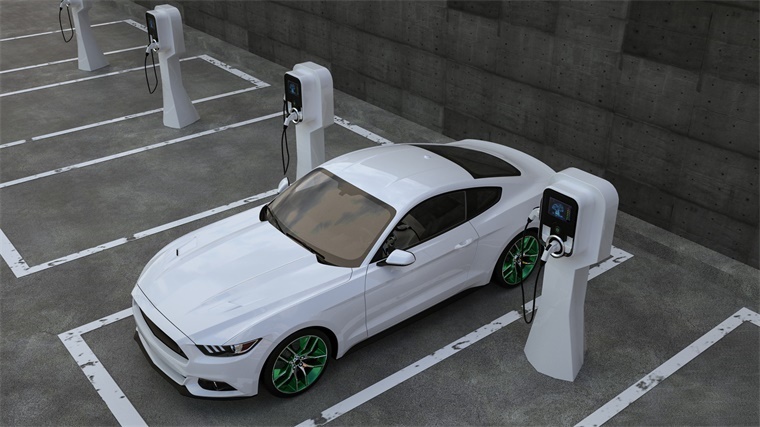
“不仅是跟中国竞争电动车,如果输了,福特就没有未来”
Guan Cha Zhe Wang· 2025-07-22 01:20
【文/观察者网 柳白】"我们正与中国展开全球竞争,不只是电动汽车。如果我们输了,福特就没有未 来。"中国车企强势崛起之际,福特CEO吉姆·法利一番话,反映出欧美老牌车企与日俱增的焦虑。 美国《纽约时报》7月21日发表的一篇文章,提及了双方在拉美市场的博弈。 在圣保罗一处高端社区,一家比亚迪展厅周末热闹非凡。人们试车、看价,很多人已做好功课。一位车 主说:"我绝不会再回去开油车,(电车)环保、舒适又安静。" 文章注意到,长城、比亚迪等中国车企正在收购福特、奔驰等欧美车企撤离巴西后留下的厂房,希望在 这一全球第六大汽车市场站稳脚跟,最终辐射整个拉美市场。中国车企凭借快充技术、价格优势及全球 化布局,在全球汽车业转型中崛起,也给巴西等国带来机遇。 在距离巴西最大城市圣保罗两小时车程的一处甘蔗种植地,一座中国电动汽车工厂已准备就绪,即将投 产。就在不久前,这家工厂还属于老牌汽车巨头德国奔驰,如今,它的新主人是长城汽车。 丰田、通用、大众等西方同行在掌握电动汽车技术方面举步维艰,但对中国而言,这种行业变革却是利 好。中国汽车已涌入全球其他大部分市场,成为中国经济和技术崛起的有力象征。 在圣保罗等城市,中国汽车受到越来越 ...

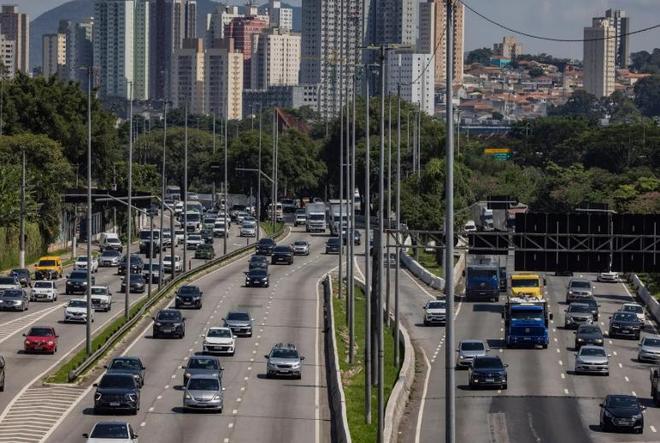
企业“走出去” 叙事能力“跟上去”
Jing Ji Ri Bao· 2025-07-21 22:01
Group 1 - The construction of a modern discourse system with Chinese characteristics is essential for enhancing China's international influence and shaping a positive national image [1][2] - Chinese enterprises play a crucial role as "living business cards" of the country, helping to convey China's voice and shape its image while expanding into overseas markets [1][3] - The international narrative landscape is dominated by Western-centric views, necessitating the strengthening of China's international communication capabilities to break the narrative monopoly [2][4] Group 2 - In 2024, China's total outward direct investment is projected to reach 1,159.27 billion yuan, reflecting an 11.3% year-on-year increase [3] - Chinese enterprises have established 48,000 overseas companies in 189 countries and regions, indicating a significant expansion in their global presence [3] - The shift from resource acquisition to integration into the global value chain highlights the evolving role of Chinese enterprises in promoting economic globalization [3][4] Group 3 - The complexity and uncertainty of the international environment pose significant challenges for Chinese enterprises operating abroad, with 78% of surveyed companies indicating increased uncertainty in the EU's business environment [4] - Chinese enterprises must enhance their narrative capabilities to address misunderstandings and build trust in international markets [5][6] Group 4 - Integrating narrative into corporate strategy is vital for Chinese enterprises, allowing them to combine business objectives with cultural communication and image building [6][7] - Understanding local cultures and values is essential for effective storytelling, enabling enterprises to resonate with local audiences [7][8] - Accurately positioning themselves within the global value chain and showcasing their contributions to local economies can enhance the international perception of Chinese enterprises [8][9]
第22届长春汽博会闭幕 推动汽车领域国际合作见实效
Zhong Guo Xin Wen Wang· 2025-07-21 13:10
Core Insights - The 22nd Changchun International Automobile Expo showcased the local automotive culture and expanded the international network of the Changchun automotive industry [1][3] - The exhibition covered a total area of 170,000 square meters, featuring 1,122 vehicles from 118 brands, with 447 new energy vehicles accounting for 39.8% of the total [1][3] - The event attracted 217,000 visitors over 10 days, highlighting its significance in the automotive sector [1] Industry Trends - The expo focused on the "new four modernizations" trend, with smart, connected, and new energy products and technologies taking center stage [3] - Notable new models included the Hongqi Tian Gong series, Audi's luxury electric series, and various models from BYD, showcasing advancements in intelligent vehicles [3] - The newly added Future Mobility exhibition area featured cutting-edge innovations such as the world's first mass-produced hubless hydrogen two-wheeler and flying cars, illustrating the future of transportation [3] International Collaboration - The expo served as a vital platform for international trade, hosting nearly a hundred representatives from over ten countries, including Russia, Japan, and South Africa, for business discussions [3][4] - Major international technology firms engaged in over 50 one-on-one negotiations with local companies like FAW Jiefang and Geely, focusing on smart driving and battery technologies [4] - The Changchun Auto Expo aims to integrate global resources, build high-end platforms, and drive industry upgrades, enhancing the resilience and competitiveness of the local automotive industry [4]
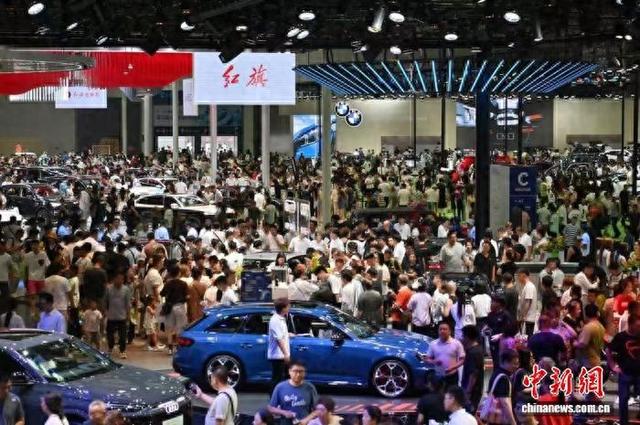
晚一天多花10万,豪车税惊了买车人
3 6 Ke· 2025-07-21 10:11
Core Viewpoint - The new luxury car tax policy in China, effective from July 20, 2023, lowers the threshold for luxury car taxation, impacting the sales dynamics of high-end automotive brands significantly [1][2][14]. Group 1: Tax Policy Changes - The luxury car tax threshold has been reduced from a retail price of 1.3 million yuan (excluding VAT) to 900,000 yuan, now including various types of vehicles, including electric and fuel cell cars [1][2]. - The new tax policy results in a new taxable price range for vehicles, with the inclusive tax price threshold dropping from 1.469 million yuan to 1.017 million yuan [2][14]. Group 2: Market Reactions - The announcement of the tax change led to a surge in sales as consumers rushed to purchase vehicles before the new tax took effect, with reports of extended store hours and high sales activity [3][11]. - Major luxury brands like Porsche, Land Rover, and Mercedes-Benz experienced significant consumer interest, with many buyers attempting to finalize purchases before the tax increase [3][5][11]. Group 3: Impact on Luxury Brands - The new tax policy is expected to affect the sales of high-end models from brands such as Porsche, Land Rover, Mercedes-Benz, BMW, Audi, and Lexus, with many models now falling under the new tax bracket [7][9][10]. - Brands like Porsche and Land Rover are particularly impacted, as a significant portion of their models exceed the new tax threshold [10][11]. Group 4: Consumer Behavior - Consumers who had already placed orders for vehicles are reconsidering their purchases due to the unexpected tax increase, with some contemplating canceling their orders [6][7]. - The market dynamics are shifting, with potential buyers now looking at alternative models that may fall below the new tax threshold, indicating a possible change in consumer preferences [17][18]. Group 5: Market Outlook - The adjustment in luxury car tax is seen as a response to the changing market conditions, where high-end car sales have been declining, and promotional pricing has increased [14][18]. - The new tax structure may provide opportunities for domestic luxury brands, as the lowered threshold could allow them to capture a larger market share previously dominated by imported luxury vehicles [18][19].
韩媒:三星显示将为迈巴赫供应OLED
WitsView睿智显示· 2025-07-21 08:19
Core Viewpoint - Samsung Display will supply 48-inch Pillar-to-Pillar (P2P) OLED displays for the new Maybach S-Class vehicles set to launch in 2028, marking its first collaboration with Mercedes-Benz in the automotive display sector [1][4]. Group 1: Product Features - The P2P display uniquely spans the left and right pillars of the vehicle, covering the entire area in front of the driver and front passenger, which traditional LCD and rigid OLED displays cannot achieve due to the length and curvature of the dashboard [3]. - Flexible OLED technology is crucial for the P2P display, allowing it to meet the design requirements of modern vehicles [3]. Group 2: Market Implications - This partnership signifies Samsung Display's entry into the automotive market and expansion of its electronic components business, potentially accelerating the transition from LCD to OLED displays in vehicles [4]. - The increasing penetration of OLED technology in mainstream models is expected to further expedite the shift towards OLED in automotive displays [4].
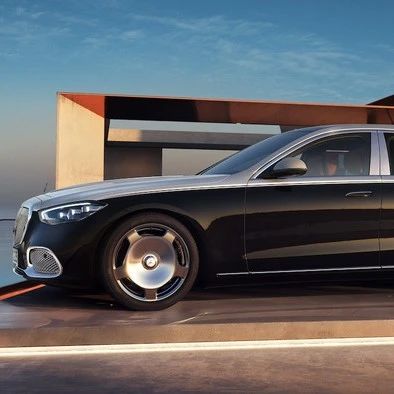
天“塌了”?超豪华车消费税起征点降至90万
3 6 Ke· 2025-07-21 04:09
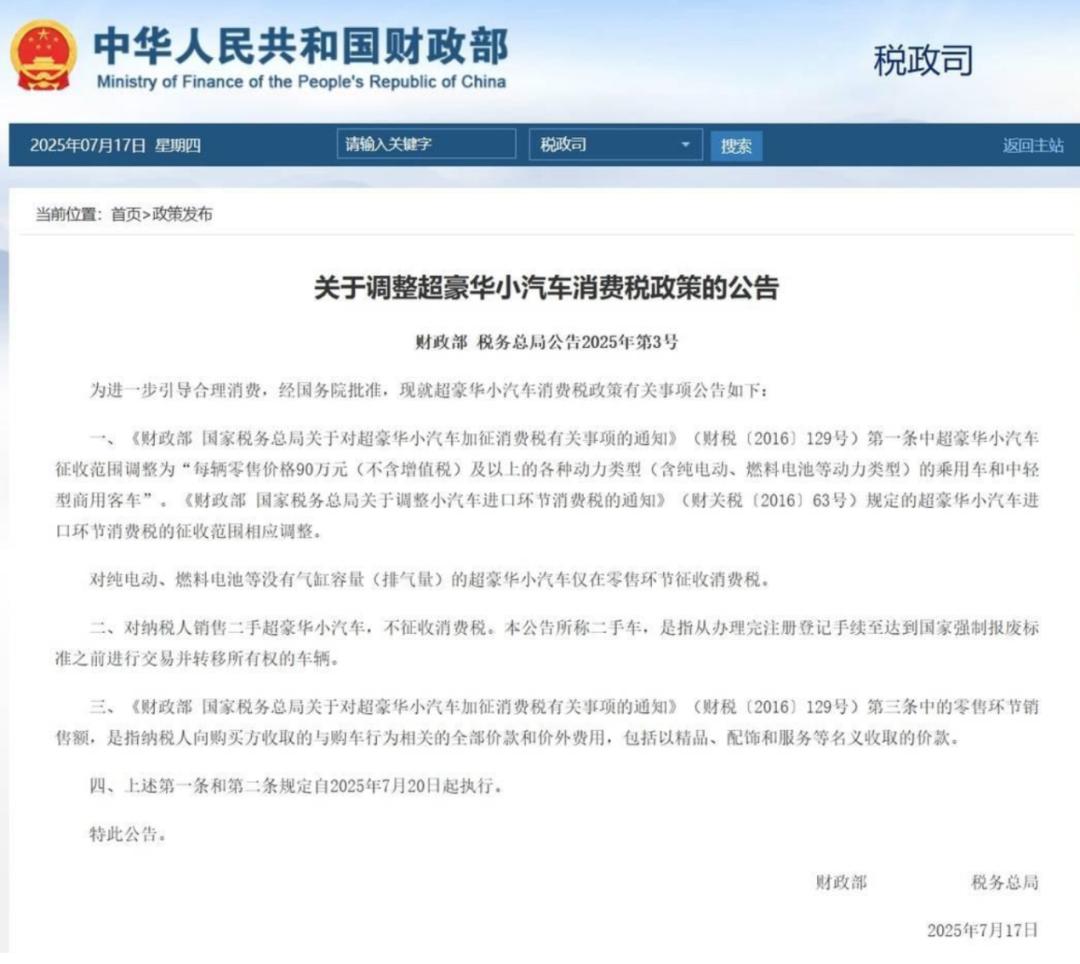
Core Viewpoint - The recent adjustment of the consumption tax threshold for super luxury cars from 1.3 million yuan to 900,000 yuan is expected to significantly impact the luxury car market, particularly affecting brands like Porsche and Mercedes-Benz that fall within the new tax range [1][3][18] Group 1: Policy Changes - The consumption tax threshold for super luxury cars has been lowered from a retail price of 1.3 million yuan (excluding VAT) to 900,000 yuan [1][4] - The new policy will take effect shortly after its announcement, leaving little time for car manufacturers to adapt [1][3] Group 2: Market Reactions - Consumers are reacting quickly to the policy change, with reports of increased sales activity in luxury car showrooms prior to the implementation date [8][9] - Brands like Porsche, Mercedes-Benz, and BMW are expected to be most affected, as many of their models now fall within the taxable range [6][11] Group 3: Competitive Landscape - The adjustment may intensify competition among luxury car manufacturers, as they may need to reconsider pricing strategies to maintain market share [11][18] - If luxury brands do not adjust prices, potential buyers may shift their interest towards second-hand vehicles or domestic luxury brands that are not affected by the new tax [13][15] Group 4: Impact on Different Segments - The policy change primarily impacts traditional fuel-powered luxury vehicles, while electric and fuel cell vehicles are less affected [12][18] - The adjustment could create opportunities for electric vehicles priced just below the new threshold, making them more attractive to consumers [16]
燃油性能车的燃擎突围
Zhong Guo Qi Che Bao Wang· 2025-07-21 00:50
Core Viewpoint - The launch of Chery's new fuel performance vehicle, the Arrizo 8 PRO 2.0T, marks a significant moment for traditional fuel cars as they attempt to regain market presence amidst the rise of electric vehicles [2][3] Market Dynamics - Fuel performance vehicles are facing strong competition from electric vehicles, yet there remains a dedicated consumer interest in this segment [3][4] - The market share of fuel vehicles has been declining, with only a few domestic brands like Chery, Geely, and Great Wall continuing to develop both fuel and electric vehicles [3][4] - The fuel performance vehicle segment is relatively scarce, and the introduction of new models like the Arrizo 8 PRO 2.0T could fill a market gap [3][8] Consumer Preferences - A significant portion of fuel performance vehicle consumers are aged between 25 and 35, indicating a strong youthful demographic that values the unique advantages of these vehicles [7] - Fuel performance vehicles are appreciated for their high-power engines, rapid acceleration, and superior handling, which resonate well with younger consumers [7][9] Technological Advancements - Recent advancements in engine, transmission, and chassis technologies have led to improved fuel performance vehicles that emphasize energy efficiency and overall performance [5][12] - The integration of smart cockpit and driving technologies enhances the driving experience, making these vehicles more appealing to consumers [5] Competitive Strategy - To succeed in the current market, fuel performance vehicles must differentiate themselves from electric vehicles by highlighting their unique driving experiences and mechanical feedback [4][12] - Companies are focusing on customization and personalization to meet consumer demands, which can enhance the appeal of fuel performance vehicles [11][12] Future Outlook - The market for fuel performance vehicles is expected to maintain a share of around 30% in the future, alongside electric vehicles at 40% and hybrid vehicles at 30% [8] - Innovations in automotive technology, such as lightweight materials and advanced manufacturing processes, are anticipated to further enhance the performance of fuel performance vehicles [8][12] Cultural and Emotional Value - Fuel performance vehicles are increasingly seen as cultural artifacts, with brands leveraging their heritage and storytelling to create emotional connections with consumers [11][12] - The potential for limited edition models and customized modifications can elevate the perceived value and exclusivity of fuel performance vehicles [12]

台风“韦帕”在广东二次登陆
21世纪经济报道· 2025-07-20 14:29
据@广东天气 刚刚消息,今年第6号台风"韦帕"于7月20日20时15分前后以强热带风暴级在阳江海陵岛沿海 再次登陆,登陆时中心附近最大风力10级(25米/秒),中心最低气压980百帕。 预计,"韦帕"将以20公里左右的时速继续向西偏南方向移动,强度逐渐减弱。 防御台风 一定要看看↓↓ S RANE MEBA CROW VOL BE D M M M S 台风天真正的危险 往往藏在 (44 l l V P IIV R 米 型量了 S RET报业传媒集团 NO NO DESTIER D N视频 年记两要三不要 清垃圾,防传染病:做好清洁, > 避免蚊、虫、鼠滋生 √ 查门窗:如有爆裂损坏,及时更换 X 不吃生食、不喝生水 人 离远点:与路边掉落电线保持距离 《别盲目开车进山:台风走后,可能 还会引发洪水、泥石流、滑坡、洪涝 等次生灾害。 S RENTANG MEDIA CROUP VO DE MAN TENZE B 超强台风(风力≥16级) 强台风(风力14-15级) 台风(风力12-13级) 强热带风暴(风力10-11级) "台风编号"起始级 热带风暴(风力8-9级) - 热带低压(风力6-7级) 9 台风破坏力 ...

豪车税收政策调整,国产新能源品牌如何“弯道超车”?
Haitong Securities International· 2025-07-20 12:28
Investment Rating - The report does not explicitly provide an investment rating for the automotive industry or specific companies within it. Core Insights - The adjustment of the ultra-luxury vehicle consumption tax aims to promote rational consumption and optimize the tax structure, with the threshold lowered from Rmb1.3 million to Rmb900,000, affecting both new energy vehicles (NEVs) and traditional luxury vehicles [1][9]. - The new tax policy is expected to significantly increase the purchase cost of ultra-luxury vehicles, dampening demand in the Rmb900,000–1.3 million price range, which accounted for only about 20,000 units sold in the first half of 2025 [2][10]. - Domestic NEV brands are presented with a historical opportunity to capture market share in the high-end segment, while imported brands like Porsche face significant challenges due to their reliance on models priced within the affected range [3][12]. Summary by Sections Tax Policy Changes - The consumption tax for ultra-luxury vehicles has been adjusted to include a 10% tax at the retail stage, while NEVs remain exempt from production-stage taxes, leading to a lower overall tax burden for NEVs compared to traditional fuel vehicles [2][11]. - Second-hand ultra-luxury vehicles are exempt from the consumption tax, which may stimulate the used car market and encourage consumers to opt for these vehicles to avoid new tax burdens [2][11]. Market Impact - The new tax policy is expected to further squeeze the market share of high-end imported brands, particularly Porsche, which saw a 49% year-on-year decline in sales in the first half of 2025 [3][12]. - Traditional luxury brands such as Mercedes-Benz and BMW are also anticipated to face pressure, with the pricing center for high-end NEVs expected to shift towards the Rmb500,000–600,000 range [3][12]. Strategic Adjustments - Imported brands must quickly adapt their strategies, either by reducing prices below Rmb900,000 or enhancing vehicle configurations to maintain competitiveness [4][13]. - Domestic brands, benefiting from tax exemptions, have more flexibility in pricing strategies, allowing them to mitigate the impact of the new tax policy through adjustments in vehicle configurations [4][14]. Fiscal Implications - The expansion of the tax base is projected to increase consumption tax revenue, helping to offset declines in ultra-luxury vehicle sales, with consumption tax revenue in the first five months of 2025 totaling Rmb772.9 billion, up 1.6% year-on-year [5][16]. - The policy encourages automakers to focus on the mid- to low-end NEV market, aligning with the trend of rising NEV price ceilings and discouraging blind expansion into the ultra-premium segment [5][16].