OPPO

Search documents
手机AI助手有新变化
2 1 Shi Ji Jing Ji Bao Dao· 2025-11-03 04:53
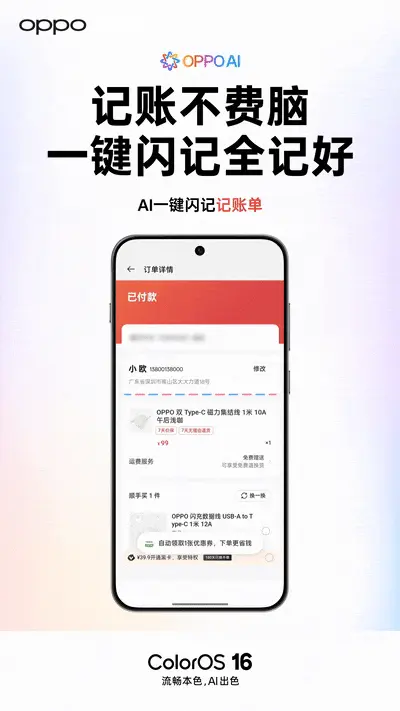
Core Insights - The penetration rate of AI assistants in smartphones is lower than expected, with users still waiting for a truly powerful and reliable AI assistant [1] - The upcoming flagship phone releases have made AI capabilities a central marketing focus for major manufacturers [1] Group 1: Evolution Trends of AI Assistants - **Deeper Understanding**: AI can recognize more screen information, but this raises privacy concerns, prompting regulatory attention [2] - **Stronger Actionability**: AI is beginning to participate in local life by recognizing restaurants, comparing prices across platforms, and writing reviews [3] - **Higher Interoperability**: There is increased communication and collaboration between different AI assistants [4] Group 2: Key Features and Upgrades - **Screen Content Understanding**: AI assistants are expected to interact more with users' screen content, such as identifying unknown callers and providing alerts for sensitive applications [5] - **Memory Functionality**: New features like "AI one-click flash memory" allow users to summarize and save screen content automatically [6] - **Privacy Measures**: OPPO is addressing privacy concerns by processing sensitive data locally on the device [7] Group 3: AI in Offline Life - **Real-time Interaction**: AI assistants can now use cameras for real-time conversations, enhancing user experience in physical environments [8] - **Price Comparison**: New AI features allow users to compare prices across multiple e-commerce platforms in real-time [8] - **Voice Recognition**: AI assistants are incorporating voice recognition to improve usability in noisy environments [8] Group 4: Challenges and Future Directions - **Complex Task Execution**: Current mobile AI assistants struggle with executing complex multi-step tasks due to a lack of mainstream protocols for communication [12] - **Third-party App Integration**: The reliance on "accessibility features" for AI to control third-party apps raises privacy concerns [12] - **Collaborative AI Models**: The emergence of "smart agents" and A2A protocols may facilitate better task delegation among AI systems [12][13]


手机AI助手有新变化
21世纪经济报道· 2025-11-03 03:55
Core Insights - The penetration rate of AI assistants in smartphones is lower than expected, with users still waiting for a truly powerful and reliable AI assistant [1] - The upcoming flagship smartphone releases have made AI capabilities a central marketing focus for major manufacturers, indicating a competitive landscape [1] Group 1: Evolution of AI Assistants - The first evolution focuses on deeper understanding, where AI can recognize more screen information, but this raises privacy concerns [1] - The second evolution emphasizes stronger action capabilities, allowing AI to participate in local life by recognizing restaurants, comparing prices, and writing reviews [1][10] - The third evolution highlights increased interoperability among different AI assistants, enabling them to communicate and collaborate more effectively [1][15] Group 2: Market Performance - In Q3, vivo led the domestic smartphone market with 11.8 million units shipped, capturing 17.3% market share, followed by Apple and Huawei [2] Group 3: Understanding Screen Content - Personalization has become a key focus, with AI expected to interact more with users' screen content, such as providing answers while browsing social media [4] - New features like call identification have been introduced to detect potential scams during incoming calls [4] - AI memory functions have been added to summarize screen content and generate bills, although privacy concerns remain [5][8] Group 4: Participation in Offline Life - AI assistants are now equipped with real-time visual capabilities, allowing them to interact with the physical world through camera input [10] - Features like cross-platform price comparison and automatic review generation are being developed to enhance user experience [10][11] Group 5: Interoperability of Intelligent Agents - The lack of mainstream protocols for mobile AI assistants limits their ability to perform complex tasks across different applications [15] - New collaboration paradigms are emerging, with many apps developing their own AI assistants and emphasizing agent-to-agent communication [15][16]


【IPO前哨】A股年内飙111%!佰维存储赴港,能否获青睐?
Sou Hu Cai Jing· 2025-11-03 02:56
Core Viewpoint - The storage chip prices have started to rise since September, accelerating in Q4 due to increased demand from downstream manufacturers, leading to a supply shortage and significant stock price increases for companies like Bawei Storage [2][3]. Group 1: Company Overview - Bawei Storage is a leading independent semiconductor storage solution provider, focusing on AI applications and possessing unique full-stack technology capabilities [3][7]. - The company has established partnerships with major global clients, including Meta, Xiaomi, and OPPO, across various applications such as smart mobile devices and AI [3][4]. Group 2: Financial Performance - Bawei Storage's revenue for 2022, 2023, and projected for 2024 is approximately 2.986 billion, 3.591 billion, and 6.695 billion RMB, respectively, with profits showing fluctuations [8][9]. - In the first half of 2025, the company reported a revenue increase of 13.70% year-on-year, reaching 3.912 billion RMB, despite a net loss of 241 million RMB [8][10]. Group 3: Product Segmentation - The revenue distribution for the first half of 2025 shows that smart mobile and AI applications accounted for 43.0%, PC and enterprise storage for 34.9%, and smart automotive and other applications for 20.0%, indicating a balanced revenue structure [12][14]. Group 4: Market Position and Strategy - Bawei Storage plans to use the funds raised from its Hong Kong IPO to enhance R&D capabilities, expand globally, and explore strategic investments and partnerships [2][3]. - The company is the only independent storage solution provider globally with wafer-level packaging capabilities and is projected to be the largest independent storage manufacturer by revenue in 2024 [7][8]. Group 5: Inventory and Cash Flow - The company has maintained high inventory levels, with figures reaching 4.382 billion RMB in the first half of 2025, which poses potential risks of impairment [15]. - Bawei Storage has recorded negative operating cash flow in recent years, with a net cash outflow of 701 million RMB in the first half of 2025 [14][15].

挑战,从人工智能最前沿发起
Zhong Guo Qing Nian Bao· 2025-11-03 02:20
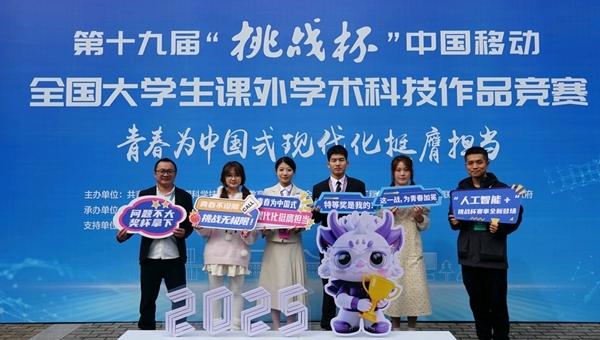
Group 1 - The 19th "Challenge Cup" National College Student Extracurricular Academic Science and Technology Works Competition was held at Nanjing University, focusing on the "Artificial Intelligence +" special competition, attracting over 18,000 teams and approximately 180,000 students [2][6] - The competition aims to align with national strategies and address core technology challenges, with a special emphasis on artificial intelligence applications across various industries [2][6] - The event showcases innovative projects that leverage AI technology to solve real-world problems, highlighting the growing interest and engagement of students in AI research and applications [3][7] Group 2 - Projects presented include a visual model lightweighting solution for AI deployment on edge devices, successfully validated in real-world applications [4] - Another project combines AI with Chinese mythology education, creating an intelligent assistant to enhance cultural education for youth [5] - A project from Southeast University utilized causal AI to analyze traffic congestion, achieving a 96.3% accuracy in identifying congestion causes and reducing error by 18.3% [7] Group 3 - The competition featured diverse applications of AI, including a robotic system for underwater ship inspections that significantly reduces time and risk compared to traditional methods [8][9] - A project from Guangzhou University developed an intelligent waste collection system using AI to improve efficiency and accuracy in environmental cleanup [9] - The "AI + " special competition encourages collaboration between students and industry, allowing participants to engage with cutting-edge technology and real-world challenges [9][10] Group 4 - The competition also highlighted advancements in robotics, with teams developing humanoid robots capable of navigating complex environments and performing tasks with high accuracy [10][11] - Agricultural applications were represented by a project that uses AI for cattle management, improving efficiency and accuracy in livestock monitoring [12] - Another project focused on real-time monitoring of marine phytoplankton using AI, aiming to enhance ecological research and environmental protection efforts [13]
中国公司全球化周报|TikTok东南亚月活用户突破4.6亿/淘宝出海双11全球上新210万新品
3 6 Ke· 2025-11-03 02:09
Group 1: Industry Trends - Investment, trade, and technology are currently the most popular directions for Chinese companies expanding into Dubai [2] - TikTok's monthly active users in Southeast Asia have surpassed 460 million, with Indonesia leading at 160 million [5] - Taobao has launched 2.1 million new products globally for this year's Double 11 shopping festival, aiming to enhance the international competitiveness of domestic brands [5] Group 2: Company Developments - Pop Mart opened its first store in the Middle East at Hamad International Airport in Doha, Qatar, marking its global expansion strategy [6] - OPPO launched its Find X9 series flagship smartphone in Spain, priced at €1,299 (approximately ¥10,700), aligning with the trend of increasing average smartphone prices [6] - Meituan's international delivery brand Keeta has officially started operations in Abu Dhabi, expanding its presence in the UAE market [6] Group 3: Financial Performance - Anker Innovations reported a revenue of ¥21.019 billion for the first three quarters of 2025, with overseas business contributing over 96% of total revenue [7] - Geely has officially entered the UK market with the launch of its first pure electric SUV, the EX5, and aims to sell 100,000 units by 2030 [7] - BYD unveiled its K-EV model at the 2025 Tokyo Mobility Show, introducing a dual strategy of pure electric and hybrid vehicles [7] Group 4: Investment and Financing - Yuan Tian Biological received strategic investment from Toyota Tsusho, aiming to penetrate the automotive supply chain [9] - Seres plans to raise over HK$13 billion through a global offering of H shares, with expansion plans across multiple international markets [9] - JBD completed over ¥1 billion in financing, setting a record for the MicroLED micro-display sector, with applications in nearly 50 smart glasses [10] Group 5: Policy and Market Initiatives - The China Council for the Promotion of International Trade will release a directory of key cross-border e-commerce enterprises to promote healthy development in the sector [11] - KrASIA launched new English media services aimed at Chinese companies going abroad, enhancing global brand visibility [11]



智动力:盈利回暖,显露转型韧性与潜力
Quan Jing Wang· 2025-11-03 00:47
Core Insights - The company has demonstrated resilience and transformation momentum despite market challenges, with a total revenue of 1.197 billion yuan in the first three quarters of 2025, reflecting a year-on-year growth of 6.03% [1] - The company's gross margin improved to 10.1%, an increase of 2.54% year-on-year, indicating enhanced profitability and cost control [2][7] Financial Improvement - The net profit attributable to shareholders was -64.45 million yuan, showing a year-on-year increase of 19.96%, while the net profit excluding non-recurring gains and losses was -61.95 million yuan, up 27.39% year-on-year [2] - Total expenses, including sales, management, and financial expenses, decreased by 5.35% year-on-year to 95.29 million yuan, representing 7.96% of total revenue [2] - Interest-bearing liabilities decreased by 27.50% year-on-year to 145 million yuan, indicating improved financial stability [2] Business Foundation - Established in 2004, the company has over 20 years of technological accumulation, focusing on R&D innovation as its core competitive advantage [3] - The company holds multiple invention and utility model patents, creating a solid technological barrier in functional materials and precision structural components [3] - Key products include thermal management, electrical shielding, and cushioning seals, with established partnerships with major manufacturers like Samsung and BYD [3] Future Layout - The company has initiated strategic investments in the new energy sector, including the establishment of Shenzhen Zhisheng Energy Technology Co., Ltd., focusing on energy storage and battery manufacturing [4] - In new materials, the company is developing PMMA+PC composite materials and fiberglass composites for various emerging applications [4] - The company has increased R&D investment in precision optics, completing a strategic investment in Shenzhen Montong Intelligent Technology Co., Ltd. to expand into AR/VR optical components [4] Growth Trajectory - The company's diversification into emerging sectors is gradually transforming its revenue structure, injecting new growth momentum for the future [5] - With the recovery of the global consumer electronics market and the continuous growth of new industries, the company is positioned to leverage its technological accumulation and customer resources to improve operational performance [7]

中国成唯一下滑市场! 苹果再失守,谁蚕食了份额? | BUG
Xin Lang Ke Ji· 2025-11-03 00:36
Core Viewpoint - Apple's revenue in Greater China has declined by 3.6% year-on-year in Q4 of FY2025, making it the only market with a revenue drop globally, attributed to supply constraints affecting iPhone sales [2][4][6] Financial Performance - Apple's total net revenue for Q4 FY2025 was $102.466 billion, up 8% from $94.930 billion year-on-year; net profit increased by 86% to $27.466 billion from $14.736 billion; diluted earnings per share rose to $1.85 from $0.97 [3][4] Regional Performance - Greater China revenue for Q4 FY2025 was $14.493 billion, down from $15.033 billion year-on-year; other regions like the Americas, Europe, Japan, and Asia-Pacific saw revenue growth [4][6] Supply Chain and Product Issues - CEO Tim Cook indicated that supply constraints led to a decrease in iPhone sales, with actual demand for the iPhone 16 series exceeding Apple's production estimates [6][11] - The delayed launch of the iPhone Air, which only supports eSIM, has also negatively impacted sales in the region [8][10] Competitive Landscape - The decline in revenue is attributed to both internal and external pressures, including limited product innovation and strong competition from local brands like Huawei, which is regaining market share in the high-end segment [7][12] - Local brands are rapidly advancing in areas like foldable screens and fast charging, providing consumers with more choices [8][12] Market Dynamics - The competitive landscape in China's high-end smartphone market is shifting, with local brands like Xiaomi, OPPO, and Vivo launching new models that directly target Apple's customer base [13][15] - Huawei's return is particularly significant, as it is rebuilding its high-end market position and influencing consumer perceptions of premium smartphones [12][15] Future Outlook - Despite current challenges, Apple maintains a strong brand influence and loyal customer base; however, it must accelerate innovation, optimize pricing strategies, and enhance localization to sustain its market position [12][15]

美团闪购双11首日:近800个品牌、300类商品销量同比翻倍 上百个品牌官方旗舰店销量同比涨300%
Zheng Quan Ri Bao Wang· 2025-11-02 13:49
Core Insights - Meituan Flash Sale reported significant sales growth on the first day of the "Double 11" shopping festival, with nearly 800 brands seeing sales increase by over 100% year-on-year [1][2] - The new instant retail model, "Brand Official Flagship Lightning Warehouse," has contributed to the surge in sales, allowing consumers to purchase a wide range of products anytime and anywhere [1][2] Sales Performance - Major brands such as Apple, Moutai, and Meiji saw their sales increase by over 100% year-on-year within the first 24 hours of the promotion [1] - Specific product categories experienced remarkable growth: mobile phone sales doubled, while liquor sales increased fivefold [1] - Over 300 product categories, including mobile phones, liquor, and milk powder, reported sales growth exceeding 100% [1][2] Brand Engagement - Official flagship stores for brands like Sony PlayStation and Pampers opened with immediate high sales, indicating strong consumer demand [2] - Meituan Flash Sale is coordinating with brands to increase product supply to meet the high shopping demand [2] Retail Participation - Nearly one million offline stores participated in the Meituan Flash Sale for "Double 11," leading to a surge in customer traffic and sales across various brands [2] - In the 3C electronics category, brands such as Apple, Xiaomi, and OPPO saw sales growth exceeding 100% [2] Overall Market Impact - The overall sales from the lightning warehouses increased by over 100% year-on-year, reflecting the effectiveness of the 24-hour operation model in meeting consumer shopping needs [2]

TikTok东南亚月活用户突破4.6亿;淘宝出海双11全球上新210万新品|36氪出海·要闻回顾
36氪· 2025-11-02 13:35
Core Insights - TikTok's monthly active users in Southeast Asia have surpassed 460 million, with Indonesia leading at 160 million, followed by Vietnam at 70 million and Thailand at 50 million, marking the highest user growth in the region [3] - Taobao has launched 2.1 million new products globally for this year's Double 11 shopping festival, aiming to enhance the international competitiveness of Chinese brands [3] - Anker Innovations reported a revenue of 21.02 billion yuan for the first three quarters of 2025, with overseas business accounting for over 96% of total revenue [5] - Geely has officially entered the UK market with the launch of its first pure electric SUV, aiming to sell 100,000 units by 2030 [5] - ByteDance is set to launch an overseas gaming distribution platform called GameTop, similar to Steam, to cater to international gaming needs [6] Group 1 - TikTok's Southeast Asia monthly active users reached 460 million, with Indonesia at 160 million, Vietnam at 70 million, and Thailand at 50 million, leading regional growth [3] - Taobao's Double 11 event features 2.1 million new products launched globally, with over 1 million participating merchants and more than 400 million items eligible for free shipping [3] - Anker Innovations achieved a revenue of 21.02 billion yuan in the first three quarters of 2025, with 96.7% of revenue coming from overseas markets [5] Group 2 - Geely launched its first pure electric SUV in the UK, with plans to establish 100 sales and service outlets by 2026 [5] - ByteDance is launching GameTop, a new gaming platform for overseas markets, providing personalized gaming content and tools for creators [6] - JBD completed over 1 billion yuan in financing, focusing on MicroLED display technology for AR glasses, with applications in nearly 50 smart glasses [8] Group 3 - Meituan's international delivery brand Keeta has officially launched in Abu Dhabi, expanding its presence in the UAE [5] - Source Biological received strategic investment from Toyota Tsusho, aiming to enter the automotive supply chain with a focus on recycling PET [7] - The China Council for the Promotion of International Trade will release a directory of key cross-border e-commerce enterprises to enhance global business connections [9]


以行践言,以终为始,朱江明「没画饼」
Sou Hu Cai Jing· 2025-11-02 12:56
Core Insights - The article discusses how Leap Motor, under the leadership of founder Zhu Jiangming, has successfully navigated the competitive electric vehicle market by focusing on core technology and a steady growth strategy rather than aggressive marketing [4][6][23] Group 1: Company Strategy - Leap Motor has adopted a low-profile approach, emphasizing self-research and development, which has allowed it to capture a significant market share with models like C11 and C10 [4][6] - In October, Leap Motor achieved a sales record of 70,300 vehicles, marking an over 84% year-on-year increase, and has sold over 460,000 vehicles in the first ten months of the year [4][6] - The company has maintained a consistent sales lead among new energy vehicle manufacturers, with a focus on long-term stability rather than short-term gains [6][7] Group 2: Market Positioning - Leap Motor's strategy includes targeting lower-tier cities and markets, where competition is less intense and consumer needs align with its pricing [9][22] - The company has successfully implemented a dual strategy of pure electric and range-extended vehicles, which has attracted a broader customer base, including those with range anxiety [9][10] - Leap Motor's focus on practical consumer needs, such as affordability and reliability, has differentiated it from competitors that prioritize flashy marketing [7][9] Group 3: Financial Performance - Leap Motor's gross margin has improved significantly, rising to 14.1% in the first half of 2023, compared to negative margins in previous years [15][16] - The company reported a net profit of 30 million yuan in the first half of 2023, becoming the second new energy vehicle manufacturer to achieve profitability [20] - Leap Motor's founder has consistently increased his stake in the company, signaling confidence in its future performance [20] Group 4: Support and Environment - Leap Motor has received over 9 billion yuan in financial support from the Zhejiang government, which has been crucial during its early development stages [22] - The supportive market environment in Zhejiang has facilitated the growth of Leap Motor, allowing it to innovate and improve its product offerings [22][23] - The company has begun producing high-value components in-house, enhancing its competitive edge and operational efficiency [22][23]