
比亚迪

Search documents
越南汽车制造商将与中国比亚迪合作,投资1.3亿美元建设电动汽车电池工厂
Shang Wu Bu Wang Zhan· 2026-01-29 16:47
(原标题:越南汽车制造商将与中国比亚迪合作,投资1.3亿美元建设电动汽车电池工厂) 据曼谷邮报1月28日报道,越南汽车制造商金龙汽车周二宣布,其与中国的比亚迪合作,将在越南中部投 资1.3亿美元建立工厂,用于生产商用电动汽车的电池。根据协议,金龙汽车将承担该设施的建设费用,而比亚 迪则提供全面的技术支持。金龙电机在声明中称,该电池工厂将建在面积为4.4公顷的土地上,其年发电量可达 3吉瓦时。在该项目的第二阶段,设施规模将扩大至10公顷,生产能力也将提升一倍,达到每年6吉瓦时的发电 量。此次扩建还包括引入用于生产电动客车的电池的生产线。该工厂将生产用于商用车辆的电池,包括公交 车、卡车及小型面包车。越南的电动汽车市场正在迅速发展,这一趋势主要由该领域的领先企业越南VinFast推 动。 ...


伯镭科技获比亚迪1亿元战略投资,推动矿山电动化与无人化
Guan Cha Zhe Wang· 2026-01-29 15:25
Core Insights - BYD has made a strategic investment of 100 million yuan in Berai Technology, focusing on the integration of electrification and automation in mining scenarios [1][2] - Berai Technology has developed a comprehensive technology stack featuring "L4 autonomous driving + unmanned battery swapping + intelligent scheduling," which aims to provide economically viable zero-carbon transformation solutions for traditional mining [1] - The funding will enhance R&D, expand intelligent production capacity, accelerate domestic and international market expansion, and deepen industrial ecosystem cooperation [1] Company Collaboration - BYD's expertise in electric vehicle battery, electronic control technology, and large-scale manufacturing will synergize with Berai Technology's capabilities in intelligent mining vehicles and unmanned operations [1][2] - Both companies plan to collaborate on technology R&D, supply chain optimization, and product exploration in specific scenarios to promote the application of new energy and intelligent technology in heavy industry [1] Market Expansion - BYD has a global presence, with its electric vehicles operating in over 110 countries and regions across six continents, and is establishing production bases in countries like Thailand, Uzbekistan, Brazil, and Hungary [1] - The local operational experience, supply chain resources, and brand influence of BYD will support the joint exploration of the international high-end mining equipment market [1][2] Strategic Vision - BYD's Chief Investment Officer emphasized the importance of investing in partners with strong core technologies that can create significant synergies with BYD's main business [2] - The investment in Berai Technology is seen as a recognition of its technological direction and commercial value, enhancing confidence among customers, partners, and the market [2] - Berai Technology aims to continue focusing on enhancing productivity through intelligent technology and collaborating with global industry partners to accelerate the green and intelligent transformation of mining and other heavy industrial scenarios [2]

对话李珂:为什么比亚迪在欧洲这么强?|欧陆志
Xin Lang Cai Jing· 2026-01-29 13:49
炒股就看金麒麟分析师研报,权威,专业,及时,全面,助您挖掘潜力主题机会! 新浪财经欧洲站站长 郝倩 发自瑞士达沃斯 上周,比亚迪执行副总裁李珂第一次参加冬季达沃斯,她说决定的匆忙,她都没时间安排派出几辆比亚 迪来达沃斯秀一圈。即使如此,李柯依然是整场最亮眼的中国女企业家代表,大家都想去谈合作,求合 影的,"比亚迪的Stella"。 李珂对我坦言,当她看到穿梭巴士在瑞士山间的雪地穿行时,就想着如果要在雪地里开,只有比亚迪车 是最漂亮最稳的。短短几天的时间,李珂已经决定,要在达沃斯开出一到两家4S店。 明年,在冬季达沃斯,或许我们就会看到中国电车的精彩亮相。 我在冬季达沃斯与李珂做了一次对话,我们谈了比亚迪在欧洲的发展战略,市场定位,和在欧洲的电车 市场中,中国电动车的竞争力。 虽然中国电动车过去数年在欧洲高歌猛进,却也是一路过关打怪,所遇到的监管和文化方面的阻碍,并 不容易跨越。 首先,李珂提到,欧洲市场接下来的战略很明晰,就是要在每个国家都建好经销商的店铺,第二就是更 加努力的去推进当地的社交网络关系;第三就是继续推更多的,为欧洲量身定制的车型过来——因为欧 洲市场仍有潜力等待发掘。 "中国的汽车创新能力很强 ...

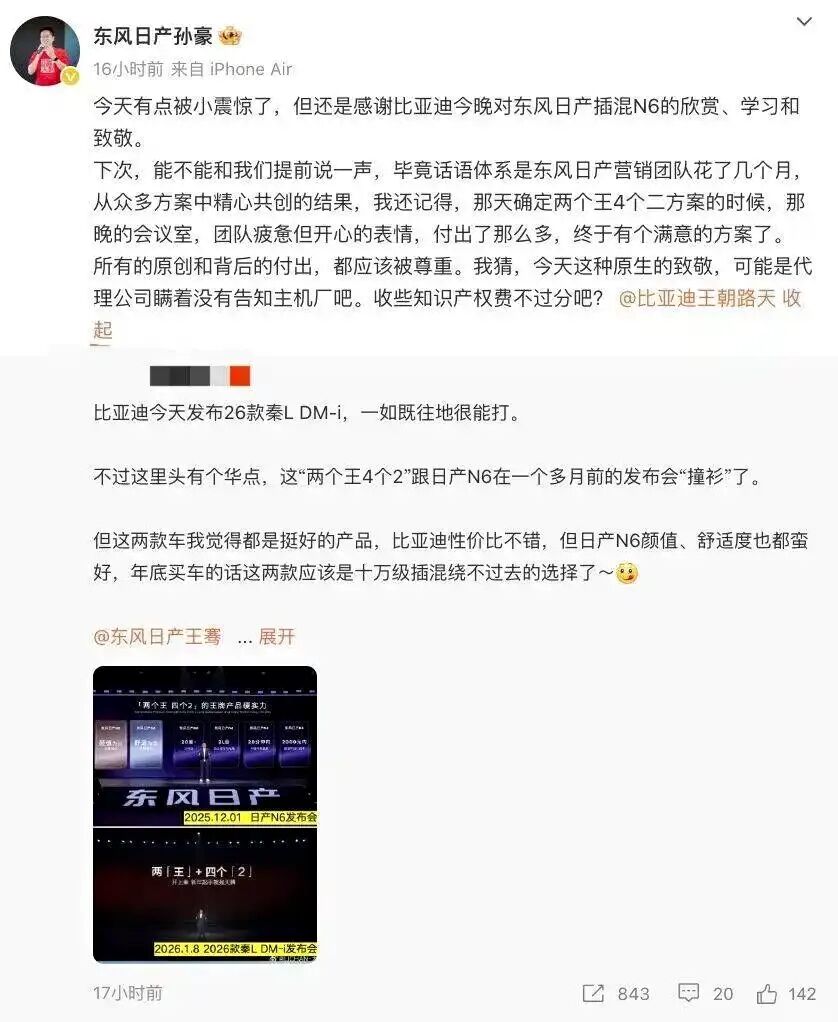
2026车圈第一瓜,比亚迪与东风日产在“斗地主”上起热议
3 6 Ke· 2026-01-29 13:47
Core Viewpoint - The recent controversy surrounding BYD's product launch and its similarity to Dongfeng Nissan's marketing language highlights the competitive dynamics and creative strategies within the automotive industry, particularly in the context of brand identity and innovation [1][3]. Group 1: Industry Dynamics - Dongfeng Nissan's recent marketing strategy has shifted towards "traffic-driven" approaches, aiming to attract consumer attention amid declining sales and market share [9][10]. - The company has faced a continuous decline in sales for seven consecutive years, with a reported 4.94% drop in 2025, leading to a reliance on a single model, the Sylphy, to maintain sales figures [11][12]. - The electric vehicle segment shows potential growth, but the N7 model has seen a significant drop in sales after an initial spike, indicating challenges in sustaining momentum [11][12]. Group 2: Brand Identity and Strategy - Historically, Nissan was synonymous with technology and reliability, but the shift towards a "traffic marketing" strategy suggests a departure from its technical roots [10][11]. - The company has been criticized for its slow response to the rise of domestic electric vehicle brands, which have rapidly adapted to market demands, while Nissan has lagged in its transition to electric vehicles [17][28]. - Nissan's decision to sell its global headquarters for 97 billion yen (approximately 4.5 billion RMB) reflects financial struggles, with reported losses of 670.9 billion yen (approximately 30.3 billion RMB) in the 2023-2024 fiscal year [12][13]. Group 3: Future Prospects - The partnership between Dongfeng and Nissan aims to leverage each other's strengths, with Dongfeng providing local market insights and Nissan contributing its global brand recognition [56][58]. - The introduction of the "GLOCAL" model in 2024 allows for greater autonomy in product development for the Chinese team, indicating a strategic shift to better align with local consumer preferences [36][58]. - Despite these changes, challenges remain, including geopolitical factors and the increasing focus on domestic brands, which may further complicate Nissan's market position in China [38][48].
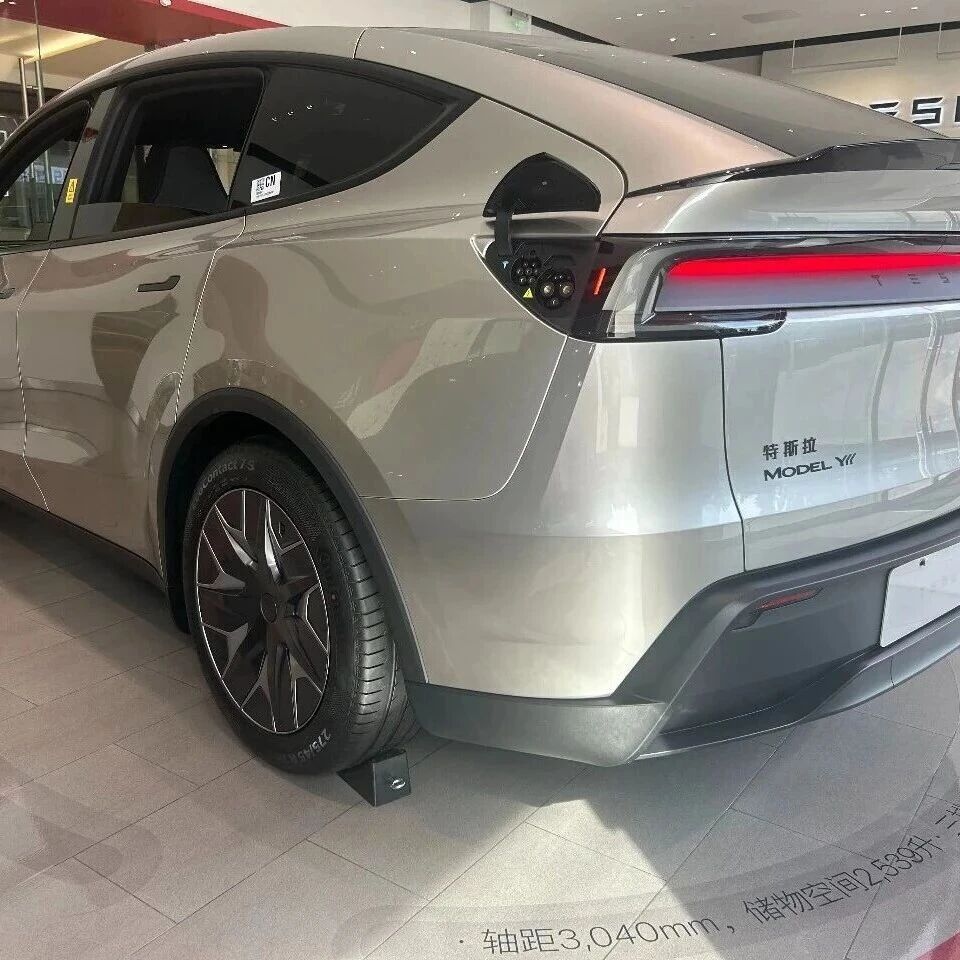
年度营收首降!汽车业务下滑10%,特斯拉万亿市值靠马斯克,还是“机器人”?
凤凰网财经· 2026-01-29 13:23
以下文章来源于时代周报 ,作者曹杨 任琰 时代周报 . 记录大时代,深读全商业。互联网新闻信息服务许可证编号:44120230006 1月29日,特斯拉(TSLA.US)发布了2025年第四季度及全年财务报告。 财报显示,特斯拉第四季度营收达 249.01亿美元,同比下降约3%;其中汽车业务收入为176.93亿美元,同比下降约11%。归属于特斯拉普通股股 东的净利润为8.4亿美元,同比下降约61%;非GAAP净利润为17.61亿美元,同比下降约16%。 | (nugunurea) | | | | | | | | --- | --- | --- | --- | --- | --- | --- | | ($ in millions, except percentages and per share data) | Q4-2024 | Q1-2025 | Q2-2025 | Q3-2025 | Q4-2025 | YoY | | Total automotive revenues | 19,798 | 13,967 | 16,661 | 21,205 | 17,693 | -11% | | Energy gener ...

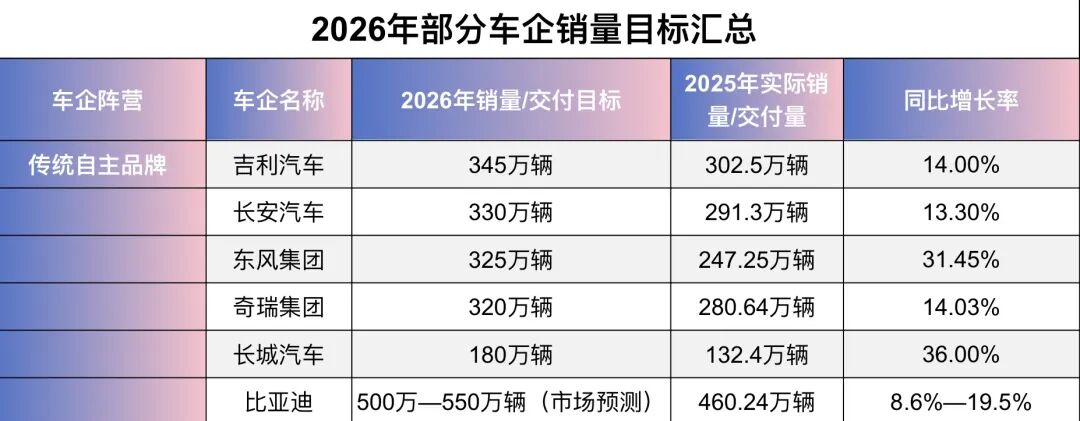
2026车企目标大“PK”
Guo Ji Jin Rong Bao· 2026-01-29 12:48
Core Insights - The Chinese automotive industry has shown impressive growth, with production and sales reaching 34.53 million and 34.40 million units respectively in 2025, marking a year-on-year increase of 10.4% and 9.4% [1] - New energy vehicle (NEV) sales reached 16.49 million units, achieving a penetration rate of 47.9% [1] - Major automakers have set ambitious sales targets for 2026, amidst challenges from policy changes, technological advancements, and global competition [1] Company Targets - Geely aims for a sales target of 3.45 million units in 2026, up 14% from 2025's 3.025 million units, with 64.3% of sales coming from NEVs [4] - Changan targets 3.3 million units, with NEV sales projected at 1.4 million units, reflecting a 26.2% increase [5] - Dongfeng Group's target is 3.25 million units, a 31.45% increase from 2025, with NEVs making up 52% of sales [6] - Great Wall Motors aims for 1.8 million units, a 36% increase, focusing on NEV and export markets [6] - BYD's projected sales for 2026 are between 5 million and 5.5 million units, with a growth rate of 8.5% to 19.5% [6] New Entrants and Growth - New entrants like Leap Motor and Hongmeng Zhixing are targeting sales of 1 million units, with significant growth rates of over 67% [7][9] - Leap Motor's sales target is 1 million units, up from 596,600 units in 2025 [9] - Hongmeng Zhixing is expected to reach between 1 million and 1.3 million units, with a growth rate of 70% to 120% [11] Industry Trends - The penetration rate of NEVs is expected to exceed 60% in 2026, driven by policy support and technological advancements [12] - The export model is shifting from "complete vehicle export" to "localized production and full industry chain layout," with significant growth in NEV exports [13] - The competitive landscape is transitioning from price wars to value-driven strategies, with a focus on technological innovation [15] - Market concentration is increasing, with leading brands capturing a larger market share, while weaker brands are likely to exit the market [15] Challenges and Uncertainties - The market faces uncertainties due to policy changes, such as the reduction of NEV purchase tax, which may affect consumer purchasing behavior [16] - Economic recovery is slower than expected, impacting consumer spending and demand for traditional vehicles [17] - Trade barriers and compliance risks are increasing for Chinese automakers expanding overseas, necessitating a balance between global operations and local compliance [17] Conclusion - The Chinese automotive market in 2026 is poised for significant transformation, emphasizing the shift towards NEVs and smart technologies, while navigating various uncertainties and competitive pressures [19]
美联储按兵不动,市场焦点转向公司业绩表现
2 1 Shi Ji Jing Ji Bao Dao· 2026-01-29 12:20
Group 1: Federal Reserve and Economic Outlook - The Federal Open Market Committee (FOMC) decided to pause interest rate cuts, citing strong economic growth and stable unemployment, with inflation remaining high [1][3] - The consensus within the FOMC is that the federal funds rate is at a "loosely neutral level," balancing inflation control and employment growth [3] - The Fed's ability to respond to employment and inflation risks has improved after three rate cuts, but future decisions will remain data-dependent [3] Group 2: Market Reactions and Performance - The stock market showed little reaction to the Fed's decision, with major indices like the Dow Jones and S&P 500 closing nearly unchanged [1] - The U.S. 10-year Treasury yield closed at 4.249%, while the 30-year yield approached 5% [2] - Gold and silver prices have risen significantly this year, with gold up 28.46% and silver up 66.77%, while the dollar index has decreased by 2.08% [2] Group 3: Corporate Earnings and Performance - Major banks like JPMorgan Chase, Wells Fargo, Citigroup, and Bank of America exceeded market expectations, with strong interest income indicating a bullish outlook for the banking sector in 2025 [4] - Microsoft reported adjusted earnings of $4.14 per share, exceeding expectations, but faced investor disappointment due to higher capital expenditures and lower cloud growth [4] - META's earnings surpassed expectations, with a reported EPS of $8.88, but its Reality Lab segment continues to incur significant losses [5] - Tesla's revenue and sales declined, but it still reported better-than-expected earnings, with a focus on future projects like Robotaxi and Optimus [6]


电动无人驾驶矿卡企业伯镭科技获比亚迪亿元战略投资
Xin Lang Cai Jing· 2026-01-29 11:59
Core Viewpoint - The strategic investment of 100 million yuan from BYD signifies market recognition of Berai Technology's technological direction and commercial value [1] Group 1: Investment Details - Berai Technology received a strategic investment of 100 million yuan from BYD [1] - The funds will be primarily used to enhance R&D investment, expand intelligent production capacity, accelerate domestic and international market expansion, and deepen industrial ecosystem cooperation [1] Group 2: Company Profile - Berai Technology is a leading provider of electric unmanned mining trucks and zero-carbon mining solutions in China [1] - The company has developed a full-stack technology system that addresses operational pain points in traditional mining [1] Group 3: Strategic Alignment - BYD's Chief Investment Officer, Li Qian, stated that Berai Technology's capabilities in unmanned mining and green energy supply complement BYD's core technological advantages in electrification and intelligence [1]
周一刻钟,大事快评(W142):隆盛科技更新、四季报前瞻
Shenwan Hongyuan Securities· 2026-01-29 11:25
Investment Rating - The industry investment rating is "Overweight," indicating that the industry is expected to outperform the overall market [15]. Core Insights - The report highlights the growth potential of 隆盛科技 in the commercial aerospace sector, focusing on core component supply and deepening relationships with key customers, successfully entering the satellite constellation supply chain [2][3]. - The company is expanding its production capacity in the harmonic reducer sector, aiming for 200,000 units by 2026, while also exploring new applications in commercial aerospace [4]. - The automotive industry shows a positive trend, with domestic and international vehicle production and sales increasing, particularly in the new energy vehicle segment [6][7]. Summary by Sections 隆盛科技 Update - 隆盛科技 is focusing on core component supply in the commercial aerospace sector, with its subsidiary 微研中佳 providing key components for satellite energy and control modules, successfully integrating into the supply chains of major aerospace companies [3]. - The company is also advancing in the harmonic reducer market, with a planned production capacity of 200,000 units by 2026, and is developing customized solutions for humanoid and industrial robots [4]. - Other business segments, including drones and precision components, are showing positive growth, with significant advancements in the natural gas heavy-duty truck EGR valve market [5]. Quarterly Report Preview - According to data from 中汽协, the total vehicle production and sales for Q4 2025 reached 10.186 million and 10.023 million units, respectively, marking year-on-year increases of 3.9% and 1.7% [6]. - Domestic retail share for independent brands reached 66.9% in Q4 2025, with a year-on-year increase of 3.2 percentage points, while new energy vehicle wholesale reached 4.89 million units, up 13.2% year-on-year [7]. - The average industry discount rate decreased by 1.33 percentage points to 12.28% in Q4 2025, indicating reduced terminal discounts [8]. - Traditional raw material price indices saw a decline, while new energy raw material prices and shipping costs increased, impacting supply chain profitability [8].
中国汽车_长远视角 -加速全球扩张-Chinese Autos_ The Long View – Accelerating Global Expansion
2026-01-29 10:59
Summary of Chinese Auto Brands' Overseas Expansion Industry Overview - The report focuses on the Chinese automotive industry, particularly the international expansion of Chinese auto brands, forecasting significant growth in overseas sales volumes and market share by 2030E. Key Forecasts and Projections - Chinese brands' overseas sales volume is projected to reach approximately **8-10 million units by 2030E**, up from **4 million units in 2025**. This indicates a **CAGR of 17-23%** from 2025 to 2030E [1][11][19]. - Long-term potential suggests that overseas volumes could reach **13-15 million units**, translating to a **20% market share** contingent on factors like regional EV adoption and geopolitical stability [1][11]. Market Share Growth - Chinese brands are expected to increase their market share outside China from **4% in 2023 to 6% in 2025E**, with a more bullish forecast of **13% by 2030E** [1][19]. - In **Eastern & Central Europe**, market share is projected to grow from **17% in 2023 to 24% in 2025**, with a forecast of **37% by 2030E** [2][19]. - In the **Middle East & Africa**, market share is anticipated to rise from **10% in 2023 to 17% in 2025**, with a target of **30% by 2030E** [3][19]. - In **LATAM**, market share is expected to increase from **7% in 2023 to 13% in 2025**, with a forecast of **30% by 2030E** [3][19]. Regional Insights - **ASEAN**: EV penetration is projected to exceed previous forecasts, reaching **18% in 2025** compared to an earlier estimate of **11%**. Chinese brands' market share is expected to grow from **5% in 2023 to 14% in 2025**, with a target of **35% by 2030E** [4][31]. - **Western Europe**: Despite geopolitical tensions, there is cautious optimism for market entry, with potential sales exceeding initial forecasts driven by strong ICE sales. Proposed tariff relaxations could further enhance market opportunities [5][21]. - **Oceania**: Chinese brands are gaining market share from Japanese brands, increasing from **12% in 2023 to 17% in 2025**, with a forecast of **30% by 2030E** [4][73]. Competitive Landscape - Chinese OEMs have outperformed expectations in both ICE and EV segments, with significant market share gains at the expense of established brands [2][27]. - The report highlights that Chinese brands are particularly strong in the EV market, capturing **77% of the EV market share in LATAM** [44]. Investment Implications - **BYD** is identified as the top pick for overseas expansion due to its strong portfolio of affordable and competitive electric vehicles, including both BEVs and PHEVs [8][9]. - Other brands rated as Outperform include **Xiaomi** and **Geely**, while brands like **XPeng**, **Li Auto**, **NIO**, **Great Wall**, **SAIC**, and **GAC** are rated as Market-Perform [9]. Challenges and Risks - Chinese brands face challenges from geopolitical tensions, brand perception issues, and limited local expertise in foreign markets. Localization strategies are deemed essential to mitigate these risks [6][20]. - The report notes that while Chinese brands are well-positioned for growth, they must navigate operational challenges such as underdeveloped charging infrastructure and after-sales service networks [32]. Conclusion - The outlook for Chinese auto brands in international markets is increasingly positive, with significant growth potential driven by competitive pricing, technological advancements, and strategic market entries. The report emphasizes the importance of adapting to local market conditions and consumer preferences to sustain this growth trajectory [6][24].