Burberry

Search documents
从表达到共鸣:品牌与消费者的沟通之道
Bei Jing Shang Bao· 2025-07-15 16:01
Group 1: Market Trends - Several luxury brands are adjusting their strategies in the Chinese market, with Gucci closing 6 stores in a year and Burberry's sales in Greater China declining by 21% year-on-year [1] - The Zegna Group reported a 14.5% decrease in revenue in China, and a total of 14 stores were closed by six top luxury brands in mainland China throughout 2024 [1] - Bain & Company forecasts a 2% decline in global personal luxury goods consumption in 2024, marking the first drop in a decade [1] Group 2: Brand Strategy Insights - Zhang Chunyu, a brand management expert, emphasizes the importance of establishing genuine connections with consumers rather than merely focusing on product sales [1][3] - The shift from heavy flavors to lighter, more refreshing tastes in snack foods reflects changing consumer preferences, as seen in the successful launch of Lay's cucumber-flavored chips [4][5] - Cartier's strategy to reposition its wedding rings involved shifting the narrative from traditional luxury to focusing on emotional connections in relationships, leading to increased consumer engagement [6][7] Group 3: Cultural Relevance - International brands are facing challenges in connecting with Chinese consumers, as traditional marketing approaches feel disconnected [9][10] - The collaboration between Coach and the iconic Chinese brand White Rabbit represents a significant cultural crossover, allowing Coach to resonate more deeply with local consumers [10][11] - The success of this collaboration demonstrates the potential for international brands to use local cultural symbols to create emotional connections with consumers [10][11] Group 4: Brand Growth Principles - Zhang Chunyu has developed a "brand growth principles" methodology that emphasizes understanding consumer needs, establishing strategic brand positions, and ensuring consistent brand expression across all touchpoints [12][13] - This approach aims to transition brands from price competition to value-driven engagement, aligning with modern consumer expectations for brand values and experiences [12][13]



2025年第27周:服装行业周度市场观察
艾瑞咨询· 2025-07-13 11:55
Industry Environment - Traditional luxury brands with similar aesthetics are being surpassed by more agile and culturally rooted competitors, facing a significant challenge in the global luxury market with an expected decline of 2%-5% in 2024 [1] - The luxury market is experiencing varied performance across regions, with the US and China showing weakness, while Europe remains stable and the Middle East and Southeast Asia demonstrate resilience [1] - Brands are responding to market challenges through innovation, diverse experiences, and entry-level products, emphasizing the need for creativity, technology, and customer relationships to attract younger consumers [1] Emotional Economy - The popularity of Labubu highlights the potential of the emotional economy in the toy market, with projected sales exceeding 3 billion yuan in 2024 [2] - There is a growing focus on the emotional needs of the elderly, with a significant increase in searches and sales for senior-friendly toys, reflecting demands for social interaction and cognitive training [2] - The senior toy market is moving towards standardization and technological innovation, aiming to foster intergenerational emotional connections and enhance the well-being of older adults [2] Outdoor Sports - Outdoor sports are becoming increasingly popular among young people, with a surge in sales of related products on e-commerce platforms [3] - The 95 post-90s generation participates in outdoor activities to relieve stress and connect with nature, pushing the industry from niche to mainstream [3] - Despite potential market bubbles, the outdoor equipment market is projected to reach 65.93 billion yuan by 2030, necessitating a balance between marketing and product development for sustainable growth [3] Fashion Trends - The shift from loose silhouettes to fitted tailoring is evident in Martine Rose's spring/summer collection, inspired by childhood experiences and retro styles [4] - The fashion industry is returning to traditional fitted designs to address creative stagnation, with brands like Acne Studios and Saint Laurent also emphasizing tailored cuts [4] Luxury Goods Market - During the Tmall 618 shopping festival, luxury brands saw significant growth, with Tmall's GMV increasing by 10% year-on-year and luxury goods outperforming other categories [5] - The platform's initiatives, such as the "Red Cat Plan," have driven traffic and doubled brand sales through live streaming and AI technology [5] Footwear Market - High-priced running shoes have become a status symbol among China's middle class, serving both health and social purposes [6] - As consumers become more price-conscious, the market is seeing increased competition, necessitating a return to value and technological innovation for sustained growth [6] Brand Communication - Luxury brands like LOEWE and Balenciaga are enhancing their brand narratives through immersive experiences and deep content storytelling in response to fragmented online communication [7] - These brands are leveraging social media to create cohesive content matrices that improve communication efficiency and meet consumer expectations for depth and sincerity [7] Men's Fashion Trends - The Pitti Uomo men's fashion exhibition highlighted the influence of cycling and active lifestyles on men's fashion, showcasing brands that emphasize lightness, functionality, and comfort [8] - Emerging brands are focusing on innovation and sustainability, reflecting a shift in design inspiration towards diverse athletic scenarios [8] Sunscreen Market - The sunscreen clothing market is experiencing rapid growth, projected to reach 95.8 billion yuan by 2026, despite issues like misleading UPF ratings and quality concerns [9] - As consumers become more discerning, brands must focus on genuine needs and improve product quality to succeed in a competitive landscape [9] Toy Industry - The toy industry is evolving with the rise of emotional consumption, as seen in the success of Labubu and the increasing interest in collectible blind boxes [10][11] - The market is becoming more concentrated, with leading companies like 52TOYS and TOPTOY accelerating their development, while the sustainability of industry hype remains in question [10][11] Footwear Trends - Barefoot shoes are gaining popularity as a niche category in the sports shoe market, aligning with the trend of returning to nature and healthy living [12] - Despite challenges like product homogeneity, future winners in this space will rely on technological development and community engagement to convert concepts into value [12] FIFA's Fashion Venture - FIFA is launching its own high-end fashion brand, FIFA1904, in collaboration with VFiles, aiming to expand its cultural influence and revenue streams [13] - This move reflects FIFA's strategy to diversify its commercial operations ahead of the 2030 World Cup, despite concerns over market positioning and identity compliance [13] Women's Sportswear - The sizing of women's sportswear is causing new body image anxieties, with a shortage of larger sizes in the domestic market [14] - Brands are encouraged to address diverse body types and provide more inclusive sizing options to meet the evolving consumer demands [14] Brand Developments - Non-Fungible Group appointed Victor Herrero as co-CEO, reflecting a strategic focus on brand transformation and supply chain management [15] - The new store opening for "Benlai" in Shanghai emphasizes sustainable fashion and community engagement through art installations and eco-friendly initiatives [16] Gender-Neutral Fashion - HOPE brand promotes gender fluidity through its "Style Before Gender" philosophy, focusing on timeless designs and practical aesthetics [25] - The brand's latest collection merges narrative and functionality, establishing itself as a benchmark in Swedish fashion [25]

为什么越丑的鞋越值钱?
3 6 Ke· 2025-07-08 23:38
Group 1 - The core argument of the article highlights the unexpected success of "ugly shoes," particularly Crocs and Birkenstock, which have gained popularity despite initial criticism, with Crocs outperforming the Dow Jones U.S. Shoe Company Index for four consecutive years [2][18] - Birkenstock has seen continuous double-digit revenue growth for nine consecutive quarters, demonstrating that "ugliness" can translate into commercial success [3][18] - The rise of Birkenstock was significantly boosted by its appearance in the movie "Barbie," leading to a 110% increase in search volume on fashion platform Lyst [6][18] Group 2 - Both Crocs and Birkenstock share a foundation in practicality, with Birkenstock focusing on foot health and comfort, while Crocs emphasized comfort and ease of cleaning [7][9] - Crocs experienced a 300-fold increase in revenue from 2003 to 2006, driven by word-of-mouth among professionals like chefs and doctors [9][18] - The operational strategies of Crocs and Birkenstock differ significantly, with Crocs adopting a high-volume, low-cost model, while Birkenstock maintains a focus on scarcity and high-quality production in Germany [23][24] Group 3 - Crocs has shifted production to third-party manufacturers, allowing for flexibility and rapid response to market demands, but this has also led to a high incidence of counterfeiting [24][11] - In contrast, Birkenstock controls its production closely, with 95% of its products made in Germany, which helps maintain brand integrity and pricing power [24][25] - Birkenstock's average selling price has consistently increased, with a high full-price sell-through rate of 90%, indicating strong brand positioning in the market [28][18] Group 4 - The article emphasizes that the key to success for these brands lies not just in their "ugliness," but in the additional value they provide to consumers, creating a narrative that resonates with their audience [29][32] - Birkenstock's commitment to traditional craftsmanship and European materials enhances its brand value, distinguishing it from mass-produced alternatives [32][33] - The luxury positioning of Birkenstock has allowed it to thrive in a market where scarcity and exclusivity are highly valued, contrasting with Crocs' volume-driven approach [28][18]

Burberry又要靠奥特莱斯清货了
36氪· 2025-07-08 00:04
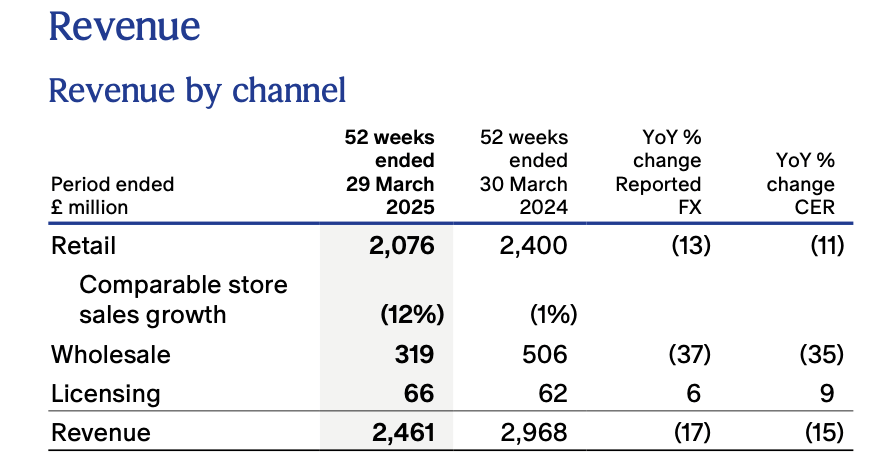
Core Viewpoint - Burberry's proactive price reduction strategy has led to a significant recovery in its stock price, increasing over 70% since mid-April, despite facing severe challenges in the luxury goods sector [3][4]. Financial Performance - For the fiscal year 2025, Burberry reported revenues of £2.461 billion, a 17% decrease year-on-year, with adjusted operating profit dropping 94% to £26 million [4][5]. - Compared to fiscal year 2024, Burberry's performance worsened, with revenues down 4% to £2.968 billion and adjusted operating profit down 34% to £418 million [5]. - Comparable store sales fell by 12% in fiscal year 2025, with the Asia-Pacific market experiencing a 16% decline, particularly in mainland China and South Korea, which saw drops of 15% and 18% respectively [6][8]. Strategic Changes - Under the new CEO Joshua Schulman, Burberry has shifted its strategy to focus on classic products and reduce prices, moving away from previous high-end strategies [10][11]. - The company plans to cut approximately 1,700 jobs, which is nearly 20% of its global workforce, aiming to save £60 million by fiscal year 2027 [10]. - The fourth quarter of fiscal year 2025 showed a narrowing decline in comparable store sales to 6%, better than the market expectation of 7.78% [9]. Market Dynamics - Japan was the only market to show growth for Burberry, with a slight increase of 1%, primarily driven by spending from Chinese tourists [7]. - The luxury market is seeing a shift where consumers are increasingly favoring value-for-money products, leading to a decline in full-price sales channels [19]. - Outlet sales have grown by 1% to 5%, indicating a strong performance in discount channels, which are becoming essential for luxury brands [19]. Inventory and Profitability - Burberry is facing significant inventory challenges, with a reported 7% decrease in total inventory at constant exchange rates [20]. - The company's gross margin for the fiscal year was 62.5%, down 470 basis points at constant exchange rates, primarily due to actions taken to address inventory overhang [20]. - The reliance on outlet sales may dilute Burberry's high-end brand image, potentially affecting its long-term sales and brand perception [21].
一条婴儿围脖200块,Bonpoint凭什么收割中产父母?
Xin Lang Cai Jing· 2025-07-07 07:56
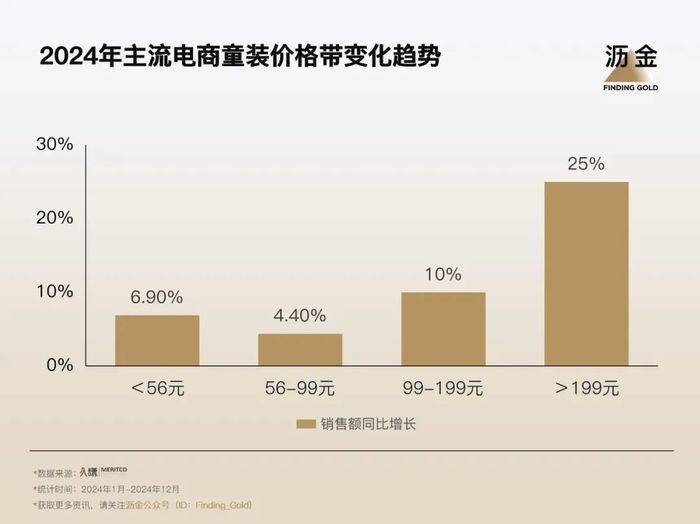
Core Insights - Bonpoint, a high-end children's clothing brand from France, has positioned itself as a luxury option in the children's apparel market, with a significant price point that reflects its premium branding [1][2] - The brand's annual revenue is approximately €150 million (around ¥1.15 billion), with 48% of its sales coming from the Asian market, indicating strong growth potential in this region [1] - The acquisition of Bonpoint by domestic apparel giant Youngor highlights a strategic shift towards high-end children's fashion amidst declining sales in traditional menswear categories [2][3] Market Dynamics - The children's clothing sector is experiencing growth in both scale and average transaction value, contrasting with the stagnation seen in traditional apparel categories [5] - Despite a declining birth rate, parents are increasingly willing to spend on high-quality children's clothing, suggesting a shift in consumer behavior towards premium products [5][11] - Bonpoint fills a market gap for true high-end children's brands, differentiating itself from mass-market players and luxury adult brands that lack tailored designs for children [8][12] Consumer Targeting - Bonpoint effectively targets affluent new middle-class families in major urban centers, with a focus on high-end retail locations [10][11] - The brand's appeal lies in its ability to combine quality, aesthetic appeal, and emotional connection for parents, who prioritize both safety and style for their children [12][13] - The unique positioning of Bonpoint allows it to command high prices while maintaining consumer perception of value, as parents are willing to invest in premium clothing for their children [13][16] Strategic Implications - Youngor's acquisition of Bonpoint is a strategic move to tap into the lucrative high-end children's apparel market, leveraging its supply chain and commercial real estate resources to enhance Bonpoint's growth [16] - The success of Bonpoint will depend on Youngor's ability to integrate its operational strengths with the brand's established market presence and unique value proposition [16]
X @The Wall Street Journal
The Wall Street Journal· 2025-07-04 13:24
Burberry pursued a niche aesthetic at the expense of its universal luxury appeal. New CEO Joshua Schulman is refocusing on more accessible, classic British outwear. https://t.co/p1vZRWpP0c ...
X @Bloomberg
Bloomberg· 2025-07-04 04:20
Brands such as Burberry stand to benefit from Oasis reviving '90s Britpop, @AndreaFelsted writes (via @opinion) https://t.co/GSbd43Wera ...
Burberry又要靠奥特莱斯清货了
Sou Hu Cai Jing· 2025-06-27 08:40
Core Viewpoint - Burberry's proactive price reduction strategy has led to a significant recovery in its stock price, increasing over 70% since mid-April 2023, despite facing severe challenges in the luxury goods sector [2][6]. Financial Performance - For the fiscal year 2025, Burberry reported revenues of £2.461 billion, a 17% decrease year-on-year, with adjusted operating profit down 94% to £26 million [2][5]. - Comparable store sales fell by 12% for the fiscal year, with the Asia-Pacific market experiencing a 16% decline [3][5]. - The fourth quarter showed a narrowing decline in comparable store sales to 6%, better than the market expectation of 7.78% [5]. Strategic Changes - New CEO Joshua Schulman has implemented a strategic shift focusing on classic products and reducing prices, moving away from previous high-end strategies [6][7]. - The company plans to cut approximately 1,700 jobs, which is nearly 20% of its global workforce, aiming to save £60 million by fiscal year 2027 [6][8]. Market Dynamics - Japan was the only market to show growth for Burberry, with a slight increase of 1%, primarily driven by spending from Chinese tourists [4]. - The outlet channel has become increasingly important, with Burberry being referred to as the "Outlet Queen," as it has performed well despite challenges in high-end retail locations [8][10]. Inventory and Pricing Strategy - Burberry has faced significant inventory issues, leading to a 7% decrease in total inventory at constant exchange rates [11]. - The company's gross margin fell to 62.5%, down 470 basis points at constant exchange rates, primarily due to discounting actions to manage excess inventory [11].
奢侈品消费变迁?消费者转向特卖会
Sou Hu Cai Jing· 2025-06-24 14:21
Core Insights - The luxury goods market has traditionally relied on price increases to maintain brand prestige and consumer perception, leveraging the "Veblen effect" where higher prices signal higher quality and status [1][3] - However, recent trends indicate a shift in consumer behavior, with a reported average price increase of only 2% in luxury goods this year, the smallest in recent years, reflecting a more pragmatic approach from consumers [3][5] - Younger consumers are increasingly focused on the actual value of products rather than their price or brand, leading to a rise in discount platforms and sales events that offer luxury items at more accessible prices [5][7] Group 1 - Luxury brands have historically used price hikes to enhance their image and create a sense of exclusivity, making consumers feel that high-priced items signify success and status [3][5] - The recent HSBC report highlights a significant change in consumer attitudes, with a mere 2% average price increase in luxury goods, indicating a shift towards more practical purchasing decisions [3][5] - Consumers are now more informed and discerning, often researching product materials and craftsmanship, which diminishes the effectiveness of traditional pricing strategies [5][7] Group 2 - The emergence of discount platforms like Vipshop has gained popularity among consumers who still appreciate luxury brands but seek better value for their money [5][7] - Recent discount events featuring brands like Burberry and COACH have attracted not only regular luxury buyers but also new consumers who are eager to take advantage of lower prices [5][7] - Overall, the luxury market is adapting to a more diverse consumer base that values cost-effectiveness, leading to new sales models and a more varied shopping experience [7]


如何让消费者真的动“新”?
虎嗅APP· 2025-06-21 08:58
Core Viewpoint - The current consumer trend is redefining "new product launches" by emphasizing emotional resonance and social engagement rather than just functional upgrades or price competitiveness [3][5][26]. Group 1: Consumer Behavior and Expectations - Consumers are increasingly looking for products that resonate with their emotions and lifestyles, rather than just additional features or aesthetic changes [3][4]. - Successful new products often tell a story or evoke a sense of nostalgia, as seen with the popularity of the Fujifilm X-Half, which appeals to a "retro film" aesthetic [3][7]. - The emotional connection and understanding of consumer needs are crucial for brands to stand out in a crowded market [5][26]. Group 2: New Product Launch Strategies - Brands must move beyond traditional SKU replacement strategies and engage consumers in a co-creation process that makes new launches feel like events [4][8]. - The Tmall platform has successfully facilitated the launch of numerous new products, with data showing significant sales growth, including five products achieving over 1 billion in sales and over 120 products exceeding 1 million [7][20]. - The introduction of immersive content and interactive experiences, such as live streaming and short videos, has transformed how new products are showcased, making them more engaging for consumers [8][9]. Group 3: Emotional Engagement and Consumer Trust - Emotional engagement is essential for driving immediate purchases, as consumers are more likely to buy when they feel a connection to the product [10][12]. - Tmall's approach to creating a sense of exclusivity and personalized experiences, such as limited edition products and celebrity collaborations, enhances consumer trust and willingness to purchase [12][21]. - The integration of comprehensive subsidy mechanisms, including government and platform discounts, has increased consumer confidence in their purchasing decisions [15][20]. Group 4: Trends and Market Dynamics - The resurgence of vintage and retro trends reflects a broader desire among younger consumers for meaningful and quality experiences, which presents opportunities for brands to innovate [23][26]. - Tmall's collaboration with fashion influencers and trendsetters has successfully tapped into these emerging trends, driving significant sales for brands like Burberry [23][26]. - The platform's ability to create trend-driven environments not only boosts product visibility but also fosters a deeper connection between brands and consumers [26].