
大疆

Search documents
构建世界级商圈,深圳的密码不止于消费
2 1 Shi Ji Jing Ji Bao Dao· 2025-09-30 10:24
Core Insights - Shenzhen is rapidly enhancing its offline consumption landscape with the opening of new commercial complexes and flagship stores, positioning itself as an international consumption center [1][2][3] Group 1: New Commercial Developments - The opening of Shenzhen Bay MixC Phase II and the first JD MALL in Nanshan marks the introduction of four new commercial complexes in the Houhai-Shenzhen Bay business district this year [1][2] - Shenzhen Bay MixC Phase II spans 167,000 square meters and features over 300 international brands, including more than 50 luxury and designer labels [2] - The Shenzhen Municipal Bureau of Commerce has identified the Houhai-Shenzhen Bay area as a "world-class business district" with significant long-term potential [1] Group 2: International Brand Integration - Shenzhen is attracting a variety of world-class brands, enhancing the shopping experience and creating a unique consumer environment [2][3] - The introduction of high-end brands and Michelin-starred restaurants in new complexes is diversifying Shenzhen's luxury consumption landscape [2] Group 3: International Consumption Environment - Shenzhen has seen 130 million inbound and outbound travelers in the first half of the year, highlighting the city's potential to convert tourist foot traffic into consumer spending [3] - The establishment of multiple tax refund points and "immediate refund" stores in the Nanshan District is improving the international shopping experience [3] Group 4: Technology-Driven Consumption - The launch of flagship stores for tech brands like Honor and Tuo Zhu in Shenzhen Bay MixC Phase II emphasizes the city's focus on technology-enhanced shopping experiences [4][6] - The integration of cutting-edge technology in retail, such as AI and 3D printing, is positioning Shenzhen as a leader in innovative consumer experiences [6][7] Group 5: Youth and Trend-Driven Consumption - The emergence of popular cultural icons and experiential marketing strategies is attracting younger consumers and enhancing the shopping atmosphere in Shenzhen [9][10] - Projects like K11 ECOAST and Taizi Bay VILLA are creating unique retail experiences that cater to high-end and tech-savvy consumers [9][10]
深圳的底牌,不只是华为和大疆
Sou Hu Cai Jing· 2025-09-30 09:20
Core Insights - Shenzhen is launching a significant initiative to modernize traditional industries, focusing on sectors like clothing, jewelry, and eyewear, aiming to build a modern industrial system [1][2] - The city has introduced 12 major policies to boost traditional industries, targeting a total scale of over 700 billion yuan within three years [2][4] Policy Initiatives - The policies aim to support enterprises throughout their lifecycle, enhancing their growth and strength [4][5] - Key measures include optimizing the industrial policy system, strengthening investment through diversified funds, and accelerating core technology advancements [4][5] - The initiative emphasizes embracing artificial intelligence to foster new momentum in traditional industries [4][12] Industry Strengths - Shenzhen's clothing industry leads the nation in brand quantity, market share, and number of listed companies [4] - The gold and jewelry sector has maintained the highest industrial output value in the country, with annual gold delivery accounting for approximately 70% of the Shanghai Gold Exchange [4] - The city produces about 50% of the world's mid-to-high-end eyewear [4] Strategic Importance - The focus on traditional industries is part of a broader strategy to adapt to global industrial chain competition, emphasizing the need for both emerging and traditional industries to thrive [11][19] - Shenzhen's traditional industries are described as "invisible pillars" of the economy, having evolved from basic manufacturing to high-end manufacturing clusters with global influence [11][19] Technological Integration - The integration of technology into traditional industries is seen as essential for achieving dual-driven growth [12][13] - Successful cases include collaborations between tech companies and traditional businesses to enhance service efficiency and product innovation [12] Financial Support - Shenzhen has established a digital transformation support plan for traditional industries, offering subsidies up to 5 million yuan for eligible projects [17] - The city is also implementing various policy tools to help enterprises access resources at lower costs [16][17]


深圳外贸再拔头筹 结构优化韧性彰显
Zhong Guo Xin Wen Wang· 2025-09-30 06:03
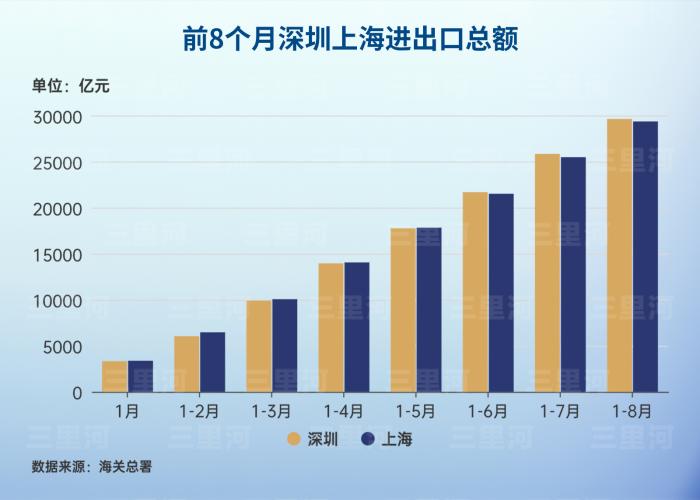
Core Insights - Shenzhen's total import and export volume reached 2.96 trillion yuan from January to August this year, leading major foreign trade cities in China and surpassing Shanghai by 27.181 billion yuan [1] - The international environment is becoming increasingly complex, putting pressure on major foreign trade cities in China as they approach 2025 [3] - Shenzhen has not only maintained its trade volume but has also demonstrated structural resilience against risks [4] Trade Performance - In 2024, Shenzhen's import and export scale is projected to exceed 4 trillion yuan, reaching 4.50 trillion yuan, a year-on-year increase of 16.4%, surpassing Shanghai's 4.27 trillion yuan [5] - Despite facing pressure in the first five months of this year, Shenzhen regained its leading position in foreign trade starting from June [5] Trade Structure - Shenzhen's foreign trade exhibits significant diversification and high added value compared to traditional cities reliant on processing trade [6] - Private enterprises accounted for nearly 70% of Shenzhen's import and export activities, with foreign-invested enterprises also experiencing rapid growth [6] - The import of electromechanical products reached 949.16 billion yuan in the first eight months, marking a year-on-year increase of 12.5% [6] Industrial Strength - Shenzhen boasts the most complete high-tech industrial chain in the country, with competitive local enterprises in sectors such as communication equipment, smartphones, and new energy vehicles [7] - In the first eight months, private enterprises in Shenzhen had an import and export volume of 2.06 trillion yuan, representing 69.6% of the city's total [7] - Foreign-invested enterprises contributed 788 billion yuan, a year-on-year growth of 11.6%, accounting for 26.6% of the total [7] Comparative Analysis - Shenzhen is characterized by a strong export orientation, with exports making up 62% of its total import and export volume in 2024, maintaining the top position in national exports for 32 consecutive years [8] - In contrast, Shanghai plays a more prominent role as an "import hub," with imports constituting 57% of its total trade volume [8] - Both cities are crucial to the stability of China's overall foreign trade landscape, showcasing their respective strengths in high-quality foreign trade development [9]
从烧钱到造血:极飞科技闯关港股 讲述农业机器人差异化生存故事
Zhi Tong Cai Jing· 2025-09-30 02:43
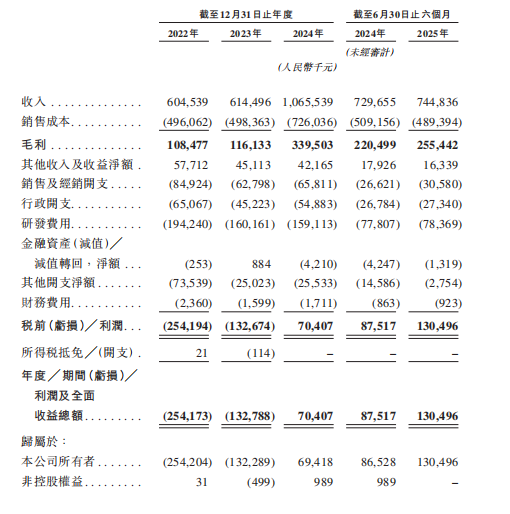
Core Viewpoint - The company, XAG, has submitted its IPO application to the Hong Kong Stock Exchange, marking its second attempt after withdrawing its application in 2021. The company has shown significant financial improvement, achieving profitability in 2024 after a period of losses [1][10]. Financial Performance - XAG's revenue increased from 6 billion RMB in 2022 to 10.66 billion RMB in 2024, while net losses narrowed from 2.5 billion RMB to 1.3 billion RMB during the same period. In 2024, the company reported a net profit of 7041 million RMB, a significant turnaround from previous losses [2][3]. - The company's cash flow showed a V-shaped recovery, with net cash inflow from operating activities of 1.9 billion RMB in 2024, compared to a net outflow of 2.4 billion RMB in 2022 [4]. Market Position - XAG ranks second in the global agricultural drone market, holding a 17.1% market share, while the industry leader DJI commands over 50% of the market. The company focuses on high-end markets and aims to differentiate itself through comprehensive automation solutions [7][8]. Growth Potential - The global agricultural robotics market is projected to grow from 8.9 billion RMB in 2024 to 74.9 billion RMB by 2029, with a compound annual growth rate of 53.3%. The Chinese market is expected to reach 20 billion RMB, driven by labor shortages and increased demand for precision agriculture [7]. Strategic Challenges - XAG faces significant competition from DJI, which has established a strong distribution network in rural China. The company is focusing on overseas markets to mitigate domestic competition, with international revenue increasing from 1.5 billion RMB in 2022 to 3.7 billion RMB in 2024 [8][9]. - The company’s revenue is heavily reliant on its agricultural drone business, which accounted for 87.8% of total revenue in 2024. This concentration poses risks, as new business lines are still in the early stages of commercialization [6]. Investment and R&D - XAG has undergone multiple rounds of financing, with significant investments from notable firms. The company allocates over 20% of its revenue to R&D, focusing on core technologies such as sensors and AI algorithms [9][10]. - The IPO is seen as a crucial step for the company to overcome funding challenges and expand its production capacity and overseas market presence [9].

新股前瞻|从烧钱到造血:极飞科技闯关港股 讲述农业机器人差异化生存故事
智通财经网· 2025-09-30 02:38
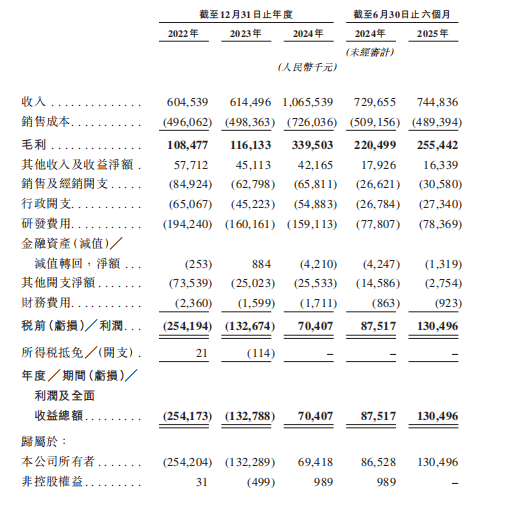
Core Insights - Company X, a leading player in the agricultural drone market, has submitted its IPO application to the Hong Kong Stock Exchange, marking its second attempt after withdrawing its application in 2021 [1] - The company ranks second globally in the agricultural drone market, holding nearly 80% market share alongside industry giant DJI [1] - In 2024, the company is projected to achieve revenue exceeding 1 billion RMB, turning a profit with a net income of 70.4 million RMB, a significant improvement from previous years of losses [1] Financial Performance - The financial data indicates a strategic shift from "burning cash for expansion" to "cost control and revenue generation" [2] - Revenue grew from 600 million RMB in 2022 to 1.066 billion RMB in 2024, while net losses decreased from 250 million RMB to 13 million RMB during the same period [2] - In the first half of 2025, revenue reached 745 million RMB, a 2% year-on-year increase, with profits soaring by 49.1% to 130 million RMB, maintaining a gross margin of 34.3% [2] Cash Flow Analysis - A clear V-shaped recovery in cash flow is observed, with net cash outflow of 240 million RMB in 2022 turning into a net inflow of 190 million RMB by 2024 [4] - However, in the first half of 2025, cash flow from operations turned negative again, indicating potential vulnerabilities in the company's financial stability [5] - The company’s cash reserves remained relatively stable, fluctuating from 377 million RMB at the beginning of 2022 to 345 million RMB in mid-2025, providing a cushion for business transformation [6] Market Opportunities - The global agricultural robotics market is expected to grow from 8.9 billion RMB in 2024 to 74.9 billion RMB by 2029, with a compound annual growth rate of 53.3% [7] - The Chinese market is projected to reach 20 billion RMB, driven by labor shortages and increasing demand for precision agriculture [7] Competitive Landscape - The primary challenge for the company comes from DJI, which holds over 50% of the global market share in agricultural drones, while the company only accounts for 17.1% [8] - The company is focusing on differentiated strategies, such as full automation solutions and expanding overseas markets, which accounted for 34.8% of revenue by 2024 [8] Investment and Future Growth - The company has undergone multiple rounds of financing, with notable investors including Hillhouse Capital and SoftBank Vision Fund, and is valued at 7.3 billion RMB as of July 2025 [9] - The IPO is seen as a crucial step to overcome funding bottlenecks, with R&D expenditures exceeding 20% of revenue in 2022 and 2023 [9] - Future growth will depend on technology iteration speed, scalability, and the regulatory environment, particularly in light of global trade protectionism [9][10]
OPPO也要做手持云台相机,对标大疆,计划2026年内发布;手机厂商海报小字引发热议,魅族高管回应;曝顶级AI大牛加入阿里通义
雷峰网· 2025-09-30 00:53
Key Points - Gree Electric's live streaming event showcased the purification of Yellow River water, demonstrating the effectiveness of their water purification products [3][5] - OPPO plans to enter the handheld gimbal camera market, targeting a release by 2026, competing with brands like GoPro and DJI [8] - Xiaomi's Lu Weibing discussed the strategic goals for the Xiaomi 17 series, aiming to compete directly with Apple and enhance product structure [12] - Huawei appointed Yu Chengdong as the head of its AI Research Board, emphasizing the company's focus on AI development [13] - Xpeng Motors' CEO He Xiaopeng shared his investment principles, highlighting a significant profit from investing in Xiaomi stocks [26] - Beijing BOE Technology Group has established a new robotics company with a registered capital of 200 million RMB, expanding into the robotics sector [24][25] - First Brands, a US automotive parts manufacturer, filed for bankruptcy protection due to heavy debts from acquisitions [36]

年度实测|我们在2024-2025都踩过什么坑,又真香了哪些好物?
虎嗅APP· 2025-09-29 13:19
Core Insights - The article discusses the dichotomy of consumer behavior, highlighting the tension between rationality and emotion in spending decisions [3] - It features user feedback from the "早点生活" community, showcasing both valuable purchases and regrettable ones [4][29] Group 1: Valuable Purchases - Users reported high satisfaction with products like the Joyoung blender, which is used frequently for making warm drinks [6] - The portable heated water cup was praised for its convenience in winter [8] - The Proya skincare product received positive feedback for improving skin condition [9] - Other recommended items include the Shokz bone conduction headphones and Xiaomi water dispenser, noted for their practicality and efficiency [16][18] Group 2: Regrettable Purchases - Several users expressed disappointment with items like the PS5 and a treadmill, which ended up being underutilized [26][27] - The SKG neck massager was specifically mentioned as uncomfortable and not recommended [27] - Other products that received negative feedback include the DJI Action 5 camera and various skincare items that did not meet expectations [23][22] Group 3: Consumer Insights - The feedback emphasizes that true value in products is derived from everyday use, suggesting a need for more practical and reliable consumer goods [29] - The article introduces the "向上向新榜单" initiative, aiming to curate a list of top products based on user experiences and professional evaluations [29]

唯特偶(301319) - 2025年9月29日投资者关系活动记录表
2025-09-29 12:58
Group 1: Production and Capacity Utilization - The company's production capacity utilization is currently operating efficiently across major product lines, with variations based on product type and process stages [1] - Future plans include expanding customer resources and order sizes to further enhance capacity utilization and operational efficiency [1] Group 2: Market Trends and Opportunities - Rapid growth in emerging industries such as electric vehicles, 5G communication, and artificial intelligence is driving demand for high-end microelectronic welding materials [2] - The company aims to become a global supplier of electronic assembly and reliability materials by leveraging a dual-driven strategy of "electronic assembly materials + reliability materials" [2] Group 3: International Expansion - The company follows a "global layout, deep cultivation of local markets" strategy, establishing subsidiaries in regions like Hong Kong, Singapore, the USA, Vietnam, Thailand, and Mexico [3] - A factory in Mexico has been established to strengthen local production and delivery capabilities, with ongoing plans for local production in other regions [3] Group 4: Client Base and Industry Applications - The company has built long-term partnerships with industry leaders across various sectors, including telecommunications (ZTE, Huawei), consumer electronics (DJI, Samsung, Xiaomi), and automotive electronics (BYD) [4] - It also serves major EMS manufacturers like Foxconn and Jabil, indirectly reaching well-known international brands such as HP, Dell, and Amazon [4] Group 5: Performance Improvement Strategies - In the first half of 2025, the company faced challenges due to increased strategic investments and reduced non-recurring income, prompting several operational measures [5] - Key strategies include optimizing business processes, enhancing financial management, and implementing digital management to reduce operational costs and improve efficiency [5] - The company plans to focus on high-end products, cost precision, and digital operations in the second half of the year to achieve sustainable growth [5]
粤商竞逐未来产业:谋技术突围,探创新之巅
2 1 Shi Ji Jing Ji Bao Dao· 2025-09-29 10:51
Core Insights - The article discusses the rising influence of Guangdong businesses (Yue merchants) in the global economic and technological competition, shifting from traditional manufacturing to technology innovation [2][3][15] - Guangdong enterprises are increasingly focusing on future industry sectors, showcasing their capabilities in AI, robotics, and smart transportation, thus establishing themselves as key players in global technology competition [3][6][10] Group 1: Technological Advancements - Guangdong companies are no longer just manufacturers; they are now competing in critical future industries such as AI, with Tencent's mixed Yuan model and Huawei's Kirin 9020 chip leading the charge [3][6] - New AI models like Kimi and DeepSeek have gained international attention, indicating Guangdong's growing role in the global AI landscape [5][6] - The region is also making strides in robotics, with companies like UBTECH and Zhiqiang demonstrating significant technological breakthroughs [8][10] Group 2: Global Expansion - Guangdong businesses are expanding globally, moving from product exports to brand and technology exports, with a focus on establishing a balanced supply chain [11][12] - Major companies like Midea and BYD are setting up manufacturing bases worldwide, reflecting a shift towards a more diversified and strategic approach to international business [12][13] - The export of high-tech products from Guangdong has seen significant growth, with a 13.3% increase in high-tech product exports in the first half of the year [13] Group 3: Local Adaptation - Successful global expansion requires local adaptation, as seen in TCL's experience in Vietnam, emphasizing the importance of local teams and product localization [14] - Companies like Visionox and EVE Energy are establishing local production bases to enhance their resilience and responsiveness to local markets [14]


网传要做云台对标大疆等 OPPO回应:该系列新品计划2026年发布
Zheng Quan Shi Bao Wang· 2025-09-29 08:29
Core Viewpoint - OPPO is entering the handheld gimbal camera market, targeting competitors like GoPro and DJI, with plans to launch a new imaging product series by 2026 [1] Group 1 - OPPO has initiated a new imaging product series based on its technological expertise in mobile photography [1] - The new product line aims to enhance mobile imaging experiences and provide more creative possibilities for image creation [1] - The launch of the new products is scheduled for within the year 2026 [1]