
邮储银行

Search documents
中国银行业协会发布《中国银行业中间业务发展报告暨创新案例选编》
Xin Lang Cai Jing· 2025-12-26 12:21
Core Viewpoint - The report highlights the trends, characteristics, significant changes, and achievements in the development of intermediary business in China's banking sector, while also analyzing the challenges faced and forecasting future directions [1][5] Group 1: Service National Strategy and Improve Service Quality - Due to factors such as slowing economic growth and policy interest rate cuts, commercial banks are experiencing a continuous narrowing of net interest margins, necessitating a shift towards intermediary business with lighter capital and assets [2][6] - Commercial banks are actively serving key sectors like advanced manufacturing, strategic emerging industries, and the elderly care industry, while enhancing product innovation and accelerating business transformation [2][6] - The implementation of fee reduction policies aims to improve financial service quality and optimize customer financial experiences, thereby supporting high-quality economic development [2][6] Group 2: Strengthen Management Capabilities and Solidify Operational Foundation - Intermediary business is crucial for commercial banks to serve the real economy and promote their own high-quality development [7] - In the context of narrowing net interest margins and tightening capital constraints, banks are enhancing refined management and professional capabilities to achieve cost reduction and efficiency improvement [7] - The report emphasizes the need for product and service innovation, building a versatile talent pool, deepening technological empowerment, and strengthening compliance management to enhance value creation capabilities [7] Group 3: Learn from International Experience to Promote Transformation and Upgrading - The report reviews the overall development and structural characteristics of intermediary business in European and American banks over the past three years, comparing income structure, product service innovation, and management models [3][7] - By integrating China's national conditions and policy guidance, the report suggests adopting mature practices from international banks in terms of management philosophy, operational models, and technological innovation to facilitate the transformation and upgrading of intermediary business in China [3][7] Group 4: Select Excellent Cases to Showcase Good Practices - The report selects exemplary cases of intermediary business product innovation from various banks, including the China Development Bank, Agricultural Development Bank of China, and others, showcasing innovation models, service effectiveness, significance, and specific application scenarios [4][7] - This selection aims to demonstrate the innovative development of intermediary business in commercial banks and the effective practices in addressing key issues [4][7]

如何看待银行承接长债指标压力,如何缓解?
GOLDEN SUN SECURITIES· 2025-12-26 12:14
1. Report Industry Investment Rating No relevant content provided. 2. Core View of the Report Since mid - to late November, long - term bonds, especially ultra - long bonds, have undergone significant adjustments, possibly due to banks' selling under year - end duration indicator constraints. The mismatch between banks' asset and liability durations has intensified, with some state - owned banks' bank book interest rate risk indicators approaching regulatory limits. In 2026, the regulatory standards for bank book interest rate risk are likely to be adjusted. Possible adjustment methods include lowering the interest rate shock amplitude, relaxing regulatory indicator upper limits, and using special treasury bonds to supplement primary capital. It is expected that the probability of lowering the shock amplitude and issuing special treasury bonds to supplement capital next year is relatively high, and the indicator pressure will be alleviated compared to this year [1][2][4]. 3. Summary by Directory 3.1 Bank Book Interest Rate Indicator Regulatory Policy Evolution After the 2008 international financial crisis, the importance of bank account interest rate risk management became prominent. In 2009, the CBRC issued the "Guidelines for the Management of Commercial Bank Account Interest Rate Risk". In 2016, the Basel Committee on Banking Supervision released standards for bank book interest rate risk. In 2017, China comprehensively revised the 2009 guidelines. In July 2024, the Basel Committee revised the bank book interest rate shock scenario, to be officially implemented on January 1, 2026, with the "parallel upward" shock amplitude for interest rates adjusted from 250BP to 225BP [8][9]. 3.2 State - owned Banks' ΔEVE/Net Primary Capital Approaching the Upper Limit Banks divide financial assets into TPL, AC, and OCI accounts. AC and OCI accounts, mainly for allocation, face bank book interest rate risk management indicators. Due to the shortening of liability duration and the lengthening of asset duration, the mismatch between banks' asset and liability durations has intensified. In 2024, the ΔEVE/Net Primary Capital of Agricultural Bank of China (-14.31%), Industrial and Commercial Bank of China (-14.71%), and China Construction Bank (-14.73%) was close to the - 15% regulatory limit [10][19]. 3.3 How to Alleviate Bank Book Interest Rate Risk? - **2025 Risk Calculation**: Calculate the 2025 year - end ΔEVE based on the increment of AC and OCI financial investments and their growth rate; calculate the 2025 year - end estimated value of primary capital based on the cumulative year - on - year growth rate from Q3 2025 to Q3 2024; then calculate the theoretical value of ΔEVE/primary capital for each major bank. It is expected that the indicators of Agricultural Bank, Industrial and Commercial Bank, and China Construction Bank will exceed the 15% regulatory red line, and the indicators of Agricultural Bank, Industrial and Commercial Bank, China Construction Bank, and Bank of China will deteriorate marginally in 2025 [22]. - **2026 Possible Measures**: - **Lowering Interest Rate Shock Amplitude**: Lower the parallel upward shock amplitude of RMB in the IRRBB standard by 25BP from January 1, 2026. Static calculations based on 2025 forecast data show that the regulatory buffer space of △EVE/Net Primary Capital increases by 1.3%, and it can support large - scale banks to undertake 30 - year government bonds worth 649 billion yuan. For 5 - year and 10 - year bonds, the supportable scales are 2.8 trillion yuan and 1.3 trillion yuan respectively [2][23]. - **Relaxing Regulatory Indicator Upper Limits**: Static calculations based on 2025 forecast data show that when the regulatory indicator is raised by 1%, the regulatory buffer space of △EVE/Net Primary Capital can support large - scale banks to undertake 30 - year government bonds worth 484 billion yuan. For 5 - year and 10 - year bonds, the supportable scales are 2.0612 trillion yuan and 968.9 billion yuan respectively. If the regulatory indicator is raised by 2%, the supportable incremental scales for 5 - year, 10 - year, and 30 - year government bonds are 4.1225 trillion yuan, 1.9379 trillion yuan, and 968 billion yuan respectively [3][24][26]. - **Supplementing Primary Capital with Special Treasury Bonds**: This year, 50 billion yuan of special treasury bonds have been issued to support state - owned large - scale banks to supplement capital. If Agricultural Bank and Industrial and Commercial Bank each have 25 billion yuan of primary capital increase next year, based on the △EVE/primary capital regulatory requirement of 15%, the △EVE released by the 50 billion yuan of supplementary primary capital can support large - scale banks to undertake incremental scales of 5 - year, 10 - year, and 30 - year government bonds of 1.0166 trillion yuan, 477.9 billion yuan, and 238.7 billion yuan respectively. It is less likely to raise the regulatory threshold of "ΔEVE/primary capital" in IRRBB, while it is more likely to lower the interest rate shock amplitude and issue additional special treasury bonds to supplement capital. After these measures, the pressure on IRRBB in 2026 is expected to be alleviated compared to this year [3][4][28].



2025回顾| 猛涨450%,逼近万亿,定增大爆发!
Guo Ji Jin Rong Bao· 2025-12-26 12:02
Core Viewpoint - The A-share market has seen a significant increase in the scale and performance of private placements in 2025, with a total fundraising amount of 959.38 billion yuan, marking a 454.4% increase compared to the entire year of 2024 [2][6]. Group 1: Fundraising Activity - As of December 25, 2025, 164 A-share companies have implemented private placements, raising a total of 959.38 billion yuan, which is a substantial increase from the previous year [2][6]. - The approval rate for private placement projects has reached 100%, with nearly 90% of projects currently showing profits [2][12]. - The fundraising scale in 2025 is approaching the 1 trillion yuan mark, with the total exceeding 950 billion yuan, a significant recovery from the low of 173.05 billion yuan in 2024 [5][6]. Group 2: Sector and Company Distribution - The financial sector leads in fundraising, with 11 companies raising a total of 659.47 billion yuan, including major banks like China Bank and Postal Savings Bank [7][8]. - Among the 164 companies that have completed private placements, 118 are from the manufacturing sector, raising 189.66 billion yuan, indicating a strong demand for long-term funding in this industry [6][19]. - The top four state-owned banks have collectively raised 520 billion yuan, accounting for 52.5% of the total private placement fundraising this year [8][10]. Group 3: Market Performance - Approximately 88% of the private placement projects this year have shown profits, with 33 projects experiencing price increases exceeding 100% [12][16]. - Notable performers include companies like AVIC Chengfei, which has a premium rate of 820.23% [13]. - The overall enthusiasm for private placements is high, with public funds participating significantly, leading to a floating profit amount of 10.74 billion yuan for public funds [16]. Group 4: Approval and Regulatory Environment - The approval process for private placements has accelerated, with 133 projects approved by the end of 2025, reflecting a significant increase in efficiency compared to previous years [17][18]. - The "Six Merger Policies" have notably increased the proportion of financing for mergers and acquisitions, with 45 cases related to asset acquisitions [19]. - The reduction in the average review cycle for private placements has improved the responsiveness of the capital market to the needs of the real economy [18][19].




“十五五”规划建议的“必答题”,银行业何解?
Jin Rong Shi Bao· 2025-12-26 11:47
Core Viewpoint - The construction of the Western Land-Sea New Corridor is a clear requirement outlined in the "14th Five-Year Plan," with the People's Bank of China and other departments issuing guidelines to enhance financial services for this initiative [1] Group 1: Financial Support Measures - The guidelines propose 21 key measures across six areas to improve financial services for the Western Land-Sea New Corridor, focusing on logistics, trade, and industry integration [1] - The measures include enhancing organizational collaboration, strengthening financial connectivity, optimizing cross-border payment processes, and supporting the digital transformation of financial services [1] Group 2: Cross-Regional Collaboration - The issuance of the guidelines is significant for establishing cross-regional financial collaboration mechanisms among banking institutions [2] - Current challenges include a lack of regular coordination platforms between banks and other entities, slow response times for cross-province services, and inefficient cross-border settlement processes [2] Group 3: Digital Financial Services - The guidelines encourage the adoption of digital financial services, highlighting the advantages of risk identification, service efficiency, and cost control through digitalization [4] - Financial institutions are urged to innovate product offerings and optimize their overseas presence to better support the digital transformation of financial services [5] Group 4: Innovative Financing Models - The National Development Bank's Guangxi branch has adopted an innovative financing model, providing 7.373 billion yuan for the Pinglu Canal project, demonstrating the financial sector's role in enhancing logistics and infrastructure [6] - Strengthening trade relations with ASEAN countries is a key focus of the Western Land-Sea New Corridor, emphasizing the need for expanded financial cooperation [6] Group 5: Responsibilities of the Banking Sector - The guidelines call for the banking sector to take on greater responsibilities in establishing financial cooperation mechanisms and exploring international financial collaboration [7] - Banks are encouraged to work with domestic and international financial institutions to develop tailored financial solutions that meet regional trade characteristics [7]
每日机构分析:12月26日
Zhong Guo Jin Rong Xin Xi Wang· 2025-12-26 10:38
Group 1: Asset Environment and Economic Outlook - CITIC Securities predicts that the asset environment in 2026 may exhibit characteristics of marginal liquidity easing and moderate economic recovery, with the 10-year China bond yield expected to fluctuate between 1.5% and 1.8% and the 10-year US Treasury yield maintaining a range of 3.9% to 4.3% [1] - The report anticipates that Brent crude oil will oscillate between $58 and $70 per barrel, while gold prices may continue to be strong, potentially reaching $5,000 per ounce, supported by liquidity easing and geopolitical risks [1] - Copper prices are expected to rise to an average of $12,000 per ton due to supply constraints and electricity demand [1] Group 2: Currency and Foreign Investment - Huatai Securities indicates that the current appreciation of the RMB is likely to enhance foreign investors' interest in RMB-denominated assets, creating a positive cycle for capital inflows and easing financial conditions [2] - The report notes that despite seasonal declines in capital flows and risk appetite towards the end of the year, the strengthening of the RMB will continue to boost the valuation of both onshore and offshore RMB assets [2] Group 3: Silver Market Dynamics - Silver prices have surged nearly 150% this year, driven by strong industrial demand, low global inventories, and its inclusion in key mineral lists [2] - Analysts suggest that silver is breaking away from its traditional role as a "by-product" of gold, with its independent investment logic being re-evaluated by the market [2] - Predictions indicate that silver prices could reach $100 per ounce by 2026, especially if monetary instability increases [2] Group 4: Japanese Economic Indicators - Tokyo's inflation rate has shown a greater-than-expected decline, with the CPI rising 2.3% year-on-year in December, down from 2.8% the previous month, primarily due to easing food price increases and lower energy costs [3] - Despite the slowdown, inflation remains above the Bank of Japan's 2% target, suggesting continued tightening of monetary policy [3] - The Japanese economy is expected to rebound from a contraction in Q3, with forecasts indicating production growth of 1.2% and 1.8% in December and January 2026, respectively [3] Group 5: Japanese Government Bond Issuance - The Japanese Finance Ministry plans to reduce the issuance of ultra-long government bonds to the lowest level in 17 years, cutting nearly 20% from the previous fiscal year to approximately 17.4 trillion yen [4] - The total issuance of Japanese government bonds for the next fiscal year is projected to be 180.7 trillion yen, a decrease of nearly 5% from the current fiscal year [4] Group 6: South Korean Currency Intervention - The South Korean won has strengthened against the US dollar due to verbal interventions and measures from authorities, with the government expressing a firm commitment to alleviate pressure on the currency [4] - Recent measures may lead to a dollar sell-off of up to $23 billion, although there are risks that the outcomes may not meet expectations [4]
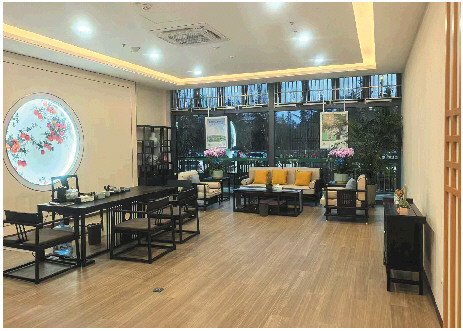
邮储莱芜分行营业部设特色茶室构建“金融+文化”服务新场景
Qi Lu Wan Bao· 2025-12-26 10:33
Core Viewpoint - The China Postal Savings Bank's Laiwu branch has opened a unique tea room that integrates traditional tea culture with modern financial services, aiming to enhance customer experience and meet diverse service needs [2] Group 1: Tea Room Features - The tea room is designed based on Chinese aesthetic principles, creating an elegant and tranquil environment that incorporates traditional cultural elements [2] - It serves as a relaxing space for clients to enjoy tea while conducting business, suitable for private meetings and small business discussions [2] Group 2: Future Plans and Objectives - The tea room will function as a cultural platform, hosting regular tea tasting events and cultural sharing activities to enrich clients' financial life experiences [2] - This initiative is part of the Laiwu branch's ongoing efforts to optimize service models and explore diversified customer service, aiming to provide warmer and more distinctive services [2]

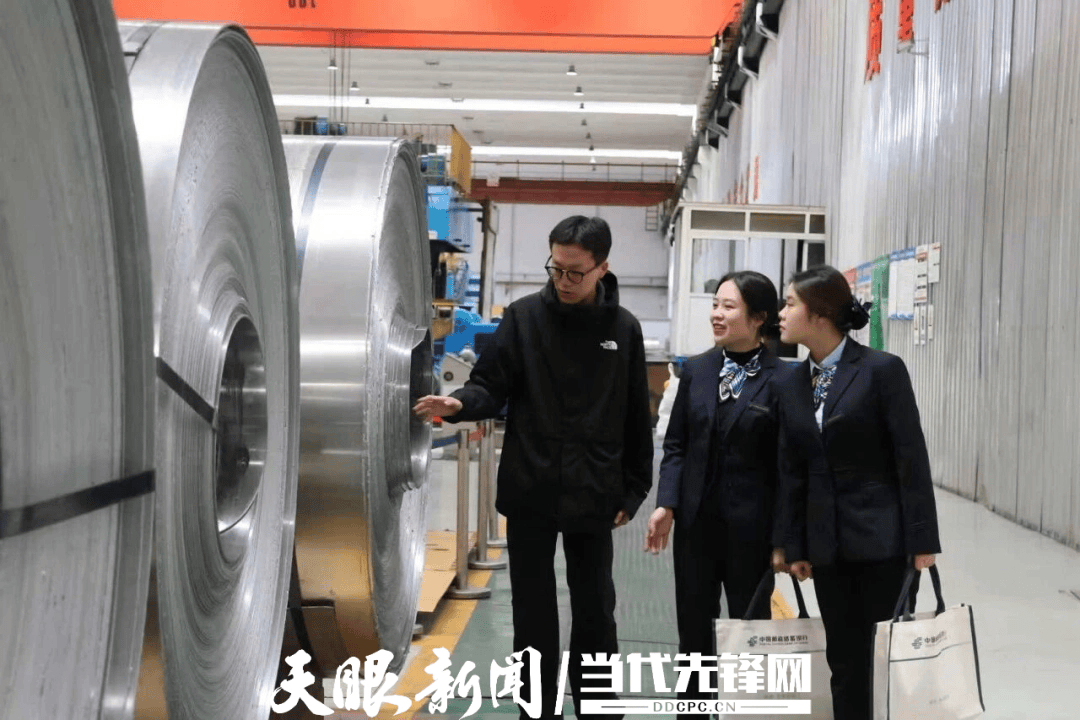
邮储银行六盘水分行借平台之力为小微企业融资超5600万元
Sou Hu Cai Jing· 2025-12-26 10:32
Core Viewpoint - Postal Savings Bank of China (PSBC) is effectively addressing the financing difficulties faced by small and micro enterprises in Liupanshui City through the promotion of the National Small and Micro Enterprises Fund Flow Credit Information Sharing Platform, having disbursed loans totaling 56.19 million yuan by mid-2025 [1][5]. Group 1: Implementation of the Fund Flow Information Platform - The Fund Flow Information Platform aggregates financial flow data from banks and third-party payment institutions to create comprehensive profiles of enterprises, breaking down traditional credit information barriers and enabling financial institutions to assess the actual operating conditions and credit levels of businesses more accurately [3]. - A human resources company in Guizhou faced funding gaps during business expansion, but traditional online approval was unsuccessful due to limited information. By authorizing access to multi-dimensional financial flow data through the platform, the company was able to demonstrate its healthy operating status, leading to a successful loan renewal of 3.85 million yuan [3]. - A construction materials sales company in Zhongshan District, Liupanshui City, struggled with financing due to a lack of collateral. Utilizing the advantages of the Fund Flow Information Platform, PSBC analyzed the company's authorized account transactions, revealing an annual cash flow of 20 million yuan and timely payments, resulting in a loan of 4.2 million yuan being issued within five working days [3]. Group 2: Future Plans and Goals - The relevant official from PSBC stated that the Fund Flow Information Platform transforms dormant enterprise data into a financing "pass," making "credit-based lending" a reality and significantly enhancing the accessibility and precision of financial services [5]. - The bank plans to continue promoting the application of the Fund Flow Information Platform, optimizing service models, and improving service quality and efficiency, aiming to leverage data as a link and credit as a foundation to help more small and micro enterprises obtain convenient and efficient financing support [5].
邮储银行举办第二届养老金融论坛携手各方共绘中国式养老新蓝图
Sou Hu Cai Jing· 2025-12-26 10:14
Core Viewpoint - The forum hosted by Postal Savings Bank aims to explore new ideas for activating the silver economy and promoting high-quality development in pension finance, aligning with national strategies to address aging population challenges [2]. Group 1: Pension Financial Services - Postal Savings Bank actively supports the construction of a multi-tiered pension insurance system, having issued over 130 million financial social security cards and opened over 10 million personal pension accounts [3]. - The bank enhances its "financial + social security" one-stop service capabilities, offering features like card replacement and cross-province services [3]. - It provides comprehensive personal pension account management, covering all channels and products, including deposits, funds, insurance, and wealth management [4]. Group 2: Silver Economy Product Rights - The bank launched the "Warm Post Autumn Festival" event, creating a "financial + pension" ecosystem and introducing the "Vitality Life Card" series, which includes 12 pension rights across six categories [5]. - Collaborations with various institutions aim to enhance the quality and convenience of services for the elderly, focusing on health management and financial products [5]. Group 3: Elderly Financial Services - Postal Savings Bank improves its elderly-friendly financial services by enhancing the accessibility of physical branches and self-service devices, as well as providing a large-font mobile banking version [6]. - The bank has established over 3,000 health management stations nationwide, offering convenient services for elderly clients [6]. Group 4: Pension Industry Financial Solutions - The bank has developed a "523" service system targeting five core areas, implementing a dual-drive strategy to provide tailored financial solutions for the pension industry [7]. - It has successfully launched significant projects, such as a 4.972 billion yuan health care syndicate project in Wenzhou, demonstrating its innovative financial service capabilities [7]. Group 5: Continuous Improvement and Future Plans - The bank is enhancing its support systems by optimizing credit policies and developing specialized products for pension fund management [8]. - The "U Enjoy Future" pension financial brand was launched, along with a report on national pension demand trends, reinforcing the bank's commitment to supporting the silver economy [8].

谁是银行贵金属之王?
Xin Lang Cai Jing· 2025-12-26 10:11
Core Viewpoint - The global market is experiencing a rare super cycle in precious metals, driven by a reassessment of the dollar's credibility and real demand from new industrial revolutions such as AI and hydrogen energy [2][24]. Group 1: Market Dynamics - As of December 24, spot gold reached $4500 per ounce, with international silver and platinum increasing over 140% for the year [2][24]. - The demand for precious metals has shifted from traditional safe-haven assets to being driven by monetary credit, geopolitical factors, and green technology [10][34]. Group 2: Banking Sector Adjustments - Major banks like ICBC, CCB, and CITIC are cleaning up personal precious metal accounts that have been inactive, indicating a strategic shift towards focusing on quality clients rather than quantity [3][26]. - This move is not a retreat but a strategic adjustment to enhance service quality, risk control, and long-term trust [27][36]. Group 3: Asset Growth and Competition - By Q3 2025, ICBC led the market with precious metal assets of 385.43 billion yuan, followed by Bank of China, China Construction Bank, Agricultural Bank of China, and Shanghai Pudong Development Bank, all surpassing 100 billion yuan [29][31]. - The growth in precious metal assets is built on a solid foundation from 2024, with ICBC showing consistent expansion from 254.30 billion yuan in Q1 to 385.43 billion yuan in Q3 2025 [32][33]. Group 4: Future Outlook - Goldman Sachs predicts that gold prices may reach $4900 per ounce by 2026, with several financial institutions forecasting gold to potentially hit $5000 per ounce [21][41]. - The competition in the precious metals sector will focus on compliance, customer trust, and long-term strategies, with the true "king of precious metals" being the bank that retains the most engaged and trusting clients after account clean-ups [42].

日常金融纠纷何解?多地建立第三方纠纷调解机构
Xin Lang Cai Jing· 2025-12-26 09:28
Core Viewpoint - The rise of financial products and services has led to an increase in consumer disputes, prompting the establishment of third-party mediation institutions to resolve these issues efficiently and improve the allocation of judicial resources [1][7]. Group 1: Third-Party Mediation Institutions - The establishment of third-party mediation institutions is growing, with the Beijing Bingzheng Center being one example that facilitates dispute resolution for credit card holders [2]. - Various types of third-party mediation institutions exist, including independent organizations under the guidance of the central bank, court-affiliated mediation bodies, and internal mediation organizations within financial institutions [3]. - As of December 2024, there are 192 financial dispute mediation organizations in China, with 13,000 mediators involved, having resolved 41,000 cases involving a total dispute amount of 10.2 billion [4]. Group 2: Mediation Process - Third-party mediation can occur through online or offline methods, where mediators clarify the rights and obligations of both parties and work towards a resolution [5]. - A case example illustrates how a customer, unable to access their frozen bank account, sought mediation, leading to a resolution where the bank assisted in paying the child's school fees [6]. Group 3: Financial Institutions' Reflection - The complexity and diversity of financial disputes have highlighted the need for financial institutions to reflect on their service shortcomings, as consumers often lack the knowledge to effectively advocate for their rights [7]. - The establishment of a non-litigation dispute resolution mechanism has been emphasized by regulatory bodies to alleviate the burden on courts and improve consumer trust in financial institutions [7][8]. - Third-party mediation institutions serve as a neutral bridge between consumers and financial institutions, helping to mitigate risks and improve service processes [8].