九号公司

Search documents
轻工造纸行业周报:重视新型烟草回调布局机遇,持续推荐潮玩龙头-20250622
SINOLINK SECURITIES· 2025-06-22 13:43
Investment Rating - The report suggests a focus on companies with high earnings growth certainty and relatively high dividend support in the domestic furniture sector, as well as certain export companies with strong growth logic or overseas production capacity advantages [4][9]. Core Insights - The furniture retail sales in China saw a year-on-year increase of 25.6% in May, with a cumulative increase of 21.4% from January to May. However, the overall order situation has weakened since June, indicating a potential fatigue in demand stimulation from national subsidies [4][9]. - In the new tobacco sector, the glo hilo product launched in Japan is expected to accelerate revenue growth in the second half of 2025, supported by strong marketing resources from BAT [4][12]. - The paper packaging sector is experiencing price stability, with a focus on growth-oriented packaging companies. The report highlights the need to monitor the performance of major paper types and the overall supply pressure in the market [4][15]. - The light consumer goods and pet sectors are seeing increased online competition, with a focus on companies that demonstrate clear growth narratives and operational capabilities [4][16]. - The two-wheeler market is expected to see a rebound in the second half of the year, driven by new national standards and product launches, despite a temporary slowdown due to subsidy fund exhaustion [4][19]. Summary by Sections Furniture Sector - Domestic retail sales of furniture increased by 25.6% in May, with a cumulative increase of 21.4% from January to May. However, the order situation has weakened since June, indicating potential fatigue in demand stimulation [4][9]. - Recommended companies include Sofía, Gujia Home, Mousse, and others, focusing on those with high earnings growth certainty and dividend support [4][9]. New Tobacco - The glo hilo product launched in Japan is expected to accelerate revenue growth in the second half of 2025, with strong marketing support from BAT [4][12]. - Recommended companies include Smoore International, which is expected to benefit from the expansion of the overseas compliant market [4][12]. Paper and Packaging - The paper sector is experiencing price stability, with major paper types showing no significant improvement in orders. The report emphasizes the importance of monitoring growth-oriented packaging companies [4][15]. - Recommended companies include Yutong Technology and others, focusing on those with stable operations and growth potential [4][15]. Light Consumer Goods & Pets - The light consumer goods sector is seeing increased online competition, with a focus on companies that demonstrate clear growth narratives and operational capabilities [4][16]. - Recommended companies include Guibao Pet and others, focusing on those with resilient consumer demand and growth potential [4][16]. Two-Wheeler Market - The two-wheeler market is expected to see a rebound in the second half of the year, driven by new national standards and product launches, despite a temporary slowdown due to subsidy fund exhaustion [4][19]. - Recommended companies include Yadi Holdings and others, focusing on those with strong product capabilities and market expansion potential [4][19].


新消费核心反弹可期,持续布局稳健复苏
Xinda Securities· 2025-06-22 04:52
新消费核心反弹可期,持续布局稳健复苏 [Table_Industry] 轻工制造 [Table_ReportDate] 2025 年 06 月 22 日 证券研究报告 行业研究 [Table_ReportType] 行业周报 | [Table_StockAndRank] 轻工制造 | | --- | | 投资评级 看好 | | 上次评级 看好 | | [Table_Author] 姜文镪 新消费行业首席分析师 | | 执业编号:S1500524120004 | | 邮箱:jiangwenqiang@cindasc.com | | 陆亚宁 新消费行业分析师 | | 执业编号:S1500525030003 | | 邮箱:luyaning@cindasc.com | 信达证券股份有限公司 CINDA SECURITIES CO.,LTD 北京市西城区宣武门西大街甲127号金隅大厦 B座 邮编:100031 [Table_Title] 新消费核心反弹可期,持续布局稳健复苏 [Table_ReportDate] 2025 年 06 月 22 日 本期内容提要: 请阅读最后一页免责声明及信息披露 http://www.c ...
2025年中国餐饮配送机器人行业产业链、市场规模、行业政策、代表企业分析及行业趋势研判:行业将保持快速的发展势头,市场空间巨大[图]
Chan Ye Xin Xi Wang· 2025-06-22 02:00
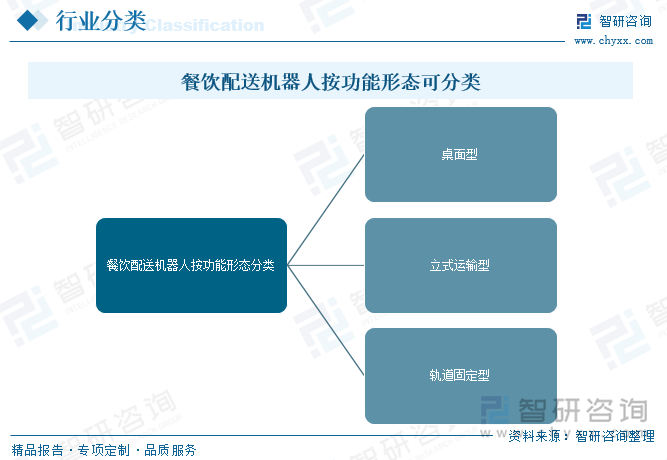
Core Viewpoint - The restaurant delivery robot market in China has experienced rapid growth, with the market size increasing from 276 million yuan in 2020 to 500 million yuan in 2023, reflecting a compound annual growth rate (CAGR) of 21.9% [1][6]. Industry Definition and Classification - Restaurant delivery robots are commercial service robots based on artificial intelligence (AI), autonomous driving (AGV/AMR), and Internet of Things (IoT) technologies, used for tasks such as food delivery, tray return, and reception in restaurants, hotels, and cafeterias [2][6]. - They can be categorized into desktop, upright transport, and fixed-rail types based on their functional forms [2]. Current Development Status - The domestic restaurant delivery robot market is projected to reach approximately 603 million yuan in 2024 and is expected to grow to 726 million yuan by 2025 [6]. - The intelligent service robot market in China is anticipated to grow from 6.48 billion yuan in 2016 to 66.29 billion yuan in 2024, with a forecast of 77.91 billion yuan by 2025 [4]. Industry Chain - The upstream of the restaurant delivery robot industry includes components such as reducers, servo motors, controllers, and sensors, as well as software systems like operating systems, voice interaction, and image recognition [8]. Competitive Landscape - Major companies in the restaurant delivery robot market include QianShanJia Robot, Pudutech, QingLang Intelligent, and others, with QingLang Intelligent and Pudutech leading the first tier of competition [12][14]. - QianShanJia Robot focuses on commercial service robot development, while Pudutech is recognized for its comprehensive product lines across various sectors [13][14]. Development Trends - The application of restaurant delivery robots is expanding in restaurants and hotels, enhancing service efficiency and reducing labor costs [17]. - The industry is evolving from "functional" to "intelligent" robots, with a focus on expanding application scenarios beyond dining to a broader service ecosystem [17].


500质量成长ETF(560500)震荡调整,机构:市场或将呈现成长和价值轮动态势
Sou Hu Cai Jing· 2025-06-20 06:01
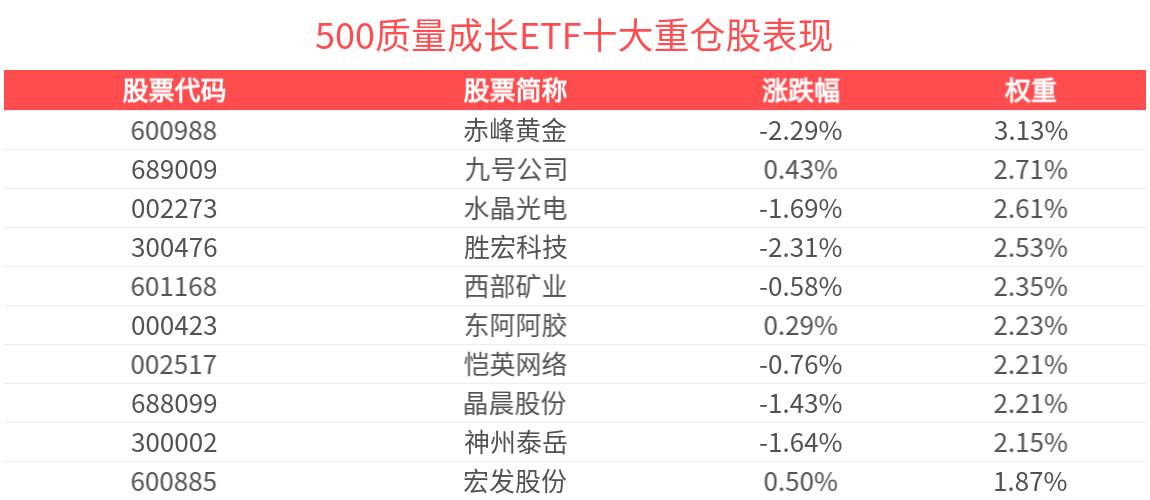
Group 1 - The core viewpoint of the news is that the 中证500质量成长指数 (CSI 500 Quality Growth Index) has shown mixed performance among its constituent stocks, with some stocks gaining while others declined, indicating a volatile market environment [1] - As of June 20, 2025, the CSI 500 Quality Growth Index decreased by 0.36%, while the CSI 500 Quality Growth ETF (560500) fell by 0.10%, reflecting a slight downturn in the market [1] - The top-performing stocks included 常熟银行 (Changshu Bank) with a gain of 1.73%, and 齐鲁银行 (Qilu Bank) with an increase of 1.69%, while 柏楚电子 (Bachu Electronics) led the decline with a drop of 5.76% [1] Group 2 - Looking ahead to the second half of 2025, 中原证券 (Zhongyuan Securities) anticipates that the core driving factors for the equity market will include ongoing policy support focused on technological innovation and domestic demand [2] - The report suggests that the liquidity environment is improving due to a loose domestic monetary policy and increasing capital repurchases, which is expected to enhance market liquidity [2] - As of May 30, 2025, the top ten weighted stocks in the CSI 500 Quality Growth Index accounted for 23.79% of the index, with 赤峰黄金 (Chifeng Gold) being the highest at 3.13% [2][4]

聊聊4个出海中最常见误解
3 6 Ke· 2025-06-20 03:08
Core Insights - The traditional cost strategy for Chinese companies going global is becoming less effective as labor and raw material costs rise, necessitating a shift towards automation and smarter technologies [1] - Structural opportunities arise from supply-demand mismatches in foreign markets, which can be addressed by leveraging domestic capabilities to fill gaps in those markets [2][3] Group 1: Supply-Demand Mismatch - Supply-demand mismatch refers to a market situation where there is a clear supply shortage or unmet demand, allowing efficient solutions to gain market share [3] - Successful examples include Insta360, which identified a niche in the action camera market by addressing specific user needs rather than competing on price [2] - DeepSeek capitalized on the need for low-cost AI solutions in the developer community, filling a gap left by higher-cost competitors [5] Group 2: Technology and Differentiation - Companies like Shein have succeeded by integrating technology, user understanding, and ecosystem development to meet the fast-paced consumption needs of Gen Z [10][12] - The combination of technology, market understanding, and a robust operational ecosystem creates a differentiated advantage that goes beyond mere product offerings [15] Group 3: Localization and Cultural Understanding - Effective localization involves understanding local consumer preferences and cultural nuances rather than simply translating products or marketing strategies [16][24] - Shein's experience in Brazil illustrates the importance of adapting product offerings to local tastes, leading to significant sales growth [18][20] - Xiaomi's strategy in India, which includes local manufacturing and cultural adaptation, demonstrates the benefits of a tailored approach to market entry [25] Group 4: Compliance and Regulatory Understanding - Compliance with local regulations can become a competitive advantage, as seen with CATL's proactive approach in Germany, which helped secure production permits and government support [29] - Transsion's focus on data privacy compliance in Africa has built consumer trust and expanded its market presence [31] - Understanding and leveraging local policies can enhance operational efficiency, as demonstrated by Shenzhen's streamlined services for businesses [32] Group 5: Strategic Recommendations - Companies must recognize that succeeding in international markets requires a multifaceted approach that includes addressing supply-demand mismatches, leveraging technology, understanding local cultures, and ensuring compliance with regulations [33][34]
上证科创板高端装备制造指数下跌0.55%,前十大权重包含时代电气等
Jin Rong Jie· 2025-06-19 09:58
Group 1 - The Shanghai Stock Exchange Science and Technology Innovation Board High-end Equipment Manufacturing Index (Sci-Tech High-end Equipment, 000687) experienced a decline of 0.55%, closing at 993.99 points with a trading volume of 10.35 billion yuan [1] - Over the past month, the Sci-Tech High-end Equipment Manufacturing Index has decreased by 2.41%, and over the last three months, it has fallen by 11.55%, while year-to-date it has increased by 4.77% [1] - The index comprises 50 large-cap companies from sectors such as aerospace equipment, satellite applications, rail transportation equipment, marine engineering equipment, and intelligent manufacturing equipment, reflecting the overall performance of representative high-end equipment manufacturing companies listed on the Sci-Tech Board [1] Group 2 - The index is fully composed of companies listed on the Shanghai Stock Exchange, with an industry breakdown showing 70.71% in industrials, 17.85% in consumer discretionary, 10.84% in information technology, and 0.60% in healthcare [2] - The index samples are adjusted quarterly, with adjustments occurring on the next trading day following the second Friday of March, June, September, and December each year [2] - Weight factors are generally fixed until the next scheduled adjustment, with special circumstances allowing for temporary adjustments, such as the delisting of a sample company or corporate actions like mergers and acquisitions [2]

中证体育产业指数下跌1.09%,前十大权重包含昆仑万维等
Jin Rong Jie· 2025-06-19 09:57
从中证体育产业指数持仓样本的行业来看,通信服务占比47.05%、可选消费占比26.92%、主要消费占 比8.67%、信息技术占比7.82%、原材料占比6.50%、工业占比1.05%、房地产占比1.02%、医药卫生占比 0.97%。 据了解,中证体育产业指数选取涉及体育服务、体育产品、体育劳务以及其他体育衍生活动的上市公司 证券作为指数样本,以反映体育产业相关上市公司证券的整体表现。该指数以2012年06月29日为基日, 以1000.0点为基点。 从指数持仓来看,中证体育产业指数十大权重分别为:巨人网络(6.58%)、三七互娱(5.6%)、吉比 特(5.33%)、完美世界(5.26%)、掌趣科技(5.09%)、奥瑞金(4.91%)、汤臣倍健(4.73%)、九 号公司(4.71%)、昆仑万维(4.68%)、浙数文化(4.62%)。 从中证体育产业指数持仓的市场板块来看,深圳证券交易所占比72.74%、上海证券交易所占比 27.26%。 金融界6月19日消息,上证指数低开低走,中证体育产业指数 (中证体育,399804)下跌1.09%,报 1657.96点,成交额166.08亿元。 数据统计显示,中证体育产业指数近 ...






专业聚焦消费板块发展红利!泉果消费机遇混合发起式(022223)成立以来规模已涨近500%
Xin Lang Cai Jing· 2025-06-19 01:28
Group 1: Economic Data and Consumer Trends - In May 2025, the total retail sales of consumer goods reached 41,326 billion yuan, with a year-on-year growth of 6.4%. Excluding automobiles, retail sales amounted to 37,316 billion yuan, growing by 7.0% [1] - From January to May 2025, the total retail sales of consumer goods were 203,171 billion yuan, reflecting a growth of 5.0% [1] - The "May Day" holiday saw a 6.4% increase in domestic tourism compared to the previous year, indicating a significant rise in consumer spending on travel and leisure [1] - Restaurant revenue in May 2025 grew by 5.9%, accelerating by 0.7 percentage points from the previous month [1] Group 2: Investment Opportunities in Consumer Sector - The fund "Qingguo Consumption Opportunity Mixed Initiation" (022223) aims to selectively invest in listed companies related to consumption themes while strictly controlling risks, targeting long-term stable asset appreciation [1] - As of June 13, 2025, the fund has achieved a growth of 6.55% since its establishment in September 2024, with a current scale of 0.58 billion yuan, nearly a 500% increase from its initial size [1] Group 3: Key Holdings and Market Insights - The top ten holdings of the fund include Tencent Holdings, CATL, Midea Group, and others, accounting for 32.09% of the total portfolio [2] - In May 2025, Li Auto delivered 40,856 vehicles, marking a year-on-year increase of 16.7% and a month-on-month increase of 20.4% [2] - The investment value of the consumer sector is highlighted as a core driver of economic transformation, shifting from investment-driven to consumption-driven growth [2] Group 4: Future Trends in Consumer Brands - The core competitiveness of new consumer brands is shifting from "traffic-driven" to "global supply chain + cultural output capability" [3] - The potential for growth in new consumer industries is significant due to the structural changes in the consumption market, with expectations for continued growth and a strong position in the global market [3]
科创板发布重磅新政,588只个股“硬科技”成色几何
Sou Hu Cai Jing· 2025-06-18 10:39
Core Viewpoint - The China Securities Regulatory Commission (CSRC) has implemented the "Opinions on Setting Up a Growth Layer in the Sci-Tech Innovation Board" to enhance the inclusiveness and adaptability of the system, allowing unprofitable tech companies to list under the fifth set of standards [1][3]. Group 1: Establishment of the Growth Layer - The Sci-Tech Innovation Board will establish a Growth Layer specifically for tech companies that have significant technological breakthroughs, broad commercial prospects, and substantial ongoing R&D investment but are currently unprofitable [4]. - Unprofitable tech companies will be included in the Growth Layer, with specific criteria for their exit, such as achieving positive net profits for two consecutive years with a cumulative profit of at least 50 million yuan or a positive net profit in the last year with revenue exceeding 100 million yuan [4]. Group 2: Policy Measures - Six policy measures have been introduced to support high-quality tech companies, including the introduction of experienced institutional investors, a pre-IPO review mechanism, and expanding the applicability of the fifth set of standards to more frontier tech fields like AI and commercial aerospace [5]. - Additional measures focus on supporting ongoing unprofitable tech companies in fundraising activities, improving the institutional framework for listed companies, and enhancing the coordination of investment and financing functions in the market [5]. Group 3: Performance of the Sci-Tech Innovation Board - Over the past six years, the Sci-Tech Innovation Board has seen 588 listed companies with a total market capitalization exceeding 6.8 trillion yuan and cumulative fundraising surpassing 1 trillion yuan [6][7]. - In 2024, these companies reported a total operating revenue of 143 billion yuan and a net profit of approximately 486 billion yuan, with R&D expenditures totaling nearly 168 billion yuan, which is 3.45 times the net profit [7]. - The board has successfully listed 54 unprofitable companies, with 22 of them achieving profitability post-listing, and these companies collectively generated 174.48 billion yuan in revenue in 2024 [7][8].


2025北美割草机大爆发,九号、松灵、追觅刀锋对决|焦点分析
36氪· 2025-06-18 06:30
Core Viewpoint - The article discusses the competitive landscape of the lawn mower robot market in North America, highlighting the strategic importance of this market and the challenges faced by companies entering it. Market Overview - The global outdoor power equipment (OPE) market is valued at over $30 billion, with lawn mower robots accounting for $2.6 billion and a sales penetration rate of 5%. By 2030, sales are expected to reach 5-10 million units [6][7]. - North America represents the largest market for lawn care, contributing nearly 60% of the global market share, yet the penetration rate for lawn mower robots remains below 3% [7][8]. Competitive Landscape - Companies like Ninebot and Mammotion are actively expanding their presence in North America, with Ninebot having established partnerships with major retailers like Lowe's [5][8]. - Mammotion has reported stocking over 300,000 lawn mower robots from January to May 2023 [5]. Consumer Behavior - In the U.S., approximately 42% of middle-class households prefer traditional DIY mowing methods, while high-income households often hire professional services, which can cost between $1,000 to $2,500 annually [11][12]. - U.S. consumers prioritize cost-effectiveness and practicality over smart features in lawn care tools, leading to a preference for traditional push mowers priced under $100 [12][11]. Product Development Challenges - Entering the U.S. market requires significant investment in product upgrades to meet local demands, such as handling steep terrains and durable materials for tough grass types [14][23]. - The lawn mower robot industry is compared to the automotive sector in terms of product standards, emphasizing the need for high-quality components and customer service [14][23]. Sales and Distribution Channels - The distribution landscape in the U.S. is fragmented, with professional garden tool stores, large retail chains, and online platforms each playing distinct roles [30]. - Major retailers like Home Depot and Lowe's dominate the market, accounting for about 40% of sales, while e-commerce platforms are growing and currently represent 25% of the market [30][31]. Brand Positioning and Market Penetration - Companies are leveraging partnerships with local influencers and KOLs to enhance brand awareness and educate consumers about lawn mower robots [33][35]. - Ninebot's Segway brand has achieved significant sales milestones, including leading the Amazon category in Germany [36]. Future Outlook - The article concludes that the competition for market share in the U.S. lawn mower robot sector is intensifying, with companies needing to rapidly establish distribution channels and brand recognition to survive [38].