
美的集团

Search documents
史诗级上涨:沪铜突破9.6万/吨,国际铜冲上1.2万美元!铜价暴涨的3大推手曝光?
Sou Hu Cai Jing· 2025-12-24 13:56
王爷说财经讯: 全球抢铜潮来袭! 2025年12月24日,铜市传来重磅消息:沪铜主力合约收盘价飙至9.61万元/吨,单日暴涨2170元,LME铜价更是突破1.2万美元/吨,年内累计涨幅超37%, 距离2009年以来的最佳年度表现仅一步之遥! 这波铜价疯涨已经席卷整个产业链,A股铜板块12月平均涨幅超8.5%,多家下游企业紧急调价。你有没有发现身边的家电、建材悄悄涨价了?这波铜价上 涨到底靠什么支撑?会不会是泡沫?普通人能抓住这波机会吗? 01、铜价今年已涨37%! 先给大家梳理下这波铜价上涨的来龙去脉。 其实从2025年四季度开始,铜价就开启了上行通道,12月更是进入加速冲刺阶段。 数据显示,12月1日沪铜主力合约还停留在8.93万元/吨,短短24天就突破9.6万元/吨,涨幅接近8%;LME铜价从12月初的1.1万美元/吨左右,一路飙升至 1.2万美元以上,年内涨幅远超其他大宗商品。 国际铜研究组织原本预测2025年全球精炼铜小幅过剩17.8万吨,但实际市场却呈现"全球看似过剩、区域严重短缺"的诡异格局,这也为铜价上涨埋下了伏 笔。 传统的建筑、家电行业需求虽然疲软,但新能源和AI产业补上了缺口。 大家可能不 ...

金田股份20151223
2025-12-24 12:57
Summary of JinTian Co., Ltd. Conference Call Company Overview - **Company**: JinTian Co., Ltd. - **Industry**: Air Conditioning and Copper/Aluminum Materials Key Points and Arguments Aluminum Substitution for Copper Strategy - JinTian is actively promoting the "aluminum substitution for copper" strategy to address high copper prices, aiming for mass production of aluminum air conditioning pipes by early 2027 [2][3] - The company has established the first new aluminum pipe production line in China, ensuring production stability and longer supply times [2][3] - The aluminum substitution technology in air conditioning mainly includes two paths: temperature control straight pipe parallel flow and finned tube heat exchangers, with the latter using internally threaded aluminum pipes [2][4] Market Potential and Acceptance - The market potential for aluminum substitution is significant, with approximately 5 kg of copper used per traditional air conditioning unit, which can be reduced to about 3 kg with aluminum [6] - Acceptance of aluminum technology among downstream companies is increasing, with brands like Xiaomi actively adopting it, indicating a rapid rise in aluminum pipe penetration in the air conditioning sector [6][2] Economic Impact and Cost Savings - Switching to aluminum air conditioning units can save approximately 350-400 RMB per unit, although it requires additional capital expenditure for production line modifications [8] - If copper prices remain high (around 4 to 4.5 RMB), companies may prefer a one-time investment to switch to aluminum, leading to a potential trend of high-end units using copper and mid-range units using aluminum [8][2] Production Capacity and Technological Advancements - JinTian has made significant progress in aluminum technology, achieving small-scale supply of internally threaded aluminum pipes and planning to establish a production capacity of around 10,000 tons by the end of 2026 [3][4] - The company is also focusing on liquid cooling technology, having established Guangdong Liquid Cooling Technology Company to drive related technological advancements [4][19] Future Development Strategy - JinTian's overall profit has significantly increased this year due to product structure upgrades and a rise in export ratios [7] - The company aims to enhance its product mix towards high-margin emerging sectors while maintaining existing scale, targeting "high-end, international, and green" development goals [7] Challenges and Considerations - The transition to aluminum technology involves higher processing costs, with aluminum internal threading costing over double that of copper [12] - The feasibility of replacing copper pipes with aluminum in various air conditioning components is being explored, with existing technologies already in use [10][11] Market Demand and Trends - The domestic market demand for aluminum products in home appliances is projected to reach approximately 45,000 tons by 2025, indicating substantial growth potential compared to copper products [18] - The penetration rate of aluminum air conditioning units in the domestic market is currently low (5-10%) but is expected to increase due to technological advancements and supportive policies [16] Conclusion - JinTian Co., Ltd. is strategically positioning itself in the air conditioning industry by transitioning from copper to aluminum, capitalizing on market trends and technological advancements to enhance competitiveness and profitability [2][6][7]

消费:年末复盘及2026Q1展望
2025-12-24 12:57
消费:年末复盘及 2026Q1 展望 20151223 摘要 白酒板块预计 2026 年 Q1 收入和利润双位数下滑,但降幅或收窄,头 部企业汾酒、五粮液可能调整,酒企对全年持保守态度,重在稳定市场 和份额,预计 Q1 仍处于下修状态。 大中型零食和饮料企业受益于品类和渠道红利,对未来展望积极,叠加 春节效应,预期增长高于行业平均水平;啤酒企业淡季保守,奶制品企 业结构性收缩,液态奶下滑明显。 品牌服饰受气温和需求影响,终端流水走弱,运动品牌加盟渠道 12 月 流水下降,但海澜之家、森马等大众品牌保持增长。春节较晚利于去库 存,但对 Q4 财报有负面影响,多数龙头品牌对 26 年度计划谨慎。 出口制造受耐克财报影响,大中华区销售额下降,运动品牌订单调减。 中期看好全球化布局、垂直一体化及新产能新客户开拓标的,如申洲国 际、华利实业等。 黄金珠宝受金价高涨压制终端销售,推动商业模式向品牌化转型,如潮 宏基、周大福等逆势增长。春节较晚使订货会滞后,Q1 订货量同比有 利,Q4 压力大。高金价背景下,板块调整延续,关注传动机,适度关 注周大福与老铺。 Q&A 2025 年第四季度食品饮料行业的表现如何?对 2026 ...
【新华财经调查】中国家电扎根“全球最难市场” 未来存在四大挑战
Xin Hua Cai Jing· 2025-12-24 11:56
尽管增长迅速、前景广阔,但巴西市场的复杂性、多变性和高门槛,使其被业内普遍视为"全球最具挑战的家电市场之一"。中国品牌在享受增长红利的同 时,也面临着一系列严峻而长期的考验。 新华财经圣保罗12月24日电(记者 杨家和 翟淑睿)在巴西贝伦近日闭幕的第三十届联合国气候变化大会(COP30)上,中国家电企业集中展示绿色节能 技术,与巴西能源转型议程同频共振。这一亮相背后,折射出中国家电企业在拉美最大家电市场——巴西,正经历从"规模扩张"向"价值竞争"的阶段性跃 迁,从传统消费品制造商,向绿色能源转型参与者角色延展。 中国家电企业在巴西的这场转型,发生在独特而复杂的历史节点。中国机电产品进出口商会数据显示,仅2024年前三季度,中国家电对拉美出口96.7亿美 元,同比增长33.5%,其中对巴西增长52%以上。这个曾经以"中国制造"性价比优势闻名的产业,正从简单的商品输出,转向技术输出、标准输出和价值 共创的新阶段。 行业统计显示,巴西家用空调普及率仍不足四分之一,远低于全球平均水平;电视机市场则在大屏化和智能化浪潮中持续迭代更新,正经历消费升级与绿 色转型的双重浪潮。与此同时,巴西市场以税制复杂、认证严苛、渠道分散 ...

主力资金丨尾盘大幅加仓股出炉
Zheng Quan Shi Bao Wang· 2025-12-24 11:21
Group 1 - The electronic industry saw a net inflow of 4.916 billion yuan, leading the market [1] - The A-share market indices collectively rose, with the Shanghai Composite Index achieving six consecutive days of gains [1] - Among the 13 industries with net inflows, the power equipment and defense industries also saw significant inflows of 2.217 billion yuan and 1.233 billion yuan, respectively [1] Group 2 - A total of 45 stocks experienced net inflows exceeding 200 million yuan, with 15 stocks seeing inflows over 400 million yuan [2] - Demingli topped the list with a net inflow of 955 million yuan, driven by increasing data storage demand influenced by AI [2] - Tianji Co. reached a trading limit with a net inflow of 885 million yuan, focusing on the industrialization of lithium sulfide material preparation [2] Group 3 - At the market close, there was a net inflow of 129 million yuan, with the communication sector leading with over 500 million yuan in inflows [3] - Individual stocks such as Zhongji Xuchuang and Qingshan Paper experienced net inflows exceeding 200 million yuan [3] Group 4 - Beijing Junzheng and Wolong Electric Drive saw net outflows exceeding 100 million yuan at the market close [4] - Companies like Midea Group and Sihua Intelligent Control had net outflows exceeding 70 million yuan [5]



电网“碳”路:一座万亿制造业大市的绿色能源变革
2 1 Shi Ji Jing Ji Bao Dao· 2025-12-24 06:45
12月6日,破解这一难题的"国家队"关键工程——国家新型储能创新中心顺德实证基地在佛山正式投产 运行。该基地是我国首个百兆瓦级"锂电+超级电容"混合储能商业化规模化实证项目,它的投运标志着 我国在解决电网"毫秒级"快速响应和频率波动难题上取得重大技术突破。 该项目的建成投运,也是佛山面向国家能源转型重大需求开展系统性实践的一个缩影。在全球能源格局 深度变革与我国"双碳"目标的引领下,制造业大市佛山直面绿色转型的时代命题,掀起一场全域电力绿 色革命,从电网侧的集中式储能,到用户侧的分布式储能;从海寿岛的微网示范,到制造基地的精准调 控;从技术研发到规模化应用,佛山以"全场景、多层级、闭环式"的实践,在确保安全的前提下,实现 清洁能源的最大化消纳与系统效率的全局最优。 在这场绿色征程中,南方电网佛山供电局(以下简称"佛山供电局")悄然从传统的电力"供应者",转变 为能源革命的"深度参与者"与"生态共建者"。通过供电线路,他们在城乡之间、企业与田野之间构建起 一条将国家战略、前沿技术、产业需求与城市未来精密耦合的"韧性链路",为佛山面向未来的竞争力注 入确定性的绿色动能。 "双碳"目标引领下,我国新能源领域持续快速 ...
最强牛股暴涨超600%,A股广东军团86股年内翻倍
2 1 Shi Ji Jing Ji Bao Dao· 2025-12-24 06:45
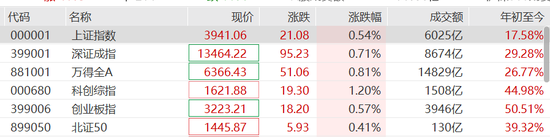
Core Viewpoint - The A-share market in 2025 is characterized by a daily trading volume exceeding 2 trillion yuan, with structural market trends and technological innovation becoming the main narrative. As of December 24, the Shanghai Composite Index, Shenzhen Component Index, and ChiNext Index have increased by 17.58%, 29.28%, and 50.51% respectively [1]. Market Performance - As of December 19, the market capitalization weighted increase of Guangdong listed companies outperformed the overall market average by over 5 percentage points [3]. - Guangdong's listed companies have a market capitalization of nearly 19 trillion yuan, ranking second in the country, with Beijing leading at over 30 trillion yuan [4]. Stock Performance - Guangdong's "army" of 86 stocks have doubled in value this year, leading the nation [4]. - The average market capitalization weighted increase for Guangdong companies is 44.24%, surpassing the overall market's 38.77% [9]. - Among the 490 stocks that have doubled in value this year, 86 are from Guangdong, accounting for about one-sixth of the total, indicating a broad distribution across various sectors [9]. Sector Analysis - Guangdong's listed companies exhibit a diverse matrix of enterprises, including industry leaders like BYD, Midea Group, and China Merchants Bank, as well as numerous companies in key segments such as electric vehicles and AI-driven technologies [7]. - The top ten listed companies by market capitalization in Guangdong include Industrial Fulian, China Ping An, and BYD, reflecting a mix of large and specialized leading firms [8]. R&D Investment - Guangdong companies invested 2,433.67 billion yuan in R&D, ranking second nationally, with BYD leading all A-shares with 437.48 billion yuan [12][14]. - The R&D investment landscape in Guangdong is predominantly driven by private enterprises, covering multiple strategic emerging industries [15]. Return on Equity (ROE) - The highest ROE among Guangdong companies is 110.45% for Tongzhou Electronics, indicating strong capital efficiency [18]. - Companies like Dongpeng Beverage and TCL Smart Home also rank high in ROE, showcasing effective capital utilization [18]. Conclusion - The performance of Guangdong listed companies reflects a structural advantage in high-end manufacturing and technology sectors within the A-share market, driven by increased R&D investment and improved operational efficiency [20].




华夏养老百城计划:以专业与温度陪伴投资者
2 1 Shi Ji Jing Ji Bao Dao· 2025-12-24 06:43
Group 1 - The core initiative of the "Elderly Care Hundred Cities Plan" by Huaxia Fund and Bank of China aims to enhance awareness and accessibility of retirement planning through community engagement events [1][2] - The program has successfully conducted multiple interactive events across various cities, including a recent one in Foshan, focusing on personalized retirement solutions and investor education [1][2] - Huaxia Fund emphasizes the importance of early long-term investment in response to the challenges posed by an aging population, aiming to provide comprehensive retirement services [2] Group 2 - Huaxia Fund has developed a diverse product line for retirement planning, including 22 pension funds, with a total scale of 20.1 billion for Y-share personal pension funds, making it the largest fund management company in this sector [2] - The performance of specific funds, such as the Huaxia Shanghai Stock Exchange Science and Technology Innovation Board 50 ETF, has shown significant returns, with a one-year change of 47.63% [3] - The Huaxia Pension 2040 Three-Year Holding Mixed Fund has also performed well, with a net value growth rate of 16.62% over the past year, surpassing its benchmark [3][4]
最强牛股暴涨超600%,A股广东军团86股年内翻倍
21世纪经济报道· 2025-12-24 06:40
2025年的A股市场,日交投屡破2万亿元大关,结构性行情不断演绎,科技创新渐成叙事主 线。截至12月24日发稿,上证指数、深证成指、创业板指年内分别上涨17.58%、29.28%、 50.51%。 | 代码 | 名称 | 现价 | 涨跌 | 涨跌幅 | 成交额 | 年初至今 | | --- | --- | --- | --- | --- | --- | --- | | 000001 | 上证指数 | 3941.06 | 21.08 | 0.54% | 6025亿 | 17.58% | | 399001 | 深证成指 | 13464.22 | 95.23 | 0.71% | 8674亿 | 29.28% | | 881001 | 万得全A | 6366.43 | 51.06 | 0.81% | 14829亿 | 26.77% | | 000680 | 科创综指 | 1621.88 | 19.30 | 1.20% | 1508亿 | 44.98% | | 399006 | 创业板指 | 3223.21 | 18.20 | 0.57% | 3946 Z | 50.51% | | 899050 | 北证50 | 14 ...

益普索:中国品牌全球净信任度较2024年提升12个百分点
Xin Lang Cai Jing· 2025-12-24 06:39
Core Insights - The report by Ipsos indicates that the global net trust index for Chinese brands reached 32% in 2025, a significant increase of 12 percentage points compared to 2024, reflecting a continuous rise in trust levels [1] Group 1: Trust Levels - In 2025, the proportion of respondents in developed markets who expressed strong or moderate trust in Chinese brands rose to 36%, with particularly strong performance in the UK and US markets [1] - The consumer electronics sector sees Lenovo, Huawei, and Xiaomi maintaining the top three positions in the trust rankings [1] - In the smart home appliance sector, brands such as Hisense, Haier, TCL, and Midea have seen their trust indices and rankings rise in tandem [1] Group 2: AI Industry Insights - The AI sector is identified as a core area of competition between China and the US, with emerging markets like Malaysia (57%) and Qatar (51%) showing a higher willingness to purchase/use Chinese AI products compared to the US [1]