吉利汽车

Search documents
汽车周观点:油价上涨强化出海逻辑,重视整车配置机会
GOLDEN SUN SECURITIES· 2026-03-23 08:24
Investment Rating - The industry investment rating is maintained as "Increase" [5] Core Views - The automotive sector is experiencing a significant improvement in weekly data, with wholesale daily averages increasing to 31,000 vehicles in the first week of March and 58,000 vehicles in the second week, alongside retail daily averages of 31,000 and 45,000 vehicles respectively. This improvement is attributed to the end of the holiday season and new vehicle launches. The rise in oil prices due to geopolitical tensions in the Middle East is expected to boost demand for new energy vehicles, accelerating the overseas expansion of automotive companies. The profitability of car manufacturers is currently at a low point, but is expected to improve from March to June as new vehicles are launched and sales recover [1][2][3] Summary by Sections Weekly Dynamics - The report highlights that new energy vehicle companies such as Xiaopeng, Li Auto, and others have achieved significant year-on-year sales growth, with Xiaopeng and Li Auto reaching profitability in Q4 2025. The overall sales growth for these companies is reported at 126% for Xiaopeng and 103% for Li Auto [10][12] Weekly Market Performance - The automotive sector saw an overall decline of 4.40% in the week from March 16 to March 22, ranking 16th out of 31 sectors. The Shanghai Composite Index fell by 3.38%, while the Shenzhen Component Index and CSI 300 Index decreased by 2.90% and 2.19% respectively. Among sub-sectors, passenger vehicles showed a slight increase of 0.78%, while other segments like automotive services and parts experienced declines of 5.53% and 6.20% respectively [13][20] Recommendations - The report suggests focusing on several companies across different segments: 1. Passenger Vehicles: Jianghuai Automobile, Geely Automobile, BYD, Xiaopeng Motors, Tesla 2. Commercial Vehicles: Weichai Power, China National Heavy Duty Truck Group, Yutong Bus, King Long Automobile 3. Liquid Cooling: Yinlun Holdings, Feilong Holdings, Ruikeda 4. Robotics: Zhejiang Rongtai, Laling Holdings, Deka Motor Holdings, Top Group, Sanhua Intelligent Controls, Xinquan, Shuanghuan Transmission, Hengshuai 5. Autonomous Driving: Horizon Robotics, Hesai Technology, Suteng Juchuang, Pony.ai, Nexperia, Coboda, Jingwei Hirun, Borsali 6. Commercial Aviation: Chaojie Holdings, Haoneng Holdings, Jingwei Hirun [3]




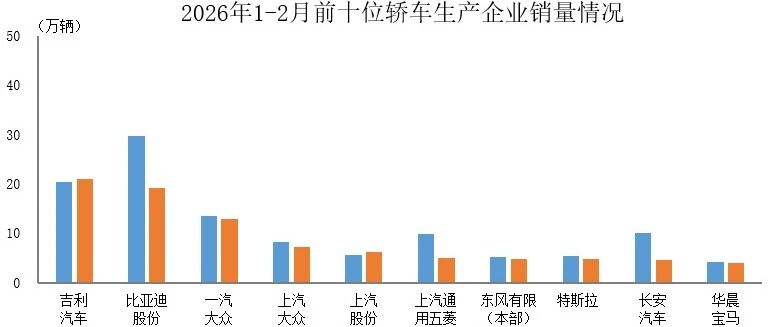
数据简报 | 2026年1-2月前十位轿车生产企业销售情况简析
中汽协会数据· 2026-03-23 07:57
Group 1 - The core viewpoint of the article highlights that among the ten companies analyzed, Geely Automobile and SAIC Motor experienced varying degrees of sales growth compared to the same period last year, while other companies saw a decline in sales [1] - According to the China Association of Automobile Manufacturers, the top ten car manufacturers sold a total of 902,000 vehicles in January and February 2026, accounting for 70% of the total car sales [3]


周观点:油价上涨强化出海逻辑,重视整车配置机会-20260323
GOLDEN SUN SECURITIES· 2026-03-23 07:52
Investment Rating - The report maintains an "Accumulate" rating for the automotive industry [5] Core Insights - The automotive sector is experiencing a significant improvement in weekly data, with wholesale and retail daily averages showing substantial increases. The rise in oil prices is expected to accelerate the demand for new energy vehicles, enhancing the logic for overseas expansion [1] - The report highlights that the profitability of automotive companies is currently at a low point, but with new vehicle launches and a recovery in industry sales, there is a strong certainty of marginal improvement in the vehicle sector from March to June [1] - The report emphasizes the importance of the robotics sector, with significant developments expected in 2026, as companies like Yushutech are set to benefit from increased funding and production capabilities [2] Summary by Sections Weekly Dynamics - The new energy vehicle companies, including Xiaopeng and Li Auto, have achieved significant year-on-year sales growth, with Xiaopeng and Li Auto reaching profitability in Q4 2025 [10] Weekly Market Performance - For the week of March 16-22, the SW automotive sector declined by 4.40%, ranking 16 out of 31 sectors. The performance of sub-sectors varied, with passenger vehicles showing a slight increase of 0.78%, while automotive parts and robotics experienced declines of 6.20% and 6.39%, respectively [13][20]
汽车周报:油价上涨将撬动新能源Beta,宇树IPO有望催化机器人板块-20260323
Shenwan Hongyuan Securities· 2026-03-23 07:45
Investment Rating - The report maintains a positive outlook on the automotive industry, particularly focusing on hybrid and fast-charging solutions, recommending companies like Geely and BYD, and highlighting the potential of the robot sector with the IPO of Yushu [2][3] Core Insights - The recent rise in oil prices is expected to boost the penetration rate of new energy vehicles globally, with a recommendation for hybrid and fast-charging solutions [2] - The report emphasizes the anticipated recovery in the robot sector, driven by the production release of Tesla's Optimus V3 and the IPO of Yushu [2] - The upcoming annual report season is a key focus, with a recommendation to pay attention to companies with strong performance support, particularly those in the weighted index [2] Industry Situation Update - According to the China Passenger Car Association, the average daily retail sales of passenger cars in the second week of March were 45,000 units, a 19% decrease year-on-year but a 42% increase compared to the previous month [2] - The price index for traditional raw materials and new energy raw materials has decreased recently, with traditional vehicle raw material prices down by 1.1% week-on-week and up by 6.1% month-on-month, while new energy vehicle raw material prices decreased by 2.7% week-on-week and increased by 2.4% month-on-month [2] - The total transaction value of the automotive industry this week was 349.939 billion yuan, a decrease of 8.81% week-on-week, with the automotive industry index closing at 7488.87 points, down 4.40% [2][12] Market Situation Update - This week, 14 automotive stocks rose while 257 fell, with the largest gainers being Shentong Technology, Meili Technology, and Jintuo Co., which rose by 11.3%, 5.0%, and 4.9% respectively [2][16] - The report highlights the importance of AI spillover and demand recovery as key investment themes, recommending a focus on intelligent and high-end directions in the automotive sector [2] Key Events - The report reviews the "Spring Automotive Industry Investment Strategy" and notes the strategic upgrade of Xiaomi's SU7 model, which integrates AI capabilities [3][7] - The new Xiaomi SU7 has undergone significant upgrades in safety, driving control, and intelligence, with prices ranging from 219,900 to 303,900 yuan [8][45] - The report mentions the anticipated growth in the fuel cell vehicle market, aiming for a doubling of the number of fuel cell vehicles by 2030 [24]

资本市场周报(2026年第1期):美以伊冲突持续,全球资本市场表现如何?-20260323
Yin He Zheng Quan· 2026-03-23 07:41
Core Insights - The ongoing conflict in the Middle East, particularly the U.S.-Israel-Iran tensions, has led to increased risks in global energy supply and market volatility, resulting in a dual logic of "risk aversion" and "stagflation trading" in capital markets [5][7] - Brent crude oil prices surged to $108.65 per barrel, an increase of 8.15% from the previous week and 53.37% since the onset of the conflict [5][7] - Major global stock indices have faced downward pressure, with the U.S. dollar strengthening and gold prices declining by 10.49% [8] Global Capital Market Overview A-shares and Hong Kong Market Review - The Shanghai Composite Index closed at 3957.05, down 3.38% for the week, while the Hang Seng Index fell by 0.74% to 25277.32 [15][21] - The Shenzhen Component Index decreased by 2.90%, closing at 13866.20 [15] Overseas Market Review - The Dow Jones Industrial Average fell by 2.11% to 45577.47, while the S&P 500 and Nasdaq Composite dropped by 1.90% and 2.07%, respectively [23] - European indices such as the DAX and CAC40 saw declines of 4.55% and 3.11% [24] Global Bond Market Dynamics - The yield on the 10-year U.S. Treasury bond rose to 4.39%, reflecting market concerns over inflation driven by rising oil prices and geopolitical tensions [27] Major Currency Exchange Rates - The U.S. dollar strengthened against the Japanese yen, closing at 159.25, while the dollar to Chinese yuan exchange rate was 6.89 [29] Major Commodity Prices - Brent crude oil prices increased significantly, while gold prices fell to $4491.67 per ounce, down 10.49% from the previous week [30] Important Policy Developments - The People's Bank of China emphasized the need for high-level financial market openness, aiming to enhance investment convenience and cross-border regulatory cooperation [31] - The China Securities Regulatory Commission is working on improving the stability of the capital market, focusing on long-term capital inflows and enhancing the quality of listed companies [32] - A new liquidity support mechanism for non-bank financial institutions is being explored to prevent systemic financial risks [33] - Hong Kong's regulatory body has tightened controls on investment banking practices, limiting the number of active projects for sponsors to enhance project quality [37] - South Korea announced a ban on the spin-off of subsidiaries by listed companies to protect shareholder interests and improve market valuation [38]






能源安全将促进我国新能源车出海,关注出海链整车及汽零
Orient Securities· 2026-03-23 07:14
Investment Rating - The industry investment rating is Neutral (maintained) [5] Core Insights - Energy security will promote the export of new energy vehicles from China, with opportunities for domestic brands to capture overseas markets due to rising oil prices and geopolitical tensions [2][9] - The upcoming launch of several key new energy models is expected to boost demand in the passenger car market, with a gradual recovery anticipated as consumer sentiment improves [10] - The IPO application of Yushun Technology has been accepted, indicating strong growth potential in the humanoid robot sector, which may positively influence market sentiment [11] Summary by Sections Investment Suggestions and Targets - Strong alpha vehicle and parts companies are expected to withstand industry risks and achieve revenue and profit growth; focus on companies in the gas power generation chain, humanoid robotics, liquid cooling, and advanced driving industries [12] - Recommended vehicle-related stocks include BYD, Geely Automobile, SAIC Motor, JAC Motors, and Seres; gas generator stocks include Yinlun Holdings and Weichai Power; liquid cooling stocks include InvoTech, Yinlun Holdings, Top Group, Feilong Shares, and Chuanhuan Technology; robotics stocks include Xinquan Shares, Top Group, Yinlun Holdings, Daimai Shares, Sanhua Intelligent Control, Zhejiang Rongtai, Xusheng Group, and others; advanced driving stocks include Jingwei Hirain, Bertel, and Desay SV [13]



法国巴黎银行董事长:释放消费潜力关键在于改善储蓄配置,转向养老金等长期金融工具
Sou Hu Cai Jing· 2026-03-23 05:17
Group 1 - The core focus of the speech is on consumption in China, emphasizing it as a fundamental issue and a policy matter, with a dual approach on financing consumption and boosting consumer confidence [3][4] - Consumption finance has become a significant part of China's financial system, showing a 1% increase in 2025, indicating a solid foundation for consumer demand and a transition to a more mature phase of consumption finance [4] - The company believes in the necessity of expanding credit accessibility to support consumer spending and the real economy while maintaining strict risk control and compliance standards to ensure long-term stability in the consumption finance sector [4][5] Group 2 - The transformation of household savings is essential to unlock consumption potential, focusing on improving the allocation of savings towards long-term and diversified financial instruments, which can enhance family confidence [5][6] - Policy actions are crucial for establishing a robust pension system and appropriate incentives, with a call for collaboration between public policy and private sector investments to reshape consumer confidence and promote consumption potential in China [6]

港股周观点:冲突升级,港股承压-20260323
Soochow Securities· 2026-03-23 05:10
Group 1 - The report indicates that global markets weakened, with the Hang Seng Index and its sub-indices all declining, particularly the Hang Seng Technology Index which fell by 2.12% [1] - The report highlights that the energy sector led gains with a 0.9% increase, while the materials sector experienced the largest decline at 11.3% [1] - Concerns over increased capital expenditures by major tech companies like Tencent and Alibaba are pressuring technology stocks, leading to a cautious market sentiment [1] Group 2 - The report notes a net outflow of 6.3 billion HKD from southbound funds, a significant decrease from the previous week's outflow of 58.7 billion HKD [2] - The report mentions that the net inflow into ETFs targeting the Hong Kong market has slowed, with a total scale decreasing to 437.88 billion HKD, down by 1.65 billion HKD [2] - The report identifies the top net inflows in sectors such as financials, non-essential consumer goods, and information technology, while materials saw net outflows [2] Group 3 - The outlook suggests that sustained high oil prices may delay the Federal Reserve's shift in policy, increasing global liquidity pressure and continuing to suppress emerging risk assets like Hong Kong stocks [3] - The report warns of potential further declines in the Hang Seng Technology Index due to ongoing geopolitical uncertainties and high volatility in the U.S. market [3] - The report recommends a defensive investment strategy, emphasizing the importance of value dividends and the potential of China's new energy sector as a scarce global asset [3] Group 4 - Key upcoming data and events include the Bank of Japan's monetary policy meeting minutes on March 25 and U.S. initial jobless claims on March 26 [4] - The report lists several important earnings reports from companies such as Xiaomi and Meituan scheduled for the upcoming week [4]
全球新车销量:中国车首次超越日本车
日经中文网· 2026-03-23 03:29
Core Viewpoint - Chinese automakers have surpassed Japanese automakers in total global sales for the first time since 2000, with BYD and Geely leading the charge, but growth in the Chinese market is beginning to slow down [1][3]. Group 1: Sales Performance - Chinese automakers now account for 6 out of the top 20 global car manufacturers, surpassing Japan's 5 [1][3]. - Total sales of Chinese automakers increased by 10% year-on-year, approaching 27 million units, while Japanese automakers saw a slight decline to nearly 25 million units [3]. - BYD's sales grew by 8% to 4.6 million units, marking its first time surpassing Ford, one of the three major U.S. automakers [5]. - Geely's sales increased by 23% to 4.11 million units, moving up two ranks from the previous year [7]. Group 2: Market Dynamics - The Chinese market's growth is slowing, and the ability of Chinese automakers to maintain momentum will depend on expanding into overseas markets such as Europe and Southeast Asia [1][10]. - Honda's sales dropped by 8% to 3.52 million units, with a significant 24% decrease in the Chinese market due to local brand competition [8][10]. - Nissan's sales fell by 4% to 3.2 million units, marking its first time out of the top ten since 2004 [10]. Group 3: Future Outlook - The outlook for Chinese automakers in 2026 hinges on their ability to continue expanding internationally, as domestic competition intensifies and EV tax incentives tighten [10][11]. - Both BYD and Geely are considering acquiring Nissan's factories in Mexico to enhance cost competitiveness [11].
吉利汽车2026年新车规划
数说新能源· 2026-03-23 03:02
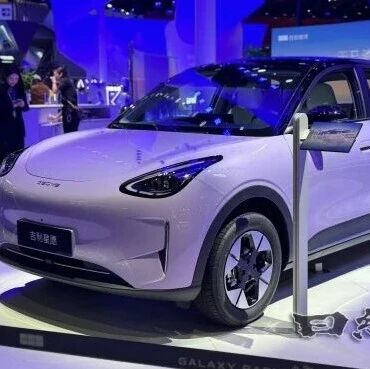
Core Viewpoint - The article discusses the latest developments in the electric vehicle (EV) market, focusing on new models and their specifications from various brands, highlighting the growing competition and innovation in the sector [2][3][4]. Group 1: New Models and Specifications - Geely's Galaxy A7 is a compact to mid-size electric sedan, expected to launch in 2026, with a length of 4935mm and a wheelbase of 2845mm, priced between 100,000 to 150,000 CNY, emphasizing comfort and equipped with Flyme Auto smart cockpit [2]. - The Galaxy Starry 7 is a mid-size plug-in hybrid sedan targeting the 100,000 to 150,000 CNY family market, measuring 4958mm in length and 2852mm in wheelbase, with a pure electric range of up to 165km, featuring the Raytheon AI hybrid technology 2.0 [2]. - The Galaxy M7 is a compact plug-in hybrid SUV starting at around 100,000 CNY, offering a pure electric range of 225km and a comprehensive range of 1730km, focusing on family space and cost-effectiveness [3]. - The Galaxy Battleship is a rugged electric SUV with a boxy design, featuring AI smart four-wheel drive and a wading depth of 800mm, expected to be priced between 280,000 to 380,000 CNY [3]. - The Zeekr 8X is a mid-large plug-in hybrid SUV, positioned as a high-performance flagship, measuring between 5100-51080mm in length, with a comprehensive power of 1030kW and a pure electric range of 400km, anticipated to be priced around 400,000 CNY [3]. - The Zeekr 009 plug-in hybrid version is based on the pure electric model, featuring a 2.0T plug-in hybrid system with a pure electric range of 200-300km and a comprehensive range exceeding 1000km, enhancing long-distance travel convenience [3]. - The Lynk & Co 800 is a large six-seat plug-in hybrid SUV based on the SPA EVO architecture, positioned just below the Lynk & Co 900, offering both five and six-seat configurations with top-tier features [4]. - The Lynk & Co 07EM-P travel version enhances storage space practicality with a design that complements the pure electric Zeekr 007GT [4].