华能国际

Search documents
电力行业4月月报:多地发布“136”号文衔接机制,风光抢装潮持续
Xinda Securities· 2025-06-06 06:03
多地发布"136"号文衔接机制,风光抢装潮持续 [Table_Industry] —电力行业 4 月月报 [Table_ReportDate] 2025 年 6 月 6 日 证券研究报告 行业研究 [行业月报 Table_ReportType] 电电力行业 投资评级 看好 上次评级 看好 [Table_Author] 左前明 能源行业首席分析师 执业编号:S1500518070001 联系电话:011-83326712 邮 箱:zuoqianming@cindasc.com 李春驰 电力公用行业联席首席分析师 执业编号:S1500522070001 联系电话:011-83326723 邮 箱: lichunchi@cindasc.com 化工行业: 邢秦浩 电力公用分析师 执业编号:S1500524080001 联系电话:010-83326712 邮 箱:xingqinhao@cindasc.com 唐婵玉 电力公用分析师 执业编号:S1500525050001 邮 箱:tangchanyu@cindasc.com 信达证券股份有限公司 CINDA SECURITIES CO.,LTD 北京市西城区宣武门西大 ...
电力月报:多地发布“136”号文衔接机制,风光抢装潮持续-20250606
Xinda Securities· 2025-06-06 05:30
Investment Rating - The investment rating for the electricity industry is "Positive" [2] Core Insights - The report highlights the implementation of the "136" document mechanism in multiple regions, leading to a surge in renewable energy installations. The specific measures vary across regions, impacting the development of new energy projects significantly [3][8] - The report anticipates that the domestic electricity sector may experience profit improvement and value reassessment following several rounds of supply-demand tensions. Despite a gradual easing of supply-demand conflicts, some economically developed areas still face regional supply shortages [4][10] Summary by Sections Monthly Special Topic - The "136" document has been implemented in Shandong, Guangdong, and Inner Mongolia, with varying measures affecting the protection of existing projects and the execution of new projects [9][10] Monthly Sector and Key Listed Company Performance - In May, the electricity and public utilities sector rose by 2.3%, outperforming the broader market, while the Shanghai and Shenzhen 300 index increased by 1.8% [11][14] Monthly Electricity Demand Analysis - In April 2025, total electricity consumption reached 772.1 billion kWh, with a year-on-year growth of 4.7%. The growth rates for different sectors were 13.8% for primary industry, 3.0% for secondary industry, and 9.0% for tertiary industry [16][19] Monthly Electricity Production Analysis - In April 2025, total electricity generation was 711.1 billion kWh, with a year-on-year increase of 0.9%. Notably, wind and solar power generation saw significant growth of 12.7% and 16.7%, respectively [38][39] Monthly Electricity Market Data Analysis - The average purchase price of electricity in June was 385.80 yuan/MWh, showing a decrease of 1.02% month-on-month and 2.78% year-on-year [4] Investment Strategy and Valuation of Major Listed Companies - The report suggests that coal-electricity integrated companies and national coal-electricity leaders are likely to benefit from the current market conditions. Specific companies mentioned include Xinji Energy, Shaanxi Energy, and Huaneng International [4][10]
汾渭煤炭专家:动力煤市场调研反馈及展望
2025-06-06 02:37
Summary of Coal Industry Conference Call Industry Overview - The coal industry, specifically the thermal coal market, is experiencing a downward trend since 2025, with prices nearing 2014 lows due to oversupply [1][3] - The market is characterized by a significant increase in coal production, particularly in Shanxi and Xinjiang, but recent environmental inspections and weak demand may lead to a decrease in production [1][5] Key Points Price Trends - As of May 2025, the price of 5,500 kcal thermal coal has dropped over 150 RMB since the beginning of the year, reflecting a significant decline in market prices [1][3] - The average price for thermal coal is expected to decrease to 650-660 RMB/ton for the year, with potential fluctuations in the second half of the year [4][14] Supply and Demand Dynamics - From January to April 2025, the cumulative oversupply of thermal coal reached 30.46 million tons, with inventory levels remaining historically high despite some reductions at northern ports [10][11] - Domestic thermal coal supply has increased by over 10 million tons year-on-year, while demand from the thermal power sector has been pressured by the rise of renewable energy sources [9][10] Production Insights - Shanxi aims for a production target of 1.013 billion tons, while Xinjiang's target is 600 million tons, but both face challenges related to market conditions and transportation limitations [6][15] - Environmental inspections have led to some production reductions, but no large-scale shutdowns have occurred [7][25] Import and Export Factors - Import volumes of thermal coal are expected to decrease by 30-50 million tons in 2025, primarily due to reduced imports from Indonesia and Australia [8][19] - The overall supply remains ample, with domestic production compensating for the decline in imports [9][10] Market Predictions - Short-term price fluctuations are anticipated, with potential improvements in supply-demand balance due to seasonal factors and production adjustments [4][12] - The market may see a slight price increase in the third quarter, but high inventory levels and continued supply could lead to further price declines [13][14] Regulatory and Policy Impacts - The National Development and Reform Commission (NDRC) has engaged with index institutions to stabilize market pricing, which has contributed to a period of relative price stability [21][22] - Government policies are expected to prevent drastic price declines, with a focus on maintaining production levels despite market pressures [25] Additional Insights - The recent increase in low-calorie coal prices is attributed to high supply and low demand for high-calorie coal, leading to a shift in market dynamics [16][17] - The coal market is currently facing a challenging environment, with potential price drops below 600 RMB likely if demand does not improve and production levels remain high [24]
多省纷纷废止风光发电项目,新能源“香饽饽”不香了吗
Di Yi Cai Jing· 2025-06-05 11:15
Core Viewpoint - The large-scale cancellation of renewable energy projects is primarily attributed to tightened policies and regulatory measures in the industry [1][6][9]. Summary by Sections Project Cancellations - Multiple provinces in China, including Shanxi, Ningxia, Shaanxi, and Fujian, have announced the cancellation of numerous renewable energy projects due to non-compliance with new regulatory requirements [1][2][4][5]. - For instance, Shanxi's recent announcement included the cancellation of 14 projects totaling over 590,000 kilowatts [1]. - In Fujian, 10 solar projects were canceled, amounting to a total capacity of 114.3 megawatts, involving major energy companies [5]. Policy Changes - The National Development and Reform Commission and the National Energy Administration have implemented stricter policies regarding project approvals and timelines, requiring projects to be completed by specific deadlines or face cancellation [2][6]. - The "136 Document" introduced a market-driven pricing mechanism for renewable energy, shifting from guaranteed pricing to market-based pricing, which has altered investment dynamics in the sector [6][7]. Economic Viability - The decline in expected returns due to changing electricity pricing has made many projects economically unfeasible, leading companies to halt or cancel projects [7][8]. - Major companies like China Power Construction and State Power Investment Corporation have announced project terminations due to these economic pressures [7]. Industry Challenges - The rapid expansion of the renewable energy sector has led to issues such as blind expansion and project "occupying" without actual development, resulting in resource wastage [9][10]. - The industry faces significant pressure from the integration of large-scale renewable energy into the grid, necessitating a restructuring and optimization of project management [11].

中泰国际每日晨讯-20250605
ZHONGTAI INTERNATIONAL SECURITIES· 2025-06-05 02:36
Market Overview - The Hong Kong stock market continued its rebound with the Hang Seng Index rising by 0.6% to close at 23,654, while the Hang Seng Tech Index also increased by 0.6% to 5,219. The trading volume reached HKD 212.6 billion, indicating active trading, although net inflows from the Stock Connect decreased by about 10% to HKD 3.5 billion [1] - The market showed a "stronger gets stronger" trend, with funds continuing to favor high-certainty stocks. New consumption leaders like Pop Mart (9992 HK) and Mao Geping (1318 HK) reached new highs, reflecting market premium recognition for scarce consumer brands [1] Macro Dynamics - In the U.S., job vacancies rose to 7.391 million in April, an increase of 191,000 from March, indicating resilience in the labor market. The ratio of job openings to job seekers remained at 1.03, consistent with 2019 levels [2] - Despite a rise in layoffs to 1.79 million, the layoff rate remains relatively low, suggesting that companies are hesitant to reduce staff amid a moderately slowing economy [2] Industry Dynamics Automotive Sector - The Chinese government is promoting the "2025 New Energy Vehicles Going to the Countryside" initiative, with 124 models included in the directory, including vehicles from BYD and Geely. The automotive sector in Hong Kong showed stable performance, with most stocks fluctuating between -1% and +2% [3] Consumer Sector - The new consumption and IP concept sectors continue to attract capital. Companies like Blucor (325 HK) have entered the Mexican market, showcasing their product matrix at exhibitions. Blucor and Pop Mart saw respective increases of 17% and 14% over the past five trading days [3] Healthcare Sector - The Hang Seng Healthcare Index rose by 3.2%, driven by recent licensing agreements between domestic pharmaceutical companies and global firms, boosting confidence in the export of innovative drugs. Companies like Innovent Biologics (1801 HK) reported promising clinical data at the ASCO conference, leading to a 14.1% surge in their stock price [4] Energy Sector - The energy sector, particularly nuclear and renewable energy stocks, saw significant gains. China General Nuclear Power (1164 HK) rose by 28.3% after signing a uranium sales framework agreement, benefiting from rising uranium prices due to increased demand from U.S. nuclear energy initiatives [5][9] Company-Specific Insights Huaneng International (902 HK) - The company reported an 8.2% year-on-year increase in net profit for Q1 2025, benefiting from lower fuel costs and increased electricity demand during the summer [11] China General Nuclear Power (1164 HK) - The company is expected to benefit from a new uranium sales agreement, with a pricing mechanism favoring current market prices, enhancing its position amid rising uranium demand [11] Stone Pharmaceutical (1093 HK) - The company experienced a 21.9% decline in total revenue for Q1 2025, primarily due to a slowdown in its core product sales. However, it anticipates a gradual recovery in sales starting from Q2 2025, supported by new licensing agreements and increased sales of oncology drugs [13][14][15]
中国11大电力央企,为何全部重仓盐城?
Sou Hu Cai Jing· 2025-06-04 14:25
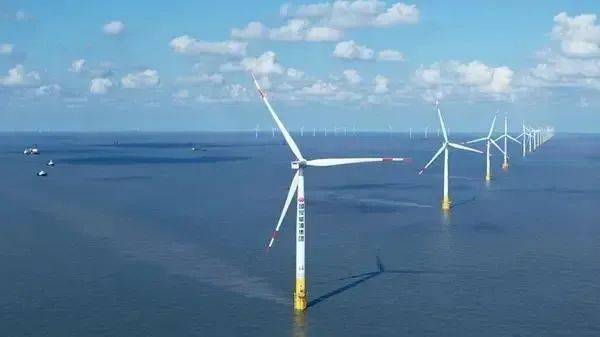
Core Viewpoint - The article highlights China's significant advancements in power generation, particularly in clean energy, and emphasizes the strategic importance of Yancheng as a hub for renewable energy projects involving major state-owned enterprises [1][9]. Group 1: Power Generation Capacity - As of 2024, China's power generation capacity is approximately 3349 GW, nearly three times that of the United States, which stands at 1225 GW [1]. - The increasing share of clean energy in China's power generation is a notable trend, indicating a shift towards sustainable energy sources [1]. Group 2: Renewable Energy Projects in Yancheng - Yancheng has attracted all 11 major state-owned power enterprises, making it a unique city with full coverage of the power industry [9]. - Significant investments include the East Taihai Offshore Wind Power Project, a joint venture between China and France, with an investment of 8 billion yuan [2]. - The Dafeng Offshore Wind Power Project, developed by Huaneng Group, has an annual output of 1.14 billion kWh of clean energy, saving 350,000 tons of standard coal and reducing CO2 emissions by 931,000 tons [4]. Group 3: Advantages of Yancheng - Yancheng boasts a coastline of 582 kilometers and favorable wind conditions, with average wind speeds exceeding 7.6 m/s at 100 meters height, making it ideal for wind power generation [12][13]. - The region also has high solar radiation levels, with annual totals between 1400-1600 kWh/m², supporting the development of solar power projects [15]. Group 4: Industry Development and Supply Chain - Yancheng has established the largest offshore wind power industrial cluster in China, with a production capacity accounting for 40% of the national total [22]. - The city is also home to major solar energy companies, achieving a solar cell production capacity of 84.5 GW and module production of 120.4 GW, ranking first in the country [22]. Group 5: Market Dynamics and Energy Consumption - The Yangtze River Delta region, where Yancheng is located, is a major electricity consumption area, with a projected total electricity consumption exceeding 20,000 billion kWh in 2024, accounting for 21.1% of the national total [27][29]. - Yancheng's proximity to major consumption centers like Shanghai enhances its ability to sell generated electricity at competitive prices [29]. Group 6: Low-Carbon Development Initiatives - Yancheng is recognized as a pilot city for carbon peak initiatives, aiming to lead in low-carbon development practices [38]. - The city is actively exploring the establishment of a green standard system to support carbon emission reduction efforts and enhance its role in global climate governance [56][57].
【基础化工】新一轮环保督察启动,持续关注农药和颜料板块——行业周报(20250526-20250601)(赵乃迪/胡星月)
光大证券研究· 2025-06-04 13:56
Group 1 - The third round of the fourth batch of central ecological environment protection inspections has been fully launched, with eight inspection teams focusing on five provinces and three central enterprises [2] - The pesticide industry is undergoing capacity optimization, with the recent explosion at Youdao Chemical affecting the supply of chlorantraniliprole, which may lead to price increases [3] - Chlorantraniliprole is a highly efficient and low-toxicity insecticide, currently the top-selling insecticide globally, with the explosion impacting short-term supply [3] Group 2 - The organic pigment industry is experiencing continuous consolidation, with a focus on high-performance organic pigment domestic substitution due to stricter environmental policies and tightening profit margins [4] - High-performance organic pigments are becoming a new trend in the industry, with few domestic companies mastering core production technologies, leading to a favorable competitive landscape for industry leaders [4]

海通国际证券利率债周报-20250604
Haitong Securities International· 2025-06-04 09:31
Core Insights - The report suggests that spot electricity prices may have bottomed out, leading to potential improvements in valuation and performance for the sector [1] - The analysis indicates that the electricity market is undergoing significant changes, particularly in the context of coal-fired power generation and renewable energy integration [3] Group 1: Coal Power - In northern regions, the proportion of renewable energy is higher, making coal power more scarce during peak times, which could lead to price increases [3] - The report anticipates that after three years of decline, the spot electricity price in Gansu will rise for the first time in 2025, surpassing long-term contracts [3] - In Q1 2025, coal power generation in China decreased by 4.7% year-on-year, with major state-owned enterprises experiencing significant drops in electricity output [21][22] Group 2: Hydropower - The report highlights that large hydropower resources are becoming increasingly scarce as most potential sites have been developed, particularly outside Tibet [35] - It is projected that hydropower prices will see a moderate increase during the 14th Five-Year Plan period, driven by further marketization [42] - Major hydropower companies are expected to show stable profit growth, with significant revenue from electricity sales [45] Group 3: Renewable Energy - The report notes that by 2024, the installed capacity of renewable energy in China reached 1.41 billion kilowatts, accounting for 42% of total installed capacity, with a compound annual growth rate (CAGR) of 27.4% from 2020 to 2024 [10][57] - The analysis indicates that the new energy policy aims to stabilize electricity prices and control the growth rate of installed capacity, suggesting a potential slowdown in future capacity additions [3] - The report also points out that the profitability of renewable energy is under pressure due to market dynamics, with significant declines in electricity prices observed in Guangdong [61][62]
2025年中期投资策略:现货电价或见底,估值业绩双提升
GUOTAI HAITONG SECURITIES· 2025-06-04 07:20
Investment Rating - The industry investment rating is "Overweight" [1] Core Insights - The report indicates that spot electricity prices may have bottomed out, leading to improvements in both valuation and performance [1] - The report highlights the increasing scarcity of large hydropower assets as the development of hydropower in China has largely been completed, except for the Tibet region [41][46] - The report anticipates that the approval of nuclear power projects will continue, with an expected national installed capacity of 110 million kilowatts by 2030, reflecting a CAGR of +11% from 2024 [3] - The report notes that the share of renewable energy in installed capacity has exceeded 40%, with significant growth expected in wind and solar power by 2030 [60][63] Summary by Sections Thermal Power - In northern regions, the higher proportion of renewable energy leads to better scarcity of thermal power, making prices easier to rise than to fall [3] - Recent increases in spot electricity prices in southern regions are attributed to previously low thermal power prices, which have severely impacted power plant profitability [3] Hydropower - The report states that the hydropower market in China has a relatively low electricity market share, with stable prices during the 13th Five-Year Plan and a slight increase expected during the 14th Five-Year Plan [46] - The scarcity of large hydropower assets is expected to become more pronounced as development enters its later stages [41] Renewable Energy - The report suggests that new policies for renewable energy will focus more on stabilizing electricity prices and controlling installed capacity growth, potentially leading to a slowdown in installation rates [3] - The report highlights that the marketization of renewable energy is progressing, but electricity prices are under pressure [64] Nuclear Power - Since 2019, the approval of nuclear power projects has become normalized, with over 10 units approved annually for four consecutive years [3] - The report projects that by 2030, the national installed capacity of nuclear power will reach 110 million kilowatts, indicating a robust growth trajectory [3] Financial Performance of Major Hydropower Companies - The report provides detailed financial metrics for major hydropower companies, indicating stable revenue and profit margins, with a focus on improving debt structures and reducing financing costs [54][55] - The dividend payouts of major hydropower companies have been steadily increasing, reflecting a commitment to returning value to shareholders [59]





心智观察所:乌克兰“蛛网”行动,让人想起我国核电领域的“绝密较量”
Guan Cha Zhe Wang· 2025-06-04 05:48
Core Viewpoint - The recent operational launch of the Shandong Rongcheng Shidao Bay High-Temperature Gas-Cooled Reactor (HTR-PM) marks a significant advancement in nuclear energy technology, showcasing China's leadership in the development of fourth-generation nuclear power and its inherent safety features [3][5]. Group 1: Technological Advancements - The Shidao Bay nuclear power plant is the world's first fourth-generation nuclear power station, utilizing helium gas as a coolant and achieving operational temperatures of 750-950°C, significantly higher than third-generation reactors [3][5]. - The core technology involves TRISO ceramic-coated fuel particles, which can withstand temperatures exceeding 1600°C, effectively containing radioactive materials [3][5]. - The reactor's design ensures that even in the event of a complete power failure or cooling system failure, there is no risk of core meltdown or radioactive leakage [3][5]. Group 2: Safety and Security Measures - The reactor's inherent safety features include a passive cooling system that allows the reactor to cool naturally without external power, significantly reducing the risk of incidents similar to the Fukushima disaster [3][5]. - To counter modern threats, the Shidao Bay nuclear power station has implemented a multi-layered defense system, including high-precision radar monitoring, electronic jamming technology, and physical barriers to prevent unauthorized drone access [5][8]. - The power and control systems of the plant are designed with redundancy to maintain critical functions even if some facilities are damaged [7]. Group 3: Cybersecurity and Espionage Prevention - The plant employs "gap isolation" technology to physically separate critical control systems from external networks, effectively preventing hacking attempts [7][9]. - Regular cybersecurity drills are conducted by the China National Nuclear Corporation to ensure the digital defense capabilities of the HTR-PM [7][9]. - Advanced security networks, including facial recognition and infrared monitoring, are deployed around the plant to ensure the safety of critical areas [8][9].