
微软

Search documents
【太平洋科技-每日观点&资讯】(2025-11-20)
远峰电子· 2025-11-19 12:05
Market Overview - The main board saw significant gains with notable performers including Rongji Software (+10.05%), Langchao Software (+10.02%), and Dawi Co. (+10.01%) [1] - The ChiNext board led the gains with Liantech (+14.48%), Saiwei Electronics (+10.16%), and Sichuang Medical (+7.78%) [1] - The Sci-Tech Innovation board also showed strong performance with Tengjing Technology (+8.88%), Yingfang Software (+7.98%), and Guangyun Technology (+4.68%) [1] - Active sub-industries included SW Communication Network Equipment and Devices (+1.57%) and SW Electronic Chemicals III (+0.58%) [1] Domestic News - Aibang announced the acquisition of shares and other equity securities of Dispelix Oy, a leader in AR diffraction optical waveguide technology, to enhance global market leadership [1] - Suteng Juchuang secured exclusive orders exceeding 500,000 units for high-performance digital laser radar from a North American EV manufacturer and multiple models from a major European automotive company [1] - Jingdong Fang responded to disputes with Samsung Display regarding intellectual property, indicating a resolution and plans to withdraw related investigations [1] - Xiaomi's Lu Weibing mentioned a supply agreement for 2026 to mitigate rising storage prices, potentially through price increases and product upgrades [1] Company Announcements - Neusoft Group received a notification from a major domestic automotive manufacturer to supply smart cockpit domain controllers, with an estimated total supply amount of 4.2 billion RMB over a lifecycle of approximately 6 years [2] - Junyi Digital disclosed a voluntary investment announcement, increasing its stake in Guanghong Precision to 60% with a total investment of 120 million RMB [2] - Fuguang Co. announced a share buyback plan with a minimum investment of 80 million RMB and a maximum of 150 million RMB within 6 months [2] - Huahai Qingke's major shareholder plans to reduce holdings of up to 3,534,051 shares, representing 1% of total equity, due to personal financial needs [2] International News - STMicroelectronics launched the STM32V8, a new high-performance microcontroller designed for demanding industrial applications, produced using advanced 18nm technology [3] - Microsoft introduced the Azure Cobalt 200, optimized for common customer workloads, with broader deployment expected in 2026 [3] - Nvidia and Microsoft announced a potential investment of up to 15 billion USD in Anthropic, a competitor to OpenAI, with commitments for significant computing power purchases [3] - Wolfspeed unveiled two new 1200V silicon carbide power module series for electric vehicle traction inverters, aiming to set new industry standards for performance and reliability [3]


11月全球市场暴跌,资产抛售潮的底层逻辑
Sou Hu Cai Jing· 2025-11-19 12:02
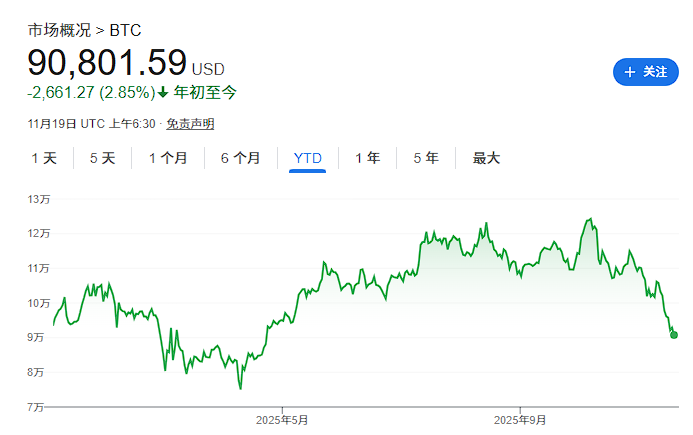
Core Viewpoint - The global financial markets experienced significant volatility in mid-November 2025, characterized by a synchronized sell-off across various asset classes, driven by three main factors: a shift in Federal Reserve policy, valuation concerns in the AI sector, and geopolitical debt issues in Japan [1][9][13]. Market Performance - The stock market was heavily impacted, with developed markets suffering greater declines than emerging markets. The U.S. stock market saw a four-day decline, with the Dow Jones Industrial Average dropping 498.5 points to 46091.74, a decrease of 1.07%, and the Nasdaq Composite falling 275.22 points to 22432.85, a drop of 1.21% [2][3]. - European markets also fell, with the Euro Stoxx 50 index down 1.85% and the UK FTSE 100 down 1.27% on November 18 [3]. - In the Asia-Pacific region, the Nikkei 225 index dropped 3.22%, marking its largest single-day decline since April, while the A-share market showed relative resilience with smaller declines [3]. Cryptocurrency Market - The cryptocurrency market, particularly Bitcoin, experienced a dramatic decline, falling below $90,000 for the first time in seven months, erasing all gains for the year. This decline was attributed to tightening macro liquidity and changing regulatory expectations [4]. Commodity Market - The commodity market saw a broad decline, with both risk and safe-haven assets under pressure. Gold prices fell below $4,000 per ounce, driven by reduced expectations for interest rate cuts and a stronger dollar [5][6]. - Industrial metals also faced declines, reflecting concerns over global economic slowdown, while energy markets were an exception, with oil prices rising due to geopolitical tensions [7]. Bond Market - The bond market experienced significant volatility, particularly in Japan, where the 10-year government bond yield rose to 1.751%, the highest since 2008. This was driven by concerns over Japan's fiscal sustainability amid a proposed large-scale economic stimulus plan [8]. Core Drivers of the Sell-off - The shift in Federal Reserve policy was a primary driver, with expectations for rate cuts diminishing sharply from 90% to 44% for December, leading to increased market volatility [9][10]. - Valuation concerns in the AI sector, particularly surrounding Nvidia's upcoming earnings report, prompted institutional investors to reduce their positions, reflecting fears of overvaluation [11][12]. - Japan's geopolitical tensions and debt concerns acted as a "black swan" event, exacerbating global market volatility and impacting capital flows [13][14]. Industry Performance - Defensive sectors such as healthcare and utilities showed relative resilience, while technology and growth sectors, particularly those related to AI, faced significant declines [15][16]. - Some segments within the semiconductor and AI application sectors experienced gains, indicating structural opportunities despite broader market declines [16]. Fund Flows - There was a notable shift in fund flows, with significant outflows from high-valuation tech stocks and inflows into defensive sectors. The S&P 500 saw $40.5 billion in outflows, while energy and healthcare sectors attracted investments [17]. Market Sentiment - Investor sentiment turned increasingly fearful, with the VIX index rising to around 20, indicating heightened concerns over market volatility [18]. Historical Comparison - The current market conditions share similarities with past crises, particularly in terms of the impact of Federal Reserve policy shifts, but differ in the underlying causes and market dynamics [19][20]. Unique Aspects of the Current Sell-off - The current market downturn is marked by the unique factors of AI valuation bubbles and the potential unraveling of yen carry trades, which have not been prominent in previous crises [21]. Outlook - Key upcoming events, including Nvidia's earnings report and U.S. non-farm payroll data, will be critical in determining whether the current market volatility represents a short-term correction or a more significant trend reversal [22]. - Mid-term risks include Japan's debt situation and the potential for global economic slowdown, which could further impact market dynamics [23]. Investment Strategy - Investors are advised to adopt a defensive approach, reducing exposure to high-valuation tech stocks while seeking opportunities in defensive sectors and structural growth areas [24][25].
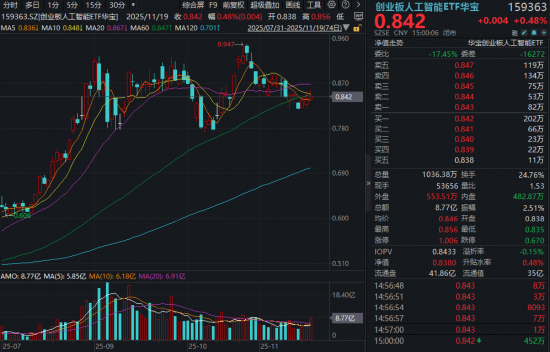
创业板人工智能ETF(159363)放量三连涨!英伟达财报公布在即,光模块CPO再迎催化?资金抢跑布局
Xin Lang Ji Jin· 2025-11-19 11:42
Group 1 - The core viewpoint of the articles highlights the strong performance of optical module companies and the AI sector in the face of a broader tech stock pullback, with significant gains in stocks like LianTe Technology and Zhongji Xuchuang [1][3] - The announcement of Anthropic's $30 billion investment in Microsoft's Azure cloud platform to expand its Claude AI model, supported by Nvidia, indicates a growing demand for AI and related technologies [3] - Predictions suggest that the global demand for 800G optical modules will reach 40 million units and 1.6T optical modules will exceed 7 million units by next year, driven by increased shipments of ASIC chips [3] Group 2 - The upcoming Nvidia earnings report is expected to validate the demand for computing power, which could catalyze the optical module sector in the A-share market [4] - Analysts recommend focusing on the first AI ETF tracking the ChiNext AI Index, which has over 54% exposure to optical modules, as a way to capture opportunities in the AI theme [4] - The ETF has seen significant inflows, with a net subscription of 92 million units in a single day, indicating strong investor interest [1][4]

周四,决定全球市场命运的财报来了
Hua Er Jie Jian Wen· 2025-11-19 08:19
全球市场正陷入一场危险的集体焦虑,而唯一能打破这种僵局的恐怕只有英伟达。这家市值4.5万亿美元的芯片巨头将于美东时间周三 (北京时间周四凌晨)美股盘后公布三季度财报,这份财报将决定全球市场在今年最后几周的走向。 眼下,市场的紧张情绪正在蔓延:从比特币到科技股,从黄金到国债,从私募市场到企业债券,几乎所有资产类别都遭遇抛售压力。在 这样的背景下,投资者将目光聚焦在英伟达身上,这既是希望也是无奈。这家公司的业绩将直接反映科技巨头们数千亿美元AI投资的真 实回报。 目前,华尔街分析师普遍看好英伟达即将公布的财报,预计净利润和营收将双双增长超过50%。 分析人士指出,如果投资者满意英伟达的三季度业绩和四季度指引,多头将推动市场迎来乐观收官;如果不满意,市场可能面临更深的 调整。正如华尔街人士所言,"这是一份英伟达走向如何,市场就走向如何的报告。" 值得注意的是,在市场高度集中风险下,英伟达作为标普500指数最大权重股和AI交易的中心,其业绩表现的重要性前所未有。但是有 市场人士指出,集中度风险在市场上行时令人兴奋,但在下行时可能变成噩梦。 英伟达:当前市场唯一的救赎者? 一种更为阴郁的情绪正在市场蔓延,而只有英伟达能 ...
创业板人工智能ETF华夏(159381)、5G通信ETF(515050)午后探底回升,算力建设开启新一轮扩张周期
Xin Lang Cai Jing· 2025-11-19 07:05
Core Insights - The computing power industry is experiencing renewed activity, with significant movements in related ETFs and stocks [1] - Strategic partnerships between major companies like Microsoft, Nvidia, and AI startup Anthropic are set to reshape the computing power landscape [1] - A shift from traditional heavy asset construction models to diversified financing structures is emerging, facilitating a new expansion cycle in computing power [1] Group 1: Market Performance - The ChiNext AI ETF (159381) rose by 0.70%, aiming for a third consecutive day of gains [1] - The 5G Communication ETF (515050) turned positive in the afternoon, increasing by 0.41% [1] - Notable stock performances include LianTe Technology, which surged over 14%, and leading optical module companies like Zhongji Xuchuang and Xinyi Sheng, both rising over 3% [1] Group 2: Strategic Partnerships - Microsoft and Nvidia, along with Anthropic, announced a strategic collaboration, with Nvidia committing up to $10 billion and Microsoft up to $5 billion [1] - Anthropic plans to invest $30 billion in purchasing Azure computing power [1] Group 3: Industry Trends - Huatai Securities indicates that capital innovation is transforming computing power construction models, initiating a new expansion cycle [1] - New financing models such as "computing power leasing" and "computing power debt financing" are emerging, addressing previous issues of high upfront investment and long return periods [1] - The dual drive of capital and technology is creating a positive feedback loop in computing power construction, leading to a new prosperity cycle in global computing infrastructure [1]

桥水基金三季度增配美股宽基ETF,减持科技龙头,清仓黄金
Ge Long Hui· 2025-11-19 06:41
Core Insights - Bridgewater Associates increased its allocation to U.S. broad-based ETFs in Q3 2025 while reducing holdings in major tech stocks and completely liquidating its gold position [1][4][5] Group 1: Portfolio Adjustments - The overall portfolio value rose from $24.8 billion in Q2 2025 to $25.5 billion in Q3 2025, marking a 3% increase, with the number of holdings significantly increasing from 585 to 1014 [1] - The largest holding is now the iShares S&P 500 ETF (IVV) at $2.71 billion, representing 10.6% of the portfolio, followed by the SPDR S&P 500 ETF (SPY) at approximately $1.71 billion, or 6.7% [1] - The combined weight of the two S&P ETFs is about 17.3%, indicating a notable increase from the previous quarter [1] Group 2: Sector and Stock Changes - Significant increases in holdings include Lam Research (+111%), Mastercard (+191%), and Workday (+132%), among others, indicating a shift towards semiconductor and financial sectors [2] - New positions were established in social media platform Reddit and online brokerage Robinhood, reflecting diversification in the portfolio [3] - Major tech stocks such as Nvidia, Google, and Microsoft saw substantial reductions in holdings, with Nvidia's shares reduced by 65%, indicating a strategy of taking profits after previous gains [4] Group 3: Gold Position and Market Outlook - Bridgewater completely liquidated its position in the SPDR Gold Trust ETF, capitalizing on recent price increases, but maintains a long-term view on gold's role in macro allocation [5] - The firm’s China currency asset head, Hudson Attar, noted that the sustainability of Western high-net-worth investors' demand for gold is crucial for future price movements [5][6] - Attar expressed caution regarding the current gold market, suggesting that a lack of retail participation could hinder prices above $4,000, despite central bank demand potentially supporting prices between $3,000 and $3,500 [5][6][7]
美国独角兽Anthropic获微软、英伟达150亿美元投资承诺,格局微妙改变
3 6 Ke· 2025-11-19 04:05
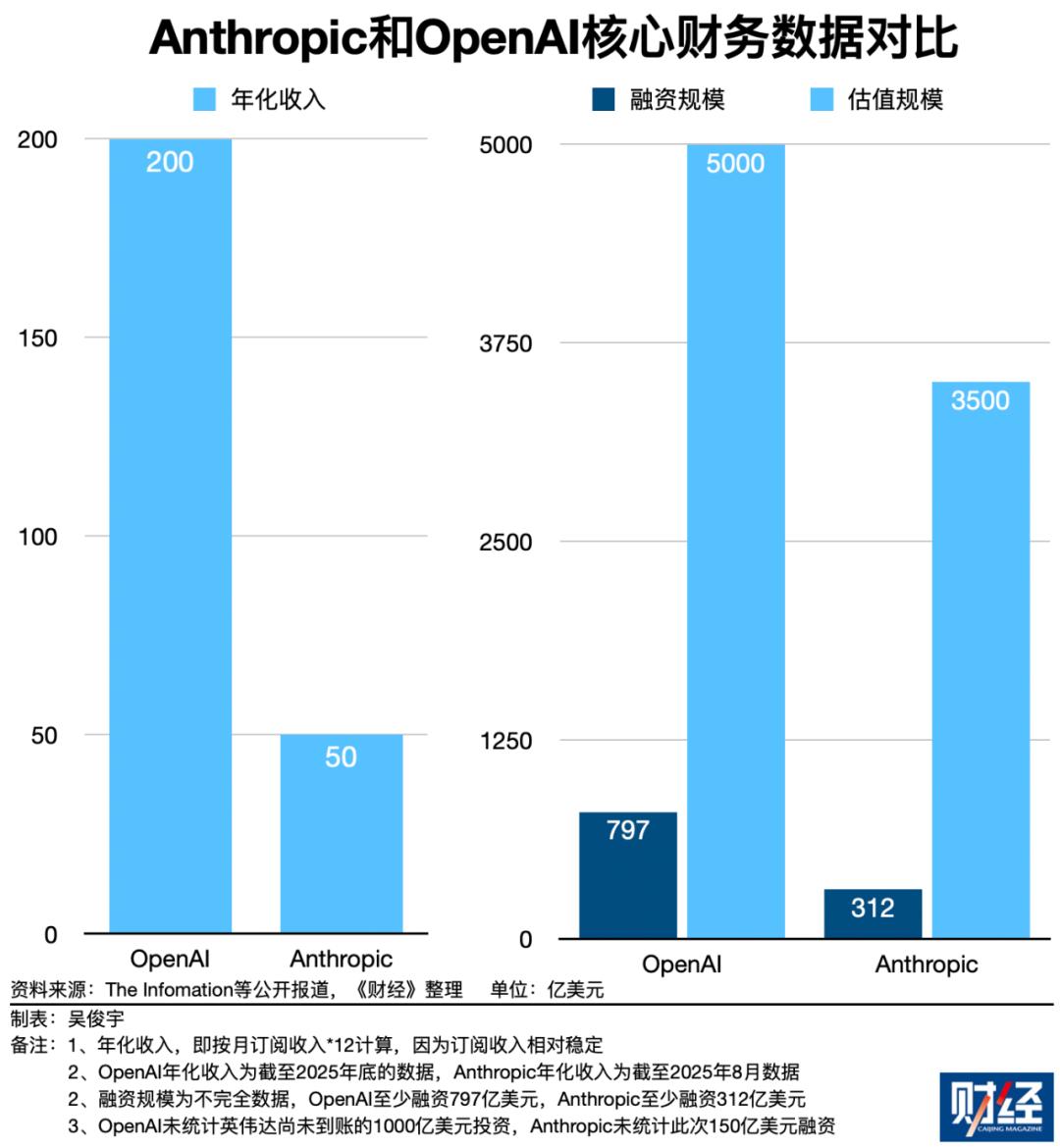
Core Insights - Nvidia and Microsoft have committed to invest $10 billion and $5 billion respectively in Anthropic, which has raised over $31.2 billion in total funding and is currently valued at $183 billion, potentially rising to $350 billion after this investment [1][4] Investment and Valuation - Anthropic's valuation is expected to increase to $350 billion, making it the second highest valued large model startup globally, following OpenAI at $500 billion [1] - The total funding raised by Anthropic exceeds $31.2 billion, with a current valuation of $183 billion [1] Strategic Partnerships - Anthropic will purchase at least 1 GW of Nvidia's computing power, which can accommodate 200,000 Nvidia GB200 chips [1] - Anthropic will optimize its models in collaboration with Nvidia, starting with the Blackwell chip and moving to the Rubin chip [4][6] - Microsoft and Anthropic will integrate Anthropic's Claude models into Microsoft's AI services, including Microsoft Foundry and Copilot [4] Cloud Service Dynamics - The partnership with Nvidia and Microsoft indicates a weakening of Anthropic's strong ties with Amazon, which has invested over $4 billion in Anthropic [7][8] - Despite the new partnerships, Amazon remains a primary cloud service provider for Anthropic [8] - Anthropic's multi-cloud strategy allows it to utilize services from Amazon AWS, Google Cloud, and Microsoft Azure, enhancing its appeal to enterprise clients [15] Competitive Landscape - Anthropic has rapidly grown to become a strong competitor to OpenAI, with a projected annual revenue of $1 billion by January 2025, and a significant increase in revenue to $5 billion by August 2024 [9] - The competition between Microsoft and Amazon for Anthropic's services is intensifying, with both companies vying for dominance in the AI space [10][13]


美股跌近500点!亚马逊市值蒸发7800亿
Sou Hu Cai Jing· 2025-11-19 02:26
Group 1: Market Overview - The US stock market experienced a significant adjustment on November 18, with all three major indices closing lower, led by a decline in technology stocks. The Dow Jones Industrial Average fell by 498.5 points, a decrease of 1.07%, closing at 46091.74 points; the S&P 500 dropped by 0.83% to 6617.32 points; and the Nasdaq Composite Index decreased by 1.21%, ending at 22432.85 points. Concerns over technology stock valuation bubbles and a cooling expectation for Federal Reserve interest rate cuts exerted dual pressure on the market [1][2]. Group 2: Technology Sector Performance - The technology sector faced severe losses, with major tech stocks generally declining. Amazon's stock plummeted by 4.43%, resulting in a market value loss of approximately 784 billion RMB, making it one of the most significant losers among tech giants. Additionally, semiconductor leader Nvidia fell by 2.81%, and software giant Microsoft dropped by 2.70%. The Philadelphia Semiconductor Index also declined by 2.31% [2]. - The market showed a mixed performance among popular Chinese concept stocks, with the Nasdaq Golden Dragon China Index rising by 0.42%. iQIYI saw a notable increase of over 6%, while Pinduoduo's stock fell by more than 7% due to slowing growth, making it one of the largest decliners among Chinese concept stocks. Analysts noted that 45% of fund managers view the "AI bubble" as the biggest tail risk in the current market, with ongoing concerns about excessive investments in AI projects by tech companies [2]. Group 3: AI Industry Developments - Amid the downturn in tech stocks, significant collaboration emerged in the AI sector. Microsoft, Nvidia, and Anthropic, a major competitor of OpenAI, formed a three-party alliance, with Anthropic planning to invest $30 billion in cloud computing power from Microsoft Azure over the next decade, all supported by Nvidia hardware. In return, Nvidia committed to investing up to $10 billion in Anthropic, while Microsoft pledged up to $5 billion. This collaboration boosted Anthropic's valuation to approximately $350 billion, nearly doubling from $183 billion in September [5]. - This $45 billion partnership creates a unique "symbiotic cycle": Microsoft's investment will flow back through Anthropic's cloud power purchases, while Nvidia solidifies its hardware dominance by binding with an AI leader. Anthropic aims to implement a "dual cloud strategy" to reduce reliance on a single cloud service provider, further diluting OpenAI's industry influence. Market attention is now focused on Nvidia's upcoming Q4 fiscal year 2025 earnings report, which is expected to reshape market expectations for the AI industry, with projected revenues of $39.3 billion (up 78% year-on-year) and data center revenues of $35.6 billion (up 93% year-on-year) [5].

英伟达、微软向Anthropic注资150亿美元!科创人工智能ETF华夏(589010) 早盘探底回升,市场情绪较开盘显著回暖
Mei Ri Jing Ji Xin Wen· 2025-11-19 02:20
Group 1 - The core viewpoint is that major players in the AI sector are collaborating on a significant investment initiative, indicating a strong competitive landscape despite potential conflicts [2] - NVIDIA and Microsoft are set to invest up to $15 billion in Anthropic, a competitor to OpenAI, highlighting the urgency for AI model development [2] - Anthropic plans to purchase $30 billion worth of computing power from Microsoft Azure, which runs on NVIDIA's AI systems, showcasing the interdependence of these companies [2] Group 2 - The AI application penetration is rapid, with ChatGPT achieving a penetration rate comparable to that of the PC internet in just over two years, necessitating quick responses from the entire industry chain [3] - Investment opportunities in the computing power sector include established companies with strong growth certainty, as they are crucial for rapid iterations in the industry [3] - The focus on new technology upgrades is essential, particularly in addressing power supply and heat dissipation issues for AI systems, which are becoming bottlenecks [3] - The acceleration of domestic industrial clusters is evident, as local companies are increasingly validating components like copper-clad laminates and optical modules to keep pace with rapid R&D iterations [3] - The trend of order overflow from leading companies is creating a high level of prosperity across the entire industry chain, with some companies gaining market share [3] Group 3 - The Sci-Tech Innovation Artificial Intelligence ETF (589010) closely tracks the Shanghai Stock Exchange Sci-Tech Innovation Board AI Index, covering high-quality enterprises across the entire industry chain [4] - The ETF benefits from high R&D investment and policy support, with a 20% price fluctuation limit and the flexibility of small and mid-cap stocks to capture the "singularity moment" in the AI industry [4]
谷歌发布Gemini 3,微软、英伟达与Anthropic建立战略合作伙伴关系,人工智能ETF(159819)备受关注
Xin Lang Cai Jing· 2025-11-19 02:16
Group 1 - Google has launched Gemini 3, which shows significant improvements in reasoning and multimodal understanding capabilities, outperforming previous models like GPT-5.1 and Sonnet4.5 in almost all evaluation metrics [1] - Microsoft, NVIDIA, and Anthropic have announced a new strategic partnership, with Anthropic committing to purchase $30 billion in Azure computing capacity and Microsoft investing $5 billion in Anthropic [1] Group 2 - The upgrade of Google Gemini 3 and the collaboration among tech giants may catalyze the overseas computing power industry chain in the A-share market, increasing demand for AI training and reasoning computing power [2] - The investments and computing capacity procurement by Microsoft and NVIDIA are expected to widen the global high-end computing demand gap, benefiting A-share companies involved in overseas computing power support [2] Group 3 - The Artificial Intelligence ETF (159819) tracks the CSI Artificial Intelligence Theme Index, which includes 50 listed companies providing resources, technology, and application support for AI, reflecting the overall performance of AI-related stocks [3] - As of November 19, the Artificial Intelligence ETF (159819) has reached a scale of 23.019 billion yuan, indicating sufficient liquidity [3]
