海康威视

Search documents
AI触底反弹,人工智能AIETF(515070)连续12日获得资金加仓,累计加仓超20亿元
Mei Ri Jing Ji Xin Wen· 2025-09-04 04:39
Group 1 - The technology sector opened high but quickly declined, with significant drops in CPO, telecommunications, and artificial intelligence sectors. The AI ETF (515070) fell over 6% before rebounding to a decline of less than 4% [1] - Continuous capital inflow into the artificial intelligence sector has been observed, with over 2 billion yuan added in the last 12 days [1] - Major investment focus is expected to remain on the AI industry chain, supported by macro trends encouraging the integration of AI with technology, industry, and social governance [1] Group 2 - The third quarter is entering a period of intensive updates and iterations from leading domestic and international large model companies, with ongoing progress in AI applications [1] - Companies in the AI sector have begun disclosing positive advancements in AI applications, with expectations for significant growth in the second half of the year [1] - The AI ETF (515070) tracks the CS Artificial Intelligence Theme Index (930713), focusing on companies providing technology, foundational resources, and applications in the AI industry chain [1]



趋势研判!2025年中国安全应急装备行业产业链、行业现状、区域市场、竞争格局及发展趋势分析:集群化布局持续优化,智能化与无人化推动万亿市场升级[图]
Chan Ye Xin Xi Wang· 2025-09-04 01:16
Core Insights - The safety emergency equipment industry is designed to respond to public emergencies, encompassing monitoring, emergency response, life rescue, and support functions, with a full-cycle management system integrating traditional and intelligent equipment [1][3] - The industry is experiencing significant growth due to increasing natural disasters, with over 200 million people affected and direct economic losses exceeding 1 trillion yuan from 2022 to mid-2025, highlighting the urgent need for advanced equipment technology [1][4] - The market is projected to exceed 1.32 trillion yuan by 2025, driven by industrialization, urbanization, and emerging risks, with specific segments like drone rescue showing remarkable growth [1][10] Industry Overview - Safety emergency equipment is specialized for natural disasters, accidents, and public health events, categorized into monitoring, emergency response, life rescue, and support systems [3][4] - The industry is classified into three main categories: safety prevention, emergency response, and safety emergency services, forming a closed-loop system that promotes technological integration and regional collaboration [4][6] Development Background - The frequency and severity of natural disasters in China have increased, with annual disaster-affected individuals exceeding 100 million and direct economic losses reaching 401.1 billion yuan in 2024 [4][5] - The demand for safety emergency equipment is driven by the complexity and scale of disasters, necessitating advancements in technology and product coverage [4][5] Market Size and Growth - The safety emergency equipment market is expected to surpass 1.32 trillion yuan by 2025, with a significant contribution from the drone rescue segment, projected to grow from 5.064 billion yuan in 2024 to 8.751 billion yuan by 2027 [1][10] - The market is segmented into emergency services (56%), emergency rescue (24%), monitoring and early warning (18%), and safety protection (2%) [10][11] Competitive Landscape - The industry features a diverse competitive landscape with state-owned enterprises leading major projects, private companies focusing on niche markets, and technology firms enhancing traditional emergency sectors [12][13] - Key players include China Shipbuilding Emergency, China Aneng, and DJI, with a focus on integrating technology and expanding capabilities [12][13] Future Trends - The industry is expected to evolve towards intelligent, green, and globalized development, with smart equipment penetration projected to reach 45% by 2030 [1][13] - The green transition is anticipated to accelerate, with the market for green emergency equipment expected to exceed 180 billion yuan by 2025 [14][15] - Global expansion is supported by the Belt and Road Initiative, with Chinese emergency equipment companies projected to capture 35% of the global market by 2030 [16]


液冷行业展望
2025-09-03 14:46
Company and Industry Summary Industry Overview - The company operates in the liquid cooling industry, focusing on products such as heat sinks and liquid cooling plates, which are utilized in servers, aerospace, 5G communication, data centers, and energy storage batteries [2][3][5]. Company Profile - Established in 2009, the company has experienced a sales growth rate of 20%-50% from 2013 to 2022, increasing revenue from 170 million to 650 million RMB [2][5]. - The company is expanding its production lines to enter new markets, including electric vehicles, energy storage batteries, and renewable energy sectors [2][5]. Key Clients and Partnerships - Major clients include Huawei, ZTE, DJI, Dell, and BYD, with long-term collaborations with Hikvision and Dahua [2][4]. - The company has become a core supplier for Huawei, with several products exempt from inspection [5][12]. Product and Technology Advantages - The company has its own mold manufacturing and R&D centers, along with multiple production bases equipped for metal processing [3][5]. - It offers advanced thermal management solutions, including stamped lead welding and diffusion black cooling plates [3]. - The company is expected to achieve sales of 900-1,000 million RMB by the end of 2025, with a gross margin of 15%-20% and a profit margin above 5% [3][9]. Market Challenges - Entering the data center liquid cooling market poses significant challenges due to high technical requirements and stringent quality standards set by major clients like Huawei [7][8]. - The company faces competition from established suppliers such as Inke and Dongchuang, which currently dominate the market [8]. Future Outlook - The company anticipates that NVIDIA orders will contribute 300-500 million RMB to its revenue in 2026, representing 20%-30% of total sales [11]. - The company is also exploring further development in liquid cooling technology and products to meet market demands [14][15]. Product Customization - Liquid cooling plates are customized for different clients, ensuring unique design solutions rather than standardized modules [17]. Cost and Profitability - The cost of a single liquid cooling plate accounts for approximately 5% of the total cost in intelligent computing centers, indicating a significant investment in cooling technology [18]. - The company aims for a profit margin of at least 20% on its liquid cooling products, reflecting its focus on high-value offerings [19]. Market Trends - There is an increasing demand for dual-sided cooling plates, which can enhance cooling efficiency by 30%-50%, making them more favorable among users [19][20]. - The second half of the year has seen accelerated data center construction and equipment procurement, indicating a robust market demand [21].
【行业深度】洞察2025:中国智慧交通行业竞争格局及排名情况(附项目竞争情况、企业排名、细分赛道、战略集群、波特五力模型)
Qian Zhan Wang· 2025-09-03 10:41
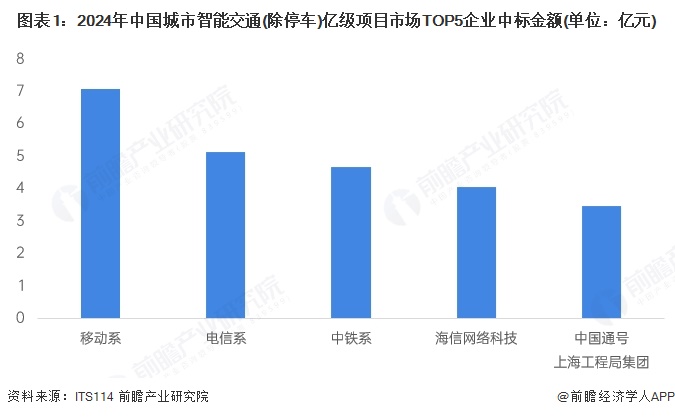
Core Viewpoint - The Chinese smart transportation industry is experiencing moderate market concentration, with leading companies like China Mobile and China Telecom dominating the market due to their advanced communication technologies and infrastructure resources [2][6]. Market Competition Analysis - In 2024, the top five companies in the urban smart transportation project bidding are China Mobile, China Telecom, China Railway, Hisense Network Technology, and China Communications Shanghai Engineering Bureau Group, collectively holding over 45% of the market share [1][2]. - The market is characterized by a layered competition where telecom operators lead infrastructure, state-owned enterprises focus on vertical markets, and tech companies emphasize technological breakthroughs [6][15]. - The CR3 (concentration ratio of the top three companies) stands at 31%, while the CR5 (concentration ratio of the top five companies) is 44%, indicating a significant presence of leading firms [6]. Innovation and Technology Ranking - The top five companies in the Chinese smart transportation technology innovation ranking for 2025 are Baidu Apollo, Huawei, Mogu Car Union, Zhongke Chuangda, and Jinzhi Technology, recognized for their comprehensive technology solutions and successful pilot projects [8][9]. - Companies like Baidu Apollo and Huawei leverage their full-stack technology and integrated solutions to maintain their leading positions in the market [8][10]. Segment Analysis - Smart transportation solution providers include Baidu Apollo and Huawei, which offer comprehensive solutions from perception to control, focusing on technology integration and scene implementation capabilities [10]. - Hardware product solution providers consist of component manufacturers like Bosch and Dahua Technology, which meet the demand for sensors and vehicle-mounted terminals [10]. - The competitive landscape also includes technology integrators such as Baidu Maps and Gaode Maps, which provide foundational data and technical support for smart transportation [10]. Strategic Cluster Analysis - Market leaders like Dahua Technology excel in revenue and profit margins by offering a range of smart transportation products and solutions [13]. - Companies such as Junsen Electronics and Yutong Bus are recognized as market drivers due to their scale advantages in automotive manufacturing and components [13]. Competitive Forces Summary - The competitive landscape of the smart transportation industry is characterized by high technical barriers for existing competitors, with significant pressure from potential entrants, particularly tech giants [15]. - The bargaining power of suppliers is moderate, while buyers, including government and automotive companies, exert strong pressure for cost-effectiveness and customization [15]. - The threat of substitutes is low, as smart transportation is a necessary upgrade area, making it difficult for existing technologies to be disrupted in the short term [15].
31家百亿私募二季度重仓股名单出炉!高毅加码黄金概念
Sou Hu Cai Jing· 2025-09-03 07:18
Group 1 - As of August 31, 31 private equity firms held a total of 46.99 billion shares in 175 A-share companies, with a combined market value of 658.29 billion yuan [1][25] - Compared to the end of Q1, the number of private equity firms increased by 5, and the number of shares held rose by 4.1 billion, with a market value increase of 158.07 billion yuan [1] - The sectors attracting significant investment include technology, particularly AI, as well as cyclical stocks and pharmaceuticals, indicating a favorable investment environment [1] Group 2 - The computer industry is the only sector with a total holding value exceeding 100 billion yuan, while other sectors like non-ferrous metals, electronics, and food and beverage also show significant holdings [12][13] - Among the 24 companies with a market value exceeding 5 billion yuan, 12 maintained their holdings, 6 saw increases, 4 were reduced, and 2 were newly added [15] - The top private equity firm by the number of companies held is Gao Yi Asset, with 9 companies, and its largest holding, Hikvision, was significantly reduced by 12 million shares [16] Group 3 - 31 companies have seen their stock prices rise over 30% since the end of Q2, with 14 of those rising over 50% [23] - The leading stock in terms of growth is Kaipu Cloud, which has increased nearly 160% following an announcement of a significant acquisition [23] - The technology growth sector is predominant among the companies with significant stock price increases, particularly in semiconductors and automotive components [23]



主观多头管理人今年以来仓位及配置观点变化
私募排排网· 2025-09-03 07:00
点击↑↑上面卡片参考更多 2025年是中国资本市场直面外部冲击与内部转型的关键之年。在中美贸易摩擦升级、科技产业变革深化、政策托底信号强化的三重交织下,A 股市场经历了从指数下跌到修复再到快牛的剧烈波动。 在此环境中,主观多头策略管理人通过灵活调整仓位与主线布局,展现出对市场节奏的 敏锐把握。 年初国债利率在宽松货币政策表态下达到历史新低,A股核心指数价格震荡向下。在此背景下,主观多头私募管理人仍以中高仓位运作为主, 股票仓位分布于六成至满仓范围,多数基金维持八至九成仓位,现金仓位较低,大多低于5%,强调进攻性策略。其中A股仓位占股票总仓位的 50-90%,多数管理人超配,港股仓位占比为10-40%,聚焦互联网和消费板块,美股仅少数全球化基金配置。 行业配置高度集中于科技(AI、 半导体)、消费、周期品及高端制造等,其中科技占比整体约为20-40%,管理人普遍增持AI应用端和国产算力链,不同管理人持有子行业有所 不同, 例如信息技术、电子、计算机;消费(含互联网)占比15-30%,主要分为持电力设备、汽车为主和持医药生物为主的管理人,主要布局 内需复苏预期;周期板块(有色/能源)占比约10-20%,出于防御性 ...

8月各地密集推进数字经济发展,数字经济ETF(560800)整固蓄势
Xin Lang Cai Jing· 2025-09-03 05:36
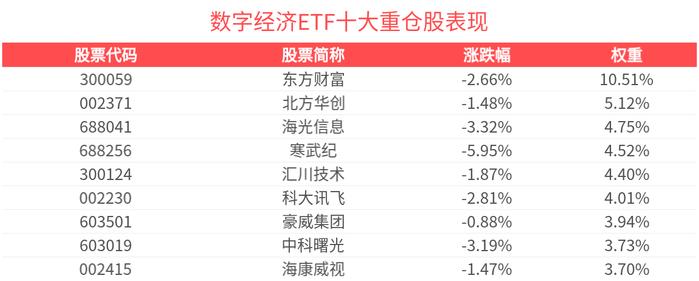
Group 1 - The core viewpoint of the news highlights the ongoing decline of the China Securities Digital Economy Theme Index, which fell by 1.86% as of September 3, 2025, with mixed performance among constituent stocks [1] - Notable gainers included Unisplendour Co., Ltd. (up 5.36%), and JASO Technology (up 4.42%), while Wealth Trend led the decline [1] - The Digital Economy ETF showed a trading volume of 29.81 million yuan with a turnover rate of 3.88% [1] Group 2 - Various regions in China are actively promoting digital economy development, with significant investments such as a 3 billion yuan fund in Henan and new policies in Anhui [1] - The report from Great Wall Securities indicates a significant increase in demand for computing power driven by the global AI wave, suggesting a sustained rise in domestic computing power needs [2] - The top ten weighted stocks in the China Securities Digital Economy Theme Index account for 53.36% of the index, with notable companies including Dongfang Wealth and Cambricon Technologies [2]
95%公募产品正收益!有基金经理道歉,有基金经理精挑细选全跌了...
Sou Hu Cai Jing· 2025-09-03 04:26
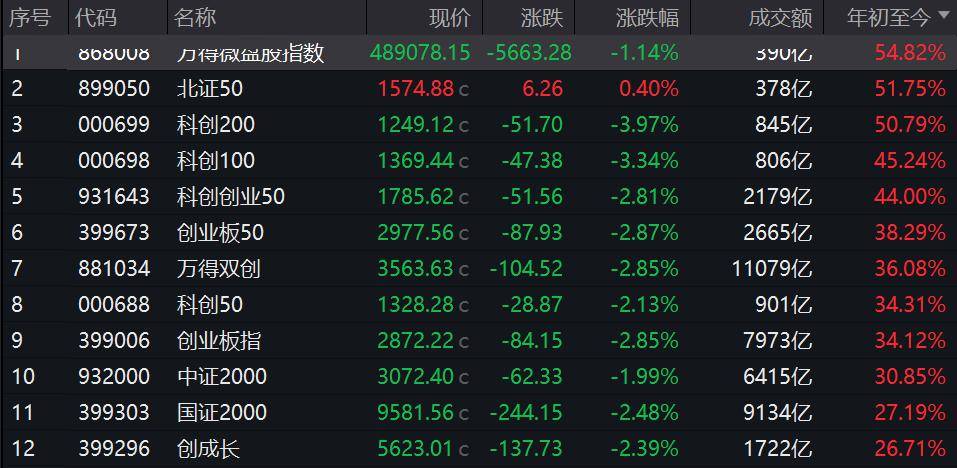
Group 1 - The A-share market has seen significant gains recently, with many investors profiting from both direct stock purchases and mutual funds, particularly those linked to the micro and northern exchanges, achieving returns of around 50% [1] - Public funds have performed exceptionally well this year, with 95.6% of the 16,790 public funds recording positive returns, and 95.5% of equity funds also achieving positive results [2] - Among the top eight underperforming active equity funds, several have recorded significant losses, with some funds experiencing declines of nearly 9% [3] Group 2 - The Minsheng Jianyin Preferred Fund, managed by Liu Jun, has seen a decline of nearly 9%, with a heavy focus on consumer stocks that have been underperforming since their peaks in April and May [5] - The Tianye Quantitative Core Selection Fund, managed by Li Shen, has a three-year loss of 40% and is facing potential liquidation due to its poor performance and low fund size [7] - The Xin Yuan Consumer Selection Fund, managed by Yao Qifan, has also struggled, with a three-year loss of 27% and a fund size of only 800 million [7] Group 3 - The Zhongxin Jiantou Smart Life Fund, managed by Zhou Ziguang, has recorded a loss of 51% over three years, with a significant reduction in fund size from 34 billion to just over 10 billion [9] - Xu Jun, manager of the Guolian An Desheng Dividend Fund, apologized to investors for negative returns, attributing the poor performance to reliance on outdated investment strategies [11][12] - The overall trend indicates that while many funds have performed well, a notable number of funds managed by less experienced managers have struggled significantly, leading to investor dissatisfaction [10][14]
你跑赢 人工智能板块ETF了吗?
小熊跑的快· 2025-09-03 03:22
Core Viewpoint - The article highlights the strong performance of AI-related ETFs, driven by both fundamental earnings and quantitative passive investment demand, with significant price increases observed in recent months [1][3]. Group 1: ETF Performance - The AI ETF (515070) has seen a price increase of 70.3% since April 9, making it one of the top performers among ETFs, second only to the communication ETF [1]. - The Sci-Tech 50 ETF (588000), which includes AI chip stocks, has experienced a price increase of 43.7% since April 9 [3]. Group 2: ETF Scale Analysis - The latest scale of the Sci-Tech 50 ETF is 81.74 billion, up from less than 4 billion at the beginning of the year, indicating a sharp increase in scale over the past week [5]. - The AI ETF has a current scale of 9.16 billion, slightly up from 9 billion at the beginning of the year, but it experienced a decline in scale before climbing again in May [7]. Group 3: Component Stock Analysis - The AI ETF's main component stocks include companies like Zhongji Xuchuang, Xinyi Sheng, and Hanwha Technology, covering a wide range of sectors such as optical modules, domestic chips, AI applications, and hardware [9]. - The Sci-Tech 50 ETF's major component stocks include SMIC, Haiguang Information, and Hanwha Technology, with a significant focus on domestic chips, which have recently seen substantial growth [9]. Group 4: Market Trends and Future Outlook - Despite a slight market adjustment, there is an anticipated increase in capital expenditure (capex) from major cloud companies, with projections of a 40% growth in capex next year [9]. - The demand for large model data usage is on the rise, suggesting that AI and technology will remain the strongest investment themes moving forward [12].
全球份额调查:中国企业在15个品类下滑
日经中文网· 2025-09-03 02:54
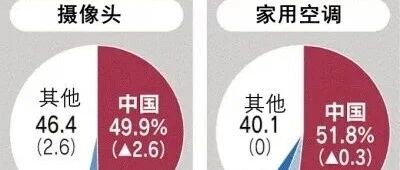
Core Insights - The article highlights the competitive landscape of global markets, indicating that the U.S. leads in 27 product categories, while China leads in 18 categories, an increase from 17 the previous year [2][7] - Despite some categories showing a decline in market share for Chinese companies, there are 24 categories where they have expanded their share, up from 21 the previous year [6] Group 1: Market Share Trends - In 2024, Chinese companies saw a reduction in market share across 15 categories, an increase from 13 categories in 2023 [4] - The market share of Chinese companies in the camera segment decreased from 52.5% to 49.9%, with Hikvision's share dropping by 1.8 percentage points [4] - The cloud services sector, previously growing, is now showing signs of decline, with Alibaba's share down by 0.7 percentage points [6] Group 2: Economic Impact - The ongoing real estate downturn in China, exacerbated by the crisis of Evergrande Group, has led to a sluggish domestic demand, impacting sectors like home appliances [6] - The real estate and related industries are estimated to account for 30% of China's GDP, contributing to economic stagnation and poor sales in home-related products [6] - The beer market also reflects this trend, with China Resources Beer’s market share declining by 0.2 percentage points to 5.2% [6] Group 3: Competitive Landscape - In the electric vehicle (EV) sector, Tesla's market share decreased by 2.3 percentage points to 16.1%, while the combined market share of Chinese companies like BYD exceeds 30% [6] - In the smartphone market, companies like Xiaomi and Transsion are gaining traction, particularly in emerging markets [7] - The U.S. government continues to exert pressure on Chinese companies through tariffs and regulations, which is expected to prolong the stagnation of the Chinese economy [7]