极氪

Search documents
吹响“集结号”,李书福赌一个大未来
Hua Er Jie Jian Wen· 2025-05-16 11:00
Core Viewpoint - Geely's decision to privatize Zeekr and integrate it back into the Geely brand reflects a strategic shift to enhance competitiveness in a challenging automotive market [3][4][8] Group 1: Strategic Integration - Geely aims to consolidate its resources and streamline operations by merging Zeekr back into the Geely brand, moving away from a fragmented brand strategy [3][4][8] - The urgency for this integration is driven by increasing market competition and the need for a unified approach to improve operational efficiency [3][8][9] - The privatization process of Zeekr has begun, with a special committee established to evaluate the proposal and negotiate terms [5][6][10] Group 2: Financial Performance and Market Response - Following the announcement of the privatization, both Geely and Zeekr's stock prices rose, indicating positive market sentiment towards the merger [12] - Geely's non-binding offer for Zeekr was set at $25.66 per ADS, representing a 14% premium over the previous closing price [12] - In Q1, Geely's sales increased by 22.8 million units, with revenue growing by 25% to 72.49 billion yuan, while Zeekr's revenue also saw a slight increase [25] Group 3: Historical Context and Future Outlook - This move marks a return to Geely's previous strategy of consolidating brands to enhance market presence, reminiscent of the pre-2014 era when multiple sub-brands were integrated [17][18] - The integration of Zeekr is part of a broader trend in the Chinese automotive industry towards consolidation amid changing market dynamics [4][19] - Geely's leadership anticipates that the merger will improve overall efficiency by over 5%, with R&D and management efficiencies expected to rise by 15-20% [23][22]

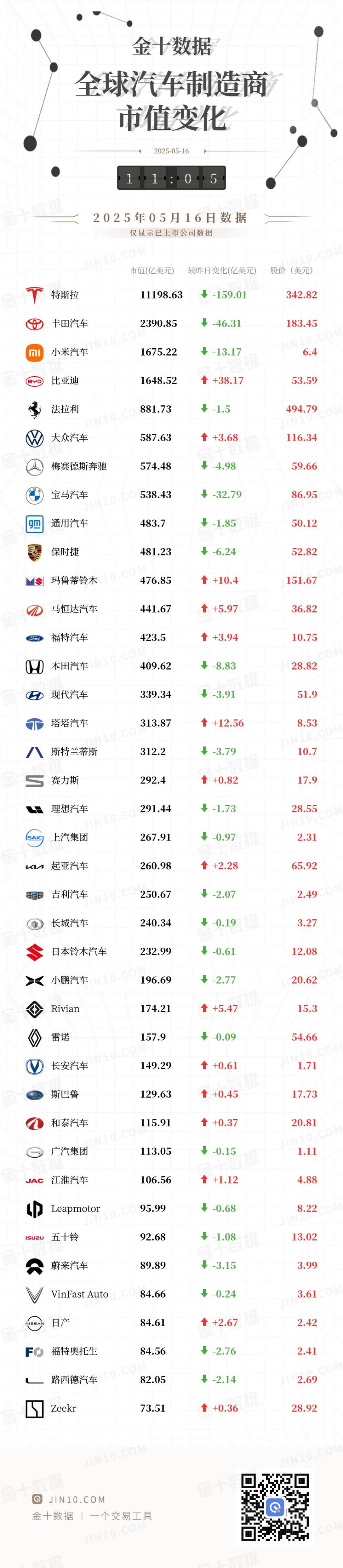
金十图示:2025年05月16日(周五)全球汽车制造商市值变化
news flash· 2025-05-16 03:11
| וש | 小米汽车 | 1675.22 | + -13.17 | 6.4 | | --- | --- | --- | --- | --- | | (BHD) | 比亚迪 | 1648.52 | ↑ +38.17 | 53.59 | | 法拉利 | | 881.73 | + -1.5 | 494.79 | | () 大众汽车 | | 587.63 | 1 +3.68 | 116.34 | | (1) | 梅赛德斯奔驰 | 574.48 | + -4.98 | 59.66 | | 宝马汽车 | 538.43 | V -32.79 | 86.95 | | --- | --- | --- | --- | | 通用汽车 | 483.7 | + -1.85 | 50.12 | | 保时捷 | 481.23 | + -6.24 | 52.82 | | MS 玛鲁蒂铃木 | 476.85 | 1 +10.4 | 151.67 | | 马恒达汽车 | 441.67 | 1 +5.97 | 36.82 | | 福特汽车 | 423.5 | 1 +3.94 | 10.75 | | 本田汽车 I | 409.62 | + -8. ...




被异化的汽车“风阻系数”,一场没有裁判的“行业内耗”
Hua Xia Shi Bao· 2025-05-16 02:35
Core Viewpoint - The recent controversies surrounding the wind resistance coefficients of electric vehicles (EVs) highlight the industry's obsession with technical parameters, which have shifted from being a tool for enhancing range to a symbol of brand "technological strength" [2][4][6]. Group 1: Industry Trends - The wind resistance coefficient has become a focal point in the EV industry, with companies like Tesla setting benchmarks that others strive to surpass, leading to a competitive environment where every 0.01Cd reduction is seen as a significant achievement [4][6]. - The lack of stringent national standards in China allows manufacturers to exploit testing conditions, often leading to misleading representations of vehicle performance [4][5]. - The pursuit of lower wind resistance has led to a phenomenon where companies prioritize testing standards over genuine improvements in aerodynamic performance, potentially stifling true innovation in the industry [5][6]. Group 2: Consumer Impact - Misleading marketing practices regarding wind resistance can confuse consumers, leading them to believe that advertised performance aligns with real-world capabilities, which can affect purchasing decisions [5][6]. - The focus on wind resistance has created a disconnect between consumer preferences and vehicle design, with many consumers favoring traditional designs over the increasingly popular aerodynamic shapes [7][8]. Group 3: Design and Innovation - The obsession with achieving lower wind resistance has led to design choices that may compromise user experience, such as reducing cabin space or eliminating practical features [6][8]. - Successful examples in the industry demonstrate that it is possible to balance aesthetics, functionality, and efficiency without solely focusing on wind resistance metrics [7][8].
阿里AI产品爆发!吴泳铭最新研判
新华网财经· 2025-05-16 02:23
Core Viewpoint - Alibaba Group's financial results for the fourth quarter and fiscal year 2025 demonstrate strong growth driven by AI initiatives, with significant increases in revenue and shareholder returns [1][21]. Financial Performance - For the fourth quarter ending March 31, 2025, Alibaba reported revenue of 236.45 billion RMB, a year-on-year increase of 7%, and a non-GAAP net profit of 29.85 billion RMB, up 22% from the previous year [4][20]. - In fiscal year 2025, Alibaba achieved total revenue of 996.35 billion RMB, a 6% increase year-on-year, with adjusted EBITA growing 5% to 173.07 billion RMB [6][20]. - Alibaba Cloud's revenue grew 18% year-on-year to 30.13 billion RMB, marking the fastest growth in three years, driven by strong AI demand [10][12]. Shareholder Returns - Alibaba repurchased 1.197 billion shares for a total of 11.9 billion USD in fiscal year 2025, becoming one of the largest repurchasers among Chinese concept stocks [1][21]. - The company announced a total dividend of 4.6 billion USD for fiscal year 2025, reinforcing its commitment to enhancing shareholder returns [1][21]. AI and Cloud Business Growth - AI-related product revenue has seen triple-digit growth for seven consecutive quarters, indicating robust demand across various industries [1][12]. - Alibaba Cloud's market share has been recovering for three consecutive quarters, reflecting the increasing adoption of AI solutions [10][12]. Strategic Focus and Trends - CEO Wu Yongming highlighted two key trends in AI: the shift of AI applications from internal systems to user-facing scenarios in medium and large enterprises, and the expansion of AI usage among small and medium-sized enterprises [2][13]. - The company plans to invest over 380 billion RMB in cloud and AI hardware infrastructure over the next three years to meet growing AI demand [21]. Business Segment Performance - The International Digital Commerce Group's revenue grew 22% year-on-year to 33.58 billion RMB, driven by strong performance in cross-border business [19][20]. - The Local Services Group's revenue increased by 10% to 16.13 billion RMB, supported by order growth from Gaode and Ele.me [19][20]. - The Digital Entertainment Group's revenue rose 12% to 5.55 billion RMB, primarily due to strong performance in film and entertainment [19][20].

吉利汽车一季度净利润同比增长264%,李东辉:协同是公司的重要战略
Mei Ri Jing Ji Xin Wen· 2025-05-16 01:12
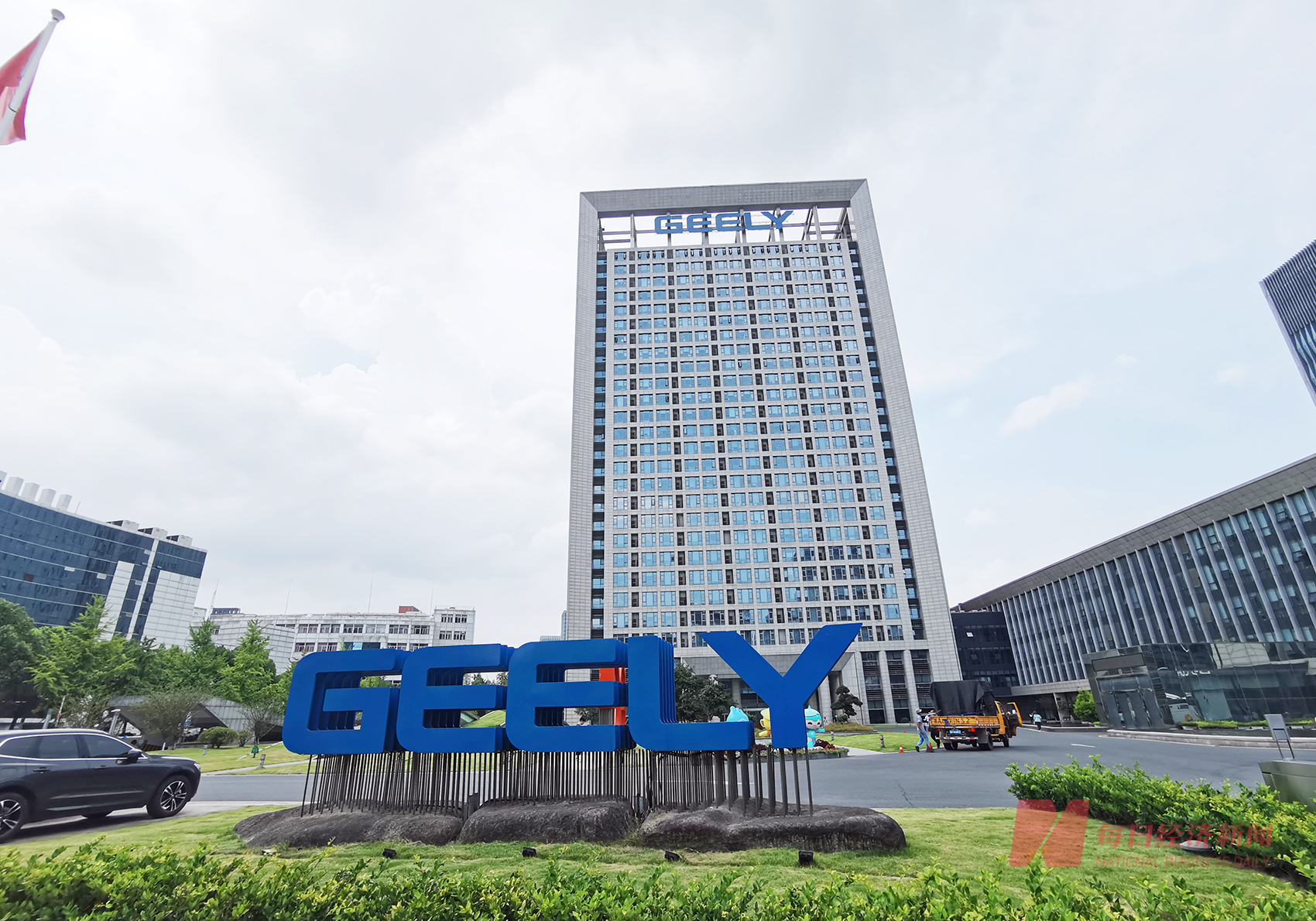
Core Viewpoint - Geely Automobile is confident in achieving or exceeding its annual sales target, with a strong performance in Q1 2025, showcasing significant revenue and profit growth driven by its transition to new energy vehicles and improved operational efficiency [1][4]. Financial Performance - In Q1 2025, Geely reported total revenue of 72.5 billion yuan, a 25% increase year-on-year, and a net profit attributable to shareholders of 5.67 billion yuan, up 264% [1]. - The gross profit for the quarter reached 11.4 billion yuan, a 26% increase year-on-year, with a gross margin of 15.8%, up 0.2 percentage points from the previous year [1]. Sales and Market Performance - Geely's Q1 sales reached a record high of 703,800 units, a 48% year-on-year increase, achieving 26% of its annual target of 2.71 million units [4]. - The new energy vehicle segment saw a significant boost, with sales from the Zeekr, Lynk & Co, and Galaxy brands totaling 339,000 units, a 135% increase year-on-year [4]. Product Strategy - Geely plans to accelerate its product launch strategy, focusing on both fuel and new energy vehicles, with multiple new models set to be released in 2025 [5]. - The fourth-generation Boyue L SUV has been launched, priced between 92,900 to 119,900 yuan, emphasizing "intelligent equality" in fuel vehicles [5]. Operational Efficiency - Geely has implemented deep internal integration under the "Taizhou Declaration," focusing on strategic alignment and cost reduction, leading to improved operational efficiency [6][9]. - The merger of Zeekr and Lynk & Co has resulted in a significant increase in financial performance, with Zeekr achieving a gross margin of 19.1% in Q1 [6][7]. Strategic Integration - The company is moving towards a "One Geely" strategy to eliminate redundant investments and improve resource allocation, which has positively impacted its stock performance [8][9]. - The integration aims to enhance efficiency across R&D, management, and marketing, targeting a 5% overall efficiency gain and a 15% to 20% improvement in operational metrics [10].

吉利首次解释合并:极氪退市后,降本、统一“利益”
3 6 Ke· 2025-05-16 00:41
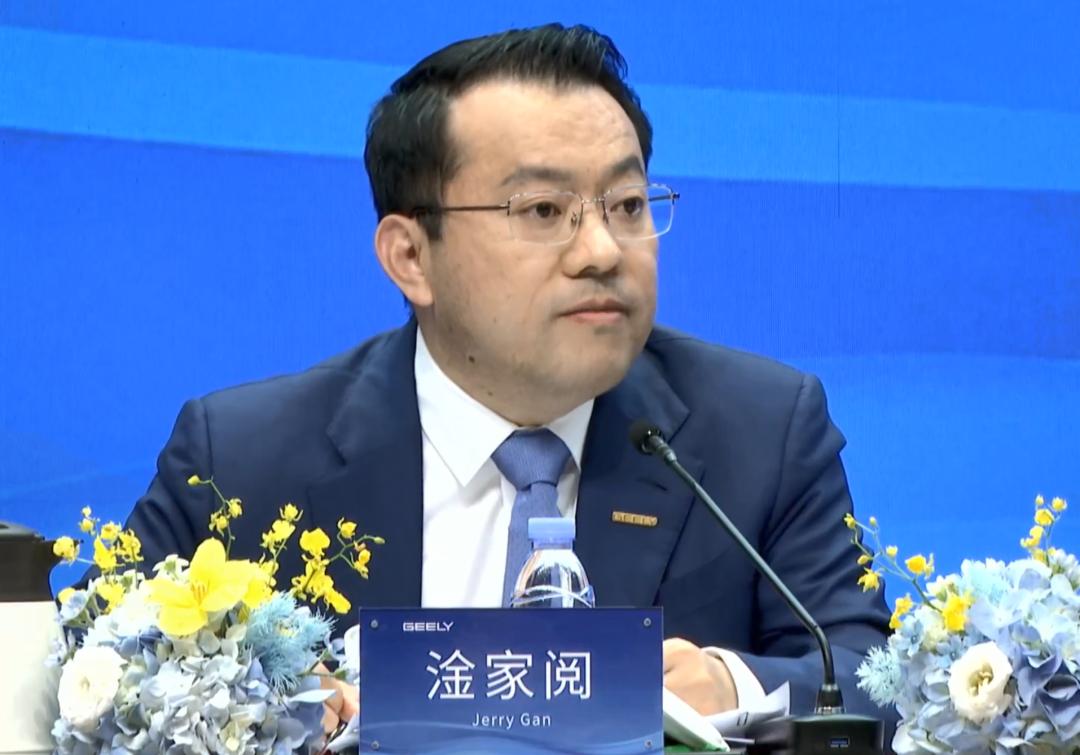
Core Viewpoint - Geely Auto is merging with Zeekr, with Geely's executives taking a dominant role in the new company, indicating significant organizational adjustments for Geely compared to Zeekr [1][3] Group 1: Cost Reduction and Organizational Streamlining - Geely Auto announced a non-binding acquisition offer for Zeekr at $2.566 per share, aiming to facilitate Zeekr's delisting from the NYSE [2] - The timing of the privatization proposal is notable, as it comes just three days before Zeekr's one-year anniversary of being listed on the NYSE [3] - Geely's CEO, Gui Shengyue, emphasized the need for rapid problem-solving through integration to enhance competitiveness in a challenging Chinese automotive market [3] - The merger aims to address issues of inconsistent interests between the two companies due to different employee incentive mechanisms [3] - Geely's management structure will see Geely's CEO, Gan Jiayue, leading the merged entity, with a focus on significant organizational changes for Geely [3][5] - Geely aims to achieve cost reductions of over 3% in production, 10-20% in R&D optimization, and 10-20% in management efficiency post-merger [5] Group 2: Financial Implications and Market Positioning - In 2024, Geely and Zeekr's R&D expenses were approximately 10.42 billion and 9.72 billion respectively, with potential savings of over 2 billion from R&D alone if cost reduction targets are met [6] - The privatization offer represents a 13.6% premium over Zeekr's stock price on the announcement date and a 20% premium over the average price of the last 30 trading days, yet it remains below half of Zeekr's pre-IPO valuation [8] - The merger is primarily driven by the need for a more concentrated and efficient main business amidst increasing competition and diminishing returns from new energy and smart technology [9] - Geely's internal restructuring began in 2024, focusing on "focusing on the main business and concentrated development" as part of its strategic framework [9][12] Group 3: Strategic Integration and Brand Management - Geely is undergoing a systematic reform to address issues of brand matrix dispersion and insufficient business synergy, leading to the "One Geely" strategy [12] - The restructuring will streamline the ownership structure, allowing Geely to transition from a holding group to an operational entity [14][15] - Post-merger, Geely will maintain a multi-brand strategy, with Zeekr targeting the global luxury tech market, Lynk focusing on high-end new energy, and Geely Galaxy and China Star catering to the mainstream consumer market [15]
8点1氪:卫健委调查组通报肖某、董某莹舆情事件;刘晓庆深夜回应被指涉嫌偷税漏税;娃哈哈声明与今麦郎已终止合作
36氪· 2025-05-15 23:48
肖某医师执业证书被吊销,董某莹四项证书被撤销。 整理 |丁丁炒面 点击上方【36氪随声听】,一键收听大公司热门新闻。听完音频记得添加进入 【我的小程序】 中哟! 国家卫健委通报关于肖某引发舆情事件调查处置进展情况 5月15日,国家卫生健康委调查组通报关于肖某引发舆情事件调查处置进展情况。通报显示,有关单位依据相关法律法规,吊 销肖某医师执业证书;撤销董某莹的毕业证书、学位证书、医师资格证书、医师执业证书。(央视新闻) 刘晓庆深夜回应被指涉嫌偷税漏税 据报道,近日,刘晓庆被王先生实名举报涉嫌偷税漏税,上海市税务局第四稽查局已受理并启动调查。王先生举报内容显示, 2020年12月刘晓庆珠宝(宁波)有限公司向其借款330万元。2021年1月,刘晓庆通过名下上海弈熙文化传媒中心,以"形象代 言费"名义将330万元借款转为个人收入,涉嫌虚开发票逃税。 公开信息显示,刘晓庆珠宝(宁波)有限公司成立于2018年11月,法定代表人为许可筠,注册资本1000万人民币,经营范围包 括珠宝技术服务等,由许可筠、宁波晓庆企业管理咨询合伙企业(有限合伙)共同持股。变更记录显示,2021年4月,刘晓庆 已退出该公司股东行列。公开信息显示 ...


阿里的AI转型与进化
硬AI· 2025-05-15 15:04
Core Viewpoint - The article emphasizes the significant increase in AI investments by major technology companies, highlighting that AI has transitioned from an experimental phase to a growth-driving operational lever, with companies like Amazon and Meta recognizing AI as a core strategic focus [2][5]. Group 1: AI Investment Trends - Major tech players are increasingly investing in AI, with Amazon's CEO stating that AI will be one of the company's largest business areas in the coming decades [2]. - Alibaba's recent financial report shows a 10% year-over-year revenue growth, with its cloud intelligence business growing by 18%, indicating a shift towards AI-driven growth [5]. - Alibaba plans to invest over 380 billion yuan in capital expenditures over the next three years for cloud computing and AI infrastructure, surpassing the total investment of the past decade [5][6]. Group 2: Technological Advancements - Alibaba's self-developed Qwen model series has gained global recognition, with the latest Qwen-3 model outperforming competitors while significantly reducing costs [9][10]. - The open-source strategy adopted by Alibaba is crucial for fostering innovation and collaboration in AI development, with over 100,000 derivative models created based on the Qwen model [10][11]. Group 3: AI Application Across Industries - The demand for cloud computing resources is surging as AI applications transition from model training to inference deployment, positioning Alibaba Cloud as a key player in this trend [13]. - AI applications are expanding beyond large enterprises to include small and medium-sized businesses, with industries such as traditional manufacturing and agriculture actively exploring AI solutions [13][15]. - Strategic partnerships with leading companies in various sectors, including automotive and telecommunications, demonstrate Alibaba's commitment to integrating AI into real-world applications [14][15].

极氪(ZK) - 2025 Q1 - Quarterly Results
2025-05-15 15:00
Exhibit 99.1 Zeekr Group Reports First Quarter 2025 Unaudited Financial Results HANGZHOU, China, May 15, 2025 -- ZEEKR Intelligent Technology Holding Limited ("Zeekr Group" or the "Company") (NYSE: ZK), the world's leading premium new energy vehicle group, today announced its unaudited financial results for the first quarter ended March 31, 2025. Operating Highlights for the First Quarter of 2025 · Total vehicle deliveries were 114,011 units for the first quarter of 2025, representing a 21.1% year-over-year ...
Temu美国站可能恢复全托管;微信帮忙,腾讯录得近三年最快单季收入增速;特斯拉成立委员会讨论马斯克薪酬问题丨百亿美元公司动向
晚点LatePost· 2025-05-15 14:56
Group 1: Temu's Business Model Changes - Temu may resume its full-service model in the U.S., with merchants being notified to prepare for increased orders, contingent on customs policies [1] - Since April 26, many full-service items on Temu's U.S. site were removed due to new customs regulations, requiring low-value packages from China to pay a 120% tariff or a fixed fee of $100 [1] - Temu attempted to adapt by shifting sellers from full-service to semi-service models, which increased operational complexity for merchants [1] Group 2: U.S.-China Trade Relations - A recent agreement between the U.S. and China maintained a 10% tariff on Chinese goods while suspending an additional 24% tariff for 90 days, but small packages under $800 still face a 30% tariff [2] Group 3: Tencent's Financial Performance - Tencent reported a 13% year-on-year revenue growth to 180 billion yuan and a 17% increase in net profit to 49.7 billion yuan in Q1 [3] - The growth in advertising revenue was attributed to the optimization of the WeChat transaction ecosystem, with more merchants joining [3] - Tencent is restructuring its organization to better support merchants and creators, establishing an e-commerce product department [3] Group 4: Tesla's Executive Compensation - Tesla's board has formed a special committee to evaluate Elon Musk's compensation and discuss a new stock option incentive plan [4] - Musk previously sued to reinstate a 2018 compensation plan valued at approximately $56 billion, which was contingent on achieving specific market value targets [5] Group 5: Microsoft Workforce Reduction - Microsoft announced a global layoff of 6,000 employees as part of ongoing organizational adjustments to succeed in a changing market [6] - The company is reallocating resources towards artificial intelligence and cloud computing, with AI-related capital expenditures reaching 80 billion dollars this year [6] Group 6: NIO's Potential IPO - Chinese battery manufacturer CATL is set to list in Hong Kong, potentially raising about 4.6 billion dollars, which could be the largest IPO of 2025 [7] Group 7: Chinese Investments in Brazil - Multiple Chinese companies, including Meituan and GAC, announced significant investments in Brazil, totaling over 1 billion dollars for various projects [8] Group 8: Ford's Vehicle Recall - Ford is recalling over 270,000 vehicles in the U.S. due to brake failure risks, affecting certain models produced between 2022 and 2024 [9][10] Group 9: Geely's Privatization Proposal for Zeekr - Zeekr's board has formed a special committee to assess a non-binding privatization proposal from its parent company, Geely [11] Group 10: Pony.ai's IPO Plans - Autonomous driving company Pony.ai is reportedly planning a secondary listing in Hong Kong after its initial public offering in the U.S. [12] Group 11: Burberry's Financial Struggles - Burberry reported a 17% decline in revenue to 2.46 billion pounds and a shift from a profit of 271 million pounds to a loss of 75 million pounds [13] - The company plans to cut 1,700 jobs globally, nearly 20% of its workforce, due to overproduction issues [13] Group 12: Foxconn's Strong Q1 Performance - Foxconn's Q1 revenue increased by 24% to approximately 391.3 billion yuan, with net profit rising by 91% to 10 billion yuan, driven by AI server orders [14]