吉利汽车

Search documents
43家港股公司出手回购(1月12日)
Zheng Quan Shi Bao Wang· 2026-01-13 01:51
| 代码 | 简称 | 回购股数 | 回购金额(万 | 回购最高价 | 回购最低价 | 年内累计回购金额 | | --- | --- | --- | --- | --- | --- | --- | | | | (万股) | 港元) | (港元) | (港元) | (万港元) | | 00700 | 腾讯控股 | 102.40 | 63568.82 | 627.000 | 614.000 | 445012.55 | | 00175 | 吉利汽车 | 900.70 | 15128.33 | 17.150 | 16.630 | 37249.70 | | 02382 | 舜宇光学科 技 | 124.00 | 7934.07 | 64.850 | 63.150 | 18722.08 | | 02096 | 先声药业 | 367.20 | 4194.53 | 11.600 | 11.198 | 4194.53 | | 02367 | 巨子生物 | 40.00 | 1400.29 | 35.500 | 34.500 | 8250.74 | | 06098 | 碧桂园服务 | 170.00 | 1061.50 | 6.280 ...



标准先行破解新能源汽车“老大难”
Zhong Guo Qi Che Bao Wang· 2026-01-13 01:49
Core Viewpoint - The article discusses the challenges faced by electric vehicle (EV) owners regarding high repair costs and insurance premiums, highlighting the need for standardized repair and claims processes to improve the situation in the EV market [2][5][6]. Group 1: Industry Challenges - High repair and insurance costs for EVs have created anxiety among consumers, despite recent policies aimed at addressing these issues [2][5]. - The lack of standardized repair and claims processes has led to increased operational costs and disputes within the industry [2][5][11]. - The rapid growth of EVs has outpaced the existing automotive repair standards, necessitating new guidelines to address the complexities of modern EV technology [5][6][14]. Group 2: Regulatory Developments - The China Automotive Maintenance Industry Association has initiated the development of repair and claims standards for EVs, following a directive from multiple government agencies [2][11]. - The "Guiding Opinions" issued by regulatory bodies aim to enhance the repair capabilities of EV maintenance companies and establish a comprehensive standardization framework [5][6][9]. - The revised "Automotive Maintenance Technical Information Disclosure Management Measures" mandates that automakers provide independent repair shops with access to essential technical information [4][6]. Group 3: Insurance Market Dynamics - As of mid-2025, the total number of EVs in China reached 36.89 million, representing 10.27% of all vehicles, with insurance premiums for EVs projected to exceed 200 billion yuan, reflecting a growth of over 30% [7][8]. - The average risk cost for EV insurance is approximately 2.2 times that of traditional fuel vehicles, yet the premiums are only 1.7 times higher, indicating a mismatch that pressures insurance companies [8][9]. - Some insurance companies have begun to report improved profitability in EV insurance, with major players like Ping An and China Pacific Insurance showing positive trends in their EV insurance segments [9][10]. Group 4: Standardization Efforts - The establishment of a standardized framework for EV repair and claims is seen as essential for the high-quality development of the EV insurance market [11][14]. - The standards being developed will focus on safety, economic efficiency, and the integration with existing national standards to ensure practical applicability [13][14]. - Collaboration among various stakeholders, including automotive manufacturers, repair shops, and insurance companies, is crucial for creating effective standards that address the unique challenges of the EV market [12][15].





资源整合,海外扎根,生态竞争——2026车企销量目标透视
Zhong Guo Qi Che Bao Wang· 2026-01-13 01:26
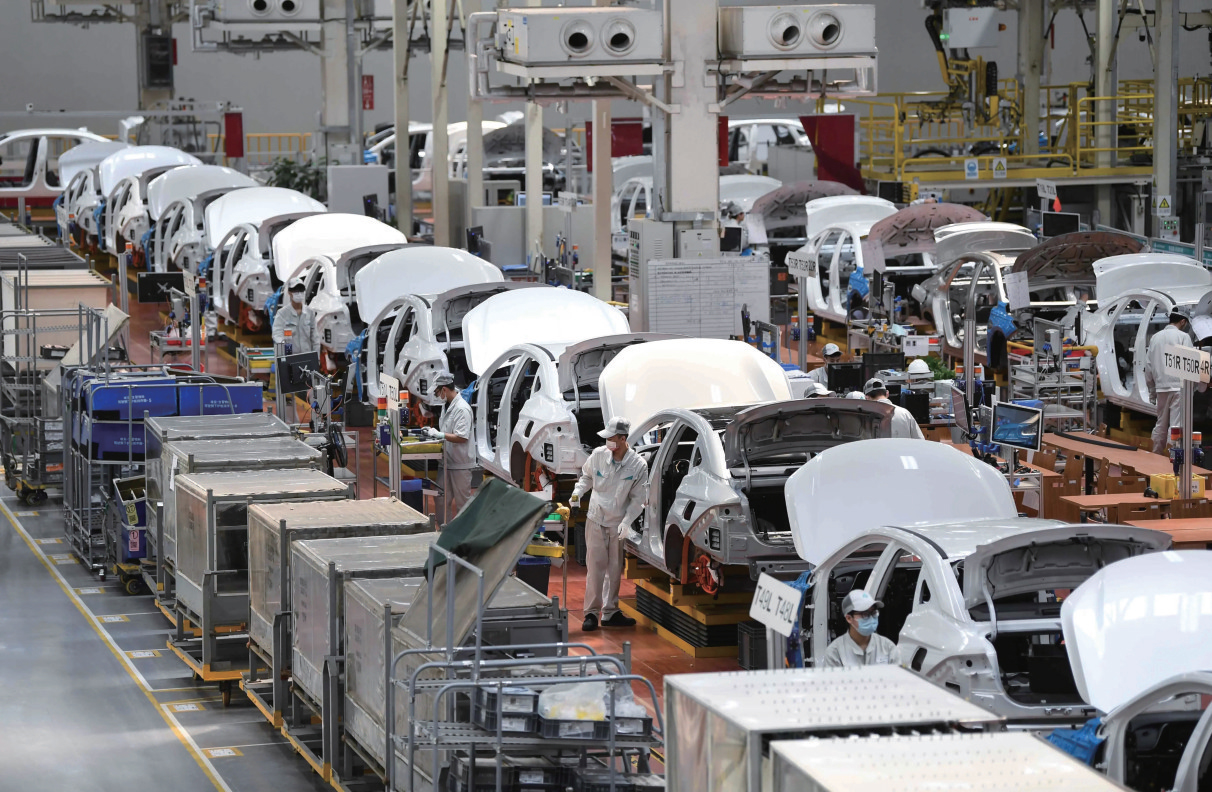
在2026年车企公布的销量目标中,市场集中度提升的趋势愈发显著。从头部车企的销量目标来看,头部车企设定的目标总和已超过1000万辆。若加上零 跑、鸿蒙智行、小米汽车等新势力阵营,头部玩家将占据中国车市的半壁江山。这种销量目标的集中设定,反映出头部车企在市场中的主导地位不断强化, 它们凭借成熟的产品矩阵、强大的供应链管理能力以及广泛的渠道布局,精准把握市场动态,持续扩大市场份额。 市场集中度提升的背后,是行业资源的加速整合。头部车企凭借规模经济优势,能够投入更多资金进行技术研发,如比亚迪计划推出的刀片电池5.0版 本车型,长安汽车将密集推出11款全新车型。这些技术创新不仅提升了产品竞争力,还进一步巩固了头部车企的市场地位。同时,它们在供应链掌控、品牌 建设等方面也具有显著优势,能够更好地应对市场波动和竞争挑战。 相比之下,缺乏核心竞争力的中小车企则面临巨大压力。在摩根大通预测2026年中国汽车销量可能下滑3%~5%的背景下,市场资源加速向头部企业集 中,中小车企的生存空间被进一步压缩。它们或将因资金短缺、技术落后、品牌影响力不足等原因,难以在激烈的市场竞争中立足,面临被淘汰的风险。 市场集中度的提升还将对行业利 ...

汽车早餐 | 比亚迪推出子品牌“领汇”;岚图将与引望联合开发智驾、智舱;抖音App新增“租车”功能
Zhong Guo Qi Che Bao Wang· 2026-01-13 01:17
Group 1: Government Initiatives - The Ministry of Industry and Information Technology emphasizes the implementation of a new round of growth stabilization work plan focusing on ten key industries, including steel and petrochemicals, by 2026 [2] - The National Development and Reform Commission, along with other ministries, has released guidelines to support government investment funds in emerging industries, including new energy vehicles and digital economy [3] Group 2: Market Developments - The State Administration for Market Regulation has unconditionally approved several mergers and acquisitions, including the acquisition of the Changchun Automotive Testing Center by the China Automotive Technology Research Center [4] - The Ministry of Commerce reported on the progress of negotiations regarding the EU-China electric vehicle case, indicating a mutual agreement to provide guidance for Chinese exporters on price commitments [5] Group 3: Automotive Industry News - Stellantis has announced the cancellation of its plug-in hybrid vehicle sales plan in the U.S. due to weak market demand, shifting focus to more competitive electrification solutions [7] - Maruti Suzuki plans to increase its production capacity by 1 million units in Gujarat, with a total budget of approximately 49.6 billion rupees (about 5.5 billion USD) [7] - BYD has launched a new sub-brand "Linghui," with multiple electric and plug-in hybrid models submitted for approval [8] - Lantu Automotive and Yiwang have signed a strategic cooperation agreement to jointly develop intelligent driving and cockpit technologies [9] - Geely Auto has repurchased approximately 9.07 million shares for about 151 million HKD as part of its share buyback plan [10] - Zhaoyi Innovation has signed a strategic cooperation agreement with Chery Automobile to focus on vehicle-grade chips and next-generation electronic architectures [11] Group 4: Technology and Services - Douyin App has introduced a car rental feature, expanding its travel service offerings [12] - Zhiyu and Didi have reached a strategic cooperation to explore the application of general artificial intelligence in the transportation sector [13][14]
智通港股回购统计|1月13日
智通财经网· 2026-01-13 01:12
Group 1 - The article reports on share buybacks conducted by various companies on January 12, 2026, with Tencent Holdings (00700) having the largest buyback amount of 636 million yuan for 1.024 million shares [1][2] - Other notable companies involved in the buyback include Geely Automobile (00175) with 9.007 million shares repurchased for 151 million yuan, and Sunny Optical Technology (02382) with 1.24 million shares for 79.34 million yuan [1][2] - The total number of shares repurchased by Tencent represents 1.188% of its total share capital, while Geely's buyback accounts for 0.438% of its total share capital [2] Group 2 - The buyback activities reflect a trend among companies to return capital to shareholders, with some companies like Antong Oilfield Services (03337) and Weigao Group (01066) showing significant percentages of their total share capital being repurchased, at 2.460% and 6.459% respectively [2][3] - Companies such as Vitasoy International (00345) and Keep (03650) also participated in the buyback, with their repurchase amounts being 432,600 yuan and 28,900 yuan respectively, indicating a diverse range of companies engaging in this practice [3] - The data suggests a strategic move by these companies to enhance shareholder value and potentially stabilize their stock prices amid market fluctuations [1][2]
宝武镁业20260112
2026-01-13 01:10
Summary of Baowu Magnesium Industry Conference Call Company Overview - **Company**: Baowu Magnesium Industry - **Industry**: Magnesium Alloy Production Key Points and Arguments Industry Demand and Sales Growth - Magnesium alloy demand has surged, with Baowu Magnesium achieving record sales, increasing monthly sales by 2,000 tons to 24,000 tons since October, primarily driven by orders for electric vehicle components like Geely's electric drive housings [2][3] - The company anticipates magnesium alloy sales to reach 250,000 tons in 2025 and has secured orders for 320,000 tons in 2026, with new production lines in Qingyang and Huizhou [2][4] Automotive Industry Applications - The automotive sector is rapidly adopting magnesium alloys for large components such as dashboard supports, seats, and electric drive housings, with annual production of battery housings increasing from 10,000 units to approximately 1.2 million units since 2023 [6] - The introduction of weight tax policies in the automotive industry is prompting manufacturers to seek lightweight materials like magnesium alloys to reduce vehicle weight and tax burdens [11] Electric Bicycle and Robotics Demand - The electric bicycle sector shows significant demand for magnesium alloys, with potential needs reaching around 300,000 tons for components like frames and hubs [7] - In humanoid and industrial robotics, magnesium alloys are replacing aluminum in critical areas, enhancing heat dissipation and extending battery life [8] Production Capacity and Cost Efficiency - Baowu Magnesium has achieved breakthroughs in mold production, with an annual capacity nearing 1 million cubic meters and average production costs reduced to 16,000 yuan per ton, lower than aluminum costs [9] - The price difference between magnesium and aluminum has widened to 7,000-8,000 yuan, providing a significant cost advantage for magnesium alloy applications [5][19] Future Market Growth - The magnesium alloy market is expected to maintain rapid growth from 2026 to 2028, with annual increases projected at around 100,000 tons [20] - Demand in the electric vehicle and two-wheeler sectors is anticipated to rise sharply, with over 1 million new electric vehicle units expected in 2026, translating to a demand of over 200,000 tons [21] Strategic Partnerships and Innovations - Baowu Magnesium is collaborating with Huawei to explore trends in new energy motor development and is cautiously investing in semi-solid technology, awaiting supply chain maturity and cost reductions [5][38] - The company is also developing integrated magnesium alloy components for major infrastructure projects in collaboration with companies like Seres and Geely [15] Financial Performance and Profit Margins - Current market prices for magnesium alloy components are around 20,000 yuan, with production costs at approximately 16,000 yuan per ton, yielding profits of 3,000-4,000 yuan per ton [29] - The gross margin for magnesium alloy components has decreased to below 20% due to increased competition, while larger components maintain a gross margin of about 30% [31] Challenges and Market Dynamics - The transition from steel to magnesium in electric vehicles faces cost pressures, as magnesium alloys are more expensive than steel, leading to strict cost control from manufacturers [33] - The company is strategically positioned to respond to market demands and cost pressures by promoting material substitution to mitigate long-term risks [24] Conclusion - Baowu Magnesium Industry is well-positioned to capitalize on the growing demand for magnesium alloys across various sectors, particularly in automotive and electric vehicles, while maintaining a focus on cost efficiency and strategic partnerships to drive future growth [37][39]

掌舵新央企、鸣锣争上市,十大热门人物的攻与守
Xin Jing Bao· 2026-01-13 01:01
Core Insights - The Chinese automotive market in 2025 concluded with intense competition, shifting from price wars and scale expansion to a comprehensive evaluation of system capabilities, technological depth, and global operations [1] - Key figures in the automotive industry made significant strides, marking a transformative year for the market [1] Group 1: Key Figures and Achievements - Wang Chuanfu led BYD to become the global sales champion of pure electric vehicles with a total sales volume of 2.2567 million units, surpassing Tesla for the first time [2] - Zhu Huarong became the chairman of China Changan Automobile, aiming for an annual sales target of 5 million vehicles by 2030, following the establishment of the new state-owned enterprise [3] - Yin Tongyue successfully listed Chery on the Hong Kong Stock Exchange after a 21-year journey, marking a significant milestone for the company [4][5] - Li Shufu consolidated resources within Geely, focusing on strategic integration and efficiency improvements, while maintaining a balance between traditional fuel vehicles and new energy vehicles [7][8] Group 2: Industry Challenges and Innovations - Wei Jianjun of Great Wall Motors criticized the industry's excessive "involution" and highlighted issues such as the "zero-kilometer used car" phenomenon, urging a return to rationality in the industry [9] - He Xiaopeng of Xpeng Motors aimed to transform the company into a global embodied intelligence firm, planning to launch humanoid robots by the end of 2026 [10] - Zhu Jiangming of Leap Motor celebrated the company's tenth anniversary with nearly 600,000 deliveries, while maintaining control within the founding team [11] - Zeng Yuqun of CATL pursued a secondary listing in Hong Kong to secure capital for expansion, positioning the company as a comprehensive zero-carbon technology provider [12][13] - Feng Xingya took over as chairman of GAC Group, initiating the "Panyu Action" to address market challenges and redefine the company's future direction [14] - Li Xiang of Li Auto introduced the AI glasses Livis, marking the company's entry into the embodied intelligence sector, with plans to become a leader in this field [15]
乘用车2026 | 2025政策促需 2026高端发力+智能平权+出海提速
汽车琰究· 2026-01-13 00:05
Group 1 - The core viewpoint of the article emphasizes that the demand for automobiles is driven by the continuation of the trade-in policy, leading to an unexpected penetration of new energy vehicles (NEVs) and improved profitability through high-end products and overseas expansion [3][4][5][6][7][8] Group 2 - In 2025, the cumulative wholesale sales of passenger cars reached 24.119 million units, a year-on-year increase of 12.6%, with NEVs growing by 30.7% [3][8] - The penetration rate of NEVs in wholesale sales was 50.4%, up by 7.0 percentage points year-on-year, while the penetration rate for insurance reached 53.3%, an increase of 6.6 percentage points [3][46] - The share of domestic passenger cars in wholesale sales reached 69.3%, a year-on-year increase of 4.9 percentage points, with brands like Geely, Xiaomi, and Leap Motor showing significant growth [3][50] Group 3 - Looking ahead to 2026, the trade-in policy is expected to continue, supporting demand, with projected insurance sales of 22.32 million units, a decrease of 5.0% year-on-year, and wholesale sales of 30.10 million units, an increase of 1.0% [4][5] - The NEV insurance sales are expected to reach 13.8 million units, a year-on-year increase of 6.2%, while wholesale sales are projected to be 17.3 million units, up by 13.4% [4][15] Group 4 - The competitive landscape is shifting, with joint ventures declining and domestic brands accelerating their rise in the mid-to-high-end market [5][10] - In the 5-15 million price range, price-sensitive consumers are expected to drive competition, while brands like Geely, BYD, and Leap Motor are anticipated to gain higher sales growth due to their advantages in intelligence and cost-effectiveness [5][10] Group 5 - The article highlights the acceleration of intelligent driving technology, with major players like Huawei and BYD pushing for the democratization of advanced driving features [6][10] - The L3 commercial deployment is expected to gain momentum in 2026-2027, with various automakers launching new high-level driving systems and models [6][10] Group 6 - The export of passenger cars is projected to reach 6.64 million units in 2026, a year-on-year increase of 15.5%, driven by the technological advantages of domestic NEVs and the expansion of overseas manufacturing [7][11] - Companies like BYD and Geely are expected to increase their export efforts, with BYD establishing overseas factories and Geely accelerating NEV exports [7][11]



从规模冲刺到结构优化 车企2026年销量目标透露发展新逻辑
Zheng Quan Ri Bao· 2026-01-12 17:00
Core Viewpoint - The 2026 sales targets of various automotive companies reflect a divergence in strategy, with new energy vehicle companies focusing on aggressive growth while traditional automakers prioritize stability and gradual progress [1][3]. Group 1: New Energy Vehicle Companies - New energy vehicle companies, such as Leap Motor, NIO, and Xiaomi, have set ambitious sales targets for 2026, with Leap Motor aiming for 1 million units, representing a year-on-year growth of approximately 67.6% [2]. - NIO's sales target ranges from 456,400 to 489,000 units, indicating a year-on-year growth of about 40% to 50%, while Xiaomi targets 550,000 units, reflecting a growth of around 34% [2]. - The aggressive targets are driven by the need for scale and market share, with companies like Leap Motor focusing on overseas expansion and local production to support their goals [2]. Group 2: Traditional Automakers - Traditional automakers, including Geely, Chery, and Great Wall Motors, have set more conservative sales targets, with Geely aiming for 3.45 million units and Chery targeting 3.2 million units, which represents a year-on-year growth of about 14% [3]. - Great Wall Motors has a target of 1.8 million units, reflecting a year-on-year growth of approximately 36%, while Dongfeng Group aims for 3.25 million units [3]. - The conservative approach is influenced by market pressures, policy changes, and the need to balance profitability with product structure, as the domestic market shows signs of weakening [3][4]. Group 3: Strategic Focus - Chery Group emphasizes a multi-faceted strategy involving "new fuel, new energy, new overseas markets, new businesses, and new technologies" to achieve its sales targets [4]. - The focus on overseas expansion is critical for traditional automakers, as uncertainties in export growth, particularly for electric vehicles, are anticipated in 2026 [4]. - Overall, the differentiation in sales targets reflects the industry's competitive landscape, with new energy vehicle companies aiming for rapid scale while traditional automakers focus on maintaining profitability and structural resilience [4].



【整车主线周报】12月新能源批发符合预期,看好26年景气度向上
东吴汽车黄细里团队· 2026-01-12 15:53
Investment Highlights - The automotive industry is expected to see a recovery in passenger vehicle demand in Q1 2026 due to the implementation of subsidy policies, with a focus on high-end electric vehicles and resilient companies like Jianghuai Automobile, Geely, Great Wall, and others [3][8] - For heavy trucks, wholesale sales in 2025 are projected at 1.14 million units, a 26% year-on-year increase, with domestic sales expected to reach 800,000 units in 2026, reflecting a 3% growth [4][35] - The bus sector is anticipated to benefit from a new vehicle replacement policy in 2026, with expected sales of 40,000 units, a 5% increase year-on-year, driven by the need to replace aging buses [4][34] - The motorcycle market is projected to grow, with total industry sales expected to reach 19.38 million units in 2026, a 14% increase, and large-displacement motorcycles expected to see a 31% increase in sales [5][32] Passenger Vehicle Insights - The short-term outlook for the passenger vehicle sector is positive, with a recovery in demand expected in early 2026, supported by subsidy policies [3][8] - Key players in the domestic market include Jianghuai Automobile and high-end brands like Geely and Great Wall, while export strategies should focus on established companies like BYD and Changan [3][8] Heavy Truck Insights - In 2025, heavy truck wholesale sales are expected to reach 1.14 million units, with a significant increase in terminal sales and exports [4][35] - The market is expected to see a reduction in older trucks, with a projected elimination of 210,000 units by the end of 2025 [4][35] Bus Insights - The bus market is expected to see a slight increase in sales in 2026, with a focus on replacing older buses that have exceeded their replacement cycle [4][34] - The anticipated sales for 2025 are 38,000 units, with a 25% increase year-on-year, while 2026 is expected to see 40,000 units sold [4][34] Motorcycle Insights - The motorcycle industry is projected to grow significantly, with total sales expected to reach 19.38 million units in 2026, driven by both domestic and export markets [5][32] - Large-displacement motorcycles are expected to see a 31% increase in sales, with domestic sales projected at 430,000 units [5][32]