极氪

Search documents
4月乘用车批发创当月历史新高,2025中国智能汽车技术展举行
Southwest Securities· 2025-05-12 13:30
Investment Rating - The report maintains an "Outperform" rating for the automotive industry as of May 11, 2025 [1] Core Views - April saw a record high in passenger car wholesale, with retail sales reaching 1.755 million units, a year-on-year increase of 14.5% [2][8] - The "2025 China Intelligent Automotive Technology Exhibition" was held on May 8, focusing on future research, strategic trends, and technological breakthroughs in the automotive industry [3][60] - The report suggests focusing on companies with technological innovation in smart driving algorithms, sensors, and intelligent cockpits, as well as traditional automakers actively entering the smart vehicle sector [3][63] Summary by Sections Passenger Vehicles - In April, passenger car retail sales were 1.755 million units, up 14.5% year-on-year but down 9.4% month-on-month; cumulative retail for the year reached 6.872 million units, a 7.9% increase [8][61] - Wholesale for April was 2.190 million units, a 10.7% year-on-year increase but down 9.2% month-on-month; cumulative wholesale for the year was 8.468 million units, up 11.1% [8][61] - Recommended stocks include BYD (002594), Geely (0175.HK), and Xpeng Motors (9868.HK) [61] New Energy Vehicles - April retail for new energy passenger vehicles was 905,000 units, a 33.9% year-on-year increase but down 8.7% month-on-month; cumulative retail for the year was 3.324 million units, up 35.7% [8][62] - April wholesale was 1.133 million units, a 40.2% year-on-year increase and a 0.3% month-on-month increase; cumulative wholesale for the year was 3.981 million units, up 42.1% [8][62] - Key stocks to watch include BYD (002594), Geely (0175.HK), and Huayu Automotive (600741) [62] Heavy Trucks - In April, heavy truck wholesale was approximately 90,000 units, down 19% month-on-month but up 9.4% year-on-year; cumulative sales for the year were about 355,000 units, flat year-on-year [10][64] - The report highlights opportunities in the heavy truck sector due to the inclusion of natural gas heavy trucks in the subsidy range, enhancing their economic advantages [10][65] - Recommended stocks include Weichai Power (2338.HK/000338) and China National Heavy Duty Truck Group (000951/3808.HK) [65] Smart Vehicles - The report emphasizes the importance of technological advancements in smart driving and suggests monitoring companies with significant innovations in this area [3][63] - Key companies mentioned include BYD (002594), Geely (0175.HK), and SAIC Motor (600104) for complete vehicles, and Desay SV (002920) and Huayang Group (002906) for components [3][63]



汽车与汽车零部件行业周报、月报:政策逐步发力,智驾转向实务发展
Guoyuan Securities· 2025-05-12 13:30
Investment Rating - The report maintains a positive outlook on the automotive industry and its leading companies' performance trends [6][8]. Core Insights - April saw a healthy growth in automotive sales, with retail sales of 1.755 million vehicles, a year-on-year increase of 14.5%, approaching the historical high of 1.81 million in April 2018 [2]. - The "trade-in" policy has significantly boosted vehicle purchases, with 2.705 million vehicles exchanged by April 24, 2025, indicating that approximately 70% of private car buyers benefited from this policy [4]. - The shift towards practical development in intelligent driving is evident, with a predicted penetration rate of L2 and above vehicles in China reaching 62% by 2025 [5][48]. Summary by Sections 1. Market Performance - In April, the retail sales of passenger vehicles reached 1.791 million units, a 17% increase year-on-year, while wholesale sales were 2.174 million units, up 12% year-on-year [3][22]. - The new energy vehicle market saw retail sales of 922,000 units in April, a 37% increase year-on-year, with a penetration rate of 52.3% [3][22]. 2. Policy Impact - The "trade-in" policy has led to a significant increase in vehicle purchases, with applications rising by 120,000 from March to April [4]. - The government is focusing on standardizing automotive chips and enhancing safety standards for new energy vehicles [45][60]. 3. Industry Trends - The report highlights a shift in marketing strategies among automakers, moving from emphasizing "intelligent driving" to focusing on basic vehicle features and safety [5][52]. - The automotive sector is expected to continue benefiting from advancements in core components related to intelligent driving [6]. 4. Company Developments - Companies like Xiaomi and Li Auto are adjusting their marketing strategies to align with consumer expectations and regulatory responsibilities [52]. - The report notes significant financial movements, such as Seres Group's IPO application and the increase in shareholding by its CEO [42][43].

极氪上市不到一年,吉利好像就后悔了?
36氪· 2025-05-12 13:07
Core Viewpoint - Geely has announced the privatization of Zeekr, its electric vehicle brand, just under a year after its IPO on the New York Stock Exchange, aiming to enhance operational flexibility and resource integration in response to market challenges [3][4][10]. Group 1: Privatization Announcement - Geely submitted a non-binding proposal to acquire all outstanding shares of Zeekr at a price of $2.566 per share or $25.66 per American Depositary Share [3][4]. - Geely currently holds approximately 65.7% of Zeekr's shares, and if the privatization is completed, Zeekr will become a wholly-owned subsidiary of Geely [4][10]. Group 2: Strategic Rationale - The chairman of Geely, Li Shufu, stated that the privatization is a response to "intense market competition and increasingly complex economic conditions," aiming to integrate automotive operations and enhance innovation and profitability [6][10]. - Analysts suggest that this move aligns with Geely's "Taizhou Declaration," which emphasizes strategic focus, resource integration, and operational efficiency [9][10]. Group 3: Market Context - Zeekr's sales for 2024 have surpassed 220,000 units, with annual revenue exceeding 80 billion yuan, representing a significant portion of Geely's total revenue from new energy vehicles [10][11]. - The privatization will allow Zeekr's financial data to be consolidated into Geely's financial statements, enhancing Geely's narrative in the electric and intelligent vehicle sector [11][12]. Group 4: Challenges in the U.S. Market - The U.S. market environment has become increasingly challenging for Chinese companies, with the Foreign Companies Accountability Act posing risks of delisting for firms that fail to meet audit requirements [14][15]. - Zeekr's stock performance has been underwhelming, with its market capitalization declining significantly since its IPO, prompting Geely to consider a strategic exit from the U.S. market [16][17]. Group 5: Future Implications - The privatization of Zeekr is seen as a critical step in Geely's broader strategy to streamline operations and enhance competitiveness in the rapidly evolving automotive landscape [12][18]. - There is a prevailing sentiment that Zeekr's return to private ownership will facilitate better resource allocation and operational agility, crucial for navigating the current market dynamics [17][18].


极氪私有化背后:吉利新能源战略告别“赛马与内斗”
阿尔法工场研究院· 2025-05-12 12:47
Core Viewpoint - The current competitive landscape in the new energy vehicle sector is not favorable for Geely, prompting strategic adjustments and the privatization of Zeekr to enhance operational efficiency and market positioning [1][3][36]. Group 1: Privatization of Zeekr - Geely announced a non-binding offer to privatize Zeekr, which it currently holds approximately 65.7% of, at a price of $2.566 per share, representing a 13.6% premium over the last trading day [3][5]. - The privatization allows Zeekr to delist from the NYSE and integrate into Geely's structure, which is seen as a necessary move given the uncertain outlook of remaining publicly listed [5][36]. - This strategic move is viewed as a way for Geely to consolidate its resources and streamline operations amid increasing competition in the new energy vehicle market [6][30]. Group 2: Strategic Adjustments - Geely's management has emphasized a focus on core automotive operations, aiming to enhance efficiency and strategic collaboration across its various business units, as outlined in the "Taizhou Declaration" [6][8]. - The declaration highlights the need for a comprehensive review of Geely's business segments, aiming to clarify brand positioning and reduce internal competition [6][8]. - The integration of brands like Lynk & Co and Zeekr is part of a broader strategy to eliminate redundancy and improve resource utilization [8][9]. Group 3: Market Performance and Challenges - Despite the strategic adjustments, Geely's higher-end brands, including Zeekr and Polestar, have struggled in the market, with Polestar selling only 3,114 units in 2024 [10][12]. - The competitive landscape has intensified with the entry of new players like Xiaomi, which has significantly outperformed Geely's brands in sales [12][19]. - Geely's internal brand competition has led to confusion regarding product positioning and market strategy, impacting overall sales performance [12][19]. Group 4: Financial Performance of Zeekr - Zeekr has faced significant financial losses since its inception, with net losses of 4.514 billion, 7.655 billion, 8.264 billion, and 5.79 billion yuan from 2021 to 2024 [27]. - The brand's sales performance has not met expectations, with only 5.5 million units sold in the first four months of 2025, falling short of its annual target [26][27]. - The financial challenges faced by Zeekr are becoming increasingly apparent as competitors in the new energy sector begin to achieve profitability [27][30]. Group 5: Cost Control and Competitive Positioning - Cost control is a critical focus for both Zeekr and Geely, with expectations that the integration will lead to reduced R&D and BOM costs by 5% and 3%, respectively [30][31]. - The consolidation of brands is anticipated to enhance negotiation power with suppliers, thereby improving competitive pricing [30][31]. - The shift to a more streamlined operational model is seen as essential for maintaining competitiveness in a rapidly evolving market [30][31].
车企集体开炮 黑公关为何攻而不破?
Zhong Guo Qi Che Bao Wang· 2025-05-12 10:05
Core Viewpoint - The automotive industry is intensifying efforts to combat black public relations (PR) and malicious online attacks, with several companies offering substantial rewards for information leading to the identification of perpetrators [4][7][10]. Group 1: Company Actions - Deep Blue Automotive has initiated a "defense fund" to collect evidence against malicious attacks, offering rewards up to 5 million yuan for verified information [4][5]. - Avita has reported receiving nearly 200 tips since launching its black PR whistleblower program, with rewards reaching up to 500,000 yuan for verified leads [5][6]. - Several companies, including Seres and NIO, have also announced similar initiatives, with rewards ranging from 10,000 to 500,000 yuan for information on black PR activities [6][8]. Group 2: Industry Trends - The prevalence of black PR in the automotive sector has been increasing, prompting companies to escalate their countermeasures [7][12]. - Historical context shows that companies like BYD have been actively fighting against black PR since 2021, with significant legal actions resulting in court rulings in their favor [7][8]. - The automotive industry is facing challenges from organized black PR campaigns that can severely impact sales and brand reputation, with some companies reporting losses in the billions due to these activities [11][12]. Group 3: Regulatory and Collaborative Efforts - The National Development and Reform Commission has called for a collective effort to address the chaos in the automotive industry, emphasizing the need for a healthy market environment [10][12]. - In 2023, the China Automotive Industry Association, along with 14 companies, launched an initiative to resist the use of online water armies for negative commentary [12]. - Recommendations from experts include strengthening law enforcement against black PR and establishing self-regulatory agreements among industry players to promote fair competition [12].


【快讯】每日快讯(2025年5月12日)
乘联分会· 2025-05-12 08:34
Domestic News - The Ministry of Ecology and Environment is promoting the implementation of vehicle environmental supervision, focusing on third-party compliance and heavy-duty truck emissions standards [4] - In the first quarter of 2025, China's automobile exports to Belt and Road countries reached $32.13 billion, a year-on-year increase of 11.7%, accounting for 58.4% of total automobile exports [5] - Zeekr has introduced a partner (agency) model to enhance its channel layout in lower-tier markets, aiming to accelerate sales targets for the year [6] - FAW Bestune has initiated a new round of capital increase to support its transition to smart electric vehicles [7] - NIO has delivered its 700,000th vehicle, marking a significant milestone for the company [8] - Lantu has officially entered the Middle East market with the launch of its Dreamer model in Abu Dhabi [9] - BYD has announced its entry into the Romanian market, planning to open over 30 sales points by the end of 2025 [10] International News - Turkey's automotive exports reached $3.14 billion in April 2025, a 15% increase year-on-year, setting a new record for the month [12] - Hyundai has introduced new charging features to enhance the public charging experience for its electric vehicles [13] - Spanish manufacturer Baltasar has launched the latest version of its electric track model, the Revolt R, at the Barcelona Auto Show [14] - Researchers at the Technical University of Munich have developed a new solid-state battery material that improves lithium-ion conductivity by over 30% [15][16] Commercial Vehicles - EVE Energy has launched eight new commercial vehicle battery products, covering various logistics vehicle needs, with plans for gradual mass production starting next year [17] - Supa Technology is accelerating its expansion in the new energy heavy truck market, launching a third-generation intelligent electric heavy truck designed for bulk transport [18] - Foton's new national standard electric logistics vehicle was unveiled in collaboration with CATL, focusing on green logistics development [19] - King Long's hydrogen fuel cell heavy truck, featuring a range exceeding 500 kilometers, was showcased at the Xiamen Industrial Expo [21]



人形机器人企业爆单!宇树机器人最新发声,机器人ETF基金(159213)再度飙涨超2%,全球资管巨头唱多人形机器人!
Xin Lang Cai Jing· 2025-05-12 03:17
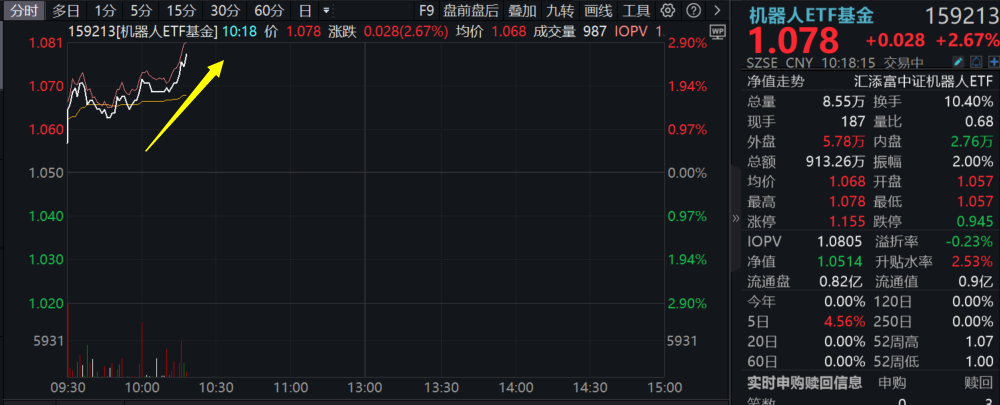
Core Viewpoint - The humanoid robot market is experiencing significant growth, driven by favorable government policies and increasing demand across various sectors, with projections indicating a potential market size of over 15 trillion yuan by 2025 [4][9]. Group 1: Market Performance - The A-share market showed an upward trend on May 12, with the robot sector rebounding, particularly the Robot ETF fund (159213), which opened high and rose by 2.67% [1]. - Major components of the Robot ETF fund saw substantial gains, with companies like Tuosida reaching a 20% limit up, and others like Koli'er and Xinjie Electric also experiencing significant increases [3]. Group 2: Industry Advantages - The humanoid robot industry in China benefits from strong policy support, with various national and local initiatives aimed at fostering development, including the inclusion of robots in key work reports and the establishment of industry funds [5][6]. - China's competitive edge in the humanoid robot market is highlighted by its leading position in patent applications, with 5,925 patents filed from 2020 to 2024, significantly outpacing other countries [4][5]. Group 3: Production and Supply Chain - The domestic robot industry is witnessing a rise in localization, with the domestic production rate of key components increasing from 17.5% in 2015 to 35.7% in 2022, indicating a trend towards cost reduction and efficiency [7]. - Major companies are preparing for mass production of humanoid robots, with 2025 expected to be a pivotal year for the industry, as several manufacturers are on the brink of entering small-scale production [7][8]. Group 4: Application Scenarios - The demand for robots is driven by manufacturing upgrades and demographic changes, with the global aging population creating a pressing need for robotic solutions to address labor shortages [9]. - The potential market for humanoid robots is projected to exceed 1 billion units, corresponding to a market space of over 15 trillion yuan, as the industry prepares for widespread adoption across industrial, commercial, and domestic applications [9].

全球车市转折大年,西方落幕中国登场
3 6 Ke· 2025-05-12 01:33
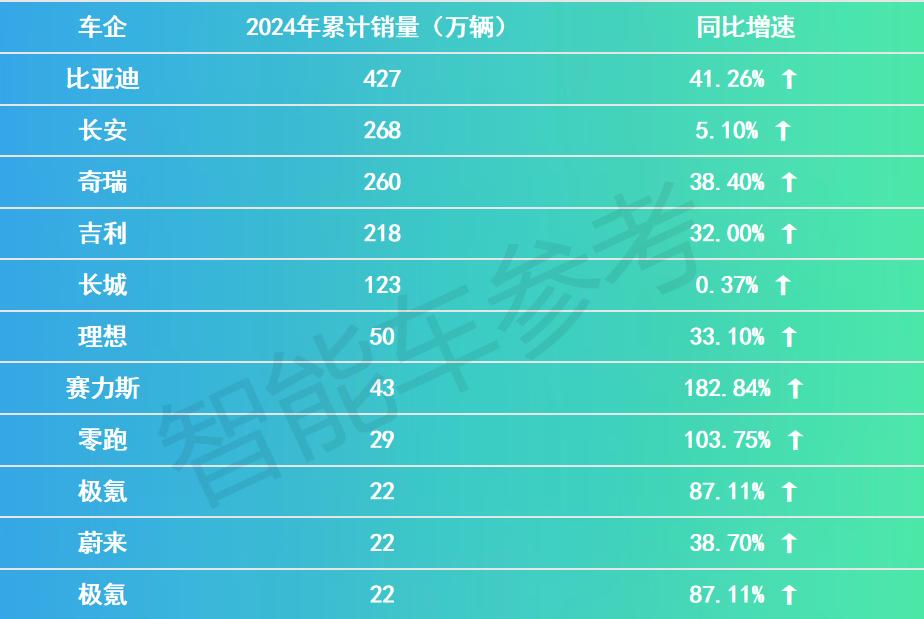
Core Viewpoint - The global automotive industry is experiencing a significant shift, with traditional automakers struggling to adapt to electrification and smart technology, while Chinese companies are rapidly gaining market share and showing strong growth in sales and performance [1][2]. Group 1: Sales Performance - Chinese automakers are witnessing substantial sales growth, with BYD projected to sell 4.27 million units in 2024, marking a 41.26% increase year-on-year [1]. - Other notable performers include Changan with 2.68 million units (5.10% increase), Chery with 2.60 million units (38.40% increase), and Geely with 2.18 million units (32.00% increase) [1][2]. Group 2: Financial Health and Debt Levels - The debt levels of major global automakers are generally high, with many exceeding 60% debt-to-asset ratios. For instance, Ford's debt ratio is 84.27%, and Chery's is 88.64% [4][5]. - Chinese companies like BYD and Geely have lower debt pressures compared to their overseas counterparts, with BYD's total liabilities at 75% of its revenue and Geely's at 88% [8][10]. Group 3: Debt Structure - The structure of debt is crucial, with Chinese automakers relying less on interest-bearing debt. For example, BYD's interest-bearing debt constitutes only 4.9% of its total liabilities [9][10]. - In contrast, foreign giants like Volkswagen and Ford have over 60% of their debt as interest-bearing, indicating higher financial pressure [11]. Group 4: Accounts Payable and Operational Efficiency - The accounts payable to revenue ratio is an important indicator of financial health. BYD has the lowest ratio at 31%, while NIO has the highest at 52% [12][14]. - The average accounts payable turnover days for domestic automakers range from 125 to 205 days, with BYD leading at 127 days, indicating efficient payment practices [13][14]. Group 5: Strategic Implications of Debt - High debt levels in the automotive industry can signify substantial investments in growth and innovation. Companies like BYD and Changan demonstrate that manageable debt can support expansion and technological advancement [16][17]. - The ability to carry significant debt is increasingly seen as a competitive advantage in the rapidly evolving automotive landscape [18].
阿里巴巴内网曝出四件大事!阿里员工兴奋值拉满;曝上海微软大裁员,部分员工N+8,最高20个月工资;蔚来重大调整!三品牌全面整合
雷峰网· 2025-05-12 00:26
1.阿里巴巴内网曝出四件大事!包括全面打通内网权限、调整员工跨业务流动机制等,马云否认回归 2.蔚来重大调整!三品牌全面整合:乐道产品研发、销售体系并入蔚来 3. 头条功臣、抖音元老陈林暂未离职创业,曾与顶级VC私下探讨教育创业构想,但不考虑外部融资 4.曝上海微软大裁员,部分员工获得N+8赔偿,最高20个月工资 5.小米SU7 Ultra陷「虚假宣传」争议,数百名消费者要求无损退车 6.网传GPU公司砺算科技连续两个月暂停全员薪酬:员工沉默,高管未正面回应 7.OpenAI CEO奥特曼:美国模型最先进,但领先中国的幅度并不大 8.停工时长超预期,特斯拉得州工厂Model Y及Cybertruck产线员工强制休假一周 今日头条 HEADLINE NEWS 阿里巴巴内网曝出四件大事!包括全面打通内网权限、调整员工跨业务流动机制等,马云否 认回归 据阿里多名内部员工在社交平台上爆料,5月8日晚,阿里集团全面打通内部论坛权限,淘天、阿里云、大 文娱、菜鸟、钉钉、飞猪、国际等各个业务的员工,时隔两年又在内网重聚。社交媒体上不少员工纷纷发 帖纪念重回内网,直呼"见证历史","MAGA","Make Alibaba G ...




央行:汽车金融公司存款准备金率降至0%!工信部出手整顿隐藏式门把手!宝马一季度财报公布,净利润大幅度下滑!丨一周大事件
电动车公社· 2025-05-11 15:55
New Car Launches - BYD Sea Lion 07DM-i launched with a price range of 169,800 to 205,800 yuan, featuring a 1.5T engine and a 26.6kWh battery pack with a pure electric range of 150/135 km [3][9] - Li Auto L series smart refresh version launched, maintaining original prices with upgraded configurations; prices range from 241,800 to 439,800 yuan [10][19] - Geely Galaxy Star 8 launched with a limited-time price of 115,800 to 155,800 yuan, featuring a family-style design and advanced driver assistance systems [20][30] - Jiayuan AIR launched with two versions priced at 147,800 to 159,800 yuan, targeting family users with high configurations [31][37] - New Audi A6 plug-in hybrid version revealed, featuring a 2.0T engine and a 25.9kWh battery pack with a WLTC pure electric range of 111 km [39][42] - Beijing Hyundai ELEXIO global debut, based on the E-GMP platform with a CLTC range exceeding 700 km [45][46] - New Volvo XC70 unveiled, set to launch in September, based on the new SMA hybrid architecture [49][51] Company Dynamics - SAIC Group achieved a record high of 128,000 new energy vehicle sales in April [55][58] - Changan Automobile reported 71,349 new energy vehicle sales in April, indicating steady growth [59][61] - Extreme Stone Automobile delivered 1,128 units in April, surpassing a cumulative delivery of 10,000 units [62][63] - BMW's Q1 financial report showed a significant decline in net profit by 26.4% to 2.173 billion euros, with a revenue drop of 7.8% [82][84] Industry News - The Ministry of Industry and Information Technology proposed a mandatory national standard for automotive door handle safety to address potential risks [85][89] - The People's Bank of China announced a reduction in the reserve requirement ratio for automotive finance companies to 0%, aimed at stimulating consumption in the automotive sector [91][92]