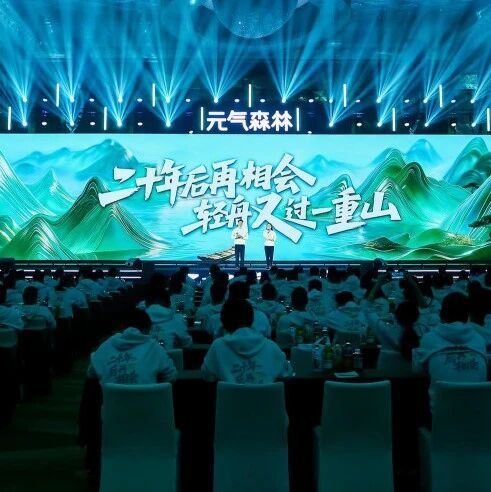
元气森林

Search documents
巨头们都在押注的白桦树汁是智商税吗?
3 6 Ke· 2025-12-01 08:08
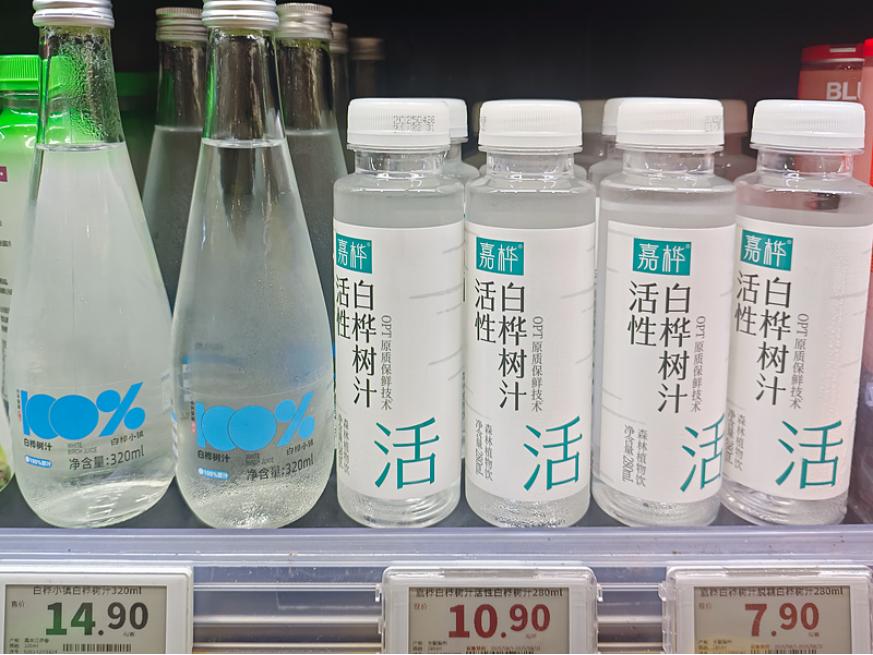
Core Viewpoint - The article discusses the rising popularity of birch sap as a health drink, highlighting its nutritional claims and the skepticism surrounding its benefits, while noting the significant interest from major beverage companies in entering this market [3][5][18]. Industry Overview - Birch sap, priced between 8 to 30 yuan, with some premium products exceeding 50 yuan, has gained traction in supermarkets and online platforms, driven by influencer marketing [3][5]. - The market for birch sap is projected to exceed 100 million yuan in sales by mid-2025, with over 20,000 influencers promoting it online [5][18]. Nutritional Claims - Birch sap is claimed to contain 17 amino acids, 8 trace elements, and various polyphenols and flavonoids, marketed as a "liquid gold" with health benefits such as anti-fatigue and hangover relief [5][9]. - However, some experts argue that the health benefits are overstated, with actual nutritional content being relatively low compared to other beverages [12][18]. Market Entry by Major Brands - Major beverage companies like Nongfu Spring, Huiyuan, and Yuanqi Forest have launched their own birch sap products, each with distinct marketing strategies and pricing [13][14]. - Huiyuan offers NFC birch sap at a competitive price of approximately 5.99 yuan per bottle, while Yuanqi Forest targets younger consumers with a low-sugar variant priced at 12 yuan [13][14]. Quality and Supply Chain Concerns - The birch sap market faces challenges regarding product quality and supply chain integrity, with reports of misleading labeling and varying product standards [12][19]. - The raw material cost for birch sap has surged from 1,700 yuan to 6,000 yuan per ton, leading to inflated product prices and concerns over sustainability [16][19]. Consumer Behavior and Market Sustainability - Despite the initial excitement, there are concerns about the long-term sustainability of birch sap as a health drink, with questions about consumer repurchase rates and the potential for market saturation [21][22]. - The industry is urged to focus on product innovation and quality control to avoid the pitfalls of being labeled a "fad" and to ensure a healthy market development [21][22].


巨头们都在押注的白桦树汁是智商税吗?
首席商业评论· 2025-12-01 04:29
Core Viewpoint - The article discusses the rising popularity of birch sap as a trendy health drink, highlighting its nutritional claims and the influx of major beverage companies entering the market despite skepticism about its health benefits [5][7][20]. Market Overview - Birch sap, priced between 8 to 30 yuan, with some premium products reaching over 50 yuan, has seen a surge in sales, exceeding 100 million yuan in revenue within a year [5][8]. - Major brands like Nongfu Spring, Huiyuan, and Yuanqi Forest have launched their own birch sap products, indicating a competitive market landscape [7][17]. Nutritional Claims - Birch sap is claimed to contain 17 amino acids, 8 trace elements, and various polyphenols and flavonoids, marketed as a "liquid gold" with health benefits such as anti-fatigue and detoxification [7][10]. - However, some experts argue that the actual health benefits are overstated, with the drink primarily serving as a hydration source [12][21]. Consumer Perception - Consumer feedback is mixed, with some praising its taste and health benefits, while others criticize it as merely sweetened water with minimal health effects [10][12]. - The market's current demand is driven by a trend towards natural and health-oriented beverages, as consumers shift away from sugary drinks [20][24]. Industry Dynamics - The cost of birch sap has increased from approximately 1,700 yuan per ton to 6,000 yuan per ton, leading to inflated product prices and concerns about quality control among various brands [20][21]. - The entry of large companies into the birch sap market is motivated by the potential for high profit margins and alignment with health trends, despite challenges in raw material supply and sustainability [21][24]. Future Considerations - The sustainability of birch sap sourcing is a concern, as increased demand may threaten local ecosystems and product quality [23][26]. - For long-term success, brands must focus on product innovation, quality control, and responsible marketing, moving away from exaggerated health claims to ensure a stable market presence [26].
“天府珍水”五粮液酒文化论坛举办 共探世遗水韵传承与产业发展新路径
Yang Shi Wang· 2025-12-01 02:40
Core Viewpoint - The "Tianfu Precious Water" forum aims to explore the cultural significance and industrial collaboration surrounding the "Tianfu Precious Water" concept, promoting the integration of cultural heritage and local industry development [1][3]. Group 1: Cultural Significance - The forum emphasizes the multi-faceted value of "Tianfu Precious Water," highlighting its role as a cultural, ecological, and economic driver for the Chengdu Plain's sustainable development [3][5]. - The historical significance of the Dujiangyan irrigation system, referred to as a "living monument," is crucial for understanding the ecological perspective of "Precious Water for Eternity" [7]. Group 2: Industry Collaboration - Representatives from 30 companies in the water, liquor, and tourism sectors participated, focusing on the integration of cultural ecology and brand collaboration [3][11]. - Five Grain Liquid Company aims to leverage the "Tianfu Precious Water" concept to create a new development model that integrates water, liquor, health, and tourism [5][18]. Group 3: Future Initiatives - Future projects will focus on deepening cooperation to enhance cultural experiences and the integration of liquor and tourism, ensuring the ongoing empowerment of cultural heritage and industrial upgrades [20]. - The establishment of a water gene database and a traceability system for water sources is suggested to transform water resources into brand assets [9].


氪星晚报|雷军:未来5年,人形机器人将大面积在小米工厂上岗;淘宝闪购将全面取消超时扣款,以正向激励提升骑士保障与用户体验;美永久停止接收所谓第三世界移民
3 6 Ke· 2025-11-28 12:27
Group 1: Company Developments - MINISO LAND's flagship store in Shanghai achieved sales exceeding 100 million yuan within 9 months, with monthly sales surpassing 16 million yuan, setting a global record for store sales [1] - Xiaomi's founder Lei Jun announced that humanoid robots will be widely deployed in Xiaomi factories over the next five years, indicating a significant shift towards AI integration in traditional industries [2] - Yuanqi Forest and a local high-tech development company established a new food science research company with a registered capital of 100 million yuan, focusing on scientific research and technology development [3] Group 2: Industry Trends - Taobao Shanguo is expanding its policy to eliminate penalties for delivery delays across 60 cities, aiming to enhance rider safety and user experience through positive incentives [2] - Weibo announced an upgrade to its hot search list to improve public and diverse content representation, with a clear division of content categories [4] - Amazon is entering the Indian banking sector by offering new consumer loan services, having acquired a non-banking financial institution earlier this year [5] Group 3: Regulatory and Market Changes - The People's Bank of China and other regulatory bodies released a new management method for customer due diligence, effective from January 1, 2026 [8] - The Shanghai government is promoting the integration of the marine industry with artificial intelligence, focusing on smart ships and underwater robotics [8] - New regulations for live-streaming e-commerce are set to be introduced by the market regulatory authority, aimed at enhancing oversight in the sector [10]

【2025美好生活高峰论坛】Worldpanel消费者指数大客户总监刘建永:新消费浪潮下的快消品市场变革与升级路径
Jing Ji Guan Cha Wang· 2025-11-27 08:58
Core Insights - The forum highlighted the transformation of the fast-moving consumer goods (FMCG) market in China amid a dual-cycle economic context, indicating new growth opportunities and consumer trends despite a slowdown in market growth [1][2]. Market Adjustment Under Dual-Cycle Context - The annual growth rate of China's FMCG market has decreased from over 5% to 2% over the past decade, influenced by a slowdown in GDP growth and a decline in natural population growth [2]. - Changes in consumer behavior are notable, with a 40% increase in the number of purchasing channels compared to ten years ago, leading to intensified competition in the industry [2]. - Consumers are shifting from bulk buying to on-demand purchasing, necessitating a reevaluation of supply chain management and product innovation strategies by companies [2]. Channel Reconstruction of Consumption Landscape - Three major trends in channel transformation were identified: growth in lower-tier cities, explosive growth in instant retail, and the rise of out-of-home consumption scenarios [3]. - The growth rate in county and town markets significantly outpaces that of first-tier cities, with a shift from large supermarkets to smaller, more localized retail formats [3]. - Instant retail services, such as 30-minute delivery, are rapidly penetrating the market, while out-of-home consumption in tourism, dining, and sports venues is becoming a new growth driver, with notable increases in customer traffic [3]. Consumer Segmentation Driving New Consumption Logic - Changes in population structure are releasing new consumption potential, with distinct trends in the single-person economy and the silver economy [4]. - One-person households focus on emotional value consumption, leading to significant growth in categories like pet spending and ready-to-eat products, while the silver demographic is divided into pre-silver (ages 45-60) and silver (60+) groups, each with different consumption needs [4]. - Health-related demands vary across age groups, indicating a need for companies to develop precise consumer profiles and product matrices [4]. Cultural Confidence Leading to Domestic Brand Revival - Domestic brands are experiencing a resurgence, gaining market share even in traditionally foreign-dominated sectors like infant formula and cosmetics, by integrating traditional Chinese medicine and cultural elements [5]. - Successful examples include collaborations with cultural symbols and innovative product offerings that resonate with consumers' emotional connections [5]. - The practice of cultural empowerment is diverse, with brands leveraging cultural narratives to enhance brand value and consumer engagement [5]. Strategic Upgrading Paths in Response to Market Changes - Companies are encouraged to focus on outdoor consumption scenarios, target the silver and single-person economies, and enhance cultural empowerment through health concepts and IP collaborations [6]. - The evolution of health demands permeates all trends, reflecting consumers' dual pursuit of physical and mental well-being [6]. - Companies that effectively adapt to scenario alignment, consumer segmentation, and cultural empowerment are likely to gain a competitive edge in the evolving FMCG landscape [6].
伙伴共赢、亲清并济,元气森林与供应商共同掌舵,“把船划得更快”
Cai Jing Wang· 2025-11-26 13:29
Core Insights - Yuanqi Forest maintains a dual strategy of "change and constancy," achieving a 26% growth in overall performance this year, with specific product lines like electrolyte water and vitamin water seeing even higher increases [1][2] - The company emphasizes trust and collaboration with suppliers, which has led to breakthroughs in the industry and a focus on long-term partnerships [2][3] Performance Metrics - Overall performance growth of 26% this year, with specific product lines experiencing significant increases: electrolyte water (34%), iced tea (56%), good self (36%), vitamin water (128%), and sparkling water (52%) [1] - The company has engaged over 600 suppliers and participated in over 130 bidding projects, contributing to the development of more than 70 new products [10] Supplier Relationships - Trust is the foundation of Yuanqi Forest's relationships with suppliers, leading to a cycle of mutual problem-solving and responsiveness [3][5] - The company has established a partnership model characterized by "partners, transparency, cost reduction, and openness," which enhances collaboration and efficiency [7][12] Operational Strategies - Yuanqi Forest focuses on lifecycle management of suppliers and long-term partnerships with those demonstrating comprehensive capabilities and innovation potential [7] - The company aims to optimize costs and innovate products while ensuring a stable supply chain, which is seen as a core competency [7][8] Future Outlook - The company plans to deepen collaboration with agricultural producers and equipment partners to enhance supply chain efficiency and competitiveness [10][12] - Yuanqi Forest is committed to a transparent and clear operational process, ensuring that suppliers are well-informed and engaged in the partnership [11]
旺旺、娃哈哈、元气森林多条产品线快速增收,养生、功能类向上景气度影响软饮细盘走向
Cai Jing Wang· 2025-11-26 09:32
Core Viewpoint - The beverage industry in China is showing signs of stability and growth, with various companies reporting positive performance across multiple product lines, although there are notable disparities in performance among different categories [1][2][3] Company Performance - China Wangwang reported total revenue of 11.108 billion yuan for the first half of the 2025 fiscal year, a 2.1% increase year-on-year, with dairy and beverage products leading the revenue streams [1] - Wahaha announced a revenue increase of 500 million yuan for 2025, with water products continuing to be a strong growth driver [2] - Genki Forest achieved a 26% year-on-year growth in overall performance for 2025, maintaining double-digit growth for three consecutive years [2] Product Category Insights - Wangwang's beverage segment saw a doubling in sales, with new products contributing nearly 50% to the beverage category's revenue [1] - The performance of functional beverages is on the rise, driven by increasing consumer demand for energy and electrolyte replenishment across various daily scenarios [3][4] - Health-conscious products like sugar-free tea and electrolyte water are gaining traction, particularly among younger demographics [3] Market Trends - The beverage sector is experiencing a divergence in performance, with some companies like Quan Yang Quan reporting revenue and net profit growth, while others focusing on plant-based and dairy beverages face declines [2][4] - Analysts predict that the beverage industry will see a recovery in demand, with expectations of mid-to-high single-digit growth in 2026, influenced by market demand and raw material prices [5]

中国最好的一批消费品牌是怎么诞生的?
36氪· 2025-11-26 09:27
Core Viewpoint - Luckin Coffee has demonstrated a remarkable turnaround, with its store count reaching 2,921, six times the number at the time of its delisting in 2020, and achieving a stable profit of 1.2 yuan per cup, contrasting with a loss of 5.6 yuan per cup five years ago [5][6]. Group 1: Company Recovery and Market Dynamics - The case of Luckin Coffee represents one of the most significant "turnaround" stories in Chinese business history, challenging the notion that delisting equates to failure and showcasing the resilience of the Chinese consumer market [8][9]. - Institutional investors, such as Snow Lake Capital and IDG Capital, have played a crucial role in supporting Luckin Coffee post-delisting, with significant investments and strategic changes that revitalized the brand [9][11]. - The market's response to Luckin's delisting was calm, indicating a strong underlying demand for its products, which remained unaffected by the delisting crisis [13][19]. Group 2: Shift in Consumer Investment Paradigms - The narrative surrounding Luckin Coffee reflects a broader shift in the Chinese consumer landscape, moving away from a model focused on aggressive spending and rapid growth towards one emphasizing product quality and sustainable profitability [16][19]. - The success of Luckin Coffee and other brands illustrates the emergence of a new generation of consumer entrepreneurs who prioritize product excellence and consumer insights over mere market share [25][26]. - The investment landscape is evolving, with a focus on long-term value creation and the importance of identifying companies with strong product capabilities and brand strength [30][31]. Group 3: Market Potential and Global Influence - China's consumer market is increasingly recognized as a significant source of global innovation, with a vast population allowing for extensive validation and iteration of niche products [34][44]. - The competitive environment in China is characterized by both high risks and high rewards, necessitating that local companies and their investors adapt to rapidly changing market conditions [35][39]. - Investment institutions are now more involved in the global expansion of Chinese brands, reflecting a shift from merely bringing foreign brands to China to actively participating in the global market [41][43].
元气森林,驶回增长正轨
3 6 Ke· 2025-11-26 02:26
Core Insights - The overall growth rate of the fast-moving consumer goods (FMCG) market in 2025 is projected to be 4.8%, with the beverage category standing out as a stable growth segment in China's FMCG industry [1][3] - The beverage industry has undergone significant restructuring over the past three years, driven by a trend towards "healthier consumption" [3][4] - Yuanqi Forest has emerged as a notable player in the beverage market, achieving an overall growth rate approximately four times the industry average, with a reported 26% year-on-year increase in 2025 [1][4] Industry Trends - The beverage industry is experiencing a structural transformation led by health-conscious consumption, with no-sugar beverages and functional drinks seeing double-digit growth [3][4] - Key consumer preferences include "ingredient transparency" and "low-sugar, no additives," which are becoming central to purchasing decisions [3] - Despite the clear trend towards health-focused products, the industry faces challenges such as high inventory turnover rates and intense competition among brands [3][4] Company Performance - Yuanqi Forest's core product categories have shown impressive growth, with specific products like Alien Electrolyte Water and various flavored sparkling waters achieving year-on-year growth rates of 34% and 52% respectively [4] - The company has maintained a double-digit growth rate for three consecutive years, significantly outpacing the overall industry growth [4][5] Innovation and Strategy - The company's success is attributed to its focus on "brand + good products," emphasizing the importance of innovation and understanding consumer needs [5][10] - Yuanqi Forest has implemented a robust product innovation mechanism, allowing for rapid iteration and adaptation to market demands [12][13] - The company has established a digital supply chain strategy to enhance transparency and reduce operational risks for distributors [13] Market Challenges - The beverage market is becoming increasingly crowded, with over 30 brands launching sparkling water products between 2019 and 2023, leading to a decline in growth for this category [9] - The industry is witnessing a high rate of new product failures, with many products being quickly eliminated from the market [12] Future Outlook - Yuanqi Forest aims to continue focusing on creating meaningful products for consumers, emphasizing the need for patience and confidence in building a sustainable brand [8][11] - The company recognizes that differentiation through continuous innovation is essential for maintaining competitive advantage in a rapidly evolving market [8][10]

元气森林,驶回增长正轨
36氪· 2025-11-26 00:09
Core Insights - The beverage industry in 2025 is undergoing a structural transformation driven by "health consumption" trends [2][6] - The overall growth rate of the fast-moving consumer goods (FMCG) market is modest at 4.8%, but the beverage category shows relatively stable growth [3][8] - The rise of innovative products such as sparkling water, sugar-free tea, and functional drinks indicates a shift towards healthier beverage options [6][8] Industry Trends - The beverage industry has experienced a "major reshuffle" over the past three years, with health-oriented products gaining significant traction [6][8] - Nielsen's report highlights that sugar-free beverages have seen double-digit growth, while functional drinks are among the fastest-growing categories [6][8] - The market is characterized by high brand homogeneity and intense competition, with issues like high inventory turnover rates and product sell-through challenges [6][7] Company Performance - Genki Forest has achieved remarkable growth, with a reported 26% year-on-year increase in overall performance for 2025, significantly outpacing the industry average [8][9] - Specific product categories within Genki Forest have shown exceptional growth, such as the Alien Electrolyte Water (34% growth) and the Vitamin Water (128% growth) [8][9] - The company's success is attributed to a strong focus on brand and product quality, aligning with health and functional trends [9][12] Innovation and Strategy - Genki Forest emphasizes the importance of "brand + good product" as the core of its business strategy [9][12] - The company has adopted a patient approach to product development, focusing on creating meaningful products for consumers [12][19] - Continuous innovation is crucial, with the company investing in product testing and consumer feedback mechanisms to ensure relevance and quality [19][20] Market Challenges - Despite the health trend, the beverage market faces challenges such as market saturation and the rapid obsolescence of new products [14][18] - The carbonated beverage segment is experiencing a decline, prompting Genki Forest to innovate within this category to maintain growth [14][18] - The company acknowledges the need for sustainable innovation to differentiate itself in a crowded market [14][19]