
沃飞长空

Search documents
eVTOL技术路线之争 复合翼与倾转旋翼引领低空经济竞逐
Huan Qiu Wang Zi Xun· 2025-08-23 05:07
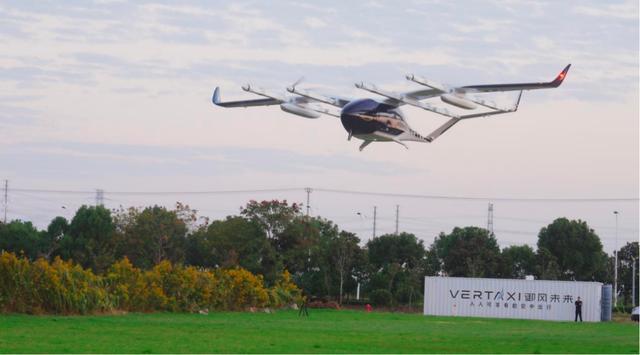
Core Viewpoint - The eVTOL (electric Vertical Take-Off and Landing) industry is experiencing intense competition in key technological routes, with compound wings and tilt-rotor designs emerging as the most representative directions for urban air mobility systems [1][3]. Group 1: Market Overview - As of June 2025, among 31 key global eVTOL manufacturers, compound wing configurations account for approximately 42%, while tilt-rotor designs follow closely with a 35% share [3]. - The compound wing and tilt-rotor designs are the focal points of industry and capital interest due to their significant advantages in technological maturity and application potential [3]. Group 2: Technical Advantages - The compound wing eVTOL features a design that allows for independent operation of vertical take-off and horizontal cruising systems, resulting in high reliability and good aerodynamic efficiency [4]. - In terms of safety, the compound wing's independent lift and propulsion systems enhance operational resilience in complex urban environments, allowing for rapid activation of backup lift units in case of disturbances [4]. - The compound wing also demonstrates superior energy efficiency and range capabilities compared to other configurations [4]. Group 3: Tilt-Rotor Characteristics - The tilt-rotor eVTOL, known as the "airborne transformer," utilizes mechanical tilting mechanisms to transition power units from vertical to horizontal flight, achieving higher flight speeds [4]. - Tilt-rotor designs are noted for their strong payload capacity and clearer certification paths, making them suitable for short-distance commuting and high-end tourism markets [4]. Group 4: Challenges and Development - Tilt-rotor designs face challenges related to mechanical complexity and potential increases in failure rates, necessitating multiple redundancy designs to meet safety standards [5]. - Both compound wing and tilt-rotor technologies are currently developing in parallel, each with its own strengths, with the compound wing being more suitable for high-frequency urban air traffic networks and the tilt-rotor excelling in speed and payload capacity [5]. - The industry consensus indicates that eVTOL technology is in a critical phase of technical challenges and certification, with no single technology route currently surpassing others across all dimensions [5].

又一个“最火专业”来了,西部大省正在抢跑
Mei Ri Jing Ji Xin Wen· 2025-08-21 15:40
Core Points - The rapid expansion of China's low-altitude economy market has triggered a competition for "high-end" talent, with a significant increase in related academic programs [1][7] - The Ministry of Education has approved the addition of 239 new undergraduate programs for 2025, including 120 points for "Low Altitude Technology and Engineering," indicating a strong focus on this emerging field [1][2] - The demand for professionals in the low-altitude economy is surging, with a projected market size of 1.5 trillion yuan by 2025 and 3.5 trillion yuan by 2035 [7][8] Education and Talent Development - Six universities, including Beijing University of Aeronautics and Astronautics, have been designated to lead the development of low-altitude economy programs, reflecting their strong foundations in aerospace and communication technologies [5][17] - The talent gap in the low-altitude economy is significant, with a reported shortage of 1 million drone operators and an annual demand for approximately 4,000 graduates in low-altitude technology [8][19] - The collaboration between universities and leading companies in the low-altitude sector is increasing, with initiatives aimed at integrating education and industry to better prepare graduates for market needs [20][21] Regional Dynamics - The competition for low-altitude economy talent is evident across various provinces, with Sichuan, Jiangsu, Beijing, and Guangdong leading in the number of new program points [10][18] - Major cities like Beijing and Chengdu are emerging as hubs for low-altitude economy education, with a concentration of resources and industry presence that supports talent development [14][17] - The establishment of low-altitude economy programs in cities like Nanjing and Guangzhou is expected to enhance local industry capabilities and drive regional economic growth [18][19] Industry Trends - The low-altitude economy is characterized by its diverse applications, including logistics, tourism, and emergency response, which are driving the demand for specialized talent [7][19] - The shift towards electric propulsion systems in aviation is creating new interdisciplinary research opportunities, necessitating a more specialized workforce [6][19] - The integration of academic programs with industry needs is crucial for the sustainable development of the low-altitude economy, requiring careful planning and collaboration between educational institutions and businesses [21]

对话沃飞长空CEO郭亮:eVTOL到底该收“车票钱”,还是收“快递费”?
经济观察报· 2025-08-19 10:31
Core Viewpoint - The low-altitude economy is emerging with various commercial paths and underlying rules, focusing on product development and airworthiness processes for domestic eVTOL manufacturers [1][2][3] Group 1: Industry Overview - The low-altitude economy is gaining traction, with significant developments in eVTOL applications, such as logistics and emergency medical services [2][10] - The eVTOL industry is characterized by a complex regulatory environment, requiring manufacturers to collaborate closely with aviation authorities to establish safety standards [3][16] - The industry is expected to see the first generation of manufacturers complete their research and airworthiness certification by 2025-2026, leading to commercial operations by 2030 [21][22] Group 2: Company Profile - Established in 2020,沃飞长空 is a key player in the low-altitude economy, focusing on the development of manned eVTOLs with a team of nearly 600 [3][4] - The company has chosen a unique technical path with a tilt-rotor design, which poses challenges in meeting safety standards during various flight modes [3][15] -沃飞长空 is actively building its commercial ecosystem through partnerships with various downstream operators and suppliers [4][19] Group 3: Business Strategy - The company prioritizes manned eVTOLs over cargo models, believing that passenger services will yield higher commercial returns [9][13] - Key application scenarios for沃飞长空 include low-altitude tourism, urban transportation, and emergency medical rescue, aiming to enhance user experience and operational efficiency [10][11][12] - The company is leveraging automotive supply chain capabilities to enhance its eVTOL manufacturing processes, ensuring safety and comfort in its products [18][19] Group 4: Challenges and Future Outlook - The eVTOL industry faces significant challenges in airworthiness certification, with safety standards set higher than traditional aircraft [15][16] - The market is expected to stabilize after initial hype, allowing companies to focus on core aspects like safety and certification [21] - Future competition will hinge on technological capabilities, innovation, and the ability to secure funding and talent in a resource-constrained environment [23][24]
对话沃飞长空:eVTOL行业普遍还在卷研发和取证,2026年后才会开始卷商业|产业专访
3 6 Ke· 2025-08-18 02:56
Core Viewpoint - WoFei ChangKong is pioneering the development of eVTOL aircraft in China, focusing on the AE200 model, which integrates advanced automotive technologies into aviation, aiming for a comfortable and safe passenger experience [1][6][9] Group 1: Product Development - The AE200 eVTOL features a "tilt-rotor" design with a range of 200 km and a cruising speed of 248 km/h, designed for low-altitude tourism, transportation, and emergency rescue [2][4] - The AE200 is the only eVTOL product from WoFei ChangKong, utilizing a semi-solid battery and capable of vertical takeoff and landing without a runway [2][4] - The company has received hundreds of intent orders and established strategic partnerships with major airlines, indicating strong market interest [4][6] Group 2: Technological Innovation - WoFei ChangKong has integrated automotive-grade smart cockpit features into the AE200, enhancing passenger comfort with elements like a dynamic island and intelligent air management [1][6] - The company is the first in China to apply automotive interior design principles to manned eVTOLs, showcasing a unique approach in the industry [1][6] Group 3: Market Position and Strategy - WoFei ChangKong is positioned as a leader in the eVTOL sector, having advanced its airworthiness certification process ahead of competitors by 1-2 years [4][6] - The company is focused on pure electric eVTOLs due to the current infrastructure and aims to leverage advancements in battery technology for future developments [7][18] - The market for eVTOLs in China is rapidly expanding, with over 30 manufacturers emerging, doubling the number from before 2024 [6][18] Group 4: Future Outlook - The company plans to conduct manned flight tests for the AE200 by the end of 2023, aiming for airworthiness certification by 2026 [8][15] - Future applications of the AE200 are expected to include low-altitude tourism, urban transportation, and emergency medical services, highlighting its versatility [22][23] - WoFei ChangKong anticipates that the eVTOL industry will see significant commercial operations starting around 2026, with a focus on establishing fixed flight routes [24][25]

成都先进制造业实力凸显,集群发展与创新突破齐头并进
Mei Ri Jing Ji Xin Wen· 2025-08-14 00:35
Core Insights - Chengdu is designated as a "national advanced manufacturing base" as part of its development goals, with a projected industrial output growth of 4.8% in 2024, an increase of 0.7 percentage points year-on-year [1] - The city has successfully cultivated multiple national-level industrial clusters, ranking seventh among cities nationwide for "specialized and innovative" small enterprises [1] Group 1: Advanced Manufacturing and Industrial Growth - In 2024, Chengdu's industrial investment is expected to grow by 48.7%, surpassing both national and provincial averages [1] - Chengdu has achieved significant milestones in advanced manufacturing, including the launch of China's first Micro-LED production line and the completion of the New Aviation Engine Industrial Park [2] - The city has established five national-level advanced manufacturing clusters and two strategic emerging industry clusters [1][2] Group 2: Emerging Industries and Technological Advancements - Chengdu is actively developing new industries, with a focus on artificial intelligence, having registered five AI industry models with national authorities [2][6] - The city has launched various innovative projects, including the world's first hydrogen-powered regional train and the establishment of a humanoid robot innovation center [2][3] - Chengdu's AI core industry is projected to exceed 70 billion yuan by mid-2025, with several local companies recognized among the top in the nation [6] Group 3: Infrastructure and Industrial Ecosystem - Chengdu has built a robust industrial ecosystem with four national-level public service platforms and 17 provincial-level platforms for industrial technology [3] - The city has developed nine large-scale computing power centers, enhancing its digital economy capabilities [3] - Chengdu's industrial parks are gaining recognition, with the Tianfu Traditional Chinese Medicine City being named one of the most vibrant in the country [4] Group 4: Strategic Initiatives and Government Support - The Sichuan provincial government is committed to supporting Chengdu's development in AI, low-altitude economy, and biomedicine, aligning with the city's strategic focus [5][6] - Chengdu is enhancing its participation in global industrial chains and fostering high-quality development through specialized industrial parks [5] - The city has been recognized as a pilot for several national-level initiatives, including smart manufacturing and 5G applications [4]
成都先进制造业实力凸显,集群发展与创新突破齐头并进 | 万千气象看成都
Mei Ri Jing Ji Xin Wen· 2025-08-14 00:22
Group 1: Economic Growth and Industrial Development - Chengdu aims to become a national advanced manufacturing base, with a projected industrial output growth of 4.8% in 2024, an increase of 0.7 percentage points year-on-year [1] - The city has achieved a remarkable 48.7% growth in industrial investment in 2024, surpassing both national and provincial averages [1] - By May 2025, the industrial output value of Chengdu increased by 8.0% year-on-year [1] Group 2: Advanced Manufacturing and Innovation - Chengdu has successfully established five national-level advanced manufacturing clusters and two strategic emerging industry clusters by 2024 [1] - The city has seen significant breakthroughs in advanced manufacturing projects, including the first Micro-LED production line in mainland China and the completion of the New District Aviation Engine Industrial Park [2] - Chengdu is home to eight companies listed among China's top 500 manufacturing enterprises, ranking seventh among cities nationwide [1] Group 3: Emerging Industries and Technological Advancements - The artificial intelligence industry in Chengdu is projected to exceed 100 billion yuan, with five AI models approved by national authorities in 2024 [4] - Chengdu has established the first humanoid robot innovation center in Central and Western China, with seven types of locally produced humanoid robots released [4] - The city has been approved as a pilot for electric vertical takeoff and landing (eVTOL) aircraft, with the AE200 becoming the first manned eVTOL design guarantee system in China [4][6] Group 4: Industrial Collaboration and Market Expansion - Chengdu has been actively expanding its domestic and international markets, signing procurement contracts worth approximately 12 billion yuan in 2024 [7] - The city has been recognized for its collaborative efforts in the Chengdu-Chongqing economic circle, enhancing the supply chain integration of automotive parts to 80% [7] - Chengdu has been selected for five national-level major pilot projects, including smart manufacturing and 5G applications [7] Group 5: Policy Support and Future Planning - The Sichuan provincial government has issued policies to support Chengdu in becoming a national advanced manufacturing base, focusing on high-quality development in emerging industries [10][12] - Chengdu is prioritizing the development of artificial intelligence, low-altitude economy, and biomedicine as key industry directions [12] - The city is implementing a comprehensive industrial system that integrates AI chips, computing power, algorithms, data, and real-world applications [12]

eVTOL航空器全球竞速:国内加速商业化,海外争夺话语权
2 1 Shi Ji Jing Ji Bao Dao· 2025-08-13 12:04
Core Insights - The domestic eVTOL (electric Vertical Take-Off and Landing) aircraft market is accelerating in terms of airworthiness certification and commercialization, with significant milestones achieved in August [1][3][4] - The low-altitude economy is experiencing robust activity, with a 50.8% year-on-year increase in procurement activities related to low-altitude economic products and services in the first quarter of this year [1] - China and the U.S. are not only focusing on domestic market development but are also seeking opportunities in overseas markets, indicating a global competitive landscape [2] Commercialization Acceleration - The successful completion of the first-ever sea logistics flight using the eVTOL aircraft "Kai Rui Ou" marks a significant step in low-altitude logistics applications [3][4] - The aircraft demonstrated operational capabilities by completing a journey of over 150 kilometers under challenging conditions, retaining over 40% battery power upon landing [3] - Strategic partnerships have been formed, including a procurement order for 100 eVTOL aircraft, aimed at accelerating real-world commercial applications [3][4] Industry Development - The eVTOL supply chain in China is evolving into a comprehensive development pattern, characterized by upstream breakthroughs, midstream collaboration, and downstream standard-setting [7] - The industry is currently facing challenges, including the need for systematic planning in scenario cultivation and the lack of innovative measures in support policies [8] - The commercial viability of eVTOL operations is contingent upon establishing standardized workflows and infrastructure to support regular flights [8] Global Competition - Companies like Archer are forming international alliances to streamline the certification and deployment of eVTOL aircraft globally, indicating a collaborative approach to market entry [9] - Domestic eVTOL companies are exploring international markets, with significant orders such as a $1 billion deal for 350 eVTOL aircraft in the Middle East [10] - The Middle East presents a lucrative market for eVTOL operations, with substantial investments planned for air traffic networks [10] Future Outlook - By 2025, companies like Peak Fly Aviation aim to establish several typical application scenarios, with expectations for large-scale commercialization by 2026 [11]
“低”空启航,“高”能未来:解锁低空经济新图景
Xin Hua Wang· 2025-08-12 06:21
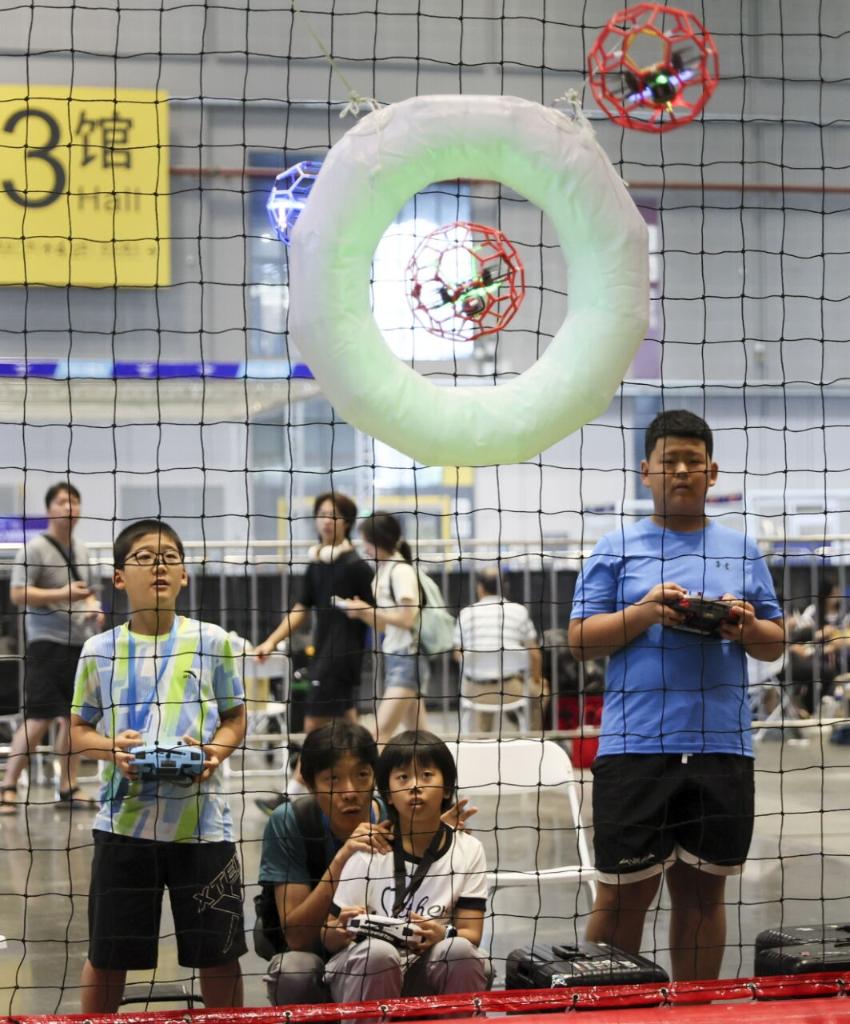
Group 1 - The 2025 International Low Altitude Economy Expo showcases innovative applications of drone technology, including drone soccer, which uses drones equipped with spherical hollow covers to create flying "magic footballs" [1][3] - Over 19 products made their global debut and 25 products had their domestic premiere at the expo, highlighting the maturity of various aircraft and the potential of the low-altitude economy [3] - Companies like Qianji Technology demonstrated advanced drones capable of performing for 25 minutes, significantly reducing human dependency by over 80% in complex environments [3][5] Group 2 - China Post has established a pioneering role in drone applications with its Zhongyou Drone Company, showcasing a drone with a maximum payload of 260 kilograms and a flight endurance of 10 hours [5] - The eVTOL (electric Vertical Take-Off and Landing) aircraft is being promoted for low-altitude tourism, allowing passengers to experience scenic views from the air [4][5] - Companies are working towards the certification of eVTOLs, with plans to offer air transport services in 30 to 40 cities by 2030 and expand to over 300 county-level cities by 2035 [6]
新兴产业“抢人” 现代服务业“吸才”——产业变革下的就业市场新动向
Xin Hua Wang· 2025-08-12 06:09
Group 1: Employment Trends - In the first half of the year, 6.95 million new urban jobs were created, achieving 58% of the annual target, indicating overall stability in the employment situation [1] - Emerging industries are increasingly driving employment, with a notable demand for talent in sectors such as artificial intelligence and low-altitude economy [3][4] - The job market is witnessing a shift from a "demographic dividend" to a "talent dividend," reflecting a significant optimization in employment structure [3] Group 2: Demand for Talent in Emerging Industries - The demand for composite talents with both hard skills (mechanical automation, AI) and soft skills (product planning, scene design) is rising, particularly in the humanoid robot sector [2] - Job postings in humanoid robots, new materials, and smart hardware have seen year-on-year increases of 398.1%, 72.1%, and 50.3% respectively in Q2 [2] Group 3: Service Sector Employment Opportunities - The growth of service consumption is creating new job opportunities, particularly in the pet medicine sector, where there is a significant talent gap [4] - The modern service industry is experiencing rapid recruitment growth, with pet services leading at a 72.2% increase in job postings [4] Group 4: Policy Support for Employment - The government is implementing policies to support employment along the industrial chain, including a series of incentives and skills training programs [5][6] - In the first half of the year, the reduction in unemployment insurance rates saved companies over 90 billion yuan in labor costs [6] Group 5: Future Employment Strategies - There is a need to continue aligning vocational skills training with industry demands and to develop policies that support new employment forms for high-quality job creation [7]
光大保德信基金布局低空经济万亿赛道 光大国证通用航空指数基金正在发行中
Zheng Quan Shi Bao Wang· 2025-08-07 09:32
Core Insights - The low-altitude economy, officially included in national planning since 2021, is transitioning from a grand blueprint to practical applications, highlighted by the successful transportation flight of a domestic electric vertical takeoff and landing (eVTOL) aircraft [1][3] - The issuance of the Everbright National General Aviation Index Fund, with an initial investment of 10 million yuan, reflects confidence in the long-term potential of the low-altitude economy [1][9] Industry Developments - The successful test flight of the "Kairui O" eVTOL, which transported fresh fruits and emergency medical supplies to an offshore oil platform, marks a significant advancement in low-altitude logistics and showcases the integration of innovative aviation technology with real-world operational needs [3] - The 2025 International Low Altitude Economy Expo held in Shanghai featured nearly 300 exhibitors and showcased over 44 new products, emphasizing the diverse applications of low-altitude economy in various sectors such as tourism, agriculture, emergency rescue, and logistics [3][4] Government Initiatives - The National Development and Reform Commission (NDRC) has identified the promotion of high-quality development in the low-altitude economy as a key focus for the second half of the year, aiming to enhance domestic circulation and stimulate innovation in the digital economy [4] Economic Impact - The low-altitude economy is characterized as a complex industrial ecosystem that integrates high-end manufacturing and modern services, with the general aviation industry serving as its backbone [6] - The flight hours for general aviation in China have increased from 730,000 hours in 2015 to 1.28 million hours in 2023, reflecting a compound annual growth rate of 7.3%, indicating robust growth potential [6] - The multiplier effect of the low-altitude economy is significant, with the U.S. general aviation industry contributing a GDP multiplier of 1:10, suggesting that each new job in general aviation can create 12 additional jobs [7] Financial Collaboration - The collaboration between Everbright Group's fund, bank, and securities arms aims to enhance financial services for emerging industries, with the launch of the Everbright National General Aviation Index Fund representing a commitment to the low-altitude economy [9]